SIG SAUER - Never Settle

Archive for the ‘Guest Post’ Category

1st SFAB Trains and Certifies Military Advisors for Worldwide Employment

Thursday, September 19th, 2019

FORT BENNING, GA. – The 1st Security Force Assistance Brigade, an Army conventional force for training and advising globally, had the opportunity to enhance their capabilities and train their military advisors over a two-week period during Advisor Forge at Fort Benning, Georgia, August 5 through 18, 2019.

Across scorching hundred degree temperatures in field environments, the Army’s advisors trained in partnering with a foreign force, conducting sling-load operations, establishing electronic equipment for global communication and emergency medical relief scenarios.

The training exercise focused on the development of skills for Army advisors to provide support, advise, and liaise with foreign conventional security force partners in time of worldwide employments.

“Through adaptability, we can be prepared for all different presented issues and come together as a global team to solve them,” said Sgt. Michael Fletcher, an intelligence analyst assigned to 1st Security Force Assistance Brigade.

The culminating exercise was an opportunity for participating Soldiers to enact 1st SFAB’s mission statement of supporting local security operations to build partner security capacity and capability and achieve regional security in support of US National Interests.

“The reason why we are in the SFAB is to create enduring innovative solutions,” said Cpt. Travis Coley, Headquarters and Support company commander within the 6th Battalion, 1st Security Force Assistance Brigade, “We exist to empower conventional foreign security forces in establishing sustainable methods to solve issues.” Coley believes SFAB Soldiers are able to do so by applying their training in the understanding of local customs, culture, traditions and political nuances.

The military advisors and instructors of the 1st SFAB, formed in 2017, includes 529 Soldiers, 360 that are officers. It is the first brigade of its kind. According to the Pentagon. Six fully operational brigades are expected to train and preform at the highest capacity by 2020.

By PVT Daniel Alkana

Army Cyber Leaders Talk Workforce Strategies, Talent Management

Wednesday, September 18th, 2019

WASHINGTON — The military is doing a great job recruiting cyber talent into military and civilian service, but retention is more difficult, said the deputy assistant secretary of defense for cyber policy said at the Billington Cybersecurity Summit in Washington.

“We have people lined up out the door that are ready to come onboard and do the mission, whether it’s cyber operations or traditional cybersecurity,” Burke E. “Ed” Wilson said at last week’s event.

Wilson said Congress gave the military some unique authorities that have helped in hiring qualified civilians.

“This has allowed us to hire with more agility based on the talent,” he said. “That’s been a big win, and we’ve seen very good results over the last 18 months.”

But the challenge is retention. “Clearly, we don’t do well on salary in the military, but we’ve been able to handle that with bonuses,” Wilson said, adding that the strategy is working well, except in some niche areas.

John “Jack” Wilmer, the Defense Department’s deputy chief information officer for cybersecurity and chief information security officer, said young people are attracted to the military because it has a “cool mission.” To keep them, the military provides them with some really great training opportunities, he said.

Cyber games, for example, allow them to go toe-to-toe with some of the best cyber warriors from other countries, he said. “We try to incentivize people and connect them with opportunities,” he added.

Army Lt. Gen. Stephen Fogarty, commander of Army Cyber Command, said another way to incentivize the workforce while solving difficult cyber problems is to organize the cyber workforce into teams.

Teams can be made up of people who are experts at electronic warfare, information operations, intelligence, developers, malware analysts and other specialties based on the type of operation they’re engaged in, he said.

The teams can extend outside the U.S. military and include foreign military partners, commercial vendors and academia, Fogarty said.

“We very rarely act without a consortium of partners. I can’t think of a single operation that didn’t include multiple partners,” he said. “Young people reach out to their peers and build their own networks. They’re very successful at building these ad hoc relationships, and they get after the mission.”

By David Vergun, Defense.gov

Brigantes Presents – High Angled Solutions – The Lofoten Gore-Tex Pro Lite Pants

Wednesday, September 18th, 2019

Since 1929, Norrona have devoted their time into making the greatest outdoor products available. Their focus is quality, function and design and Brigantes are excited to announce our UK military relationship with them.

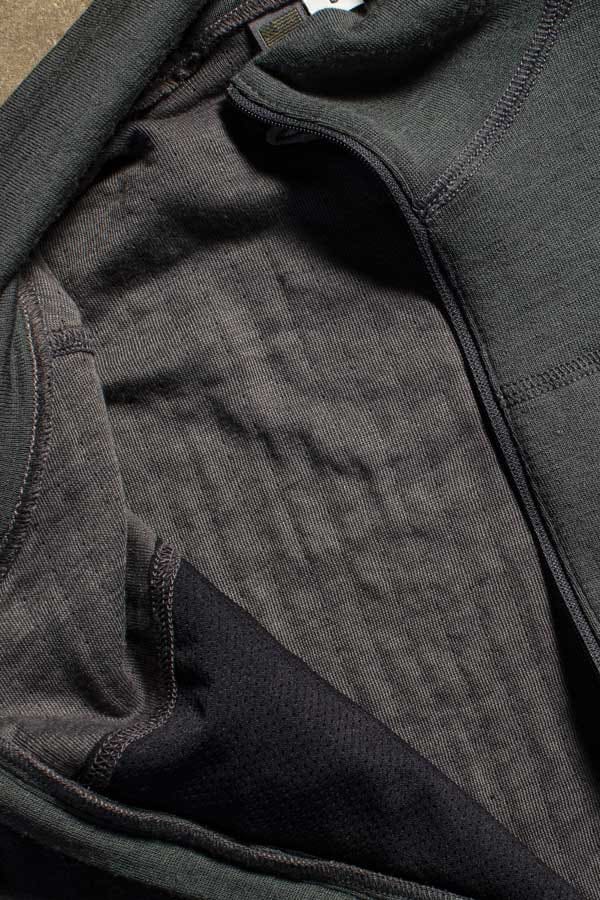
The Lofoten Gore-Tex Pro Light Pants are Norrona’s lightest water and windproof pants for the hardcore freeriders.

Developed to achieve the perfect balance between lightweight and durability, these pants have a lot of the same features as the lofoten Gore-Tex Pro Pants but are made in a lightweight wind and waterproof 80D GORE-TEX® Pro fabric. 

They have key features such as Custom-fit system™ waist adjustment, thigh ventilation with powder mesh, thigh pockets for essential gear and reinforcement on the lower leg. The cut of the pants is slightly tighter than on the Lofoten Gore-Tex Pro, but still with a fit that is customized for big mountain freeride. 

These are the ideal pants for deployments in the mountains where troops are in need of superior protection with all the critical details incl durable, lightweight, wind and waterproof garments.

For UK sales contact: warrior@brigantes.com

Or visit: Brigantes.com


Handheld Digital Targeting System Provides Fire and Air Support to Marines

Tuesday, September 17th, 2019

MARINE CORPS BASE QUANTICO, Va. —

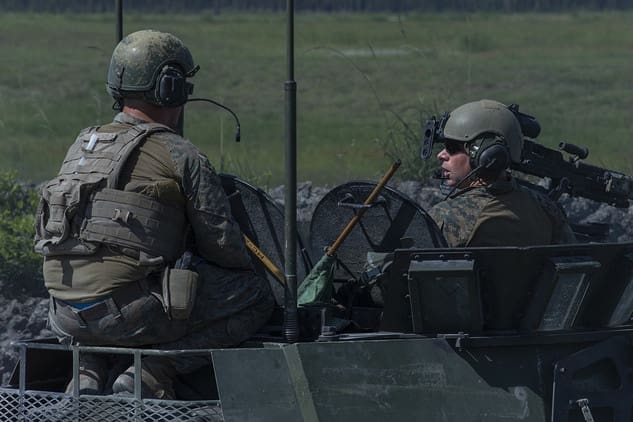
A Marine Corps Systems Command fire support device will be one of several communication technologies demonstrated at Island Marauder 2019.

The Target Handoff System version 2.0 is a lightweight, fire control system that employs commercial off-the-shelf, shock-resistant tablets to perform various targeting functions. The man-portable technology helps ascertain global positioning coordinates and call for fire support.

It allows Marines to use a single system to control close air support as well as artillery, mortars and naval surface fire support missions.

“THSv2 is the digital fire support Program of Record for the Marine Corps,” said Jeff Nebel, Fire Support Coordination team lead at MCSC. “It is a modular equipment suite that provides the warfighter with the capability to quickly and accurately identify and locate targets, and transmit that information digitally to fire support systems or weapons platforms.”

Fielded in fiscal year 2018, THSv2 enables the Marine Air-Ground Task Force to view an updated satellite image of the topography of a location. The technology provides a platform for receiving and manipulating video information. It can also be used as a controller for unmanned and autonomous systems.

“The system decreases the probability of incorrect data transfer of the initial fire request by providing a digital communication link between the observer and fires platform,” said Nebel.

The Corps has leveraged electronic tablets—including the MAGTF Common Handheld—to support the warfighter. Like MCH, THSv2 is software embedded into a tablet. However, MCH is primarily used for situational awareness on the battlefield, while THSv2 feeds information to Advanced Field Artillery Tactical Data System and other fire support and weapons platforms.

THSv2 is interoperable with several other technologies, including the AN/PRC-117 radio, Naval Fire Control System and the Common Laser Range Finder-Integrated Capability. At Island Marauder 2019, Marines will demonstrate the interoperability of THSv2 with other communication systems, including Networking on the Move.

Engineers and analysts for the THSv2 emphasize its significance in completing missions on the battlefield.

“The Target Handoff System version 2.0 is important to the warfighter because it speeds up the kill chain and reduces human error by not requiring targeting information to be passed via voice,” said William Bensch, an analyst for THSv2. “Everything is done digitally.”

Since its fielding, THSv2 has received positive feedback from Marines who participated in various live-fire events and other training. Nebel hopes annual hardware and software updates will make the technology even more useful to the warfighter.

 “It’s a piece of the latest and greatest in cutting edge technology,” said Bensch. “The system is robust enough to be expanded upon. We’re looking to provide the warfighter with the best equipment to engage the enemy faster and more efficiently—and THSv2 does that.”

Story Matt Gonzales, MCSC Office of Public Affairs and Communication | Marine Corps Systems Command

Photos by PFC Taylor W. Cooper

Army Research Looks at Pearls for Clues on Enhancing Lightweight Armor for Soldiers

Tuesday, September 17th, 2019

RESEARCH TRIANGLE PARK, N.C. — Round, smooth and iridescent, pearls are among the world’s most exquisite jewels; now, these gems are inspiring a U.S. Army research project to improve military armor.

By mimicking the outer coating of pearls (nacre, or as it’s more commonly known, mother of pearl), researchers at University at Buffalo, funded by the Army Research Office (ARO), created a lightweight plastic that is 14 times stronger and eight times lighter (less dense) than steel and ideal for absorbing the impact of bullets and other projectiles.


Photo Credit: Shutterstock

ARO is an element of the U.S. Army Combat Capabilities Development Command’s Army Research Laboratory.

The research findings are published in the journal ACS Applied Polymer Materials, and its earlier publication in J. Phys. Chem. Lett.

“The material is stiff, strong and tough,” said Dr. Shenqiang Ren, professor in the Department of Mechanical and Aerospace Engineering, a member of University of Buffalo’s RENEW Institute, and the paper’s lead author. “It could be applicable to vests, helmets and other types of body armor, as well as protective armor for ships, helicopters and other vehicles.”


Photo Credit: Courtesy University at Buffalo

The bulk of the material is a souped-up version of polyethylene (the most common plastic) called ultrahigh molecular weight polyethylene, or UHMWPE, which is used to make products like artificial hips and guitar picks.

When designing the UHMWPE, the researchers studied mother of pearl, which mollusks create by arranging a form of calcium carbonate into a structure that resembles interlocking bricks. Like mother of pearl, the researchers designed the material to have an extremely tough outer shell with a more flexible inner backing that’s capable of deforming and absorbing projectiles.

“Professor Ren’s work designing UHMWPE to dramatically improve impact strength may lead to new generations of lightweight armor that provide both protection and mobility for Soldiers,” said Dr. Evan Runnerstrom, program manager, materials design, ARO. “In contrast to steel or ceramic armor, UHMWPE could also be easier to cast or mold into complex shapes, providing versatile protection for Soldiers, vehicles, and other Army assets.”

This is what’s known as soft armor, in which soft yet tightly woven materials create what is essentially a very strong net capable of stopping bullets. KEVLAR is a well-known example.

The material the research team developed also has high thermal conductivity. This ability to rapidly dissipate heat further helps it to absorb the energy of bullets and other projectiles.

The team further experimented with the UHMWPE by adding silica nanoparticles, finding that tiny bits of the chemical could enhance the material’s properties and potentially create stronger armor.

“This work demonstrates that the right materials design approaches have the potential to make big impacts for Army technologies,” Runnerstrom said.

By U.S. Army CCDC Army Research Laboratory Public Affairs

Max Talk 37: Perspective on Tactical Training Videos: Clarity & Reality Check

Monday, September 16th, 2019

This is the thirty-seventh installment of ‘Max Talk Monday’ which shares select episodes from a series of instructional videos. Max Velocity Tactical (MVT) has established a reputation on the leading edge of tactical live fire and force on force training. MVT is dedicated to developing and training tactical excellence at the individual and team level.

This is a discussion, with video examples, of tactical training videos that MVT has posted. It attempts to give clarity to what is happening in the videos, how tactical training is run with training objectives for specific drills, along with the effects of range restrictions. Max addresses common internet complaints about what the students are doing in the videos, and provides perspective.

This is the fourth installment of ‘Max Talk Monday’ which shares select episodes from a series of instructional videos. Max Velocity Tactical (MVT) has established a reputation on the leading edge of tactical live fire and force on force training. MVT is dedicated to developing and training tactical excellence at the individual and team level.

Max is a tactical trainer and author, a lifelong professional soldier with extensive military experience. He served with British Special Operations Forces, both enlisted and as a commissioned officer; a graduate of the Royal Military Academy Sandhurst. Max served on numerous operational deployments, and also served as a recruit instructor. Max spent five years serving as a paramilitary contractor in both Iraq and Afghanistan; the latter two years working for the British Government in Helmand Province, Afghanistan.

Website: Max Velocity Tactical

YouTube: Max Velocity Tactical

Handheld Tablet Improves Situational Awareness for Marines

Sunday, September 15th, 2019

MARINE CORPS BASE QUANTICO, Va. —

During Island Marauder 2019, Marines will demonstrate the effectiveness of several Marine Corps Systems Command technologies—including a handheld system that helps the warfighter navigate on the battlefield.

The Marine Air-Ground Task Force Common Handheld is a tablet-based communication system that enhances situational awareness on the battlefield. The device enables dismounted Marines to leverage commercial smart devices to plot and share locations.

The device includes pre-installed tactical applications to eliminate the need to juggle multiple technologies for various capabilities, lightening the load for the warfighter.

“MCH is essentially an interactive tactical mapping program with a GPS navigation software and a chat functionality,” said Maj. Richard Beeson, MCH project officer at MCSC. “The technology feeds the battalion’s current operational picture with real-time friendly force positions and allows this battlespace awareness to be shared down to the squad-leader level.”

The tablet feeds the information into Networking On-the-Move, while simultaneously transmitting it to the Combat Operations Center, where command leaders can use the information to make critical battlefield decisions.

Through MCH, commanders can disseminate orders, graphics and digital data, providing Marines the ability to visualize the commander’s intent and scheme of maneuver.

“It helps Marines to share enemy locations in real-time in an easily understood digital, moving map format,” added Beeson.

MCH enables warfighters to pass messages to one another in real-time—similar to text messaging—allowing the commander to make faster, more effective, decisions. It also assists the warfighter in deciphering whether an explosion was caused by enemy or friendly fire.

“MCH is a Command and Control situational awareness system that gives the squad leader and platoon commander a better understanding of the battlefield to make tactical decisions,” said Justin Meidinger, an engineer for MCH. “This system helps them have a better idea of what is going on around them.”

Earlier this year, the Corps fielded an early release version of the system to Marines. In fiscal year 2020, the warfighter will receive an updated version of the MCH that allows Marines to communicate with one another through several additional joint communication systems.

Later this month at Island Marauder, Marines will demonstrate the effectiveness and interoperability of MCH by linking it with other satellite technologies. The risk-assessment evaluation is intended to reduce miscommunication among Marines who use communication technologies. Beeson raved about the benefits of MCH and how the system supports the warfighter.

“MCH allows for communication, collaboration and coordinating among units,” said Beeson. “It helps everyone to be on same page. MCH increases the digital lethality of Marine infantry squads while reducing the risk of friendly fire.”


By Matt Gonzales, MCSC Office of Public Affairs and Communication | Marine Corps Systems Command

SCUBAPRO Sunday – The SeaBees

Sunday, September 15th, 2019

On September 1, 1942, the first Seabee unit to serve in a combat area, the Sixth Naval Construction Battalion (SeaBees), arrives on Guadalcanal.

I am not going to tell the story as there is a movie (with John Wayne one of the seven he dies in) and I posting a link at the bottom of an excellent article about them. What I am going to say is SeaBees are some of the hardest working people you will ever find. I would rather have 1 SeaBee that 5 other people. They have made almost all the camps I have been in since the first gulf war in 91 thru Iraq in the 2000s and they never stop working on them to making them better. They build they fight; (they can’t read or write) (that was a joke) you tell them you need something, and they will find it or make it. Indeed some of the unsung heroes of the military.

www.seabeesmuseum.com/seabee-history

archive.org/details/FightingSeabees44