Danner Reckoning GTX

Archive for the ‘Guest Post’ Category

Brigantes Presents – High Angled Solutions – The Silva Expedition 4 Militaire VS the Expedition 5

Wednesday, June 19th, 2019

With the award-winning Expedition 4 Militaire, Silva have ensured that many of the necessary features needed for a military compass have been met, hence its popularity and use by various armed forces across the globe, it is a compass designed for those in the defence forces who use Mils for navigation and triangulation.

With a magnifier the Expedition ensures you understand every detail of topographic terrain displayed on a map. Glow in the dark markings on the North display and on the direction of travel allow the compass to be used in low light conditions. The Expedition 4 Militaire additionally features a hole for marking positions on a map with improved precision.

With its luminous point for night navigation, magnifying lens and weight of only 36g, the compass is an ideal solution for quick an accurate compass work.

However, Silva have a successor to the range, the Expedition 5 (6400/360). Following feedback, from the Royal Marines, the Expedition 5 has increased robustness, functionality and low light visibility. Robustness is increased by a thicker base plate and a sealed capsule, so it is now far less likely that you will get bubbles. Functionality has improved with the introduction of both mils and degrees, a better bezel provides easier use with gloves, all of the numbering on the bezel illuminates, following exposure to light, and it has variable declination as well as an inclinometer. In addition it comes with a lanyard that doubles up as a measuring scale.

The Militaire has been around for several decades and has now been replaced by a more capable and robust compass which is focused on the needs on the modern user.

For more information contact international@brigantes.com

For UK sales contact warrior@brigantes.com

Max Talk 26: Advanced Patrolling 2: Multiple Enemy Firing Points

Monday, June 17th, 2019

This is the twenty sixth installment of ‘Max Talk Monday’ which shares select episodes from a series of instructional videos. Max Velocity Tactical (MVT) has established a reputation on the leading edge of tactical live fire and force on force training. MVT is dedicated to developing and training tactical excellence at the individual and team level.

A follow up video to the previous ‘Advanced Patrol Techniques: Satellite Patrolling.’ This time, examining and running a sand table scenario for multiple enemy firing points. Utilizing a sand table model with figurines, as a method of introduction to explain these advanced patrolling techniques.

Detailed explanations can be found in the MVT Tactical Manual: Small Unit Tactics.

Max is a tactical trainer and author, a lifelong professional soldier with extensive military experience. He served with British Special Operations Forces, both enlisted and as a commissioned officer; a graduate of the Royal Military Academy Sandhurst. Max served on numerous operational deployments, and also served as a recruit instructor. Max spent five years serving as a paramilitary contractor in both Iraq and Afghanistan; the latter two years working for the British Government in Helmand Province, Afghanistan.

Website: Max Velocity Tactical

YouTube: Max Velocity Tactical

Excellence in Tactical Training.

SCUBAPRO Sunday – Self Adjusting Fin Straps

Sunday, June 16th, 2019

Self-adjusting fin straps are one of the best ways to don and doff your fins. It also makes it easier to use different size booties. Steel spring straps are a relatively new product for fins. It was invented by cave divers that didn’t want their rubber straps breaking on them in the middle of a cave. So, they took screen door springs and made fin straps out of them. Typical rubber straps have a good chance of breaking at some point. If you are lucky, it will happen as you are putting them on before a dive, not in the middle of one. While you should always try and carry a spare strap on you, replacing a strap can be a pain in the middle of a dive. 

The spring strap helps avoid most of these problems. Available for many open heel fins, spring straps permanently mount to the fin. Furthermore, spring straps typically attach using rust-resistant metal hardware. SCUBAPRO Steel Spring Straps are available for SCUBAPRO Jet fins, Twin Jet Max, Veloce fins, and the Seawing Nova fins. They are made with High-grade marine steel. These straps can replace the traditional fin strap with the added benefits of being easier to don and doff, and they will compensate at depth for the pressure underwater.  The flexible nature of the spring strap tightens as you descend to compensate for the crush on your boots, meaning your fins stay on at the exact tension you set them to at the surface.


Spring straps are strong springs with a rubber or nylon heel cover for comfort. Instead of having to adjust the tension every time you put them on like with traditional straps, you simply stretch the spring over your heel.  


This decreases your time and energy spent putting on and taking off your fins before and after a dive. Several models of fins now come with spring straps pre-installed, but they can also be added to many fin models.

The other type of self-adjusting straps is made from quality marine-grade bungee designed for years of reliable use. Marine grade bungee is design and construction, making it ideal for prolonged exposure to moisture, sunlight/UV radiation, and the general wear and tear that fins regularly go through. A denier Dacron polyester cover is thick and long-lasting, repelling water and resisting abrasion better than nylon. Made from a top-quality first extruded latex rubber, this bungee has a consistent 100% stretch and high modulus that won’t lose its elasticity as many others do. Bungee straps are depth compensating as they compress when your neoprene boots get thinner due to increased water pressure. Like the steel spring, the bungee is self-adjusting at depth. Upon ascent, they decompress keeping fin straps comfortable throughout the dive. Straps have a large rubber finger loop to aid in donning and doffing. Marine bungee is highly reliable and has a very low percentage of breaking. All this being said, I know you can break it if you “test it” to try and prove me wrong.


1st SFAB Soldiers Hone Close Combat Skills on Army’s Newest Virtual Trainer

Sunday, June 16th, 2019

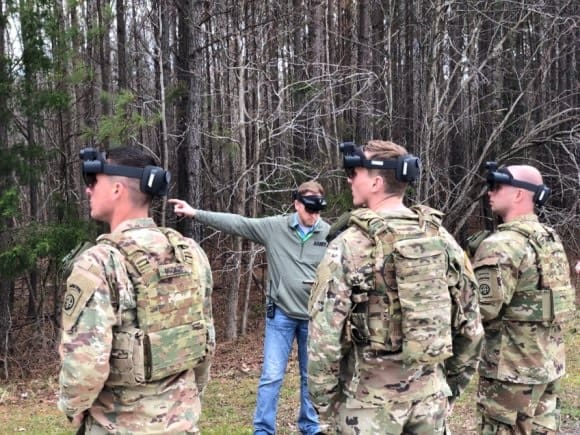
ORLANDO, Fla. — A combat advisor team from the 1st Security Force Assistance Brigade was the first unit of its type to train for an upcoming deployment using one of the Army’s recently-fielded virtual trainers at Fort Benning, Georgia.

The Soldiers of Combat Advisor Team 1133 conducted key-leader engagement and insider-threat training in early June using the Squad Advanced Marksmanship Training system to help them prepare for their overseas combat advisory role.

The SAMT provides a realistic training environment for Soldiers, fire teams and squads to hone their skills on close combat tasks, enabling them to conduct critical tasks repetitively to improve target identification, decision-making, and shooting skills.

“With SAMT, you can get as many reps as you want with minimal cost to your logistics,” said Sgt. 1st Class Silvestre Marrufo, team non-commissioned officer in charge, Combat Advisor Team 1133, 1st Battalion, 1st SFAB. “Day or night, rain or snow, you can come in here and do any kind of training. It’s whatever you and the technician can think of, so it’s pretty beneficial.”

A combination of new and improved technologies increases the realism of the training, said Tim Sayers, a capability developer for the Army’s Synthetic Training Environment. The replica M4 rifles and M9 and Glock 19 pistols are designed to approximate the form, fit and function of the weapons Soldiers use every day, he said. Magazines filled with compressed air actions the bolts and produces a recoil effect without requiring external cables.

Soldiers say they like the improved realism.

“This system allows us to do a lot more. I could have my whole team in here instead of having half of them serve as actors,” said Capt. Karis Farrrar, team leader for Combat Advisor Team 1133, 1st Battalion, 1st SFAB. “All the weapons are bluetooth, so it allows the Soldiers to actually work with their equipment. They’re not tethered to anything — it feels like you’re in a room.”

The system offers a myriad of drills that allow Soldiers to practice advanced marksmanship skills such as firing with non-dominant hand and firing on the move as they transition between rifle and sidearm, Sayers said. This type of training is critical because marksmanship is a perishable skill.

“The SAMT really trains Soldiers in decision-making,” Sayers said. “They have to quickly identify targets and decide whether to engage while being consistently aware of their surroundings.”

Fort Benning is one of nine Army sites that now boast the SAMT. The capability was installed first in March at Fort Drum, New York, with additional fieldings completed at other major installations including Fort Polk, Louisiana; Fort Riley, Kansas; Fort Hood, Texas; and Fort Campbell, Kentucky.

By fall, the trainer will be operational at more than 20 locations in the United States, Sayers said.

The SAMT was developed by the Synthetic Training Environment Cross Functional Team (located in Orlando, Florida) and the Close Combat Lethality Task Force, in an effort to address the erosion of close-combat capability skills identified in the fiscal year 2018 National Defense Strategy.

Insights gained from SAMT usage will inform development of a future immersive marksmanship capability known as the Soldier/Squad Virtual Trainer, Sayers added.

For now, the SAMT is helping 1st SFAB Soldiers at Fort Benning better prepare for potential deployment later this year.

“We’ve talked to the operators and they’ve started working on a couple of different scenarios…all things that will add to the stress a little bit while you’re still picking up on the triggers while having a conversation with the principle,” said Staff Sgt. James Elliott, Senior Support Advisor, Combat Advisor Team 1133.

By Patti Bielling, Synthetic Training Environment CFT

Army Accelerates Delivery of Directed Energy, Hypersonic Weapon Prototypes

Saturday, June 15th, 2019

WASHINGTON — The Army is accelerating its efforts to field a directed-energy prototype system by fiscal year 2022, and hypersonic weapon prototype by fiscal 2023.

For starters, the Army is fast-tracking the development and procurement of the Multi-Mission High Energy Laser, or MMHEL system, said Lt. Gen L. Neil Thurgood, director of hypersonics, directed energy, space, and rapid acquisition.

The MMHEL is a 50-kilowatt laser retrofit to a modified Stryker vehicle, designed to bolster the Army’s maneuver short-range air defense capabilities, according to officials with the Army Rapid Capabilities and Critical Technologies Office.

The Army is slated to field a four-vehicle battery by late fiscal 2022, Thurgood said. The new system was meant to be maneuverable, while protecting brigade combat teams from unmanned aerial systems, rotary-wing aircraft, and rockets, artillery, and mortars.

Further, the Army will consolidate efforts with the other services and agencies to help improve directed-energy technology, the general added. While the Army is executing a demonstration of 100 kW high-energy laser technology on a larger vehicle platform, it is working with partners to exceed those power levels.

HYPERSONIC WEAPONS

In addition to the MMHEL, the Army is expected to field a four-vehicle battery of long-range hypersonic weapon systems the following fiscal year.

Four modified heavy expanded mobility tactical trucks, or HEMTTs, will be equipped with a launcher. Each vehicle will carry two hypersonic weapon systems — totaling eight prototype rounds, Thurgood said.

“The word hypersonic has become synonymous with a particular type of missile,” he explained. “Generally, hypersonics means a missile that flies greater than Mach 5 … that is not on ballistic trajectory and maneuvers.”

The hypersonic system will also rely on the Advanced Field Artillery Tactical Data System 7.0, which is currently available to artillerymen, for command and control.

“Within the Army’s modernization plan, there is multi-domain, and there is the Multi-Domain Task Force. Part of that task force [includes] a strategic-fires battalion and in that strategic fires battalion [will be] this [hypersonic] weapons platform,” Thurgood said.

“It is not long-range artillery. It’s a strategic weapon that will be used … for strategic outcomes,” he added.

RESIDUAL COMBAT CAPABILITY

Overall, the MMHEL and hypersonic systems will both move into the hands of Soldiers as an experimental prototype with a residual combat capability, Thurgood said.

“When I say experimental prototype with residual combat capability, and as we build the battery of hypersonics … that unit will have a combat capability,” Thurgood said. “Those eight rounds are for them to use in combat if the nation decides they want to apply that in a combat scenario. The same [applies] for directed energy.”

In addition to providing an immediate combat capability, Soldiers will have an opportunity to learn the new equipment and understand the “tactics, techniques, and procedures” required to use each system during combat, the general added.

Further, the Army will also receive valuable feedback to help shape potential broader production of each system after they transition to a program of record.

The Army has already initiated the contract process to develop the prototype hypersonic systems. Senior leaders plan to award vendors by August, Thurgood said.

With both systems, “what we’re trying to create [is an] an opportunity for a decision, based on actual use by a Soldier,” he said. “Does this thing do … what we needed it to do? Do we want to continue and make it better, or do we want to have other choices?”

By Devon L. Suits, Army News Service

Army Announces Expert Soldier Badge

Friday, June 14th, 2019

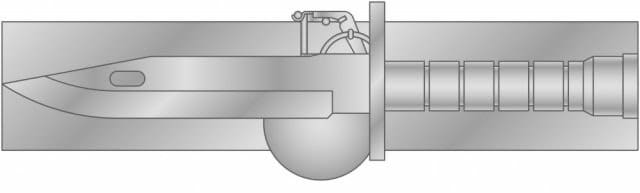
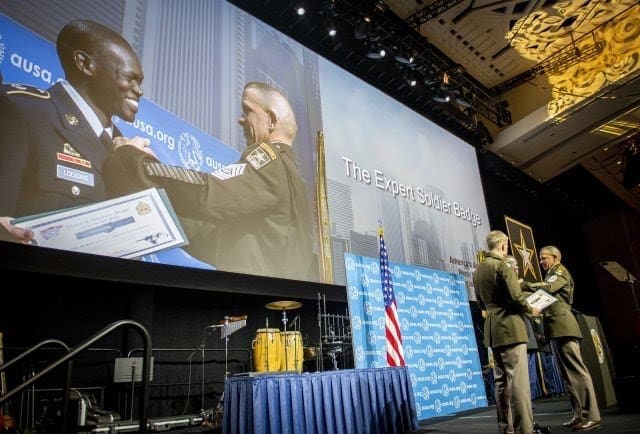
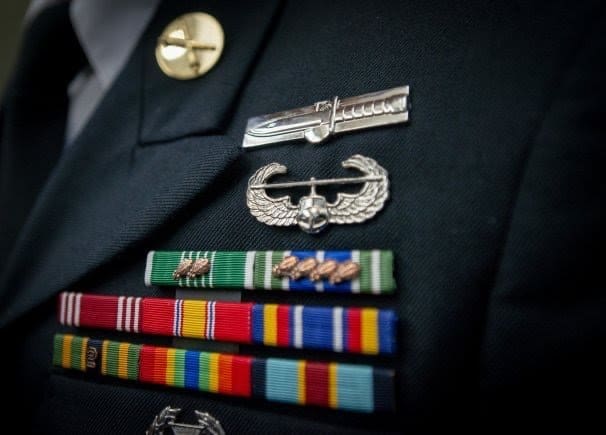
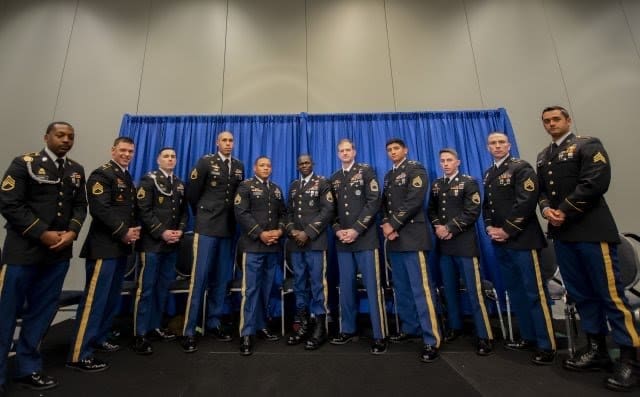
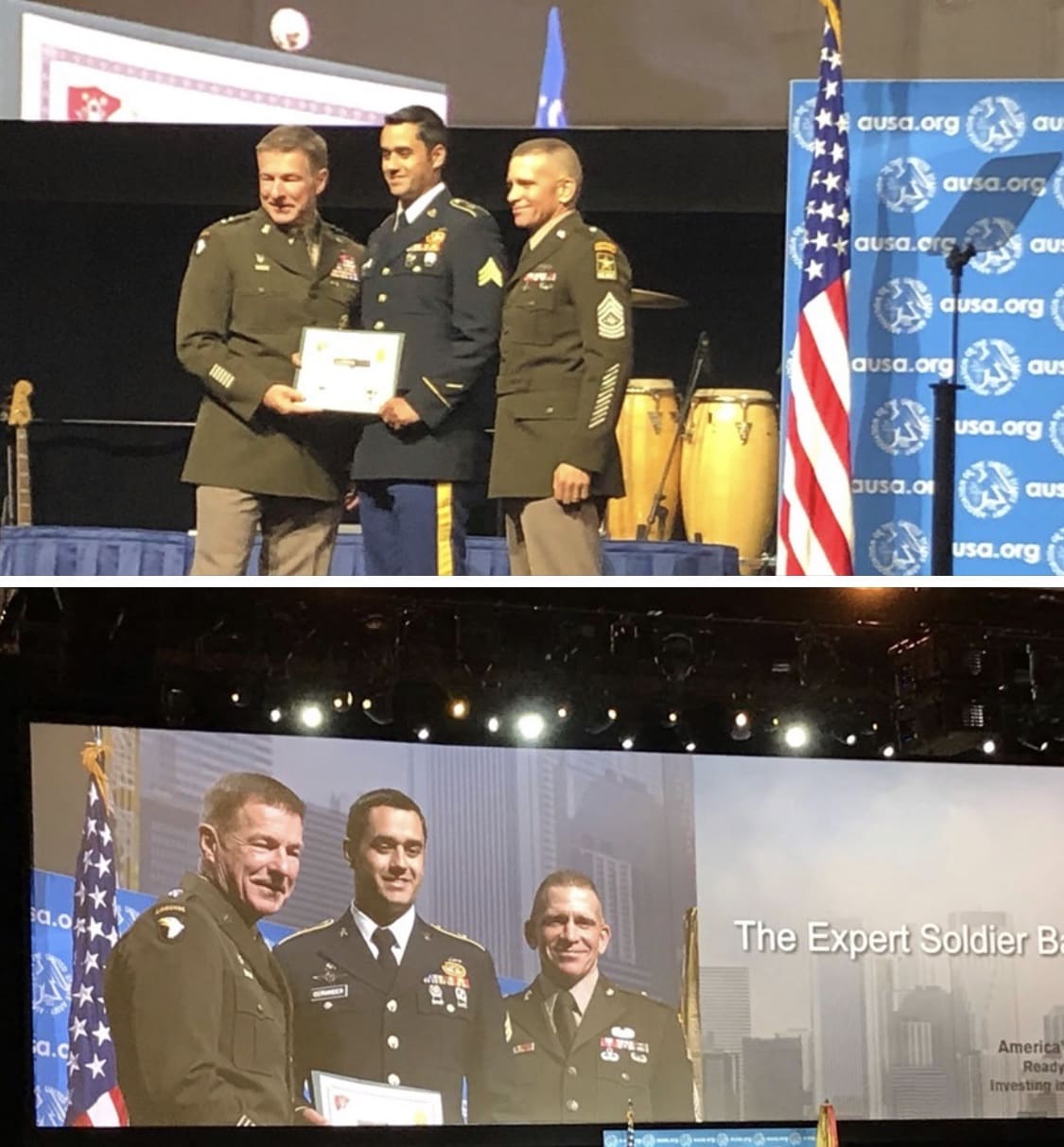
In conjunction with the U.S. Army’s 244th Birthday, the Army announced a new proficiency badge today, called the Expert Soldier Badge.

The ESB is designed to improve lethality, recognize excellence in Solder combat skills and increase individual, unit and overall Army readiness. The ESB is the equivalent of the Expert Infantry Badge and Expert Field Medical Badge but for all other military occupational specialties in the Army. Commanders will soon be able to use the badge to recognize Soldiers who attain excellence in physical fitness and marksmanship and a high standard of expertise in land navigation and performing warfighting tasks.

“The ESB will be an important component of increasing Soldier lethality and overall readiness to help achieve the vision for the Army of 2028,” said Sgt. Maj. of the Army Daniel A. Dailey. “The EIB and EFMB have supported the Infantry and medical fields with distinction, ensuring their Soldiers maintain critical skills, while recognizing the very best among them. The ESB will achieve the same for the rest of the Army.”

The Army will implement the ESB in early fiscal year 2020, with the standards and regulation to be finalized by September 2019. Earning the badge will test a Soldier’s proficiency in physical fitness, marksmanship, land navigation and other critical skills, and demonstrates a mastery of the art of soldiering.

The ESB training and testing will be extremely challenging, mission-focused, and conducted under realistic conditions. Those in the Infantry, Special Forces, and Medical career management fields are not eligible for the ESB.

“Like the EIB and EFMB, the ESB test will be a superb venue for individual training in units and the badge will recognize a Soldier’s mastery,” said Gen. Stephen J. Townsend, commanding general, U.S. Army Training and Doctrine Command. “And it will be just as tough to earn as the EIB and EFMB because the Soldier will have to demonstrate fitness, weapons proficiency, navigation and warrior task skill at the expert level.”

Standards for the ESB are still being refined but they will not be adjusted for age, gender or any other criteria. The test will share about 80 percent of the same warrior tasks as the EIB and EFMB, and is designed so it can be administered alongside and together with them. Brigade commanders will decide if and when to schedule the test so it best fits their training schedules.

Under the ESB test process, Soldiers will demonstrate mastery of individual skills through different evaluations over a five-day period. The standards for the ESB place candidates under varying degrees of stress that test their physical and mental abilities as they execute critical tasks to an established set of standards.

To qualify to take the ESB test, Soldiers must pass the Army Combat Fitness Test (ACFT), qualify as “Expert” on the M4/M16 rifle and be recommended by their chain of command.

The test itself consists of another ACFT, day and night land navigation, individual testing stations, and culminates with a 12-mile foot march. ESB test stations include warrior tasks laid out in the ESB regulation and may also include five additional tasks selected by the brigade commander from the unit’s mission essential task list. Example tasks include:

? React to an Improvised Explosive Device (IED) Attack

? Construct Individual Fighting Positions

? Search an Individual in a Tactical Environment

? Employ Progressive Levels of Individual Force

? Mark CBRN-Contaminated Areas

“We worked tirelessly on the ESB to ensure we got it right,” said Command Sgt. Maj. Edward W. Mitchell, Center for Initial Military Training Command. “We wanted to provide commanders the opportunity to recognize their top Soldiers who have met the highest standard of performance in physical fitness, warfighting tasks and readiness.”


Each ESB task will be evaluated on a “go” or “no-go” basis. Pass rates during the ESB pilot testing were similar to that of the EIB and EFMB.

“The ESB is all about increasing the readiness of our Army. It will provide commanders outside the Infantry, Special Forces and medical communities the opportunity to recognize Soldiers who best demonstrate excellence in their fields,” said Command Sgt. Maj. Timothy A. Guden, TRADOC Command Sergeant Major.

“This is not a badge to award so that the entire Army now has an ‘expert’ badge to wear. As it is now, not every Infantryman or Special Forces Soldier earns the EIB and not every medic earns the EFMB. Keeping with the same mindset, this is a badge to award to those who truly deserve recognition as an expert in their career field; for those who have achieved a high level of competence and excellence in their profession.”

By U.S. Army Training and Doctrine Command Public Affairs

So You Want to be an SFAB Advisor? Here’s How…

Friday, June 14th, 2019

FORT BRAGG, N.C. — Soldiers who believe they have what it takes to join one of the six Security Force Assistance Brigades (SFABs) must first pass the 3-day Security Force Assistance Command Assessment and Selection Course that’s designed to ensure they meet the standards of a SFAB Advisor.

Assessment and Selection Course candidates undergo a process designed to test their mental, physical and teamwork skills to ensure they possess the attributes that the SFAB teams are looking for in an Advisor.

Some of these attributes include discipline, sound judgment, moral conduct, and the ability to remain calm and collected while seizing the initiative during mission uncertainty.

“What we are looking for is someone who is physically fit, works well in a team, who is intelligent, and comfortable making decisions while operating with a certain level of ambiguity,” said Sgt. Maj. Robert George, SFAC Assessment and Selection Sergeant Major.

The assessment process is something new candidates are curious about once they decide to join the SFABs.

“I heard about the SFABs while I was deployed in Afghanistan and when I came back some senior NCOs I worked with had joined and let us know more about them,” said Sgt. Skyler Lewis, SFAC Assessment Candidate and Signal Support Systems Specialist from 1st Battalion, 41st Infantry Regiment, 2nd Infantry Brigade Combat Team, 4th Infantry Division. “I looked more into it and then decided that, yes, this is for me.”

The assessment process starts with in-processing on day zero and then moves onto day one. Day one starts the non-stop process that lasts through day two. It begins with the candidates conducting an APFT, team events, a leader reaction course, a warrior skills test, MOS proficiency and ethical dilemma tests, peer evaluations, a subject matter expert interview, and culminates with a challenging foot march.

“They briefed us on what it was going to be like when we got here and it was a little different than I thought it would be and a lot harder – but it was worth it – I thought it was a good process and I had to stay focused and push hard through some of the events,” said Lewis.

The final portion of the assessment process is the selection board on day three, after which, the candidates find out how they did and if they were selected. If selected, they receive information about the reporting process and continue their SFAB Advisor training there.

The opportunity to continue to training, mentoring and advising others is one of the reasons Fort Benning Drill Sergeant Joshua Tobin felt he needed to go through the assessment course and become a SFAB Advisor.

“I have been training and mentoring Soldiers for the past 12 years and really getting more into it with the new privates at Fort Benning for the last 33 months. I feel that this opportunity is the same, but bigger, you are still training, mentoring, and advising, but this time it’s with our partners,” said Staff Sgt. Joshua Tobin, SFAC Assessment Candidate with 2nd Squadron, 15th Cavalry Regiment, 194th Armored Brigade.

The assessment and selection process is still relatively new and constantly adapts to the current needs of the SFABs and will continue to change and facilitate any of their future needs.

“How we assess the Soldiers has changed since I got here almost a year ago. We have changed and added events that better identify the attributes that make a good Military Advisor,” said George. “We will continue to change things to better identify candidates who will make the best military Advisors.”

The SFAB Recruiting and Retention Team continues to look for Soldiers who are interested in becoming SFAB Advisors in one of the five active-duty and one Army National Guard SFABs. For more information and details about joining, visit the SFAB Recruiting and Retention Team website at www.goarmy.com/sfab or contact them at one of the following: Officers (910) 570-5159 and Enlisted (910) 570-9975/5131 or email them at usarmy.bragg.forscom.mbx.g1-ag-sfab@mail.mil.

By SFC Mark Albright, Security Force Assistance Command

Shooter Symposium Wrap Up – Presented by SureFire

Thursday, June 13th, 2019

SureFire is the title sponsor of the finest firearms training event in the world, The Shooter Symposium. The Shooter Symposium is a one-of-a-kind training event in which 11 of the world’s top firearms instructors congregate to provide training over a three day period for 100+ likeminded attendees. Students will have the opportunity to train with up to seven of the instructors over the course of the weekend. Courses include handgun, rifle, low-light, night vision, medical and force-on-force combatives. On top of phenomenal training, the first day hosts a vendor show and live-fire range day along with several competitions where students will have a chance to win tens of thousands of dollars worth of prizes. The prize table will include SureFire suppressors, WeaponLights, holsters and many more tactical products from supporting brands. The 2019 instructor roster includes: Robert Vogel, Mike Pannone, Craig Douglas, Aaron Cowan, Dan Brokos, Jared Reston, Kerry Davis, Bill Blowers, Steve Fisher, Chuck Pressburg, Scott Jedlinski and Kyle Defoor has just signed on for The Shooter Symposium 2020! Learn more at:  www.shootersymposium.com The Ranch TX www.theranchtx.net


Instructor list:

Aaron Cowan of Sage Dynamics

Bill Blowers of Tap-Rack Tactical

Chuck Pressburg of Presscheck Consulting

Craig Douglas of ShivWorks

Dan Brokos of Lead Faucet Tactical

Jared Reston of Reston Group Critical Solutions

Kyle Defoor of Defoor Proformance Shooting

Kerry Davis of Dark Angel Medical

Mike Pannone of CTT-Solutions

Robert Vogel of Vogel Dynamics

Steve Fisher of Sentinel Concepts

Scott Jedlinski of Modern Samurai Project