SIG SAUER - Never Settle

Archive for the ‘Guest Post’ Category

5th Quartermaster Brings Holiday Cheer with Operation Toy Drop

Tuesday, December 25th, 2018

ALZEY, Germany — U.S., NATO ally and partner paratroopers participated in the 5th Quartermaster Theater Aerial Delivery Company’s Operation Toy Drop Dec. 11-14.

Capt. Rizzoli Elias, company commander, the 5th Quartermaster Theater Aerial Delivery Company, 16th Special Troops Battalion, 16th Sustainment Brigade, gives a German child a stuffed animal as part of Operation Toy Drop at Alzey, Germany Dec. 13. Operation Toy Drop is an annual multi-national training event designed to strengthen relations with the local community and develop interoperability.

Operation Toy Drop is an annual multi-national training event. It entails sharing airborne operations, tactics, techniques and procedures, strengthening relationships with local communities and with NATO allies and partners as well as developing interoperability.

“It’s so much fun seeing other nations get in on our training and us to get on their training to see how they operate with these airborne operations, to see how we operate,” said Sgt. Kyle D. Shields, a parachute rigger with the 5th Quartermaster, Theater Aerial Delivery Company, 16th Special Troops Battalion, 16th Sustainment Brigade.

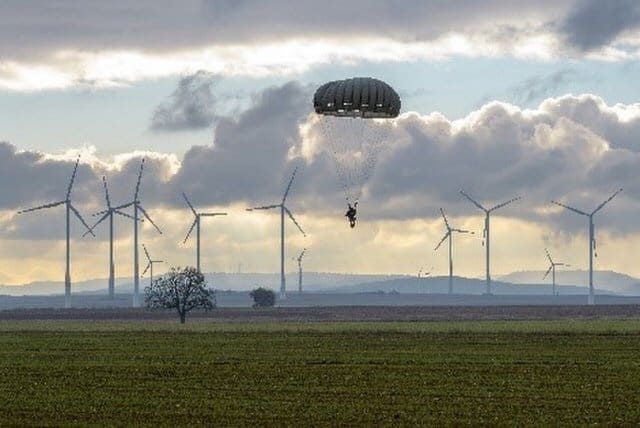
A paratrooper with an open parachute descends over Alzey Drop Zone during Operation Toy Drop in Alzey, Germany, Dec. 13. Operation Toy Drop is an annual multi-national training event designed to strengthen relations and develop interoperability.

“All of us use different parachute systems across the different militaries, so it’s just trying to get everybody synced up in one parachute system and make sure everybody understands that every system has a risk factor and different ways you have to steer it, fly it and turn it,” Shields said.

Holiday cheer played a major role during Operation Toy Drop.

Part of this cheer was Santa Claus, Mrs. Claus, and elves jumping out of an airplane and then giving toys to children from the Kaiserslautern area. Both U.S. and German children smiled and laughed with excitement as they received presents from members of the 5th Quartermaster, Theater Aerial Delivery Company, who dressed up as Christmas characters during Operation Toy Drop. The toys given to the children were donated by paratroopers participating in this event.

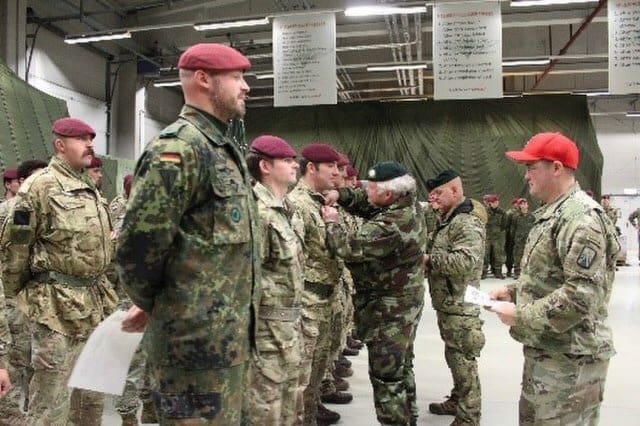
U.S., NATO ally, and partner service members receive Irish jump wings during a wing ceremony exchange hosted by the 5th Quartermaster Theater Aerial Delivery Company, at Rhine Ordnance Barracks, Kaiserslautern, Germany Dec. 14. The paratroopers earned their jump wings while participating in Operation Toy Drop, an annual multi-national training event designed to strengthen relations with the local community and develop interoperability.

“It’s a huge role for us to give back, especially to the local community within Germany, to all these kids and the American community that may not get as many presents as we do on Christmas,” said Sgt. Joshua A. Parkinson, an aerial delivery supervisor with the 5th Quartermaster, Theater Aerial Delivery Company. “For us to be able to do something for them while enjoying it together, then to get to watch their faces at the drop zone as Santa comes around and hands them toys from a bundle that dropped down from the sky … it’s really an indescribable feeling, but it’s something that every single jumper out here, whether they’re American or not, absolutely loves.”

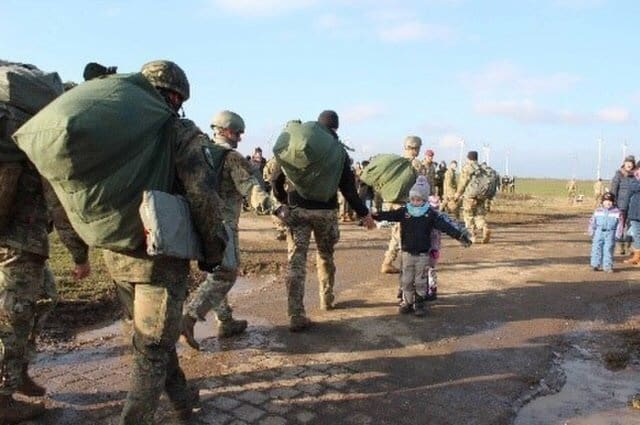
Paratroopers from U.S., NATO ally and partner militaries “high five” children at Alzey Drop Zone during Operation Toy Drop at Alzey, Germany Dec. 13. During this event U.S. and German children received toys as part of Operation Toy Drop, an annual multi-national training event designed to strengthen relations with the local community and develop interoperability.

Operation Toy Drop concluded with a wing exchange ceremony, in which paratroopers that jumped with a foreign nation, would get a certificate with that country’s wings.

“For us being able to give them American jump wings and from us receiving any number of the number of countries that are here, even the British are giving out jump wings for the first time in years, for me that is absolutely huge,” Parkinson said. “It builds a real sense of these are the people to my left and right that I can count on. We go downrange, we go to a firefight these are the people we’ll be working with and for me that is absolutely everything.”

According to Shields, one of the biggest takeaways is looking forward to future operations with the NATO allies.

“We established a lot of good connections and contacts here while we were doing Operation Toy Drop,” Shields said. “That allows us to communicate with the other armies that are around us so that we can plan additional training exercises and other tactics teaching.”

By SSG Sinthia Rosario

Army Wins Packard Award for Rapid Delivery of Electronic Warfare Prototypes

Monday, December 24th, 2018

ABERDEEN PROVING GROUND, Md. — For their efforts in answering an Operational Needs Statement from U.S. Army Europe and delivering first-of-a-kind electronic warfare prototypes for brigade and below, the Army Rapid Capabilities Office and Project Manager Electronic Warfare & Cyber have earned the 2018 David Packard Award for Acquisition Excellence.

The award, announced Dec. 7 by Hon. Ellen Lord, Under Secretary of Defense for Acquisition and Sustainment, is the Department of Defense’s most prestigious acquisition team award and is given annually to a few select recipients across the armed services and defense agencies. It recognizes organizations with significant contributions demonstrating exemplary innovation and best acquisition practices.

“This award is a remarkable honor and we are proud of the unique partnership that was formed between the two organizations to close a strategic capability gap against a rapidly modernizing adversary,” said Dr. Bruce Jette, Army Acquisition Executive. “Their approach, working with operational units every step of the way, enabled the Army to move much faster than traditional acquisition methods and serves as a model for other Army rapid acquisition efforts.”

In addition to the Army Rapid Capabilities Office (RCO) and Project Manager Electronic Warfare & Cyber (PM EW&C), other winners of the 2018 David Packard award were the Air Force’s Enhanced Polar System Team, the Special Operations Command’s Stand-Off Precision Guided Munitions Team, and the Missile Defense Agency’s Spacebased Kill Assessment Program Management Office.

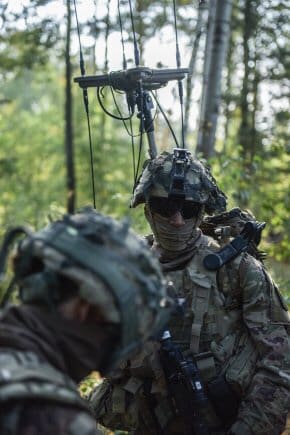
Soldiers with CEWI Platoon, Delta Company, 54th Brigade Engineer Battalion, provide actionable signal intelligence to help the 173rd Airborne Brigade during Saber Junction 18 in Germany. Soldiers with the 173rd were among the first units to receive the new electronic warfare prototype systems provided by the Army Rapid Capabilities Office and Project Manager Electronic Warfare & Cyber in response to an Operational Needs Statement.

The Army award was based on the delivery of new equipment to the 2nd Cavalry Regiment, 173rd Airborne Brigade, and the 1st and 2nd Armored Brigades, 1st Infantry Division. The prototypes, fielded earlier this year, enable Soldiers to implement electronic protection for their own formations, detect and understand enemy activity in the electromagnetic spectrum, and disrupt adversaries through electronic attack effects.

This freedom of action is essential to ground maneuver operations, since the majority of equipment, vehicles and air support Soldiers rely on to complete their missions either emit, receive on, are connected into, or are otherwise networked back into the electromagnetic spectrum or cyber domain.

In Europe, where Russian aggression, tactics and capabilities have demonstrated the ability to use the electromagnetic spectrum to affect military operations, the impact of the prototype capabilities is significant.

“This award is a testament to the outstanding work of the men and women of both PM EW&C as well as our RCO partners,” said Maj. Gen. Kirk Vollmecke, program executive officer for Intelligence, Electronic Warfare & Sensors. “We are extremely proud to have piloted this effort as it afforded the Army an opportunity to accelerate its EW capabilities and close the capability gaps with our near peers. The implementation of agile, adaptive acquisition processes are imperative as we balance the immediate needs of our men and women in the field today along with future enduring requirements.”

The team’s acquisition approach — which adapted existing systems and incorporated emerging technologies to provide new electronic warfare effects and meet the emerging threat — represented a fundamental and innovative shift in how the Army delivers a new capability. In teaming up, the organizations created a phased prototyping, experimentation and fielding approach that incorporated Soldier feedback throughout, infused new technology as it became available, and quickly delivered incremental upgrades to reduce operational risk while also informing the program of record capabilities currently under development.

It also enabled the Army to move faster than traditional acquisition methods have allowed in the past, delivering needed capabilities into the hands of Soldiers approximately a year after they were first envisioned.

“In delivering these electronic warfare systems to Europe in less than 12 months, it demonstrated how the Army can go fast, streamline processes and meet the needs of a combatant commander,” said Col. John Eggert, acting executive director of the Army RCO. “What enabled this success was the total team effort between the RCO and PM EW&C on iterative prototyping that was informed early and often by Soldier advice.”

The systems, which include mounted, dismounted and command and control systems, are prototypes that serve as an interim solution until the Army’s enduring EW programs of record can be fielded.

Winners will receive the award at a Department of Defense ceremony held at the Pentagon in February.

By U.S. Army Public Affairs

SCUBAPRO Sunday – Gloves

Sunday, December 23rd, 2018

Having the right pair of gloves will make your life so much better when you are working in the water. Whether you are doing a two-hour dive in Norway or you are on a zodiac for a long-range OTB. The right pair of gloves will depend on what you are doing, for how long you are doing it, and the water temperature/ weather. If you need to use your hands a lot during a dive like pushing button on a Navigation board or be able to use your hand right after the dive, like climbing a ladder, shooting a gun. Your tolerance to cold will be the main factors to take into account when choosing the thickness of the gloves. The colder the water, the thicker you will need to go.

1-3mm: water between 60- 75 ° F (16-24 ° C)

5-7mm: water between 45-60° F (8-16 ° C)

Here are the two main things to think about when choosing a pair of gloves for military use.

• Freedom of movement with a minimum thickness that allows you the thermal comfort you will need.

• What is on the palm and fingers? A glove that can be used to grab and hold medal and plastic.

When you are trying them on try and grab stuff around the store.

Dive gloves come in a variety of thickness levels between 0.5mm and 7mm. A good pair of 1.5mm Tropical gloves that have a leather palm is a good start. Some Tactical gear companies are making gloves designed for being in a wet environment that are also good for diving. The WETWORX gloves from S&S Precision come in two styles. One is thinner for warmer water and one is a little thinker (2mm) for cold. I know they have put a lot of work into them and they are nice gloves. As more units get back into the water, I am hoping you can get more companies like S&S that will make gear for use in the water.  That said S&S makes all their stuff so it can be used in the water as they come from a water background. I like gloves that can hold on to medal like if you have to climb a caving ladder or hold onto a gun. Being able to hold plastic like a navigation board or buckles. Some gloves have small plastic beads that are not the best for working in the water. It is hard to find a good pair of thick dive gloves that meet the above requirements. If you have to be on a boat or mostly about the water you can get a pair of dive gloves that are a couple sizes bigger, then you usually would wear and put wool gloves on as a base layer. Wool even when wet, will still hold heat in and the dive gloves will help keep your hands warm and dry. You can also bring a thinner set of gloves like 1.5mm with you and change them out a couple of minutes before you hit the target. The other thing you can try with a thinker pair of gloves is putting a set of gardening gloves on over them.

When choosing the right glove, they should fit well enough to avoid water circulation inside as much as possible this will help keep the heat in also. They should not be so tight that it will cut off circulation to your hands. The thicker the gloves, the more insulated you have, but the tradeoff is less mobility. It will be difficult to manipulate the equipment and also to done and doff them. Choose the gloves that you think will protect you enough for the type of water in which you will perform most dives. If you are diving a semi-dry suit, choose gloves that don’t have a zipper or Velcro. It will make it easier to place the glove in the most sealed way possible between the inner and outer layers of the suit. You will want them to fit close to your wrist to reduce the bulge that can happen if there is too much material between your sleeves and gloves. If you don’t do this right just moving your hands will let water in.

The material the gloves are made of should align with your intended purpose.

• Kevlar: This material is known for its elasticity and strength. It increases the durability of gloves by avoiding premature deterioration.

• Neoprene: This is the most common type of material used for dive gloves because it’s flexible and mainly designed for use in the water.

• Dyneema: It is an ultra-abrasion resistant, strong material. It is suitable for working around piers and ship bottoms. Dyneema isn’t designed for warm, but it will protect your hands,

• Amara is synthetic leather that is usually used on the palm of a lot of dive gloves. It increases your grip. Most tropical dive gloves palms use Amara

Dive Gloves Maintenance Tips

Treat dive gloves like you treat anything you want to last. You should care for gloves like you do your wetsuit. They should soaked in fresh water after each dive. You want to force the salt out. Do not put them in the washing machine or use detergents to clean your wetsuits or gloves. Allow them to dry in a ventilated place until completely dry. Textile gloves, take longer to dry. Do not dry them in the sun, as with all neoprene it will cause it to age faster.

www.scubapro.com

Corps Strength – Using the Final Protective Fire to Stay Fit

Saturday, December 22nd, 2018

Using the Final Protective Fire to stay Fit

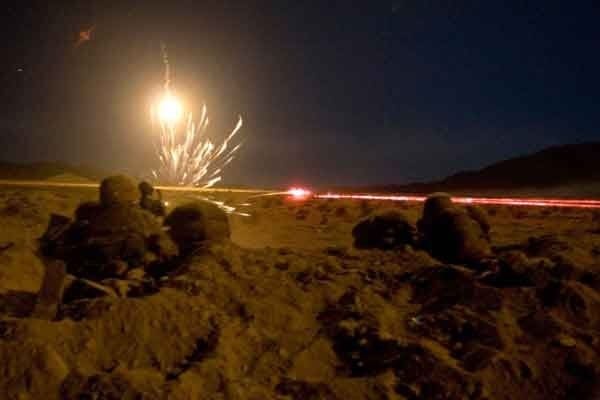
As a young Marine grunt one of my favorite parts of field training was when we executed an FPF (Final Protective Fire), especially at night. To see all of our weapons firing at their maximum rate was always something to see, very motivating stuff. Now as most of you know the FPF is designed as a last-ditch effort to prevent the enemy from over running your position. Every weapon available fires into predetermined zones. If you’ve seen done it in person, it’s hard to imagine anything bigger than a cockroach surviving in those kill zones. The main thing is when that green flare went up it happened, automatically and instantly. No debate, no second guessing, through planning and training, the actions were predetermined and embedded in everyone’s head. It had to be to make it effective.

Now in the world of diet and fitness I think that everyone should develop and use their own personal FPF. No, I don’t mean shooting up a pumpkin pie, or case of beer to prevent you from over indulging, but having a solid fall back set of thinking about your fitness program. This is especially relevant during the holidays and right after the New Year when many people decide that as a resolution, they want to lose weight and get in shape.

As I often preach (to the point of nausea), the way you think about working out and eating is the most important factor in your long term success, or failure to meet your goals. Not a specific diet, workout or supplement but the common everyday thoughts that fill your brain housing group. Good habits in the form of consistent workouts and eating start and end with good thinking. Experts will give you many theories on how we form habits, how long it takes to embed them and why. I’m not formally trained in this subject, but I do know from long experience how these things impact our ability to maintain good fitness habits.

One thing I know for sure is that people who are successful in maintaining long term health/fitness by PT efforts and good eating, have a solid set of thought “defaults” that act as their own personal FPF. Meaning that outside of unusual circumstances, they make mental choices and from those thoughts act, in an automatic, predetermined way. Just like how an FPF works when put into action. By human nature these defaults can help provide good results and require little effort, or will power once you get them in place.

As a simple example of how this works. When you go to a restaurant, let’s say a Mexican place. These places typically have big menus with a lot of choices. However, if you’re like most people (not my wife) and this isn’t your first time there, you mentally have established a few favorites. From that smaller list you most likely have one entree that if forced to choose one, would be your pick. That is your default choice. You don’t have to think that much about it either, your mind goes right to it and from that you act. What I’m getting at here is that making choices about your fitness routine should start and be held up by a strong set of defaults. All of these defaults together establish your own FPF. Here are some examples of mine:

·       I workout every day, for an hour, first thing in the morning.

·       I alternate my workouts between cardio and strength training.

·       I always warm-up before PT and stretch afterward.

·       Water is my non-alcoholic drink of choice. Light beer is my alcohol go to.

·       I skip dessert.

·       I don’t eat between meals.

·       I don’t do seconds.

·       I choose fish over chicken, chicken over beef, beef over pork.

·       I don’t do fast food.

·       I drink my coffee black.

These are just 10, I have many more “default” settings like these in my head. I don’t think much about them. But they are always there, deeply embedded and they automatically help me make good choices when I need them. Not 100% of the time, but probably 75-80% of the time, which is plenty. Now you may say: “These are just thoughts, I need action.” My friend, all good action starts with thought. My point is that to make these actions a reflex, you need to establish a default thought process. When done so, they will just automatically come up when needed. As such they’re part of my own FPF. Predetermined and ready, no debate needed.

Now you may say how do I embed these defaults to the point where they become reflex? That is the tricky part. First you have to sit down and think it through and come up with realistic, basic and practical points. To try and set silly, or unrealistic thoughts into your plan is just a waste of time. Like:

·       I run 10 miles a day

·       I lift weights 3 hours a day.

·       I never eat bread.

Those are unsustainable long term and frankly silly. How about: I always park at the end of the row so I can get more walking in, or I skip an appetizer before dinner. After you come up with your own (feel free to use mine as they are pretty effective and general), Then post them on your frig, bathroom mirror, computer screen, smart phone, etc. Where ever you need to, until you have them memorized. After that it’s a matter or reps, mental reps till they become embedded and eventually reflex.

You will be amazed at how having these default thoughts can improve your chances of maintaining a long term fitness routine. I teach students this technique all the time and seen it help most of them. This may seem like a small thing, but there is nothing small about the power of the right thinking. Don’t underestimate its influence. Give it a real try it and you’ll see what I mean.

I hope everyone has a safe and fun Christmas and New Years with friends and family. I’m off to do the northeast “test of manhood” winter climb of Mt Washington. (Weather permitting as I don’t plan to become a statistic). In any case say a prayer and lift a glass to our brothers and sisters deployed forward and our 1st responders who are working. It’s their sacrifice that allows us the freedom to enjoy the holidays. Till next month:

“Be Safe Always, be Good when You Can.”

Semper Fi

MGunz

Joint Communications Support Element Provides Support To Global Response Force

Friday, December 21st, 2018

CHITOSE, Japan — Whether on a hill, in a dale or on a dusty trail, battlefield communications are essential to every service member no matter their location. Be it the individual service member in the field to the pilot flying the jet, the ability to communicate clearly and concisely is extremely important during times of conflict.

Not doing so could be the difference between life or death.

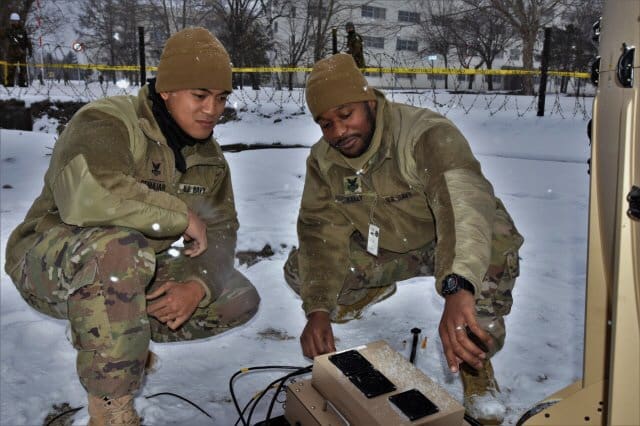
IC1 Jonathan Kelly and IC1, 1st Squadron, Joint Communications Support Element check a communications satallite dish on Camp Higashi-Chitose, Japan during exercise Yama Sakura, Dec. 12, 2018

As communication technologies advance and the tools used to intercept these technologies grow more elaborate, the need for proper battlefield-communications techniques becomes evermore important

Established units have specific processes already in place to meet their communications needs, however, when it comes to deploying units to locations lacking an established communication framework, many call upon outside agencies to supplement these needs.

One team commanders call on to do this is the Joint Communications Support Element (JCSE), part of Joint Enabling Capabilities Command (JECC), which falls under the U.S. Transportation Command and provides mission-specific, joint capabilities to combatant commanders needed to facilitate accelerated establishment of joint force headquarters, fulfill Global Response Force execution and bridge joint operational requirements.

“What sets us apart here at the JCSE, is that we provide an essential skill set that allows commands to work efficiently and effectively until they are able to bring up their own capabilities in order to sustain themselves,” said Information Systems Technician 1st Class Jonathan L. Kelly, 1st Joint Communications Squadron Team Chief.

Comprised of both an active and reserve components – of three active duty squadrons, two Air-National Guard squadrons and one Army reserve squadron – the JCSE enables both tactical and strategic communications. This is done by providing rapidly deployable, scalable, en-route and early-entry communications capabilities across the full gamut of operations enabling increased action of the joint force in support of the 10 combatant commands, special operations commands and other agencies, as directed.

“We are the embodiment of the total force and for this reason our units routinely exercise and deploy together, making for an effective team capable of meeting a wide range of mission-critical demands and tasks,” said Kelly.

At the heart of the unit’s core competency is its communications support for contingency operations. Using the latest technologies, JCSE is a tactical unit with the ability to operate at the tactical, operational and strategic levels. In addition, the element has the skill sets needed to support broader Joint Task Force operations ranging anywhere from 40 to 1500 network users.

“Here at the JCSE, we use the latest technologies in order to meet today’s operational requirements while also keeping up with the units’ wide-range mission requirements,” said Kelly. “We ensure our members are well trained communicators ready to deploy at any given moment.”

Today, the element has service members deployed to locations all around the world, covering a wide range of missions, including a team currently deployed to Higashi-Chitose, Japan, supporting exercise Yama Sakura 75.

Yama Sakura is an annual bilateral exercise involving the U.S. Military and the JGSDF with the purpose of enhancing U.S. and Japanese combat readiness and interoperability while strengthening relationships and demonstrating U.S. resolve to support the security interests of allies and partners in the Indo-Asia-Pacific region.

Just as in other exercises, the JCSE team at Yama Sakura, used their expertise to provide the real world capability for both NIPR and SIPR communications requirements, to support simulated battlefield communications.

By Petty Officer 1st Class Kiona Miller

FirstSpear Friday Focus – New Summit Bag Sizes

Friday, December 21st, 2018

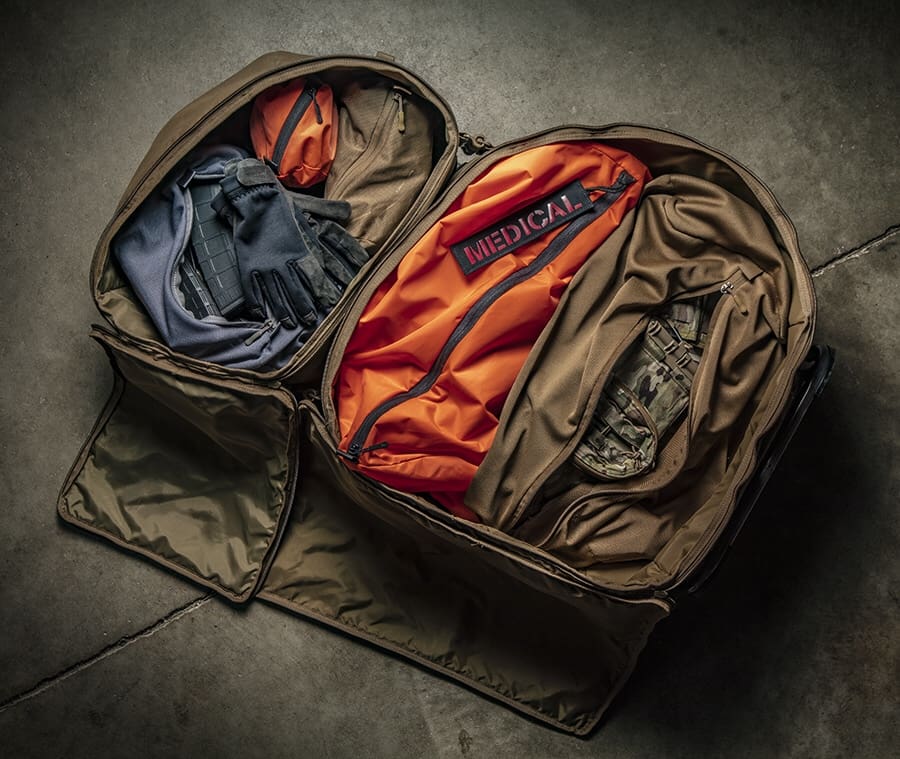
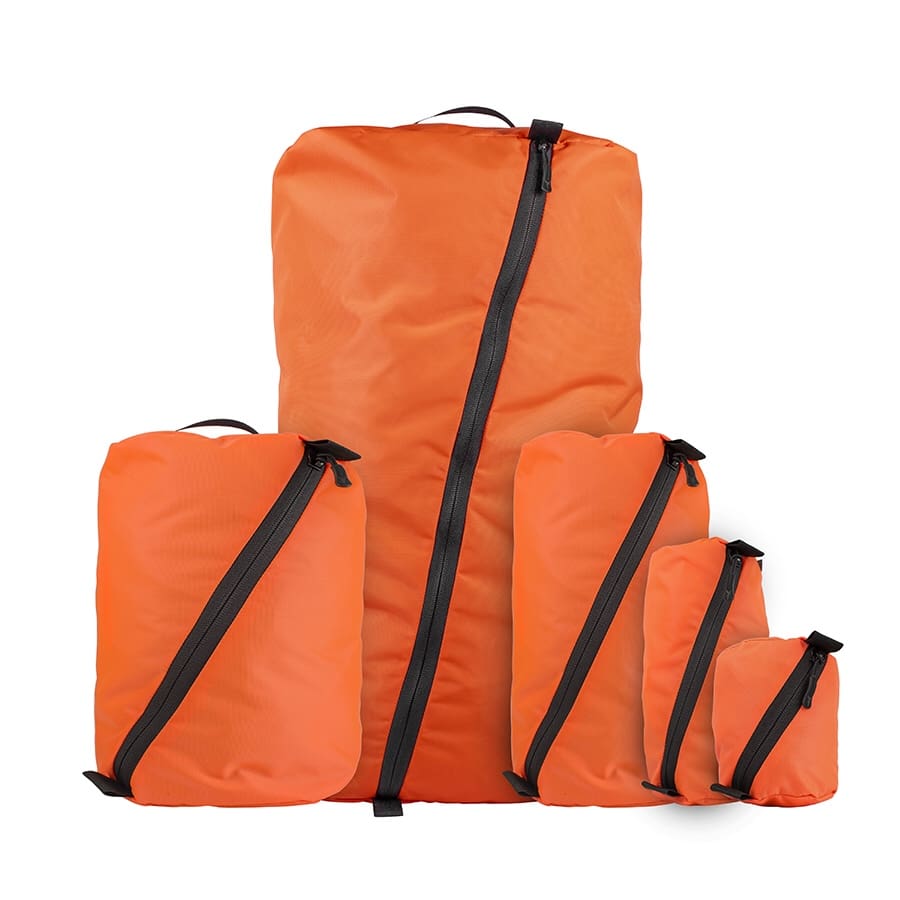
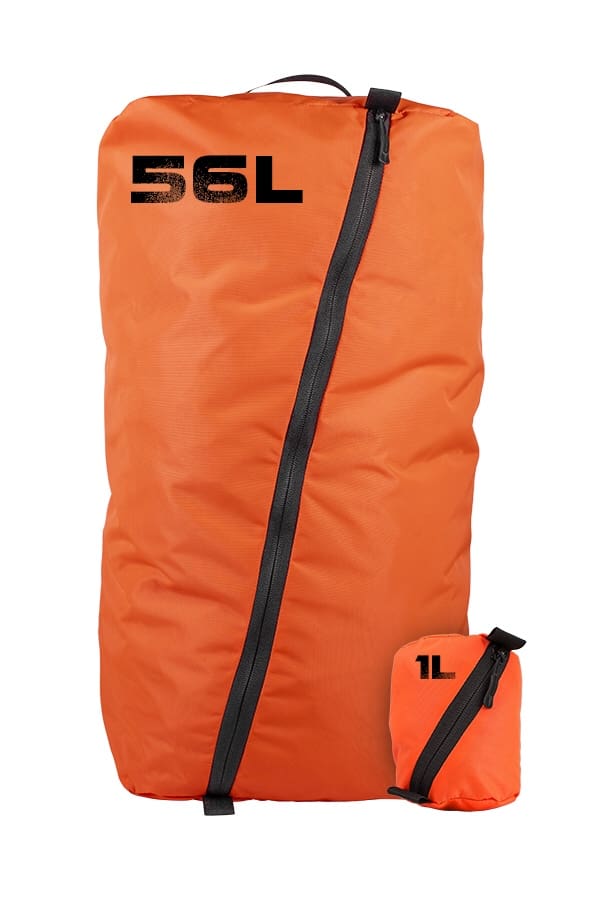
Introducing yet another all new item from the FirstSpear web store! They have decided to bring on two new sizes to their popular Summit Bag line with an 11L and massive 56L. These are 100% American made and available in all stocking summit bag materials and colors including both full mesh and light weight ripstop. Both new sizes feature a simple webbing handle to hang in a locker or tie off point.

With absolutely no limit on possible applications the Summit Line is excellent for interior organization inside larger bags or packs, hauling loose ammo, under seat/glove box storage, stuff sacks for garments, hygiene kits, electronics/ cables and other various loose equipment you can keep an eye on all in one place.

Made in America, available now only on first-spear.com.

Brigantes Presents – The Brigantes Show 2018

Wednesday, December 19th, 2018

The difficulty of obtaining everything a Unit requires in order to be considered “fully kitted out” is a lengthy affair for all those in a buying position within the military. Those in the know will sympathise with the reams of paperwork and requisitions that need to be signed, often only to order a small quantity of one item. Not to mention the frustration that comes with trying to release funds, once they have been agreed.

This is a difficulty that is shared with militaries around the world.

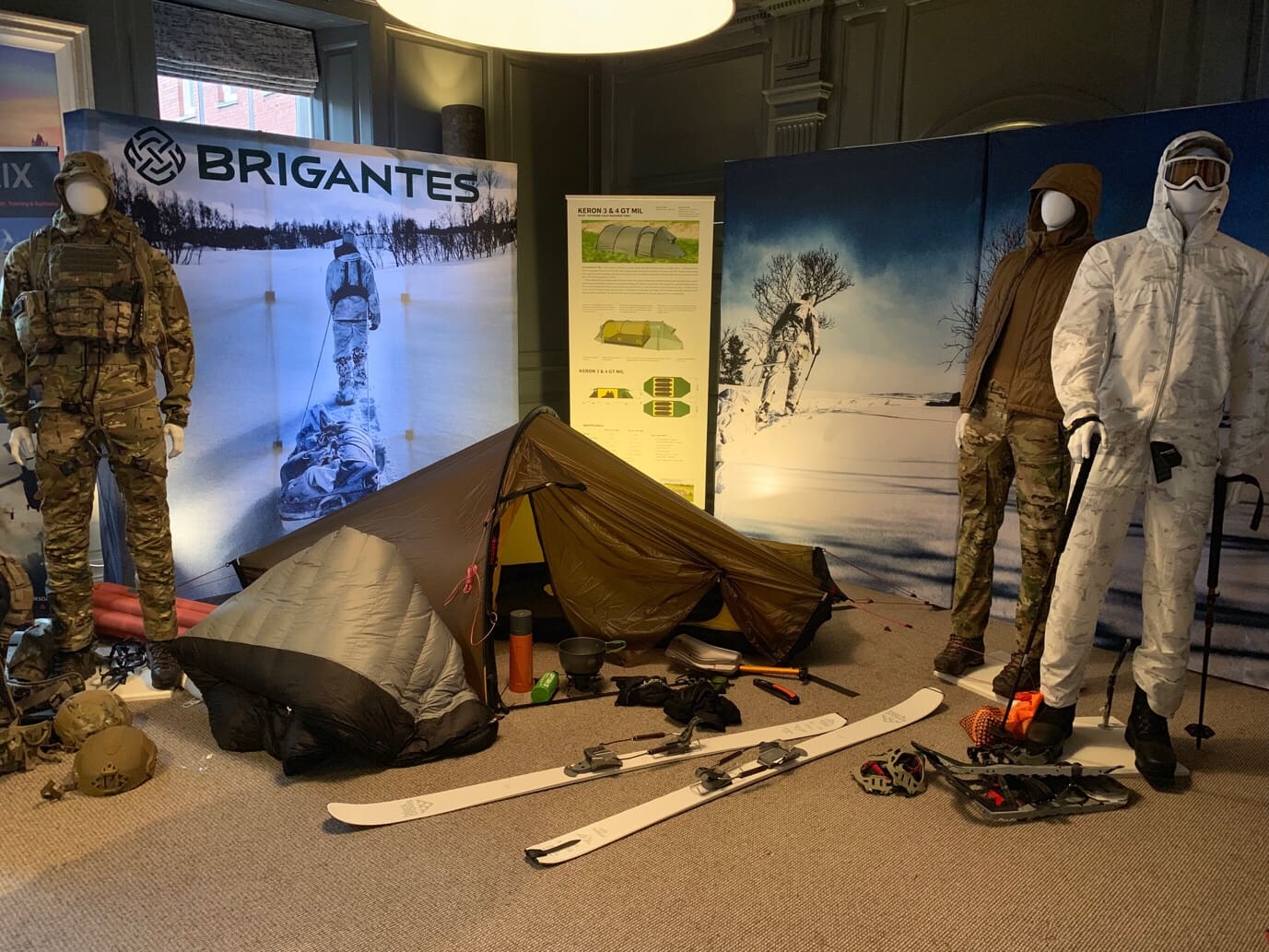
Enter Brigantes. This year, they held the Brigantes Show in the UK. A trade show that demonstrated the unique relationship that they have with many internationally recognised and revered outdoor brands.

Key representatives from the UK and US military forces attended to realise the true capability of Brigantes in the areas of Adventurous Training and Extreme Cold Weather. Brigantes demonstrated how they are the gateway to solving all military buying issues with minimal effort and how unparalleled their open, honest approach was to the buyers.

The team will be assisting in the organisation of the UK’s only defence show for the outdoor industry, The Outdoor Military Show, in December 2019 as well has exhibiting at DSEI 2019.

For more information contact international@brigantes.com

For UK enquiries contact warrior@brigantes.com

The Baldwin Files – Old Soldiers vs Young Soldiers

Tuesday, December 18th, 2018

I have been thinking for some time about belatedly developing some kind of guiding philosophy or “mission statement” for these articles. Over time, I have ranged – more or less randomly – all over the place; from commentary on gear, pontificating on the Constitution, exploring a bit of what I deem relevant history, and preaching leadership above all. Leadership fascinates me precisely because it is universal and always central to all military actions whether in the past, the present, or in the foreseeable future. In large part I have been guided by my favorite Carl von Clausewitz quote, “War is no pastime; it is no mere joy in daring and winning, no place for irresponsible enthusiasts. It is a serious means to a serious end.

Clausewitz could just as readily have been talking about military leadership when he made that observation. Likewise, Clausewitz’s insightful conceptions of the impacts of probability and chance as well as fog and friction are challenges just as true of leadership as they are of combat. That is one reason why his thoughts – as well as Sun Tzu’s and others – on the subject of leadership, war, strategy, and operational art, are still deemed relevant for professional soldiers to study even now. However, the small unit tactics of ancient China and the Napoleonic era are of very little professional interest to modern warfighters – and rightly so.
With that in mind, I have also been considering the risk of being guilty of providing only antiquated information that is of little practical value today. Antiquated as defined by Webster’s is something that is “outmoded or discredited by reason of age: old and no longer useful, popular, or accepted.” It is true that tactics change constantly and can indeed become outmoded over time. Sometimes, if an enemy fields an effective countermeasure for example, a tactic can become obsolescent very quickly. However, sound military principles like those that Clausewitz is talking about above age much better and rarely go completely out of style.

For example, the version of Major Roger’s Rules for Ranging that I learned decades ago had one rule that went something like this; “Let the enemy come till he’s almost close enough to touch. Then let him have it and jump out and finish him up with your hatchet.” Even when I was a young soldier, that was certainly not a tactic, technique, or procedure (TTP) that was in use by any modern military. If it were, hatchets would still be standard issue. Therefore, if taken literally, that “rule” would indeed be antiquated tactical advice. However, if considered instead in terms of more enduring principles like speed, surprise, and violence of action than that rule – I would respectfully submit – is just as applicable today as it was in 1757.

By the way, just because a TTP is antiquated does not mean it no longer works. Moreover, just because the U.S. Military considers something too low tech, hopelessly outdated and no longer popular does not mean that our enemies have the luxury or inclination of thinking the same way. Just because the person shooting at you from the ridge is using a 303 Enfield rather than a more modern AK47 does not mean he is any less of a threat. Antique tools can still kill you and your friends just as dead as the newest high-tech precision ordinance. The same resource limitation applies to many of our Allies. They may not have any choice but to use “old school” and unsophisticated TTPs. That means – by military necessity – we have to be prepared to work within the limits of what they have and how they are constrained to operate.

As I alluded to above, the mechanics of warfare change all the time, it is human nature that is enduring. Therefore, insight into fundamental human nature during war remains relevant across time and cultural boundaries. As we know, while a soldier may train constantly, he actually practices his profession only intermittently. Most of the soldiers that landed at Normandy in 1944 had never seen combat until that day – even though the war had been ongoing for years. Today, some soldiers may have multiple tours but on each rotation most are still experiencing combat for their first time. Even for those who have seen combat more than once, it is a very individual and in some sense narrow experience. Like all veterans, I can only say that I have personally experienced combat: in the rank I held at the time, at the specific level and intensity of warfare I was involved in prosecuting, only for relatively short periods of time, in particular geographic locations, and against contemporaneous enemy threats.

I have visited the Normandy beaches and walked the ground of Pickett’s charge several times. Yet, despite my experience and training, I can still only make an educated guess about what it was like to land on those beachheads under fire or what Pickett’s men experienced at Gettysburg. Therefore, I cannot honestly claim that I have “mastered” the broader aspects of the “art of war” without diligently studying the experience and wisdom of others – and perhaps not even then. Investigating how those in the past have addressed the training of troops, used intelligence or out maneuvered a determined opponent helps provide additional and critical context. Historical figures like Vegetius still provides useful insight in some aspects of war; Saxe a different perspective; Sun Tzu a more strategic point of view; and Clausewitz and Jomini additional different thoughts and theories to consider.

It is important to note that even though some may have first experienced war as young men, all wrote their thoughts down as older men. A long time ago a Major General told me that he learned everything he knows about leadership as a Second Lieutenant – but it took him 30 more years to understand what he had learned. Warfare is like that. Clausewitz and Saxe initially experienced war as teenagers, but it took years and additional life experiences for them to contextualize that information and form it into coherent theories or principles. I read many of these authors years ago and learned – even memorized – some of their words. Nevertheless, I understand their ideas far better today than I ever did as a younger soldier.


Experiencing war for the first time has been likened to “seeing the elephant” since Hannibal’s campaigns, I suppose. However, there is another – even more ancient – pachyderm analogy that also aptly applies. That is the blind men and the elephant. One declares the tail of the animal is “like a rope” because that best describes the piece he can “see.” Whether he is aware or unaware that the portion that he has access to is just a small part of a larger beast does not in any way invalidate his observation. That particular blind man is absolutely “right” in his assertions, as are the others in their descriptions of different elements of the whole creature in question.The study and practice of war and combat has always been like that. Each “blind man” in turn describes warfare as he experienced it – or as he thinks it should be conducted – but, shaped and confined by his own experiences and biases, only had opportunity to “see” just a limited portion of the whole “truth” of combat. Today we only know as much as we think we know because we have access to the writings of ALL the “blind men” who have gone before us, “laid hands” on war, and then bothered to leave us their sincere impressions.

I will use one example to illustrate the point. Consider the inherent danger of combat; in On War, Clausewitz gives a good description of the emotional impact on a novice as he approaches a notional battle. The danger of painful death and dismemberment is at first abstract and far away. As the new soldier moves closer to the actual fighting the abstract becomes very real and frightening – to the uninitiated even petrifying. Danger, i.e. realistic FEAR of violent death is not something most of us have to deal with on a daily basis – not even soldiers in peacetime. It is not something that can be simulated in training. In fact, military training is rigorously designed in such a way as to minimize even the possibility of death or serious injury. In combat, a leader must control his own dread, display confidence and inspire soldiers to overcome their natural fear in order to accomplish a mission.

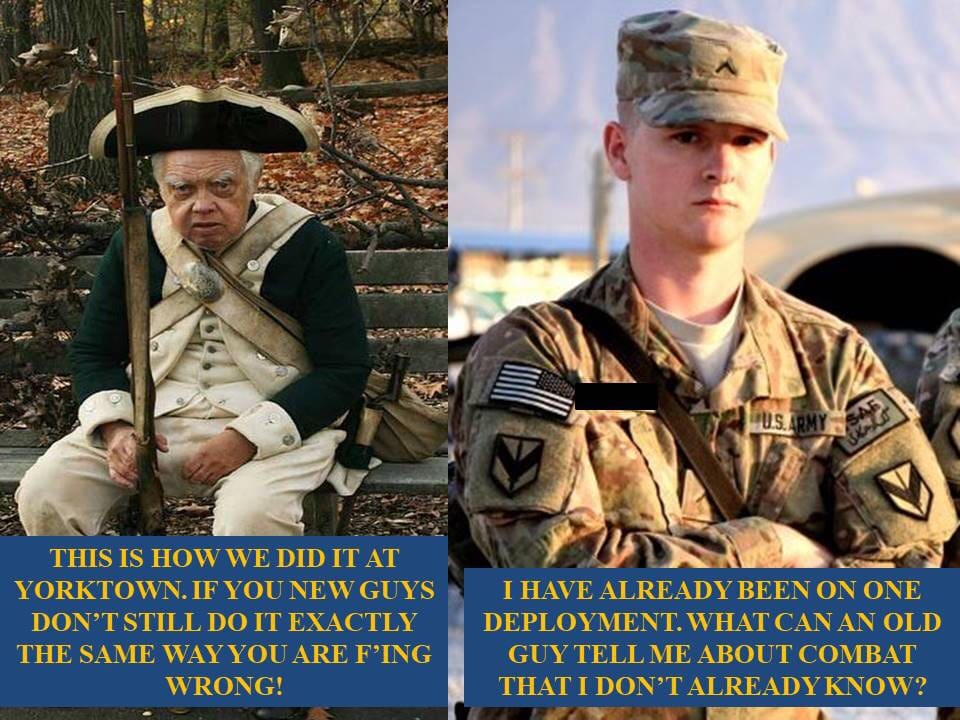
True enough, but so what? The caricatures in the attached picture are deliberate exaggerations of what a great many soldiers – retired and active – actually feel. Each is like the “blind men” above. An individual convinced that he has mastered the entire art of war by virtue of experiencing combat at least once. Of course, they are both equally wrong; it simply is not that easy. However, of the two, I am much more concerned about the younger guy – since he is still in the fight. He and his teammates are really the target audience I hope to ultimately reach. That does not mean that my minor contribution so far provided any appreciable value added either. Candidly, no one really needs me to repeat what Clausewitz said. His work is readily available and better authors than I have written whole books explaining him. So, that leads to the larger overarching question to be asked and answered. Why keep writing these articles at all? Is there any real need?

I decided to see what else was available on the internet. The good news is there is a lot of sound stuff out there produced by numerous good, professional people. Many of whom are featured on this site from time to time. On the other hand, there is a lot of goofy – and frankly scary – misinformation out there as well. I will mention two YouTube videos in particular because they seemed to be representative of a lot of questionable content and, as a result, the most problematic to me. First, both videos had good production values, the presenters were articulate, and each gave the impression that they were subject matter experts. One young fellow was demonstrating how to assembly a Molle II rucksack. He was wearing a multicam combat shirt with no insignia. He claimed he was showing the audience “pro tips” and how to set up the pack the way “guys going to selection” do it. Then he proceeded to attach each element of the pack to the frame wrong – pack body, load lifters, and shoulder straps.

By the end, when he mounted the waist belt upside down, he had dissuaded me of the notion that he knew anything about the subject at hand – or the military in general. Here is a real pro tip, if you do not have extensive experience with an item of kit, put it together the way the official instructions say it should be done. The other video was on assembling ALICE gear. The fellow on this was closer to my age I assume. I have to guess because only his hands were visible on screen. He did seem to be very familiar with the ALICE harness. He rigged his pouches with zip ties and 550 cord as was common in the early 80s and onward. I saw one major problem with his presentation. He was not just passionate about the subject, but rather came off instead as inexplicably angry.

In fact, he made sure the audience understood that there was one way – and one way only – to properly assemble ALICE gear in order to survive in combat. His way. No variations authorized. If anyone dared to do it differently, they must be damn fool cherries with a death wish. Here is another pro tip from me. Anyone that says there is only a singular way to do something in combat is probably wrong. Sure, some specific TTP are more desirable than others because they are tactically sounder and, consequently, more likely to produce the desired outcome. However, there is almost never just “one way” to get the job done. Both the presentations I have highlighted were slick and professionally produced. An experienced soldier would spot the same issues I saw quickly enough, but a neophyte might be easily led down the wrong path.

That sampling convinced me that there was indeed still some need for higher quality material out there. That said, I am not going to make it my mission to deal with all the disinformation in the tactical or quasi-tactical corners of the internet. I admit that task is far too large and daunting for me to take on. However, I can attempt to put out information that might be useful for some. More accurate – hopefully – than the young guy, and certainly a lot less angry than the older guy. That is good enough for me. I assure anyone that is reading this or anything else I have written, I do not make these comments or observations while astride some high horse. I have benefited from the guidance of outstanding leaders and excellent teachers. Still, being the hard head I am, I have learned many of these lessons the hardest way. That is, I have screwed it up royally – sometimes multiple times – before I figured it out. Still, there is no reason that others cannot learn from my mistakes without having to repeat them. Besides, I have the time and I am not ready to do the old soldier fade away just yet.

LTC Terry Baldwin, US Army (Ret) served on active duty from 1975-2011 in various Infantry and Special Forces assignments. SSD is blessed to have him as both reader and contributor.