FirstSpear

Archive for the ‘Guest Post’ Category

Army’s Soldier and Squad Performance Research Institute Will Increase Lethality, Resilience

Tuesday, November 6th, 2018

NATICK, Mass. — “No Soldier ever fights alone,” says Cynthia Blackwell, the S2PRINT project director at the Natick Soldier Research, Development and Engineering Center, or NSRDEC.

The ways in which Soldiers interact individually, in squads and on small teams play a key role in success on the battlefield. This is one of the main ideas behind the creation of the Soldier Squad Performance Research Institute, or S2PRINT.

NSRDEC and the U.S. Army Research Institute of Environmental Medicine, or USARIEM, have joined together to lead the development of this state-of-the-art facility, which is slated to be built at the Natick Soldier Systems Center in Natick, Massachusetts.

The institute will empower NSRDEC’s and USARIEM’s world-class scientists and engineers with a controlled, cutting-edge, and mission-relevant environment in which to perform applied studies to uncover ways to optimize Soldier and squad performance and enhance combat readiness.
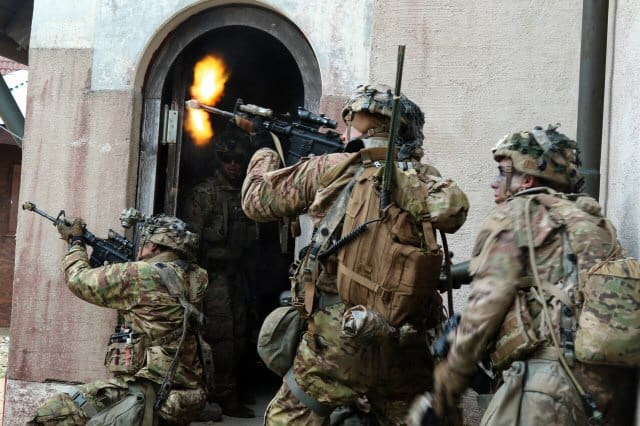
U.S. Soldiers with the 2nd Battalion, 503rd Infantry Regiment, 173rd Infantry Brigade Combat Team (Airborne) engage opposing forces in a simulated exercise during Saber Junction 18 at Hohenfels Training Area, Germany, Sept. 26, 2018. The ways in which Soldiers interact individually, in squads and on small teams will be a key area of study for the Army’s new Soldier Squad Performance Research Institute, or S2PRINT. (Photo Credit: U.S. Army photo by Cpl. Gabrielle Weaver)

S2PRINT’s emphasis is on Human Performance Optimization, with research focusing on the individual Soldier’s and the squad’s cognitive, social, physiological, physical, and nutrition-based performance. Blackwell explained that S2PRINT will provide the Army with a greater understanding of teams, leading to the optimization of team interactions and team dynamics.

S2PRINT will help researchers to develop validated performance and training strategies; tools and interventions for the Soldier, leader and small unit; techniques to mitigate injury; and interventions to increase Soldier and squad resilience and longevity.

Studies performed in the S2PRINT facility, which will include several operationally relevant laboratories, will help researchers baseline, measure, predict and optimize individual and small unit readiness, performance, and resiliency across real-world, mission-essential tasks. Outcomes/findings of this research will ultimately help improve readiness, enhance mission performance, and increase Soldier and squad lethality.

The new facility will also enhance NSRDEC’s and USARIEM’s already strong collaborations with top-notch academic institutions, cutting-edge industrial partners, and other DOD agencies and initiatives. As with other work performed by NSRDEC and USARIEM, the knowledge obtained through S2PRINT will lead to technologies and informational resources that will benefit not only warfighters but also first responders.

Moreover, Natick will be able to develop and evaluate prototype gear and emerging technologies more quickly than ever before, accelerating the delivery time of critical information and equipment to troops in the field — all while reducing costs.

S2PRINT is expected to become operational in the spring of 2023.

By Jane Benson, NSRDEC Public Affairs
Max Talk Monday: Mission Focus & Will To Win

Monday, November 5th, 2018

This is the eleventh installment of ‘Max Talk Monday’ which shares select episodes from a series of instructional videos. Max Velocity Tactical (MVT) has established a reputation on the leading edge of tactical live fire and force on force training. MVT is dedicated to developing and training tactical excellence at the individual and team level.

It is based on Max Talk 018 which is a discussion on being mission focused, and how the will to win will allow you to not only build the whole warrior, but will allow you to achieve your goals.

MVT Tactical Manual
Max is a tactical trainer and author, a lifelong professional soldier with extensive military experience. He served with British Special Operations Forces, both enlisted and as a commissioned officer; a graduate of the Royal Military Academy Sandhurst. Max served on numerous operational deployments, and also served as a recruit instructor. Max spent five years serving as a paramilitary contractor in both Iraq and Afghanistan; the latter two years working for the British Government in Helmand Province, Afghanistan. Website: Max Velocity TacticalYouTube: Max Velocity Tactical

BE Meyers & Co “MAWLR” LX570 Official Debut

Monday, November 5th, 2018

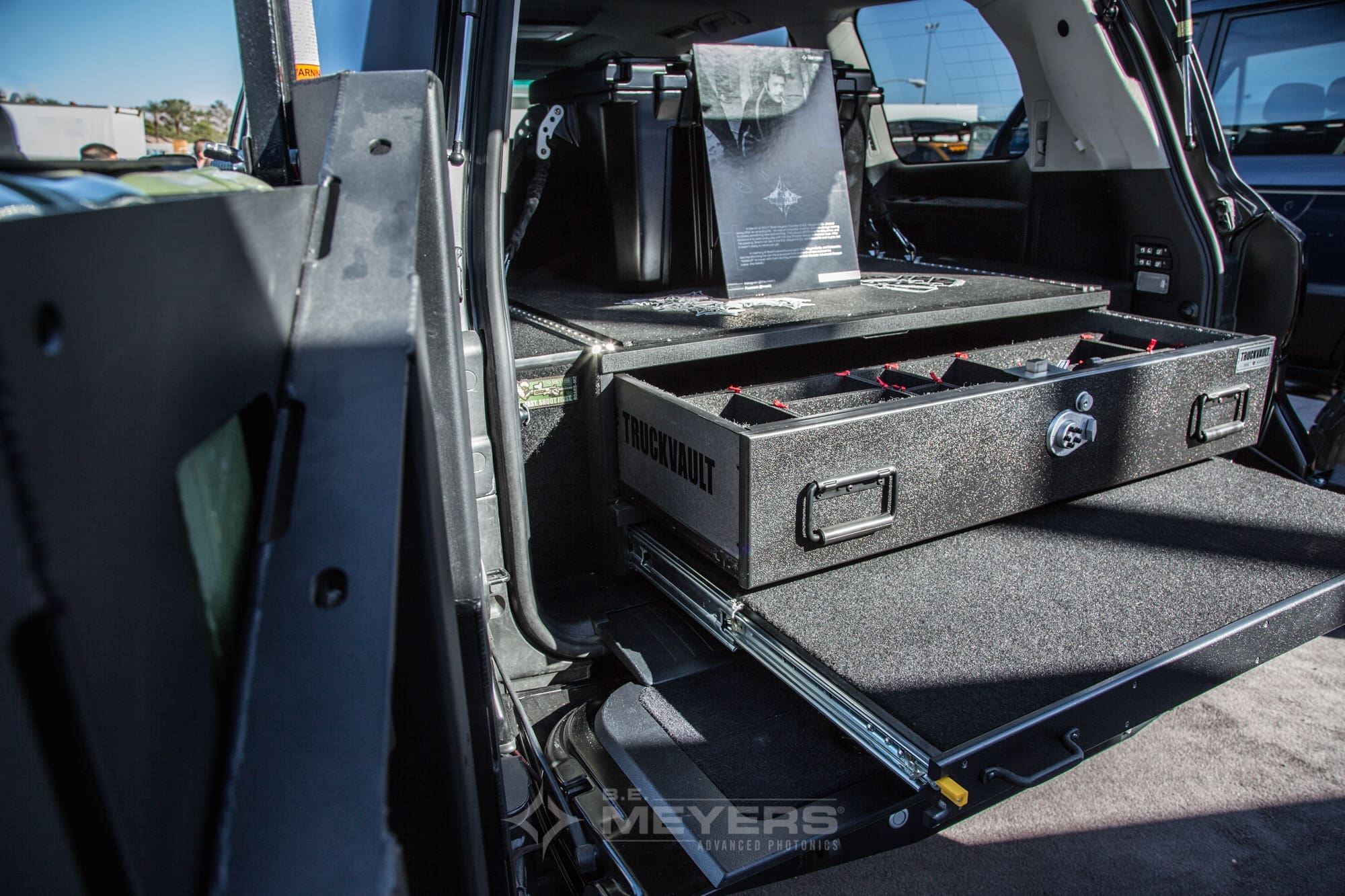
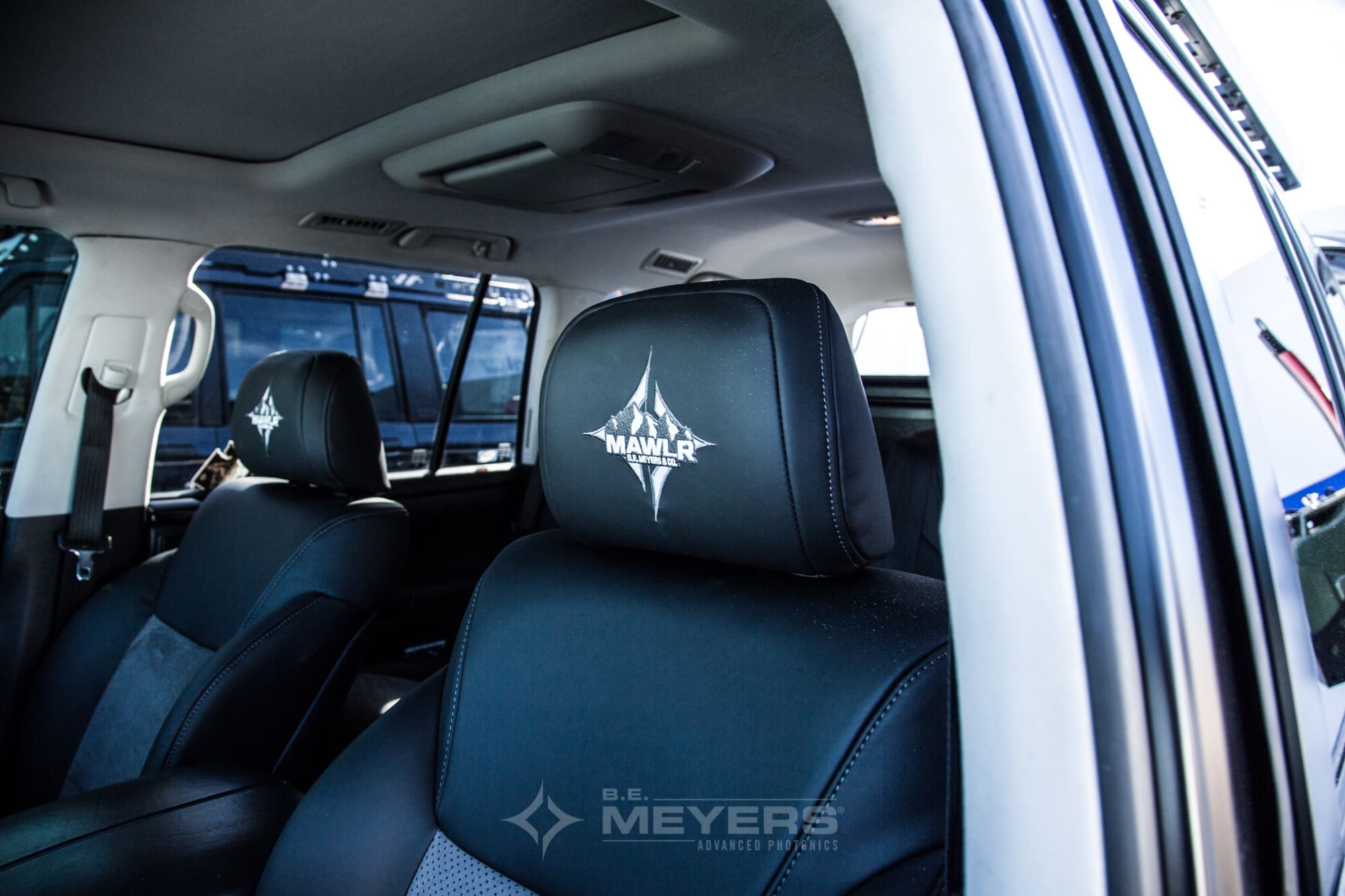
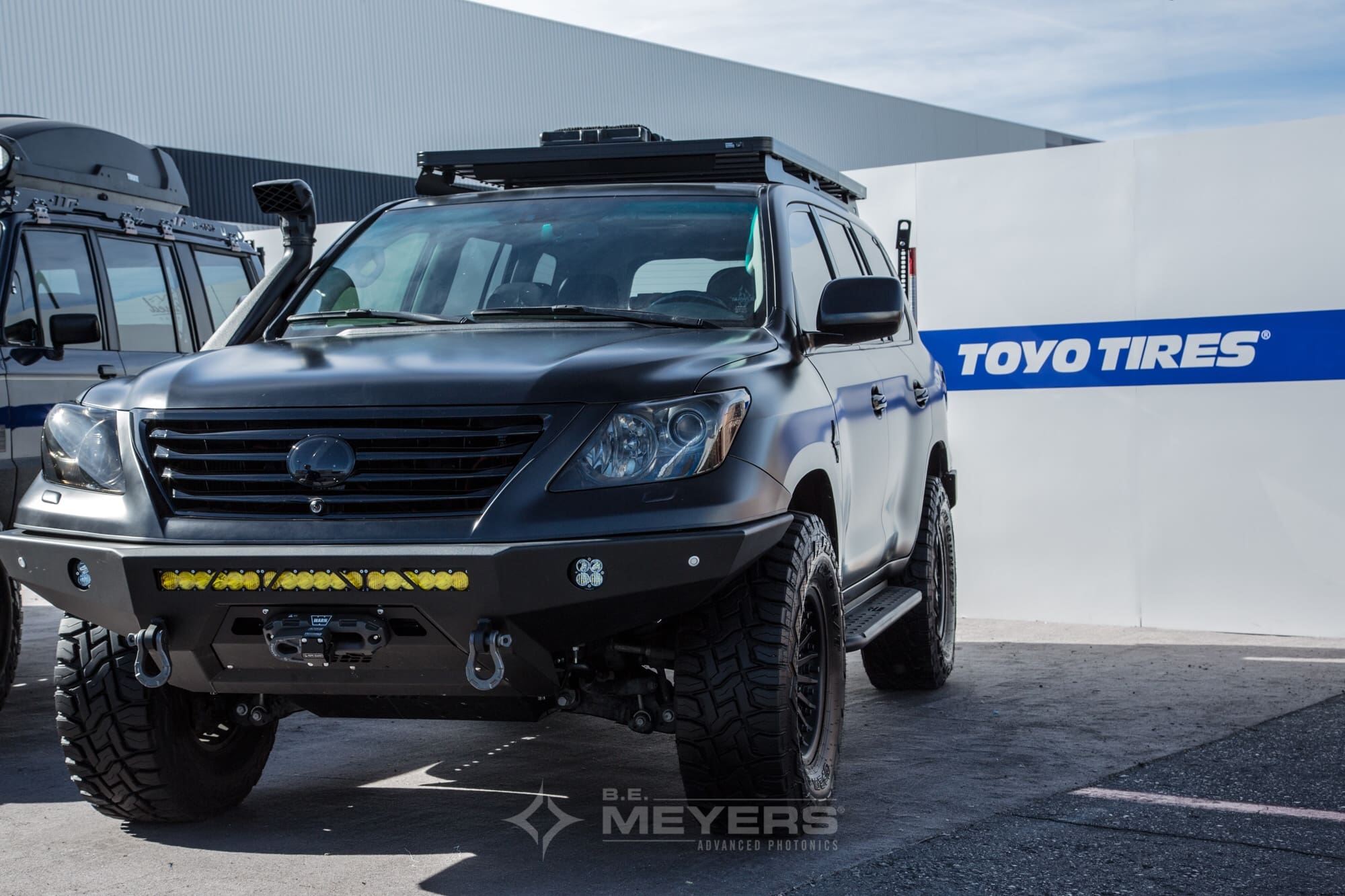
SEMA 2018 finished last week, wrapping up the first year of B.E. Meyers & Co.’s participation in one of the world’s premier auto shows. While SEMA may seem an unlikely place to find a laser manufacturer, B.E. Meyers & Co., who is known for innovative defense and aerospace solutions, had something truly unique to share with the automotive industry. The “MAWLR”, a Lexus LX570 that B.E. Meyers & Co. and Defconbrix transformed into the ultimate overland vehicle, was unveiled at SEMA in the Toyo Tires Treadpass. It is extremely rare to see an LX570 configured for off-road use, and none have a story quite like the MAWLR’s.

When Sean Jennings of Defconbrix picked up the Lexus LX570 from B.E. Meyers & Co. in Redmond, WA last February, it was a completely stock vehicle with a long way to go before it would become the MAWLR. The Lexus had belonged to the founder of B.E. Meyers & Co., the late Brad Meyers. To honor Brad’s adventurous spirit, and his legacy of ingenuity, Matt Meyers, CEO of B.E. Meyers & Co., decided to turn the LX570 into a project build with a unique vision. The MAWLR would parallel the qualities that make B.E. Meyers & Co. products successful, specifically the MAWL® (Modular Advanced Weapon Laser).

Purpose-Built

As a company that focuses primarily on laser systems for night operations, the B.E. Meyers & Co. team needed a vehicle that could navigate the rugged Pacific Northwest terrain in low-light, and no-light conditions. The MAWLR is purpose-built to transport equipment to remote destinations for product demonstrations, testing, and photo shoots.

Weapon-Ready

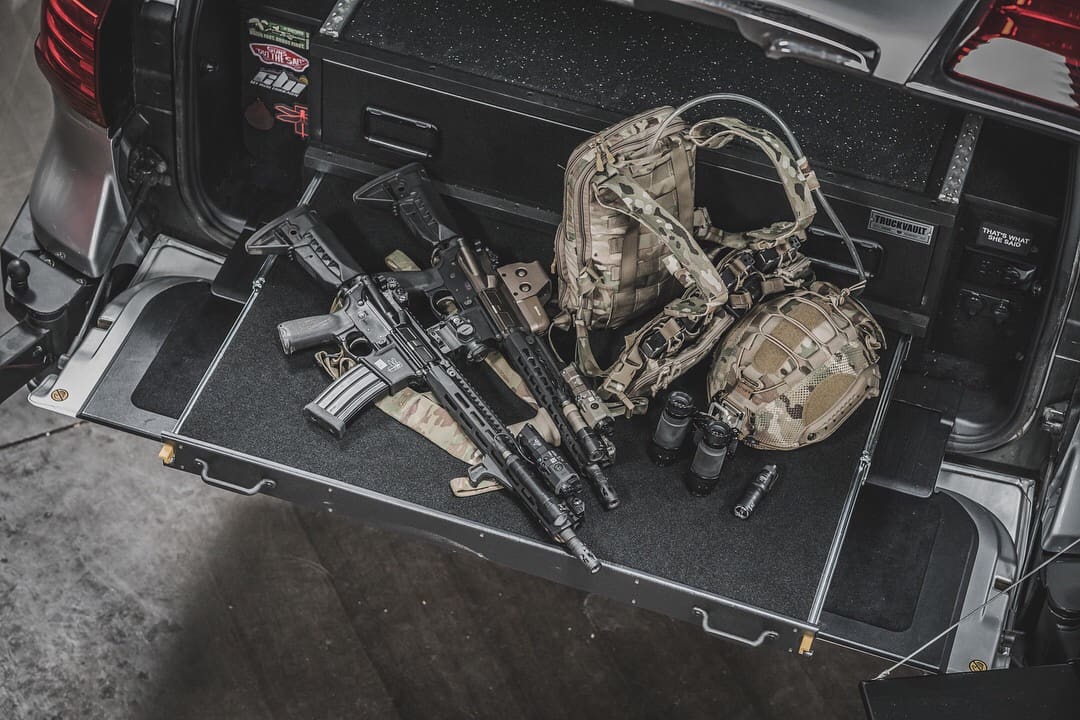
The MAWLR is weapon ready, equipped with a TruckVault featuring designated space for rifle platforms, laser systems, and accessories. A large roof rack easily accommodates additional gear in travel cases.

Rugged and Dependable

Custom armor, all-terrain tires, and all-wheel-drive ensure the MAWLR can make it from point A to point B in the varying climates of the Pacific Northwest. The MAWLR can transition from Washington’s snowy mountain passes, to wet rainforests, and sandy deserts, all without breaking a sweat.

All the Photons

Whether demonstrating the latest laser technology, or shooting machine guns on a photo shoot, the B.E. Meyers & Co. team can often be found making magic happen during hours of complete darkness. Extensive aftermarket lighting on the front and rear of the MAWLR provide the lumens necessary to navigate to and from remote destinations at night.

B.E. Meyers & Co. and Defconbrix will be revealing the official build list once the project is officially completed.

The B.E. Meyers & Co. MAWLR build by Defconbrix can be followed on Instagram (@the.mawlr), and Facebook (@mawlr).

www.bemeyers.com

SCUBAPRO Sunday – Clearing Your Ears

Sunday, November 4th, 2018

The inability to clear ears not is one of main reasondivers cant start a diver or finish it if they cannot clear at the start. It is easy to clear/equalize your ears almost all the time. Even the best of divers can have trouble clearing on a dive. But with a few of these technic’s I hope that you won’t have to end a dive because of ear problems. Some of these also work for skydiving or flying. It is always a good practice to try and clear your ears before you even get into the water. At your dive brief, the Dive Supervisor should ask everyone if they canclear their ears. 

Valsalva

This is the most common way to equalize. I am sure you learned it when you first started to swim. This method teaches you to pinch your nose so that no air can pass through your nostrils, and then gently “blow” your nose. This forces air into your inner ear space, equalizing the pressure within to the outside pressure often with an audible popping or clicking sound. The key to this is the word “gently.” Don’t blow your eardrums out before you dive.

Frenzel

To perform this maneuver, you thrust your jaw forward.  This slight shift in your natural anatomy will cause the Eustachian Tube to straighten and open, thus allowing gases to travel in the direction of higher pressure to lower pressure until full equilibration occurs.

Voluntary tubal opening

Try yawning with your mouth closed by contracting the muscles in the back of the roof of your mouth and throat while pushing your jaw forward and down. Tensing and stretching the muscles pulls the eustachian tubes open.

Toynbee

The Toynbee technique of clearing your ears is to pinch your nose and try to swallow. This tenses the muscles in the throat and soft palate to pull the tubes open, while your tongue compresses air against them. This results in a decreased pressure against the middle ear and Eustachian Tube, which will open in response.

Lowry

This is a combination of Valsalva and Toynbee. Pinch your nose and then blow against your closed nose while swallowing at the same time.

If your ears are particularly stubborn while trying the equalizing methods tilt your head from side to side or look up towards the surface. It helps stretch the folds surrounding the eustachian tubes making it easier to open them.

Medication

First, it is not recommended to take anything before you dive. If you have to dive and do take a decongestant, make sure it will last for the duration of the dive.

Good Luck and I hope this helps.

Widget Wednesday:  C4 Assets Increase Small Unit Lethality

Wednesday, October 31st, 2018

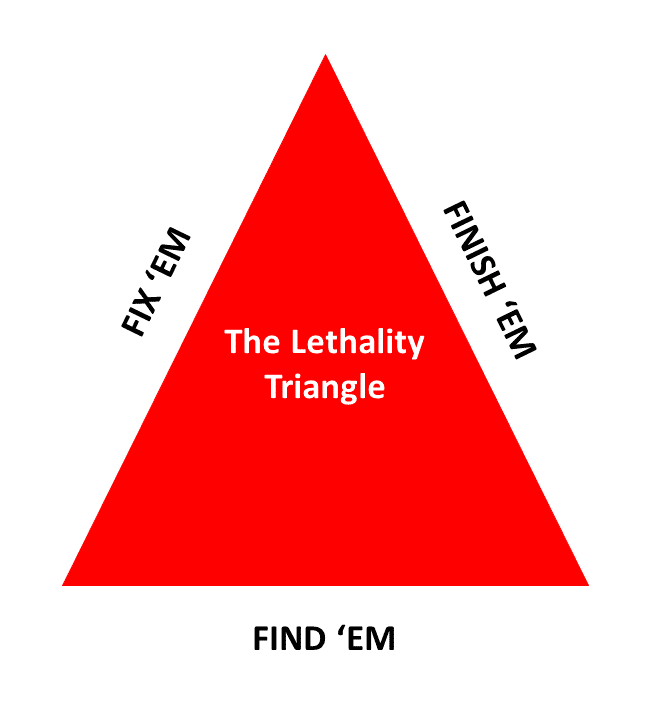
“Lethality” is the new hot Pentagon buzzword, but it also harkens back to the age old Infantry principle of “Find ‘em, Fix ‘em, Finish ‘em” – what could be called “The Lethality Triangle”, if it has a name. On the “Finish ‘em” side, both the Army and Marine Corps have small arms programs underway that will bring significant increases in squad-level small arms firepower and lethality.

In terms of “Find ‘em” and “Fix ‘em”, the proliferation of small, rugged and portable command, control, communications, and computer (C4) assets has dramatically enhanced the level of firepower that small units can bring to the fight – at the right time and in the right place. Programs such as the US Army’s Nett Warrior and the USMC’s Modernized Rifle Squad, incorporating a designated ‘systems operator’, are significant steps forward in creating technologically-enhanced fighting units.


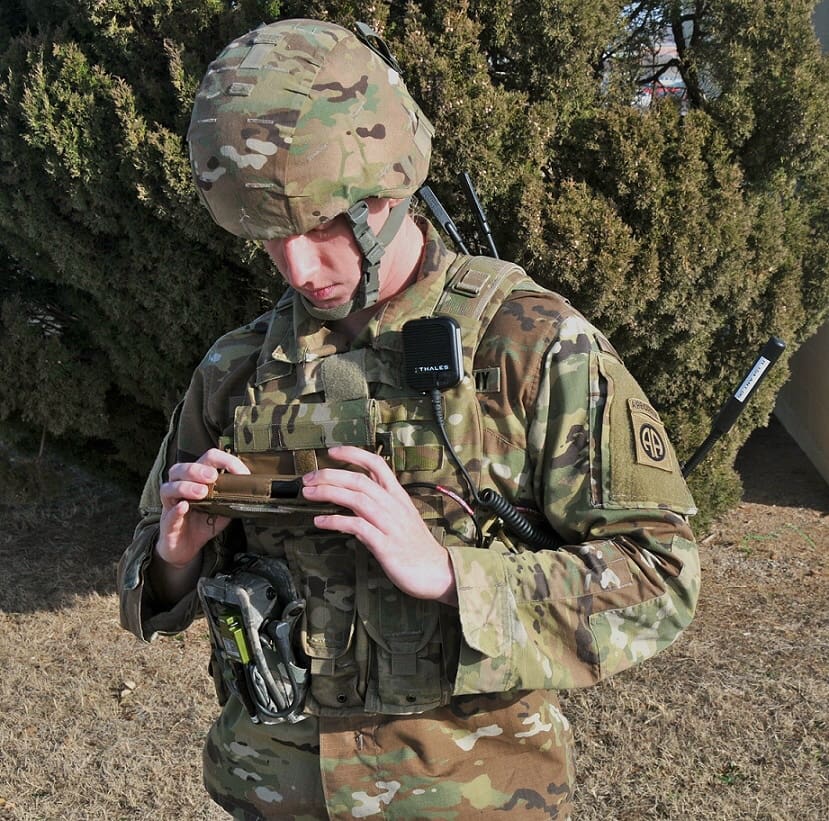
Sgt. Nathaniel Shaver trains on the Precision Fires-Dismounted system, a software application hosted on the Nett Warrior End User Device. (Photo Credit: Dan Lafontaine (PEO C3T))

Operational environments however present significant challenges to keeping small unit C4 assets up and running so that units can cut through the fog of war, dominate the battlespace and win the fight quickly and efficiently. Our rugged, portable, intelligent power management solutions are in the field already and have been proven on numerous deployments in some of the most austere environments possible.


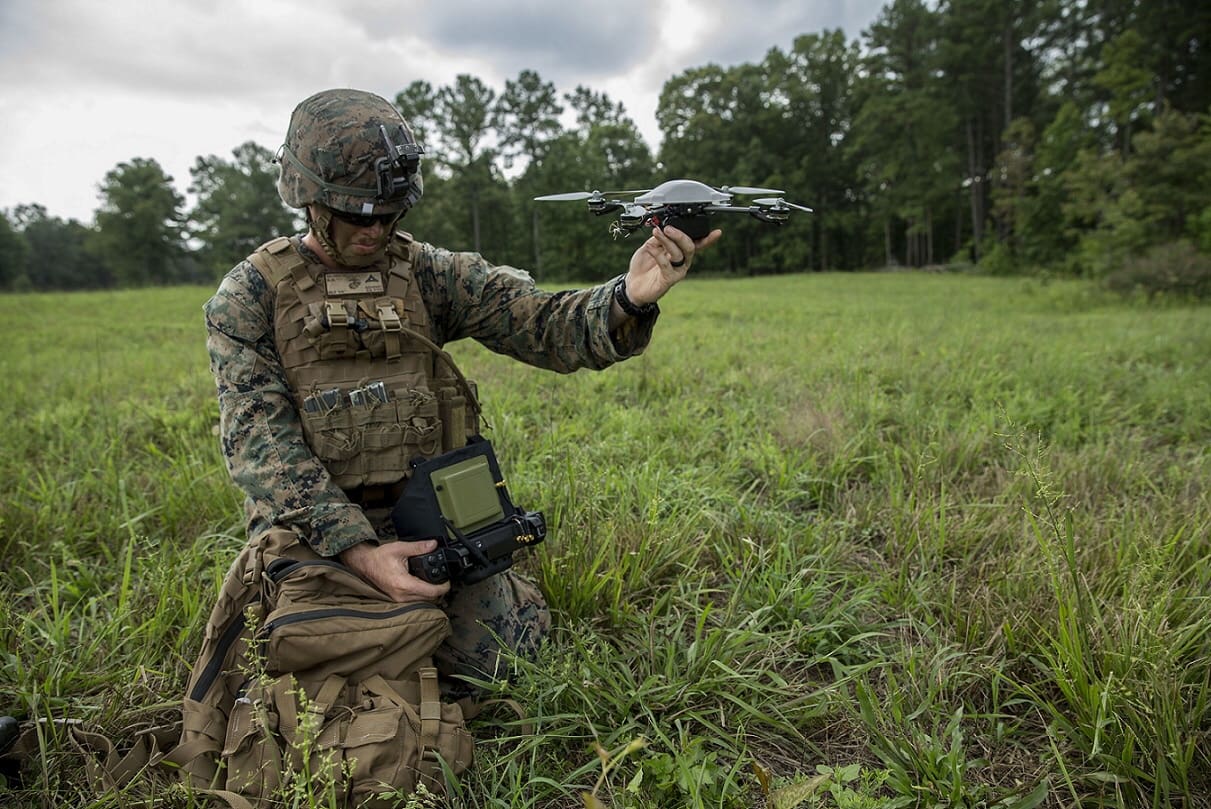
U.S. Marine Corps Lance Cpl. Ryan Skinner prepares to fly the InstantEye during the Infantry Platoon Battle Course as part of a training deployment. The InstantEye is a small unmanned aerial system used to be deployed at the squad level for quick and local surveillance and reconnaissance. (U.S. Marine Corps photo/Released)

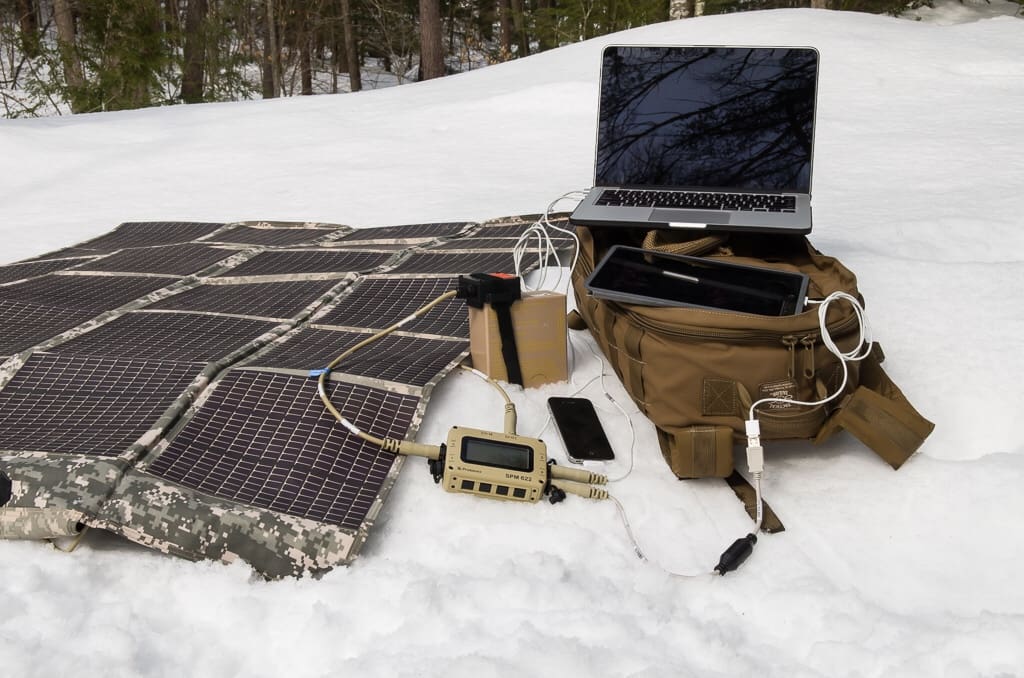
Troops are already able to draw power from any available source; such as a vehicle battery or DC outlet, a solar blanket, a field generator, standard commercial primary batteries, and most US and Allied Forces military-issue rechargeable batteries. And thanks to our plug-and-play smart cable technology, troops are also able to carry fewer batteries– helping to simplify battery logistics and reduce combat loads.


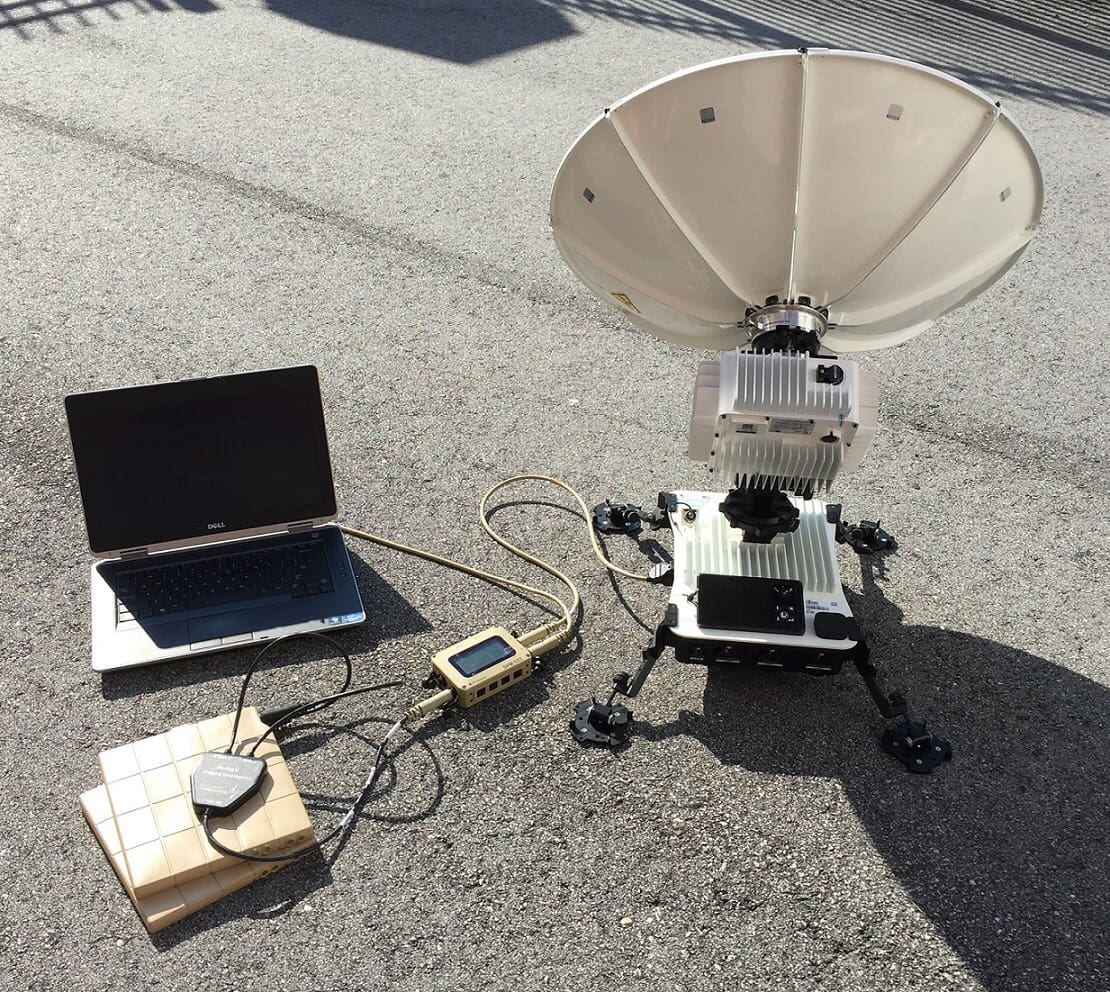
A Panther 2 SATCOM system powered by an SPM-622 integrated solution in service with a USASOC unit.

Our Power Management systems currently support a wide range of C4 equipment, including:
• radios and SATCOM systems
• laptops, tablets, and smart phones
• GPS systems, laser markers and designators
• and more…


Keep your C4 assets running – no matter where you are.

To see the full list of equipment we can support, visit www.PTXnomad.com/supported-equipment

If you don’t see what you need, contact us at Team.Room@Protonex.com and we will lead you through the process of developing a bespoke solution.

Army Developing New Enhanced Night Vision Goggles, Squad Rifles to Increase Soldier Lethality

Wednesday, October 31st, 2018

WASHINGTON — The Army is slated to release the newest Enhanced Night Vision Goggle-Binocular to a select number of combat units sometime in fiscal year 2019, according to the Soldier Lethality Cross-Functional Team officials.


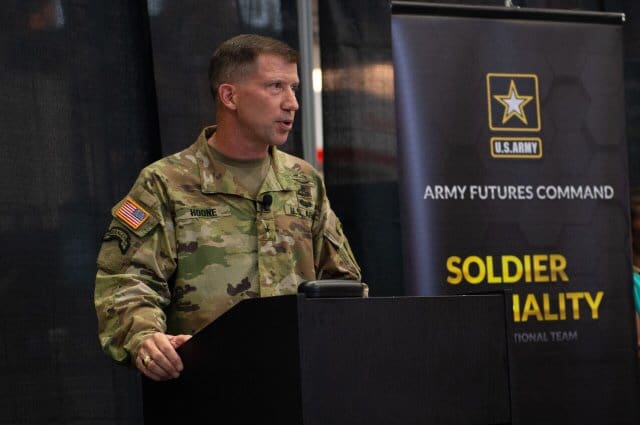
BG David Hodne, the Soldier Lethality Cross-Functional Team director, spoke about the Soldier Lethality team’s progress during the Association of the U.S. Army’s Annual Meeting and Exposition Oct. 9, 2018.(Photo Credit: US Army photo by Devon L. Suits)

The new ENVG-B has both night vision and thermal-sensing capabilities and “stereoscopic binocular depth perception,” providing Soldiers with an illusion of depth on a flat image, officials said.

According to 82nd Airborne Division Soldiers who field-tested the new technology, the new ENVG-B is a “game changer” providing Soldiers with a unique advantage against an adversary, said Brig. Gen. David Hodne, Soldier Lethality CFT director, during the Association of the U.S. Army’s Annual Meeting and Exposition, Oct. 9.

Soldiers testing the new device had a 100 percent improvement in weapons qualifications using that ENVG-B, along with a 300 percent increase in detection of targets in day and night environments, and a 30 to 50 percent decrease in the time taken to shoot a target, Hodne added.

Over the next three years, the Army is scheduled to field about 10,000 ENVG-B systems, according to Brig. Gen. Anthony Potts, the program executive officer in charge of PEO-Soldier. U.S. Army Forces Command has yet to finalize the list of units that will be among the first to receive the new ENVG-B.

Aside from the new night binoculars, the Army will also field the new ENVG version 3 in fiscal year 2019, he said.

Both devices will incorporate a wireless system that connects the goggles to a Soldier’s rifle sites, Potts explained. Through testing, Soldiers employing the ENVG version 3 “rapid target acquisition” capability have seen a 100 percent increase in first-time target engagement.

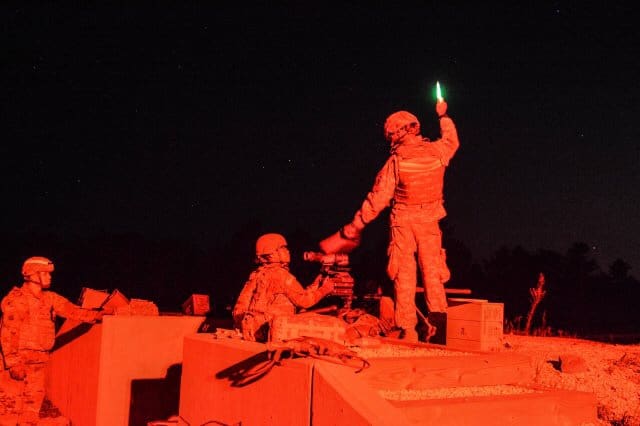
US Army Reserve SGT Gordon Massiah, Task Force Ultimate cadre, signals to the tower with a chemical luminescent stick at night-fire qualification during Operation Cold Steel II, hosted by U.S. Army Civil Affairs and Psychological Operations Command (Airborne), Aug. 7, 2018 at Joint Base McGuire-Dix-Lakehurst, N.J. The Army is slated to release the newest Enhanced Night Vision Goggle-Binocular to a select number of combat units sometime in fiscal year 2019. (Photo Credit: US Army photo by SPC Brianna Saville )

REQUEST FOR A COMMON CARTRIDGE

Back in July, the Army awarded an opportunity contract to five companies to develop prototypes for the Army’s Next Generation Squad Automatic Rifle System. The new system is said to replace the M249 squad automatic weapon serving in the automatic riflemen role.

Prototypes from the new weapon system are slated to be evaluated sometime in June 2019, Potts added.

“Much of this effort is informed by the findings of the 2017 Small Arms Configuration Study. Previously, Probability of Hit drove a lot of our requirements,” said Hodne. “But now, [the Army is] looking at energy — at range. It is one of the critical factors that will define the next generation squad weapons, both the automatic rifle and the rifle.”

Coinciding with the new squad rifle system, PEO-Soldier recently released a “draft Prototype-Opportunity Notice” to help develop a 6.8mm common bullet cartridge, Potts added. The goal is to have lethal effects on targets beyond 300 meters. The Phase II Prototype Opportunity will ask vendors to propose an automatic rifle, a rifle and a common cartridge.


“There’s a great logistics support function to having a common cartridge on the battlefield,” Potts said. “From an engineering perspective … if you’re going to optimize a cartridge, you want the engineers that are developing these weapons to be able to optimize both concurrently.”

Story by Devon L. Suits

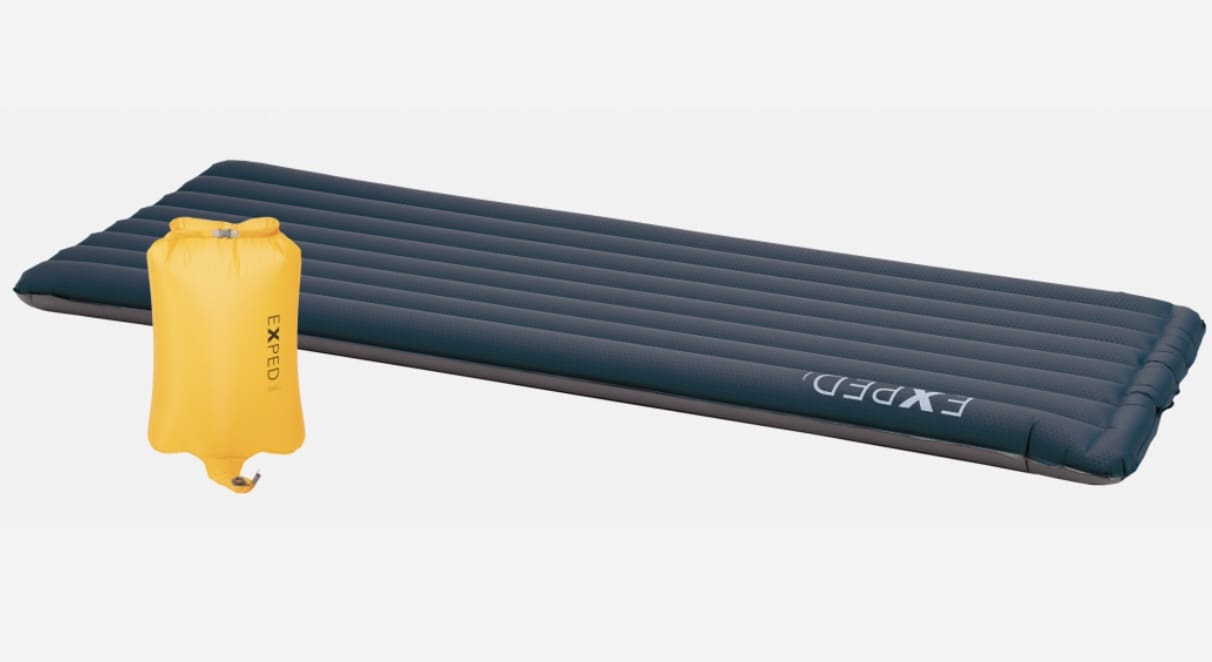
Brigantes Presents – High Angled Solutions – Exped 9xp Sleeping Mat

Wednesday, October 31st, 2018

Sleeping mats have moved a long way from the closed cell foam mats that are still in use in some units. Whilst light and cheap, they take up space and don’t insulate the individual, allowing the cold to penetrate up through the ground and chill the user. The initial response to being colder than expected, is upgrade to warmer, bulkier sleeping bags. This often doesn’t give the expected results, as the insulation under the user is compressed and doesn’t insulate as efficiently.

The answer is to move to a more advanced sleeping mat. Enter the Downmat XP 9, the revolutionary DownMat for extreme temperatures!

The Downmat XP 9 is exceedingly comfortable, extremely warm and packable! This enables the user to carry a smaller, lighter bag. Sleep warm and comfortable, recover and be ready for what lies ahead.

Max Talk Monday – Casualties

Monday, October 29th, 2018

This is the tenth installment of ‘Max Talk Monday’ which shares select episodes from a series of instructional videos. Max Velocity Tactical (MVT) has established a reputation on the leading edge of tactical live fire and force on force training. MVT is dedicated to developing and training tactical excellence at the individual and team level.

This episode is based on Max Talk 025, which is a general discussion around the realities of casualties and the implications for planning, avoidance, and dealing with them. This is primarily a tactical not a medical discussion.

Max is a tactical trainer and author, a lifelong professional soldier with extensive military experience. He served with British Special Operations Forces, both enlisted and as a commissioned officer; a graduate of the Royal Military Academy Sandhurst. Max served on numerous operational deployments, and also served as a recruit instructor. Max spent five years serving as a paramilitary contractor in both Iraq and Afghanistan; the latter two years working for the British Government in Helmand Province, Afghanistan. 

Website: Max Velocity Tactical

YouTube: Max Velocity Tactical