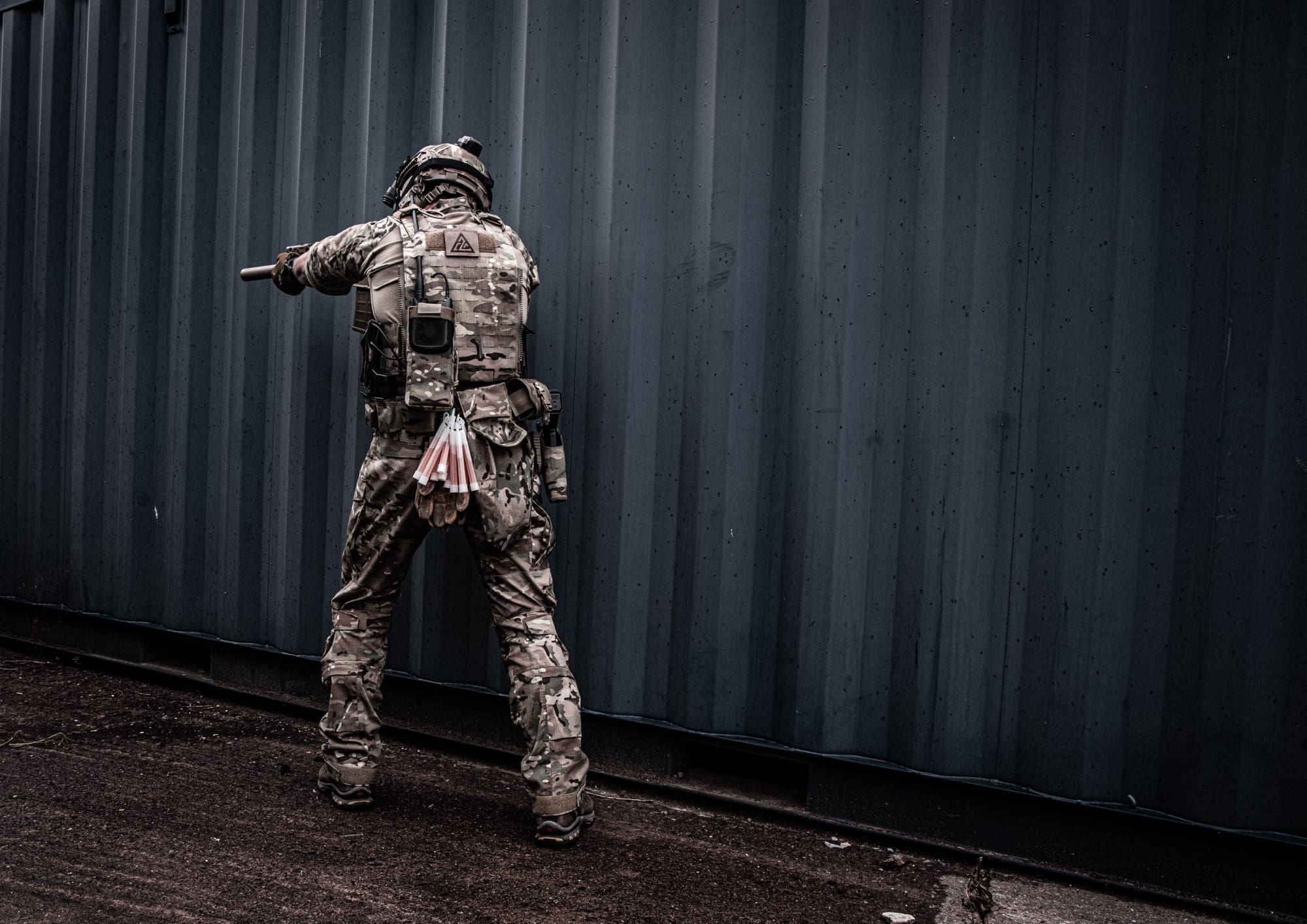
Salomon Forces Genesis MID GTX

Archive for the ‘Guest Post’ Category

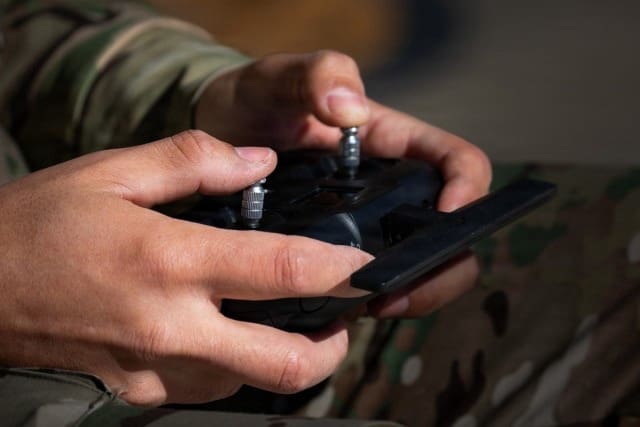
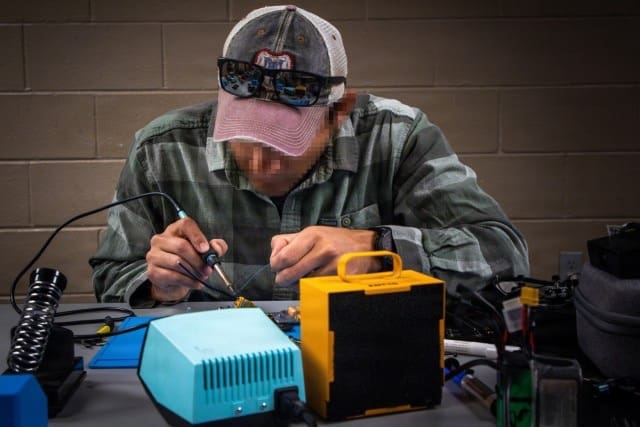
Army Drone Team Advances Tactics at Drone Crucible Competition

Wednesday, December 10th, 2025

FORT RUCKER, Ala. – The Army Drone Team competed in the National Drone Association’s Drone Crucible Competition Dec. 4-6, joining some of the military’s top drone operators and industry experts in a series of combat-focused challenges.

The event, held at Camp Blanding, Fla., brought together teams with their own unmanned aircraft systems to test and refine squad-level drone capabilities. Scenarios included close-quarter breaching and room clearing, strikes against moving enemy convoys and aerial targets, long-range engagements on critical assets, and integrated missions against multiple targets and counter-drone systems.

Capt. Jacob Bickus, officer in charge of the Army Drone Team stationed with the 1-145th Aviation Regiment, US Army Aviation Center of Excellence at Fort Rucker, said the competition was only the third event for the newly formed unit since its launch in September. Over the three-day event, the team, comprised of top drone operators and specialists from across the Army, showed they belong among the military’s leading drone experts in both technical and tactical drone employment.

Chief Warrant Officer 2 Scott Carpenter, an unmanned aircraft system operations technician from the 20th Special Forces Group said the Drone Crucible Competition offered a rare chance to bring together some of the Army’s best minds in unmanned systems.

“I think it’s a great way to bring all those different viewpoints and experiences and really generate the best tactics, techniques and procedures,” Carpenter said. “It’s powerful as far as how UAS is employed.”

Carpenter noted that success often hinges on having the right tool for the mission, whether infrared cameras for night operations or quadcopters with prop guards for close?quarters training. He said developing subspecialties within units could strengthen capabilities across the force.

The event also gave Carpenter, a National Guard Soldier and Dual Status Military Technician, the opportunity to see how active?duty units are employing drones. “It’s a very good opportunity to get outside of your normal sphere and see what the conventional Army is doing across the nation,” he said. “Even down to the finer details, like what kind of antenna they’re using. It absolutely translates.”

The Army Drone Team’s participation in the Drone Crucible competition is aimed at more than testing equipment though. Capt. Nathan Rosenberger, a military intelligence officer and artificial intelligence technician assigned to the Army’s Artificial Intelligence Integration Center in Pittsburgh, said the event highlights the value of working across branches.

“Inter-service collaboration is extremely important,” Rosenberger said. “One of the main takeaways from a competition like this is having all of the services come together, work together, and take some lessons to work from.”

Sgt. Ernesto Viveros, an unmanned aircraft systems operator in the 1st Armored Brigade Combat Team, 1st Cavalry Division at Fort Hood, Texas, said his path to the team began after the Army retired the Shadow system, forcing soldiers to adapt to new platforms. “I’ve been flying drones since August of last year,” Viveros said. “Our chief put us on a path to figure it all out, because he saw what was going on and wanted us to be prepared.”

Viveros said that the rapid pace of innovation has pushed the Army to keep up. “Shadow was an old system, and they just kept it around,” Viveros said. “Now you’ve got conferences, the USNDA, everyone’s trying to learn and buy new systems. From last year it’s just been fast-paced, and we’re jumping on.”

Bickus reflected on the competitive nature of the exercise and the opportunity to train alongside elite units. “Anytime you can train with someone as elite as the Navy SEALs, it’s a good day,” Bickus stated. He also compared commercial drones with systems developed in?house, noting that Soldiers are still building trust in different platforms. “The more we use them, the more we’ll get comfortable and kind of build trust with certain systems,” he said.

Finally, Bickus addressed the broader learning environment, pointing to the importance of adapting established tactics while observing global drone employment. He remarked that the competition allowed Soldiers to refine their skills in close?quarters battle scenarios and nighttime operations, while also learning from allied and partner practices.

The Army Drone Team came out on top in many of its matches, underscoring the unit’s rapid growth and potential. The competition, however, was less about winning individual events and more about building trust in emerging systems, refining tactics and strengthening ties across the force. As the Army continues to adapt to the fast pace of drone innovation, the team’s performance at Camp Blanding marked another step toward shaping how Soldiers employ unmanned systems in future conflicts.

By Leslie Herlick

Hegseth Introduces Department to New AI Tool

Wednesday, December 10th, 2025

Yesterday, several employees at the Pentagon got a pop-up on their computers inviting them to use a new artificial intelligence tool developed for the War Department. Some were skeptical, wondering if the invitation was part of a cybersecurity test.

But by this morning, those concerns were gone — posters around the Pentagon and an email from Secretary of War Pete Hegseth assured everyone that the new tool is not only legit, but that he wants everybody to start using it. 

“I am pleased to introduce GenAI.mil, a secure generative AI platform for every member of the Department of War,” Hegseth wrote in the email. “It is live today and available on the desktops of all military personnel, civilians and contractors. With this launch, we are taking a giant step toward mass AI adoption across the department. This tool marks the beginning of a new era, where every member of our workforce can be more efficient and impactful.”

Visitors to the site will find that what’s available now is a specialized version of the Google AI tool Gemini, Gemini for Government. This version is approved to handle controlled unclassified information. A green banner at the top of the page reminds users of what can and can’t be shared on the site. 

In addition to Gemini for Government, the site indicates that other American-made frontier AI capabilities will be available soon. 

“There is no prize for second place in the global race for AI dominance,” said Emil Michael, undersecretary of war for research and engineering.

“We are moving rapidly to deploy powerful AI capabilities like Gemini for Government directly to our workforce. AI is America’s next manifest destiny, and we’re ensuring that we dominate this new frontier.” 

Access to the site is available only to personnel with a common access card and who are on the War Department’s nonclassified network.

When GenAI was asked, “How will you help the Department of War achieve its mission,” through a user prompt, it replied with a list of capabilities, including, among other things, creating and refining documents, analyzing information, processing and analyzing satellite images, and even auditing computer code for security purposes.

“I can support the DOW’s mission by providing a range of capabilities designed for a secure, high-impact environment,” GenAI replied. “I am ready to support your mission requirements.”

The tool reminds users to double-check everything it provides to ensure accuracy. The highest authority within the War Department, Hegseth himself, provided that validation. 

“The first GenAI platform capability … can help you write documents, ask questions, conduct deep research, format content and unlock new possibilities across your daily workflows,” he wrote. “I expect every member of the department to log in, learn it and incorporate it into your workflows immediately. AI should be in your battle rhythm every single day; it should be your teammate. By mastering this tool, we will outpace our adversaries.”

For those unfamiliar with how to use AI, online training is available at genai.mil/resources/training.

By C. Todd Lopez, Pentagon News

AV Awarded $13.2M Contract to Provide P550 UAS for US Army’s Long Range Reconnaissance (LRR) Program

Tuesday, December 9th, 2025

ARLINGTON, Va., December 8, 2025 – AV, with partner Parry Labs, has been awarded a 3-year Other Transaction Agreement with an initial base contract value of $13.2M with additional options for a total potential contract value of $42M to provide the newly developed P550™ uncrewed aircraft system (UAS) for the U.S. Army’s Long Range Reconnaissance (LRR) program. The all-battery electric, high-performance P550 delivers long-range intelligence, surveillance, and reconnaissance (ISR) capabilities alongside lethal effects crucial to the LRR mission. AV will deliver P550 system updates along with support and documentation deliverables to the U.S. Army, PEO Aviation, PM UAS, PdM SUAS for testing, evaluation, and integration into the Army Family of Systems.  This award is in addition to the previously announced delivery of P550 systems to PM UAS. 

“AV’s LRR offering was engineered to meet the Army’s unique needs, resulting in an architecture tailored to match battalion-level battlefield requirements,” said Jason Hendrix, AV’s vice president of Small Uncrewed Aerial Systems. “AV has a strong track record of providing both ISR and lethal effect solutions to the U.S. Armed Forces. We are confident that P550 will effectively bridge the current capability gap, providing the Army with critical functionalities in a single, adaptable platform.” 

Equipped with advanced AI and autonomous capabilities, P550 serves as a readily deployable asset for enhanced situational awareness, force protection, and targeting capabilities in contested environments. Its toolless quick-connect airframe and vertical take-off and landing (VTOL) system reduce soldier exposure to adversarial fire. 

“From its inception, P550 was designed with a Modular Open Systems Approach (MOSA),” continued Hendrix. “The ability to swiftly install and exchange payloads, update mission software, and interoperate with other Army elements depending on mission requirements is crucial to operational success and soldier safety. AV’s partnership with Parry Labs integrates their proven mission system components into P550, offering best-in-class solutions that anticipate soldier needs. P550 embodies a true MOSA system, providing maximum flexibility with minimal logistical demands.” 

P550 represents a significant advancement in AV’s commitment to equipping soldiers with adaptable, mission-ready tools that enhance battlefield effectiveness while minimizing logistical burdens. As a versatile, cutting-edge platform, P550 is poised to support the Army’s LRR needs and elevate the operational readiness of U.S. forces. 

Tactical Distributors Announces Woodland Week

Monday, December 8th, 2025

Woodland Week Starts Now

The wait is over. Woodland Week has officially kicked off and we are dropping exclusive gear in the pattern that built an era. M81 is back in full force and this week is stacked with limited runs, TD only collabs, and the kind of small batch drops that disappear before lunch. If you know Woodland, you know the energy. If you are new here, this is the camo that raised a generation of shooters, gear junkies, and range day lifers.

Every drop this week is hand picked, built for hard use, and released in tight quantities. Once it is gone, it is gone. We are starting strong with two heavy hitters and rolling out more throughout the week. Grab the gear, claim the camo, and get ready to refresh often. Woodland Week is live.

TD x illPRO x Ridge Wallet in M81 Woodland

The first Woodland Week release is a pocket sized powerhouse. Grade 2 titanium. Powder coated. Wrapped in illPRO’s signature Woodland finish. This is the Ridge Wallet you already trust, rebuilt the Tactical Distributors way and dropped in an exclusive M81 edition you will not find anywhere else.

It carries 1 to 12 cards without stretching, blocks unwanted scans with RFID tech, and locks your cash down with the integrated strap. Replaceable screws and elastic keep it running for life. Simple. Strong. Woodland ready. This is the only wallet you want on deck for the week ahead.

Stroup Knives Bravo 5 Tanto: TD Exclusive Woodland Edition

Next up for Woodland Week. A fixed blade built for real work. The Bravo 5 Tanto is full tang 1095 high carbon steel and ready for piercing, slicing, chopping, and whatever you throw its way. Field missions. Backcountry trips. Daily carry. It thrives where weak blades fail.

This TD Exclusive hits even harder with a Woodland wrapped sheath you can only get here and a custom Stroup Knives x TD Woodland printed box. Whether you collect or put miles on your gear, this one earns its spot fast.

KEY FEATURES

• Full tang 1095 steel

• Tanto point strength

• TD exclusive Woodland sheath

• Custom Woodland printed box

• Vertical or horizontal Kydex carry

• Built with Stroup Knives and Justin Melnick

www.tacticaldistributors.com/collections/td-woodland-collection

Initial Gen 6 Glock Details Dropped

Monday, December 8th, 2025

After a reported five years of development, Glock Inc. has released an initial overview of the Gen 6 series of pistols.

Initial offers are all 9mm models: the Glock 17, Glock 19, and Glock 45.

New Glock Gen6 disassembled

The announcement, captioned ENGINEERED FOR YOU, was published across the range of Glock’s social media channels, with a fairly simple message:


Introducing the 6th Generation of GLOCK pistols. Gen6 is engineered for you.

The Gen6 line brings you purpose-driven ergonomics with a refined optic ready system. The models included are the G17 Gen6, G19 Gen6, and G45 Gen6, chambered in 9mm.


Few details were officially available, though an expected formal release this week (if not today) should rectify that.

We do know a few things about the new Gen6, including the following features:


  1. An updated palm swell intended to contour the pistol to the natural curvature of the hand. We’ve seen several reports that Glock went so far as to measure the majority of their employees’ hands as part of the design process, though nothing (yet) on how those measurements were quantified and utilized by the engineers.
  2. A new grip texture: RTF6, which combines elements of previous textures (RTF2 and RTF4) to create the “…perfect blend of performance and comfort.”
  3. An enlarged beavertail. This obviously encourages a higher master grip and protects from slide bite.
  4. A ridge or “fence” around the slide stop lever, or as Glock puts it, a “Slide Stop Lever Enlarged Border.” This is meant to mitigate or prevent unintended activation.
  5. A “thumb rest.” This is for all intents and purposes a “gas pedal” type feature, which allows better control of the weapon during recoil (and is a favorite among competitive shooters).
  6. Deeper, more overt slide serrations. These are angled deeper intot he slide to make the surface engagement more tactile for slide manipulation.
  7. Undercut trigger guard. This is something people have been asking about for years. It may well eliminate “Glock Knuckle,” which might seem like a minor thing but is – at least for Glock shooters who routinely put a lot of rounds downrange – anything but.
  8. A flat-faced trigger, with the obligatory Safe Action System.
  9. An RDS-mounting system that provides for what Glock describes as “direct mounting” to the slide. Each pistol will ship with three polymer optic plates that together provide fitment for most common optics and act as what’s been described as a “shock absorber.” As a result of the new optic system, MOS Glock models are no more.


Additionally, we know the following:

  • They are returning to a single recoil spring design.
  • This is not a modular design in the context of a serialized fire control part of some kind.
  • They have not changed their stock sights. While this will be a point of contention for many, others will note the increasingly ubiquitous use of pistol optics as a defense, not to mention the tendency of so many shooters to replace the stock sights of any pistol with a style they prefer…though this may be rebutted in turn by acknowledging that better stock sights might reduce the demand for replacements in the first place. This will be argued about a lot, whether the pistol’s other features prove to be an improvement or not.
  • The cost of the Gen6 will purportedly be the same as that of the Gen 5.
  • Though other models will be released, the G47 will not be one of them. That’s because the G47 is not the G17 is the G47 (and so on).
  • The magwell is flared for faster reloads.
  • The accessory rail remains unchanged.
  • Available optic footprints include Trijicon RMR, Leupold DPP, and C-More.
  • Internals are not completely identical to the V series of handguns, but they’re close.
  • The Gen6 is not believed to be backwards compatible with its predecessors, though that might not be the case with the magazines (or at least those of the Gen 5).
  • A large number of extant holsters will take the Gen6, but not all of them.


The gun ships with an assortment of accessories, including three magazines, a cleaning set, two backstraps that can be used to more closely fit the weapon to your hand, and three optic plates.

In short, most of the changes made to the Gen6 overall design appear to be predicated on solving common complaints about previous versions. They will definitely reduce the amount of DIY work and workbench modification so commonly seen in the past. The new guns have some expected features as well as a few unexpected features, none of which will be sufficient to prevent a vast outpouring of dissatisfaction from the internet-cognoscenti who are all too eager to share their knowledge and opinion.

As is usual, unfortunately, with any new gun.)

Note: this sort of “drive-by commenting” should not be conflated with the measured, intelligent delivery of questions, observations, or concerns).

Anyway, we’ll know soon enough (43 days and counting down as of this writing) whether the gun deserves hype or derision or something in between.

Glock seems happy with the new gun, arguably more so than in generations past, though that’s obviously difficult to determine from outside the walls of their facility in Smyrna.

We’re advised by Larry Vickers that the following missive was sent out by Glock to their workforce:

According to Larry Vickers, the following missive was sent out by Glock to their workforce:


Dear Glock Employees,

GLOCK is proud to announce the 6th Generation of GLOCK pistols. The Gen6 line of products delivers enhanced ergonomics for increased usability and comfort with a unique optic ready system. The models included are the G17 Gen6, G19 Gen6, and G45 Gen6, chambered in 9mm Luger.

The 6th Generation of GLOCK pistols are engineered for you. Each detail is meticulously calculated with the user in mind, delivering enhancements that feel intuitive. The Gen6 line brings you purpose-driven ergonomics with a refined optic ready system.

“For nearly four decades, the pursuit of perfection has guided GLOCK in focusing on what truly matters: safety, reliability, and our commitment to our customers. The Gen6 pistol line continues that commitment. We’re not chasing trends. We’re moving forward thoughtfully, with the same uncompromising standards that define every GLOCK product.“ – Carlos Guevara, GLOCK Inc., CEO.


The new pistols should be commercially available on January 20, 2026 – which is, no doubt not coincidentally, the first day of the 2026 NSSF SHOT Show. 

You can learn more on this subdomain of the Glock website, in this Glock Gen 6 rundown, or in one or more of several videos that are coming out on YouTube.

You might check back here occasionally over the next few days, as we hope for a more in-depth formal release to be available soon.

MATBOCK Monday – Cobra Sled

Monday, December 8th, 2025

MATBOCK is an industry leader in developing and manufacturing innovative products and technologies for Defense, Law Enforcement and outdoorsmen. One of their best-selling products is called the Cobra Sled which was recently added to a SOCOM program of record to support Casualty Evacuation (CASEVAC) operations. This is an option for SOF operators to swap heavier bulky systems for the lightweight, Cobra Sled. The prime is Triablco and if medics are interested in obtaining a Cobra Sleds for their unit, they need to route their requests up to Medical Logistics team.

The Cobra Sled is the lightest and smallest hoistableevacuation sled on the market at only 9lbs (4.1kg) and can easily fit on the small of your back.

The Cobra Sled’s hoist straps are made from 5,500 lbstensile strength Kevlar webbing with Kevlar stitching. An integrated chest harness directly attaches to both the horizontal and vertical hoist straps. There are four front drag straps that create 2 x 10 ft loops for operators to sling and drag forward in a hands-free configuration, as well as stabilizing straps in the back for uneven terrain.

Additionally, the Cobra sled has 4 ways to EXFIL an injured person. Not only can it be dragged but the Cobra sled also has carrying handles for a 4-person litter carry, but you can also use the hoisting straps to create shoulder loops for a hands-free carry. Finally, you can add our lightweight combat carbon fiber poles to do a 2-personlitter carry.

Features:

• Decontamination Ready – Ultra High Molecular Weight Polyethylene Material, Kevlar Stitching, Kevlar Webbing

• All straps are included and configured for both vertical and horizontal hoist evacuations, dragging, and carrying. This includes the mission-critical chest harness

• Only weighs 9 pounds (4.1kg)

• Max carrying capacity of 600lbs

• Easy to assemble for quick medical extractions

NSN: 3920-01-694-6803

PATENT: 11,207,226

Product Specs:

• Dimensions

• Rolled: 15” x 10” x 10” (38.1cm x 25.4cm x 25.4cm)

• Deployed: 97” x 40.5” x 1“ (246.38cm x 102.87cm x 2.54cm)

• Weighs: 9lbs (4.1kg)

• Volume: 1,178 cubic inches (19,305 cubic centimeters)

• Material: Ultra High Molecular Weight Polyethylene Material, Kevlar Stitching, Kevlar Webbing

To learn more about the Cobra Sled and all the amazing features checkout our YouTube Playlist.

Email sales@matbock.com for more details.

From 88 Days to 24 Hours: Capt. Keneally Phelan Earns Lt. Gen. Weinstein Award for Game-Changing Military Intelligence Innovation

Monday, December 8th, 2025

FORT CARSON, Colo. – Capt. Keneally Phelan, Director of Intelligence with 4th Battalion, 10th Special Forces Group (Airborne), was named the 2025 recipient of the Lt. Gen. Sidney T. Weinstein Award for Excellence in Military Intelligence at a ceremony held on Fort Carson, CO, Oct. 30, 2025. She is the first “Original” from the 10th SFG(A) to receive the award, which recognizes exceptional leadership and commitment within the Military Intelligence (MI) Corps.

The Weinstein Award was established in 2007 to honor Lt. Gen. Tom Weinstein, known as the “Father of Modern Military Intelligence.” His innovative vision transformed Army Intelligence, shaping its structure, doctrine, and capabilities—particularly the principles of Intelligence Preparation of the Battlefield (IPB), which remain crucial today.

To win the award, candidates must go through a thorough selection process. A board of at least five senior officers reviews the nominations. They evaluate each candidate based on their leadership and contributions to military intelligence in the past year.

Col. Nathanael E. Joslyn, Commander of 10th Special Forces Group (Airborne), praised Phelan for her outstanding accomplishments during the ceremony. He highlighted how her leadership enabled her team to become the first under Special Operations Command Europe (SOCEUR) to gain authority to release intelligence reports. This innovation dramatically shortened the time needed for intelligence production from 88 days to less than 24 hours.

“Your efforts didn’t just improve operations,” Joslyn added. “They made up an incredible 98 percent of SOCEUR’s total intelligence output; that’s a clear reflection of your dedication and drive to make a real difference.”

Phelan also improved intelligence training while working on TROJAN ARCHER (TA), the top validation exercise for Counterintelligence (CI) and Human Intelligence (HUMINT) agents in Special Operations. She developed a new Tier IV Training Manual for TA, which helped accelerate the career progression of 91 personnel in the 10th SFG(A) and ensured that skilled intelligence professionals were available more quickly.

Her model proved to be so effective that the 1st Special Forces Command (Airborne) plans to adopt and expand it for the 2026 TROJAN ARCHER exercise. This decision solidifies her legacy as a key driver of change within the Intelligence community.

“Your work embodies everything Lieutenant General Weinstein stood for,” Joslyn said. “Vision, innovation and commitment to excellence.”

Phelan used her acceptance speech to express her gratitude to her team. She emphasized that her success was a group effort and credited them for their support.

“Those accomplishments are not my own,” Phelan said. “They are a testament to teamwork, collaboration, and shared purpose with some of the hardest workers I’ve ever met.”

The award was presented by Lt. Gen. Weinstein’s daughters, Mila Masur and Halee Weinstein. It recognizes Phelan’s leadership, professional skills, and commitment to the values of Duty, Honor, and Country—all of which were integral to their father’s 33-year military career.

“I am really excited that another woman won the award,” said Masur. “My dad was a feminist, and it is really exciting when women are recognized.”

By SSG Michael Wood

US Army Activates Western Hemisphere Command in Historic Transition Ceremony

Sunday, December 7th, 2025

FORT BRAGG, N.C. — The Department of the Army activated the U.S. Army Western Hemisphere Command in a historic transition ceremony today at Fort Bragg, uniting U.S. Army Forces Command, U.S. Army North and U.S. Army South into a single, four-star operational headquarters.

The ceremony also marked the casing of the U.S. Army Forces Command colors and the retirement of FORSCOM’s commanding general. Gen. Andrew Poppas, who has led Forces Command since July 2022, is set to retire after more than 37 years of service.

“Today we become something new,” Poppas said, “but FORSCOM’s spirit of readiness, resilience and warfighting strength will not fade. Rather, that spirit will radiate throughout the Army.”

Gen. Joseph A. Ryan assumed command of the new USAWHC. He previously served as the Army’s Deputy Chief of Staff for Operations, Plans, and Training (G-3/5/7).

The ceremony is a significant moment in the Army’s transformation. The establishment of USAWHC is part of a broader transformation campaign to modernize Army command structures and improve operational agility.

USAWHC is an operational warfighting theater command headquarters overseeing all Army plans, posture, operations, and power projection in support of U.S. Northern and Southern Commands — aligned with national strategic priorities.

“Western Hemisphere Command is designed for speed, flexibility and relevance to effectively respond to challenges in our complex times,” said Army Chief of Staff, Gen. Randy George. “By consolidating these headquarters and aligning the theater, we will streamline processes, eliminate redundant efforts, and free up talent and resources. This will allow us to better support our fighting formations.”

USAWHC unifies domestic-response capabilities from ARNORTH, regional engagement expertise from ARSOUTH and the large-scale readiness oversight of FORSCOM. This integration delivers uninterrupted readiness, rapid force generation and expertise in homeland defense and civil support. This enables the U.S. Army to respond more rapidly to crises and continue building strong military alliances.

“Today is much more than a change of command ceremony,” Poppas said, “it’s a major step toward the merger of three powerhouse Army headquarters into one operational, transregional team that will face the nation’s top strategic priorities.”

The activation of USAWHC is the first step in a conditions-based transformation. By February 2026, USAWHC will reach its initial operational capability and will be assigned to U.S. Southern Command and U.S. Northern Command to prepare to accept Theater Army authorities and responsibilities. If all conditions are met, the command will reach full operational capability by summer 2026.


Today, we continue in the Army’s rich history of transformation — combining Forces Command, Army North and Army South — to form the United States Army Western Hemisphere Command,” Ryan said. “The Army is making an enormous investment in this transformation; combining three important, effective and historically capable commands into one. It is our responsibility to deliver returns on that investment.

The USAWHC mission statement is: “U.S. Army Western Hemisphere Command is the Theater Army for U.S. Northern Command and U.S. Southern Command. USAWHC enables defense of the homeland; conducts defense support of civil authorities, crisis response, and regional security cooperation; provides trained and ready land forces for global and regional employment; integrates Army capabilities into Joint and interagency operations; and ensures the ability of the Army to mobilize and employ reserve component forces to secure American interests and security in the Western Hemisphere.”

Visit USAWHC’s website for more information on the command.

By U.S. Army Western Hemisphere Command Public Affairs