SIG SAUER - Never Settle

Archive for the ‘Guest Post’ Category

SCUBAPRO Sunday- Knives

Sunday, August 19th, 2018

Dive Knifes

The general maintenance of your dive knife is easy and will not be hard as long as you get into a good habit of always raising the knife and scabbard in fresh water properly.

Post Dive care

After diving, rinse the knife and sheath in fresh water. Wash the scabbard thoroughly to ensure no salty residue is left inside, remove the knife from the sheath and operate any moving parts while soaking. This helps remove sand and other debris that may have gotten inside. If not done properly when you put the knife back the remaining salt will cause the blade to rust. If the knife can be disassembled (usually by taking the handle off), take it apart and rinse the individual pieces in fresh water after every couple of dives or if you plan to store for a long time. This helps prevent salt buildup and corrosion from happening underneath the grip where you can’t see it. Dry all of the pieces thoroughly before putting the knife back together.

If you are done diving for the day you can apply a light coat of silicone to the blade to prevent corrosion, but don’t use a petroleum-based lubricant. Petroleum will attract dust and sand. Use a light oil designed for knifes for lubricating and storage. You will want to use a lightweight honing or mineral oil designed for knife care. If your knife does start to rust try and clean it as soon as possible. For very light corrosion, you may be able to wipe it off with just a towel or toothbrush. Again you can also use a cleaning cloth that is designed to help remove light rust marks. For more stubborn stains and rust, soak the knife in distilled white vinegar for about three – five minutes. Remove the blade from the vinegar and wipe it down. Again, a toothbrush will work nicely for removing the lighter stuff. An abrasive sponge can be used for tougher jobs but be careful not to scrub too hard because you could scratch the blade and you can also remove some of the outer coating and it will make it rust faster. Do not use a steel wool, as that will cause more rust to form later. The steel wool will leave small pieces of steel behind that will start to rust.

Rinse the knife in fresh water in the same manner as you would for post-dive care. Dry the knife thoroughly and apply a light coat of silicone to protect against corrosion.

K6 Stainless Knife

Storing your knife

You can store your knife in the scabbard once you are sure both the knife and scabbard are dry. For long-term storage you should store the knife outside the sheath/ scabbard.  If you have a leather sheath, that retains moisture and will cause rust.  You can store the knife outside the scabbard in a cloth that has some oil on it. They make cloths that are treated with mineral oil you can use or just spray some on one. Store the knife in a dive mask box or put the knife wrapped in the cloth in a Zip lock bag.

Sharping your knife

Dive knifes can be hard to sharpen as most have a straight edge and a serrated edge to them. So you cannot really use the easy methods, like a quick pull sharpener, that you just pull the knife thru. You can use a sharpening stone for the straight edge and a ceramic rod for the serrated edge.

1. With your knife at the correct angle, slowly draw the knife down and across the stone in a smooth motion, starting at the heel and finishing at the tip.

2. The number of times this must be done will vary depending on how dull your knife is. But what’s most important is that you do the same amount of pulls on both sides of the knife.

3. After five draws, flip the knife to the other side and repeat the heel-to-tip motion.

4. Repeat this process, but instead push the knife from tip to heel. Knives are used to cut in both push and pull motions, so it’s important to sharpen them in both directions as well.

5. Flip the stone over to the finer side, and complete steps again until your knife is sharp.

Serrated Edge sharping

There are lots of ceramic rods out there so I am just going to talk about one the Lansky rod. It is tapered so it will fit all sorts of sizes of serration bevels.

1. First size the bevel by taking the rod and place it in a serrated bevel so that the angle is the same. Run the rod from the top (side closest to the spine of the blade) to the bottom (the cutting edge) a few times in each serrated groove. Try and stay with the angle of the serration.

2. Knock off the burr by taking a fine grit sandpaper or sharpening stone and remove any burr from the flat side of the serrated grooves by making a few light passes. Be sure to only take the tapered rod to the width of each serrated groove so that it does not deform them. You don’t need to use a lot of pressure with this method.

3. If you don’t understand this look on YouTube there are a ton of ways to do this.

Titanium Dive Knives

Sharping a titanium dive knife is the same as a stainless steel, but there is a difference. Most companies recommend a diamond sharpener. You will have to make sure you know what type of titanium knife you have as some are only coated with titanium. If it is called military grade it should be pure titanium. Remember when sharpening to use a light touch, titanium is easy to deformed and excessive pressure in sharpening will roll the edge causing difficulties getting a sharp edge.

SCUBAPRO Professional Knife

The SCUBAPROs TK15 is the first in a new series of Tactical dive knifes. It is built around a single piece of marine-grade stainless steel machined to achieve the ideal balance of strength and weight. Its surface is specifically polished to let water drain easily and prevent oxidation. The thickness of the stainless steel is consistent from one end to the other, creating a high level of stiffness. This is a traditional, heavy-duty, no-frills type of knife designed to handle all cutting jobs, large and small.

The blade is a generous 15cm/6in long and features a lower full-length smooth-edge and an upper serrated edge positioned close to the handle so you can maintain maximum control of the cut. A line cutter is positioned closer to the tip of the blade to enable you to easily hook lines, plus in this position it doesn’t weaken the blade. Also, a shackle key is built into the body of the blade, a great addition for boat divers.

Marine-grade stainless steel offers the best balance between cutting edge reliability and resistance to corrosion. This can be a difficult balance to achieve on the same piece of steel, but SCUBAPRO succeeded by adding a handmade polish finishing on the steel surface which promotes water run-off for long-term oxidation-free durability.

The TK15 comes with a heavy-duty handle that’s sized and shaped for solid gripping. The rugged sheath is made from fiberglass reinforced polyamide. The knife is kept in place by two teeth on the sheath matching the recesses on the handle. The sheath includes heavy-duty nylon straps for easy attachment and a SCUBAPRO branded hand cover with bungee to secure the knife to your hand under critical conditions.

www.scubapro.com

MCTSSA Tests Marine Corps Network to Make Cyber Systems Stronger

Sunday, August 19th, 2018

CAMP PENDLETON, Calif.—Command and control must be assured anywhere the Marine Air Ground Task Force operates, which requires in-depth testing to deliver success on the battlefield.

Cyber security experts and engineers from Marine Corps Tactical Systems Support Activity recently tested various systems within the Marine Corps Enterprise Network, or MCEN, to assess interoperability and cyber resiliency.

“MCTSSA started executing mission-based systems tests as a means to aid Marine Corps acquisition programs in security engineering and ensure our capabilities can perform in cyber-contested environments,” said Jimmy Clevenger, MCTSSA senior principal engineer for Cyber Security.

This mission-based system of systems testing is one of the functions of the MCEN Planning Yard.

The MPY evaluates proposed changes to the MCEN from a performance, interoperability, and cyber security perspective. The MPY testing takes a big-picture approach to validate network processes, provide baseline performance characteristics and conduct an adversarial cyber vulnerability assessment.

“The MPY capability is a great test and analysis service that informs leadership of the impacts imposed on the MCEN’s core services of transport, processing and storage,” said Clevenger.

MCTSSA conducted the cyber resiliency tests in April and May, and delivered a final report of the results to Marine Corps Systems Command programs of record as well as Marine Forces Cyberspace Command and Headquarters Command, Control, Communications, and Computers, United States Marine Corps stakeholders in June.

Specific testing measured the impacts and cyber resiliency of several command and control programs that are connected to the MCEN.

“We collected performance metrics such as network utilization and throughput,” said Paul Tice, MCTSSA technical director. “This enables us to measure the impact of future changes.”

These tests have expanded in size, scope and complexity as MCTSSA looked at different warfighting functions and the systems that support them.

Large scale network tests are a big undertaking, and under the direction of MCSC, MCTSSA formed a federation of technical organizations to aid in the detailed analysis, including: SPAWAR Systems Center (SSC) Atlantic; SSC Pacific; Naval Surface Warfare Center – Crane Division; and Portfolio Manager, Supporting Establishment Systems, Systems Integration Lab.

“System of systems tests are challenging, and we decided to take a crawl, walk, run approach as we developed the current capability here at MCTSSA,” said Clevenger.

MPY testing facilitates the maintenance of the MCEN by enabling a technical evaluation process of proposed hardware and software changes within the MCSC portfolio to determine the impact of those changes to the network.

“The goal of the MPY is to technically evaluate changes to the MCEN before they are introduced,” said Tice. “The idea is to determine whether a proposed change impacts the performance or security posture of the MCEN and recommend mitigation steps before the change is implemented.”

One of the side benefits is enterprise awareness of the changes happening to the network.

“Each program office is extremely busy delivering their particular product to the MAGTF, and often don’t have time to see what is changing in the other systems that share their environment,” said Tice.

This strategic look at the MCEN aids future planning and gives a better understanding of current network capability.

“We have established a measurement of the Marine Corps’ Aviation C2 systems’ impact to the MCEN and have preliminary formulas that can estimate the bandwidth required for these systems in a Tactical Air Operations Center role,” said Darren Spies, test director for MCTSSA’s Test and Certification Group. “For future planning efforts of the MCEN, this information will be useful when gauging further impacts of modifications made to existing systems or incorporating any future systems into the architecture.”

By evaluating the impact of various C2 tools on the MCEN, MCTSSA provides the data leaders need to deliver a C2 environment for tomorrow’s Marine Corps today.

MCTSSA, the only elite full-scale laboratory facility operated by the Marine Corps, is a subordinate command of Marine Corps Systems Command. MCTSSA provides test and evaluation, engineering, and deployed technical support for Marine Corps and joint service command, control, computer, communications and intelligence systems throughout all acquisition life-cycle phases.

Marine Corps Tactical Systems Support Activity personnel tested various systems within the Marine Corps Enterprise Network as part of the MCEN Planning Yard 18-1 event. MCTSSA started executing mission-based system of systems tests as a means to aid programs of record in security engineering and cyber resiliency. (U.S. Marine Corps illustration by Jennifer Sevier)

By Sky M. Laron, Public Affairs Officer, MCTSSA

Corps Strength – The Long and Short of it

Saturday, August 18th, 2018

I have a buddy who is an Army Ranger and Green Beret. A guy with multiple tours in Iraq and Afghanistan. Your typical SOF type, (at least in my experience) easy going, down to earth, smart as a tack and a one tough bastard, both inside and out. When he isn’t deployed, or deep in a training loop, I get him down here to be a guest speaker for my international leadership class. He’s a great speaker and the students love him. I love the fact that we get to hang out and catch up later over some chow and beer. As he’s still on active duty, I get to pick his 50 lb brain, especially on current ops, weapons and PT.

When it comes to PT we think a lot alike. More functional, than sports minded and definitely more outdoor, than gym stuff. He has shared a lot about his team’s PT routine and their other training. Much of it wasn’t a surprise, (other than the insane amount of live fire they do). But, one thing that surprised me on their PT program, was that they almost never do any long-distance running? In fact, he told me that they rarely ever run more than a ½ mile at once. The vast majority of their PT is combination workouts of short runs/sprints, functional movements with tires, sandbags, ammo cans and calisthenics. Intense, functional and in the dirt. Of course, as a matter of operational training, they do a bunch of humping with heavy packs, and on his own time he likes to lift weights. That shows, as he’s built like a linebacker at around 6’ 220lbs. Funny thing when I was a young Jarhead, most of the SOF I saw were all skinny? Now they’re almost all big, stocky guys? I guess it’s more Capt Crunch and Creatine, than Marlboro’s and Jack Daniels nowadays.

In any case I asked him, you guys don’t ever do any longer runs, 5-6 miles every once in a while? “Naw, almost never, some of the guys like to run, they do marathons and all that, but that’s their own thing. It doesn’t help us for what we need. What good is it to jog around in PT gear when in real life we’re carrying weapons, ammo, water, etc. and it’s all in full uniform and in the dirt? When we’re forward it’s humping hills, short dashes, climbing up, around and over crap, and always carrying gear (and sometimes people). We need to train here, for how we fight there. Besides, I hate all that long running, hurts my knees and it’s boring.” I was a typical response from him on any issue; Cut to the chase, let’s do what’s important and forget the bullshit.

Thinking back to my Marine infantry days, we did a lot of running. Many times we went over 10 miles at a pop and lot of it was pretty fast too, even in formation. It seemed that most times it was more of a manhood test than anything else, but I never questioned its value then, as it just seemed like a must do thing, to be in top condition. However, as I’ve grown older (and maybe a little wiser) I find less and less value in long running: just jogging along for mile after mile on the side of road. God knows I’ve done more than my share of it. Having run many marathons, triathlons and other road races, I’ve done training runs over 20 miles for those events. However, if your aim is to achieve a high level of all around “real world” conditioning, I think spending a lot of time on long runs is overrated and frankly probably counterproductive.

Besides being as what my buddy calls; “F’ing boring”, it yields little overall conditioning and can lead to repetitive motion injuries. Especially after you reach the level where you can easily run a 10k. Now I get the fact that it’s mindless and burns calories pretty well. I also get that many people don’t care about “functional fitness”. They just want something simple to keep in decent shape and maintain a good body weight. Running an hour everyday will do that, no doubt. However, if you’re in the military, a 1st Responder, or do have a desire for something better, you need to do more than just jog.

Not that running isn’t valuable, it’s extremely valuable and IMO necessary for conditioning. But, running will serve you better by mixing up the distance and intensity. Interval running that combines fast runs of up to a ¼ mile with jogging, or walking. Beach runs and hill sprints in different combinations and all of this made even better when combining it with some other movements. Besides, taxing and conditioning your body in a more realistic way, it’s almost impossible for this type of workout to become boring, as there is an endless variety of combinations you can dream up. I do at least one of these workouts a week and it’s never exactly the same way.

I shoot for an hour workout total, which is about 5 minutes of warm-up, 45 minutes of continuous running, calisthenics and functional stuff with tires, ammo cans and even some big rocks that are down near the beach here. In the end I probably run 2-3 miles total and all at fast clip, but never more than ¼ mile at once. I finish up with 10 minutes of stretching out and cooling down. A workout like this will hit every area of your body and builds strength, muscular endurance and aerobic fitness all at once. Certainly, much better overall than just jogging for the same amount of time and a whole lot less boring.

In the end, a lot of finding the right workouts for you is more about what you need (and want) vs. than what is just “mindless”. Mix up your running workouts and I’m sure you’ll see some good results. Besides if it works for SOF, I’m pretty sure it will work for the rest of us.

Headed north for a few weeks of climbing, hiking and relaxing. We’ll talk next month. Till then;

“Be Safe always, be Good when you Can.”

Semper Fi

MGunz

Widget Wednesday:  Supported Equipment

Wednesday, August 15th, 2018

6D06681B-7E82-4271-965B-00C683D91EDF

Over the past decade we have worked closely with Program Offices, Commands, and Units to develop a wide range of adapters and cables to bring true plug-and-play power capability to end-users.

770B6CBC-A42F-4DB3-97E6-6FD6516338C5

Our Power Management systems currently support more than 200 different types of electronic equipment, including:
• military and commercial primary and rechargeable batteries
• UAV and UGV systems (both platforms and control units)
• high-performance military radios
• military and commercial SATCOM systems
• laptop and tablet computers
• EOD equipment
• field medical equipment
• GPS systems
• Laser markers and designators
• Smart phones
• And more…

A3D08570-BBA3-48AF-9D8C-D0E7CFD65E1C

To see the full list of equipment that we can provide solutions for, check out the SUPPORTED EQUIPMENT page on our website at www.PTXnomad.com /supported-equipment /.

7C18C75B-C096-4384-95A7-F8364842BDE6

If you don’t see what you need, contact us at Team.Room@Protonex.com and we will lead you through the process of developing a bespoke solution.

Max Talk Monday – The Tactical Reload & The Scan

Monday, August 13th, 2018

In this second edition of Max Talk Monday, we review “029: The Tactical Reload & The Scan”

This is the second installment of ‘Max Talk Monday’ which shares select episodes from a series of instructional videos. Max Velocity Tactical (MVT) has established a reputation on the leading edge of tactical live fire and force on force training. MVT is dedicated to developing and training tactical excellence at the individual and team level.

In ‘Max Talk 029: The Tactical Reload & The Scan’ Max instructs best practices for the tactical reload and scanning, including tactical context, nuance and reality. This includes live fire demo of the various techniques.

Max is a tactical trainer and author, a lifelong professional soldier with extensive military experience. He served with British Special Operations Forces, both enlisted and as a commissioned officer; a graduate of the Royal Military Academy Sandhurst. Max served on numerous operational deployments, and also served as a recruit instructor. Max spent five years serving as a paramilitary contractor in both Iraq and Afghanistan; the latter two years working for the British Government in Helmand Province, Afghanistan. 

Website: Max Velocity Tactical

YouTube: Max Velocity Tactical

Army’s BCT Cyber Teams to Double in Size

Monday, August 13th, 2018

WASHINGTON — Combatant commanders are increasingly getting better support in the cyber domain thanks to a diverse group of problem solvers, said Lt. Col. Wayne A. Sanders.

Sanders, chief of the Cyber-Electromagnetic Activities Support to Corps and Below Program, U.S. Army Cyber Command, spoke Aug. 2 at the Association of the U.S. Army’s Cyber Hot Topics panel.


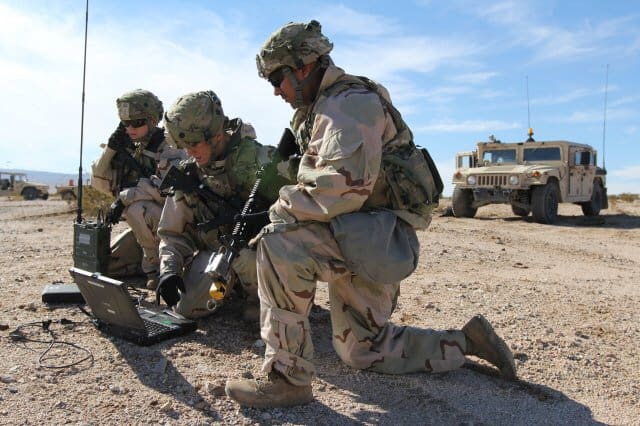
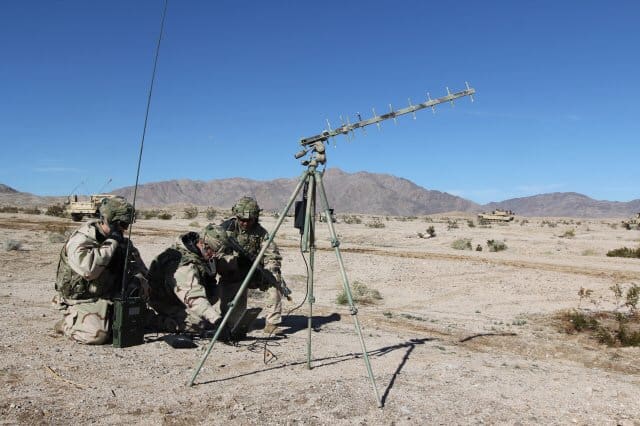
Sgt. Camille Coffey (on the antenna), Spc. Victorious Fuqua (on the computer), and Spc. Mark Osterholt, all cyber operations specialists from the Expeditionary Cyber Support Detachment, 782nd Military Intelligence Battalion (Cyber), from Fort Gordon, Ga., provided offensive cyber operations as part of the Cyber-Electromagnetic Activities (CEMA) Support to Corps and Below (CSCB) program during the 1st Stryker Brigade Combat Team, 4th Infantry Division, National Training Center Rotation 18-03, Jan. 18-24, 2018. (Photo Credit: U.S. Army photo by Steven Stover)

After each of the past 10 combat training center rotations and numerous deployments, these problem-solving cyber operators have been learning something new each time and are improving and integrating better with the staff of the maneuver commanders, he said.

As a result of learning from those 10 CTC rotations and lots of assessments from the Cyber Center of Excellence and other commands, a determination was made to double the size of cyber teams supporting brigade combat teams from five personnel to 10, he said.

Each of those teams will be led by a major who has a “17B Cyber Electromagnetic Activities Officer – Electronic Warfare” military occupational specialty, and a captain, with a “17A Cyber Operations Officer” MOS, he said. Teams will include offensive and defensive cyber, as well as electronic warfare and information operations Soldiers.

Soldiers from the Expeditionary Cyber Support Detachment, 782nd Military Intelligence Battalion (Cyber), provide offensive cyber operations in support of the 1st Stryker Brigade Combat Team, 4th Infantry Division during a seizure of a town at the National Training Center during Rotation 18-03 on January 18, 2018. (Photo Credit: U.S. Army photo by Capt. Adam Schinder)

The other big development is that the secretary of the Army authorized the creation of a cyber warfare support battalion, he said. Initial operational capability for that battalion will be in fiscal year 2019, which begins in October.

The battalion will go after gaps in cyber against peer threats, he said. Those personnel will find the software and hardware solutions that will make the cyber teams more innovative and expeditionary.

Sanders said that in every single operation that cyber teams are a part of, they learn something new during their forensic analysis of attacks. That information is then shared with cyber teams throughout the Army.

A lesson learned could be about a new tactic or technique used in a cyber or electronic warfare attack, he said. Or, it could be about something totally unrelated.

He provided an example. During a recent deployment, the cyber team assigned to the maneuver commander found out after hitting the ground that transportation was not readily available. “We weren’t a known entity to anyone,” one of the Soldiers said. The lesson learned was to integrate early into the operations planning process and attend home-station training prior to going to the combat training center.

Soldiers of the 780th Military Intelligence Brigade embedded with the 3rd Brigade Combat Team, 1st Armored Division, establish a location to conduct cyberspace operations during Decisive Action Rotation 18-08 at the National Training Center at Fort Irwin, Calif., June 6, 2018. (Photo Credit: U.S. Army photo by Sgt. Jeff Storrier)

Brig. Gen. William Hartman, deputy commander, Joint Force Headquarters, U.S. Army Cyber Command, looked back on the brief history of cyber. Just a few years ago a cyber team of four Soldiers was invited to their first combat training center rotation. There wasn’t Internet set up, so it was impossible to conduct realistic training.

On the next rotation, 35 cyber operators were able to surveil enemy targets at 900 meters, he said. On subsequent rotations, that improved to 5 kilometers, giving the maneuver commander the ability to see cyber activity around him from inside the tactical operations center.

Hartman noted that besides being really good at what they do, cyber operators need to know how to communicate to the maneuver commander and his staff in language they can understand.

Col. Paul T. Stanton, commander, Cyber Protection Brigade, oversees 20 cyber protection teams.

“We understand the ones and zeroes and the complexity of the systems we’re defending,” he said. “We develop interesting and novel algorithms, sometimes on the fly in order to analyze the data in a meaningful way to defend the network.”

Having said that, there are limitations to defending the network at the tactical edge, he noted. There are just 2 megabits of bandwidth per second available at the tactical edge, compared to many times that available at home station.

That means there’s limited bandwidth for those systems at the tactical edge, but the upside to that is there’s a smaller footprint, meaning it’s harder for the enemy to find and target the cyber team’s activities.

Frank Pietryka, director of Information Operations, Electronic Warfare Systems, Raytheon, said that 2 megabits of bandwidth might be okay today, but as artificial intelligence and machine learning take hold, operators at the forward edge of the battle area are going to need “more horsepower.”

By David Vergun, Army News Service

SCUBAPRO Sunday – Galileo G2 Family of Dive computers

Sunday, August 12th, 2018

SCUBAPRO’s groundbreaking design of its Galileo dive computers changed the diving world forever.

Galileo revolutionized dive computers in 2007, with hybrid air-oil filling, dot-matrix display and a maximum operating depth of 330 meters or 1080 feet. The Galileo won awards for its design and the hearts and minds of its legions of fans through incredibly easy menus, intuitive usability and technology that made diving easier and more fun. Loaded with computing, navigation and personalization features unavailable anywhere else, you simply couldn’t get a full-featured wrist-mount dive computer better than a Galileo. The G2 (Galileo 2) series of dive computers features a wrist mounted and also a console version. The big brothers to the Galileo SOL and LUNA. The G2,s has been redesigned from the ground up, and in the process a new standard in dive computing for SCUBAPRO has been created. The air integrated G2 uses the same menu structure, the same simple 3-button control system, and the same diver-friendly functions that helped earn the Galileo its reputation as the most technologically advanced computer available – and also the hands-down easiest to use. Every color computer is not the same. Instead of using color for color’s sake, SCUBAPRO engineer’s have leveraged color to deliver the best readability and usability available. Color indicators that quickly draw your attention to what you need to know are combined with high contrast, user configurable screen layouts and default color settings to make the G2 stand out from the crowd… at any depth. SCUBAPRO offers the only dive computers in the world that take heart rate, skin temperature, breathing rate and water temp into account during a dive. This provides you with extremely reliable no-stop and decompression stop calculations, even under the most demanding diving circumstances. These patented features are available ONLY on SCUBAPRO computers. Even though it’s a fully loaded dive computer, the G2 is surprisingly easy to use. It offers a choice of screen configurations that enable you to customize data presentation. Navigate effortless through the system via the 3 clearly marked stainless steel buttons. Rotate the screen 180 degrees to position buttons on top or bottom.  The intuitive digital compass is one of the best in the business, and a choice of languages and characters lets you receive dive data in your mother language. The G2 easily goes where you do, from open water, to free diving, to Closed Circuit Rebreather to side-mount tanks. Even your dive profile is one of a kind – based upon your real-time breathing rate, your skin temperature and your heart rate.

KEY FEATURES & SPECS

Incorporating cutting-edge biometrics through Human Factor DivingTM, the G2 comes with a slim-line casing design and a stunning full-color TFT (Thin-Film Transistor) LCD display screen. The sleek fiberglass-reinforced thermoplastic casing offers high-impact strength and good UV resistance. The high-resolution TFT screen produces vibrant colors and crisp digits that radically increase readability.

Equipped with SCUBAPRO’s UWATEC ZHL-16 ADT algorithm, the G2 can handle 8 nitrox mixes to 100% O2, its algorithm calculates true remaining bottom time (RBT), it offers a series of Microbubble levels and incorporates Profile Dependent Intermediate Stops.

Same intuitive menu structure, simple 3-button control system, and diver-friendly functions that make the Galileo so easy to use. Enables a seamless transition from the Galileo to the G2. All accessories are reverse compatible as well.

• Full-Color TFT (Thin-Film Transistor) 2.2in/5.6cm LCD display screen (320x240p). Produces
vibrant colors for maximum readability to quickly direct your attention to what you need to know.

TFT screens use less energy. More efficient than other screen types to help extend battery life.

See as much or as little as you like. Choice of screen display configurations. Customize your data presentation with Light, Classic, Full or Graphical screen options to suit your individual diving style.


Customize menu listings. Use as much or as little of the G2 technology as you need – your choice.

Multiple Language Choices. Select from more than 19 languages for receiving dive data.

• Predictive Multi-Gas ZHL-16 ADT MB algorithm. Advanced Uwatec algorithm programs up to 8 nitrox/trimix mixes to handle any recreational or technical diving scenario.

• Integrated heart rate monitor. Measures heartbeat and skin temperature and incorporates both into the workload calculations. Integration with the HRM Is exclusive to SCUBAPRO.

• Heart rate monitor also lets you visually track your heart rate “real time” to ensure you stay in your individual target zone to maximize your fun and safety at depth.

• Hoseless air integration. Monitors tank pressure plus provides true remaining bottom time (RBT) and allows air consumption to be factored into the decompression calculation. Provides support for up to 11 transmitters when all features are activated.

• Improved, Full tilt digital compass. The best available. Includes half-compass rose and bearing memory.

• Rechargeable battery. Provides up to 50 hours of dive time per charge.

• Huge 485MB memory. Stores pictures, tables, tissue loading status, and 1,000 hours of dive profiles.

• USB cable or Bluetooth Low Energy interface. Easily download dive data wirelessly to your phone or handheld device. Download dive data to a PC/Mac using LogTRAK software.

OTHER FEATURES & SPECS

• Fiberglass-reinforced thermoplastic slim-line casing. Ultra-durable & UV resistant.

• Curved ergonomic low-profile shape. Sits comfortably on the arm and resists rotating (integrated bungee mounts are provided for tech divers). Can also be used on a retractor.

Rugged TR 55 transparent thermoplastic lens protects the LCD segmented display. Features a backlight to enhance low-light readability.

Sleek, Swiss design. The best elements of the Galileo in an upscale design.

?

Stainless steel control buttons (3). Accessible, intuitive, easy to use, even when wearing gloves.

• Multiple dive modes. Scuba, Freediving, Gauge, CCR and Sidemount for total in-water versatility. (Freediving, Trimix, CCR and Sidemount modes are disabled from the factory. Activation is easy – no downloading or upgrading is required.)

• Special apnea logbook. Stores repetitive dives sequentially under the same apnea session.

• Maximum operating depth. 394ft/120m for reliable data computing regardless of diving situation.

SCUPAPRO Special Projects

?

SCUBAPRO in a continuous effect to always innovate has been working with S and S Precision on a Navigation board that will incorporate the G2 wrist computer to make an attack board for combat swimmer operations, Search and Rescue, surveying or whenever there is a need to conduct accurate navigation. SCUBAPRO has also worked to develop special software for its dive computers and has a military version of the G2, the G2N (Navy). It was designed specifically for Combat swimmer operation. It has an advanced bottom timer mode, which is dedicated for underwater navigation. Like with normal G2 the audible tones can be switched off for stealth mode. It is equipped with a special screen that gives Total Bottom Time, Stop Watch, Current Depth, Compass heading and local time or Zulu time. It can also monitor tank pressure.

Further software changes can be done upon request.

Unity Tactical FUSION Friday

Friday, August 10th, 2018

FUSION, by Unity Tactical, is a system of modular, multi-purpose components that provide end users unparalleled flexibility in mounting accessories to weapon platforms.  It offers complete control in attachment of lights, lasers, sights, and other equipment to achieve complete integration, optimal placement, lightest weight, and most economy of space.

This FUSION configuration features the Micro Hub 2.0 and LightWing – Left.  The Micro Hub 2.0 features a top hole pattern that matches Steiner DBAL lasers (A2, A3, I2 models).  DBAL variants are heavily used by military and law enforcement agencies around the globe, while the Class1 versions are very popular among armed citizens in the US.  The factory mount can be removed and replaced with the FUSION Micro Hub 2.0, creating a more compact platform for attaching other accessories, like lights.  In this case, a Surefire M600U Scout Light has been affixed to a FUSION LightWing – Left.  This configuration will cantilever the light backwards and place the bezel in line with the emitters on the DBAL-I2.  The Scout Light’s factory mount has been removed to create a direct mount with the LightWing, and thus a lower profile that is also raised above the bore.  This entire configuration is much more compact than using factory mounts and allows for a 12 o’clock placement of a dual pressure switch (like the pictured TAPS Standard) on a shorter rail like this Daniel Defense RIS II.

FUSION Config 5A BreakOut

FUSION components are machined from 6061-T6 aluminum and MILSPEC Type 3 anodized.  Designed and made in the US from US materials and good ole’ fashioned American innovation.  FUSION is the original and best modular accessory mounting system.  Make your gear work for you, not the other way around.

FUSION Config 5B BreakOut

FUSION components are available from Unity Tactical and authorized dealers to build your perfect setup.

www.unitytactical.com