Danner Reckoning GTX

Archive for the ‘Guest Post’ Category

Unity Tactical FUSION Friday

Friday, August 31st, 2018

FUSION, by Unity Tactical, is a system of modular, multi-purpose components that provide end users unparalleled flexibility in mounting accessories to weapon platforms.  It offers complete control in attachment of lights, lasers, sights, and other equipment to achieve complete integration, optimal placement, lightest weight, and most economy of space.

FUSION Config 10A BreakOut

This FUSION configuration features the MLOK Compatible Adapter.  It is designed to place Surefire Scout and Streamlight Rail Mount lights (as well as FUSION accessories) as close to the rail as possible.  Rail estate is always at a premium, but we also want to make sure our gear is as low profile as possible.  The FUSION MLOK Compatible Adapter will give you the lowest profile stance and is particularly handy for PDW style weapons.  In order to achieve this super low profile, you must have access to the backside of the rail on the host firearm.  This is easily achieved by removing the rail, installing the accessory, and reinstalling the rail.

FUSION Config 10B BreakOut

FUSION components are machined from 6061-T6 aluminum and MILSPEC Type 3 anodized.  Designed and made in the US from US materials and good ole’ fashioned American innovation.  FUSION is the original and best modular accessory mounting system.  Make your gear work for you, not the other way around.

FUSION components are available from Unity Tactical and authorized dealers to build your perfect setup.

www.unitytactical.com

DHS Awards $199K to Protect The Force for Development of Energy Harvesting Fabric

Thursday, August 30th, 2018

WASHINGTON – The Department of Homeland Security (DHS) Science and Technology Directorate (S&T) has awarded $199,260 to Boston-based Protect the Force, Inc. for the development of photovoltaic (PV) energy harvesting fabrics. PV materials produce electricity through exposure to light. Energy harvesting fabrics produce and store electricity within a fabric weave to power portable devices.

Protect the Force received its award for its project titled “Photovoltaic (PV) Energy Harvesting Textiles for Homeland Security Ensembles” under S&T’s Silicon Valley Innovation Program (SVIP) Other Transaction Solicitation Energy Harvesting Fabrics – HSHQDC-17-R-00050. This is the first award under this solicitation.

Protect the Force will develop PV fiber that can be woven into a “power fabric” and integrated with first responder garments to provide a reliable, portable power source. The power fabric can be used to make first responder gear or placed as panels on protective clothing.

“Protect the Force’s proposed technology could change how first responders are able to perform during emergencies,” said Melissa Ho, SVIP Managing Director. “A wearable, portable power source could support safety equipment and communication tools; it has the potential to improve the work of first responders across the nation.”

The first phase will see Protect the Force fabricating and testing the PV fiber and weaving said fiber into a textile matrix.

Companies participating in the SVIP are eligible for up to $800,000 in non-dilutive funding over four phases to adapt commercial technologies for homeland security use cases.

For more information on current and future OTS solicitations, visit www.dhs.gov/science-and-technology/svip or contact dhs-silicon-valley@hq.dhs.gov.

Widget Wednesday: PTX SAT-P Android App

Wednesday, August 29th, 2018

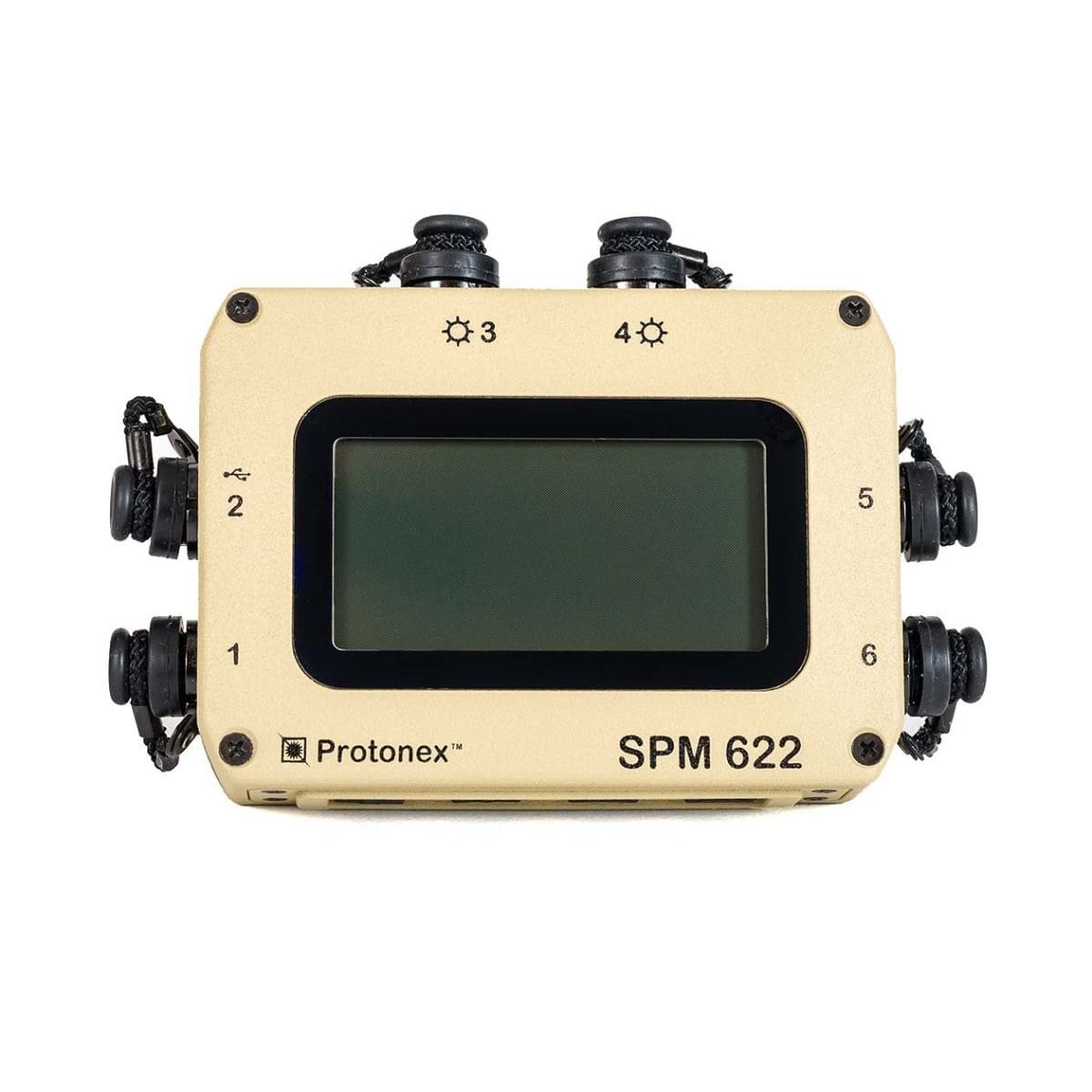
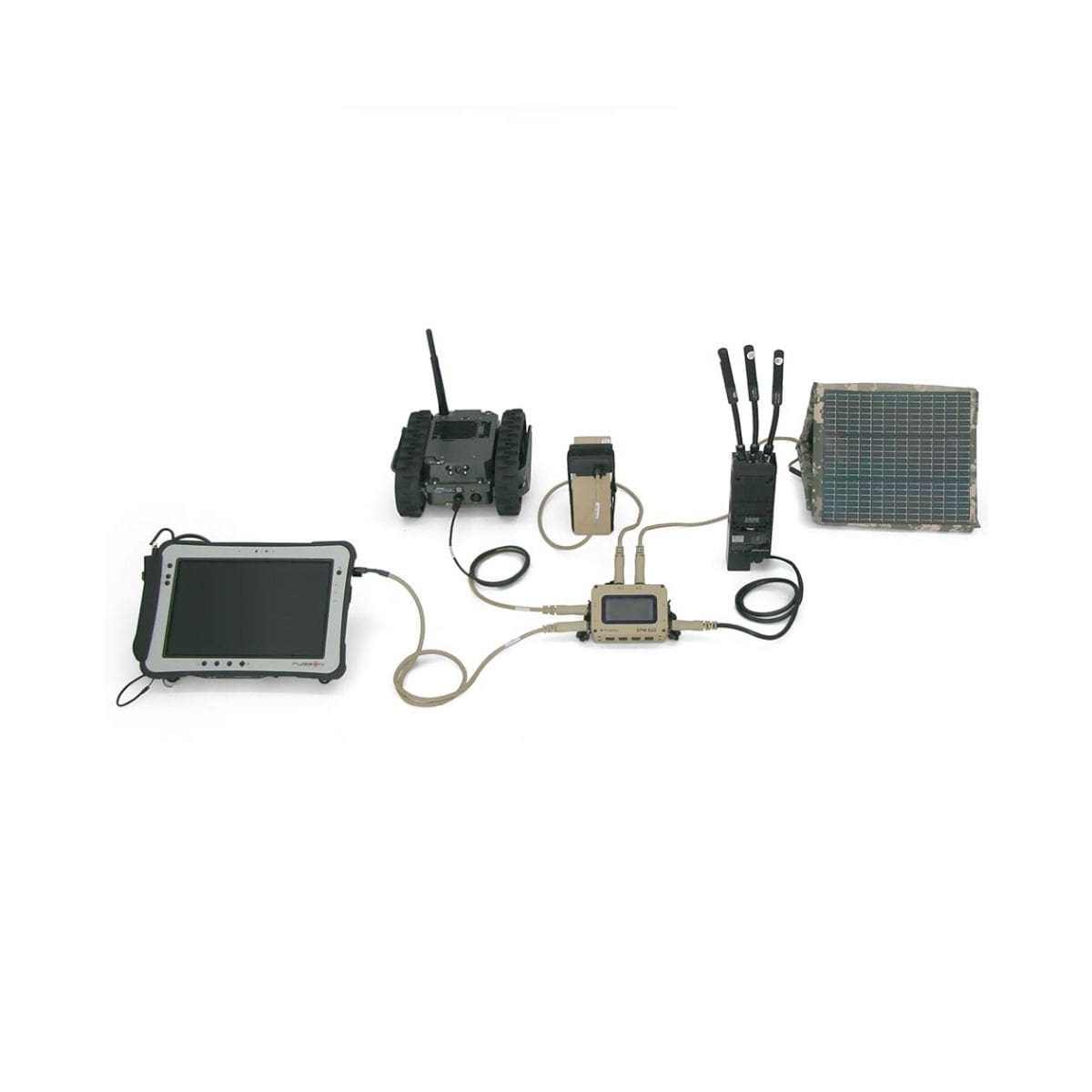
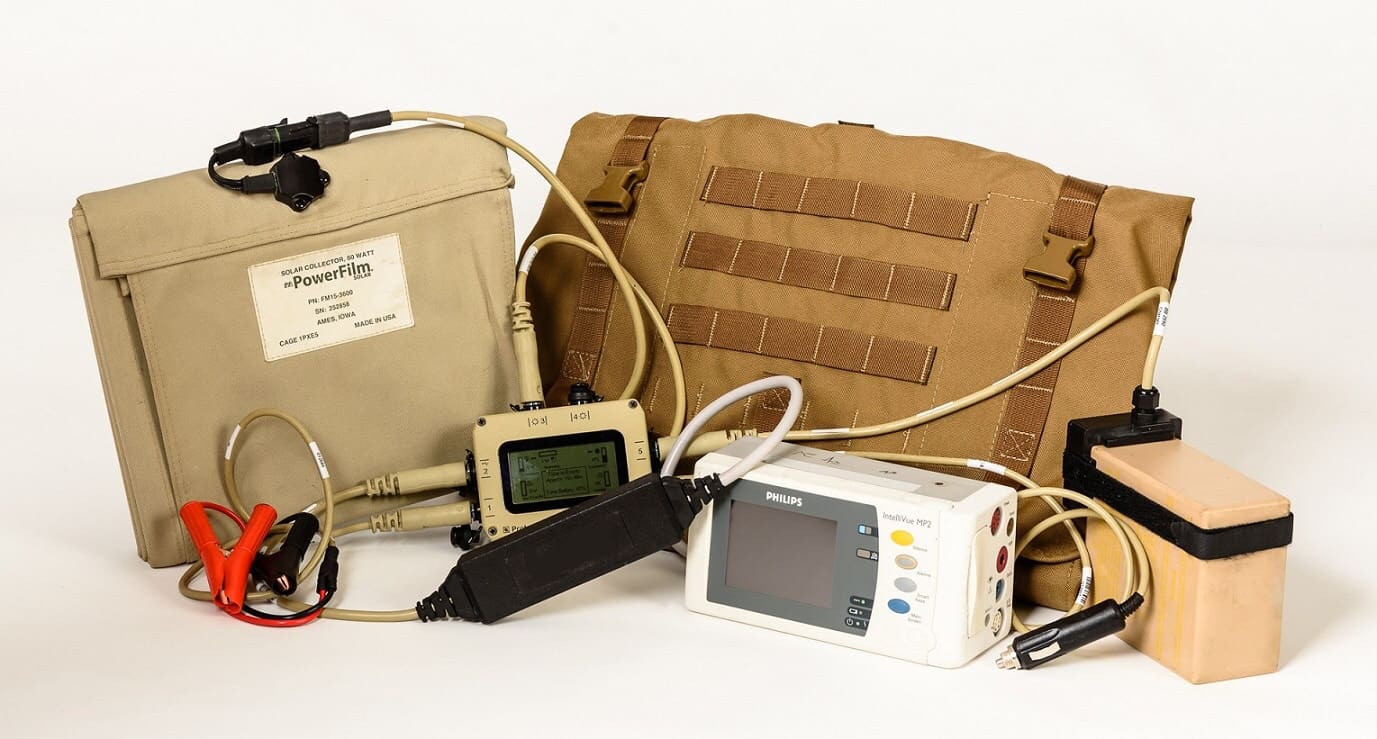
The latest Widget created by the Brainboxes at Protonex is the PTX Situational Awareness Tool for Power (PTX SAT-P). The SAT-P provides an all-in-one solution for managing your PTX SPM-622 Squad Power Manager from your Android phone or tablet.

The app allows users to easily monitor their energy usage in real time and to quickly see key information such as:
• What devices are connected and consuming power?
• What power source is connected and in use?
• How long will the battery last at present rate?

The app also allows users to monitor and update their Power Manager firmware version.

The PTX SAT-P App requires a phone or tablet that will accept an external keypad and is running Android 5.0 or higher, and is available on the Google Play Store at: play.google.com/store/apps/details

For more information about PTX power management systems from Protonex, visit: www.PTXnomad.com

Proliferation of Drones Posing Risk for US Military, Army Expert Says

Tuesday, August 28th, 2018

WASHINGTON — As of January 2018, over 1 million micro drones were registered with the Federal Aviation Administration, with about 878,000 of those registered to hobbyists, said Dr. Juanita Christensen.

These micro drones are proliferating in other nations as well, including areas in every combatant command where U.S. forces are stationed or operating, she added.

Christensen, executive director of the Aviation and Missile, Army Research, Development and Engineering Command, spoke at the Institute for Defense & Government Advancement-sponsored Counter-UAS Summit here, Aug. 23.

The growth of drone ownership poses challenges, she said, such as identifying the unmanned aerial system, determining whether or not the unmanned aerial system is friend or foe, and, if foe, employing the right countermeasures.

32B0FABF-845E-4E7A-BE39-42FDD18C7EB4
The U.S. Army is at the forefront of identifying and mitigating threats from unmanned aerial systems, including identifying the UAS, determining whether or not the unmanned aerial system is friend or foe, and, if foe, employing the right countermeasures. (Photo Credit: U.S. Army photo David Vergun)

UAS IDENTIFICATION CHALLENGE

It’s not just the sheer number of drones that is an issue, but also the the hundreds of UAS variants being produced worldwide, Christensen said.

Each of these variants comes in different weights, shapes, and sizes. Additionally, each has different operating characteristics such as speed, flight duration, maneuverability and payload capacity. These variations make tracking them difficult because it’s hard for radars and other surveillance systems to identify exactly what’s out there, she said.

Another reason why it’s hard to identify UASs, she said, is that many are very small and therefore have a minuscule radar signature. Additionally, some of these UAS fly very low to the ground, away from a radar’s line of sight. They also move relatively slowly, similar to the flight of a bird, and they produce very little acoustic, infrared, radio frequency, or electromagnetic signatures.

Current military radars and surveillance sensors may categorize class 1 and 2 UASs as “clutter,” and not identify them as UAS, she said, explaining that class 1 and 2 consist of micro and mini UAS, respectively. These are the UAS systems commercially available to anyone.

The second challenge is determining whether or not the UAS is being flown by a hobbyist or commercial entity for benign reasons, or by someone bent on causing harm, she said.

Any number of payloads can be placed on a UAS and they can also be used for surveillance, Christensen added, declining to get more specific for security reasons.

This identification problem is especially acute because operators often have to determine friend from foe and what action to take in just a matter of seconds.

UAS COUNTERMEASURES CHALLENGE

RDECOM has recognized the importance of countering UAS for some time now, Christensen said.

In January 2014, RDECOM stood up the Counter-UAS Community of Practice. That community coordinates counter-UAS research with all of the labs across the Army and the other services and looks for solutions from industry and academia, she said.

For example, the Army Research Laboratory, which falls under RDECOM, is working with the community to study how to defeat swarms of enemy UASs, she said. And, the Communications-Electronics Research, Development and Engineering Center, also in RDECOM, is testing electronic countermeasures.

The community also is working with industry and academia to open new lines of effort, such as applying machine learning and artificial intelligence that will enable faster processing of data so that countermeasures can be taken much more quickly and with greater accuracy, she said.

The community is focused on class 1, 2 and 3 UAS threats, she said, explaining that class 3 consists of low-end tactical UAS. The other classes, 4 and 5, are high-end tactical and strategic UASs, respectively, that fly high and for long durations and are in the Air Force’s area of responsibility.

There are many promising lines of effort to deter a threatening UAS, she said, such as kinetic; passive, such as shooting a missile at the UAS that contains a net that deploys to take it down intact; sensitive sensors that can detect the UAS’s signatures emitted; and various types of jamming devices.

Besides going after the UAS itself, there are other efforts underway to defeat the “kill chain aspect,” she said, meaning eliminating the enemy UAS operator and the network behind it.

By David Vergun, Army News Service

SCUBAPRO Sunday – Jet Fins

Sunday, August 26th, 2018

This famous fin, with its durable rubber construction and distinctively beefy shape, has been seen on dive boats, research vessels and in the world’s most remote dive locales since 1965, and it’s still the fin of choice among a host of professional divers the world over. The Jet Fin set the standard for power and durability when it was ?rst introduced over 50 years ago. Today, tech divers, deep divers, military divers, commercial divers and dive instructors, as well as old-school recreational divers, still strap on a pair of Jet Fins before hitting the water.
SCUBAPRO sold over 100,000 units in the first few years. That was an amazing feat in those days and set the standard for dive fins. We took the concept and proceeded to popularize the fin with the US Navy and other commercial diving operations. The fact that Jet Fins have been almost exclusively adopted by the Navy and the commercial diving sector speaks volumes about what type of diver would benefit from them – someone who needs thrust, durability, control and convenience. Its hard to not like a fin that Thomas Magnum and TC used when they dove on Magnum PI. Just saying.

Episode SO6 E11

93379657-9B87-46B5-BF93-BF323B57E076

F90CEC42-8851-4AB4-8766-432AB64D6B1D

-Rubber construction is known for its durability, promising a lifetime of use. The Jet Fins are molded from one piece of rubber which makes them very durable and vertically indestructible. This will cut down on any maintenance that you will have to do on the fins, or the likely hood that you might damage them, meaning you will have them for many years to come. Jet Fins are made by using only one single compound which is rubber, molded in one piece and therefore unable to have “component failure” being as there are no screws, welds or connections to break as happens so often with modern fins. The Jet Fins are also flexible enough to provide excellent thrust, stiff enough to transfer all the diver’s leg energy into pushing the water backwards and robust enough to take literally any harsh conditions a diver can throw at it.

-The Proven vented design. Just below the foot-pocket, allows water to flow through the blade, reducing drag on the weaker upstroke, while enhancing trust and power on the down stroke. Many divers have their pair of SCUBAPRO jet fins for decades and literally swear by them. They are perfect for the frog kick and other kicking maneuvers.

-The Jet fin is also very compact. This feature is a must in confined spaces like cave, wreck divers and piers. The Jet Fins are broad and short, which means divers, are able to avoid kicking each other and the ocean floor.

The Jet fin comes in, black, camo, red, orange, yellow, white green and pink. We can also make special orders if needed.

E8FB35D4-FF82-4255-9F68-87E01F772D3B

-The jet fins weighing about 5-7 lbs, and might not be suited for all divers but Mention “JET FIN” to virtually anybody who has a dive card or has gone to a military dive school and they’ll know exactly what you’re talking about. (I know memories of flutter kicks with them on, are running thru your head)

SCUBAPRO now offers two styles of Jet fins and two versions of heel straps.

32DA5D0B-B698-4F1E-8B5B-E477E3E023E0

00B7CBC8-F484-4EEC-9577-3092102A5A49

The original adjustable fin strap and the stainless steel spring heel. The original fin with the standard adjustable fins strap is still Made in the USA. The other version comes with a rugged stainless-steel spring heel strap that can lasts forever and makes donning and doffing as easy as can be. The steel spring was invented by cave divers that needed a fin strap that could last in some of the toughest places on earth and was quickly adopted by the military and other professional divers worldwide. The spring can be put on any of the jet fins.

SCUBAPRO has two styles of Jet fins available. With or without a hole on the blade. Each fin includes a pairing hole that allows the fins to be hung or stored together, minimizing the possibility of misplaced or mismatched fins. It also make coming out of the water on a beach or climbing a ladder easier. You can also attach the fins to you wrists or back with the SCUBAPRO fin keepers or carbineer and 550 cord will work.

5EC02996-4D2B-4032-8412-ACAE50CD82D8

53C4A8F8-A635-42AA-8ADF-67D95F14A3BB

The Jets are renown for its power and its durability. They can last a life time and with proper care. They don’t really get sun damaged, salt eroded, chlorine discolored, travel battered, coral gouged or split. They are the strongest pieces of equipment that you will ever own. We had a retired master Diver that wanted to get a new pair as the ones that he had received in navy dive school in the 60s where getting a” little old” as he said. He called SCUBAPRO and asked about buying a new set. We told him we would give him a free pair. We asked if we could put the ones he has in our museum. He gave us a very polite “hell no I am not giving away my Jet fins”. We gave him a new set and he when home a happy man with two pairs of Jet fins.

When you’re diving with JET FINS, you are diving into a long line of history.

www.scubapro.com

Top 8 Questions Asked About Salomon Forces

Friday, August 24th, 2018

For 20 years, Salomon has revolutionized the footwear market. Building upon their mountain heritage, the company developed their innovations through experience in hiking, adventure racing, and trail running.  They also bring their iconic fit and performance to Forces, a line dedicated to the specific needs of military, safety and law enforcement professionals.

If you haven’t heard of Salomon, you should look into them, and soon.  From now until Labor Day (Monday, September 3), U.S. Elite is having a Salomon sale, where you’ll find these highly sought after shoes at 25% off. It will also be the last chance to get the exclusive Wolf Grey XA Pro 3D Mid GTX “Sua Sponte” before it becomes extinct. You may have questions before making a purchase, and lucky for you- we’re about to answer the top questions asked about Salomon Forces:

8. Who sells Salomon Forces shoes?

It’s true you can find Salomon footwear at your local outdoor/footwear shop – heck, you can probably even find it on their site. But if you’re looking for some bad-ass Forces, you’ll need to get them right from U.S. Elite. Aside from the exclusive Sua Sponte, U.S. Elite is always deeply stocked, with different models and sizes available. Salomon only allows a select few retailers to sell their tactical Forces line of shoes.


7. Who makes Salomon Forces and what makes them so special?

Salomon Forces originated from The Salomon Group, with its pedigree originating from Annecy, France. Their passion for outdoor sports, along with new technology and craftsmanship, gives them the drive to create progressive gear.  Salomon Forces are made for an elite group of customers, having the specific needs of military and LEOS in mind.

6. Which Salomon shoe should I buy?

Since there are so many great ones, U.S. Elite can recommend for different reasons.

We decided to break this up into categories so we can cover everything:

Everyday use: The XA Forces Mid (2018) or XA Pro 3D Mid GTX both offer comfort, flexibility and support for all-day use.  Both boots are also lightweight, so you won’t feel weighed-down when wearing them.

Shooting / Hunting: This depends on where you are going to be hunting.  If you’re going to be in a hot, dry climate, we’d recommend the Jungle Ultra.  On the other end, the Quest 4D would be better suited for a cooler climate.

OCR / Trail Running: The SpeedCross 4 were designed with trail running (and wider feet) in mind.  Their aggressive soles grip onto loose dirt and gravel, helping you to start off and stop when you want.  With a lining that’s highly breathable and abrasion resistant, these shoes deal with mud and puddles with zero issue.

CQC / CQB: The Speed Assault has the best of both worlds.  They include an aggressive grip like the SpeedCross 4, but have more ankle support and protection, more closely resembling what a mid-sized shoe would have.

Uniform Use: The Guardian is based off the Jungle Ultras, but are designed to meet the requirements of AR-670-1, which means you’re getting tried-and-true Salomon performance.

5. How do Salomon shoes fit?

From narrowest to widest, it would be:

Jungle Ultra / Urban Jungle Ultra

Guardian

XA Forces Mid

Quest 4D

SpeedCross 4

4. How should I wash Salomon shoes?

The best way to get your boots like-new again is to use a wet brush or cloth, and pairing that with a product like Nikwax will help maintain, condition and deodorize your boots.

3. How do I tie Salomon shoes?

One of the trademarks of Salomon Forces is the Quicklace system.  It cinches up fast and keeps your boots on your feet.  Just pull the lace tab up, slide the toggle lock until you’ve got the desired fit, then secure the excess length inside the lace garage, found on the tongue of the shoe. The system ensures a secure, comfortable fit, and is much less likely to snag on something than traditional laces.  If they do break, replacements are available.  You can also check out this video which is a guide to replacing the Quicklace, featuring Hugh from AmerSports.

2. Can I machine wash Salomon shoes?

Although you can machine wash pretty much anything, we don’t recommend doing this with your boots.  Check back to number 4- how to wash Salomon shoes for the best way to get them clean again.

1. Are Salomon shoes good?

Short answer – yes.  Soldiers and professionals need dedicated equipment to operate in hostile environments, beginning with footwear. In addition to year-round comfort, outstanding traction in changing terrain, footwear for military and law enforcement must be stable, durable enough for intense conditions, and provide complete weather protection.


Don’t forget to use coupon code “SOLSYS” to get free flat rate CONUS shipping.

Operating a 2A Business Online – Options

Wednesday, August 22nd, 2018

“My Facebook Page/Group was shut down.”

“My credit card processor shut me off.”

“Google won’t accept my AdWords budget.”

“Shopify modified their Acceptable Use Policy and turned off my website.”

All of these are common complaints we see online every day from businesses operating in and around the Shooting, Hunting, Outdoor, and Tactical (SHOT) market – particularly when there’s tools like firearms, knives, and accessories involved. What was once a wide open ‘Wild Wild West’ of the market, is now an increasingly controlled World Wide Web of regulations, rules, and policies. Not many of which are designed to support the SHOT market. Most of them are designed to mitigate liability and risk for the partners and vendors involved. And now that risk mitigation is being wielded to target the SHOT Market.

Shopify’s Acceptable Use Policy (AUP) update last week is not the first shot of the war. It is one more shot in another battle in a long series of battles. Since the beginning of commerce on the internet we’ve seen this. If it’s not the SHOT market, it’s drug-related content, 3D CAD files (Defense Distributed), the adult industry (watch the movie ‘Middle Men’), and a myriad of other targets.

Doing business online in the SHOT is achievable, but owners/operators need to be realistic and take an approach to mitigate our risk. In the chain of vendors and service providers needed to successfully operate a 2A business, all of them carry inherent risk. Hosts, credit card processors, software licenses, service providers: all of them can change their policy at any time and have a negative effect on your ability to do online business. These policy changes may not be because they dislike us, our products, or our customers. Rather, it may be a requirement of their financial institutions – banks, lenders, processors, investors, their insurance providers – many of whom dislike the inherent risk associated with commerce in 2A, or their leadership or board members – some of whom may push personal agendas in the course of their role, amongst many other factors.

For that reason, it’s important to have these conversations with our providers. Be upfront about our business with our online resources. Let them know what our businesses do, with whom, and what steps we’ve taken to mitigate their risk (your resources, your customers), and our risk – as a business owner/operator. And, ask them the tough questions: “Do you support my business – the legal sale of products in the 2A space?” If the answer is no – move on. If the answer is yes, ask them how they plan to deal with external pressure to exit the space. Ask them how they plan to notify us in the event they are ‘required’ to change their policies/terms that may negatively affect our business’ ability to conduct commerce online.

These questions and relationships can happen at many different levels in the spectrum of online business, depending on our approach to doing SHOT business online. For most of our businesses, this falls into one of three solutions:

Full Custom Development

Working with your team and that of a developer, payment and processor solutions, hosting, homegrown or licensed cart and other software, and likely a suite of marketing and management tools. This option provides the most flexibility for a SHOT business that has the business to support the diverse group of resources required to make it work.

Full Custom is often the most expensive and time intensive but allows for an environment where overall risk is greatly reduced by spreading it across multiple vendors and resources: if one fails, it can often be replaced with another that supports our industry. Solutions like this are perfect for companies looking to both mitigate risk, as well as having a diverse set of business rules and requirements.

Hosted Solutions

Yes: there are hosted solutions alternatives to Shopify that ARE SHOT and 2A friendly, including huge companies with stronger platforms and capabilities than Shopify has ever had. These SaaS (Software as a Service) companies provide nearly a one-stop-shop environment: pay the fee, plug-in your products, start doing business. Yes, that’s a generalization, but time-to-commerce is reduced significantly working with one of these providers.

With Hosted Solutions we operate in their environment, they maintain the hosting, software, and vendors required for us to do business. Using their services or outside resources, you skin the look and feel of the site and add your content and you’re off! From a risk perspective, like Shopify, some of these services can be an all-or-nothing endeavor: if they change a policy your business could be shut down.

It’s imperative, therefore, to have the discussion about policy changes up front with a Hosted Solution provider – will they work with you in the event of a policy change? Can they or will they explore other resource options to support you if, for example, their credit card processor was the weak link and opted out of 2A business? Again – there are some fantastic options out there but approach any relationship with a Hosted Solution provider with your eyes wide open and have a plan for contingencies. These solutions are optimal for brands looking for near-turn-key ecommerce solutions, preferably for brands not selling firearms, weapons, or accessories – soft goods and non-gun parts are a good fit.

DIY Solutions

If you’re good with rolling up your sleeves and terms like ‘CSS’ and ‘API’ don’t scare you, then a DIY solution might be for you. Or, if you can figure out how to navigate some of the online basics of buying a domain, finding a host, and installing plugins, it’s not hard to roll-your-own with little to no help. There’s a number of free shopping carts available. Some requiring little configuration, the others a degree in computer sciences. Depending on your skill and risk level, these could be a good fit for you, but often would be better suited to engaging a developer for a custom project.

Other options may be simpler and easier. One of the most expedient methods is to use WordPress – a widely adopted blog software – in combination with a cart plugin. WordPress powers a claimed 31% of the internet – and it’s a believable claim: their software is everywhere. Over time, companies have built a significant number of plugins to extend the capability of WordPress, including shopping cart software. These shopping cart plugins are available as free, licensed, and hosted options – all ‘plugging into’ the WordPress environment to allow you to operate an online store. Using the easy WordPress interface and finding a place to host your website are relatively straightforward processes. Adding in payment processors, fulfillment providers and other plugins can be a bit trickier, but generally achievable for most.

Building one of these sites takes some time and it opens us to some risk: If your cart plugin is dependent on a specific payment gateway, or any other service/capability, plugin or extension and that provider changes their policy, your business could be at risk. Therefore, a shopping cart plugin with a wide array of options to fulfill these roles and needs is advisable and will help mitigate your risk. Additionally, there’s the possibility of WordPress changing their policies and terms, and though that could be difficult to enforce with the broad proliferation of their software, it could happen. These solutions may allow you to diversify risk across more components and may cost less than a full custom solution or hosted solution, but they add time and resource requirements.

There is a solution for everyone. The options above can and do work. We work with iterations of them every day. Because we, as an industry, are not done or going away. They can’t push us out or shut us down. Using one of the solutions above, or a combination of them, can help mitigate our risk. Having a plan, however, will help further reduce our risk and ensure we’re ready for contingencies. Managing our risk with a plan isn’t a suggestion, it’s a requirement for a smart business owner. They have and will continue to make it harder and more difficult for us. More policies will change, likely not in our favor. More providers will fail us. But we’ve got a plan.

By N Hoffman.

US Army Evaluates UK’s Hung Up Parachutist Release Assembly

Sunday, August 19th, 2018

ABERDEEN PROVING GROUND, Md. — Jumping out of a plane may be a routine part of an airborne Soldier’s training, but if the equipment doesn’t function properly, it can be deadly.

“Generally, there are a handful of towed jumpers per year, which can be potentially dangerous situations,” said Samuel Corner, project manager for the U.S. Army Research, Development and Engineering Command Soldier Center Aerial Delivery Directorate.

Until recently, there were two ways to help a towed jumper, which occurs when the static line attached to the aircraft anchor cable becomes tangled with the jumper and/or the equipment and the parachute is not released — cut the jumper’s static line so the Soldier can deploy his or her reserve parachute or pull the Soldier back into the aircraft. Both scenarios are dangerous because the Soldier is dragged alongside or behind the aircraft until he is either released or pulled into the aircraft.

In March 2017, in an effort to eliminate the possibility of a towed jumper situation, the Aerial Delivery Directorate’s Airdrop Technology team submitted a project proposal to the U.S. Army Foreign Comparative Testing Program, which is embedded in RDECOM’s Global Technology Office, as part of their annual call for proposals. The proposal was selected, enabling the Airdrop Technology Team to purchase ten Hung Up Parachutist Release Assemblies, or HUPRA, from the United Kingdom company, IrvinGQ (formally Airborne Systems Europe) for tests and evaluation.

A simulated towed jumper scenario is created during U.S. Army testing with a mannequin that is towed behind an aircraft. The new system includes an emergency parachute that is released once the jumpmaster cuts the aircraft anchor line cable. (Photos Credit: U.S. Army photo )

The HUPRA, which includes an emergency parachute that is released once the Jumpmaster cuts the aircraft anchor line cable, is manufactured by IrvinGQ in the UK. The HUPRA is used by the UK as well as other nations on C-130 and other military aircraft.

By purchasing the system from the UK, the Army saved approximately $500,000 in non-recurring engineering costs and additional costs to develop, integrate and validate a new recovery system.

“Testing, which includes aircraft time and manpower to design validation tests, is very expensive,” Corner said. “We built on efforts of the UK by using their lessons learned to accelerate our process and decrease our costs.”

The tests, which were conducted at Yuma Proving Ground, Arizona, used mannequins that “jumped” out from the aircraft’s side doors and ramp. The testing was conducted on C-130 aircraft and divided into seven phases; minor changes were made to the system after the first phase was completed.

Before a Soldier jumps out of an aircraft, a Jumpmaster conducts a personnel inspection of the Soldier’s attaching, jumping and releasing equipment. Jumpmasters must complete a rigorous training program before they manage airborne jump operations.

A complete developmental test was performed on the Towed Jumper Recovery System (the Army name for the slightly modified HUPRA) at YPG, including aircraft procedures development, safety evaluation, rigging procedure development and performance testing.

One of the goals of the tests was to ensure the system recovered with an All Up Weight maximum of 400 pounds, slightly above the UK’s fielded version of the HUPRA systems capabilities. AUW includes the weight of the Soldier, the weight of the parachute system, which is approximately 40 pounds, and the weight of the equipment that Soldier needs for a mission — rucks, guns, ammunition, food and water.

While Standard Operating Procedures were developed based on the C-130 aircraft that was used during testing, another set of SOPs will be developed for C-17 aircraft, which is a much larger aircraft that the Army uses.

“The TJRS program has been positively briefed to the Army Airborne Board,” Corner said. “The next step is to work with the board and TRADOC to develop a formal requirement for a jumper recovery system. After that, the project will transition to PM Soldier Clothing and Individual Equipment, under PEO Soldier.”

The Foreign Comparative Testing program is a congressionally authorized program that is executed for the Army by the RDECOM Global Technology Office, which receives oversight from the Office of the Secretary of Defense, Comparative Technology Office. The FCT Program provides an avenue for Army engineers, scientists and program managers to acquire, test, and evaluate items and technologies from foreign industry allies and other friendly nations that may fill an Army capability gap or other urgent need.

By Argie Sarantinos-Perrin, RDECOM