SIG SAUER - Never Settle

Archive for the ‘Guest Post’ Category

FirstSpear Friday Focus – Stratton Flannel

Friday, September 28th, 2018

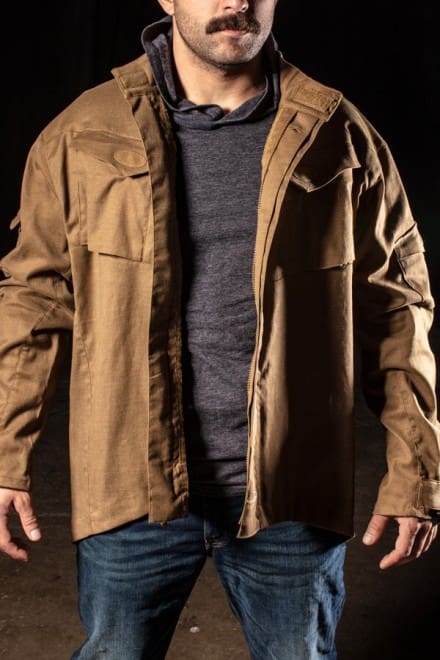
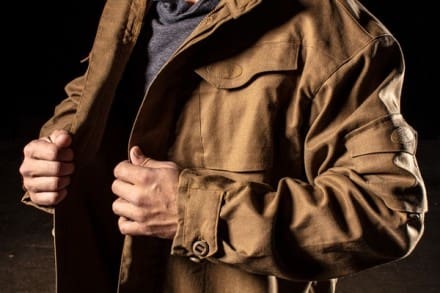
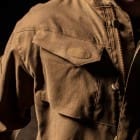
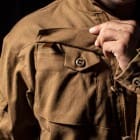
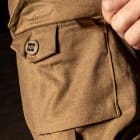
Introducing the all new Stratton Flannel available exclusively from FirstSpear! This is a 5oz lightweight flannel in navy/green/white perfect for fall. Features two oversized breast pockets and a two button closure on the forearms and cuffs. Machine washable and slightly oversized to accommodate for a 3% shrinkage after the first wash.

Made in the USA – Shipping now.

www.first-spear.com/technical-apparel/outerwear/stratton-flannel

Soldier Lethality Cross-Functional Team Bringing Next Generation Technologies To Soldiers

Thursday, September 27th, 2018

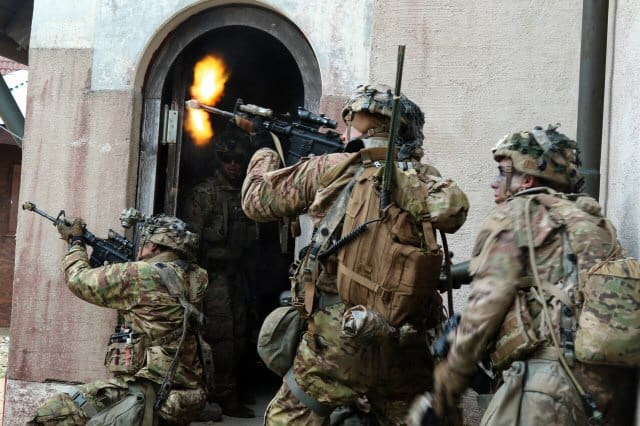
Sgt. 1st Class Aaron Sanford, a maintenance supervisor, Delta Battery, 1st Battalion, 145th Field Artillery Regiment, gives commands to his platoon following their departure from a UH-60 Black Hawk during a training exercise near Camp Buehring, Kuwait, Feb. 28, 2018. The Soldier Lethality Cross-Functional Team is working to narrow the capability gaps that affect Soldiers — particularly the 100,000 close-combat Soldiers who close with, engage and destroy the enemy. (Photo Credit: U.S. Army photo by Spc. Joshua P. Morris)

FORT BENNING, Ga. — In October 2017, the Soldier Lethality Cross-Functional Team, or CFT, began work to narrow the capability gaps that affect Soldiers — particularly the 100,000 close-combat Soldiers who close with, engage and destroy the enemy.

This is a critical task, as civilian and military leaders alike recognize that the Army is losing the near-peer advantage by being out-ranged, out-gunned and increasingly outdated. Potential adversaries and even private industry have been fielding new capabilities much faster than the Army.

The team has had some early success with the implementation of the Infantry One-Station Unit Training transformation and the requirement approval for the Enhanced Night Vision Goggle-Binocular, or ENVG-B, device. In particular, the ENVG-B requirement was written and approved in 30 days. The average time it takes the Army to approve requirements is two to three years.

The Soldier Lethality CFT is doing exactly what was intended at the outset: to have warfighters and developers work together to prepare capability documents that enable the rapid delivery of capabilities to the warfighter, and to inform a potential program of record.

The ongoing efforts of the Soldier Lethality CFT will be the focus of a Warriors Corner presentation on Tuesday, Oct. 9 from 3:20-4:00 p.m. Eastern time, as part of the Association of the United States Army’s annual meeting in Washington, D.C.

“The Army’s fundamental responsibility is to equip, train and field Soldiers with the tools and resources to engage and destroy the enemy,” said Brig. Gen. David Hodne, Soldier Lethality CFT director. “Soldiers must have capabilities that increase lethality, mobility, situational awareness and protection while countering threats. New systems will be designed to employ emerging technologies to ensure our Soldiers have a decisive advantage over potential adversaries.

“Our CFT has been given the task to develop requirements informed by experimentation and technical demonstrations — through teaming, agility and rapid Soldier feedback,” Hodne explained. “This enables informed decision-making by Army leadership for potential programs of record in order to regain our overmatch over near-peer competitors. We have all the right people in the organization; from warfighters, program management, finance, testing, science and technology and others. That was the original intent for the creation of the CFTs.”

Currently, the Lethality team is working on three lines of effort: the ENVG-B, the Next Generation Squad Weapons, and the Adaptive Soldier Architecture. Of the three, the ENVG-B program is closest to fielding, with devices expected to be in the hands of Soldiers in 2019.

“The ENVG-B was developed based on an urgent operational requirement from U.S. Army Forces Command,” said Col. Chris Schneider, project manager for Soldiers Sensors and Lasers. “They were seeking a capability that provided both night vision and thermal sensing capability with stereoscopic binocular depth perception to increase mobility and improve visual confidence in varying lighting present on the modern battlefield during day and night operations. It also had to give Soldiers increased mobility and situational awareness through a heads up display of friendly and enemy locations.”

The ENVG-B is a digital system that allows for significant capability growth and the ability to network sensors and other situational awareness systems such as NETT Warrior, Small Arms Fire Control, range finding systems, and any information transmitted across the tactical network.

“The ENVG-B utilizes the same wireless technology to communicate with the Nett Warrior system and is designed for full compatibility with future synthetic training systems to facilitate Soldiers training and fighting with the same equipment,” said Col. Travis Thompson, Soldier Lethality CFT chief of staff.

To meet future warfighter needs, the CFT has made significant progress in the development of the Next Generation Squad Weapons. The first of these weapons will be the Next Generation Squad Automatic Rifle, or NG-SAR. The NG-SAR is the planned replacement for the M-249 Squad Automatic Weapon for the 100,000 Soldiers of the close-combat force.

To meet future warfighter needs, the CFT has made significant progress in the development of the Next Generation Squad Weapons, or NGSW. The first of these weapons will be the Next Generation Squad Weapon – Automatic Rifle, or NGSW-AR, which will be followed by the Next Generation Squad Weapon – Rifle, or NGSW-R. The NGSW-AR will replace the M-249 Squad Automatic Weapon, or SAW, in the Automatic Rifleman Role, and the NGSW-R will replace the M4/M41 Carbine in Brigade Combat Teams.

“The NGSW-AR is the first in a series of capabilities to modernize the weapons of the dismounted maneuver force,” explained Col. Elliott Caggins, project manager, Soldier Weapons. “NGSW capitalizes on advancing technologies to provide increased performance at range, integrated Squad Fire Control (S-FC) systems, improved ergonomics of the weapon, lightweight case technologies, signature suppression capabilities and Intelligent and powered rail designs through systems integration.”

The goal of NGSW is to improve lethality, mobility and situational awareness of the dismounted infantryman, scout and engineer to overcome our nation’s adversaries and win on the battlefield.

“By incorporating frequent Soldier touchpoints in the development and acquisition strategy of the system, the Army is ensuring the Soldier, weapon, ammunition and fire control combined-system function as needed and are optimized,” Caggins finished.

The most complex effort ongoing for the CFT is the work being done with the Adaptive Soldier Architecture, or ASA.

The architecture is a concept of treating the Soldier as a system much like a tank or an aircraft. It ensures that systems are integrated with the Soldier rather than added to the Soldier.

“With this new architecture, we want to provide adaptive and responsive leap-ahead capability to our Soldiers that results in an innovative, collaborative, and cross-functional culture to drives advanced capabilities into the squad to support current and future priorities,” explained Thompson.

The ASA establishes power, data, connection and transfer standards to the Soldier and their equipment, treating the Soldier the same as an integrated combat platform.

“What’s vitally important about the architecture is that it facilitates technology insertion and Soldier integration through enhanced communication with industry that will enable the advanced capability that our Soldiers require to defeat our current and future threats, and facilitate future technology growth and capability integration across the Soldier and squad,” Thompson added.

Brigantes Presents – High Angle Solutions – DMM Helix Raptor Tactical Ice Axes

Wednesday, September 26th, 2018

Helix provide their high-quality technical equipment to the UK mountain troops.  Made in the DMM factory, in North Wales, to the highest possible standards these tools are ideal for use by specialist troops.

E59C0780-74F8-497C-9BD2-5F70F201464B

As we are about to enter the season for mountain training it is time to look at your kit and update what is looking a little tired and worn, or maybe not Gucci enough.  The DMM Raptor is an ideal multi use tool.  Great for covering the kind of terrain we need to in winter conditions but with the ability to go into harder areas if required.

The gentle curve in the shaft gives clearance when swinging without compromising the Raptor’s ability to self arrest.  A full size hammer and adze make light work of cutting steps and ledges and bashing in pegs for security. The spike on the base of the handle rounds out the Raptors mountaineering capability by giving security on snow and ice slopes.  For those wishing to venture into steep terrain the Raptor can be fitted with a Fly pick that improves climbing performance. A Choke Hold Leash prevents you accidentally dropping the axe and allows resting opportunities if climbing steeper ground.

Gone are the days of long heavy walking axes now the lightweight and highly capable Raptor gives mountain troops everything that they need.  The snow may not be here yet but it won’t be long before you are putting on your Bergan and heading up the hills.

For more information get in touch by email on international@brigantes.com or for UK customers warrior@brigantes.com.

www.brigantes.com

TYR Tactical Tuesday – Huron Collapsible Direct Action Assaulters Pack – MV

Tuesday, September 25th, 2018

35422B37-6E58-45EC-A446-EF1F7EC71C64

The Huron™ Collapsible Direct Action Assaulters Pack – MV (HRN-DAAP-MV) attaches to all TYR Tactical® Plate Carriers with 11” back panel zippers. This attachment system allows for a quick disconnect and reconnect of the pack to your carrier. The DAAP-MV may also be utilized as a Stand-Alone Pack with its two low profile shoulder straps. The shoulder straps can be removed or remain on the pack when attached to the carrier, this allows the user to remove the pack from their carrier and then quickly don the pack again via the shoulder carry straps. The DAAP-MV can carry hydration, a 117-G Radio and/or other equipment for various mission sets. It also features a zippered expandable main compartment that has two antenna/cable routing ports, an internal hydration pocket with top hydration port, two external general purpose pockets and a removable beavertail for storing a helmet or transitional garments.

8A06DBBD-3919-4743-B3C6-7887F970225F

The DAAP-MV can also be attached to other plate carrier brands by purchasing the TYR Tactical® 11″ Zipper Adapters (SOLD SEPARATELY).  The TYR-AZPR001 MOLLE to the back of any plate carrier or vest that has 1 column/6 rows of MOLLE webbing.

Wt: 1.55 lbs.
Dim: 13.25” H x 9.25” W x 3” or 5”D
Cubic Liters: 8.86L – 12.88L (Collapsible Main Compartment & Two GP Pockets)

Design Features:
• 500d Cordura®
• Collapsible Main Compartment from 5” to 3”
• Top Loading
• Carry Handle
• Qty.1 Tapered GP Pocket 4.75”H x 7.50”W x 2”D
• Qty.1 Padded Bottom GP Pocket 6”H 8.50”W x 2”D
• Removable Poly Mesh Beavertail
• Attaches to all TYR Tactical® Plate Carriers with 11” back panel zippers
• Removable Yoke/Shoulder Straps
• Hydration Pocket

Max Talk Monday – Buddy Pair Fire & Movement: Assault

Monday, September 24th, 2018

This is the sixth installment of ‘Max Talk Monday’ which shares select episodes from a series of instructional videos. Max Velocity Tactical (MVT) has established a reputation on the leading edge of tactical live fire and force on force training. MVT is dedicated to developing and training tactical excellence at the individual and team level.

An instructional session buddy pair fire and movement (assault), including a live fire demo. This is a follow up to the ‘Why the Lone Wolf Operator will Die’  Max Talk Videos, designed to show the advantages of the correct application of fire and movement at the basic building-block of a two-man buddy pair. This video is followed in series by a buddy pair break contact demonstration.

Max is a tactical trainer and author, a lifelong professional soldier with extensive military experience. He served with British Special Operations Forces, both enlisted and as a commissioned officer; a graduate of the Royal Military Academy Sandhurst. Max served on numerous operational deployments, and also served as a recruit instructor. Max spent five years serving as a paramilitary contractor in both Iraq and Afghanistan; the latter two years working for the British Government in Helmand Province, Afghanistan. 

Website: Max Velocity Tactical

YouTube: Max Velocity Tactical

Navy Announces Updates to Uniform Policies

Monday, September 24th, 2018

WASHINGTON (NNS) — Navy announced updates to uniform policy, grooming standards and the launch of a uniform working group in NAVADMIN 233/18, Sept. 21.


U.S. Navy photo by Mass Communication Specialist 1st Class Ryan U. Kledzik.

Highlights of the changes include:
• Completion of fittings and wear tests for new, improved female officer and chief petty officer slacks and skirts, scheduled to be available for purchase by the end of 2018
• Announcement of the improved general safety boot (I Boot 4) with enhanced comfort and durability features, expected to be available for purchase in October 2018
• Commanding officer’s (CO) approval for the wear of coyote brown ball cap with coveralls and flight suits
• CO authorization of command logos on t-shirts worn with Navy Working Uniform (NWU) Type I, II and III, coveralls and flight suits
• Fingernail grooming standards for men and women, including guidance on length, shape and color of nails
• Lock hairstyle standards for wear, size, length and guidance for wear in uniform
• Wear guidance and changes to the allowed material for rings and bracelets
• Announcement for Sailors assigned to Marine Corps units, who must now abide by Marine Corps grooming standards when wearing Marine Corps uniforms
• Authorization and wear guidance for the optional simultaneous wear of the Post-Tour Command at Sea and Command Ashore/Project Manager insignia

Navy has launched a uniform policy working group to provide a forum for direct Fleet feedback on uniform wear and regulations. Commands interested in having a crew member participate in a future working group can submit a command endorsed request with the name, rank, rate and availability of the Sailor to the “Ask The Chiefs” email list at umo_cmc@navy.mil.

Sailors can provide feedback and recommendations on Navy uniforms and the Navy Uniform App at any time via the “Ask The Chiefs” email, on the Navy Uniform Matters Office website at www.npc.navy.mil, or a link available on the Uniform App.

Read NAVADMIN 233/18 in its entirety for details and complete information on all of the announced uniform changes, updates and guidelines at www.npc.navy.mil.

Get more information about the Navy from US Navy facebook or twitter.

For more news from Chief of Naval Personnel, visit www.navy.mil/local/cnp/.

From Chief of Naval Personnel Public Affairs

Editor’s Note: The message is available here.

Tom Cruise Spotted With MAWL/GIGN

Monday, September 24th, 2018

img_6204.jpg

Last July, while on a promotional tour through France for Mission Impossible: Fallout, Tom Cruise paid an unplanned visit to the National Gendarmerie Intervention Group (GIGN) in Versailles. These photos from the GIGN’s Twitter account showcase Cruise on the range with GIGN operatives, shooting various weapons from their arsenal, including their primary weapon, the CZ Bren 2 equipped with the B.E. Meyers & Co. Modular Advanced Weapon Laser – Direct Action (MAWL®-DA).

DB2A0164-ACB6-40F2-B772-D4DEF1EDBFC9

The MAWL®-DA is the most end –user centric high powered NIR/VIS aiming and illumination laser available for individual weapons. It was designed from the ground up to provide improved ergonomics, interface, and performance for night fighters across the globe. After rigorous testing, the GIGN selected the MAWL®-DA as the superior choice for formal procurement and deployment within the unit.

img_6206.jpg

Known for missions including counter-terrorism, hostage rescue, surveillance of national threats, protection of government officials, and targeting organized crime, it makes sense that the Mission Impossible star would want to meet with the elite unit that helped inspire the action in Fallout, and try their gear firsthand.

img_6205.jpg

SCUBAPRO Sunday – Snorkels

Sunday, September 23rd, 2018

As far back as 3000 B.C.E, (5000 years) people were going after natural sponges off the coast of Crete and breathing through the world’s first snorkel tube that they made from hollow reeds. Aristotle, the Greek philosopher, recalled instances of divers breathing through a device similar to the trunk of an elephant.

In later years, the Assyrians developed an alternative snorkel device. They filled animal skins with air to breathe from when they were under water. Aristotle wrote about divers who used a tube that led from the surface to the divers below.  The consummate Renaissance Man, Leonardo Da Vinci had many designs that he called diving or underwater apparatuses. He designed a self-contained dive suit and even sketched diving gloves with webbed fingers. Technically, they could be considered the fist fins.

The development of the diving bell which contained air bubbles for divers to inhale while underwater was overseen by Alexander the Great.

• 900 B.C.E- Assyrian divers used animal skins filled with air in order to lengthen the time they could spend below the surface of the water.

• 333 B.C.E Alexander the Great encourages divers to develop and use the first diving bell — a large bell-shaped object that trapped air in the top of the bell (and a person) to submerge and maintain the ability to breathe.

• 1538- Greeks in Spain (Toledo) submerge themselves in large diving bell-like contraption to the bottom of the Tagus River only to emerge later with dry clothes and a still burning candle.

The same concept allows modern-day snorkelers to breathe air from the surface with their face submerged. Modern rubber and plastics make equipment durable and comfortable while offering maximum safety. With the advances in rubber and plastic composite materials, snorkels have significantly improved their function and use. The most popular snorkels is the J-shaped plastic tubes connected by a flexible strap or clip assembly to the diver’s mask.

Snorkels for diving

The snorkel makes it possible to breathe safely on the surface without using the air in your tanks. When choosing a snorkel, think first what you want to use it for and how you will use it the most. The diameter is important because it minimizes your effort while using it. Most snorkels are brightly colored so dive boats can easily spot them and more importantly you.


Free-diving Snorkels

Free-diving snorkels are often the simplest models. They are made without a complex purging system and without valves to limit breathing noise, those snorkels are also shorter to easily expel water from the tube and are easily tuck away. They usually have a slightly larger diameter to properly ventilate between two dive immersions. They are one of the best for Combat swimmer to use, as they are small and can be packed away easily and mostly come in dark colors.

Types of Snorkels

There are four common types of snorkels and each has their advantages and disadvantages.

Classic

The classic snorkel, also called a J-style snorkel, is a plastic tube with a mouthpiece attached. This snorkel is usually slightly bent, but it can also be made to fit a more specific shape. The SCUBAPRO Apnea snorkel can be rolled up and easily stored in a pocket or attached to the sides or bottom of a Rebreather. This is the one best suited for combat swimmer operations.

Flexible Snorkel

The flexible snorkel has a purge valve. This snorkel has a flexible portion and a rigid portion, as well as a one-way valve located at the bottom that makes it easier to expel any water that may get into the snorkel. The added flexibility allows divers to fit the snorkel better around their masks and faces. The purge valve at the bottom of the mouthpiece helps ensure uninterrupted breathing as it flushes water out every time you exhale.

Semi-Dry

The semi-dry snorkel is a mix of a classic and dry snorkel. The top features a splashguard, and sometimes even a flexible tube and a purge valve. The splashguard at the top helps to prevent splashes or sprays of water from easily entering the tube. It doesn’t prevent all the water from entering, especially if you fully submerge yourself underwater or if water covers the top like in a high wave.

Dry

The dry snorkel has a valve at the top of the snorkel. The valve blocks water and air when the snorkel is submerged—and a purge valve at the bottom. They are great for snorkeling on the surface and occasionally dive without having to worry about constantly clearing water out of the tube. When used for diving, the advantage is that divers don’t have to clear them of water when they reach the surface.

As with semi-dry snorkels, the one-way purge valve at the bottom allows the user to easily flush water out with a few quick exhalations. While the dry snorkel is more convenient and efficient to use, it can also has its drawbacks. The valve at the top of the snorkel can sometimes become blocked. The dry snorkel may also be more buoyant underwater.

SCUBAPRO.com