Danner Reckoning GTX

Archive for the ‘Guest Post’ Category

PEO Soldier Tests Modular Scalable Vest at Fort Carson

Monday, October 30th, 2017

FORT CARSON, Colo – Soldiers with the 71st Ordnance Group (Explosive Ordnance Disposal) and 10th Chemical Hazardous Response Company participated in the final round of field-testing for the Army’s new body armor, the Modular Scalable Vest (MSV), during a weeklong series of evaluated tasks conducted here Oct. 16-20.



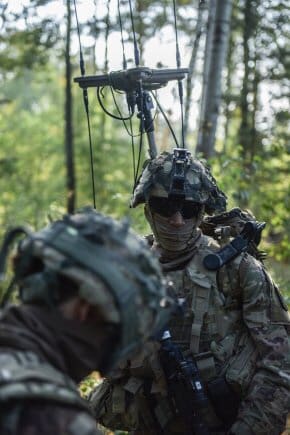
SPC Hannah Carver-Frey, a chemical, biological, radiological, nuclear specialist with 10th Chemical Hazardous Response Company, participates in the final round of field-testing for the Modular Scalable Vest (MSV) during a weeklong series of evaluated tasks at Fort Carson, CO, Oct. 18, 2017. Once this evaluation is complete, the vest will go into production and is expected to reach Soldiers in the field by summer of next year. (US Army Photo by SSG Lance Pounds, 71st Ordnance Group (EOD), Public Affairs)

According to the U.S. Army Acquisition Support Center’s website, the MSV is part of the Soldier Protection System (SPS) and is the Army’s next generation Personal Protective Equipment (PPE) system. The SPS is a modular, scalable, tailorable system designed to defeat current threats at a reduced weight in comparison to the Army’s existing PPE.


Damon Brant, a new equipment trainer from Project Manager Soldier Protection Individual Equipment at Prince George, VA, ensures the proper wear and use of a new body armor system by SPC Creed Cooney, an explosive ordnance disposal technician with 62nd Ordnance Company, during a weeklong field-test of the Modular Scalable Vest (MSV) at Fort Carson, CO, Oct. 18, 2017. Following the field-test, the vest will go into production and is expected to reach Soldiers in the field by summer of next year. (US Army photo by SSG Lance Pounds, 71st Ordnance Group (EOD), Public Affairs)

Stephen McNair, test manager for Project Manager Soldier Protection Individual Equipment (PM SPIE), a division of Program Executive Officer Soldier (PEO Soldier) at Fort Belvoir, was on-site to observe as Soldiers conducted an obstacle course, weapons training, don and doffing procedures, tactical vehicle access capabilities, and a ruck march.


Soldiers with in the 71st Ordnance Group (Explosive Ordnance Disposal) and 10th Chemical Hazardous Response Company participate in the final round of field-testing for the Modular Scalable Vest (MSV) during a weeklong series of evaluated tasks at Fort Carson, CO, Oct. 18, 2017. Once this evaluation is complete, the vest will go into production and is expected to reach Soldiers in the field by summer of next year. (US Army photo by SSG Lance Pounds, 71st Ordnance Group (EOD), Public Affairs)

“We have been working on this vest for the past five years and have since have gone through four versions of the vest and an additional two versions of the Soldier plate carrier system,” said McNair.

McNair said once the evaluation is complete, the vest will go into production and is expected to reach Soldiers in the field by summer of next year.


1LT Dawn Ward, a platoon leader with 663rd Ordnance Company and evaluation officer in charge, participates in the final round of field-testing for the Modular Scalable Vest (MSV) during a weeklong series of evaluated tasks at Fort Carson, CO, Oct. 18, 2017. Once this evaluation is complete, the vest will go into production and is expected to reach Soldiers in the field by summer of next year. (US Army photo by SSG Lance Pounds, 71st Ordnance Group (EOD), Public Affairs)

Debuting in 2008, the Improved Outer Tactical Vest’s modular design was carried over and improved upon for the MSV. Most of the pouch attachment ladder system (PALS) have been replaced with a rubber-like material with laser-cut slots. The improvement still allows Soldiers to affix mission essential gear to the vest, while reducing overall weight.

The MSV weighs approximately 11-pounds, based on a medium size vest without ballistic plates. Fully configured, the MSV weighs approximately 25-pounds, which is five pounds lighter than the IOTV.


Michael Spencer, a new equipment trainer from Project Manager Soldier Protection Individual Equipment at Fort Bragg, NC, demonstrates how the Modular Scalable Vest (MSV) can be separated into different configurations, during the final round of field-testing of the vest at Fort Carson, CO, Oct. 18, 2017. Once this evaluation is complete, the vest will go into production and is expected to reach Soldiers in the field by summer of next year. (US Army photo by SSG. Lance Pounds, 71st Ordnance Group (EOD), Public Affairs)

McNair said the big push to design a new body armor was based on “cutting down on the weight of a Soldier’s load.”

Many of the testers said the MSV was noticeably lighter than their current body armor.

“Compared to my IOTV, this vest is lighter and cooler, has a greater range of motion, and a better fit,” said 1st Lt. Dawn Ward, a platoon leader with 663rd Ordnance Company and officer in charge during the evaluation.

“It is a huge improvement over previous body armors,” Ward said.


Michael Spencer, a new equipment trainer from Project Manager Soldier Protection Individual Equipment at Fort Bragg, NC, demonstrates how to transfer ballistic plates from the Modular Scalable Vest (MSV) to a plate carrier configuration enclosed within the MSV, during the final round of field-testing of the vest at Fort Carson, CO, Oct. 18, 2017. Once this evaluation is complete, the vest will go into production and is expected to reach Soldiers in the field by summer of next year. (US Army photo by SSG Lance Pounds, 71st Ordnance Group (EOD), Public Affairs)

In addition to saving weight, the MSV is scalable, which was made possible by a four-tier configuration. The tier system will allow the wearer to tailor the vest to better fit mission requirements.

The first tier enables the wearer to pull out the inside soft armor to be used as concealable body armor. The second tier is the soft armor with plates. The third tier is the vest with ballistic plates and soft armor.

The final tier is the addition of a ballistic combat shirt that has built -in neck, shoulder and pelvic protection and a belt system designed to relocate much of what Soldiers affix to their vest to their hips.


(Graphic credit: PEO Soldier)

Spc. Isaac Bocanegra, an EOD technician with 764th OD CO, said he prefers the MSV’s ballistic combat shirt over the IOTV’s yoke and collar set up because it gives him more range of motion.

“I currently wear the IOTV about twice each day and it is quite a bit heavier than this body armor,” said Bocanegra. “Having this new body armor would make my job so much easier,” he added.

McNair said the premise of the tier system is to evenly distribute the system’s weight and reduces stress on a Soldier’s upper body.

“It will be up to unit leadership to determine the level of protection required for wear,” said McNair.

The MSV retained the quick-release feature first used in the IOTV to allow for easy removal in emergency situations, but with a simpler and interchangeable design. Instead of a single pull-tab, the MSV has a buckle system that can be used in one of three ways; left shoulder, right shoulder, or both depending on the wearer’s preference.

Extended sizing options allow the MSV to be tailorable and more accommodating to most Soldier body types.

“The extended range allows Soldiers to be more comfortable while performing tasks with greater ease,” said McNair.

“I have an extra-small because it positions the plates where I need them to be and it has a tighter fit for me,” said Spc. Hannah Carver-Frey, a chemical, biological, radiological, nuclear specialist with 10th Chemical Hazardous Response Company.

In addition to developing the lighter weight body armor, McNair said that developers at PEO Soldier are also working on an improved protective helmet system. It too, will be lighter than current protective helmets and capable of stopping certain 7.62 rounds.

For more information about the MSV body armor, visit the U.S. Army Acquisition Support Center’s website at asc.army.mil/web/portfolio-item/soldier-protection-system-sps

For more information about the future of Soldier protective equipment, visit the PEO Soldier’s website at www.peosoldier.army.mil.

This article was written by SSG Lance Pounds and shared via the Army News Service.

Marine Corps Reaches Final Stages of Tropical Boot, Uniform Testing

Monday, October 30th, 2017

MARINE CORPS BASE QUANTICO, Va. —
The Marine Corps wrapped up its fourth and final field user evaluation for a prototype tropical utility uniform and boots in late September.

IMG_5145

Between June and September, 400 Marines from 3rd Battalion, 3rd Marine Regiment put the new uniform and three types of boots to the test in a tropical climate. The testing was done in various locations on the island of Oahu, Hawaii.

“About four years ago, then Commandant Gen. James Amos directed us to explore tropical uniforms and boots for Marines,” said Todd Towles, program analyst for the Clothing and Equipment Team at Marine Corps Systems Command. “When he became commandant, Gen. [Robert] Neller followed up on the initiative, which brings us to where we are today.”

To date, MCSC has tested five different fabric types and four boots, downselecting to the single uniform fabric and three boot options that 3rd Battalion, 3rd Marines tested. The goal of the final FUE was to collect feedback about the durability, fit and function of the prototypes that will be included along with other data in a decision package during the second quarter of fiscal year 2018.

IMG_5146

“When our program office goes out [to conduct a FUE], we talk to the Marines about what we’re testing and why,” Towles said. “We ask them to wear the uniform every day, whether they’re in the field or a classroom. At the end of the FUE, we conduct surveys and focus groups where we inspect the uniforms and talk to the Marines about wear and tear, how the uniform feels on the body and whether or not they could conduct their mission. If it interferes with the mission or training, we want that feedback as well.”

The tropical uniform prototype is made from a lighter-weight material than the current Marine Corps Combat Utility Uniform. The fabric is also designed to dry faster and keep Marines cooler in warm climates than the current utilities.

“The tropical uniform is made with the same fiber blend—nylon and cotton—as the MCCUU, but the fabric construction and weight are different,” Towles said. “The tropical uniform is approximately 30 percent lighter than the MCCUU.”

IMG_5147

The uniform also has a slightly heavier, reinforced fabric in the elbow, knee and groin areas to provide higher abrasion resistance against the mountainous terrain and dense vegetation of tropical environments.

“I prefer to wear these over the [current uniform] because they have thinner, lighter material,” said Lance Cpl. Kyle Herzog, an infantryman with 3rd Battalion, 3rd Marines. “It’s hot and humid here, and the current ones are thick and not as breathable. Once it’s wet, it’s damp or wet for days at a time. The [new uniform] dries within an hour. For Marines stationed in this environment, new cammies are a must.”

IMG_5148

The boots—designed by three different manufacturers—are intended to have a self-cleaning outsole and dry faster than the current boot. They are also a half pound to one pound lighter than the current boot out of the box, and thus much lighter when wet, Towles said.

“We had several different types [of boots], and all of them dry much faster than the regular boot, and they’re really light, so that’s been a huge combat multiplier for us,” said Battalion Operations Officer Maj. Evan Ota.

Marines could know as early as 2018 whether a new tropical uniform and boots will make their way to the fleet. If so, Marines slated to deploy or already stationed in tropical climates will be the first to have access to the items. The tropical uniforms and boots will be owned by the Marine Expeditionary Force supply and issued for contingency operations. Uniforms and boots could be available for optional purchase by Marines, pending certification.

“What we see throughout the Pacific is it’s a very hot, humid and wet environment with a lot of jungle and mountainous terrain,” Ota said. “So, anything you can do to lighten the load, dry yourself out quicker, take care of your feet and take care of your body definitely adds to your combat effectiveness.”

Article and Photos By Monique Randolph, MCSC Office of Public Affairs and Communication | Marine Corps Systems Command

PEO Soldier – Soldiers Test Newest Precision Targeting Device

Wednesday, October 25th, 2017

This is a great story by PEO Soldier’s Kyle Olson, updating you on their JETS program.

FORT GREELEY, Alaska – For nearly two weeks in mid-August, it seemed the only sound that could be heard between gusts of wind along a few of Fort Greeley’s Alaskan ridge lines was…

Picture7

“Target Lock.” “Target Lock.”
“Lasing.” “Lasing.”
“Solution.” “Solution.”
“5…7…6…9.” “5…7…6…9.”
“4…2…5…2.” “4…2…5…2,” and so it went—more than two-thousand times.
Find a target. Check.
Identify the target. Check.
Range/Geolocate the target. Check
Call it. Verify it. Log it.
And do it again, and again, and again, and again.

Six teams of Forward Observers (FO) from the 1st Stryker Brigade’s 2nd Battalion, 8th Field Artillery Regiment and data collectors atop places like Windy Ridge and Donnelly Dome looked out over the Alaskan landscape. They picked out targets and called in target data acquired through the Joint Effects Targeting System, better known as JETS, as part of a Limited User Test (LUT). The Army’s Operational Test Command conducted the testing at the Fort Greeley Cold Region Test Center (CRTC).

JETS is a modular advanced sensor suite consisting of a hand-held target location module (HTLM), a precision azimuth and vertical angle module (PAVAM), and a laser marker module (LMM) that collectively offer the FO capabilities not contained in any currently fielded system. JETS allows them to quickly acquire and precisely locate targets.

When fielded, it will be the first precision targeting device of its kind provided to Soldiers.

“Its brand new cutting edge technology that is a paradigm shift in how the Field Artillery BOS (Branch of Service) is employed across the battle space,” said LTC Michael Frank, Product Manager Soldier Precision Targeting Devices (PM SPTD). With JETS, “I turn a [M777A2] howitzer or a Paladin into a giant sniper rifle. I’m dropping that round, with first round effects, on target.”

Picture8

LTC Frank is guiding the development of JETS with the experienced hand of a FA officer with multiple deployments and more than 26 years in the Army. The lieutenant colonel emphasized that JETS not only provides greater precision, but also allows for a more rapid response. “Standoff doesn’t just mean range anymore,” LTC Frank said. “It means time. We can get kinetic effects on that target, and we don’t have to mess around with mensuration. We don’t have to take anywhere from 15 to 18 to 20 minutes to go through mensuration. We can get that target data to the guns and rounds out of the tube faster with JETS than without.”

According to CPT Eric Munn, JETS Assistant Product Manager (APM), “JETS will revolutionize how the Field Artillery conducts precision fire missions. A hand-held, stand alone, true precision targeting device that is fielded to every Forward Observer team will increase the agility and lethality of Field Artillery as a whole.”

Before the system is fielded, and well before Soldiers can experience the benefits of JETS on the battlefield, it must go through comprehensive and rigorous testing. While the 1st Stryker Brigade’s FOs could attest to the seemingly mind-numbing monotony of conducting thousands of data calls, they also understood the inherent value and importance of their mission.

“We have the ability to find things that are wrong with the system and have the capability of getting it changed,” said SPC Israel Wallace, FO, Delta Battery, 2nd Battalion, 8th Field Artillery Regiment (2-8 FAR). “We’d go up there, shoot grids, see if we can find anything wrong with it—see how long the batteries last, you name it.”

Although the Soldiers packed the JETS in their rucks and maneuvered through the Alaskan terrain to their observation posts, the LUT was not about the system’s durability on the move. It was about collecting enough data to verify its consistency, reliability, and ease of use.

“We don’t do a whole lot of rugged testing like throw it on the ground or anything like that,” SPC Israel said. “We’ll take it up there and use it all day long.” The Soldiers took note of things like the various connections and ports—were they easy to use or maybe vulnerable to snagging or breaking; was the tripod stable and easy to use; how did the system perform in the rain; and were the controls easy to use while wearing gloves?

According to CPT Munn, it’s essential that the JETS is developed with Soldiers in mind. “One of the most important parts of these tests is determining how suitable the JETS is for the Soldier and what we need to fix prior to fielding these systems to the Army,” he said. “The Soldier is the ultimate customer and we have to ensure that they can employ the system effectively and reliably.”

SGT Christopher Maurer, 2-8 FAR FO, appreciated the ability make a difference. “It’s good to know what it can do,” he said. “But, it’s [also] good to have that face to face with the people that actually designed it, so they can take in the feedback and actually do something about it.”

LTC Frank described how the Soldiers conducted the testing. “The Soldiers operated over five different lanes, incorporating different scenarios that put JETS through the type of mission scenarios it would see—not just if, but when it’s taken into a theater of combat,” LTC Frank said.

After spending several weeks training and then testing JETS, the Soldiers gained a special appreciation for the system and its capabilities. SGT Maurer especially appreciated the reduced weight when compared to the Lightweight Laser Designated Rangefinder (LLDR) and increased capability when compared to the Vector 21 Laser Target Locator (LTL). “They’re both kind of the far ends of the spectrum,” he said. “[JETS] is the perfect hybrid between having one module you can take and just go with, or you can bring everything.”

SPC Wallace echoed SGT Maurer’s sentiment. “If I was running around up in the mountains, constantly moving, setting up hasty [observation posts] I would take the JETS over the LLDR any day.”

The Operation Test Center will spend the next several weeks combing through the LUT data and then present PM SPTD with the test findings. Everything will be looked at and recommendations will be made. Some will affect training, and others will result in physical changes or even software updates.

Soldiers will have another opportunity to work with the JETS in the upcoming Initial Operational Test and Evaluation (IOT&E) scheduled for February 2018. The IOT&E, like all previous tests, will put the JETS in hands of Soldiers. They will put it through its paces ensuring the operational capabilities of this next generation precision targeting device are tested and verified to exacting detail before any Soldier uses the JETS to call for fire on a live target.

“Our goal in the Acquisition community is to increase our Soldiers’ survivability and ability to win on the battlefield,” CPT Munn said. “The JETS system accomplishes both tasks by giving the Forward Observer time and space to defeat enemies on the battlefield,” he added.

JETS is expected to be fielded to Soldiers in fourth quarter of Fiscal Year 2018 (July–September 2018).

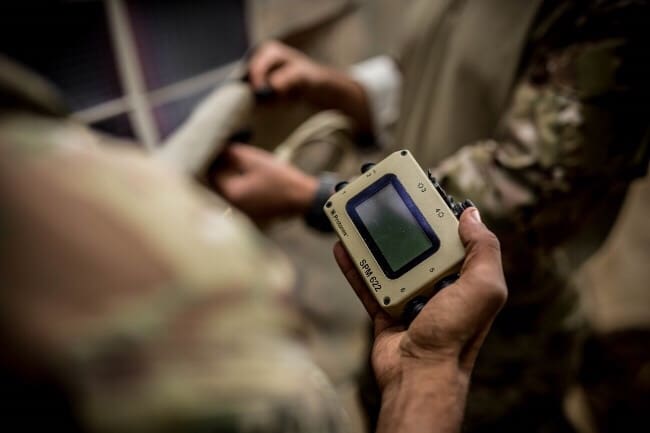
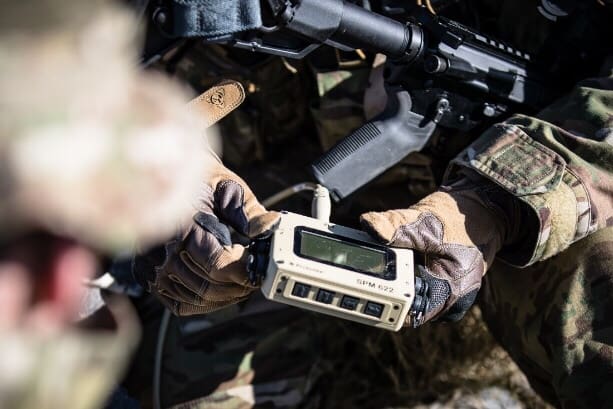
Picture1Soldiers from the 1st Stryker Brigade’s 2nd Battalion, 8th Field Artillery Regiment put the Joint Effects Targeting System (JETS) through its paces at the Cold Region Test Center (CRTC), Fort Greeley, Alaska. The Soldiers, all Forward Observers (FO), spent several weeks testing and evaluating the JETS during the Limited User Test (LUT) conducted by the Army’s Operational Test Command. More than 2,000 data calls were logged on the systems by six teams of FOs and data collectors. JETS, a hand-held, stand alone, true precision targeting device, represents a capability not yet available to Forward Observers. One of the Soldiers characterized it as the perfect hybrid system, fitting neatly between the Vector 21 Laser Target Locator (LTL) and the larger Lightweight Laser Designator Rangefinder (LLDR). At 17 pounds, JETS weighs less than half of the LLDR and offers greater precision than the Vector 21.

(Photos by Kyle Olson, PEO Soldier)

peosoldier.armylive.dodlive.mil/2017/10/24/soldiers-test-newest-precision-targeting-device

SERE meets SPEAR: Specialists Convene for Unique Combative Course

Sunday, October 22nd, 2017

DAVIS-MONTHAN AIR FORCE BASE, Ariz. —
Your transport aircraft has just crashed in a remote and hostile environment. You and only a handful of other troops have survived the crash. As you survey the surroundings, you notice a crowd of local inhabitants running toward the wreckage screaming wildly, with brows furrowed and fists clenched. The level of fear inside you begins to skyrocket. You’re now scanning the crowd for its weakest links, trying to formulate a progressive strategy with the little time you have before they make contact. Which combative system are you most confident to employ in order to save your own life?

2C000000-98AD-445E-8322-86A72DDC0001
(USAF photo by Senior Airman Chris Drzazgowski)

Self-defense is a major component of support provided by Survival, Evasion, Resistance and Escape specialists to troops who have a high risk of isolation in theater, such as downed-pilots and operators.

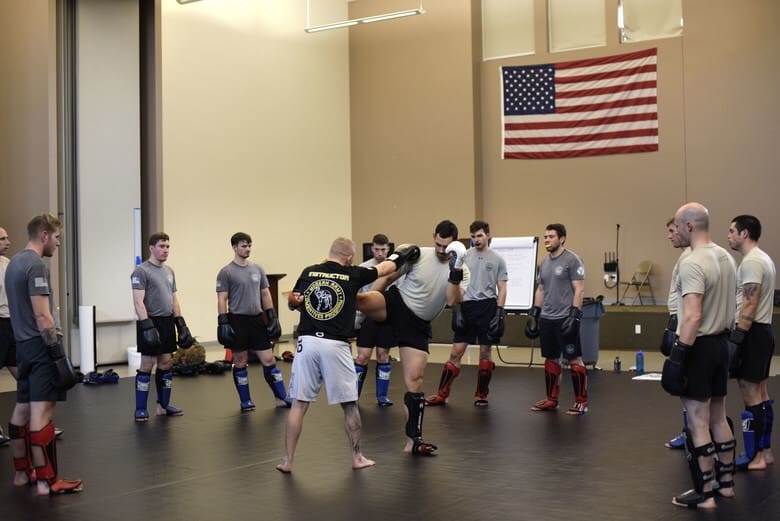
Late last month, SERE specialists across the 23d Wing, along with Pararescuemen from the 68th Formal Training Unit convened at Davis-Monthan Air Force Base, Ariz., to attend a one-week personal defense course led by a special guest.

“The intent of this week’s instruction was to give these Air Force SERE specialists the qualifications required to teach the SPEAR System as subject matter experts,” said Tony Blauer, founder of Blauer Tactical Systems Inc., and SPEAR coach. “We augmented the system and customized it with specific capture avoidance and SERE-type nuances — specific scenarios you wouldn’t see in a regular fight.”

F0318195-621A-4376-BB28-23B39A81AEF7
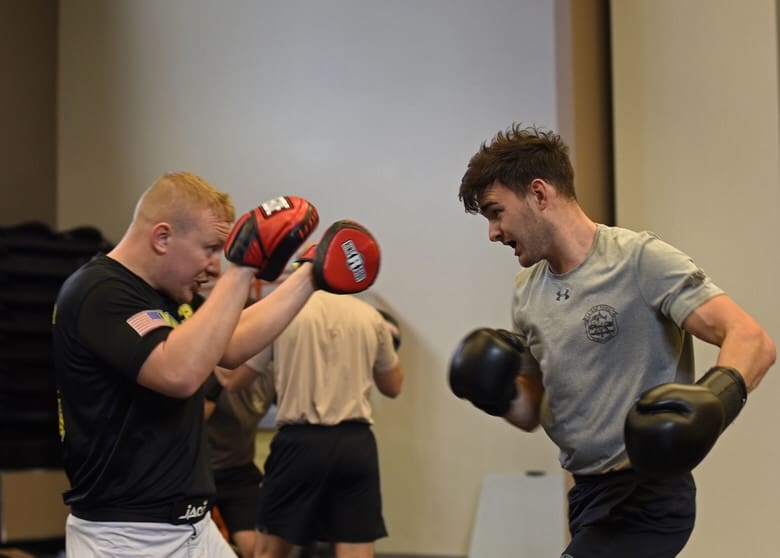
Tony Blauer, founder of Blauer Tactical Systems Inc., and SPEAR coach, instructed SERE specialists and other Guardian Angel counterparts in order to qualify them to teach the SPEAR System to personnel across the Air Force. (U.S. Air Force photo by Senior Airman Chris Drzazgowski)

The Spontaneous Protection Enabling Accelerated Response System takes advantage of the human body’s startle/flinch mechanism to convert an aggressor’s attack into a tactical counter measure, according to Blauer.

“We weaponize the flinch,” Blauer said. “By combing the old brain’s most important function, to survive, with the new brain’s intelligence, to think and decide, we have reawakened a non-perishable personal defense system that can make every human being safer.”

To implement a strong foundation of Blauer’s system into future SERE training, a collaborative effort was necessary among the SERE specialists to maintain and distribute a uniform understanding of SPEAR.

“In the 23d Wing, we’ve got Nellis, D-M and Moody,” said Tech. Sgt. Nick, SERE specialist. “All the C-130 and HH-60 guys, and all the PJs within the 23d Wing — we all see the same people, so we’re all getting together to share the same information across the wing.”

Currently, Modern Army and Special Operations Combatives Programs are administered by SERE specialists.

“There are so many different combative programs in the military already,” Sergeant Nick said. “I did a lot of research and looked at what we were already teaching. In order to make this continuation training, I needed a system out there that builds upon what we already have. I saw his system and it directly translated into what we teach.”

The practical application and versatility of the SPEAR System has gained much popularity among police, first-responders, and the military. Blauer has spent three decades researching real violence and has reverse-engineered a system of close quarters entirely based on how fear and danger can afflict tactical performance.

“We teach them how people move,” Blauer said. “Everything from the extreme close quarter is built on a premise determining that the bad guy controls the fight, the location, the level of violence and the duration of the fight, so I need to figure out how to beat him. This is a new paradigm in strategic thinking. It’s brain-based and allows the defender to be much more responsive.”

When the specialists weren’t executing drills on the mats, they were engaged in analytical classroom discussions.

“Those real fights are completely different challenges, emotionally and psychologically, the duress is different, and then the movement patterns of the attacks are different,” Blauer said. “What we do is we use body cam, helmet cam, dashboard video and closed circuit TV to study how real violence looks and moves. As valuable as martial arts are, the real fight is different. Our approach is to study the enemy and move from there.”

Upon the training’s conclusion, SERE specialists and other Guardian Angel counterparts are now able to tailor a specific program for their customers across the Air Force.

“The most important lesson from this week is the realization that we’re all human weapon systems,” Blauer said. “Everybody knows how to fight, they just don’t know they know how to fight. Realize you don’t need a martial art belt, you don’t need a level, you don’t need to win tournaments, you need to have the ‘I don’t want to die, I’m gonna fight’ mentality.”

Just before Blauer departed Davis-Monthan AFB, the course attendees presented him with a gift signifying their gratitude for a week of exclusive and in-depth instruction.

“I really appreciated Tony Blauer coming out here himself,” Sergeant Nick said. “He’s the CEO of his company and he could have sent another trainer to come out here and train us — but the level of instruction, professionalism and customer service he provided was phenomenal — I consider Tony a friend now.”

Senior Airman Chris Drzazgowski, 355th Fighter Wing Public Affairs

Marine Corps Systems Command supports 2017 Modern Day Military Expo

Sunday, September 17th, 2017

MARINE CORPS BASE QUANTICO, Va. — Marine Corps Systems Command will support the 37th Annual Modern Day Marine Military Exposition Sept. 19-21 aboard Marine Corps Base Quantico.

The annual event showcases the latest innovations in military equipment and systems, designed specifically to address the evolving, expeditionary needs of the Marine Corps. During the three-day event, members of industry, military leaders and Marines will have the opportunity to interact with MCSC and Program Executive Officer Land Systems, and experience some of the systems and technology used by Marines in the fleet.


The Target Handoff System Version 2 is one of many pieces of equipment Marine Corps Systems Command will display at Modern Day Marine Military Exposition Sept. 19-21 aboard Marine Corps Base Quantico. THS V.2 is a portable system designed for use by dismounted Marines to locate targets, pinpoint global positioning coordinates and call for close air, artillery and naval fire support using secure digital communications. (USAF Photo by SSgt Joe Laws)

Sponsored by the Marine Corps League, the event is intended to nurture the intellectual energy and creativity that will enable the Corps to lead tactical and operational innovation.

“This vital and unique expo plays a large part in helping us communicate to industry about the future acquisition of military equipment, systems, services and technology,” said Brig. Gen. Joseph Shrader, MCSC commander. “Our goal is to emphasize the importance of critical technologies and capabilities MCSC provides to ensure Marines maintain combat readiness.”

On Sept. 19, MCSC will conduct a Planning Brief to Industry, and PEO LS will present a science and technology brief. MCSC’s Office of Small Business Programs will also conduct small business training sessions. MCSC will also provide interactive displays at the expo to boost visibility for the command and its system capabilities to key decision makers and industry leaders.

The event will also provide attendees an interactive experience with vehicles, weapons systems and other technologies used by Marines. Some of these items will include:

* Ground Radios
* Personal Protective Equipment
* Indoor Simulated Marksmanship Trainer III
* Target Handoff System Version 2
* Individual Water Purification System

“We look forward to seeing our industry partners and fellow Marines at Modern Day Marine, and sharing more about how Marine Corps Systems Command equips Marines and advances the warfighting effectiveness and readiness of the Marine Air Ground Task Force,” Shrader said.

For more information and a full schedule of events, visit the MDMME website.

Rugged Blood for Rugged Men: Freeze-Dried Plasma Saves SOF Life

Tuesday, September 12th, 2017

The life of a foreign partner nation force member was saved last month through MARSOC’s first operational use of freeze-dried plasma.

img_0693.jpg

The foreign ally sustained life-threatening injuries during an operation in the U.S. Central Command area of operations, requiring battlefield trauma care made possible by MARSOC training and availability of the new product.

According to U.S. Navy Lt. Eric Green, force health protection officer, freeze-dried plasma is providing better medical care on the battlefield. Green is the study coordinator with MARSOC Health Services Support. He explained that freeze-dried plasma is a dehydrated version of plasma that replaces the clotting factors lost in blood. Typically, plasma is frozen and thawed over a period of five days, preventing quick use in a deployed setting.

IMG_0694

Another disadvantage of traditional blood products for special operations is the need for additional equipment, such as refrigerators and electricity. This creates a higher target profile for special operations forces (SOF) teams, and presents a logistical challenge for Navy corpsmen. Use of such equipment, as well as timely casualty evacuation options, is not always possible during SOF missions. FDP eliminates the need for this equipment and buys precious time for corpsmen to treat the injured before evacuation.

“I think it reassures Raiders that when they’re in harm’s way, they have a life-saving product in the medical bags of their very capable corpsmen,” said Green.

With the need for freezing and refrigeration eliminated, FDP can sustain a wider range of temperatures and is therefore more stable and reliable than traditional plasma during military operations. The dehydrated state of the plasma allows for a shelf life of two years and is compatible with all blood types. Before MARSOC received approval to begin use of freeze-dried plasma, battlefield treatment options for hemorrhaging – the leading cause of preventable death on the battlefield – were mainly limited to tourniquets and chemical clotting agents.

IMG_0695

“It is stable in the field unlike whole blood or if we were to do fresh plasma or frozen plasma, so our guys can carry it with them in their resuscitative packs,” said U.S. Navy Capt. Necia Williams, FDP primary principal investigator and MARSOC force surgeon with MARSOC HSS. “They can quickly reconstitute it, infuse it to somebody and it buys time that is so critical.”

According to U.S. Navy Lt. Aaron Conway, Marine Raider Regiment surgeon with MARSOC HSS, reconstitution happens within six minutes and patients start showing improvement in vital signs minutes later. The precious time bought using FDP allows medical personnel to transfer patients to a hospital where they can receive full medical care. Conway, MARSOCs FDP principal investigator, said during medical care, FDP’s effects can be physically seen most in a patient when surgery and recovery is happening.

Since December 2016, every MARSOC special amphibious reconnaissance corpsman deploys with a supply of freeze-dried plasma and the experience to administer it. By October 2017, every MARSOC unit deployed will be outfitted with FDP.

Once the FDP has returned unused from a deployment it goes into quarantine and gets used during training exercises to prepare Navy corpsmen in its use. Corpsmen go through a rigorous academic and practical training process to prepare them for the field. They get practical experience before deploying and learn how to reconstitute and identify the indications to use FDP.

“We’ve trained with it, we’ve sourced it to our guys, and now we’ve actually got the combat wounded application of the product,” said Conway. “I think it is a tip of the spear life-saving measure.”

This life-saving measure is manufactured by French Centre de Transfusion Sanguine de Armees and used since 1994. They provide the U.S. with FDP while it is pending Food and Drug Administration approval and is under an Investigative New Drug protocol. Currently the use of FDP has been allowed within U.S. Special Operations Command. MARSOC was the second service component within U.S. Special Operations Command to receive approval for use of freeze-dried plasma.

In 2010, U.S. Navy Adm. William H. McRaven, then-SOCOM commander, learned that U.S. allied forces were using FDP successfully in Iraq and Afghanistan. McRaven wanted it made available to U.S. forces, so he pushed his plan and helped expedite the process between the White House and the FDA.

The main roadblock getting FDA approval was the historical spike of Hepatitis B after World War II, causing the stoppage of production and use by U.S. forces, resulting in rigorous testing and changes to the original formula. Plasma donors now undergo more testing for infectious diseases to prevent similar events. Freeze-dried plasma is expected to receive FDA approval by 2020.

Story by Cpl. Bryann Whitley
U.S. Marine Corps Forces, Special Operations Command
U.S. Marine Corps photo by Sgt. Salvador R. Moreno)

Kit Badger on Rationalizing 3Gun as a Game

Monday, September 11th, 2017

Kit Badger recently posted a video after shooting a 3 Gun competition. It is about the rationalization that comes from the hard line tactical side, which he was once a part of. The thought process is that because it’s a game, there’s no reason to do it. Read his article at this link and wayxh this video to see what he thinks now.

What do you think?

Best Military Charities for Hurricane Harvey Disaster

Friday, September 8th, 2017

The last few weeks have been difficult for people living in Texas. First, they had to survive the wrath of Nature that came as Hurricane Harvey and second, they now have to deal with the aftermath of the said hurricane (floods, landfalls, and more).

Hurricane Flood

The unprecedented rain and floods left behind a lot of damage so, if you want to help, it will be most welcomed. If you’re not close to the disaster area, and you can’t participate in the rescue missions, you can offer help by donating money to charities involved.

Still, it’s not recommended to write checks with your eyes closed – even in the darkest times, some people still try to profit. To make sure your money will reach people in need take a look at the list of trusted military charities below.

#1: Army Emergency Relief Fund

Donation page: Click here
Their main focus is on helping soldiers (active and retired) and their families. However, they also get involved in major disasters (such as the events in Texas right now). Right now, the AER offers assistance for anyone in need of an evacuation or any other needs associated with the impact of the storm.

The AER is one of the most credible military charities in the USA and they are active through 75 sections located all over the world on Army installations. They are also working with the American Red Cross so you can get easier in touch.

#2: Operation Supply Drop (OSD)

Donation page: Click here

The OSD was founded in 2010 but, as they grew, they shifted focus to military veterans and their families. Nowadays, they work on helping veterans re-integrate into society by collaborating with various local experts such as GoogGun, and offering people a new view on life as a retired soldier.

Nowadays, the charity has both veterans and civilians who help local military populations. They have 37 locations in the country and the team of volunteers is strong and reliable.

#3: Navy-Marine Corps Relief Society

Donation page: Click here

Their main mission is to provide active and retired Sailors and Marines and their families with financial, educations, and other types of support.

Right now, they offer assistance to service members and their families if they were impacted by the Harvey Tropical Storm. The charity has a good reputation and the members of the NMCRS are always reliable so you don’t have to worry about funds being diverted another way.

#4: Coast Guard Mutual Assistance (CGMA)

Donation page: Click here

As the name says, this military aid society focuses on helping the men and women of the United States Coast Guard. The CGMA is the official relief society for these people and they function as an individual organization.

Right now, the CGMA is prepared to help coast guard families and active or retired members who need to be evacuated due to the hurricane. They have locations all over the US but, in case people can’t reach a local representative, they can be reached via the American Red Cross as well.

They are active in major disasters and their main purpose is to provide emergency assistance to anyone who gets in touch. So, if you want to support their actions, your help is welcomed.

A Few Final words…

In the end, you should know that civilian charities cover the Hurricane Harvey situation as well, in a try to reduce the number of victims and to help people get over this natural disaster. It will take a long time before Texans will rebuild their homes and lives, which is why your help is paramount right now.

– Michael N
Michael is a passionate gun supporter and writer.