SIG SAUER - Never Settle

Archive for the ‘Guest Post’ Category

Army Mad Scientist Initiative Advances Goal to Assess, Analyze the Operational Environment

Monday, December 30th, 2024

JOINT BASE LANGLEY-EUSTIS, Va. — Next year, the U.S. Army Mad Scientist Initiative will continue in their efforts to explore the operational environment and collaborate and form partnerships with government and industry organizations and academic universities. This was recently carried out during their in-person, unclassified conference, “Game On! Wargaming and the Operational Environment,” in partnership with the Georgetown University Wargaming Society last month and will be a focus in 2025.

More than 150 wargame experts across the military, academic, commercial and hobbyist communities attended the conference, which endeavored to explore trends in wargaming. Topics included how wargames can address unconventional and neglected aspects of the operational environment, how wargaming can provide experiential learning for professional military education and how technology is enhancing wargaming.

Lee Grubbs, Mad Scientist director, opened the conference by highlighting the benefits of wargaming to maintain a trained and ready force at every echelon.

“[Wargaming] is a method of learning that the Army should consider driving down into all kinds of different learning domains,” he stated. “We decided to hold this conference to start the drumbeat of how we can drive all different types of gaming, at all different types of clearance levels, against all different types of operational conditions across all Army learning domains.”

Ian Sullivan, TRADOC deputy chief of staff for intelligence, followed by emphasizing the significance of learning from various types of wargames and wargaming communities.

“I have been playing wargames since the fourth grade,” he shared. “Playing [wargames] as a kid I think prepared me to do the job that I do today in ways that I couldn’t imagine at the time. It gave me an understanding, even perhaps in a simple way, about some important ideas about warfare.”

One major focus of the conference was to gather a multitude of wargaming communities to share experiences and lessons learned. Connecting different communities that the Army might not normally get to engage with will also be a priority at the various events in 2025.

“We’re bringing together folks who do this for DOD, hobby wargamers and folks who design wargames, both for DOD and hobby wargames,” Sullivan shared. “This led to a great effort to get a crowdsourced look at wargaming.”

Sebastian Bae, senior game designer and research scientist for the Center for Naval Analyses and Adjunct Assistant Advisor with Georgetown University, also shared his thoughts on how the military could work in partnership with commercial and hobbyist gamers and games.


“This conference — this panel — is a reflection of a [wider] trend, in terms of the merger of hobby gaming and professional gaming, as much as the increased frequency in which we intersect, reinforce and support each other,” he described. “I’ve always been a proponent for in-the-box educational games to build an ecosystem of games, because I think that’s how you get the most hands and minds working at the problem.”

The two main conference themes included the evolution and integration of wargaming, and emerging technology enablers. Wargaming literacy helps achieve experiential learning, enabling practitioners to explore new concepts and promote understanding. Along with professional wargaming, hobbyist and commercial wargaming is increasingly addressing joint and interagency operations and is used in PME to build wargaming literacy throughout the force. Additionally, while the operational environment changes, new aspects of the OE must be integrated into wargaming, such as civilian harm mitigation and response, weather, and space and cyber capabilities or operations.

In 2025, the Mad Scientist Team is planning to hold more events just like this one to include a writing contest focused on the idea of great power competition and conflict to crowdsource ideas about how current conflicts are shaping how the Army may need to fight in 2034. Additionally, contributors can assess what role the U.S. can play in countering adversary influence in the global south, and how the U.S. can counter authoritarian collusion in the Arctic and China’s growing presence in the Antarctic.

The insights gleaned from this crowdsourcing event will feed directly into the next unclassified in-person conference in the fall of 2025 where the Mad Scientist team and subject matter experts will further explore topics with a leading research institution.

Check out the Mad Scientist Laboratory website for a complete review of conference highlights, discussions, and a full conference report to be published in early 2025.

Videos of each presentation and panel can be found at the Mad Scientist All Partners Access Network site.

By Raechel Melling, TRADOC G-2

Tyndall AFB Increases Readiness with Aircrew CBRN Equipment

Sunday, December 29th, 2024

TYNDALL AIR FORCE BASE, Fla. – Tyndall Air Force Base is taking a proactive step in increasing its combat readiness by implementing the use of aircrew chemical, biological, radiological and nuclear equipment. Known as aircrew CBRN equipment, this specialized gear is essential in ensuring the protection and readiness of the personnel operating the aircraft against any threats that adversaries may use.

The 325th Operations Support Squadron Aircrew Flight Equipment Flight (AFE) has set a personal deadline of February 2025 to have current and new pilots fitted and trained with how to wear their new equipment properly, ensuring pilots are always mission ready.

“We need to be prepared for anything,” said Senior Airman Kaitlin Wells, 325th Operations Support Squadron aircrew flight equipment journeyman. “That includes having all their equipment sized, fit, inspected, tested and ready so that if something does happen tomorrow, we won’t have limited time to fit up every single pilot to fight a war.”

The aircrew CBRN equipment is specifically designed for the unique requirements of flying in high-performance aircraft. This includes being able to withstand g-force during operations and egress scenarios while also being able to be worn in conjunction with other items, such as the thermal protection layer and cold-water immersion garments. Additionally, this gear integrates respiratory protection directly with the full-body covering, creating a seamless system.

The equipment is so complex that in total, pilots can be expected to add approximately 10-15 lbs. of additional weight while operating with aircrew CBRN equipment.

The fitting and training process is equally as comprehensive. It involves detailed measurements, donning of each piece of equipment and regular fit checks to ensure that pilots can operate properly and safely. Pilots undergo classroom training that covers the basics of the equipment, its purpose and the expectations for the pilots in using and maintaining the gear.

They will also go through practical training, where they will be required to don their gear and process through a chemical line known as Air Crew Contamination Area & Air Crew Contamination Station, which are mock CBRN events that will simulate the process of testing, removing and decontaminating the aircrew CBRN equipment.

The chemical line process must be conducted every three years or whenever a member is newly assigned; however, AFE plans on conducting the process every quarter to stay ahead of the curve and ensure that the pilots maintain knowledge of the workings of their gear.

By providing essential protection, expanding operational reach and enhancing overall readiness, the implementation of aircrew CBRN equipment at Tyndall is a critical step in furthering the base’s combat capabilities and preparing it to face any challenges.

“I think it gets us back to a combat-ready mission, and it makes it to where there are no limitations as to where we can go and where we can take our aircraft to fight the fight, making us a more agile and a more prepared force,” said Tech. Sgt. Kevin Terry, 301st Fighter Squadron flight chief.

Story by Airman 1st Class Asha Wiltshire, 325th Fighter Wing

3rd MDTF Cyber Defenders Partner with Allies During Keen Sword 25

Saturday, December 28th, 2024

SAGAMI DEPOT, Japan — A Cyber mission element from the Multi-Domain Effects Battalion (MDEB), 3rd Multi-Domain Task Force’s, partnered with joint and allied forces to conduct defensive cyber operations as part of Keen Sword 25 from Oct. 23 to Nov. 1, 2024.

A MDEB Defensive Cyber Operations (DCO) Mission Element partnered with Japanese and Canadian cyber professionals to defend mission critical infrastructure from adversary intrusions on a live cyber range. Using various cyber tools, the teams successfully mapped the network, discovered red team intrusions and then conducted hunt operations to restore full network operability.

“Cyber mission elements are a key component of multi-domain effects battalions that provide allies and the joint force additional cyber capability able to protect key infrastructure, enhance overall mission readiness across the full spectrum of military operations, and counter emerging digital threats in today’s complex operational environment,” said Lt. Col. Pablo Diaz, Commander of the 3rd MDEB.

The mission element executed multiple training iterations against a live adversarial red team alongside their allied partners.

The training objectives for the MDEB cyber mission element were to validate the readiness of the DCO mission element, refine standard operating procedures, and to build relationships with allied partner cyber units.

“My team integrated with our partners, leveraged cyber tools, and defended several critical infrastructure networks against a dynamic red team on a live network. It was a great training event where we were able to apply our skills and collaborate with our allies,” said MDEB Cyber Officer in Charge 2nd Lt. Lucas Bires.

Keen Sword is a biennial, joint, and bilateral field-training exercise involving U.S. military and Japan Self-Defense Forces personnel, designed to increase readiness and interoperability while strengthening the ironclad U.S.-Japan alliance.

Keen Sword 25 is the latest iteration of the exercise which was first conducted in 1986. Keen Sword provides realistic, relevant training that increases the Joint Force’s abilities to plan, communicate, and conduct complex multi-domain operations.

By SGT Perla Alfaro

USAF Selects SEI for AFSPECWAR Airborne Operations Personnel Services Contract

Friday, December 27th, 2024

Starting FY25 right

EXCITING news for Green Feet Enterprises dba S.E.I., on the announcement of the PRIME contract award AFSPECWAR Airborne Operations Personnel Services, in support of the 68th RQS, Davis-Monthan AFB, Arizona. The 68th is Air Combat Command’s Formal Training Unit charged with upgrading the most elite rescue specialist.

S.E.I., since 1996 has leveraged the most respected special operations warfighters and Subject Matter Experts to help today’s units prepare for future threats in non-permissive environments…helping ensure mission success and the return home of personnel.

S.E.I. Is excited yet again to be given the nod of confidence and the opportunity to provide the commensurate level of professionalism due our military, and to those who make it what it is.

S.E.I. is an SDVOSB 8(a) Small Business specializing in coordinating and managing custom-crafted training for government/civilian agencies…working with today’s warfighter for tomorrow’s battlespace.

sei-nh.com

Friday Focus: Happy New Year & Happy Holidays!

Friday, December 27th, 2024

Happy New Year and we hope you had a Merry Christmas from the FirstSpear team. We’re proud to bring you 100% American made products and to continue to support those at the tip of the spear.

A special happy holidays to all of you who put your lives on the line to secure the freedoms we have today. To those deployed around the world right now — wherever you are, we’re grateful for your service. Stay safe.

Special Operations Chief Details Irregular Warfare Place in Defense Strategy

Friday, December 27th, 2024

Special operations forces have been crucial in U.S. counterterrorism efforts, but they also have a place in what is also known as a great power competition, said Chris Maier, the assistant secretary of defense for special operations and low-intensity conflict.

Maier spoke at the Center for a New American Security, yesterday and highlighted the various roles special operations forces play in competitions with China and Russia.

He said special operations forces work in the context of a whole-of-government approach, but they can play a major part in those efforts. “We are, particularly as we look at some of our special operations enterprise, in a lot of different places,” he said. This gives special operators a chance to reassure allies and partners and also a chance to give a heads-up when they see things going amiss.  

Special operations forces are nimble, they have a culture of innovation, and that fits in with great power competition.

It wasn’t always that way.

Maier said that irregular warfare was covered in an annex to the 2018 National Defense Strategy. “For those of you who have been in the federal government, you know what annex means — it was an afterthought. It didn’t make the main show,” he said.

In the 2022 iteration of the strategy, irregular warfare was integrated into the main strategy. “It’s really a key part of integrated deterrence,” he said. Asymmetric and nonconventional operations are side by side with the conventional aspects of the strategy, he said.

“I think an indication of the road we still have to travel is the number of synonyms we use to describe this space,” he said. “It may be irregular, it may be unconventional, it may be hybrid, it may be gray zone, it may be asymmetric. These are all sort of variations on a theme.”

The myriad of names shows that there is some confusion about the dividing line between conventional and unconventional warfare and forces. Whatever it is called, it has a place at the table, Maier said.

“As a department, we think about fighting large scale combat operations,” he said. “And much of the early years of the 2022 [National Defense Strategy] were focused on that. The progress I think we’ve made in recent years is in expanding that aperture to really look at the aspects of competition and crisis as part of warfighting challenges.” 

Maier said the reason the strategy defines China as the pacing challenge “is because they have such a range of tools and considerable leverage that they can draw on. So, it is rare [the Chinese] operate … exclusively in kind of the gray zone or the regular space.” 

There are conventional aspects to their operations. They engage in hybrid operations. The Chinese use the diplomatic Belt and Road Initiative as a part of their security strategy.

The U.S. strategy is evolving to ensure deterrence across all domains and in all theaters.

“At the end of the day, this is about deterrence,” he said. Taiwan is a flashpoint, and the United States stands by all the understandings with China and the Taiwan Defense Act. Essentially, this boils down to no country changes the status quo by force. “I think we’re carefully calibrating what we’re doing at any given time to as much as possible, establish that deterrence, dissuade from a military operation into Taiwan.”

The other flashpoint with China is their excessive claims in the South and West China Seas. China has their own irregular warfare arm of maritime militias challenging other countries in the region — most notably the Philippines. The Chinese maritime militias are not a conventional military force, but they have “a lot of ability to compel and coerce,” Maier said.

The partnerships with the Philippines and others in the region are important to the United States in putting Chinese actions on the record. “At the end of the day, a lot of this type of activity is dissuaded with the ability to put it in the open,” he said. “If it’s allowed to exist in the shadows, it’s going to continue and the coercive effects will be felt.”

By Jim Garamone, DOD News

Varusteleka Project MEGA Update

Tuesday, December 24th, 2024

Our project MEGA is moving forwards. Where are we at now, and why is this project so important?

Read more in the article: www.varusteleka.com/en/articles/project-mega-gtfo-of-china-3/692

U.S. Army Takes Delivery of Textron Systems’ MK 4.8 HQ Aerosonde System for Future Tactical Uncrewed Aircraft Systems Program

Tuesday, December 24th, 2024

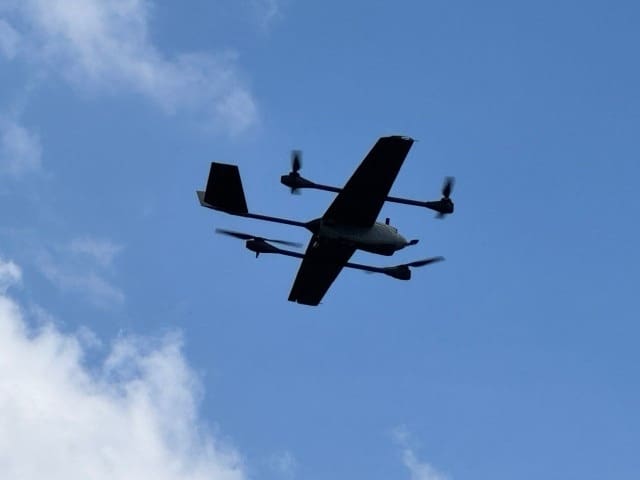
Redstone Arsenal, AL – The U.S. Army’s Future Tactical Uncrewed Aircraft Systems (FTUAS) Product Office has officially taken receipt of the Textron Systems’ MK 4.8 HQ Aerosonde system, marking a significant milestone in the program’s rapid prototyping effort. This achievement follows a comprehensive two-year development and testing process, which included extensive technical testing, ground and flight acceptance testing, and a joint effort between the vendor and the United States Government (USG).

The delivery of the system, formalized through the DD-250 process, transfers ownership to the USG. The FTUAS team will now proceed with New Equipment Training (NET) to qualify instructors and operators at the Redstone Test Center on the MK 4.8 HQ Aerosonde system. This training is expected to be completed by late January 2025.

Upon completion of NET, the FTUAS team will embark on a USG-led developmental testing cycle, which will culminate in the program’s capstone event. This testing effort will occur in parallel with the ongoing efforts to evaluate production proposals for award, anticipated in the fourth quarter of fiscal year 2025.

The FTUAS program will provide Brigade Combat Teams (BCTs) with an organic capability for reconnaissance and surveillance operations, enabling them to collect, develop, and report actionable intelligence. This will allow BCT commanders to maintain dominance during Multi-Domain Operations. The FTUAS system boasts transformational capabilities, including vertical take-off and landing, on-the-move command and control, and Soldier-led, field-level maintenance. Its Modular Open Systems Approach enables rapid capability insertions, ensuring the system keeps pace with evolving technology.

The Program Executive Office (PEO) for Aviation, located at Redstone Arsenal, AL, is responsible for modernizing the Army Aviation fleet of crewed and uncrewed aircraft. PEO Aviation’s Uncrewed Aircraft Systems Project Office is dedicated to rapidly fielding innovative UAS capabilities to Army formations, maintaining the Army’s asymmetric advantage over peer adversaries in large-scale combat operations.

Courtesy Story from Program Executive Office, Aviation

Photos by David Hylton