Troop Performance

Archive for the ‘Guest Post’ Category

Terrain 365 Introduces the Narwhal-AT Folding Knife

Sunday, March 23rd, 2025

A Rustproof, Streamlined Folder with a Low-Profile Flipper Action

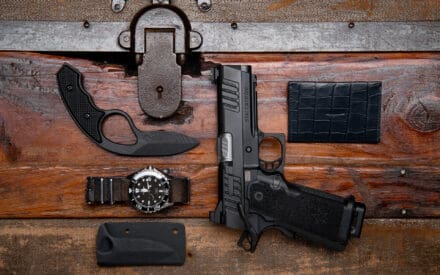
New for March 2025, Terrain 365™ launches their newest folder model, the Narwhal-AT. A sleek and streamlined, rustproof folder for use on land or in the water. Featuring a fast, low-profile flipper tab, our Terravantium™ super alloy blade, all titanium hardware, Hyperglowpivot rings, and signature fullers in the handle and blade. A precision-made study in purpose-driven, spartan yet capable design. Like its namesake, “narwhal”, this folder is unique in its adaptation to the world around it. A highly successful hunter with a simple, sleek and streamlined yet blunt body. Available with a solid titanium framelock side and titanium presentation side with and without various handle scale material options.

The Narwhal-AT is available with Terravantium™ super alloy, all titanium hardware, titanium framelock and G10, micarta, carbon fiber or fat carbon scales.

Creative Director and Co-Founder Patrick Ma of Terrain 365 states,

“I wanted to design a full-sized folder that was inspired by the simplicity and ergonomic balance of a capsule shape. In keeping with the streamlined design direction, I used a low-profile flipper tab that could easily flip open the blade with your thumb or index finger. Something about the final appearance reminded me of the predatory marine mammal the narwhal so the name stuck. ”

The Narwhal-AT is available starting at $365.00 on their website.

188th Infantry Brigade Innovation Lab Invests in Drone Training for Future Combat

Sunday, March 23rd, 2025

FORT STEWART, Ga. – The 188th Infantry Brigade is breaking new ground in Army training and readiness with the launch of its Innovation Lab, a future forward initiative dedicated to the development, construction, and integration of drones in modern warfare.

As part of First Army’s mission to prepare Reserve and National Guard units (Compo 2 and Compo 3) for mobilization, the 188th Infantry Brigade is embracing emerging technologies to enhance warfighter capabilities. The Innovation Lab provides Soldiers with hands-on experience in drone assembly, programming, and field training, preparing them for efficiency on the battlefields of the future.

Maj. Trevor Barrett, the Brigade Innovations Officer, emphasized the lab’s value in fostering a culture of adaptability.

“This is the future and the sooner we can expose Soldiers to this technology the better and more proficient we will be,” Barrett said. “This makes our Army stronger, more adaptive, and more lethal.”

The Innovation Lab is a collaborative space where Soldiers from various military occupational specialties (MOS) work together to construct and modify drones tailored to mission-specific needs. Using commercially available components and 3D printing, the lab enables Soldiers to design drones for reconnaissance.

In addition to drone construction, the Innovation Lab integrates small unmanned aerial systems (sUAS) into field exercises and combat simulations. Soldiers undergo training on drone piloting and electronic warfare countermeasures to prepare them to operate effectively in both offensive and defensive scenarios.

“I think sUAS operation will be a required skill for many MOS and you will see multiple variants in the US inventory,” Barrett said.

The Innovation Lab serves as a multifaceted learning tool for drone technology, with Soldiers being trained on both the assembly and field use of the sUAS. The drones that have been built will be introduced at upcoming training events and competitions for the brigade.

“We plan on using these systems this summer at eXportable Combat Training Capability (XCTCs) and the second annual Pershing Cup Best OC/T Competition,” Barrett said.

This initiative aligns with the Army’s broader modernization efforts, leveraging grassroots ingenuity to develop practical solutions for warfighters at all levels.

“Like most Soldiers, I am a student of warfare and have seen how drones have changed the modern battlefield,” Barrett said. “The overall objective is to become masters of these systems, learn to employ them effectively, and modify them to defeat our enemies.”

As the 188th Infantry Brigade continues to refine its drone training program, the Innovation Lab is a tangible testament to the Army’s commitment to adaptability and technological advancement. With each flight and every experiment, Ready Brigade Soldiers are not just learning to use drones—they are shaping the warfighting future.

Story by SSG Marlana Cureton, 188th Infantry Brigade

Disabled Veterans Overcome Obstacles Through Adaptive Sports

Saturday, March 22nd, 2025

Winter Sports Clinic offers “Miracles on a Mountainside”

SNOWMASS VILLAGE, Colo. – Veterans with disabilities often face significant challenges after military service, including traumatic brain injuries (TBI), spinal cord injuries, vision loss or amputations. For some, recovery can be incredibly difficult. The U.S. Department of Veterans Affairs (VA) recognizes the value traditional and recreational therapy-based models play in the healing process. During the week of March 31 – April 5, 2025, VA and DAV (Disabled American Veterans) will co-host the 39th National Disabled Veterans Winter Sports Clinic (NDVWSC), also referred to as Miracles on a Mountainside.

This premier rehabilitative and adaptive sports event allows disabled Veterans with traumatic brain and spinal cord injuries, orthopedic amputations and visual impairments explore recovery through participation in downhill and cross-country skiing, sled hockey and other adaptive sports.

This year, approximately 400 disabled Veterans will participate and work to overcome real and perceived limitations. 

Below are a few of the countless story opportunities waiting for you to tell. 

Ryan Garza, a U.S. Marine Corps Veteran, did four tours in Afghanistan – and it was on that fourth tour that Lance Corporal Garza’s truck drove over an improvised explosive device (IED), severely injuring his right leg. Doctors tried for several years to save Ryan’s leg; however, he eventually decided to amputate in 2015. After the amputation, Ryan then went on to deal with thoughts of suicide, depression, and hopelessness.

In 2022, Ryan joined us for the first time at the Winter Sports Clinic. He shared, “I never thought I’d be able to snowboard. You feel the wind, you hear the ice and it gets me excited. It’s an awesome feeling!”

Mariela Meylan, a U.S. Army Veteran, was struck by a truck while serving in Kuwait. She suffered a TBI, collapsed lung, and severed liver; then had a stroke and slipped into a coma – for eight months. Meylan can offer her perspective about the ways the Winter Sports Clinic has helped her heal over the years by showing her she can still participate in adaptive sports.

Physical Therapist Kendra Betz has served for years as the Winter Sports Clinic Seating and Prosthetics Coordinator. “The Winter Sports Clinic is a premier and unparalleled adaptive sports event that provides outstanding support for Veterans to face and overcome challenges as part of a multi-faceted rehabilitation program,” she said. “Our goal is to optimize Veteran participation, well-being, and quality of life, as they breathe life to the catchphrase, ‘Miracles on a Mountainside,’ here in Snowmass every year.”

For the past decade, Betz’s daughter, Maddie, who works in a technology industry that supports people with disabilities, has volunteered with her mom in Snowmass, helping Veterans get out on the slopes, properly outfitted with their adaptive equipment. This dynamic duo provides insight into the role therapists, instructors, volunteers, and others play in helping Veterans reach their highest potential.

U.S. Air Force Reserve Citizen Airman Maj. Monica Riggs attended her first Winter Sports Clinic in 2024. The former Mrs. Kansas 2018 flew more than 100 combat missions during her 18 years of service, but in 2019, she received a diagnosis of neurosarcoidosis that changed her life.

Although life post-diagnosis comes with its challenges, Riggs remains determined not to let her chronic inflammatory disorder define her.

Riggs and many others can expand on these sentiments and share how the clinic earned the nickname “Miracles on a Mountainside.”

For more information contact our team at wintersportsclinic@va.gov, or 303-619-1145.

Blue Force Gear Presents: How MARCO Literally Changed the Game of Tactical Marking

Saturday, March 22nd, 2025

Whether you’re military, law enforcement, or security personnel, the ability to quickly and reliably mark people, places, and things during operations is non-negotiable. In this video, Chris Sizelove and Jared Reston discuss tactical marking and how MARCO allows them to do things they would otherwise not be able to do. 

Chris and Jared both have stories about the frustrating inefficiencies of traditional chemlight marking methods. The approach before BFG’s revolutionary MARCO design involved bundling together ten 6-inch chemlights with 550 cord or something equivalent. But each light was too bright, so the SOP was to partially tape the individual lights to dim them. This ridiculous process still didn’t solve the problem that these bundles were heavy, clunky, and impractical in other ways they discuss in the video.

Blue Force Gear’s MARCO Marking Light Dispenser radically changed tactical marking by addressing the vast deficiencies of traditional marking using chemlight bundles. It’s lighter, holds thirty chemlights per dispenser, optimizes brightness, can protect the lights from UV exposure, and doesn’t present a snag hazard. It’s all that you need and nothing you don’t and “you’re not giving anything up to have them” as the guys mention in the video.

Jared and Chris discuss the numerous applications for marking. In a professional setting, marking is essential for room clearing and the chemlights are also useful in various ways in training environments or range use. MARCO is one of those BFG products that literally changed the game and allowed operators to greatly improve their abilities and techniques. Watch the full video to learn more about lighting philosophy and the MARCO Dispenser from Blue Force Gear.

Jared is a seasoned law enforcement veteran with over 20 years of service at Jacksonville Sheriff’s Office. Since retiring in 2020, he now travels the nation teaching firearms and tactics to prepared citizens, military personnel, and law enforcement agencies. For more information on Jared or to take a training course from him, visit his website.

Cobra Gold 25 | Royal Thai Army, U.S. Special Operations Forces Subject Matter Expert Exchange

Saturday, March 22nd, 2025

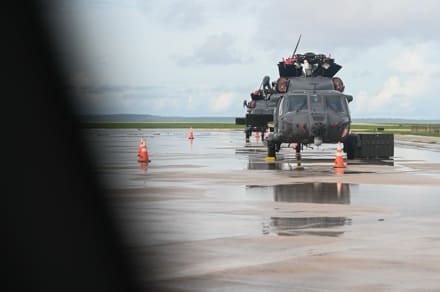
Lop Buri, Thailand – Royal Thai Army 1st Special Forces Division and U.S. Special Operations Detachment – Pacific shared staff insights on the Joint Planning Process and combined operations during the 2025 Cobra Gold academic week subject matter expert exchange, February 17-21, 2025.

Facilitated by Joint Special Operations University, the bilateral exchange for Royal Thai Army Special Forces and U.S. Special Operations participants focused on knowledge of best practices through candid dialogue and iterative demonstrations of processes through hands-on exercises.

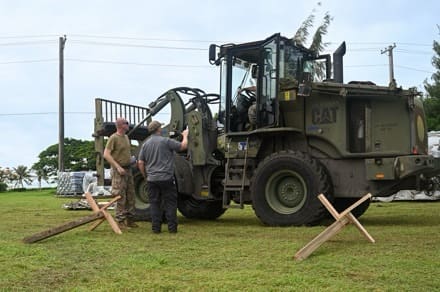
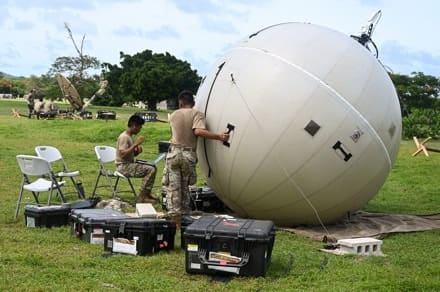
CG25 has three primary events: a command and control exercise, humanitarian civic assistance projects, and a field training exercise to enhance readiness and foster responses to security challenges and natural disasters. Approximately 30 nations participate, with 3,200 U.S. personnel directly involved, underscoring the importance of cooperation and goodwill.

JSOU’s focus is joint special operations education and has the mandate to support U.S. Special Operations Command Pacific. SOCPAC serves as the operational component command for all SOF missions throughout the Indo-Pacific region.

The JSOU JPP academic SMEE prepared participants for aspects of special operations forces’ integration during the Cobra Gold command and control event. JPP is a method to determine the use of military capabilities in time and space to achieve objectives within an acceptable level of risk.

“Having this academic SMEE as part of Cobra Gold 2025 demonstrates the importance both Thai and U.S. leadership place on cognitive warfare,” said JSOU senior mentor retired U.S. Army Col. Scott Malone. “As part of its Joint SOF charter, the university is uniquely positioned to facilitate operational collaboration and the exchange of strategic thought amongst Special Operations partner forces.”

JSOU’s academic engagements enhance operational collaboration and strategic thinking among partner forces, fostering a culture of continuous improvement and adaptive thinking. Class discussion and group exercises were the primary means for the intellectual exchange.

“The special operations professionals from Royal Thai Army 1st Special Forces Division and SOD-P collaboration nurtures a culture of continuous improvement and highlights adaptive thinking where knowledge transference and removing barriers to learning is paramount.” said Malone. “This SMEE on day one placing Thai and U.S. participants together in working groups heightens learning and promotes intellectual exchange. This immediate placement allows for each individual to gain a sense of ownership as the combined team is built and fosters unbiased exchanges of best practices as the week progressed.”

SOD-P provides trained, prepared, and equipped augmentation to the U.S. Army Special Operations Command and SOCPAC.

“This is an unparalleled opportunity for us to share our expertise with each other,” said U.S. Army Col. David Coughran, commanding officer of SOD-P. “Our focus is on strengthening our combined operational proficiency and leadership acumen, ensuring we are all prepared to handle any eventuality.”

CG25 is a visible symbol of the U.S.-Thai defense alliance, demonstrating the U.S.’s steadfast commitment to maintaining the conditions for peace and prosperity. Enhancing critical capabilities and readiness enables each force to jointly address regional stability in the Indo-Pacific.

The 44th iteration of this exercise exemplifies the longstanding alliance with Thailand and reflects the shared commitment to preserving a peaceful, prosperous, and secure Indo-Pacific region.

Story by Petty Officer 1st Class Joseph Rolfe 

U.S. Special Operations Command Pacific

FirstSpear Friday Focus: FS Hooded Field Shirt V2 – ACM Base 150

Friday, March 21st, 2025

The FirstSpear HOODED FIELD SHIRT v2 – ACM™ BASE 150 is a versatile and rugged garment designed for all-season performance. Made in the USA from American-sourced wool, this shirt offers exceptional durability and comfort. The lightweight 4.3oz ACM Base 150 fabric delivers superior moisture-wicking and antimicrobial properties.

This unique blend provides the natural benefits of wool with enhanced strength and flexibility, making it ideal for demanding conditions. The oversized hood offers added coverage and protection, while the low-profile cuffs with integrated thumb holes ensure a secure fit and keep your sleeves in place.

Designed for adaptability, it functions perfectly as a base layer in cold weather or as a standalone piece during warmer seasons. Its breathable construction helps regulate temperature, keeping you comfortable and dry whether you’re on the range, on the trail, or handling everyday tasks. The antimicrobial properties reduce odor buildup, making it a reliable choice for extended wear. Despite its lightweight feel, the fabric is built to withstand heavy use without sacrificing comfort.

FirstSpear is the premier source for cutting edge-tactical gear for military, law enforcement and those who train.

For more information visit First-Spear.com.

Project Convergence Capstone 5 Returns to California; Expands to Indo-Pacific AOR

Friday, March 21st, 2025

FORT IRWIN, Calif. — Project Convergence Capstone 5 (PC-C5), the latest iteration of the U.S. Army’s premier modernization experiment, is set to take place in March and April 2025. This ambitious campaign of learning will bring together Joint and Multinational partners in a series of complex, realistic scenarios designed to push the boundaries of future warfare capabilities.

PC-C5 is organized in two parts:

The first part arrays land forces across the National Training Center at operationally relevant distances. In addition to addressing aspects of the emerging Army Warfighting Concept this phase will assess Next Generation Command and Control (NGC2).

The second part is nested with Global Information Dominance Experiments by using Combined Joint All-Domain Command and Control in the Indo-Pacific Theater, across multiple combatant commands; with Joint and Multinational partners.

Building on the successes and lessons from previous experiments, PC-C5 focuses on experimental objectives aligned with the Army Warfighting Concept and the Joint Warfighting Design. This year’s experiment boasts greater participation from Joint and Multinational allies and partners, along with a broader array of cutting-edge technologies and equipment.

A Crucible for Innovation: PC-C5 serves as a critical proving ground for emerging technologies and concepts crucial to enabling a data-centric and networked fighting force. Participants will engage in both live and simulated exercises focused on:

Data-Driven Decision Making: Evaluating the effectiveness of advanced data analytics and artificial intelligence to provide real-time situational awareness for rapid, informed decisions.

Expanded Maneuver: Experimenting with new concepts and technologies that enhance the ability to maneuver and engage adversaries across land, air, sea, space, and cyberspace.

Forging Seamless Joint and Multinational Interoperability: Refining the ability of allied forces to operate together seamlessly across all domains.

A Catalyst for Transformation: PC-C5 is more than just an experiment; it’s a critical component of the continuous transformation within the U.S. Army. The insights from this event will directly inform future readiness and modernization efforts, ensuring that the Joint Force remains at the forefront of military innovation.

By David Miller

Soldiers Experiment with Next-Generation C2 at Project Convergence

Thursday, March 20th, 2025

FORT IRWIN, Calif. (March 11, 2025) – The Army’s Next Generation Command and Control effort is reaching a critical milestone at Project Convergence Capstone 5, where commanders and Soldiers are employing new capabilities in realistic mission scenarios and conditions.

Next Generation Command and Control, known as NGC2, aims to provide the integrated information framework that commanders need to make rapid decisions across warfighting functions, giving them an edge over adversaries. NGC2 will also enable Army tactical units to operate faster and more dispersed by providing lighter, more mobile and survivable network and C2 equipment.

“What we’re trying to do is take these emerging technologies where we can get this data better and faster to execute,” said Lt. Col. Tad Coleman, commander of the 2-37 Armor Battalion, 1st Brigade, 1st Armored Division (1/1 AD). “The technology in Next Generation C2 is the stuff a majority of people are seeing and already doing (in their daily lives). It’s just that now, it’s at the fingertips of the commander.”

After a year of NGC2 technical experimentation in lab and field environments, the Project Convergence Capstone 5 (PCC5) experiment taking place within the operational rigors of the National Training Center is serving as a “proof of principle” for the Army to assess progress with the approach before transitioning to prototyping.

NGC2 is focused at the 3-star headquarters and below to provide a “full stack” of capabilities from applications to edge compute and tactical communications links. At PCC5, the 1/1AD, 82nd Airborne Division, and 18th Airborne Corps are utilizing elements of NGC2 experimental capabilities to execute offensive and defensive operations at speed, scale, and distance, attempting to achieve shared understanding of the battlefield and improve decision-making at all echelons.

Although early in the experiment, Soldiers and leaders at PCC5 said they saw the value of NGC2 in providing faster communications, smaller form factors, more complete data across warfighting functions, and ease of training and use as compared with legacy systems.

“It is really good information that is passed a lot faster,” said Staff Sgt. Paul Johnson, a section sergeant in Alpha Company, 2-37 Armor Battalion.

At PCC5, NGC2 experimental technology – including applications, data infrastructure, software, and hardware such as tablets, end user devices, and mobile communications equipment – has been integrated onto the armor battalion’s tactical vehicles, as well as brigade, division, and corps nodes. However, Army officials emphasized that the equipment at PCC5 is not a final product, and solutions will continue to evolve based on upcoming prototype contract awards and continuous iteration of requirements and user input.

The ability to avoid vendor lock, and flexibility to make quick changes to functionality based on Soldier needs, are key Army priorities in developing the NGC2 approach. Even ahead of PCC5, Army Futures Command made updates based on Soldier feedback received from 1/1 AD at a touchpoint in January.

“We were able to generate more Soldier feedback, and since we’ve been out here (at Project Convergence) we’ve actually seen a lot of that integrated and incorporated,” said Capt. Nathan Kraemer, brigade AS3 (operations officer), 1/1 AD. “It’s very intuitive, the functionality of it. That really opened our eyes, and everyone was excited to use this. Now, we are just seeing how it can contribute, take effect, and change the way we fight.”

Breaking down information siloes and stovepipes across warfighting functions, locations, and echelons for a common understanding of the battlefield has the potential to significantly change operations, users said.

“I fully believe that you cannot win any war without communications,” said Sfc. Victor Norman-Morris, a communications section chief in 2-37 Armor Battalion. “I don’t care if it’s bullets, logistics – if you can’t talk to whoever you’re trying to, to get whatever you need, you’re not going to be able to do it. At every echelon, everybody (must be) able to talk and sync and be on the same page so we can continue moving forward and completing our missions successfully.”

For example, Sfc. Joshua Holland, a platoon sergeant in Alpha Company, 2-37 Armor Battalion, said using NGC2 at PCC5 enabled him to gather more real-time data to “paint a picture” of the battlefield that provided greater situational awareness to his platoon leader.

“She can control everything that she has to control, and I can continue to paint that picture, and the system I’m [using] right now is making it a lot easier to do that in a quicker time,” Holland said. “You can get a visual image of something and simultaneously share that with your counterparts. Even if it’s something simple like sending a message saying, ‘Hey, can you see this?’ and you share it and it’s an immediate response back and forth.”

Project Convergence is the Army’s premier experimentation event that brings operational units and industry teams together in a complex real world operational environment to test ideas, concepts, and promising technology. The lessons and observations captured during PCC5 will directly inform Army decisions to refine requirements documents, prioritize funding, and invest to accelerate promising technologies.

For NGC2, the operational feedback received through PCC5 will inform updates to requirements including the Capability Characteristics of Need (CoN) document, which is consistently updated to reflect the evolving needs of the warfighter and technology progress.

NGC2 is executed in partnership by the Army Futures Command (AFC) and the Assistant Secretary of the Army for Acquisition, Logistics and Technology (ASA(ALT)). The AFC product owner and ASA(ALT) program manager will work together to plan and rapidly execute capability drops in concert with the operational force.

By Claire Heininger, U.S. Army Futures Command C2 CFT