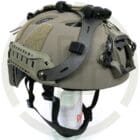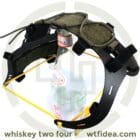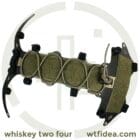
Wilcox Ind RAID Xe

Archive for the ‘Guest Post’ Category

Jacobite Solutions – Back on Track

Wednesday, March 19th, 2025

Following a couple years of sickness and recovery, Jacobite Solutions has moved into a new shop in their home town of Aberdeen, Scotland.

Bigger Space, Bigger Projects-

The new space not only features a better space for JS branded kit, but also a more elaborate display for their TUFF DUGZ brand of heavy-duty dog equipment, as well as more space for their ever growing offering of surplus/pre-owned kit.

But the new premises isn’t just a shop, having more space to work means Jacobite Solutions now has room to work on bigger, more substantial projects.

“I’ve always wanted to push more into the equipment manufacturing side of things, but never really had the space to do so. Now, with the new shop, it not only gives greater shelf space that also lets customers come in and browse, but also space for me to really lay out projects, both product and R&D wise.” -Rob, Director of Jacobite Solutions

S.E.R.E Kit updates-

One of the things JS is best known for (aside from the memes) is its offering of S.E.R.E kit. With the new shop, what plans does JS have for this area this year?

“In terms of S.E.R.E kit, this year will be solely focused on re-visiting the current line-up, seeing where things can be improved or perhaps even designed altogether. The S.E.R.Espace has been really busy the past couple of years, with all the ongoings in Europe and the Middle East. Now the mad rush for kit has settled, I can finally sit down and pick at ideasthat I never got around to before I became ill.”

What else is to come?-

With a new found health and momentum, what else does Jacobite Solutions have in the pipeline?

“This year will certainly busy. Outside of the S.E.R.E kit, our belts have proven popular, especially with local Law Enforcement, so there’ll certainly be more to come in that area. There’s also our brand of heavy-duty dog accessories that’s really starting to mature now, both in terms of the off-the-shelf stuff and the custom work. Of course, we’ll still continue to offer our 3D printing and repairs service, as well as all the other custom work we do and our surplus/pre-owned kit catalogue is also growing more and more, so it’s really a war on all fronts this year that may even involve employing someone and, with the way things are going, potentially a bigger space. Obviously, considering not too long ago I was near death in hospital with an illness that has taken me almost 2 years to return to some kind of normal, it’s been crazy how things have grown and I don’t think I’ll get over just how supportive and understanding both my customers and others in the community have been.”

Jacobite Solutions can now be found on Summerhill Drive, Aberdeen, Scotland. They ship internationally and offer both off-the-shelf and custom work, as well as consultancy services.

jacobitesolutions.com

Improving Warfighter Readiness Using Augmented Reality

Tuesday, March 18th, 2025

FORT DETRICK, Md. – The Congressionally Directed Medical Research Programs’ Traumatic Brain Injury and Psychological Health Research Program recently awarded a $3.4 million grant to a team of Cleveland Clinic researchers to develop an innovative augmented reality tool for assessing whether Warfighters recovering from concussion are ready to return to duty. The new tool, called Troop Readiness Evaluation with Augmented Reality Return-to-Duty, or Troop READY, promises to provide answers more quickly and reliably than existing methods.

Concussion, also referred to as mild traumatic brain injury or mTBI, is a relatively common injury in the military. According to the DOD Traumatic Brain Injury Center of Excellence, over 80% of the TBI injuries sustained by Service Members between 2000 and 2024 were classified as mTBI. Service Members can experience an mTBI while on deployment, during training, and even when participating in a sport. Most injured Service Members are able to return to duty within two weeks. Military doctors currently follow a six-step protocol called the Progressive Return to Activity for safely returning an injured Service Member to duty, but the PRA has some shortcomings.

“The PRA is not 100% objective,” explains Dr. Dwayne Taliaferro, CDMRP’s TBIPHRP program manager. “While a medical professional guides the Service Member through the protocol, progress is dependent on the Service Member’s self-assessment of the mildness or severity of their symptoms. Troop READY offers an opportunity to provide more objectivity in the PRA protocol.”

Troop READY uses a Microsoft HoloLens 2 augmented reality headset and simulated M4 carbine assault rifle to generate a series of realistic and increasingly intensive scenarios that a patient must complete in order to simultaneously assess their cognitive and physical readiness. The exercises involve marching, shooting while standing and kneeling, and breaching and clearing a room. The patient’s cognitive, motor, and task performance capabilities are then analyzed using specially trained machine learning algorithms to determine the severity of any detected symptoms.

Dr. Jay Alberts, director of Cleveland Clinic’s Concussion Center, is leading the three-year project to further refine Troop READY, which he originally developed and tested under a previous CDMRP grant. In partnership with Microsoft Federal, Alberts and his team will use the new grant to improve the tool’s ability to detect signs of mTBI and to recommend personalized treatment plans for patients that streamline their return to duty.

Under the TBIPHRP grant, Alberts and his team will conduct a usability study with volunteers to refine the simulation modules, which will then be tested on a larger cohort of volunteers to identify baseline performance levels. Those baseline data will be used to train the machine learning algorithms to ensure a high degree of accuracy when assessing a patient’s current condition and guiding their continued treatment.

Taliaferro says that Troop READY offers several potential advantages over existing methods for assessing mTBI recovery in Service Members. For example, doctors use a battery of neurocognitive tests called Automated Neuropsychological Assessment Metrics to assess a Service Member’s readiness to return to duty. The computer-based ANAM assesses changes to a Service Member’s attention, reaction time, memory, and decision-making abilities based on their answers to a series of survey questions. However, as a sit-down multiple-choice test, ANAM lacks the fidelity of an active 3D simulation.

“The Computer Assisted Rehabilitation Environment Laboratory at the National Intrepid Center of Excellence blends virtual reality with a treadmill, immersive video, surround sound, and even smells,” Taliaferro says. “It is very powerful, but it’s in a fixed location and not very portable. Whereas with Troop READY, you can deploy the goggle set and the mock weapon anywhere quickly.”

In addition to helping Warfighters return to duty, the Troop READY tool has the potential to be adapted for use in other fields where mTBI is a risk, such as professional sports, construction, and law enforcement, says Taliaferro.

Before it can be deployed with the military or other users, Troop READY will need to be assessed by both the U.S. Food and Drug Administration and the DOD for its safety and readiness for use.

“CDMRP’s role is to accelerate the development of products like Troop READY so that they can be properly evaluated to determine how, when, and where they can be deployed,” explains Taliaferro. “We do not always put things directly in the hands of Warfighters at the end of a study, but we get them as close as we can. That is a great use of taxpayer dollars.”

By Paul Lagasse, USAMRDC Public Affairs Office

Air Force Aims to Instill Warrior Ethos, Increase Lethality

Saturday, March 15th, 2025

WASHINGTON (AFNS) —

The Air Force is making progress toward Secretary of Defense Pete Hegseth’s priorities, which will ultimately result in giving the president more options, said Air Force Chief of Staff Gen. David Allvin, who provided a keynote address, March 3, at the 2025 Air and Space Forces Association’s Warfare Symposium in Aurora, Colorado.


Allvin mentioned those priorities — restoring the warrior ethos, reestablishing deterrence, meritocracy, reforming acquisition, passing an audit, matching threats to capabilities and defending the homeland — and how the Air Force is executing them.

Reviving the warrior ethos means letting every Airman know what it means to fight as a unit, what’s going to be expected of them, and focusing on the threat, he said.

“Your Air Force continues to kick butt. Our Airmen are doing amazing things every day. They make it look just normal,” he said, noting how Airmen, along with allies and partners, controlled the skies over the Middle East and are increasing interoperability with allies and partners in the Indo-Pacific region.

Also, every day, Airmen protect the skies over the homeland through exercises and nuclear deterrence, he said.

“We’re a well-used Air Force, and we’ve been used well and used often. Every time we ask them to do more, they continue to do more,” Allvin said.

Ensuring all of the service’s investments increase combat readiness and effectiveness is now the focus, he said.

For example, the Air Force maintains excess infrastructure, approximately 20-30% too much, he said.

“All of that is not adding to combat capability. All of that is infrastructure that needs to be maintained, sustained and doesn’t necessarily provide more combat lethality,” he said.

Greater lethality, he said, has been degraded by a drop in aircraft availability as the fleet ages and needs more maintenance. Also, weapon sustainment costs are growing, and the nuclear triad needs to finish its modernization efforts.

As threats continue to evolve, the Air Force is racing toward adding unmanned fighters to the fleet, training for human-machine integration and using autonomy more effectively, he said. 

When the new Air Force secretary and undersecretary get confirmed, they will examine how effectively the force is executing the defense secretary’s priorities, Allvin said.

“I have a hunch that when they see some of these things we’re doing, we’re going to be told to go faster,” he added.

Lastly, he pointed out that “Americans keep signing up, saying they want to join the team. And the team that is the United States Air Force continues to be the best in the world. They show up every day. They do what they’re asked. They do it with excellence. They do it in a way that makes us all proud.”

The Air Force is ahead of its annual recruiting goal, with more recruits currently in the delayed entry program than at any point in nearly 10 years.

By David Vergun, DoD News

Photos by Master Sgt John Hillier, Airman 1st Class Koby Mitchell, and Airman Elijah Van Zandt

Army Introduces Industry to Squad as a System Concept

Friday, March 14th, 2025

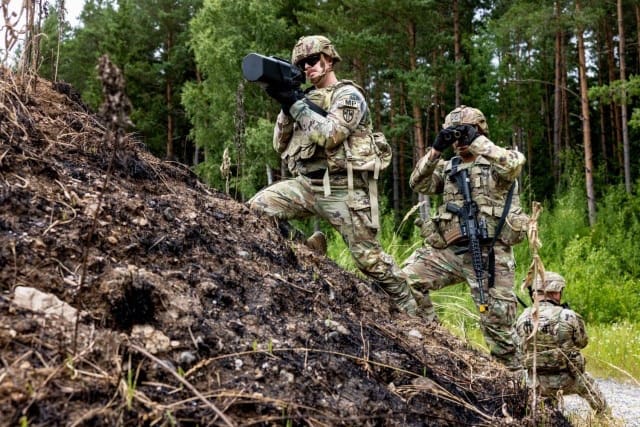
ALEXANDRIA, VIRGINIA – During the Industry Stakeholder Engagement Forum here last week, the U.S. Army Chief of Infantry encouraged more than 400 representatives from across the military industrial enterprise to reconsider how they conceptualize the end user as they develop capabilities for front-line Soldiers.

Brig. Gen. Phil Kiniery, Chief of Infantry, Commandant of the U.S. Army Infantry School and the director of the Soldier Lethality Cross Functional Team at Fort Benning, Georgia, introduced the concept of Squad as a System, the Army’s new systematic and holistic approach to enabling and enhancing close combat squads.

“My goal this morning is to convey to you just how much we need you, what we need from you, and that the need is urgent,” said Kiniery, who spoke March 4 to an audience of representatives from traditional and non-traditional industries.

Decades of “kitting and equipping” Soldiers piecemeal and through various traditional “stovepipes” has resulted in redundancies, excessive weight, and cognitive overload, Kiniery said.

“Squad as a System is the way forward, a new approach,” he said. “It is a formation-based approach, because we fight formations.”

His message to those interested in partnering with the Army to facilitate Squad as a System: We need to rapidly deliver reliable technology and reduce redundancies.

“Going forward, we must focus on a common architecture to optimize the performance of the squad, not just the individual,” he said. “How can we effectively maximize combat power with packaged capabilities that are better designed, developed, and integrated to provide stable and predictable modernization?”

How do we reduce redundancy and increase combat power?

How do we reduce weight and increase combat power?

How do we reduce cognitive load and increase combat power?

How do we improve efficiency and increase combat power?

Currently, Kiniery said, the individual Soldier carries or wears more than 80 items with redundant power sources and cables. The goal is to reduce the fighting load to no more than 30 percent of the Soldier’s body weight, or about 55 pounds.

“Excessive load will degrade the Soldier’s cognitive and physical performance if we don’t do something about it,” he said.

Presently, as each capability is developed individually, the process lacks an integration architecture, and there’s no synchronizing function for information flow in and out of the squad.

“I believe the application of Squad as a System is going to change all that,” said Kiniery, who invited his audience to “join us as we seek solutions to redundancies, weight, tactical power burden, cognitive overload, and lifecycle costs.”

To do that, he said, industry leaders will make sure individual items – wearable, non-wearable and weapons – are compatible and synergistic.

“Through Squad as a System, we will establish a sustainable, adaptable architecture with validated metrics and structural standards. This will facilitate an expectation, a standard, of what the future force will look like.”

By Bridgett Siter

36th AS Flexes Agility, Conducts Airdrop Operations Under Limited Visibility

Thursday, March 13th, 2025

YOKOTA AIR BASE, Japan (AFNS) —

As the sun set over the Yokota Air Base flightline, four C-130J Super Hercules assigned to the 36th Airlift Squadron revved engines in preparation for a routine, yet convincing, demonstration of world-class agility, Feb. 6.

This night time sortie – also known as a night tac – would take aircrews over the Mount Fuji drop zone for the swift and synchronized delivery of container delivery system bundles and heavy equipment.

“This particular one was a multi-element formation lead flight,” said Capt. Zachary Norton, 36th Airlift Squadron C-130J pilot. “We also trained on airdrops, so we did visual low-levels over the Mount Fuji drop zone with heavy equipment and CDS bundles.”

Night tacs present unique challenges and provide pilots and loadmasters an opportunity to implement tactics and techniques under limited visibility. These missions rely on critical tools such as aircraft station-keeping equipment, avionics systems used to maintain formation flight in low-visibility or night operations. Aircrew also utilized night vision goggles during the flight.

“NVGs bring a whole different challenge because you lose depth perception when using them.” said Senior Airman Blake Janssen, 36th AS loadmaster. “We do this because in the event we have to conduct night operations, we’re just as proficient as we are at day operations.”

Such exercises are part of the squadron’s unwavering commitment to meet the demands of region-wide airlift support. Their rigorous training schedule includes drumbeat, scenario-based events, and exercise injections to ensure that pilots and loadmasters meet their training objectives and maintain peak proficiency.

“We aim for at least one student on all of our training flights so they can meet all of their requirements,” Janssen said.

The 36th Airlift Squadron champions synchronized logistics by continuously refining their capabilities, ensuring they remain capable of delivering rapid and precise airlift support across the Indo-Pacific.

By SSgt Spencer Tobler, 374th Airlift Wing Public Affairs

The Army at 250: Did you Know the Army Invented This?

Wednesday, March 12th, 2025

You might be surprised by the number of things you use or rely on in work and play can be traced back to Army ingenuity or investment.

Check out this list to discover some of the many things created for or by the Army.

Food preservation – The Army is renowned for food preparation research. The U.S. Army Natick Soldier Systems Center in Massachusetts specializes in, among other things, sustaining the military’s food.

Anastacia Marx de Salcedo, author of “Combat-Ready Kitchen: How the U.S. Military Shapes the Way We Eat,” says much of the processed food we eat today originated through experiments in an Army laboratory.

The Army’s Quartermaster Corps funded research at the USDA early in World War II to resolve a problem that had stymied Army food scientists – they couldn’t dehydrate cheese to feed soldiers.

USDA scientist George Sanders came up with the solution, and after the war his method of powdered cheese was used to flavor Cheetos.

The Army also expanded research into high-pressure processing, which de Salcedo says is the application of high pressure to eliminate bacteria in food. Once the food industry adopted the Army’s techniques, it began using them on foods that are produced for public consumption.

One popular product that relies on the pressure process is ready-to-eat guacamole.

In a 2015 interview with National Public Radio, de Salcedo said she realized “that everything in my kids’ lunchboxes had military origins or influence – the bread, the sandwich meat, juice pouches, cheesy crackers, Goldfish Crackers and energy bars,” she said. “In a large sense, l estimate that 50 percent of items in today’s markets were influenced by the military.”


Pringles – The USDA and the Army Quartermaster Corps worked to develop dehydrated potato flakes, which led directly to the production of Pringles potato crisps.

Super Glue – Cyanoacrylate adhesives were initially discovered during World War Il by a scientist at Eastman Kodak Company when the Army was urging American industry to make things to help win the war.

Dr. Harry Coover initially created the new compound in 1942, while striving to create a clear plastic gun sight for Soldiers.

Believing the substance was too sticky, Coover shelved the idea for a decade, but later revisited it while researching material to make jet canopies. This time he realized he had created a super glue, and he filed for a patent.

During the Vietnam War, medical teams caring for severely injured Soldiers realized the material, marketed as Super Glue, was helpful for sealing bloody wounds and to stop bleeding until the patient could be transported to a medical unit for more advanced treatment. Cooper said he took great pride in the fact that his glue saved the lives of many Soldiers injured in combat.

The computer – The Army funded research by John Mauchly and J. Presper Eckert at the University of Pennsylvania into the Electronic Numerical Integrator and Computer. This was the first electronic computer used for general purposes. The Army wanted to calculate artillery firing tables for its Ballistic Research Laboratory. Construction began in 1943. Six women, recruited in 1942 for their math skills, programmed ENIAC.

Electric Razors – A retired Army colonel invented the first electric razor that could be easily manufactured. Jacob Schick patented his invention in 1928.

Duct Tape – In 1943, an Illinois woman with two sons in the military during World War II first visualized how to make a waterproof cloth tape to seal boxes of ammunition.

Vesta Stoudt worked at the Green River Ordinance Plant near Amboy, Illinois. According to Margaret Gurowitz, the chief historian with Johnson & Johnson, workers at the plant saw that the paper tape used to seal boxes of rifle ammo was inferior and hampered how Soldiers in combat opened the boxes, often while under fire.

Stoudt told others how the tape could be improved but didn’t get help from her supervisors. So, she wrote a letter to President Franklin D. Roosevelt, explaining the problem and detailing her idea to solve it with a better tape. According to Johnson & Johnson company history, the president passed her letter on to the War Production Board.

The board approved of the change and asked a Johnson & Johnson operating company to make the product based on its experience in making tape.

The Jeep – The brainstorm for a quarter-ton, four-wheel drive truck designed as a cross-country tactical vehicle originated just before World War II for the infantry. The military considered numerous prototypes from America’s automakers, and during the war, Willys-Overland and Ford Motor Company produced 643,000 Jeeps for Allied forces.

Two-way portable radio – The Army asked Galvin Manufacturing Corporation, (now Motorola) to make a radio that would allow World War II Soldiers on the move to communicate with each other.

The EpiPen – The roots of a self-directed auto injector go back to 1973, when the Army asked a researcher to create an easy-to-use device to treat chemical warfare exposure for troops in the field. Soon after, experts in the medical industry realized that the auto injector device filled with epinephrine could be carried by civilians who suffer severe allergic reactions.

By Jonathan Austin , Army News Service

Rock Island Arsenal-Joint Manufacturing and Technology Center’s 3D Printing Revolutionizes Military Readiness, Uniting the Best and Brightest in the Industry

Tuesday, March 11th, 2025

ROCK ISLAND ARSENAL, Ill.—The U.S. Army’s Rock Island Arsenal-Joint Manufacturing and Technology Center is embracing additive manufacturing to revolutionize machine repair, lower costs and enhance military readiness, showcasing the ingenuity and dedication found within the Department of Defense, the U.S. Army and its organic industrial base.

“The process of creating these temporary parts first requires reverse engineering the original part,” Edward Flinn, the director of the Advanced Manufacturing Center of Excellence at RIA-JMTC said. “We then printed the part, and fortunately minimal machining was required, so we were able to get the equipment operational soon after the prints were complete.”

The AM CoE, staffed by some of the brightest minds in the field, is creating temporary replacement parts for critical manufacturing equipment, significantly reducing downtime and extending the lifespan of aging machinery.

“In this factory, we have machines from the early 1950s that performed tasks that some newer technology just can’t do in the specifications and the tolerances that we require,” RIA-JMTC Logistics Director John Shappell explained. “The machines today are not as simple to adjust electronically, and the older machines are manually adjusted by a tradesman.”

This initiative builds on the success of the Battle-Damaged Repair and Fabrication program developed with Tank-automotive and Armaments Command. It allows rapid on-demand 3D printing of temporary repair parts for Army units in the field, directly contributing to the readiness and operational capability throughout formations.

“We make a lot of things that are hard to come by,” explains Robert Branch, AM CoE engineer. “By the time a part gets to the AM CoE, everyone has been given an opportunity to provide this part to the government. We’re sort of a last resort because traditional manufacturing methods are more appropriate for large-scale production. When you need a small quantity quickly, that’s when additive manufacturing comes into play.”

The adoption of additive manufacturing offers significant cost savings for the Army by reducing reliance on expensive traditional manufacturing methods, especially for small production runs. RIA-JMTC is at the forefront of this innovation, demonstrating the potential of 3D printing to revolutionize military manufacturing and readiness. While 3D printed parts can sometimes be more expensive, the speed and flexibility they offer prove invaluable.

“Customers understand that readiness solutions might come with a premium, and some are willing to invest in that assurance,” Randl Besse, AM CoE project manager said. “We can provide those parts in days compared to weeks, demonstrating the value of that investment in times of urgent need.”

This commitment to innovation within the defense industrial base ensures that facilities like RIA-JMTC are capable of not only sustaining fielded systems but also maintaining pace with Army modernization efforts. The AM CoE’s work is a testament to the talent present throughout the total workforce, ensuring the RIA-JMTC facility remains postured to surge in support of large-scale combat operations.

“I’m not a real big fan of recreating failure modes just because that’s the way it was,” Branch said. “If someone’s coming to the AM CoE and saying, ‘hey, we need these parts,’ I’m going to ask them why do you need these parts? Is it because they break in a certain area, or they wear out? Do they have one failure mode over another? Because I’m already there adjusting the part. So, let’s see how it interfaces with the other parts around it and if we can make it better.”

One example highlighting the factory replacement part program’s effectiveness is the replacement of a water pump for a critical plating system. With traditional procurement, the lead time for this pump was four to six weeks. The AM CoE was able to print, machine and test a replacement part in less than a week.

“As customers, we’re competing with the rest of the private industry to get this pump that we need to continue producing parts that build on military readiness,” Shappell said. “This replacement part program drastically improves operational availability and readiness.”

Beyond simply replicating existing parts, the AM CoE team actively analyzes and improves designs. For example, a redesigned burner cone, previously a two-piece component prone to failure, was 3D printed as a single, more robust piece, eliminating the previous failure points.

“There are many aspects where we’re getting material performance on printed items that are very close to forged or cast materials,” Branch explains. “When you factor in the safety margins of the original designs, the difference between the materials is often negligible.”

As the technology continues to evolve, additive manufacturing will likely have an even greater impact on Army operations and the wider military manufacturing industry. By embracing this emerging technology, RIA-JMTC is enhancing readiness and operational capabilities, ensuring Army formations are prepared for large-scale combat operations in contested environments.

By Kendall Swank

Platatac Individual Marker Panel

Monday, March 10th, 2025

The Platatac Individual Marker Panel now available in MultiCam Tropic and Ranger Green, alongside MultiCam. With new colours, Pink and Yellow, in addition to Orange.

At 30cm x 30cm, our Individual Marker Panel is a lightweight high visibility item, that is perfect to carry in your kit for individual recognition when marrying up or RV’ing with friendly forces, or signalling vehicles and aircraft.

The shock cord & toggle loops at the corners allow for easy attachment to various items or use ITW Grimlocks to link multiple panels together to create a bigger visual footprint for specific signalling needs.

The marker panel is the perfect accessory to stash in our range of Pouches or even in our notebook covers.

platatac.com/platatac-individual-marker-panel