FirstSpear

Archive for the ‘Guest Post’ Category

Advising the Other Side of the COIN II

Saturday, May 31st, 2025

INTRODUCTION

In war, whether its counterinsurgency (COIN) operations or large-scale combat operations (LSCO), “the side that is best prepared, best understands an operational environment, adapts more rapidly, and acts more quickly in conditions of uncertainty is the one most likely to win.”[1] This is a lesson best observed in urban environments, such as in the large cities in Ukraine where the local population influences and are influenced by the tactical and operational outcomes of military operations. This document explores existing COIN doctrine and seeks to relate how, during LSCO, the principles of clear, hold, and build remain valid in terms of consolidating gains, especially through the lens of security force assistance (SFA). In doing so, it is important to define doctrinal terms such as COIN, LSCO, and consolidation of gains to frame the discussion of how clear, hold, and build connects to existing doctrine as it all relates to the ongoing military operations in Ukraine, for example. Therefore, the purpose of this document is to inform Army planners at all echelons of the utility of how clear, hold, and build are still relevant during LSCO to achieve those tactical gains that support decisive operational outcomes.

COIN, as a subset of irregular warfare, is defined as “the blend of comprehensive civilian and military efforts designed to simultaneously defeat and contain insurgency and address its root causes.”[2] If insurgency is the organized use of subversion and violence to seize, nullify, or otherwise challenge the political status quo in a country or region, then COIN is the unified approach to countering an insurgency’s momentum. There are several examples of recent U.S. COIN, such as in Afghanistan, Iraq, and Columbia. The important consideration in understanding COIN is it tends to be long-term, often decades to achieve desired strategic outcomes. Much of COIN, when active, is tied to country- or region-specific foreign internal defense programs, which recently have shifted away from lethal counterterrorism operations to building partner capacity to address the broader security challenges in a country or region.

“LSCO are extensive joint combat operations in terms of scope and size of forces committed, conducted as a campaign aimed at achieving operational and strategic objectives.”[3] During large-scale ground combat, Army forces focus on defeating enemy ground forces through a balance of offensive, defensive, and stability operations. Yet, critical to these three operations is the consolidation of gains once Army forces have achieved relative advantage over enemy ground forces, but how is consolidating gains understood or implemented at the tactical level?

Consolidation of gains are “activities to make enduring any initial operational success and to set the conditions for a sustainable security environment, allowing for a transition of control to other legitimate authorities.”[4] At the tactical level, this should look like short term, yet sustainable, stability activities or targeted civil-military operations in large urban centers, such as Mariupol in Ukraine. It also could translate into training and equipping local security or police forces, as part of broader campaign objectives, depending on the authorities, but it may not necessarily be an assigned mission of a security force assistance brigade (SFAB). During a LSCO fight, SFABs will most likely support their partner force and liaise between their partner and the U.S. joint force. If true, consolidating gains in the division’s rear area, especially in terms of SFA as part of hold and build, may be tasked to other available units, such as military police or combat engineers.

Critical to consolidating gains in the rear area, or uncontested areas outside of the rear area, is understanding the civil considerations and how civil support to U.S. military operations allows Army forces to maintain momentum to conduct limited offensive operations and shape the environment in terms of influencing local populace perceptions. This document examines consolidating gains through a clear, hold, and build construct with examples of how Ukrainian security forces used COIN-era SFA developmental activities in contested areas of the Ukraine since 2014, but before the Russian invasion in 2022. Finally, this document covers what support and liaise, two of the more prominent LSCO-focused advising tasks, should look like in post-invasion Ukraine also using a clear, hold, and build construct.

CLEAR, HOLD, AND BUILD IN UKRAINE (COIN AND LSCO)

In COIN doctrine, clear, hold, and build is part of a larger concept known as shape, clear, hold, build, and transition. This document does not explore shape or transition as it is outside the scope of advising partner forces while consolidating gains in division rear areas as part of broader SFA objectives. Although consolidating gains can mean almost anything during LSCO, such as establishing defensive perimeters in key terrain or conducting civil-military operations in large urban centers, the methodology to examine the proper context of advising partner forces on SFA is through a clear, hold, and build construct. In the following three sections, COIN is introduced and described first, followed by a brief description of what advising support and liaise should look like during LSCO through the hypothetical lens of U.S. advising teams.

Clear

In COIN, clear is an offensive-oriented task to remove insurgent forces and eliminate organized resistance in an assigned area. During the clear phase, it is critical for the United States to comply with the international law of war and avoid the destruction of civilian homes or the disruption of business as upsetting either will have negative amplifiable effects to U.S. COIN efforts, especially in large cities. Once insurgent forces have been removed or eliminated, eliminating their capabilities to influence or coerce becomes a police function that will rely heavily on military forces and intelligence assets until a host nation’s security sector institutions have the capacity to assume responsibility within an assigned area.

In 2014, Russia seized Crimea and sponsored an insurgency in eastern Ukraine that killed more than 13,000 people.[5] Russia annexed Crimea, resulting in demonstrations by pro-Russian supporters that broke out across Ukraine’s southern and eastern oblasts. In the Donbas region, for example, civil unrest eventually became an armed conflict, and despite a negotiated cease-fire, low-intensity fighting continued until the Russians invaded in full force in 2022. Yet, from 2014 to 2022, despite episodic clearing operations from Ukrainian security forces, the fighting in Donbas was largely a frozen conflict, or, in international relations parlance, a situation in which an active armed conflict ended without a satisfying peaceful resolution for both combatants.

In LSCO, like COIN, clear is also an offensive-oriented task and is the most dangerous and dynamic phase. Ukrainian security forces launched a counteroffensive 29 August 2022, to retake control of the southern regions of Kherson and Mykolaiv, which were occupied by Russian troops. By 12 November, despite heavily fighting acrost Kherson oblast, Ukrainian security forces recaptured the city of Kherson, breaking Russia’s access to that area of the Black Sea coast. In this example, and as a hypothetical, had U.S. advisor teams accompanied Ukrainian security forces during their counteroffensive, support and liaise could have demonstrated greater targeting capabilities from the Ukrainians to strike at large enemy troop movements that were deployed to repel the Ukrainian counter-offensive, reducing potential partner casualties.

Hold

In COIN, hold is a defensive-oriented task to secure the populace and separate them from the insurgents. During the hold phase, U.S. forces need to establish a firm and persistent government presence and control over the assigned area. It is preferable to establish a governance apparatus that replaces the insurgent’s apparatus. Concerning consolidating gains, it is during this phase where U.S. advisors conduct SFA developmental activities, such as organize, train, equip, build, and advise (OTEBA) security forces. While LSCO continues, advisor teams may remain in the corps or division rear area to develop capabilities and build greater capacity in the security forces and their institutions.

To this end, the U.S. effort to assist Ukraine during the hold phase was through security assistance, which encompassed formal training and equipping Ukrainian security forces, but on a grander scale, which included developing greater capacity in Ukrainian defense institutions. For example, from 2015 to 2021, the United States manned a training and advising mission in Ukraine located at the Joint Multinational Training Group–Ukraine (JMTG–U) in Yavoriv. JMTG-U focused on the defense and security training of Ukrainian security forces at the echelons of brigade and below. Because of JMTG-U’s mission, some analysts speculated Ukrainian forces had the resources to develop sufficient warfighting capabilities, and, equipped with the latest military gear, were able to provide a sustained defense against the Russians when they invaded in early 2022.

In LSCO, like COIN, hold remains a defensive-oriented task. Three days following the Russian invasion of Ukraine, on 25 February 2022, Russian forces launched a massive attack to capture Kyiv, Ukraine’s capital. Yet, Russian offensive efforts stalled, along with their 40-mile-long logistics convoy that was, then, about 24 miles from Kyiv. This allowed the Ukrainians to fortify much of Kyiv, even arming civilians with more than 25,000 assault rifles and approximately 10 million bullets.[6] Russian forces made little gains capturing Kyiv during their offensive and eventually withdrew, without admitting defeat. Ukrainian forces conducted a few counteroffensives, as part of the hold, to repel Russians from suburban areas in Kyiv.

In this example, and as another hypothetical, had U.S. advisor teams partnered with Ukrainian security forces to defend Kyiv, not only would the support and liaise function facilitate more accurate counterfires from Ukrainian artillery, but it would also facilitate a more accurate common operational picture of the Russian order of battle to be shared with other interested allies and partners. Finally, as the hold becomes permanent, U.S. advisors could enable further OTEBA activities in recruiting, training, and equipping local security forces in Kyiv to build on the consolidation of gains.

Build

In COIN, build is a stability-oriented task to restore essential services, restore civil control, provide support to infrastructure and economic development, and, in a continuation from the hold phase, build on the capability and capacity of the security forces. During the build phase, the emphasis is on stability activities in an assigned area. It is also during this phase when messaging the populace about security force legitimacy should be the strongest. Stated differently, if the populace does not believe their security forces can protect them from insurgent intimidation, coercion, or reprisals, the populace may not overtly support the local security force.

In LSCO, like COIN, build remains a stability-oriented task and is arguably the longest phase most associated with reconstruction, development, and governance. In SFA terms, the build phase is where most of OTEBA occurs and is usually in safe areas identified by security forces for the reconstitution of security forces. Although not exclusively support or liaise, as it has been in clear and hold, build is immensely an advise and assist function for U.S. advisor teams and their partner forces.

CONCLUSION

Although Carl von Clausewitz is famous for his observation that war is a continuation of policy by other means, he also states the defense is intrinsically stronger in war than the offense because the offense requires overcoming resistance and is constrained by limitations, such as the culminating point where seizing key terrain becomes too costly to clear and hold.[7] This is an applicable observation for the ongoing war in Ukraine, where offensive and defensive exchanges between Ukrainian and Russian military forces are ubiquitous, especially in the cities. Stated differently, although the fighting in Ukraine is fluid, held areas can become contested again, which is why it is important to understand the clear, hold, build construct is not always a linear sequence, as some phases may overlap.

The defense, where the hold phase occurs, is also where units begin to consolidate their gains. In COIN, the center of gravity is the population, but in LSCO the center of gravity is focused on the enemy. The tactical defeat of an enemy, however, does not necessarily translate into a victory for the United States and their partner forces. Ensuring enemies cannot transition a conventional military defeat into a protracted irregular conflict is not only a foundation for achieving victory, it is the very essence of why the rapid consolidations of gains in rear areas is so very important during LSCO and why supporting and liaising with local security forces matter during the clear, hold, and build phases.

By Robert Schafer, Center for Army Lessons Learned

[1] Army Doctrine Publication (ADP) 3-0, Operations, 21 March 2025, page 1.

[2] Joint Publication (JP) 3-24, Counterinsurgency, 30 April 2021, page III-1.

[3] ADP 3-0, Operations (21 March 2025), page 4.

[4] Field Manual (FM) 3-0, Operations, 21 March 2025, page 16.

[5] Kim, Lucian. “How U.S. Military Aid Has Helped Ukraine Since 2014.” National Public Radio. 18 December 2019. Retrieved 15 April 2025. https://www.npr.org/2019/12/18/788874844/how-u-s-military-aid-has-helped-ukraine-since-2014.

[6] Khurshudyan, Isabelle; O’Grady, Siobhán; Morris, Loveday. “‘Weapons to anyone’: Across Ukraine, militias form as Russian forces near.” The Washington Post. 26 February 2022. Retrieved 15 April 2025.

[7] Michael Howard and Peter Paret, Clausewitz: On War (Princeton, NJ: Princeton University Press, 1989), 358. In Book VI, Chapter 26, Clausewitz notes it is far from certain the defensive is always the stronger form of warfare, but it is the more advantageous to adopt because it presents more conditions favorable to its success. Clausewitz further observes the defensive is a more elementary form of warfare, and therefore more readily mastered. Clausewitz was a contemporary of Sir Arthur Wellesby, 1st Duke of Wellington, and most likely drew his conclusions on defense from Wellesby’ s successful defense of key terrain over Napoleon’s offensive charge of infantry and calvary near the village of Waterloo on 18 June 1815.

Download the article in PDF here: No. 25-1018, Advising the Other Side of the COIN II [PDF – 9.4 MB]

Army Aviation Leader Urges Branch to Embrace Change

Saturday, May 31st, 2025

NASHVILLE, Tenn. — Army Aviation is undergoing a significant overhaul in training and culture, a transformation described by Army Aviation Center of Excellence Commanding General Maj. Gen. Clair Gill as a “full scale change” during his address to the Army Aviation Association of America Summit opening ceremony on May 14, 2025, in Nashville. He emphasized the need for rapid transformation in the face of a rapidly shifting global landscape.

Gill stressed the core mission of Army Aviation: to support the Army and the nation. He quoted retired Gen. Eric Shinseki, former chief of staff of the U.S. Army, stating, “If you don’t like change, you’re going to like irrelevance even less,” and urged attendees to focus on providing capabilities to “see, sense, strike, move and extend the battlefield.”

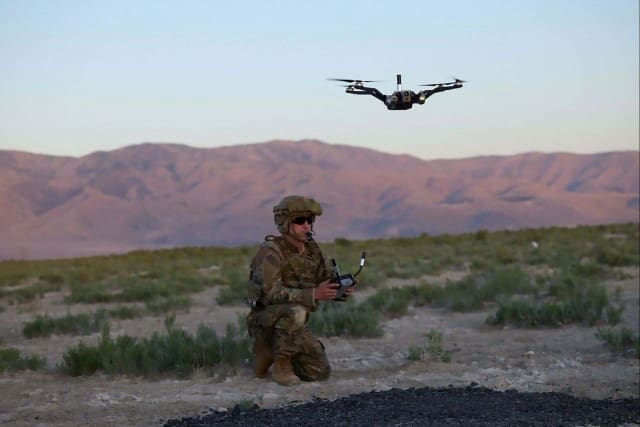
A key component of this transformation, Gill explained, is the integration of unmanned aerial systems. He emphasized the Army’s intention to augment, not replace, manned aviation with UAS, stating, “I don’t want to be standing there when the music stops and not have a chair.” He outlined a plan for the aviation branch to lead this effort, focusing on aviation-specific expertise like airspace integration while allowing for broader operation of UAS by other specialties through universal control systems. The Army is currently determining the appropriate balance between training dedicated UAS operators versus enabling all soldiers to operate smaller UAS platforms.

Gill detailed how future combat teams are projected to include 500-700 UAS, a domain previously solely occupied by manned aircraft. He highlighted the challenges this presents for managing airspace, particularly coordinating with the Air Force, with a planned meeting scheduled later this month to address these issues. He envisions a future where UAS operations are automatically deconflicted through network integration, similar to how consumer quadcopters are prevented from flying in restricted airspace.

“I want the same thing for a UAS operator out there in a brigade combat team,” Gill said. “He pops down his tac device, and he gets ready to fly and he finds out that he’s underneath an active corridor, and it’ll just say, ‘you can’t fly here’.”

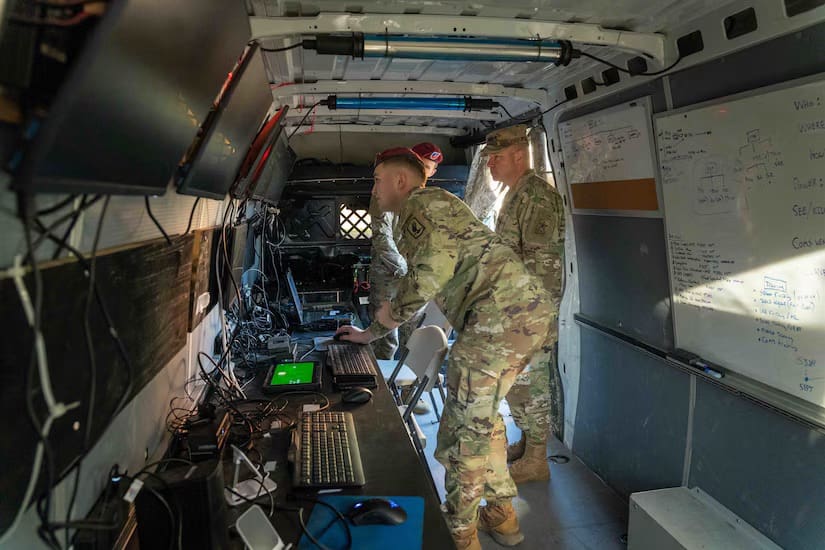
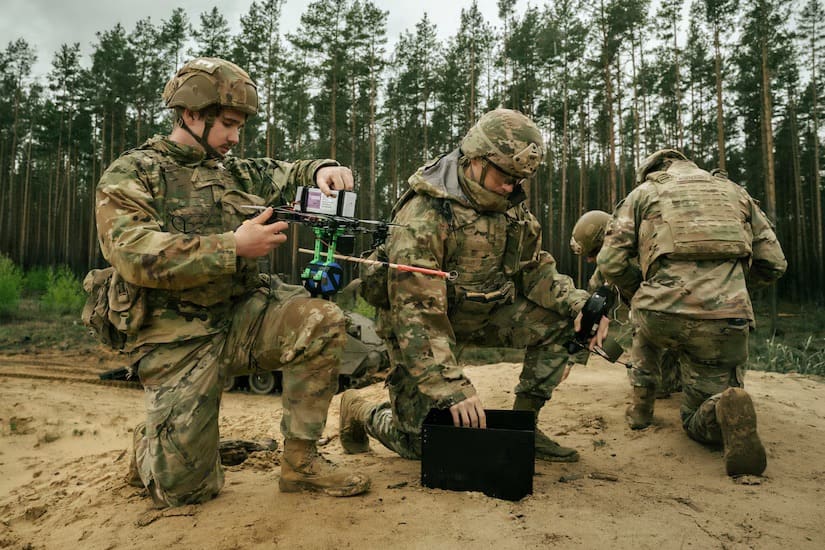
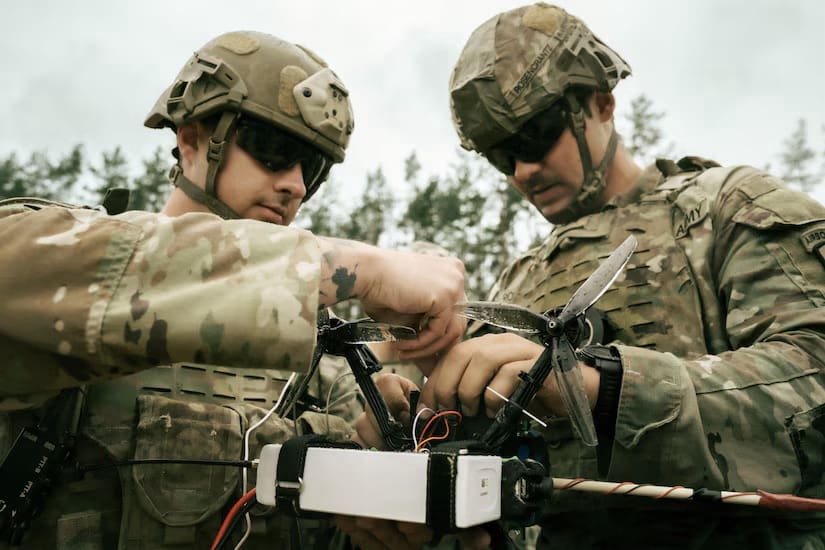
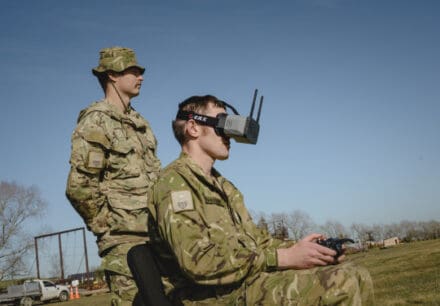
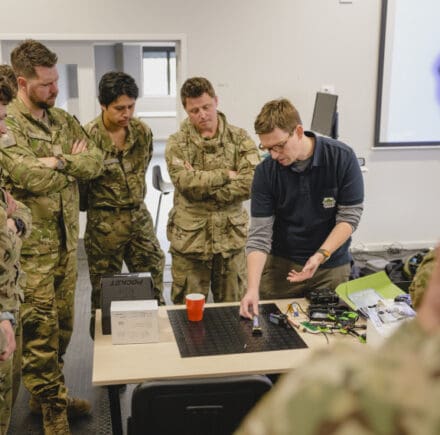
Regarding UAS personnel, Gill highlighted the divestment of the Shadow UAS system and the subsequent shift in training for 15E, Shadow mechanics and 15W, Shadow operators MOS to become tactical UAS operators, proficient in operating systems like small UAS, first-person view drones and utilizing additive manufacturing for parts production. 150U officers will become tactical UAS integrators, focusing on system acquisition, employment, lifecycle management, spectrum management, electronic warfare and airspace integration. He also noted UAS platoons are now training alongside infantry, operating from field positions rather than from protected shelters, signifying a shift towards a more integrated battlefield role.

He also discussed ongoing efforts to integrate position location information transmitters on aircraft — both manned and unmanned — allowing them to communicate their location and priority to other aircraft, enhancing situational awareness and safety.

Gill also highlighted the importance of the Aviation Tactics Instructor Course, emphasizing the need for instructor pilots, as lead trainers, to understand the operating environment and prepare young warfighters for the realities of modern combat, where traditional flight pattern work offers minimal survivability on the future battlefield. He underscored the importance of training units to operate effectively in challenging environments, even with legacy platforms like the Black Hawk helicopter.

Another component of the modernization effort focuses on addressing a perceived gap in pilot skillsets. Gill noted feedback indicating that many recent graduates are proficient system operators but lack fundamental flying proficiency.

“They’re great system operators, they don’t know how to fly the aircraft,” he said, adding the Army is re-evaluating its current training methods and platforms to ensure they effectively prepare aviators.

To address this, the Army is experimenting with innovative training methods, including augmented and virtual reality, plot-based learning models and a new pilot program. The pilot program involves a total of 48 students; two classes of eight students each have started. Pilot program students will earn FAA private pilot certifications, with a critical emphasis on solo flight — independent, unpartnered time in the cockpit. Gill believes this will foster maturity and produce a higher quality aviator.

“They’re going to be solo, solo in there,” he stated. “I think in terms of the maturity and development of somebody that’s going to be an aviator, it’s going to produce a tremendously better product that we deliver to the Army when they get to their first operational unit.”

Gill also stressed the importance of reinforcing a strong “warfighter culture” within Army Aviation, emphasizing the need for a mission-focused mindset across all roles, from maintainers to flight operations. He invoked the sentiment of former Army leader Lt. Gen. Walt Piatt, who noted that “every day in Army Aviation is a live fire event,” highlighting the constant operational tempo, in harsh conditions, and the need for training in austere environments.

Looking ahead, Gill discussed the integration of unmanned systems, anticipating launched effects in every division next year. He envisions a future where unmanned platforms handle certain tasks, allowing human pilots to focus on missions requiring deliberate human control.

“We’re not going to stop the flight school. We’re going to be flying aircraft for quite some time, but I do think that there are certain things that we can offload to unmanned things that we can focus where we want humans in the loop more deliberately,” Gill said.

Ultimately, Gill stated the Army Aviation branch aims to proactively deliver the capabilities demanded by commanders, rather than simply responding to requests. He concluded by emphasizing the branch’s readiness to meet future challenges.

“When the phone rings, we’ve got to be ready to meet tomorrow’s challenges today,” he said.

By Leslie Herlick, Fort Novosel Public Affairs

FirstSpear Friday Focus: New MultiCam Black Drop

Friday, May 30th, 2025

Now available at First-Spear.com/MultiCam-Black is our full line of MultiCam Black featuring products such as the Strandhogg v3, LaserFrame Primary Pocket Panel, Fleece Pullover, and more!

MultiCam Black features a distinctive pattern of blacks and dark grays, offering a sleek, aggressive aesthetic that emphasizes intimidation and authority and visually aligns with the gear used by SWAT teams and special response units. MC Black works well with night operations and urban landscapes. The subdued palette minimizes visual signatures under low-light conditions while maintaining a professional, unified look.

MultiCam Black represents a fusion of function and form, tailored for urban tactical use where visibility and presence matter just as much as protection.

Visit First-Spear.com/MultiCam-Black to view the full line of FirstSpear products now offered in MultiCam Black! FirstSpear is the premier source for cutting edge-tactical gear for military, law enforcement and those who train.

For more information visit First-Spear.com.

Special Tactics Enterprise Transitions as 24 SOW Flag Furled

Friday, May 30th, 2025

HURLBURT FIELD, Fla. —  

The 24th Special Operations Wing furled its flag May 16, 2025, marking the transition of the organizational structure of the Special Tactics enterprise, the latest change in Air Force Special Operations Command’s commitment to adapting to the evolving demands of the strategic environment.

“The furling of this flag represents not an end, but another transition point for both the Special Tactics community and AFSOC,” said Lt. Gen. Michael Conley, commander Air Force Special Operations Command. “I truly believe that the best days of Special Tactics lie ahead, not behind us. Special Tactics remains vital to AFSOC and our Nation.”

Activated in 2012 as the ST functional wing, the 24 SOW was initially designed to maximize the effectiveness and advocacy of AFSOC’s air-to-ground integration force. However, the operational environment has evolved significantly over the past 13 years, impacting the role of ST within AFSOC.

“The 24th Special Operations Wing has not ended. It has simply passed into each of you. Wherever you go next, carry it forward. Lead with the quiet strength that built this wing. Fight with the heart that made it great. Honor those who cannot stand beside us today,” said Col. Dan Magruder, outgoing 24 SOW commander.

While the demand for small, self-sustaining, and distributed forces – the attributes inherent to ST units – are more valuable than ever, the integration of ST into the larger AFSOC enterprise has matured considerably. ST leaders, both officer and enlisted, now consistently fill key leadership positions across the command, SOF enterprise and joint force.

“This isn’t a division of labor. This is a unity of effort as we transition to the next phase,” said Col Joseph Gross, 720th Special Tactics Group commander. “I can’t wait to see the next two years as we move out with a new [organization],” he added.

The 720 STG will now report directly to AFSOC headquarters continuing to provide operational and administrative oversite of the 2-series special tactics squadrons, as well as the Special Tactics Training Squadron which is responsible for combat mission qualification for all ST operators.

“The evolving strategic landscape and advancing adversary capabilities underscore the invaluable nature of Special Tactics’ skills,” said Conley. “Innovation, ingenuity, boldness, and valor have been defining attributes of the ST community since its inception and are critical as AFSOC adapts to meet the challenges ahead.”

By AFSOC Public Affairs

AFSOC Public Affairs

Warfighters Put Emerging Technologies to the Test at Fort Leonard Wood

Thursday, May 29th, 2025

FORT LEONARD WOOD, Mo. — The Army Futures Command Maneuver Support Battle Lab is winding down this year’s Maneuver Support and Protection Integration eXperiments and Army Application Lab assessments, in which warfighters conducted simulated battlefield experiments with 14 emerging technologies from May 5 to 16, 2025, at locations across Fort Leonard Wood.

“Protection, though largely attributed to the Maneuver Support Center of Excellence, is everyone’s responsibility,” said Kyle Henry, MSBL Experimentation Branch chief and one of the key organizers of the event.

According to Henry, MSPIX puts the latest tools in the hands of Soldiers while also giving capability developers and the science community credible and validated operational experiment venues for their conceptual and materiel development.

“Engineers and scientists can get lost behind their computer screens and become narrow sighted within the confines of their labs. Their ideas of how something might benefit a Soldier in real world applications are often biased and skewed,” Henry said. “Bringing their capabilities — often their life’s work — out into the field with the Soldiers who may become the end-user provides a reality check for all involved.”

MSPIX participants include both government labs and private industry.

“The vast majority of technology providers are not under contract with the government and pay-to-play, meaning they bring their technology and support to us at no cost. Through coordination with Army Test and Evaluation Command and MSCoE, we can put these capabilities into the hands of Soldiers, something that is mutually beneficial, at a relatively low cost to the taxpayer,” Henry explained.

AAL’s assessments focused on robotic breaching and terrain shaping operations, while MSPIX tested several unmanned and autonomous technologies.

About 50 U.S. Army Forces Command Soldiers from Fort Leonard Wood; Fort Cavazos, Texas; Joint Base Lewis-McChord, Washington; Fort Bragg, North Carolina; Fort Carson, Colorado; and Vicenza, Italy, took part in the assessments.

Some of the experiments had Soldiers controlling unmanned drones, vehicles and boats traversing air, land and water.

Sgt. Mariano Negron, a 12C, or bridge crewmember, with the 74th Multi-Role Bridge Company at Fort Cavazos, spent much of May 13 at Training Area 250’s lake using a system that allowed him to control a bridge erection boat, commonly called a BEB, from a handheld controller.

He said he regularly uses BEBs to build bridges, but not with a remote control.

“I am used to using handheld controllers to play games and it is similar to that. I picked it up easily. It’s like driving a remote-controlled car,” Negron said.

The system can be fitted to existing vessels already in the Army’s inventory to facilitate remote control or autonomous operation.

“We could use this to build bridges without having Soldiers enter the water,” Negron said. “If we needed to remain covered but also needed to bridge a gap to transport troops or cargo we could with this technology.”

Negron said it felt good to be able to provide guidance to the system’s creators.

“We operate these boats all the time. We know how to make these boats do what we need them to do to complete our mission. I have been able to give them feedback that I hope will improve this technology if we get it someday in the future,” Negron said.

Capt. Adam Robinson, an experimentation officer with the Maneuver Support Capability Development Integration Directorate of AFC at Fort Leonard Wood, supervised the testing of seven technologies at Training Area 401.

“We are running platoon style lanes to test the remote breaching and terrain shaping capabilities of these technologies,” Robinson said. “We are giving a platoon leader, a platoon sergeant and a section of combat engineers a mission to complete with these new technologies and watching how they use the technology to execute.”

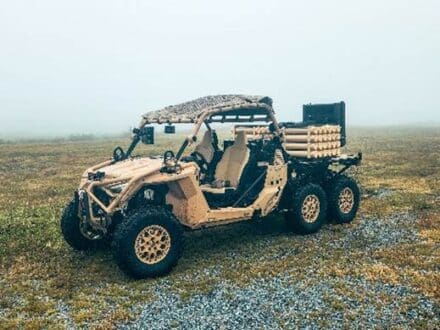
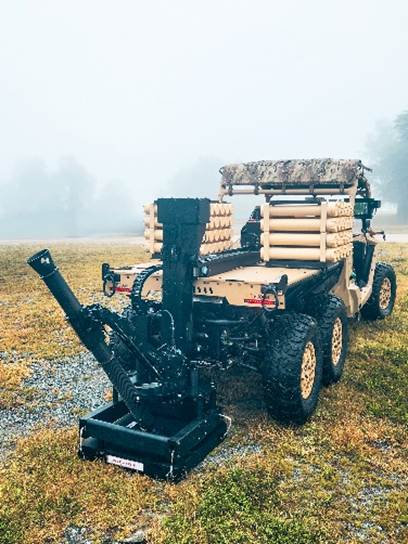
Robinson said he was impressed by watching how the Soldiers operated a robotically controlled utility terrain vehicle.

“The way it can move and track is pretty impressive,” Robinson said. “The engineers are using them to shape terrain, but as a MP, I would use it for surveillance or resupply. It has a variety of applications.”

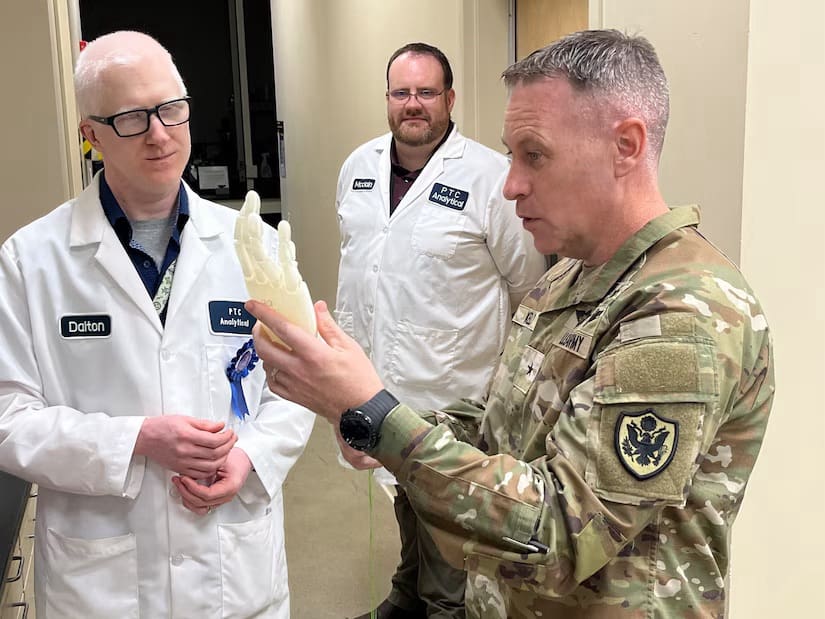
Other technologies assessed the capabilities of autonomous track loaders for dig, dump and fill operations; autonomous biological critical area disinfection; a mobile sensing system designed to detect the movement of targets and provide visual imaging; equipment delivering a broad-spectrum electromagnetic pulse during breaching operations; and bioreporters created to detect nerve agents for standoff chemical threat detection.

By Melissa Buckley, Fort Leonard Wood Public Affairs Office

TACP, SERE Airmen Conduct Sensing Operations Against 820 BDG Opposing Forces at Exercise Capri Sun

Wednesday, May 28th, 2025

ALPENA, MICHIGAN, UNITED STATES

U.S. Air Force Survival, Evasion, Resistance, and Escape (SERE) specialists and 3d Air Support Operations Group (ASOG) Tactical Air Control Party (TACP) waged simulated war against 820th Base Defense Group (BDG) Airmen during exercise Capri Sun at an Alpena Combat Readiness Training Center operations site in Michigan, Mar. 31 to Apr. 11, 2025.

Blue force TACP and SERE conducted surveillance and targeting operations while being hunted by 820 BDG opposing forces in the bitter cold of Michigan’s forests reaching lows of 14 degrees Fahrenheit. The opposing forces’ goal was to detect TACP and SERE Airmen’s presence with small unmanned aerial systems, simulated intelligence injects, roving patrols, and reconnaissance and surveillance equipment, then to engage with blank rounds and simulated indirect fire.

“It’s critically important that exercises are difficult,” said Col. Anson Stephens, 3 ASOG commander. “You never want someone to see something for the first time on the battlefield when bullets are actually flying, so we intentionally make these as difficult as we can to push the limits, and the next time, that limit is even further to make us successful in combat.”

820 BDG’s primary mission is to defend austere airfields in contested battlefield environments, and this exercise enabled them to apply their defensive fundamentals to protect simulated adversarial assets on this battlefield. Blue forces aimed to infiltrate these defenses undetected to provide targeting data to strike assets.

“A motivated and capable opposition force truly tests the mission capabilities of the blue force, it identifies both strengths and weakness,” said Master Sgt. Anthony Pyle, 823d Base Defense Squadron opposing force leader.

These opposing forces stressed the TACP and SERE Airmen’s ability to blend into the environment, move covertly throughout the simulated battlefield and detect critical assets for strikes. The weather, environment and opposing forces confronted these blue forces during their 108 operating hours.

“It’s important for us to train in arduous and difficult conditions, because we need to be able to employ our forces anywhere, anytime,” said Capt. Aaron Moore, 3 ASOG TACP officer.

These blue forces enabled 820 BDG opposing forces to develop and test their subordinate leaders, the backbone of a flexible fighting force. Through centralized planning and decentralized execution, these subordinate leaders executed individual operations to achieve their common objective.

“The capability for a commander to empower their subordinate leaders to execute their intent with minimal oversight is a huge force multiplier in Agile Combat Employment operations,” Pyle explained. “Rather than operating as one giant echelon of troops at a company level, we can execute multiple missions at the squad level and below to achieve greater effects.”

Story by Capt Christian Little 

93rd Air Ground Operations Wing

Hegseth Announces Pay Raise for Army Paratroopers

Saturday, May 24th, 2025

FORT BRAGG, N.C. — Defense Secretary Pete Hegseth announced a pay raise for Army paratroopers today during remarks to current and former members of the 82nd Airborne Division at Fort Bragg, North Carolina.

Hegseth made the announcement during the 82nd’s All American Week, a four-day event that brings past and present paratroopers together to celebrate their service through competitions and camaraderie.

“I’ve got a bit of an announcement today that might be of interest to this community,” Hegseth said to the formation of Soldiers.

“For the first time in [decades], here [as] the secretary of defense, through the secretary of the Army, we are increasing jump pay,” Hegseth said, eliciting an enthusiastic response from the crowd.

Hazardous duty incentive pay — commonly referred to as “jump pay” — is set to increase from $150 per month to $200 for rank-and-file paratroopers.

Additionally, Hegseth added, jumpmasters — the senior paratroopers responsible for training and teaching the techniques for jumping from aircraft — will receive an additional $150 per month on top of the $150 in HDIP they already earn.

“Here’s to our paratroopers, our jumpmasters, who do the difficult things in difficult places that most Americans can never imagine,” Hegseth said following the announcement.

He emphasized that service members remain central to decision-making at the Pentagon.

“I want you to know [that] inside the corridors of the Pentagon, you are on our minds — with the decisions we make in budgets, in planning, in deployments, in orders [and] in reorganizations,” he said.” We have you and your families in mind.”


Hegseth then spoke about rebuilding the military and reestablishing deterrence — two of his top three priorities, along with restoring the warrior ethos, as outlined in his Jan. 25, 2025, message to the force.

“President [Donald J.] Trump is committed to historic investments inside our formations,” Hegseth said. “Our promise to you is that when the 82nd Airborne is deployed — if we have to call 911 for America’s response force — you will be equipped better than any other fighting force in the world.”

He added that under the current administration, the 82nd Airborne will always maintain a superior advantage in battle.

“That’s my promise to you,” he said.

On deterrence, Hegseth said the department is focused on restoring “peace through strength.”

“When I look out at this formation, the eyes of the men and women and these flags, I see the eyes of deterrence; I see the eyes of American strength; I see the eyes that will deter the wars that we don’t want to fight,” he said. “Those who long for peace must prepare for war.”

Hegseth closed his remarks by expressing gratitude to the division’s troops, veterans and their families in attendance.

“Like those who came before you, you keep showing the world the stuff you’re made of,” Hegseth said.

“Because we know you are ready for the important work that lies ahead.”

– Matthew Olay, DOD News

Special Operations Airmen Maneuver Through TRADEWINDS25

Saturday, May 24th, 2025

TRINIDAD AND TOBAGO (AFNS) —  

Mission Ready Airmen assigned to the 137th Special Operations Wingmission sustainment team, Oklahoma Air National Guard, strengthened critical self-sustaining skills and assessed their ability to operate in multiple expeditionary environments across the Caribbean during TRADEWINDS25, April 21-May 5.

The team conducted five total maneuvers during the exercise, establishing forward operating sites in Trinidad and Tobago, Antigua, Martinique and Puerto Rico. This is the first time the 137th SOW’s current MST Airmen conducted agile combat readiness in environments outside of the continental U.S. These rapid maneuvers tested their resiliency, adaptiveness and ability to integrate logistics with U.S. Air Force aircrews and multinational hosts.

“Being able to operate in environments where you don’t have the logistical footprint to move resupplies in is critical,” said Lt. Col. Morgan Mathis, mission sustainment team commander. “With each maneuver, we are dealing with different embassies, different security operations officers and different militaries to enable movement into those different countries. That is a big push for us this Tradewinds.”

Mission sustainment teams are employed in support of Air Force Special Operations Command assets. By exercising enhanced operational reach and sustainment through integrated logistics, pre-positioning of forces and shared infrastructure during TW25, the 137th SOW MST assessed their ability to ensure readiness and responsiveness for future exercises and operations.

The 40th iteration of Tradewinds, a U.S. Southern Command-sponsored, regionally oriented annual exercise with 26 participating nations, provided a platform for the 137th SOW MST to train in ground, air and cyber operations. Although the exercise was held in Trinidad and Tobago, the 137th SOW team’s various movements to neighboring islands offered a blueprint for what future iterations of the exercise could incorporate to further interoperability between Caribbean nations.

“This team is able to provide a proof of concept by moving around to different countries and seeing what standard operating procedures we can develop for next year so that we can expand that Agile Combat Employment all over the Caribbean and all over the U.S. Southern Command,” Mathis added.

The first iteration of the 137th SOW MST was established in 2021, aligning AFSOC forces with the U.S. Air Force’s shift toward ACE. ACE is a concept that allows Mission Ready Airmen to operate in expeditionary environments to maintain posture, command and control, movement and maneuver, protection and sustainment. This is reliant on their ability to rapidly execute operations from various locations with integrated capabilities and interoperability, as 137th SOW Mission Ready Airmen demonstrated in TW25, through technical training and by conducting multiple maneuvers across Caribbean islands.

In the 18 months leading up to TW25, Airmen assigned to the current 137th SOW MST were hand-picked to form a team centered around enabling rapid maneuvers around areas of responsibility, sustaining AFSOC forces, providing force and medical protection to those forces, and mission generation: being able to rearm, refuel, launch, land and recover aircraft.

TW25 is the fourth major field training exercise this team participated in, each with an emphasis on movement and maneuver, protection, mission generation or sustainment. While operating in the Caribbean, Airmen assigned to the 137th SOW MST focused on the movement and maneuver and the sustainment elements of their mission.

“This is a huge opportunity for our Airmen to learn, to grow, to be leaders and to make decisions,” Mathis said. “As we look toward the future, exercises are how our Airmen are going to learn how to do mission command and how to problem solve on the fly without oversight. These exercises are a huge part of enabling them to gain that experience that, in the past, Airmen would have gotten through multiple deployments, but now they are getting through named exercises like Tradewinds.”

A key element to self-sustainable operations and maneuvers for Mission Ready Airmen is tactical combat casualty care tier two. TCCC tier two equips Mission Ready Airmen with advanced lifesaving skills that are crucial for sustainment in expeditionary environments. Airmen assigned to the 137th SOW MST enhanced these critical skills through multiple hands-on scenarios during TW25 in Trinidad and Tobago.

“TCCC tier two is especially critical for Mission Ready Airmen to understand and be proficient in,” said a 137th SOW TCCC instructor that accompanied the MST for TW25. “It is battlefield-proven to reduce preventable deaths. When they are in austere environments, these Airmen may be the only medical care available to their wingmen.

Following their operations in Trinidad and Tobago, the team shifted focus toward bolstering mobile communications.

Throughout their maneuvers, 137th SOW Airmen were tasked to establish and test the effectiveness and reliability of Mobile Ad-hoc Network, or MANET, communication networks between dispersed 137th SOW Airmen across Caribbean-centric islands in multinational operations, increasing the survivability, security and sustainability of communications as ACE’s command and control element requires.

With each maneuver to a new island, 137th SOW Mission Ready Airmen would establish a near vertical incidence skywave antenna to bounce high-frequency radio waves off of internal mobile communications. Alongside the NVIS technology, the 137th SOW team utilized handheld AN/PRC-163 radios to extend their secure communications networks further as they tested line-of-sight communications on the island of Martinique, and satellite communications to Wingmen on other islands and to units stationed in North Carolina and New York.

This technical and hands-on training provided a foundation for 137th SOW MST Airmen to participate in a cross-functional mobile communications discussion with members of the French Navy while the team was operating in Martinique.

“Communications are a big part of MST,” Mathis shared. “Without communications, MST cannot operate. We want each of the members of the team to be proficient in not just basic communications but digital communications, line-of-sight and beyond.”

Similarly, the Mission Ready Airmen assigned to the 137th SOW MST conducted a knowledge exchange with the Antigua and Barbuda Defense Force where they compared combat casualty care methodologies and life-saving techniques, mission and command planning, supply transportations logistics and mobile communications while staying in Antigua.

By comparing mission essential strategies with multinational forces, the 137th SOW Mission Ready Airmen are able to reinforce their skillsets and expertise while enhancing foundational relations and interoperability for future exercises and operations.

Opportunities like TW25 allow for these Airmen to demonstrate their professionalism and proficiency as they continue to grow as leaders and Citizen Airmen. For many on the 137th SOW team, this was the first time they collaborated with a Caribbean nation.

“I was very appreciative of their hospitality,” an MST Airman noted. “This exercise has helped me expand my worldview in ways that will continue to help me grow as a person and as a Mission Ready Airman.”

As Guardsmen, the 137th SOW team has the advantage of retainability, allowing for TW25 multinational interoperability opportunities to serve as a cornerstone for continuity and lasting relations that will allow 137th SOW Mission Ready Airmen to better support Air Force Special Operations Command assets in future global operations.

The success of global operations relies on the ability of units like the 137th SOW MST to project, maneuver and sustain the joint force and is made stronger through continued relationships with allies and partners.

“Working with these host nations is everything,” Mathis said. “From initial planning and coordination to on the ground communication and logistics support, building that relationship with each of the countries is a big part of what we have been able to do in Tradewinds. We hope to continue that in the future as we practice working with partner nations to enable Agile Combat Employment for AFSOC.”

Collaboration with partners and participation in multinational operations and exercises, such as TW25, reinforces 137th SOW Mission Ready Airmen’s capabilities to operate in a high-intensity environment, improving readiness, responsiveness and interoperability in both peacetime and crisis.

By Senior Airman Erika Chapa

137th Special Operations Wing Public Affairs