SIG SAUER - Never Settle

Archive for the ‘Guest Post’ Category

Prolonged Casualty Care – “Not the Plan, But Needs a Plan”

Thursday, March 6th, 2025

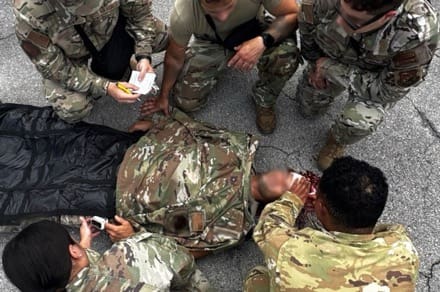
In military and tactical medicine, Prolonged Casualty Care (PCC) is a prime example of something that isn’t the plan but needs a plan. The standard protocol in combat medicine follows the MARCH algorithm and the Tactical Evacuation (TACEVAC) process, ensuring casualties are stabilized and rapidly evacuated to a higher echelon of care. However, in austere environments, evacuation might be delayed or impossible due to terrain, weather, enemy threats, or logistical failures.

PCC isn’t part of the intended medical plan because the expectation is rapid evacuation but since delays are a known possibility, a plan must exist to handle extended care in the field.

Key Elements of PCC Planning

1. Resource Management:  Since standard medical resupply isn’t guaranteed, planning must include rationing fluids, medications, oxygen, and blood products.

2. Patient Monitoring & Deterioration Prevention:  Extended field care requires tracking vitals, managing infections, and preventing secondary injuries.

3. Prolonged Pain Management & Sedation:  Casualties may need extended analgesia, sedation, or even ventilatory support.

4. Field-Expedient Interventions:  Improvising solutions for issues like wound care, nutrition, and hypothermia prevention.

5. Decision-Making on Movement vs. Staying Put:  Teams must plan whether to hold their position or attempt a self-evacuation.

Conclusion

PCC is a contingency rather than the primary goal, yet it requires its own protocols, training, and preparation. Failing to plan for PCC means hoping for the best instead of preparing for the worst, a dangerous mindset in operational medicine.

For more information on CTOMS™ tactical and operational medical training, contacttraining@ctomsinc.com or visit ctomsinc.com

10th Mountain Soldiers Learn Their History, Join the Legacy

Thursday, March 6th, 2025

VAIL, Colorado — With the fierce and ever-consistent snowfall, the 10th Mountain Division (LI) Soldiers enter the Camp Hale and Vail communities ready to begin the Legacy Days events, with 2025 marking the 80th anniversary of the Battle of Riva Ridge, a turning point in World War II.

Legacy Days is a combination of events that honor the resiliency and commitment of the 10th Mountain Division (LI) Soldiers who trained at Camp Hale before setting off to fight for their country in the Battle of Riva Ridge in Italy, February 1945.

Camp Hale was built in 1942 at 9,224 feet, making it the highest-altitude permanent military post in World War II. The altitude made training especially difficult, and elevations reached as high as 13,100 feet.

The 10th Mountain Division (LI) was activated and placed at Camp Hale to train in high altitude mountaineering and alpine combat for the sole reason of defeating the Germans that were entrenched high up on ridges, preventing allied forces from advancing into Europe.

Today’s 10th Mountain Division (LI) Soldiers carry on the legacy and respect the history of their predecessors through Legacy Days in Vail, Colorado.

The Soldiers accepted the privilege of participating in Legacy Days and learning more about their division’s heritage with eagerness.

“Just being in the same area that our predecessors, the first 10th Mountain Soldiers, not only trained at but also proved that this is an achievable task that we can overcome and apply in warfighting,” Staff Sgt. George Matthews, weapon squad leader with Charlie Company, 2nd Battalion, 14th Infantry Regiment, 2nd Brigade stated. “It’s very exciting for us.”

Upon entering Vail, the community, and more specifically the 10th Mountain Division descendants and veterans, welcomed the Soldiers and immediately began sharing stories of the past. The connection and sense of pride that ran through the community resonated with the Soldiers and made them that much more eager to begin the Hale to Vail Traverse, the first event.

Only a few days before the event began, a snowstorm passed through the area adding nearly 50 inches of fresh powder.

Originally, the Hale to Vail Traverse is a 26-mile cross-country ski trek that starts in Camp Hale, Colorado, and ends at Vail. However, to mitigate the risk of avalanches happening enroute, a different route was selected making it nine miles long with a 2,000-feet increase in elevation.

The Hale to Vail Traverse was no less of a challenge despite the route being changed since the Soldiers had to break trail and carve out their own path in the snow.

The event was more than just a test of endurance, it strengthened unit cohesion while honing the specialized tactics, techniques, and skills their forefathers required to operate in extreme mountain conditions.

This nine-mile cross-country ski trek paid tribute to the division’s World War II legacy, when Soldiers trained in the rugged Rockies to prepare for alpine warfare.

The Soldiers of the 10th Mountain Division (LI) used this event to enhance their skills and techniques while also gaining practical experience in skiing. This preparation ensured that they were well-equipped, just as their predecessors had been, to face any challenges in mountain warfare.

“It’s super cool to be out here teaching the next generation of Soldiers how to ski, not a lot of people have had the opportunity to gain the experience or skill set,” Spc. Rylan Parsons, a Soldier with Headquarters and Headquarters Battalion, 10th Mountain Division (LI) stated. “Skiing is both personally and tactically relevant.”

The following day, the Ski Cooper Serpentine Ski Parade took place where the Soldiers, descendants, veterans, National Ski Patrol and the community could participate.

The Serpentine Ski Parade included the participants weaving down the slopes with Maj. Gen. Scott Naumann, commanding general of the 10th Mountain Division (LI), Command Sgt. Maj. Brett Johnson, senior enlisted advisor of 10th Mountain Division (LI) and flag bearers leading the way.

This event was a part of Legacy Days, and celebrated the storied history of the division, which was formed during World War II from elite skiers, climbers, and alpinists to fight in precipitous, mountainous terrain.

The Serpentine Ski Parade was a celebration of history, whereas the next event was an acknowledgment and note of the intense and grueling training the predecessors of the 10th Mountain Division (LI) not only endured, but triumphed in.

The Ski Trooper Cup was a rigorous competition that tested physical fitness, alpine skills and equipment knowledge. It featured teams of three competing in a series of tasks while racing against the clock and other teams. This event combined elements of strength, endurance, and military-specific challenges, all set in winter warfare and alpine environments. Teams were assessed on a variety of skills, including push-ups, slope climbing, rappelling, skiing through gates, performing pull-ups and glacading.

The 10th Mountain Division (LI) Soldiers who fought in the Battle of Riva Ridge trained fiercely to ensure their victory, this event was a testament to the difficulties and commitment of those Soldiers.

“It encompassed skinning up a section of the mountain, repelling down, boot packing up and then glacading down to the finish,” Capt. Lauren Takayesu, a physical therapist with 2nd Brigade Combat Team, 10th Mountain Division (LI) H2F stated. “Then of course it’s the Army, so we had to do push-ups and pull-ups in between, it was incredible.”

Legacy Days is a way of honoring the history and legacy of the 10th Mountain Division predecessors and Soldiers alike, but it’s also a way to keep that connection with their origins, descendants and the community.

“If there was no 10th Mountain Division, there would be no Vail. That’s because about 20 miles behind me is a place called Camp Hale, Colorado, and during WWII, it was at Camp Hale where skiers, climbers and outdoorsmen came to become mountain Soldiers,” stated Naumann.

The 10th Mountain Division lost 1,000 Soldiers in service and had more than 4,000 wounded, however, thanks to their sacrifices the division was able to secure victory in the Battle of Riva Ridge and pave the way to victory during WWII.

“The mountain Soldiers climbed a place that was thought to be unclimbable, and they broke through the defensive line that was thought to be unbreakable, a place held by the Germans and they kept fighting, always forward until the end of the war,” stated Naumann.

By PFC Abigail Stewart, 27th Public Affairs Detachment

9th Annual Whiskey & War Stories – March 22, 2025 in Va Beach

Wednesday, March 5th, 2025

The Silent Warrior Foundation is announcing their 9th Annual Whiskey & War Stories at the Marriott Virginia Beach Oceanfront Resort March 22, 2025.

This year we are honored to have British SAS veteran Christian Craighead and former Google employee Meyli Chapin. Both Christian and Meyli were immersed in the DusitD2 complex terrorist attack in the Westlands District of Nairobi, Kenya on January 15-16, 2019. Christian famously earned the internet nickname “Obi Wan Nairobi” after images and video of him repeatedly entering the complex to rescue civilians and engage the terrorists within emerged in news reports and on the internet.

For his actions he was awarded the Conspicuous Gallantry Cross, one of only around 60 ever awarded for “acts of conspicuous gallantry during active operations against the enemy”.

Meyli was trapped in her room by herself for 17 hours of the 22 hour seige. Her experience inspired her to author the book “Terrorist Attack Girl, How I Survived Terrorism and Reconstructed My Shattered Mind”.

ABOUT THE EVENTLOCATION:MARRIOTT VIRGINIA BEACH OCEANFRONT RESORT4201 ATLANTIC AVENUEVIRGINIA BEACH, VA 23451

SCHEDULE:

VIP NIGHT

(MEET AND MINGLE WITH OUR SPEAKERS)

 FRIDAY, MARCH 21, 2025

(INCLUDES WHISKEY TASTING BY TARNISHED TRUTH DISTILLERY AND TACO BAR)

DOORS AT 5PM UNTIL 10 PM

GALA NIGHT

SATURDAY, MARCH 22, 2025

COCKTAIL HOUR, AUCTION, DINNER AND FEATURE PRESENTATION

DOORS AND COCKTAIL HOUR 5PM

AUCTION 5-9 PM

DINNER 6 PM

FEATURE PRESENTATION 7:15 PM

CONCLUSION 9:00 PM

(CIGARS ON THE OCEANFRONT DECK AFTERWARDS)

Do not miss this once-in-a-lifetime chance to meet Christian and Meyli and hear them relate their experiences during the Dusit D2 complex terrorist attack.

Back as our moderator this year will be Retired Navy SEAL Senior Chief Dave Hall. Please join us and our friends from one of our favorite international special operations units, the storied British SAS for this exciting event. Doors open at 5:00 pm and the event will conclude around 10:00 pm.

Individual ticket prices are $175 per person, and various table sponsorships are available. All proceeds benefit the Silent Warrior Foundation, a 501(c)3 charity serving our Special Operations Community since 2010.

The auction this year includes clones of Christian Craighead’s rifle and pistol, a copy of his custom TG Knives knife, as well as industry donated optics and equipment.

ABOUT THE CHARITY

FOUNDED IN 2010, THE SILENT WARRIOR SCHOLARSHIP FUND WAS SET UP BY RECONNAISSANCE MARINES IN MEMORY OF THEIR FALLEN BROTHERS.

Originally founded as the Silent Warrior Scholarship Fund, our mission was to award scholarships to any college-bound person based on direct familial relationships to a Reconnaissance Marine/0321 or Critical Skills Operator/0372, based on academic achievement and financial need.

Our revised mission includes support for our Special Operations Veterans & their families by providing funding for emergency assistance, mental health services, education, scholarships, HBOT and for service dogs.

Special hotel rates at both the Marriott Virginia Beach Hotel and the Cavalier Hotel are available for those attending our event for a limited time. Rate link is on the event registration site:

9th Annual Whiskey and War Stories | Auction Frogs

AFSOC Reveals Name for OA-1K: Skyraider II

Monday, March 3rd, 2025

FORT WALTON BEACH, Fla. —

AFSOCs newest airframe, the OA-1K, will officially be the Skyraider II. AFSOC leaders made the announcement today at the Special Air Warfare Symposium. The moniker renews the rugged and versatile nature of the A-1 Skyraider, which was in service from 1946 to the early 1980s.

“I am excited about the Skyraider II, I think we have a capability that’s only ours, and we are going to have the ability to shape that into something that the rest of the nation might not even know they need right now,” said Lt. Gen. Michael Conley, Air Force Special Operations commander.

The Skyraider II is a cost-effective crewed aircraft that is adaptable across the spectrum of conflict. It will have the ability to support special operations forces as well as the Joint Force through close air support, precision strike, and armed intelligence, surveillance, and reconnaissance.

“AFSOC has enduring global missions,” said Brig. Gen. Craig Prather, AFSOC’s Director of Strategic Plans, Programs and Requirements. “While we don’t expect the Skyraider II to go mix it up with 5th and 6th generation fighters, it will provide value to our supported forces globally.”

The Skyraider II is a lean, agile, modular, and hardened aircraft but one of the most distinguishing feature, like its namesake, is its tailwheel. This prominent feature gives the Skyraider II the capability for short takeoffs and landings as well as the ability to operate from unimproved or austere airfields.

“Providing scalable and precision effects is where the Skyraider II will come in. The Skyraider II could take on missions from the southwest border to Africa and create dilemmas to those we are in competition with,” said Prather.

While in use during the Korean War and Vietnam War, the Skyraider provided extra muscle and firepower for Air Commando combat operations. Its sturdy and persistent nature was showcased when Maj. Bernard Fisher was awarded the first Medal of Honor for an Airman in the Southeast Asia War in an A-1E Skyraider. Later in 1968, Lt. Col. William A. Jones III also received the United States military’s highest decoration – the Medal of Honor – for his actions in an A-1H Skyraider.

The first Skyraider II is expected to arrive at Hurlburt Field in Spring 2025.

Air Force Special Operations Command

Forging Lifelines: 5th SFAB’s Medical Mission in the Indo-Pacific

Sunday, March 2nd, 2025

The 5th Security Force Assistance Brigade (5th SFAB) plays a pivotal role in enhancing medical capabilities across the Indo-Pacific, fostering stronger partnerships and improving the readiness of allied and partner nations. Through collaborative training, operational support, and knowledge sharing, 5th SFAB’s medical teams help partner forces advance their trauma care, casualty evacuation, and medical logistics, ensuring greater resilience during both peacetime and large-scale combat operations (LSCO).

Building Medical Readiness Through Collaboration

Since 2023, the 5th SFAB has conducted over 70 medical assessments and numerous training events with nine Indo-Pacific partners. These engagements focus on improving tactical combat casualty care (TCCC), prolonged field care (PFC), whole blood programs, and medical evacuation systems. By introducing advanced trauma care techniques and refining medical processes, 5th SFAB advisors help partner forces reduce casualty fatality rates, increase return-to-duty rates, and enhance overall battlefield survivability.

Advancing Tactical Medical Training

One of the cornerstone initiatives is training partner forces in TCCC and PFC. These programs teach critical skills for stabilizing casualties and providing lifesaving care in austere environments, ensuring that medical personnel can sustain injured soldiers until evacuation. Additionally, the implementation of whole blood programs improves trauma survival rates, aligning partner force capabilities with proven U.S. military practices.

Enhancing Medical Evacuation and Logistics

Effective casualty evacuation is essential during crises. 5th SFAB advisors work closely with partner forces to optimize evacuation routes, establish Patient Evacuation Coordination Cells (PECCs), and ensure seamless coordination between military and civilian healthcare facilities. By embedding medical advisors within partner force headquarters, the brigade enhances real-time reporting and facilitates bilateral evacuation requests, strengthening interoperability and reducing response times.

Supporting Medical Logistics and Supply Chains

Sustaining medical operations during high-casualty scenarios requires robust supply chains. 5th SFAB advisors collaborate with partner force logistics teams to assess supply levels, forecast consumption rates, and address Class VIII medical supply needs. By establishing pre-positioned stockpiles and implementing walking blood banks, partner forces can maintain critical care capabilities even in contested environments. The brigade also advocates for agreements such as Acquisition and Cross-Servicing Agreements (ACSAs) to ensure reliable resupply during operations.

Building Sustainable Medical Capabilities

The 5th SFAB’s approach emphasizes long-term capacity building through train-the-trainer programs and Subject Matter Expert Exchanges (SMEEs). By empowering partner nations to develop and sustain their own medical training and operational systems, the brigade fosters enduring self-reliance and strengthens regional stability. Additionally, the use of tools like the Medical Advisor Specific Tool (MEDASAT) ensures consistent progress tracking and continuous improvement.

Strengthening Regional Resilience

Through its advisory efforts, the 5th SFAB is enhancing the medical readiness and interoperability of Indo-Pacific partner forces, ensuring they can respond effectively to both peacetime emergencies and combat operations. By sharing expertise, improving casualty care, and optimizing logistics, the brigade is helping to save lives and strengthen alliances across the region, reinforcing collective security and promoting long-term stability.

Conclusion

The 5th SFAB’s medical advising mission in the Indo-Pacific demonstrates the power of collaboration in strengthening regional security and resilience. By improving trauma care, enhancing evacuation systems, and supporting sustainable medical logistics, the brigade plays a crucial role in ensuring that partner forces are prepared to save lives and sustain operations during both crises and conflicts. These partnerships not only enhance the capabilities of individual nations but also contribute to the collective readiness of the Indo-Pacific region, fostering a network of allies capable of responding swiftly and effectively to any challenge.

By LTC Matthew Holtkamp

Big Guns Coffee: Fueling Service Members with Innovation and Purpose

Saturday, March 1st, 2025

For service members, coffee isn’t just a beverage—it’s a lifeline. Whether fueling pre-dawn PT, long deployments, or late-night missions, the right brew keeps warriors sharp and ready for whatever comes next. Big Guns Coffee is a veteran-owned company that doesn’t just talk about strength—it brews it.

A Military Legacy, A Coffee Revolution

Big Guns Coffee isn’t your average coffee brand. Founded by Marine Corps Veteran, entrepreneur, and motivational speaker T. Shane Johnson and his 9-year-old daughter Charli, this company embodies resilience, innovation, and the relentless pursuit of excellence.

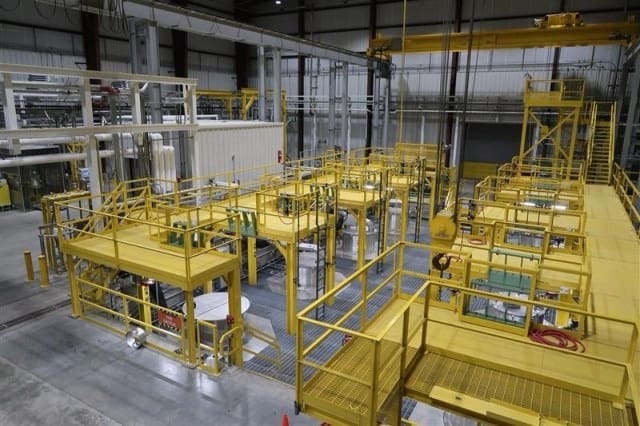
T. Shane, who has overcome homelessness and life-threatening adversity, built Big Guns Coffee with the same unwavering determination that carried him through the toughest challenges of his military career. Charli, a budding entrepreneur with big ideas, envisioned a company that would not only produce exceptional coffee but push the boundaries of how and where it’s grown. Together, they launched the first-ever indoor hydroponic coffee farm in North Carolina—a bold step toward sustainable, American-grown coffee.

A Perfect Fit for Those Who Serve

As Big Guns Coffee expands, it aligns with the mission of The Army & Air Force Exchange Service, which provides goods and services at U.S. Army, Air Force, and Space Force installations worldwide. With its presence in department stores, convenience stores, restaurants, and more across 30+ countries and four U.S. territories, the Exchange has long been a trusted provider for service members. Big Guns Coffee is ready to be part of that legacy, bringing fresh, bold, and American-roasted coffee directly to the men and women who defend our nation.

Hydroponic Coffee: Innovation Meets Sustainability

For decades, coffee has been grown in tropical regions, thousands of miles from where it’s consumed. Big Guns Coffee is changing that narrative by pioneering hydroponic coffee farming, a soil-free method that allows coffee plants to thrive in nutrient-rich water. This innovative approach delivers superior quality by eliminating soil inconsistencies and exposure to harmful pesticides, resulting in a cleaner, richer flavor. It also champions sustainability, using significantly less water than traditional farming while reducing environmental impact and preventing fertilizer runoff.

Most importantly, it brings American-grown coffee to the forefront. Traditionally, coffee production in the U.S. has been limited to Hawaii, but Big Guns Coffee’s hydroponic farm in North Carolina introduces a fresh, homegrown option that is reshaping the industry.

Expanding Access: Bringing Big Guns Coffee to Military Retailers

Big Guns Coffee is on a mission to bring high-quality, fresh-roasted coffee directly to military communities. By partnering with the Army & Air Force Exchange Service, the company aims to make its blends more accessible to service members at home and abroad. Whether grabbing a cup before heading to the flight line or stocking up for field exercises, troops deserve the best—and Big Guns Coffee is ready to deliver.

A Veteran-Owned Business That Understands the Mission

Military-serving retailers like the Exchange prioritize brands that understand the unique needs of service members. As a veteran-owned company, Big Guns Coffee is built on the same principles that drive military excellence—discipline, resilience, and mission focus.

“Our goal is simple: to provide high-quality coffee to those who push their limits every day,” says T. Shane Johnson. “As a Marine, I know firsthand the importance of a strong cup of coffee. Now, we’re taking that commitment even further by bringing American-grown coffee to military communities worldwide.”

A Bold Future for Big Guns Coffee

With 38 specialty blends sourced from around the globe, Big Guns Coffee already offers an impressive selection. But the future of coffee is growing in North Carolina, where the first hydroponically grown coffee beans are being cultivated for military personnel and coffee lovers alike. The company is also exploring new ways to expand access, including their Sprouts Farmer’s Market launch in May, ensuring that service members, veterans, and their families have a go-to source for fresh, mission-ready coffee.

Robots on the Frontline: Clearing Hazards with MTGR

Saturday, March 1st, 2025

Marine Corps Base Quantico, Va. —

As the geopolitical landscape continues to evolve, rapid capability fielding is proving critical to maintaining a decisive operational edge on the modern battlefield. In preparation for the future fight, Marine Corps Systems Command’s Program Manager Combat Support Systems (PM CSS) has achieved a significant milestone by fielding the Micro Tactical Ground Robot (MTGR)—a lightweight, agile, and modular robotic platform engineered for rapid standoff explosive hazard detection and neutralization.

Originally developed in partnership with industry for the U.S. Air Force’s EOD community, this capability has been adapted to meet the specific needs of the Fleet Marine Force (FMF) and stands as a prime example of the Corps’ Force Design modernization efforts– addressing evolving adversarial threats while aligning with the Pentagon’s strategic shift to the Indo-Pacific.

According to Capt. Timothy Guinan, project officer for the Explosive Hazard Defeat team, “The MTGR is a lightweight, backpackable robotic platform that embodies agility and modularity. Designed for dismounted combat engineers, it allows Marines to remotely assess and neutralize explosive hazards from a safe distance. This standoff capability is globally applicable, particularly in the congested and complex operational environments typical of the Indo-Pacific theater, where small, dispersed units must operate under the threat of improvised explosive devices and other explosive hazards.”

While survivability and lethality remain paramount, acquisition speed has emerged as an equally critical force multiplier. Fielded in less than a year from the program’s procurement decision, the rapid acquisition of MTGR reflects a paradigm shift in the Marine Corps’ approach to capability development.

Drawing on existing joint force programs and expertise, PM CSS’ Explosive Hazard Defeat team accelerated capability development while tailoring the system to meet the unique needs of the warfighter. Modernized technology paired with a user-friendly interface means that even Marines with minimal training can quickly become proficient operators.

The shift to the Indo-Pacific—with its geographically dispersed islands and maritime chokepoints—demands a force that is agile, expeditionary, and capable of operating in diverse and contested environments. The MTGR’s modular design allows it to be quickly reconfigured for various mission requirements, from explosive hazard detection to reconnaissance and surveillance. Rapidly fielding such a system underscores the Marine Corps’ commitment to modernization and ensures that Marines have the cutting-edge tools necessary to secure operational advantages.

Initial fielding of the MTGR capability began the last week of January 2025 with III MEF in Hawaii, where Marines concurrently completed new equipment training and integrating the system into their operations. This is the first step in a deliberate rollout that will extend to I MEF at Camp Pendleton, II MEF at Camp Lejeune, and Reserve Marines in the coming months. With a fielding objective of 154 systems, the Corps is prioritizing broad distribution to maximize operational impact.

Brian Johnson, logistics management specialist with the Explosive Hazard Defeat Team, emphasized the importance of fleet feedback in shaping effective solutions for Marines. He notes, “I’m most excited to get this system into Marines’ hands, train them, and see their reaction to a new capability that I truly believe in,” Johnson said. “Having worked with other robots, I can say this one stands out—it’s user-friendly, effective and well-suited for combat engineers. The effort behind selecting and refining this system paid off, and I think Marines will pick it up quickly and put it to good use.”

By Johannes Schmidt, MCSC Office of Public Affairs and Communication | Marine Corps Systems Command

Friday Focus: New Stratton Flannel – 4oz

Friday, February 28th, 2025

The FirstSpear STRATTON FLANNEL – 4oz is a lightweight, long-sleeve shirt made from 100% cotton and is now offered in a new Green/Navy colorway.

The shirt includes two oversized chest pockets with button closures, providing secure storage for essentials like a phone or wallet, and features smooth metal buttons that ensure long-lasting wear.

Designed with an intentionally oversized fit, we recommend you size down one step from your normal t-shirt size for a standard fit. The button cuffs on the sleeves provide adjustable wrist comfort and styling versatility. 

Made in the USA using imported cotton, this flannel is crafted to meet high-quality standards. This flannel’s lightweight design makes it ideal for layering (seen below paired with the FS Wind Cheater) or wearing alone in mild weather. 

Whether for casual wear or outdoor adventures, the STRATTON FLANNEL – 4oz offers a balance of function and style. 

FirstSpear is the premier source for cutting edge-tactical gear for military, law enforcement and those who train.

For more information visit First-Spear.com.