Phantom Lights

Archive for the ‘Guest Post’ Category

Senior Official Outlines Future Priorities for Special Ops

Tuesday, May 13th, 2025

Colby Jenkins, performing the duties of the assistant secretary of defense for special operations and low-intensity conflict, outlined his priorities for the future of the special warfare community while delivering remarks today during Special Operations Forces Week 2025 in Tampa, Florida.

Jenkins cautioned the audience that America’s adversaries are converging across regions and “the thresholds between peace and conflict.”

“We do not need another threat briefing; we need action — focused and unrelenting,” Jenkins said.

He added that such action recently came in the form of guidance from Defense Secretary Pete Hegseth, who kicked off SOF Week 2025 with keynote remarks, May 6. Hegseth said his focus is on defending the homeland, deterring Chinese aggression while maintaining a free and open Indo-Pacific region and shifting burdens to partners and allies.

“SOF delivers persistent presence, asymmetric advantage and strategic effects across all three priorities every day, everywhere,” Jenkins said, adding that SOF is also the only force in the Defense Department that delivers across all three lines of effort.



He then listed five priorities aimed at meeting Hegseth’s guidance:

  • Designing the future force to prevail in future conflicts;
  • Maximizing the performance and resilience of SOF personnel;
  • Ensuring training and readiness meet future needs;
  • Aligning capability development to strategic priorities; and
  • Strengthening resource oversight and the institutionalization of accountability.

Regarding the first priority concerning force design, Jenkins said there needs to be a shift from static formations optimized for crisis response and counterterrorism to “adaptable, tailorable, multidomain SOF formations” meant to prevail in high-end conflict.

“The future of SOF is relentless: smaller teams, faster decisions, smarter systems [and] harder targets,” Jenkins said.

As for performance and resilience maximization when it comes to SOF personnel, Jenkins said future operators will need to be agile, resilient, physically and mentally capable, and able to thrive in isolated, high-pressure environments.

“We cannot afford to simply maintain the old standards,” he said. “We must sharpen them, modernize them and expand them without losing the warrior ethos that define[s] our special operations.”

He also said the goal will be to build and preserve a force where human performance, and not just that of technology, will prove to be a critical advantage over adversaries.

“Because in the end, it is not the weapon, the drone, or the system that wins the contest. It is the person who knows when and how to use all of that technology and who refuses to quit; that person secures victory for us,” Jenkins said.

On the topic of ensuring training and readiness meet future needs, Jenkins said the battlefield of the future will be more complex, contested and ambiguous than anything SOF has faced before.

Because of that, he said, future SOF will have to operate in challenging environments while integrating cyberspace and electronic warfare. They will also need to conduct irregular warfare alongside allies, partners and indigenous forces across all phases of competition and conflict.

“Traditional training models and infrastructure focused primarily on physical skills and kinetic action will not be enough,” Jenkins said, adding that it will be necessary to rethink training for the future threat environment.

Regarding aligning capability development to strategic priorities, Jenkins said “innovation for innovation’s sake” isn’t enough.

“We must drive innovation with purpose, laser-focused on building the capabilities that allow our forces to impose costs, create dilemmas and deny advantages to our adversaries,” he said.

Jenkins added that SOF must harness artificial intelligence to accelerate decisive advantage.

On the final priority, Jenkins said strengthening resource oversight and institutionalizing accountability are necessary in an era of increasing operational demands and constrained budgets.

“Resources are not just dollars on a spreadsheet; they are the fuel for readiness, resilience and victory,” he said, adding that every dollar spent must sharpen readiness, enhance capability or increase strategic leverage.

“We have an incredible opportunity right now to make sure that our enterprise has the resources that it needs and can divest of operations or resources or platforms that we no longer need. So, let’s take advantage of that,” Jenkins said, adding that no funds should be “wasted on bureaucracy that does not deliver warfighting advantage.”After highlighting future priorities, Jenkins appealed to the SOF community for their own ideas regarding shaping the future.

“Whether you are in industry … government or the SOF community itself, you are part of this effort,” he said. “Help us develop the capabilities that give our operators the advantage they need at the speed they need.”

Jenkins said that winning future fights will not come from doing more of the same but from thinking differently, acting decisively and working together.

“This is our moment to forge the future of special operations,” he said. “A future where small teams create strategic impacts; a future where resilience, adaptability and speed win the day, [and] a future where American strength and American values prevail. Now let’s get to work.”

By Matthew Olay, DOD News

WTF’s Back Panel 91.1 for Crye AVS

Saturday, May 10th, 2025

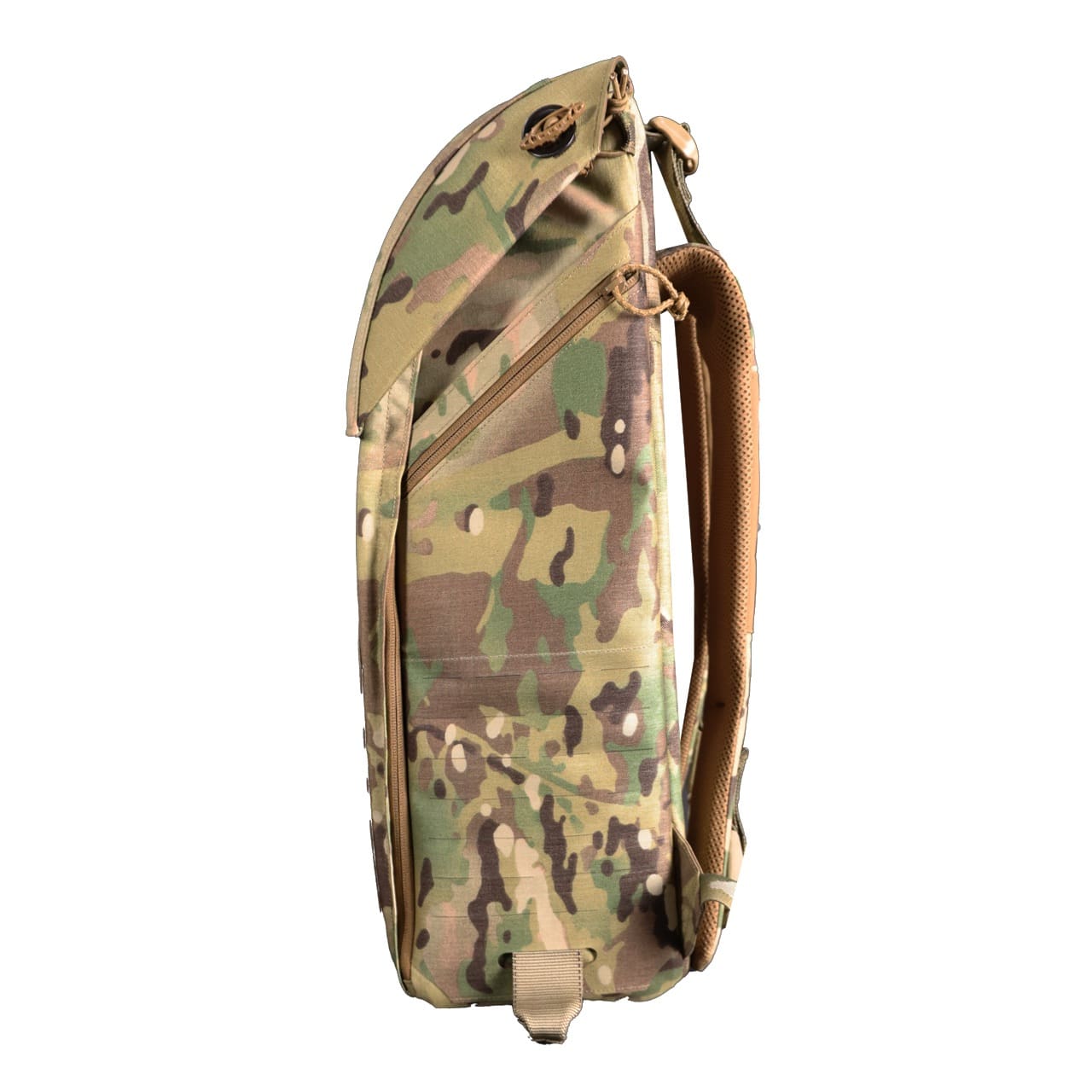
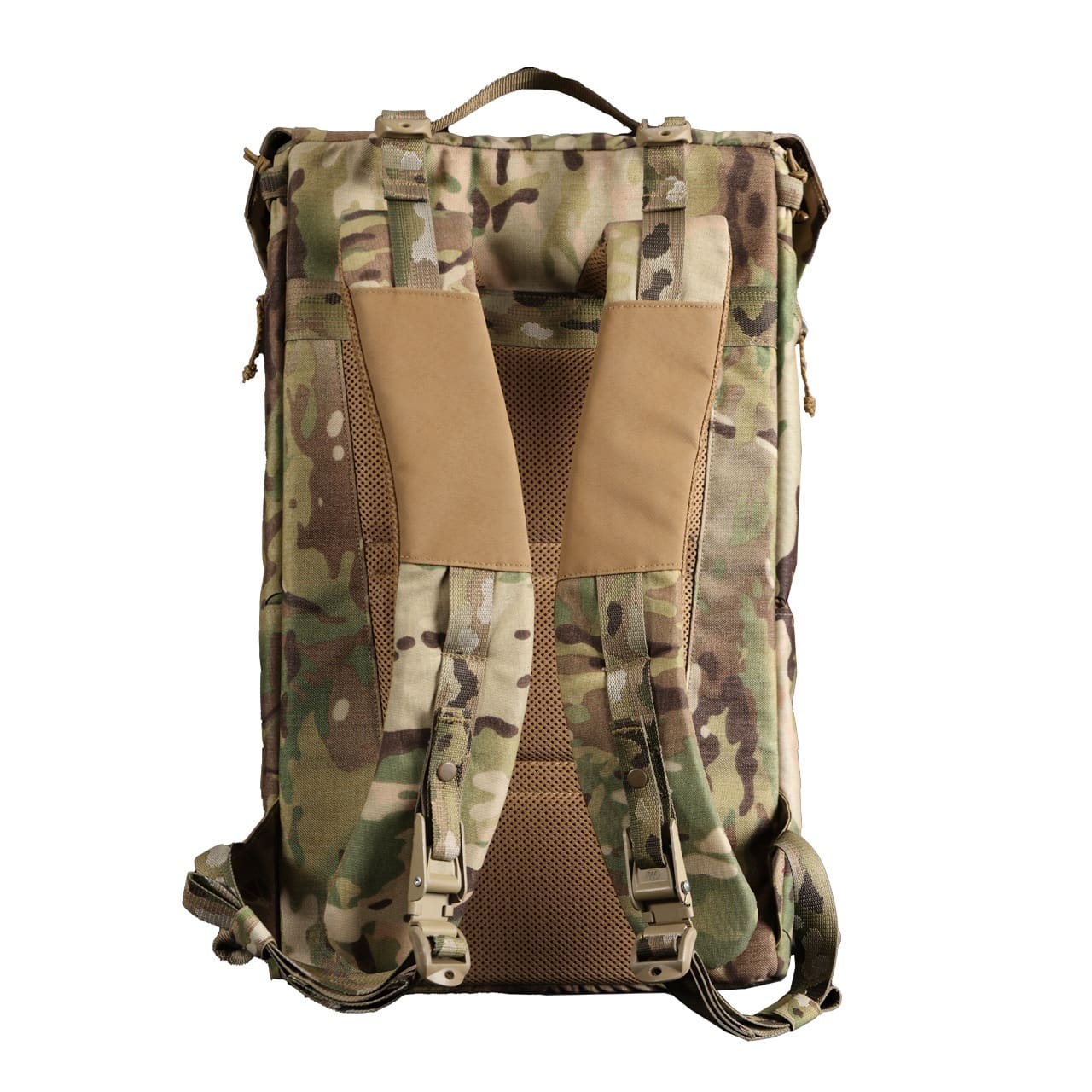
WTF’s Hydro Zip-On Back Panel 91.1 for Crye Precision AVS is designed for use with Source Kangaroo, WLPS, and ILPS bladder and CamelBak’s 70oz and 100oz short bladders.  To discourage inadvertent separation from the carrier, zipper pull tabs tuck securely and silently into milspec elastic loops to prevent the slider from riding upward.  A VELCRO® Brand ONE-WRAP® loop, as a universal bladder hanger, can interface with almost any bladder.

Back Panel 91.1 uses NIR & Berry compliant MIL-DTL-32439 500D nylon, A-A-55126 nylon hook & loop, A-A-59826 bonded nylon thread, MIL-W-5691.1 nylon elastic, A-A-55634 spec heavy duty zippers, and well compensated, skilled labor to produce a cost effective part.

Back Panel 91.1 for AVS (size medium) is lightweight at just 7.1 oz / 202 g (size medium).  Approx 3.25 liter volume.

Bladders, additional pouches, plate carrier, etc not included.

wtfidea.com

*all Crye Precision trademarks, brands, etc are the sole property of Crye Precision, LLC.  Crye Precision, LLC does not endorse this product.

Army Research Yields Rechargeable Battery for Extreme Operating Conditions

Saturday, May 10th, 2025

ABERDEEN PROVING GROUND, Md. (May 6, 2025) — Soldiers deploying in a wide range of climates for future conflicts will need batteries capable of powering their advanced electronics in extreme weather conditions. To meet these challenges, Army researchers are developing rechargeable batteries for Soldier-worn and handheld equipment with increased temperature ranges.

Initiatives to field Soldiers with next-generation equipment — such as night-vision devices, weapons, and radios — are driving the need to transition from single-use batteries to rechargeable versions, said Lexi Karalekas, an Army C5ISR Center chemical engineer.

The U.S. Army Command, Control, Communications, Computers, Cyber, Intelligence, Surveillance and Reconnaissance (C5ISR) Centeris working to improve performance of these batteries in cold and hot weather to meet the demands of Soldier-missions across a broad range of environments. Researchers are conducting lab testing of the cell technology.

“Results at the cell level show a significant enhancement in performance at extreme temperatures, achieving a higher capacity when compared with commercial-off-the-shelf options,” said Karalekas, C5ISR Center’s lead for the battery development project. “Through collaboration with industry, we are demonstrating advancements that potentially double the operational range and duration of systems powered by the innovative technology. This will enable Soldiers to operate in previously inaccessible temperatures.”

The Army’s next step is to incorporate these specialized cells into a prototype of the Army’s most widely used standard battery across many Soldier-portable systems. Because of the battery’s widespread use by Soldiers, any new iterations can be easily accommodated as ‘drop-in’ replacements. The new prototype will be delivered in the near term to C5ISR Center for lab testing before multiple rounds of Soldier field testing in extreme temperatures.

Once prototypes have been tested successfully in one battery pack, the cells inside can be incorporated into other standard Army batteries, said Dr. Ashley Ruth, a C5ISR Center senior electrochemical engineer.

“The use of standard batteries allows multiple systems to quickly see the benefits of this new technology rather than redesigning and requalifying bespoke batteries as improvements in cell chemistries occur,” Ruth said.

In addition to Soldier handheld electronics, the Army is looking to incorporate the technology into other battery types for vehicles, unmanned aerial systems and sensors.

Since 2023, the C5ISR Center has partnered with the Department of Defense Industrial Base Policy Office and Defense Innovation Unit to incorporate more advanced standard batteries from commercial industry to power Army equipment. C5ISR Center’s expertise in battery research and Army equipment power needs is paired with DIU’s commercial industry reach, flexibility and rapid contracting ability.

The newly developed battery cells can also be integrated into industry applications as the Army increasingly looks to commercial technology to support field experimentation.

For example, the Army is developing a rechargeable standard cell — the Operational Single Cell for Accessory Readiness (OSCAR) — in the same form factor as the common AA commercial cell.

“This cell has voltage flexibility and increased cold and hot weather performance that commercial manufacturers can leverage,” said Jon Novoa, a C5ISR Center division chief. “The voltage flexibility of OSCAR and emerging standard batteries allows military capability developers to focus on system development and their areas of expertise without having to focus on energy storage.

“The C5ISR Center continues to lead the way in standardizing Army batteries and coordinates capabilities and requirements across government agencies.”

Feedback from field experimentation continues to drive Army R&D to ensure batteries meet performance specifications required where Soldiers operate.

“Army technical investment, combined with industry partnerships, remains critical to meet the unique power needs of Soldiers,” said C5ISR Center Director Beth Ferry.

By Dan Lafontaine, C5ISR Center Public Affairs

FirstSpear Friday Focus: LaserFrame M4 Triple Shingle

Friday, May 9th, 2025

  • Holds three 30 round M4/AK style magazines
  • 6/9 attachment style

Our patented LaserFrame hemless construction method allows the FirstSpear LaserFrame M4/AK Triple Magazine Pocket to be extremely lightweight while not sacrificing durability. This pocket can hold three 30 round magazines and is backward compatible with PALS/MOLLE. It uses our patented 6/9 attachment system which also works with our patented 6/12 Laser platforms. 

FirstSpear is the premier source for cutting edge-tactical gear for military, law enforcement and those who train.

For more information visit First-Spear.com.

Special Operations Forces Week Comes Together to Focus on the Warrior Ethos

Friday, May 9th, 2025

Delegates from more than 60 nations to include the King of Jordan Abdullah II bin Al-Hussein along with Secretary of Defense Pete Hegseth and the Chairman of the Joints Chiefs of Staff Gen. Dan Caine and current and retired senior military leaders attended Special Operations Forces Week, May 6-9, 2025, in Tampa, Florida. The conference had 52 speakers, with 23,000 in attendance.

“Looking out at this crowd, I’m reminded of the First SOF Truth: ‘humans are more important than hardware.’ More than any other military formation, SOF is about people,” said Hegseth. “It starts and ends with troops downrange, but each of you in this room contributes to their success. Each of you — your commitment, your shared sense of mission, and your teamwork — is more important than all the cutting-edge hardware on display in the convention center. “

USSOCOM ensures the force is well-prepared for current and future challenges through 3 priorities: People – Win – Transform. The command’s philosophy is people are SOF’s comparative and competitive advantage. Special operations have eight decades of experience making the command tailor-made for this era. SOF’s warrior ethos is people-centric, and it starts with our partners.

USSOCOM focuses on deterrence, crisis response, and counterterrorism simultaneously. Through deterrence, SOF is prepared to address and deter potential threats before they escalate into full-scale conflicts. SOF Week provides the opportunity for attendees to engage with one another to exchange ideas and concepts on potential multifaceted SOF approaches that contribute to integrated deterrence and, should deterrence fail, enable the joint force to prevail in conflict.

The final pillar of the command’s philosophy is transformation, SOF places heavy emphasis on innovation and technology adapting to the fluid nature of warfare. SOF’s lethality is exemplified by speed of innovation, power of adaptability, and comfort in chaos. SOF is building an enduring advantage by the continued investment in people, technologies, and organizations – marked by a commitment to evolve, modernize, and optimize for future operating environments.

Gen. Bryan Fenton, commander, U.S. Special Operations Command and Command Sgt. Maj. Shane Shorter, command senior enlisted leader followed the Secretary of Defense.

“You heard the Secretary of Defense … we win by staying true to what makes us different— asymmetry. We offer decision-makers precise, fast, low-signature options across the spectrum—from crisis to conflict,” said Fenton. “And we’ve got an antidote to that fusion of foes. It’s right here in this room. The Global Special Operations Network. When we talk about winning… we talk about our obligation to this Nation to be the asymmetric scalpel – to not just be fast; but also, strategic. And to not just be lethal; but purposeful… tailor-made for this era.

“What does SOF transformation look like? What’s the blueprint? Because let me tell you what I am seeing: The innovation cycle has never been so compressed… when I came in the Army, we modernized across generations… I still used equipment from Vietnam… I’m old but not that old,” said Shorter. “Now we need to modernize in weeks… sometimes within days. This isn’t just about keeping pace; it’s about setting the pace. And when you think about how SOF fights against a fusion of foes… I think we better be going after these game-changing advances.”

Throughout the week, international SOF commanders discussed ways to improve interoperability, increase lethality, and optimize how SOF sources global requirements and various training venues. SOF Week is a way for the global SOF community to meet, learn from each other and advance a coordinated effort to meet global security challenges.

Melissa A. Johnson, the acquisition executive for USSOCOM, who is responsible for over 1,000-plus personnel providing lethal, rapid and focused acquisition, technology, and logistics support to SOF also gave a keynote speech.

“The name of the game is multi-domain. It’s integration, its interoperability, its interchangeability,” said Johnson. “If we are going to make an investment and close kill chains to ensure SOF forces are capable, lethal and resilient, we have to have interoperable mission systems.”

SOF Week provided the opportunity for USSOCOM personnel to network with defense industry professionals and government attendees. Attendees viewed the latest in SOF equipment and capabilities from more than 800 exhibitors.

Conference attendees from the global SOF Community were provided a unique opportunity to strengthen enduring relationships, share current technologies, enhance cooperation, and identify commonalities and challenges. These events supported USSOCOM’s ongoing efforts to formalize and strengthen existing international network partnerships and engage with key stakeholder publics.

SOF Week is the premiere conference for the special operations community to interact with industry and collaborate on the challenges, initiatives, and way-ahead in delivering the most cutting-edge capabilities to SOF operators. The week provides educational sessions, demonstrations, interaction with exhibitors and many networking opportunities. The conference is the single most important opportunity for developing, nurturing, and exercising the growing network across industry, government, academia, and international partners.

Story by Michael Bottoms  

U.S. Special Operations Command

US Army Conducts Live-Fire Test of High-Powered Microwave for Exercise Balikatan 2025

Thursday, May 8th, 2025

The 1MDTF soldiers were joined by members of the Philippine Air Force, 960th Air and Missile Defense Group, who participated alongside their partners as part of the Subject Matter Expert Exchange (SMEE) program, and U.S. Marines with the 3rd Littoral Anti-Air Battalion’s Ground-Based Air Defense Battery who employed the Marine Air Defense Integrated System (MADIS) during this multi-day live-fire event.

“This is a great opportunity for joint training alongside our short-range air defense counterparts from the U.S. Marines,” said U.S. Army Capt. Bray McCollum, battery commander of 1-51 ADA’s Integrated Fires Protection Capability (IFPC) battery.

This is the first time the Army’s IFPC-HPM has been employed in the Indo-Pacific and tested in a tropical environment. This advanced equipment supports the U.S.-Philippine Alliance through enhancing combined military cooperation and advancing our shared commitment to a secure, stable, and free Indo-Pacific region for all.

The IFPC-HPM is a Directed Energy (DE) weapon system that emits a beam of microwave energy that can disrupt, disable, or destroy Unmanned Aerial Systems (UAS). The IFPC-HPM is the first material released DE weapon system specifically designed to counter groups and swarms of drones. The 1st MDTF was the first unit to field the HPMs in February 2024 and has since been conducting tests across a range of environments.

In another first for the Indo-Pacific region, the IFPC-HPM and FS-LIDS were used together in a complementary system. FS-LIDS is another counter-UAS capability that has been operationally deployed in the middle east for the past decade. Together with the IFPC-HPM it can be used for the sensing, tracking, and disabling of UAS while allowing IFPC-HPM operators to gain positive identification of the UAS target using its electro-optical infrared camera. Both systems can be used to disable the targets. This creates a layered defense of non-kinetic effects to defeat small UAS.

“During this test, we were able to demonstrate that we can successfully defeat drone swarms in a tropical environment using layered effects,” said McCollum.

The results of the test will be analyzed by the Rapid Capabilities and Critical Technologies Office (RCCTO) who manage the development, prototyping, and testing of the Army’s Directed Energy weapons. The results will be used to improve the effectiveness in countering UAS swarms and help inform the Army’s future force requirements.

Members of the Armed Forces of the Philippines learned about the IFPC-HPM and FS-LIDS as part of the SMEE program, strengthening their partnership with the U.S. and giving them the skills that could enhance their role in national defense.

“This is a great opportunity to show our Philippine Allies the cutting-edge capabilities that the U.S. Army has in development,” said McCollum, “This training demonstrates our commitment to strengthening our ties with our Indo-Pacific allies and partners.”

As a theater-level unit and joint force enabler, assigned to the Indo-Pacific, the 1st MDTF plays a vital role in synchronizing long-range precision fires layered with long-range precision effects to create multiple dilemmas and neutralize adversary anti-access and area denial networks. The MDTF’s proven innovation, agility, and lethality have led the Army to direct five full MDTFs in strategically significant locations worldwide.

Balikatan is a longstanding annual exercise between the U.S. and Philippine armed forces designed to strengthen the alliance, showcase the capable combined force, and demonstrate the commitment to regional security and stability.

By MAJ Ian Sandall, 1st Multi-Domain Task Force

US Army Trains with Latest Maritime Domain Awareness Capabilities Alongside Philippine Partners During Balikatan 25

Wednesday, May 7th, 2025

SAN ANTONIO, Zambales, Philippines — The 1st Multi-Domain Effects Battalion from the 1st Multi-Domain Task Force conducted drone, high altitude balloon, and electromagnetic warfare training alongside Philippine counterparts at Palawan and Naval Station Leovigildo Gantioqui during the annual 2025 Balikatan exercise.

The battalion is honing its skills on reconnaissance, surveillance, target acquisition and non-kinetic effects using ground-based EW systems, ultra-long endurance, solar powered Unmanned Aerial Systems (UAS), and High-Altitude Balloons (HABs).

A key highlight of the training includes extending network communications for retransmission of signals between multiple aerial capabilities.

“These long-range high endurance UAS are capable of establishing network connectivity between multiple aircraft at long distances,” said Maj. Malcolm Royer, Electronic Warfare Sensing Company commander. “We’re continuing work to extend that range.”

Prior to Balikatan 2025, the unit was at Yakima Training Center in Washington, conducting Static Focus 3, the Army’s first battalion-level All-Domain Home Station Training exercise. This training, held from March 3-14, 2025, was the first time Soldiers were able to operate all MDEB capabilities in a completely live environment. The soldiers were able to bring this knowledge with them to Balikatan 25.

“Static Focus is our annual training and risk reduction exercise to build multidomain teams with capabilities for all domain operations from every company across the MDEB,” said U.S. Army Lt. Col. Joe Mroszczyk, 1st Multi-Domain Effects Battalion Commander, “Our Soldiers are identifying best practices and training our headquarters elements to operate at dispersed locations ahead of doing the same in the Philippines.”

During Exercise Balikatan 25, the unit trained alongside members of the Philippine Air Force, conducting multiple training balloon launches and UAS sorties. They also coordinated with PAF airspace controllers to deconflict airspace for both Philippine and U.S. air traffic, supporting reconnaissance for the HIMARS live-fire operations conducted by their sister Long Range Fires Battalion. This seamless coordination supports the combined U.S.-Philippine force land-based counter maritime capabilities.

As part of the training, the unit mounted a UAS launch cradle onto the roof of a Philippine Air Force vehicle, showcasing the potential for future collaboration with the PAF in conducting fixed-wing launches from an airstrip.

This type of collaboration with the Armed Forces of the Philippines during Balikatan 25 enhances our interoperability and helps strengthen our partnership and commitment to peace and security in the Indo-Pacific.

Balikatan is a longstanding annual exercise between the U.S. and Philippine armed forces designed to strengthen the alliance, showcase the capable combined force, and demonstrate the commitment to regional security and stability.

By MAJ Ian Sandall

US Army, Philippine Air Force Test Counter-Drone Systems at Balikatan 2025

Tuesday, May 6th, 2025

SAN ANTONIO, Zambales, Philippines — The 1st Multi-Domain Task Force recently conducted tests of their Integrated Fires Protection Capability High-Powered Microwave, or IFPC-HPM, and Fixed Site-Low, Slow, Small Unmanned Aerial System Integrated Defeat System, or FS-LIDS, in a combined joint integrated air and missile defense live-fire exercise at Naval Station Leovigildo Gantioqui, April 28, 2025.

The 1st MDTF Soldiers were joined by members of the Philippine Air Force, 960th Air and Missile Defense Group — who participated as part of the Subject Matter Expert Exchange program — and by U.S. Marines with the 3rd Littoral Anti-Air Battalion’s Ground-Based Air Defense Battery who employed the Marine Air Defense Integrated System during this multi-day live-fire event.

“This is a great opportunity for joint training alongside our short-range air defense counterparts from the U.S. Marines,” said U.S. Army Capt. Bray McCollum, battery commander of 1-51 ADA’s Integrated Fires Protection Capability battery.

This is the first time the Army’s IFPC-HPM has been employed in the Indo-Pacific and tested in a tropical environment. This advanced equipment supports the U.S.-Philippine alliance through enhancing combined military cooperation and advancing our shared commitment to a secure, stable, and free Indo-Pacific region for all.

The IFPC-HPM is a directed energy weapon system that emits a beam of microwave energy that can disrupt, disable or destroy unmanned aerial systems. The IFPC-HPM is the first material released directed energy weapon system specifically designed to counter groups and swarms of drones. The 1st MDTF was the first unit to field the HPMs in February 2024 and has since been conducting tests across a range of environments.

In another first for the Indo-Pacific region, the IFPC-HPM and FS-LIDS were used together in a complementary system. FS-LIDS is another counter-UAS capability that has been operationally deployed in the Middle East for the past decade. Together with the IFPC-HPM it can be used for the sensing, tracking, and disabling of UAS while allowing IFPC-HPM operators to gain positive identification of the UAS target using its electro-optical infrared camera. Both systems can be used to disable the targets. This creates a layered defense of non-kinetic effects to defeat small UAS.

“During this test, we were able to demonstrate that we can successfully defeat drone swarms in a tropical environment using layered effects,” said McCollum.

The results of the test will be analyzed by the Rapid Capabilities and Critical Technologies Office who manage the development, prototyping and testing of the Army’s Directed Energy weapons. The results will be used to improve the effectiveness in countering UAS swarms and help inform the Army’s future force requirements.

Members of the Armed Forces of the Philippines learned about the IFPC-HPM and FS-LIDS as part of the Subject Matter Expert Exchange program, strengthening their partnership with the U.S. and giving them the skills that could enhance their role in national defense.

“This is a great opportunity to show our Philippine allies the cutting-edge capabilities that the U.S. Army has in development,” said McCollum, “This training demonstrates our commitment to strengthening our ties with our Indo-Pacific allies and partners.”

As a theater-level unit and joint force enabler, assigned to the Indo-Pacific, the 1st MDTF plays a vital role in synchronizing long-range precision fires layered with long-range precision effects to create multiple dilemmas and neutralize adversary anti-access and area denial networks. The MDTF’s proven innovation, agility, and lethality have led the Army to direct five full MDTFs in strategically significant locations worldwide.

Balikatan is a longstanding annual exercise between the U.S. and Philippine armed forces designed to strengthen the alliance, showcase the capable combined force, and demonstrate the commitment to regional security and stability.

By MAJ Ian Sandall