FirstSpear TV

Archive for the ‘Guest Post’ Category

Mehler Systems Presents: Riot Gear Market Insights

Thursday, October 10th, 2024

FULDA, GERMANY (09.10.2024)

Björn Klar, Key Account Manager at Mehler Protection annd expert in riot gear and body armour, recently discussed the evolving market for riot gear amid increasing civil unrest and public safety concerns. Valued at approximately USD 6.1 billion in 2022, the market is projected to grow at a CAGR of 4.5% through 2032, indicating a rising demand for advanced protective equipment.

Q: How has demand for riot gear evolved?

A: Demand for riot gear has increased significantly in recent years due to rising instances of civil unrest, protests, and demonstrations around the globe. This trend is primarily driven by heightened public safety concerns and a strong emphasis on officer protection. As these events become more frequent, law enforcement agencies are investing in advanced gear to ensure the safety of personnel on the frontlines. This evolution highlights the need for innovative and effective solutions that can withstand unpredictable situations.

Q: What factors influence riot gear requirements?

A: Several factors impact the types of riot gear adopted by law enforcement agencies. Regional needs play a significant role; higher-risk areas often prioritize investments in premium, technologically advanced protective solutions, while regions with tighter budgets may opt for more cost-effective options. Additionally, local climate conditions, legislation, and law enforcement practices shape gear selection. At Mehler Protection, we collaborate closely with our clients to provide tailored solutions that align with their operational needs and financial constraints.

Q: How are governments modernising riot gear?

A: Governments and security firms are actively seeking ways to modernise riot gear to enhance personnel safety in unpredictable environments. This includes integrating advancements in material science to create gear that is both durable and versatile, addressing not just physical threats but also the comfort needed for prolonged use. At Mehler Protection, we place a strong emphasis on user feedback, ensuring our products evolve to meet the changing dynamics of public safety. This collaborative approach helps us refine our offerings based on real-world experiences.

Q: What are law enforcement’s top priorities whenselecting gear?

A: For law enforcement professionals, the primary concerns when selecting riot gear are protection, mobility, and comfort. In high-pressure situations, officers require gear that effectively shields them from physical threats while allowing for swift movement. Comfort is also crucial, as officers need gear that supports extended use without causing fatigue or strain. Moreover, adaptability is essential; the gear must be versatile enough to meet the diverse challenges encountered during various missions.

Q: How does Mehler Protection ensure agility and comfort in its gear?

A: At Mehler Protection, we prioritise both protection and comfort through our innovative design philosophy. Our modular gear allows officers to adjust their level of protection based on the specific demands of each mission, enhancing flexibility without compromising safety. We use lightweight, breathable materials to ensure comfort during extended operations, which helps reduce fatigue. Additionally, our gear incorporates advanced features like fire and chemical resistance, maintaining high-performance standards while ensuring officers remain agile and responsive in the field.

Q: What innovations are on the horizon?

A: The future of riot gear at Mehler Protection is focused on incorporating cutting-edge materials and exploring the integration of smart technology, such as AI-powered features for improved situational awareness. Our aim is to develop gear that not only offers robust protection but also enhances operational efficiency through real-time adaptability. We are also committed to sustainable manufacturing practices, ensuring that our innovations contribute positively to both security needs and environmental goals. By investing in research and development, we strive to set new standards in protective gear, continually aligning our efforts with the evolving needs of frontline professionals.

For more information about Mehler Protection and its offerings, please visit www.mehler-protection.com.

Proving Credibility: 91st Missile Wing Completes Simulated Test Launch

Thursday, October 10th, 2024

MINOT AIR FORCE BASE, N.D. —  

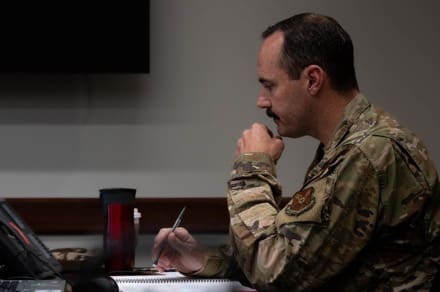
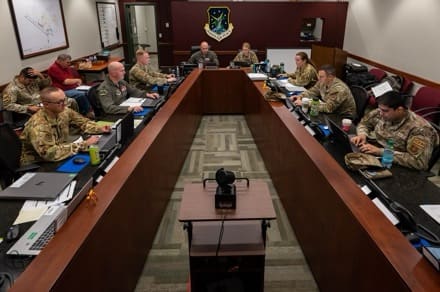
The 91st Missile Wing successfully performed its biennial Simulated Electronic Launch Minuteman (SELM) test, the first phase of testing for the Minuteman III, at Minot Air Force Base, North Dakota, on September 17th and 18th, 2024.

“This year’s SELM, named OPERATION GIANT PACE 24-2M, was conducted to evaluate the readiness and reliability of the MMIII ICBM system,” said 1st Lt. Ivan Cruz, 91MW Maintenance Group executive officer. “Although operational test launches are executed frequently at Vandenberg Space Force Base, SELM allows the Air Force to test critical processes in a deployed environment without firing the missile.”

This evaluation is an end-to-end test that is used to verify the reliability of the MMIII ICBM system’s ability to launch if given the command from a Launch Facility (LF), a Launch Control Center (LCC), or an Airborne Launch Control System (ALCS).

“This year we tested four LFs and two LCCs, with assistance from the 625th Strategic Operations Squadron, to test a new flight track of the E-6B Mercury,” said Cruz.

Before the test launch order can be given, more than 1,500 hours are committed to ensure all safety measures are met. For the SELM test, the maintenance crews and operators replaced the operational components with test components and isolated the LFs from the rest of the operational squadron to form a test squadron. This allows the test to be conducted safely without affecting an operational missile site while the testing missile crew members use real commands.

“Due to the ever-growing age of our weapon system, showing that it can complete its mission when asked is important for us in gathering analytical data, and show we are capable of assuring our allies and deterring our adversaries,” said 1st Lt. Alex Mathews, 740th Missile Squadron missileer.

Once the preparation phase was concluded, the SELM test began. The teams tested their ability as combat crews to launch from not only the LCC but from an ALCS aboard a Navy E-6B Mercury aircraft, which is capable of remotely launching the fleet of MMIII ICBMs.

Many agencies are involved in safety, like the missile maintenance team and electronic mechanical team, who ensure the numerous safety procedures are complete prior to testing. The 91MW’s crisis action team then confirms that all sites are in a safe configuration before the simulated launch, Cruz said.

When all of these tasks have been completed a last-look inspection is done by SELM Quality Assurance personnel to verify the proper configuration of the test LF and LCCs.

After the safety of each site was confirmed, test commands were sent from isolated test LCCs and the airborne ALCS. Missile commands were transmitted to the isolated SELM test squadron to evaluate everything from routine activities all the way up to the first stage ignition of the MMIII.

“The credibility of the 91st MW lies in our Airmen and the weapon system we maintain and operate. We train daily for our mission, and SELM allows us to demonstrate the standard of upkeep provided by our maintainers, and the expertise of missileers tasked with executing our mission,” said Mathews.

The most important aspect of any weapon system is to demonstrate its reliability through extensive scheduled and routine testing. With the SELM test complete the second and final phase of testing can be completed. This second phase of testing will see a live launch of unarmed MMIII at Vandenberg Space Force Base, California. This rigorous testing allows the 91MW, U.S. Air Force and U.S. Space Force to provide a demonstration of combat capability without compromising safety.

By Senior Airman Alexander Nottingham, 5th Bomb Wing Public Affairs

JPEO Armaments & Ammunition Cuts Ribbon on New 155mm Metal Parts Facility

Wednesday, October 9th, 2024

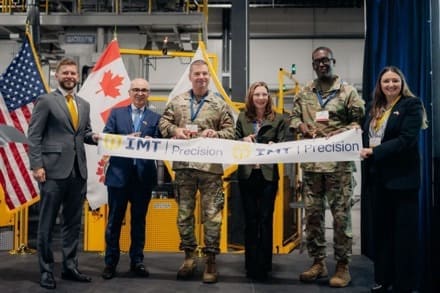
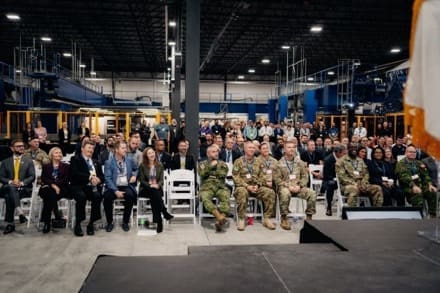
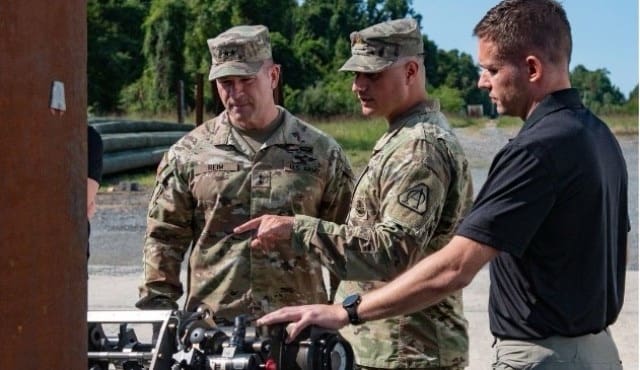
INGERSOLL, Canada — The U.S. Army’s Joint Program Executive Office for Armaments and Ammunition (JPEO A&A) hosted a ribbon cutting ceremony for the IMT Precision Production Facility, a new 155mm metal parts production facility that will produce 15,000 shell bodies per month, in Ingersoll, Canada, on Wednesday, October 2. The ceremony was attended by representatives from the Canadian and U.S Army, elected officials from the Town of Ingersoll, and industry leaders.

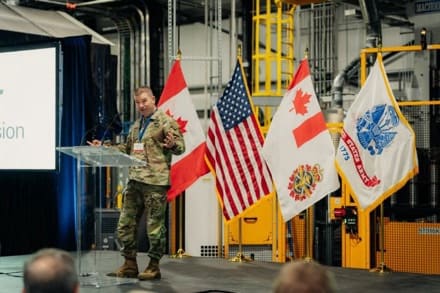
“Thanks to the U.S. Congress and Department of Defense’s confidence in our efforts, we are writing a new chapter and investing billions in our defense industrial base,” said U.S. Army Maj. Gen. John T. Reim, Joint Program Executive Officer for Armaments and Ammunition. “Back in May, we opened a new metal parts facility in Mesquite, Texas and in the month of October we will be conducting ribbon cutting ceremonies for new propelling charge facilities in Marion, Illinois and Perry, Florida and a new load assemble pack facility in Camden, Arkansas. This IMT Precision Facility, with its new and advanced forging, furnaces, non-destructive testing, and machining capabilities, is further proof of that progress.”

The newly commissioned facility will be operated by the IMT Group and is a critical component of the U.S. Army’s 155mm production ramp up. Equipped with state-of-the-art technology, the facility incorporates advanced automation, digital data capture, and high flexibility in its production lines and serves to bolster the defense industrial base.

IMT Group CEO, Cheryl Hacking, discussed the company’s long history supporting the defense industry. “Our history of service with the defence industry dates back to the First World War,” said Hacking who noted that IMT was one of the original ‘bomb girls’ facilities. “We are proud to be a part of that important history that made us uniquely suited for this project. And when the U.S. Army was able to move at lightning speed to respond to global events, we were able to respond in kind.”

According to Reim, the IMT Precision facility is one piece of a larger puzzle aimed at increasing the U.S. Army’s overall production capacity for 155mm artillery munitions and will assist the Army to be able to reach its goal of producing 100,000 artillery shots per month by fiscal year 2026.

“Victory on the battlefield begins in facilities like the one we are in today,” said Reim. “This is a mission we cannot afford to fail. Our two nations, two close allies and steadfast partners, continue to stand united in our commitment to deter would be adversaries’ intent on doing us harm. Millions of lives depend on our ability to deliver these munitions safely into the hands of our warfighters.”



The production lines will primarily produce metal parts for the currently fielded M795 as well as the Army’s new ‘go to war round’, the M1128, which boasts a 33% increase in its range and is capable of striking targets up to 30 km away.

“Every shell that rolls off this production line is a testament to the trust our nations place in each other,” Reim added. “Trust that we can deter aggression. Trust that when called upon, our two militaries are equipped to fight and win our nation’s wars.”

Reim also reflected on a recent tour of the Scranton, Pennsylvania Army Ammunition Plant with Ukrainian President Volodymyr Zelenskyy. “President Zelenskyy thanked the workers and said, ‘The 400 people here saved the lives of millions in Ukraine.’ His words should serve as a reminder that what we do matters not just for one nation, but for millions across the globe.”

Ingersoll Mayor, Brian Petrie, welcomed the partnership between the Town of Ingersoll, IMT, and the U.S. Government. “The opening of the IMT Precision Production Facility marks a significant milestone in our Town’s ongoing partnership with IMT and the U.S. Government,” said Petrie. “This collaboration not only strengthens Ingersoll’s position as a key player in advanced manufacturing but also underscores the importance of international cooperation in supporting global security. Together, we are building a future that promotes innovation, creates local jobs, and contributes to the defence capabilities of our allied nations.”

Reim concluded by thanking the people and government of Canada for their warm hospitality and ongoing support. “There is no challenge too great, no adversary too strong, and no cause more just than ensuring that our future generations inherit a safer, stronger and freer world. We are fortunate to call you our neighbors and I look forward to strengthening our bond even further.”

By ABRAAM DAWOUD

The Best D*MN EDC Pants

Tuesday, October 8th, 2024

If you’re someone who believes in being prepared for anything, Vertx pants were made for you.

From the rugged Defiance Jean to the sleek Delta Stretch 2.1, Vertx pants are purpose-built for the prepared man and everyday defender. Each pair is CCW-ready and designed to handle anything life throws at you. From tactical training to your daily grind – these pants adapt seamlessly and are built from high-quality materials that withstand wear and tear while keeping you comfortable.

These aren’t just pants; they’re your new favorite piece of gear—shop now: vertx.com

Large Caliber Product Office Has Army Modernization Priorities In Its Sights

Tuesday, October 8th, 2024

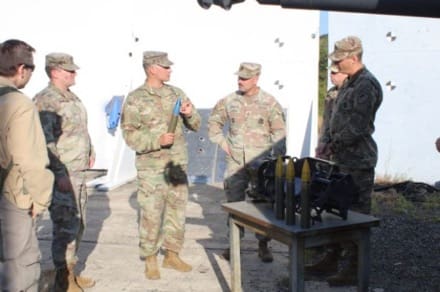
ABERDEEN PROVING GROUND, Md – The U.S. Army’s Project Manager Maneuver Ammunition Systems (PM MAS), located on Picatinny Arsenal, recently traveled to the Aberdeen Proving Ground on September 5, 2024, to successfully test the XM1204 High Explosive Airburst with Tracer (HEAB-T) prototype.

Maj. Gen. John T. Reim, Joint Program Executive Officer for Armaments and Ammunition (JPEO A&A), observed the test at the Aberdeen, accompanied by key personnel from PM MAS, including Deputy Project Manager Bob Kowalski, Assistant Product Manager for Large Caliber Ammunition Maj. A.J. Scocco, and the team lead for the 50mm program KC Koseoglu.

The 50mm XM1204 HEAB-T is one of three cartridges within the 50mm x 228 family of ammunition, tailored to provide an anti-personnel tactical solution. The munition is designed to defeat personnel both in open spaces and behind the cover of urban structures. The munition has the ability to function in point detonate, point detonate delay, and airburst.

The XM1204 HEAB-T, coupled with the XM913 main gun, is set to provide decisive overmatch for the Army’s Next Generation Combat Vehicle imitative, the XM30 Combat Vehicle. This adaptability makes it a vital component of the lethality suite for the XM30 Combat Vehicle.

According to Scocco, the purpose of the testing was to evaluate the performance of the munition’s electro-mechanical programmable multi mode fuze. “The XM1204 HEAB-T is a significant lethality upgrade for our warfighter, and we’re on track to meet cost, schedule, and performance requirements for the XM30 Combat Vehicle,” he said.

Five Bradley Master Gunner-qualified Soldiers participated in a second round of testing focused on burst-point accuracy of the XM1204 HEAB-T at Aberdeen Proving Ground on September 11, 2024. These Soldiers, representing First Army, the Maneuver Center of Excellence, the Next Generation Combat Vehicle Cross- Functional Team, and the U.S. Army Maneuver Capabilities Development and Integration Directorate, evaluated the ammunition’s performance and provided critical user feedback.

The exercise aimed to inform both the requirements for the XM1204 HEAB-T and the wider user community about the capabilities of the 50mm ammunition, including its pairing with the XM913 50mm main gun. The XM913 is the primary armaments for the XM30 Combat Vehicle and is a critical part of the Army’s modernization strategy.

“The recent XM1204 HEAB-T test is a clear demonstration of PM MAS delivering on Army modernization priorities and delivering a new level of lethality to the battlefield,” said Reim. “The lethality and flexibility of this round, paired with the XM30 platform, will give our Warfighters the tools they need to maintain overmatch on the battlefield, and I look forward to seeing this round fielded.”

By ABRAAM DAWOUD

MATBOCK Monday: Test & Evaluation Program

Monday, October 7th, 2024

At MATBOCK, we offer a T&E program through which you can test our products on your unit before making a larger purchase.

Reach out to sales@matbock.com or fill out this form to get on the list. www.matbock.com/pages/contact-us

US Military Liaison Mission Ends October 3, 1990

Sunday, October 6th, 2024

There were never more than fourteen at one time. They were licensed spies who were uniformed members of the United States military but who also held Soviet credentials or passes allowing nearly unrestricted access into and within the Soviet sector of East Germany. They were backed up by another 50 “off pass” personnel – drivers, equipment recognition specialists, analysts – all of whom were hand-picked experts in their fields. All were members of the US Military Liaison Mission (USMLM), a unique and elite joint service organization that was founded in 1947 and formalized in a bilateral agreement between the American and Soviet Chiefs of Staff. They answered only to the Commander-in-Chief, US Army Europe. The British and French had similar agreements – and the Soviets had liaison teams of their own, who patrolled throughout the Allied sectors of West Germany.


Mission Restricted Sign, in English, French, Russian, and German. These signs were nailed to seemingly every tree in East Germany, and consequently routinely ignored by the Allied Liaison Missions.

They traveled in teams (called tours) of two: an Army or Air Force officer who was a Russian linguist and Soviet specialist, paired with a noncommissioned officer driver who was fluent in German. They traveled in a standard four-wheel drive, non-descript vehicle, and were equipped with notebooks, binoculars, night vision goggles, tape recorders, cameras, compasses, maps, rations, and personal items, but no weapons. No espionage gear or other spy paraphernalia was ever carried. These “spies” never met with agents, conducted dead drops, intercepted messages, or participated in any clandestine activities. According to Major General Roland La Joie, a former commander of the USMLM, “the tours were really nothing more than overt mobile observation platforms crisscrossing the GDR [German Democratic Republic], seeking militarily useful information. The search, of course, was not entirely random.”


Potsdam House, the headquarters of the US Military Liaison Mission in East Germany.

Tours were assigned targets based on intelligence collection requirements from national and theater intelligence agencies. The targets included Soviet or East German garrisons, temporary deployment areas, field training areas, air-ground gunnery ranges, communications sites, river crossing areas, railroad sidings, and virtually anything else of military value in the country. Newly introduced or modified military equipment, especially combat vehicles and aircraft were always at the top of the target list. By virtue of the bilateral agreement, the only locations off-limits to the USMLM were “places of disposition of military units,” so the tours had to be exceedingly careful of where they stationed themselves to observe things such as military movements or tactical exercises. Tour members duly pursued, observed, recorded, and photographed whatever they encountered.


Members of the US Military Liaison Mission on a tour observing Soviet ground forces in East Germany.

The enemy’s capabilities were only part of the problem; the MLM was also tasked to look for indications of intent to use those capabilities. La Joie writes: “On every single day throughout the Cold War, eight or more Allied tours were roaming the countryside of East Germany. Every day, all night, each tour looking exactly for signs of imminence of hostilities.” Because of their unique and expansive access to Soviet military forces in Germany, the USMLM was included in all discussions about the Soviet threat, at both military and diplomatic levels. Their perspective from within the Soviet sector was exceptionally clear, even if incomplete.

Despite the official agreement, the Cold War had heated up over the decades, and the danger was genuine: On March 22, 1984, a member of the French Mission lost his life in a staged traffic “accident.” Almost exactly one year later, on March 24, 1985, Major Arthur D. Nicholson of the USMLM was shot and killed by a Soviet sentry while on a routine liaison mission. However, despite the dangers, the Missions persevered. Dutiful to the end, MLM members monitored the withdrawal of Soviet forces out of Germany and across the Polish border. They remained at their posts until the day the two sides of Germany were reunited, on October 3, 1990, at which time the Military Liaison Mission declared: Mission Accomplished.

By Ruth Quinn, Staff Historian, USAICoE Command History Office

Submissions Open for Thunder Dome 2025 Innovation Competition

Saturday, October 5th, 2024

HURLBURT FIELD, Fla. —

Are you an Air Commando with an innovative idea that gets after strategic competition but need funding? If so, now is your chance to submit your idea for the opportunity to receive capital. The submission window is now open for AFSOC’s innovation competition known as Thunder Dome. All submissions received by November 27, 2024, will be considered.

This competition is open to any member within the command and ideas can be submitted at gain.il4.afwerx.dso.mil/usaf/afsoc-ci2/overview, which is a CAC only enabled site.

Finalists will be selected based on multiple factors including impact on readiness/advantage, alignment with AFSOC strategy, and feasibility of execution. Finalists will present their ideas on January 9, 2025 for the chance to receive funding to further develop their innovative solutions. 

The first ever Thunder Dome was held in July and resulted in six projects receiving funding. By empowering Air Commandos through events like Thunder Dome, AFSOC can continue its ethos of grassroots innovation and rapidly pathfind concepts and capabilities to win in strategic competition.

– Air Force Special Operations Command Public Affairs