BOSS-Xe from Wilcox Industries

Archive for the ‘Guest Post’ Category

Navy’s First Contracted Robotics Warfare Specialist

Friday, September 6th, 2024

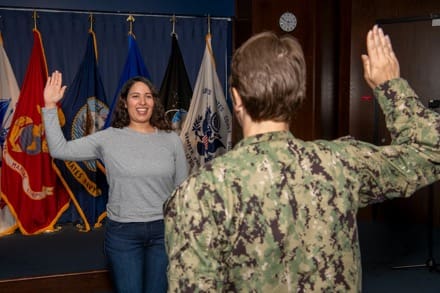
PHOENIX – Future Sailor (FS) Karla Torres-Casillas became the Navy’s first contracted Robotics Warfare (RW) Specialist after enlisting in the Navy at Military Entrance Processing Station (MEPS) Phoenix, Aug. 27, 2024.

The RW rating became available for active-duty contracts on Aug. 27, 2024.

“I came here not sure of what job I wanted or qualified for,” said Torres-Casillas. “I got so happy when I received the news that I got the job. I am going to be the first member of my family to serve in the military. My parents sacrificed a lot to provide our family with a better quality of life and I owe it to them to do well with this amazing opportunity the Navy is giving me. My family moved to San Diego from Mexico when I was young. It was really hard to move and leave behind my uncles, aunts, cousins, and friends. I can’t even imagine how hard it was for my parents. That is why I want to make them proud and show them that it was worth the sacrifice.”

Damage Controlmen 1st Class Kreig Newton, assigned to Navy Talent Acquisition Group (NTAG) Phoenix and the senior classifier for MEPS Phoenix, led Torres-Casillas in the history-making enlistment. During the job-picking process, he realized that Torres-Casillas was fully qualified for the newly available RW rating.

“I was surprised when I saw that RW was available as of today,” said Newton. “I called headquarters to confirm RW and then realized she was qualified based on her [ASVAB] line scores. I mentioned the job to her and she was super excited. I will never forget the look on her face after I told her she was going to be the first contracted female Robotics [Warfare] Specialist.”

“Petty Officer Newton was amazing,” said Torres-Casillas. “He asked me a lot of questions about my interests. Then he told me about Robotics [Warfare] Specialist. It sounded perfect to me. It is a little overwhelming to be first but I am ready for the challenge.”

Torres-Casillas, now a Delayed Entry Program Future Sailor, will continue to work with her recruiter Aviation Boatswain’s Mate 2nd Class Tremaine Smith, assigned to NTAG Phoenix, Navy Recruiting Station Desert Sky. Smith is no longer just a recruiter to Torres-Casillas; he is her first Navy mentor, and his new job is to help her get ready for the next step in her Navy career: boot camp. Torres-Casillas is expected to depart Phoenix for the Navy’s boot camp in Great Lakes, Illinois in January 2025.

The establishment of the RW rating, announced in the U.S. Navy’s NAVADMIN 036/24, underpins the Chief of Naval Operations Adm. Lisa Franchetti’s plans for building and developing “a team who has the reps and sets in sensors, platform autonomy, and mission autonomy programs, and can provide input in machine-learning feedback processes,” a priority she discussed in her keynote address at the WEST 2024 naval conference.

The creation of the RW rating has distinguished the Navy as the first Department of Defense branch to establish a dedicated enlisted workforce specialized in unmanned and autonomous technology.

The Navy’s Fact Sheet focused on RW Conversion Opportunity provides further details on the specific NECs, ASVAB scores, and background requirements for applicants:

www.mynavyhr.navy.mil/Portals/55/Messages/NAVADMIN/FACT_SHEETS/Fact_Sheet_NAV_036_24_Conversion

For information regarding the application process, visit the RW enlisted community management page on the MyNavy HR website at: www.mynavyhr.navy.mil/Career-Management/Community-Management/Enlisted/Robotics-Warfare

From Mass Communication Specialist 1st Class Jasen MorenoGarcia

Tuning Into the Future: U.S. Soldiers Deployed to Europe Master New Radio Technology

Thursday, September 5th, 2024

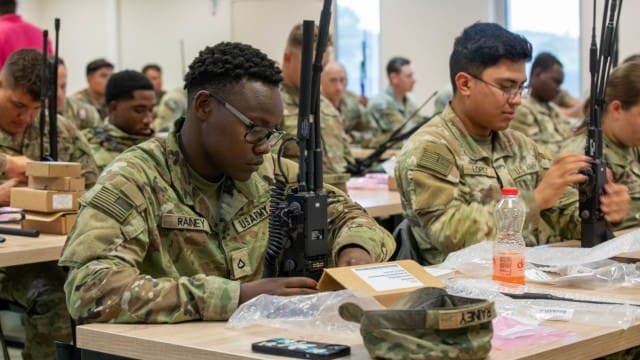
MIHAIL KOGALNICEANU AIR BASE, Romania – The U.S. Army, in collaboration with Sev1Tech, a leading provider of IT modernization, engineering, fielding, training, and program support services for U.S. government agencies, hosted a two-day event to train U.S. Soldiers on new radio equipment at Mihail Kogalniceanu Air Base, Romania, Aug. 28-29, 2024.

The ability to communicate effectively in combat environments has been a cornerstone of military success for centuries. In modern warfare, radio is one of the most essential tools for maintaining this communication. With increasing reliance on digital networks and real-time data exchange, ensuring that Soldiers are well-trained in using and maintaining new radios in the field is paramount.

“Today’s training is about transitioning from older radio equipment to much newer radio equipment,” said Pfc. Josalynne McCants, a joint fire support specialist assigned to the 10th Mountain Division (Light Infantry). “This training exercise is important because a lot of what we do relies heavily on effective communication; therefore, learning and becoming better acquainted with the tools that will enhance and improve communication is absolutely essential.”

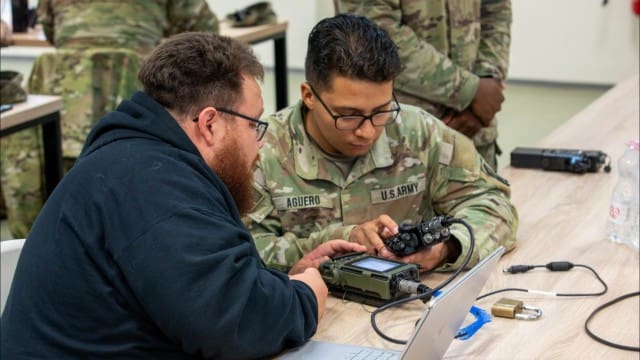
Hands-on training with the AN/PRC 14 Delta and AN/PRC 170 allowed the Soldiers to familiarize themselves with the new communication technology. This technology is crucial in maintaining tactical advantage and seamless coordination during operations. The two-day course covered everything from basic operational procedures to advanced troubleshooting and maintenance.

Army training programs designed to teach Soldiers how to operate new radio systems have become a top priority as technology advances. This training initiative, led by expert defense contractors, focused on hands-on instruction with the latest field radios. Soldiers were taught to set up secure communication links, troubleshoot common issues, and maintain connectivity in difficult environments.

“The goal of this training event is to become more knowledgeable about our equipment, to learn the correct skills, and acquire the knowledge needed to operate the new radios proficiently,” said 1st Lt. Julia Agan, a fire support officer assigned to 10th MTN Div. (LI). “As a fire support officer, we are first into the battlefield with the infantry units, so it’s extremely important to be well-versed with the new equipment so that we can do our jobs efficiently.”

Through training initiatives like this, V Corps — the Army’s only forward deployed warfighting headquarters — continues its unwavering commitment to maintaining a combat-ready force. Through modernization, resolving capability gaps, and evolving force structure, V Corps continuously engages in competition, responds to crises, and prepares to win in conflict. By staying ahead of technological advancements, V Corps ensures Soldiers are prepared for today’s missions and the missions of tomorrow.

By PFC Jason Sessions

SOARescue Accepting Army & Air Force COOL Grants

Wednesday, September 4th, 2024

SOARescue is proud to announce that we are now able to assist with and accept Air Force and Army Credentialing Opportunities On-Line Grants.

This change will allow our military students who are serving in the National Guard, Reserves, or Active Duty units to have access to our courses with fewer obstacles to manage. We hope to broaden the opportunity to the remaining branches soon.

Need help navigating the COOL process? Our admin and training team is here to help! We can answer any of you questions (or at least point you in the direction of someone who can) and get you everything you need for a successful COOL application.

Our decision to move forward with becoming an agency who partners with COOL was fueled by our desire to make our training as accessible as possible to the practitioners who would most benefit from it. We know our students come from many walks of life and having the capability to further their education and skills can only benefit them as individuals and practitioners.

We know that our training can be a substantial investment for students paying their own tuition, so we’ve made every effort to keep our pricing as fair and transparent as possible. Pricing for all courses is available on our website and easily found next to the class on the schedule. We also offer payment plans and multi-student discounts for agencies. We’ve collected an instructional cadre that have incomparable real-world experience in the topics they are teaching and make every effort to provide each of our students with invaluable training.

SOARescue quality is the best in the industry and cannot be bested elsewhere.

www.soarescue.com/fed-gov-mil

Second Annual ARROW Held at Camp Guernsey

Wednesday, September 4th, 2024

F.E. WARREN AIR FORCE BASE, Wyo. (AFNS) —  

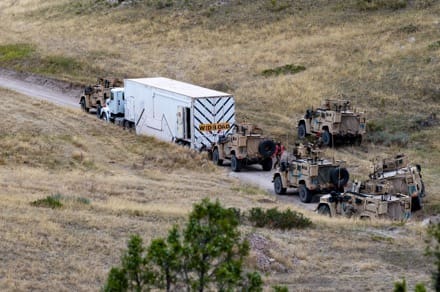
The second annual Advanced Recapture Recovery Operational Warfighter exercise successfully took place at Camp Guernsey, Aug. 5-23. Convoy Response Force teams from F.E. Warren Air Force Base; Minot AFB, North Dakota; and Malmstrom AFB, Montana, had the opportunity to train and execute asset protection procedures.

Last year, CRF teams successfully participated in the inaugural ARROW iteration, experiencing Air Force Global Strike Command’s newest revision. This year, the trend continued with each CRF team taking a week each to test their skills during multiple planned ambushes and attacks.

CRF teams are tasked with the protection of military assets during movements both to, from, and in the expansive missile fields of Minot AFB, F.E. Warren AFB and Malmstrom AFB. Teams continue to work with several different on-base agencies and local law enforcement teams in order to ensure the safety and security of military assets while in transit and on site.

ARROW continues to use the train-pause-train program during exercises, a program specifically developed to sharpen skills in the moment allowing the cadre to pause the exercise in the moment to instruct Airmen, rather than retrace and remember back at their home stations where details may have been lost.

“We’re assessing their ability to recapture and protect resources, we put teams through scenarios they might not be able to see at home station,” said Tech. Sgt. Kyree Joppy, 90th Ground Combat Training Squadron formal instructor and exercise coordinator. “It’s big for them to come here to show their capabilities while being a good place for them to test their weapons and vehicle capabilities on live ranges.”

ARROW is also the debut of the Joint Light Tactical Vehicle in a simulated combat scenario marking an Air Force wide first, underscoring AFGC’s modernization line of effort.

“The JLTV is the Department of Defense’s pick to replace the Humvee and with that in mind, that is what has been selected as the vehicle for AFGSC both in the missile field and CRF,” said Master Sgt. Kevin Brown, AFGSC A3 training and development team member and one of the head AFGSC coordinators for ARROW. “It’s got amazing capability, better range, higher top speed and its off-road capabilities far exceed the Bearcats and Humvees. This is a pretty good way for our Airmen to come out here and use these things and utilize them in the capacity they’ll be used in down the road as we phase out the Humvees.”

Through the introduction of the JLTV’s capabilities in the field and with continued springtime exercises like Nuclear Convoy Course, teams are given the chance to prepare and analyze their skills in a training environment specifically designed to mirror the challenges of the missile field.

Now with ARROW’s second year wrapped up, the exercise has again proved its ability to train, evaluate and sharpen the skills of CRF teams from all three missile wings; allowing them, and the wings, to ensure the nuclear enterprise’s continued safety and security.

By Senior Airman Landon Gunsauls, 90th Missile Wing Public Affairs

Commemorate National POW Day on 19 September at the Airborne and Special Operational Museum in Fayetteville

Tuesday, September 3rd, 2024

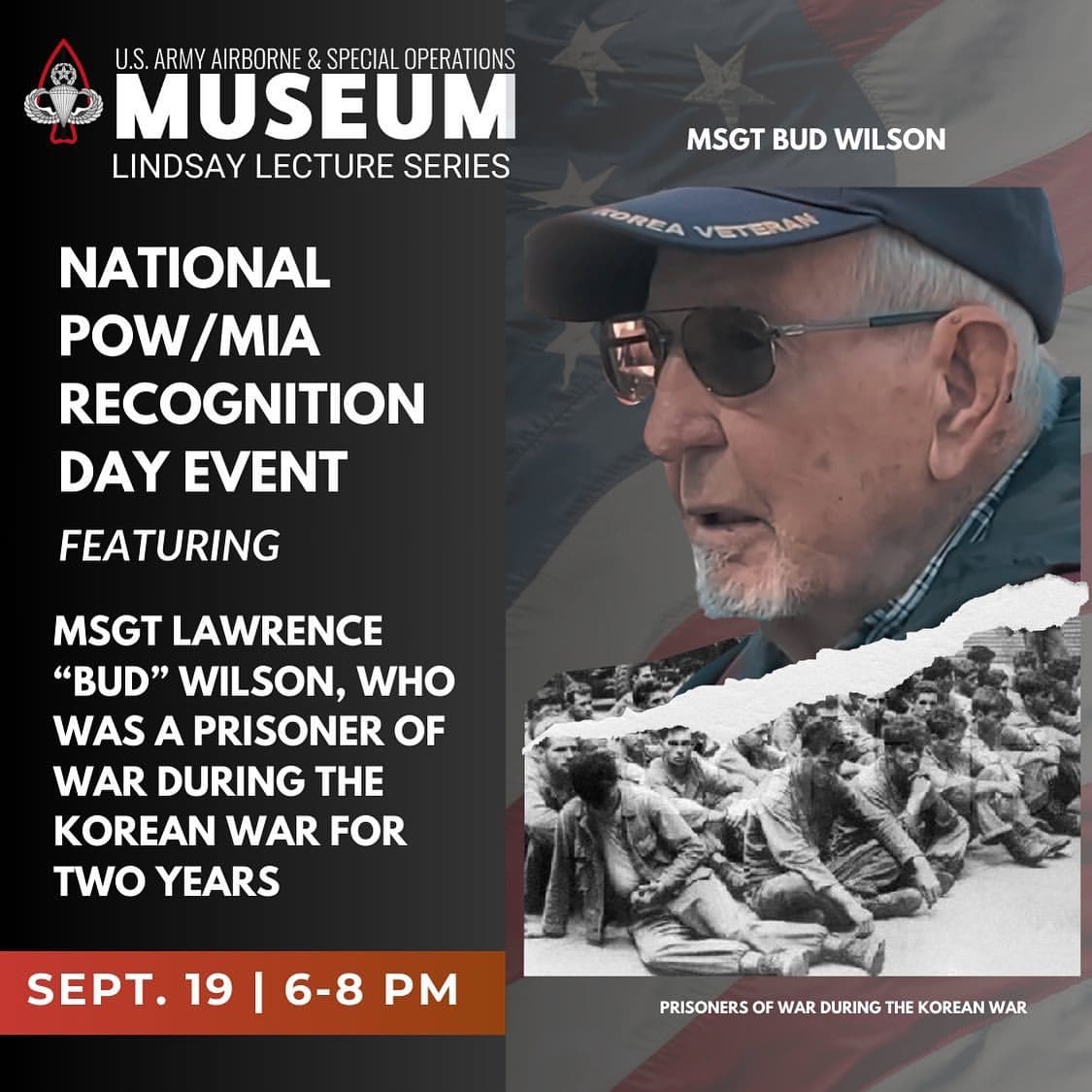
To commemorate National POW MIA Recognition Day, join us at the ASOM on September 19 for a Lindsay Lecture Series event with MSGT Lawrence “Bud” Wilson, who was a prisoner of war during the Korean War for two years.

Register here. All active duty service members get in free upon registration.

MSGT Wilson’s Story

MSGT Lawrence “Bud” Wilson was an Army medic during the Korean War. On May 18, 1951, his team was surrounded, and life changed for him on that day.

“There was nowhere to run. I thought that was the end of me,” Wilson said.

He was taken as a prisoner of war by Chinese forces. For the next two years, four months and 18 days, he lost his freedom. And the captivity was hard.

“The first thing you came down with was diarrhea. The next thing was head lice and body lice,” Wilson described.

He and the other POWs lost almost a third of their weight while they were confined. They also came under fire.

But Wilson managed to survive the ordeal. Learn more about his time in captivity by joining us on the eve of National POW/MIA Day at the ASOM.

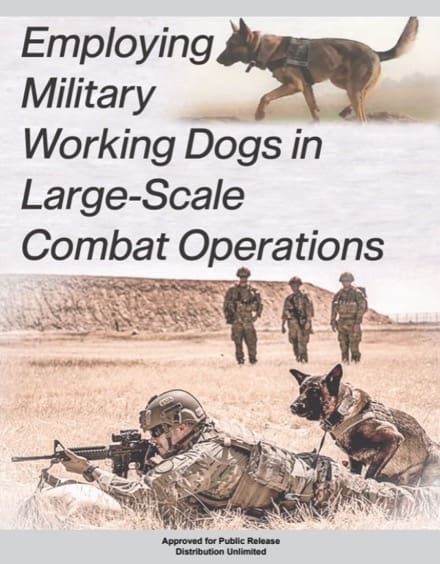
Employing Military Working Dogs in Large-Scale Combat Operations

Tuesday, September 3rd, 2024

SECTION 1

Introduction

“As they approached a grass-covered hut, a machine gun opened fire. The hut was, in fact, a camouflaged bunker. Chips (military working dog [MWD]) quickly escaped Rowell’s (handler) control and made a beeline for the bunker. Within seconds, the machine gun fell silent and an Italian soldier tumbled out with Chips chomping at his throat and arms. In short order, three others exited the bunker with arms raised. Chips was lightly wounded in the incident, suffering powder burns and several cuts.”

—Seth Paltzer, THE DOGS OF WAR: THE U.S. ARMY’S USE OF CANINES IN WWII[1]

From 13 to 18 May 2024, an analyst from CALL’s Corps and Division Branch (CDB) attended the 2024 U.S. Army Military Working Dog Leadership and Training Symposium. The analyst observed military initiatives for MWD support to large-scale combat operations (LSCO) at the Alpena Combat Readiness Training Center in Alpena, MI.

The symposium demonstrated the value MWDs contribute during LSCO, especially by providing Soldiers stand-off during detection and clearing tasks. Also, of note, many MWD programs especially, those in which MWDs perform tasks untethered to the handler, require long-term investment to train and groom MWDs to work in challenging operational environments.

During the symposium, MWDs demonstrated their capability sets, which are unique from any other instrument of war, through a broad range of scenario-based training events, such as search, tracking, detection, and bite techniques. The analyst also interviewed MWD experts from U.S. and allied partners to identify lessons learned from ongoing conflicts and gaps that exist within the U.S. Army MWD program in the context of LSCO.

SECTION 2

Key Symposium Takeaways

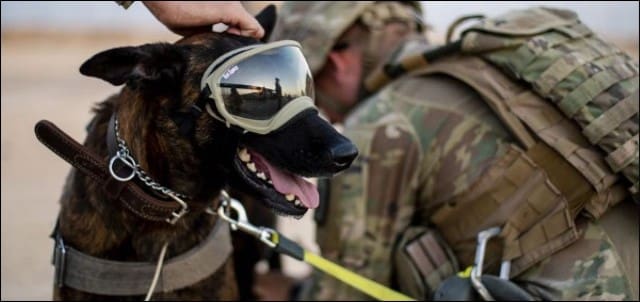
Canines have been useful to military organizations since their domestication. Few, if any, instruments of war have the successful track record and longevity of MWDs. They remain effective in a variety of environments, including dense vegetation, subterranean complexes, and trench networks. Even in the current operational environment, there are many situations in which MWDs outperform drones and conventional equipment. Unlike machines, MWDs make decisions, use intuition, and think outside of the realm of algorithmic predictions. This is a unique aspect to their employment in detection, search, attack, and reconnaissance roles. See figures 1, 2, and 3.

Figure 1. An MWD negotiates a tunnel at Kunsan Air Base, Republic of Korea.[2]
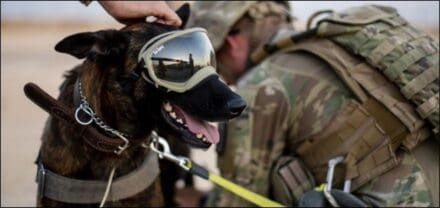
Figure 2. An Army MWD receives its protective equipment before training at Al Asad Airbase, Iraq.[3]
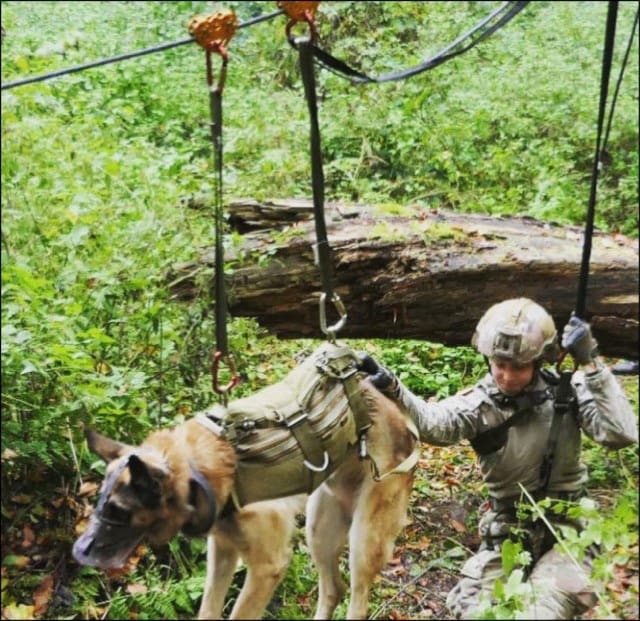
Figure 3. An MWD is zip-lined in rolling jungle terrain with the handler in tow.[4]

The U.S. Army has adapted MWDs for the challenging environments of each conflict it has fought in, ranging from LSCO in WWII to counterinsurgency in the Global War on Terrorism. U.S. Army MWDs must adapt for 21st-Century LSCO. This will require experimentation, investment, and training for MWDs to aid U.S. Soldiers in their fight against a peer adversary in challenging environments.

SECTION 3

Ongoing Conflict Observations

Israel-Hamas Conflict. The Israel Defense Forces (IDF) have employed MWDs at a large scale since their counterattack against Hamas and invasion of Gazan territories in 2023. The IDF MWD attrition rate has averaged several dozen per week in their employment roles of detection and assault. This has led to significant IDF investment in MWDs to sustain such attrition.[5] Current IDF replacement rates will likely create shortages in the long term. The U.S. acquires MWDs from many of the same suppliers as the IDF, Chinese, British, and others while producing few domestically. The rate of procurement and attrition of MWDs by the IDF is likely going to impact the world market and the U.S. Army’s ability to procure MWDs.[6]

The IDF have primarily employed MWDs to clear the pervasive subterranean environments in Gaza while limiting risk to their Soldiers. MWDs require familiarization with subterranean environments from a young age to be effective in those conditions. Changes in air flow, sound echoes, temperatures, confined spaces, and low light reduce MWD detection and cognition abilities without familiarization.

Russia-Ukraine Conflict.[7] Since Russia invaded Ukraine in 2022, the Armed Forces of Ukraine (AFU) have used MWDs in many situations. MWDs have been used in rear areas and the close fight to achieve effects that cannot be accomplished by drones or other equipment. The AFU primarily employs their MWDs in unexploded explosive ordnance (UXO) detection roles while maintaining stand-off distance with a handler.

Since February 2022, the AFU has detected vast numbers of UXO using MWDs in rubbled urban environments and captured trenches.[8] Metal pollution from shrapnel and other debris have required them to use MWDs in addition to standard detection equipment. MWDs are more effective than detection equipment because of high metal pollution from shrapnel. The U.S. Army can expect similar mine-clearing requirements during LSCO.

Russian tactics, techniques, and procedures (TTPs) have evolved to rigging positions with improvised explosive devices (IEDs) and booby traps before abandoning them to inflict casualties on the pursuing Ukrainian forces. MWD capability has enabled the AFU to clear these positions rapidly and to occupy them to consolidate territorial gains while preserving human life.

SECTION 4

U.S. Army Military Working Dog Gaps

Combat Training Center Involvement. The U.S. Army is currently transforming into an organization focused on fighting in large-scale conflicts against peer and near-peer adversaries. The U.S. Army uses combat training centers (CTCs) as venues for experimentation and adaptation during the shift away from counterinsurgency-focused warfighting. Two of the seven key tasks assigned to the CTC Program in Army Regulation (AR) 350-50, Combat Training Center Program, 2 May 2018, are to —

  • Provide a data source for lessons learned to improve doctrine, organization, training, materiel, leadership and education, personnel, facilities, and policy (DOTMLPF-P) in preparation for unified land operations.
  • Embed the most recent TTPs from current operations in theater to better prepare follow-on units.[9]

MWDs have had minimal involvement at the CTCs since 2022. The National Training Center (NTC) at Fort Irwin, CA, is the only CTC that has resident MWD handlers (military occupational specialty [MOS] 31K) assigned as observer coach/trainers (OC/Ts) and has only hosted three MWDs since 2022.[10] This has created several shortfalls. Current doctrine does not address the role of MWDs in LSCO.[11] Maneuver commanders are unfamiliar with their doctrinal employment. These two impacts have created integration gaps for MWDs in LSCO-focused training and operations.[12]

CTCs provide a realistic training environment to observe MWD’s integration into unit operations. To generate lessons for LSCO, MWD participation at the CTCs should increase. This can be accomplished by adding MWD capabilities to the CTC troop lists outlined in U.S. Army Forces Command (FORSCOM) Regulation 350-50-1, Training at the National Training Center, 29 October 2018.

“Off-Leash” Capability. A patrol explosive detector dog-enhanced (PEDD-E) is an MWD trained to operate off leash. The PEDD-E enables the handler to employ MWDs in the roles of detection, attack, and reconnaissance while maintaining distance from the search area. The value of this during LSCO when operating in unknown environments cannot be overstated for the preservation of human life while enabling maneuver.

The U.S. Army maintains additional MWD capabilities that have retained their funding. These capabilities each require the handler to employ MWDs “on leash.” This reduces MWD agility, flexibility, and the ability to preserve human life. The on-leash capability is not recommended for LSCO.

Scenarios where MWD capability is most valued during LSCO are near the forward line of own troops (FLOT). The off-leash PEDD-Es, when employed in environments such as rubbled urban structures, subterranean networks, and trench clearing, can identify and neutralize threats, inform U.S. personnel, and preserve human life.

U.S. Army Training and Doctrine Command (TRADOC) stopped funding the PEDD-E course in fiscal year 2024. Consequently, the Army will exhaust its inventory of off-leash trained MWDs between 2030 and 2032. The re-establishment of a PEDD-E training program and procurement of MWDs, training, and certification to restore this capability would likely range between two and three years.

SECTION 5

Conclusion

MWDs have consistently proven their value over centuries of evolving warfare. The United States and others have continuously adapted the employment tactics and training methodologies to tailor MWDs to the current operational environment. Drones and other detection and sensing technologies will continue to evolve. The ability to counteract and deny these technologies will also evolve. MWDs can operate in technologically nonpermissive environments and outperform technology in many situations.

AFU and IDF experiences demonstrate the value off-leash MWDs provide to maneuver forces during LSCO. The U.S. Army should consider these recent experiences and leverage resources like the CTCs to refine TTPs being employed by AFU and IDF partners. The U.S. Army may also want to reconsider funding levels for the program, considering the lead times required to train off- leash MWDs.

SECTION 6

Endnotes

1. Paltzer, Seth, THE DOGS OF WAR: THE U.S. ARMY’S USE OF CANINES IN WWII, The Army Historical Foundation, https://armyhistory.org/the-dogs-of-war-the-u-s-armys-use-of-canines-in-wwii/.

2. Photo by SRA Ashley L. Gardner, U.S. Air Force, www.pacaf.af.mil/News/Article-Display/Article/706335/ mwd-train-to-keep-paws-on-the-ground.

3. Photo by SPC Derek Mustard, Combined Joint Task Force – Operation Inherent Resolve, www.dvidshub.net/image/6231629/military-working-dogs-wear-protective-equipment-live-fire-exercise.

4. Photo provided by the U.S. Army MWD Program, www.facebook.com/photo/.

5. In-person interview with an operations officer from the 1st Military Working Dog Regiment, British Army, 16 May 2024.

6. Ibid.

7. Ibid.

8. Ibid.

9. AR 350-50, Combat Training Center Program, 2 May 2018, page 2, armypubs.army.mil/epubs/DR_pubs/DR_a/pdf/web/ARN8650_AR350_50_Final.pdf.

10. SFC Phillip Ventimiglia, NTC 31K OC/T, in-person interview, 14 May 2024.

11. Army Techniques Publication (ATP) 3-39.34, Military Working Dogs, 19 May 2022, armypubs.army.mil/epubs/DR_pubs/DR_d/ARN35094-ATP_3-39.34-000-WEB-1. (common access card [CAC] required)

12. SFC Phillip Ventimiglia, NTC 31K OC/T, in-person interview, 14 May 2024.

By CPT Alexander Spook, CPT James Campbell, Center for Army Lessons Learned

Army Begins Cognitive Testing at Initial Entry Training

Tuesday, September 3rd, 2024

WASHINGTON — The Army has begun baseline cognitive assessments during Initial Entry Training, and all services will follow in the coming months, officials say.

The Army is taking a multipronged approach to reduce brain health risks, including improved awareness through a Force Health Protection Information Campaign; expanded brain health monitoring; identification of blast overpressure protective measures; tracking and monitoring blast exposure; and developing a comprehensive strategy to enhance and advance the science and medical care for brain injuries, said Col. Jama Vanhorne-Sealy, who oversees the Occupational Health Directive, Force Health Protection in the Office of the Surgeon General.

Fort Sill, Oklahoma, home of the United States Army Field Artillery School, was the first Army Initial Entry Training location to establish permanent cognitive testing, with all services scheduled to roll out the testing at all entry training locations by the end of 2024.

In addition, Army personnel will be evaluated at least every three years after initial screening, which can help identify any unusual cognitive change, Vanhorne-Sealy said. Early detection allows for early intervention to restore or enhance cognition, should it be necessary, she said.

A long-standing cognitive assessment program that began in 2007 has shifted from a pre-deployment and injury-centric model to a regular cognitive monitoring program, which means military health authorities can better help Soldiers throughout their career, said the Chief of Neurocognitive Assessment in the Office of the Army Surgeon General, Dr. Steven J. Porter.

The Cognitive Monitoring Program, much like the Army’s ongoing hearing testing, is a screening tool to assess for cognitive change in soldiers.

Cognitive assessment means documenting the way an individual thinks, reasons and remembers.

“Without ongoing testing, changes to a Soldier’s thought processes may not be evident until an event that could put both the Service Member or their unit in jeopardy,” Porter said.

Since June 2007, more than 3.4 million assessments have been collected, processed, and stored at the Neurocognitive Assessment Branch Data Repository at Joint Base San Antonio, Texas, to aid in treatment and track recovery after a concussive or suspected concussive event, Porter said. The testing identifies cognitive changes to help inform a Soldiers need for medical care, rest and recovery. Early identification can help avert further potential injury.

Vanhorne-Sealy said over time, advancements in understanding of brain functionality have led to improved testing, expanding the program to better evaluate areas of the brain potentially impacted by blast overpressure.

Blast overpressure is the sharp rise in atmospheric pressure from an explosive or firing of a weapon causing shockwave, traveling faster than the speed of sound. Blast overpressure exposure occurs when someone is close enough to physically feel the shockwave.

In a report by the House Committee on Appropriations regarding the Department of Defense Appropriation Bill of 2021, the Committee asked the Department of Defense to develop a cost analysis plan for conducting traumatic brain injury baseline testing for all new recruits.

Currently, a medical provider may request a Soldier’s cognitive baseline from the repository if it needed for treatment planning and tracking recovery. CMP authorities are working to develop a system to directly upload the test data to the Soldier’s medical record.

The CMP assessment tool is an FDA-approved medical device, and all test records are privileged information.

By Jonathan Austin, Army News Service

Army Family Takes on New Meaning for Soldier Reunited with Biological Father Also Training at Fort Leonard Wood

Monday, September 2nd, 2024

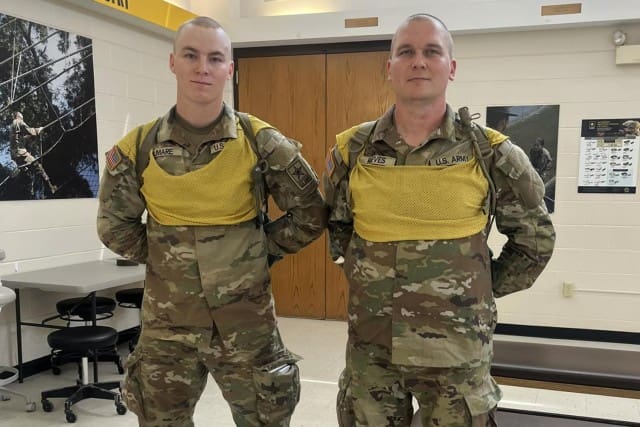
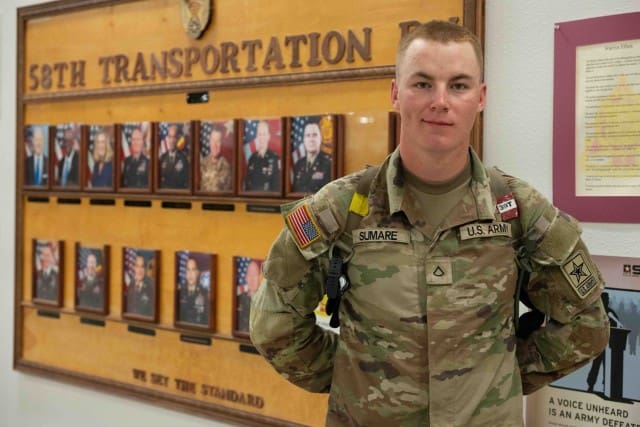
FORT LEONARD WOOD, Mo. — When Pfc. Brayden Sumare’s bus pulled into Fort Leonard Wood, nothing could have prepared him for the twist of fate that awaited him just inside the doors of the 43rd Adjutant General Reception Battalion.

The 18 year old graduated from basic combat training at Fort Jackson, South Carolina, in the summer of 2023, between his junior and senior years of high school. He arrived at Fort Leonard Wood in July, to complete his initial entry training.

Sumare, a native of Pine Bluffs, Wyoming, said he arrived at Fort Leonard Wood at about 3 a.m., and there was something oddly familiar about his bay leader, a trainee everybody called “Pops” — he exchanged a few lingering glances with him — but didn’t think much about it.

“The next day, I was laying down in my bunk as the bay leader was walking around getting all the new people’s names for the roster,” Sumare said. “When he got to me, he asked my last name, and I said ‘Sumare.’ And then he asked, ‘Brayden Hunter Sumare?’”

Sumare said he was bewildered and returned the man’s question with another question, “How did you know that?”

According to Sumare, he was “shocked” at the man’s response of — “I’m William Reeves” — his biological father.

Pfc. William Reeves said he will never forget the moment he realized he was looking into the eyes of his biological son.

“It was unbelievable,” Reeves said. “What are the chances we both joined the Army and were at Fort Leonard Wood at the same time for our training?”

Sumare said he thought they didn’t recognize each other because they both looked very different than when they met for the first, and only, time about four years ago.

“When I met him, he had long hair and a full beard. When I saw him at reception, he had a buzzed haircut and was cleanly shaven,” Sumare said.

To add to the unbelievable happenstance, Reeves said he had been nicknamed “Pops” before Sumare even arrived on post.

“I’m almost 40; I have life experience. My peers lean on me for that. They started calling me Pops and it stuck,” Reeves said.

Amanda Sumare, Brayden’s mother, said when Brayden called her to let her know he made it to Fort Leonard Wood and tell her Reeves was also there, she was awestruck, and it took her a minute to wrap her head around the coincidence.

“I was so very shocked. It is the craziest thing ever,” Amanda said.

Reeves, from Poteau, Oklahoma, said he and Brayden’s mother were young when they found out she was pregnant.

“It was unexpected. We did a DNA test when he was born, and he was mine. Our lives had gone in different directions and Brayden’s mother was living in Wyoming, engaged to the man who eventually became Brayden’s adopted father,” Reeves said. “I supported him financially but decided I didn’t want to be too involved and upset Brayden’s solid family unit.”

The two spent several days together at Fort Leonard Wood’s reception battalion, waiting to go to their separate training units.

“Over the next few days, as I watched him interact with other people, I saw familiar mannerisms. It was like looking in a mirror,” Reeves said. “I got to learn a lot from him, and I think that is really cool.”

Since Brayden had already attended BCT and earned the title of Soldier, Reeves said Brayden was able to help the new trainees at the reception battalion prepare for it.

“Brayden taught me how to Ranger roll my uniform. And not just me, he showed us all how. He also showed us what to pack before we left for our units and what to buy from the Exchange when we got a chance. I enjoyed watching him lead others. I am proud of Brayden. He has a bright future,” Reeves said.




According to Brayden, running into his biological father was, “one of those weird life things,” and he was glad he was there to help Reeves prepare for basic training and wish him well.

“I got to tell him goodbye, good luck and give him a hug,” Brayden said. “I think it is awesome that he joined.”

Amanda said she is impressed by both of them and their desire to serve.

“The Army is a good fit for Brayden because he isn’t one to just sit back and watch the world go by. He wants to be involved. He has a strong love and passion for our military and always has. He has so much potential. I am very proud to be his mama,” Amanda said. “I’m also proud of William for stepping up to serve our country. I wish him the best future.”

Brayden is in the middle of six weeks of advanced individual training, with Company C, 58th Transportation Battalion, learning the military occupational specialty of 88M Motor Transport Operator. Reeves is with Company D, 35th Engineer Battalion, for 14 weeks of one station unit training to become a 12C Bridge Crewmember.

“My fingers are crossed I may be able to attend his graduation next month,” Reeves said. “I like to joke — I am going to build the Army’s bridges, and he is going to drive his truck over it.”

By Melissa Buckley, Fort Leonard Wood Public Affairs Office