Lantac UK unveiled an image of a rifle they developed for a UK SF weapon program.
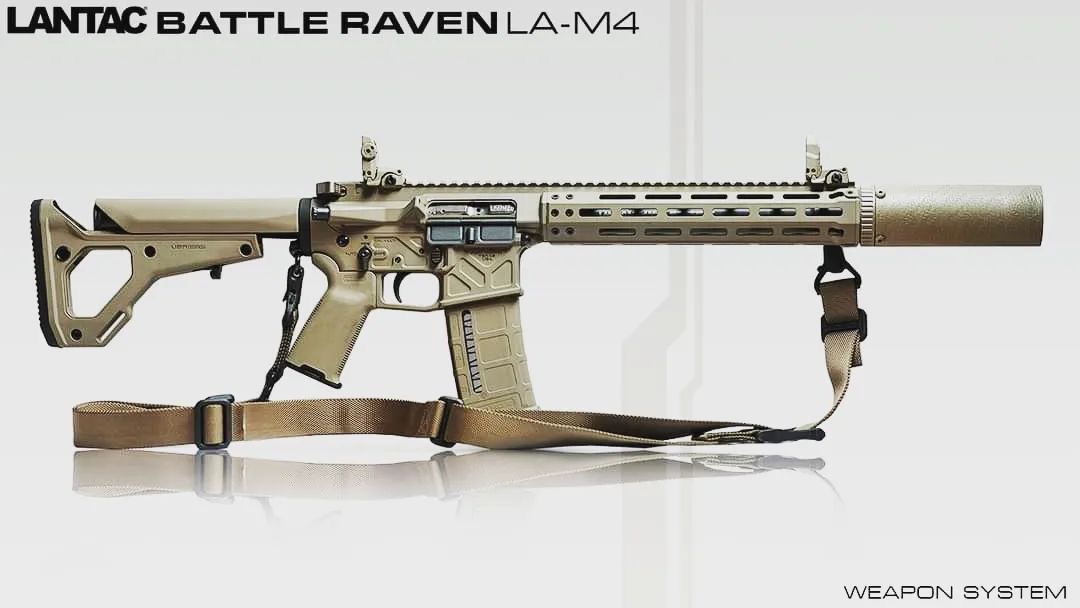
It employs new alloys, carbon fiber and other technologies for thermal and signature shielding that haven’t yet come to market.


Lantac UK unveiled an image of a rifle they developed for a UK SF weapon program.
It employs new alloys, carbon fiber and other technologies for thermal and signature shielding that haven’t yet come to market.
Rheinmetall has won an order from the German Bundeswehr to supply additional rounds of its innovative 120mm practice ammunition for main battle tanks. The contract encompasses 10,715 DM98 cartridges and 10,000 DM88 cartridges. Issued in the second quarter of 2022, the order is worth around €42 million, including value added tax. Delivery began in August and is slated to be complete in October.
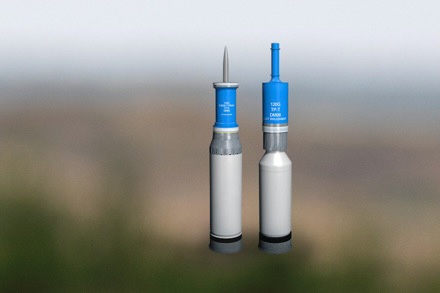
The German armed forces first took delivery of the new DM98 120mm practice round at the end of 2017. Developed by Rheinmetall Waffe Munition GmbH, this full-calibre practice round supersedes the earlier DM18 cartridge. Key features of the new round include above-average accuracy at ranges exceeding 2,000 metres as well as good observability during firing thanks to its continuously visible tracer under all daylight conditions.
The new round, dubbed the “RH88”, was qualified in 2015 by Denmark, the pilot customer, for all Leopard 2 main armament variants in response to an urgent operational requirement. In 2016 it was successfully qualified by the Bundeswehr with a second packaging system and introduced as the DM98. In English it is officially known as the “Cartridge 120mm x 570, DM98 TP-T”, with the last three letters standing for Target Practice-Tracer.
Qualified by the Bundeswehr in 2015/2016, the equally new 120mm DM88 subcalibre practice cartridge has been successfully used by the German military ever since. Developed by Rheinmetall as a successor to the DM78, it features an improved tracer as well as minor modifications due to altered materials specifications. Like the DM98, the DM88 features excellent accuracy, resulting in a highly realistic training experience. Its official English designation is “Cartridge 120mm x 570, DM88 TPCSDS-T”, short for Target Practice Cone Stabilized Discarding Sabot Tracer.
In their current state of design, the cartridges fully comply with the EU regulation on the Registration, Evaluation, Authorisation and Restriction of Chemicals (REACH).
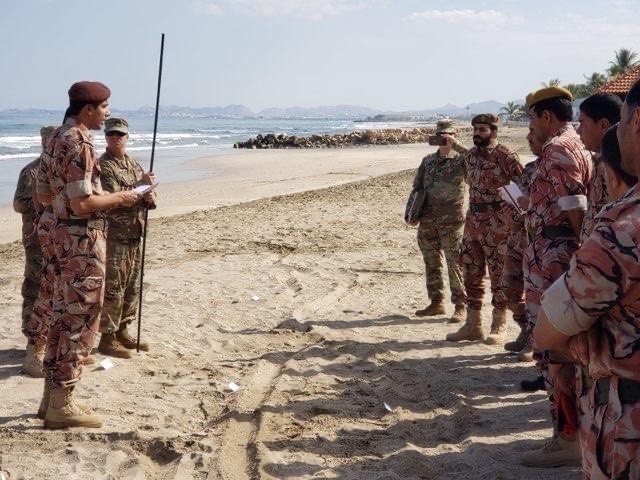
PHOENIX – The Arizona National Guard announced a new partnership with the Sultanate of Oman Oct. 13 through the Department of Defense National Guard Bureau State Partnership Program.
“Arizona has extensive land, air and emergency management experience that closely aligns with the capabilities, challenges and goals of Oman,” said Maj. Gen. Kerry L. Muehlenbeck, director of Arizona’s Department of Emergency and Military Affairs. “We are excited to welcome this partnership and look forward to the collaboration and establishment of enduring relationships for years to come.”
Next year marks the 30th anniversary of the program, which now includes more than 90 nations paired with states to build mutually beneficial, durable partnerships that support each nation’s strategic goals.
Arizona was one of the first states to join the cooperative program and has partnered with the Republic of Kazakhstan since 1993. That relationship will also continue.
“Our state partnership with Oman will offer a new perspective in working, deploying, training and learning together,” said Col. Pete Caffrey, State Partnership Program coordinator. “Our investments into relationships like that with Oman and Kazakhstan will sustain future advantages and strengthen our network of security.”
The National Guard conducts military-to-military engagements to build partner capacity, improve interoperability, and enhance U.S. access and influence while increasing the readiness of U.S and partner forces. The program has become a key security cooperation tool by facilitating cooperation across international civil-military affairs, as well as people-to-people ties.
“It allows our Soldiers and Airmen to really visit a lot of other countries,” Lt. Gen. Daniel R. Hokanson, chief of the National Guard Bureau, said of the State Partnership Program. “To look at the environment that they operate in, and to really see, in many cases, the same problems — just approached from a different angle. We learn a lot in those countries and in those interactions that we bring back to make our organizations better, and I like to think vice versa.”
The Sultanate of Oman, an Arabian country off the southeastern coast of the Arabian Peninsula, is home to almost 4 million people. It borders Saudi Arabia, the United Arab Emirates and Yemen while sharing maritime borders with Iran and Pakistan. Oman’s military, known as the Sultan of Oman’s Armed Forces, consists of Army, Navy, Air Force, Royal Guard and other defense forces.
Officials with the Arizona National Guard and the Sultanate of Oman are coordinating an official signing ceremony to celebrate their partnership.
By Arizona National Guard Public Affairs
Minister Anand announces investment of up to $3.7 billion to supply operational clothing and footwear to the Canadian Armed Forces
October 20, 2022 – Saint-Jean-sur-Richelieu, QC – National Defence / Canadian Armed Forces
Today, the Minister of National Defence, Anita Anand, announced that Logistik Unicorp based in Saint-Jean-sur-Richelieu, Quebec, has been awarded a contract to provide operational clothing and footwear to the Canadian Armed Forces (CAF). This contract, valued at up to $3.7 billion over 20 years, will support over 3000 jobs in Canada’s clothing, footwear and textile industries.
This investment will deliver approximately 1,222 different items of clothing and footwear worn by CAF members during their deployments, including:
• combat uniforms using Canadian Disruptive Pattern (CADPAT) camouflage,
• badges and insignias,
• footwear including combat boots, arid/hot weather boots, and mukluks,
• winter gear such as parkas, headwear and hand wear,
• soldiers’ personal equipment, such as sleeping bags and day packs.
This contract will deliver supplies for more than 160,000 people, including Regular and Reserve Force members, Canadian Rangers, Junior Rangers, search and rescue technicians, firefighters and Cadets. This contract also contains provisions to enable the ad hoc procurement of equipment required for unexpected deployment operations – such as the immediate supply of Personal Protective Equipment during critical emergencies.
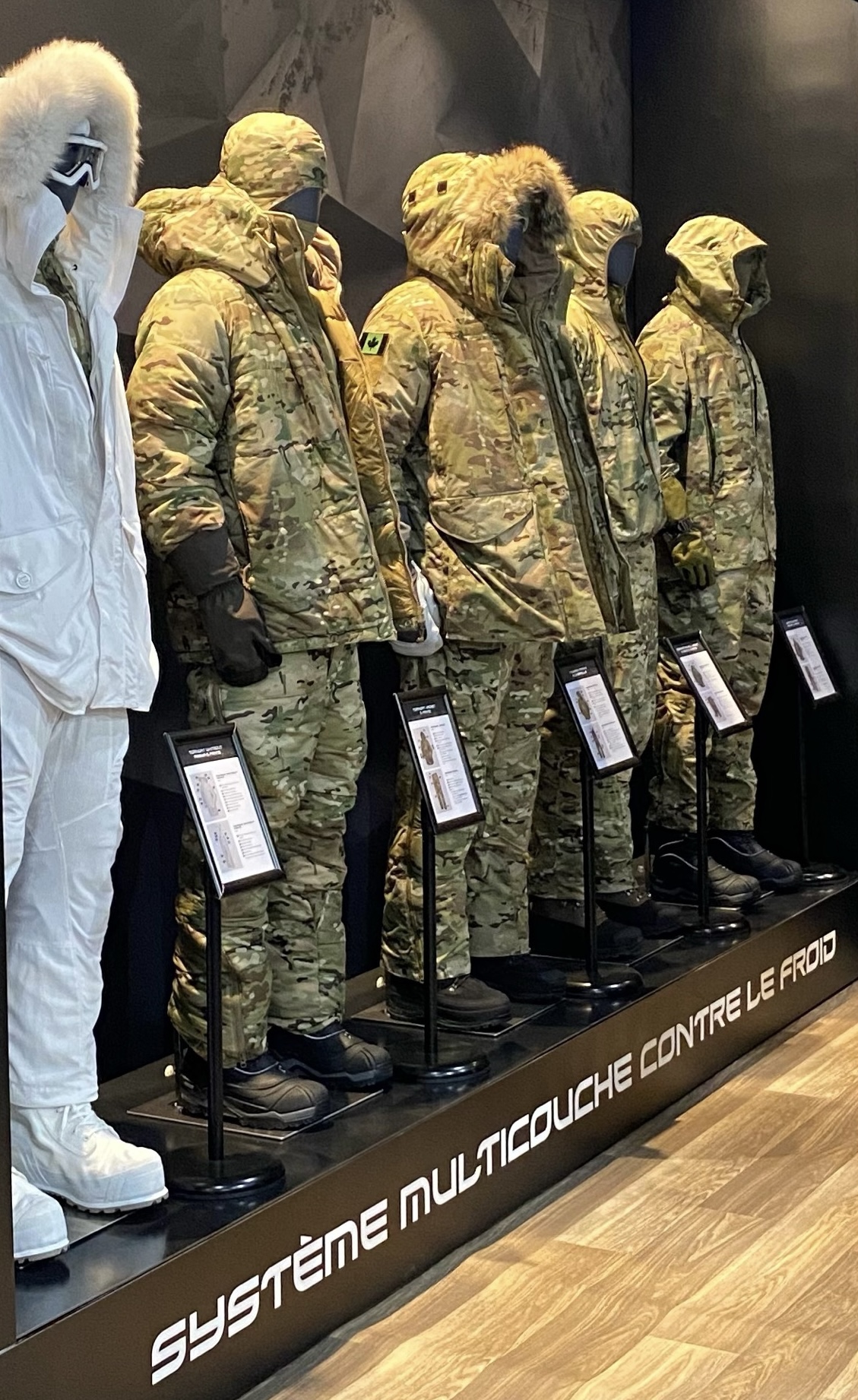
Today’s Operational Clothing and Footwear Consolidated Contract (OCFC2) represents a new approach to supplying the operational gear that the CAF needs to succeed on domestic and international operations. Once the contract is fully implemented, members will be able to order items online and have orders shipped to their door, while also providing the CAF with the ability to continue distributing uniforms directly to units. This new approach will deliver better resource and inventory management for the CAF, improve item availability, and provide better value for taxpayers.
This project will deliver concrete economic benefits to Quebecers and all Canadians. Logistik Unicorp will invest in research and development and skills training in the textile, apparel and footwear sectors, which will generate additional jobs and export opportunities. Logistik Unicorp must also conform to mandatory Canadian content requirements by ensuring that the majority of manufacturing of clothing and footwear items is done in Canada.
The Government of Canada is committed to providing the CAF with the equipment and tools that they need to serve Canada domestically and internationally.
“Today’s investment will support thousands of well-paying jobs for Canadian workers, and deliver modern, cutting-edge equipment for the members of the Canadian Armed Forces.
The Canadian Armed Forces uniform is a source of great pride for Canadians at home and abroad, and this new contract with Logistik Unicorp will ensure that our members have the equipment they need, when they need it to fulfill the duties that we ask of them. I look forward to seeing the results of today’s investment, which is great news for Quebecers and all Canadians.”
– The Honourable Anita Anand, Minister of National Defence
Quick facts
• Currently, operational clothing and footwear items are being procured through multiple individual contracts. By combining the various contracts into one, we will achieve greater efficiency and availability of items the CAF needs and better value for taxpayers.
• This contract is the result of a competitive process and the winning bidder is qualified and capable of delivering a managed clothing solution to the CAF.
• Delivery of items to clothing stores will commence during the second year of the contract, and individual online ordering capability is targeted to be implemented during the third year.
• This contract also incentivizes the contractor to include Indigenous businesses as part of its supply chain.
• The Industrial and Technological Benefits (ITB) Policy, was applied to the OCFC2 request for proposal requirements to leverage economic benefits for Canada equal to the value of the logistics services component of the contract. As a result, the contract will ensure long-term, sustainable support for the Canadian apparel, textile and footwear sectors.
• Logistik Unicorp has experience in ensuring that Gender-based Analysis Plus (GBA Plus) considerations are incorporated. Procured items will meet the requirements of the diverse CAF population with a faster turnaround time.
U.S. Air Force Airmen from the 505th Combat Training Squadron supported American and Republic of Korea forces during Ulchi Freedom Shield 22, the largest combined exercise in five years at Osan Air Base, ROK, Aug. 15 to Sep. 1.
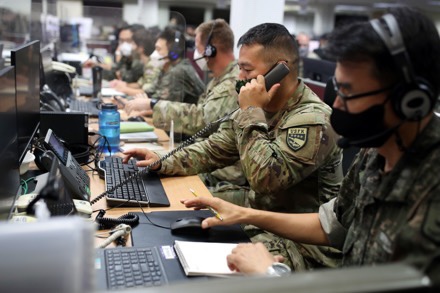
UFS 22 was an 11-day computer simulated, defense-oriented training event designed to enhance the United Nations Command, Combined Forces Command, and U.S. Forces Korea’s, defense posture, maintain readiness, and strengthen the security and stability on the Korean peninsula and throughout Northeast Asia. UFS 22, a theater-wide exercise, synchronized the efforts of the ROK and U.S. alliance’s air, land, and maritime components.
Unique to this exercise was that the American CFC commander and ROK deputy commander switched duties and responsibilities to conduct the Full Operational Capability assessment during exercise UFS as bilaterally agreed upon by the ROK minister of defense and U.S. secretary of defense in December 2021.
“Ulchi Freedom Shield 22 is an opportunity for [ROK] Gen. Ahn Byung-Seok and me to trade leadership duties based on the Future Combined Forces Command construct as outlined by both of our defense secretaries late last year. This is significant because the [ROK] CFC deputy commander will take the lead as the future CFC commander,” said U.S. Army Gen. Paul LaCamera, UNC/CFC/USFK commander, U.S. Army Garrison-Humphreys, ROK.
The 505th CTS created a realistic, operational-level, multi-domain command and control decision environment utilizing a high-fidelity constructive environment. Additionally, air, land, maritime, ROK, and seven additional simulation models were used to create a realistic, simulated environment for the exercise.
During UFS 22, the 505th CTS’s professional control force provided mission support via the Air Warfare Simulation system. Air Tasking Orders were flown and displayed on a common operating system which was used by decision makers across the training audience. The 505th CTS exercise team produced ten ATOs and executed 19,000 simulated missions, supporting the training of USFK and ROK personnel during UFS 22.
“Once again, the specialists of the 505th CTS have proven their seemingly limitless ability to provide realistic operational-level environments to train air components, joint, and allied partners,” said U.S. Air Force Lt. Col. Michael Power, 505th CTS director of operations, Hurlburt Field, Florida. “These team members leverage diverse operational backgrounds to give warfighters a true picture of airpower.”
Power continued, “While the experts from the 505th CTS made up a relatively small percentage of the exercise team, they had an outsized influence on UFS 22 execution.”
To facilitate the most realistic operational environment possible, members of the 505th CTS traveled to the Pacific Air Simulation Center, or PASC, Osan AB, ROK, a week prior to exercise execution to instruct and prepare operators to produce the high-fidelity air model.
“We could not have accomplished this feat without the support and expertise of the professionals of the 505th Combat Training Squadron,” stated retired U.S. Air Force Brig. Gen. Barry Barksdale, PASC senior air controller, Osan AB, ROK.
The 505th CTS reports to the 505th Combat Training Group, Nellis Air Force Base, Nevada, and the 505th Command and Control Wing, headquartered at Hurlburt Field, Florida.
The U.S.-ROK Alliance, established in 1953, remains critically important to regional security. Combined training events, such as UFS 22, help to maintain alliance readiness.
By Deb Henley
505th Command and Control Wing
Public Affairs
The change in leadership advances UNI&FORMA’s objectives of achieving long-term stability and enlarging upon the success of its UF PRO brand.
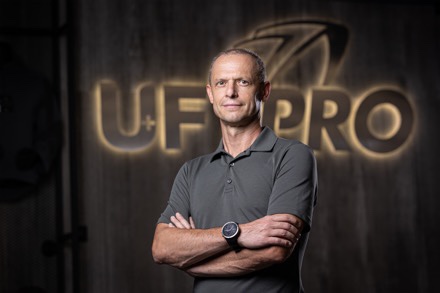
KOMENDA, SLOVENIA (20 October 2022) — UNI&FORMA d.o.o. announced today the appointment of Jože Kastelic as its new chief executive officer. Kastelic, an experienced business leader, assumed the post on 1 September 2022. He will gradually succeed Milena Wagner and Armin Wagner who are stepping down from their co-CEO roles on 31 December 2022.
Milena Wagner will retire after departing UNI&FORMA. She founded the company 25 years ago.
Armin Wagner, meanwhile, will continue in his capacity as UNI&FORMA’s Head of Product Development. He will also continue holding that same title within the company’s UF PRO brand.
Born in Novo mesto, Slovenia, Kastelic earned a Master’s degree from the University of Ljubljana in 2012 and brings to UNI&FORMA nearly 25 years of managerial experience. For his previous employer, Kastelic served as a Business Unit Managing Director and was responsible for leading a team of 185 employees. By implementing lean business approaches, new technologies and other efforts to achieve a better market position, Kastelic and his team doubled the company’s revenue and increased profitability significantly.
“I am extremely pleased and grateful for the opportunity to join UNI&FORMA, a brand with an outstanding reputation for innovation, top-quality products, and reliability,” said Kastelic. “My goal is to put in place a long-term strategy for the stability of the company and consolidate its global reputation as the leading manufacturer of tactical clothing.”
Said Wagner, “It is certainly a huge change, but it was immediately clear that Mr Kastelic is the right fit. It’s not only his impressive past achievements but also the positive attitude, work ethic, and drive to succeed—it all suggests that he will take UF PRO to the next level.”
Founded in 1997, UNI&FORMA became a part of Mehler Vario System Group in 2019. The MVS-Group is a broadly based and globally active group of companies with Mehler Vario System GmbH as parent company and its subsidiaries: UNI&FORMA, Lindnerhof Taktik GmbH, Mehler Law Enforcement GmbH, Mehler Engineered Defence GmbH.
Rheinmetall is proud to acknowledge the Australian Army’s declaration of the Boxer Combat Reconnaissance Vehicle (CRV) Initial Operational Capability (IOC).
Announced on Saturday 15 October, by The Honourable Richard Marles, Australia’s Deputy Prime Minister and Minister for Defence, the Boxer IOC declaration reflects the vehicle’s success in meeting the Australian Army’s stated operational needs; paving the way for the Boxer to be deployed on operations.
Speaking of the Boxer CRV IOC declaration, Mr Gary Stewart, Managing Director Rheinmetall Defence Australia explained the importance in providing a protected capability to the Australian Army’s soldiers.
“The Boxer CRV is the most advanced combat reconnaissance vehicle now in service with the Australian Defence Force. It offers increased protection, lethality and digitisation, and is a game-changer to safely operate in hostile environments and on peace keeping missions.”
“The Boxer’s journey to IOC has included extensive testing and live exercises with the Australian Army. I am proud of the global Rheinmetall team who have worked in partnership with Defence to deliver this important capability milestone. Following this IOC declaration, Rheinmetall continues our work in supporting the path to Final Operational Capability,” said Mr Stewart.
Rheinmetall is the largest supplier of military vehicles to the Australian Defence Force, with over 2,900 Rheinmetall trucks already in service with the Australian Army. Rheinmetall is delivering a total of 211 Boxer CRVs and a further 490 trucks from the company’s Military Vehicle Centre of Excellence (MILVEHCOE), based at Redbank, South East Queensland.
“At Rheinmetall, we believe that what we do, matters to those who serve. This is a shared purpose between our staff, now over 730 here in Australia, and the over 30 Australian companies that directly contributed to the manufacture, delivery and support of the initial Boxer CRV capability.”
“As the company continues to design, manufacture and deliver the remaining 186 Boxer CRVs, Rheinmetall’s commitment to Australian Industry Capability will provide enduring jobs, skills and opportunity in Australia for many years to come” said Mr Stewart.