XC3 Weaponlight

Archive for the ‘Maritime’ Category

Inflatable Design – The Mustang Survival RATIS

Monday, January 25th, 2021

Mustang Survival’s RATIS is a Life Preserving Unit (LPU) for SOF operators. Due to its low bulk and weight, it can be attached directly to an armor vest, or worn with its own harness, depending on the application. Additionally, RATIS rights wearers into a face-up position while the system is inflated and offers a buoyancy to weight ratio 40:1.

But the biggest innovation is in the inflator. They use the Hammar COR Electronic Inflator; a single inflator that uses an electronic control unit to enable 4 inflation modes that respond to various depths and/or immersion times. Mustang Survival also introduced a new bladder material which is more pliable, and can be packed smaller, yet when inflated, is still large enough give the buoyancy required. Between the new inflator and bladder material, Mustang Survival changed the PFD game.

Above, you can compare the RATIS on the left to the old, tried and true UDT Vest. Sure, they’re currently used for different applications, but there was a time, not that long ago I might add, that the only solution was the UDT Vest. We’ve come a long way in reducing weight and bulk thanks to Mustang Survival.

Read the entire article at mustangsurvival.com/blogs/blog/inflatable-innovation

SCUBAPRO Sunday – BMCM (MDV) Carl Brashear

Sunday, January 24th, 2021

Master Diver Carl Brashear was born on January 19, 1931, in Tonieville, Kentucky. He joined the Navy in Feb 1948. A 31-year Navy veteran, Brashear retired in 1979 as a Master Chief Boatswain’s Mate, the highest enlisted rank in the U.S. Navy. In 1966 while diving to recover a lost nuclear weapon off Spain’s coast, Brashear was severely injured in an accident. As a result, surgeons amputated his left leg below the knee. He refused to submit to a medical board’s attempt to retire him as unfit for duty. After demonstrating that he could still dive and perform his other duties, he was assigned to Harbor Clearance Unit 2, Naval Air Station Norfolk, Experimental Diving Unit. He was the first person to be returned to full service as a Navy diver after losing a limb in a diving salvage accident. There was a movie made about him in 2000 called Men of Honor. Master Chief Brasher was everything a good senior leader should be; he led from the front, he didn’t take no for an answer when he knew he was right, took care of the people below him, and left the Navy a better place then he found it.

Below, Carl training after he lost his leg, getting back to full active duty status.

usnhistory.navylive.dodlive.mil/2018/01/16/overcoming-hurdles-the-legacy-of-master-chief-carl-brashear

Aqua Lung Names Katie Roberts Director of Military & Professional, North America

Thursday, January 21st, 2021

VISTA, Calif. (January 21, 2021) – Aqua Lung, the celebrated pioneer, designer, manufacturer and distributor of dive and watersports equipment for 75 years, today announced it has appointed Katie Roberts as Director of Military & Professional, North America.

Serving as a key member of Aqua Lung’s North American management group, Roberts will lead the Military & Professional team across the United States and Canada with a focus on driving sales and business development activities for the brand’s channels and customers. Located in the Vista, Calif. office, Roberts reports to Andrew Gritzbaugh, General Manager, North America for Aqua Lung.

“Aqua Lung has a rich history of creating innovative, life-saving products that have sought to push the boundaries of what is possible. I look forward to working with our talented team to meet the needs of Military and Professional customers in North America,” said Roberts.

Most recently, Roberts led government sales and business development in North America for Gerber, the top direct supplier of knives and multitools to the U.S. Military. She is a graduate of the University of Wisconsin-Madison.

“Katie brings a unique skill set to the Aqua Lung team with over a decade of sales and business development experience with the U.S. military, international governments, and institutions,” said Gritzbaugh. “Her specific experience building close relationships with military leadership, navigating complex distribution environments, and organizing internal teams towards shared goals will be great assets in enabling the growth of our business into the future.”

For more information about Aqua Lung, visit www.AquaLung.com.

SCUBAPRO SUNDAY – Dive Gloves

Sunday, January 17th, 2021

Having the right pair of gloves will make your life so much better when working in the water, whether you are doing a two-hour dive in Norway or driving a zodiac for a long-range OTB. The right pair of gloves will depend on what you are doing and how long you are doing it. One of the other factors is the water temperature/ weather. Suppose you need to use your hands a lot during a dive, like pushing a button on a Navigation board, or be able to use your hand right after the dive, like climbing a ladder, shooting a gun. Lastly, how is your tolerance to the cold?  

These will be the main factors to take into account when choosing the thickness of the gloves. The colder the water, the thicker you might need to go.

1-3mm: water between 60- 75 ° F (16-24 ° C)

5-7mm: water between 45-60° F (8-16 ° C)

Here are the two main things you might want to think about when choosing a pair of gloves for military use. 

• Freedom of movement with a minimum amount of thickness that allows you the thermal comfort and protection you will need.

• What is material is on the palm and fingers? Can the gloves be used to grab and hold metal or plastic?

Make sure when you are trying them out to grab different things to make sure they will work. If I am in a store, I will always grab the medal racks to see how they work. They need to be suitable for everything for climbing, shooting, and holding onto different things.



Dive gloves come in a variety of thickness levels between 0.5mm to 7mm. A pair of 1.5mm Tropical gloves that have a leather palm is an excellent place to start. Gloves are like booties because even in warm water, you can have a thicker bootie on, and your feed will not get hot. Always have a warmer glove on without is being that much of a pain. Some tactical gear companies are making gloves designed for being in a wet environment that are also good for diving. The WETWORX gloves from S&S Precision come in two styles. One is thinner for warmer water, and one is a little thinker (2mm) for colder. I know they have put a lot of work into them, and they are nice gloves as more units get back into the water.

That said, S&S makes all their stuff to be used in the water as the owners come from a water background. I like gloves that can hold onto something medal, like if you have to climb a caving ladder or hold onto a gun—also holding plastic like a navigation board or working plastic buckles. Many dive gloves have small plastic beads on them that are not the best for working in the water. It is hard to find a good pair of thick dive gloves that meet the above requirements. If you have to be on a boat or mostly about the water, you can get a pair of dive gloves that are a couple sizes bigger than you usually would wear and put wool gloves on as a base layer. Even when wet, Wool will still hold heat in, and the dive gloves will help keep your hands warm and dry. The same trick works with gloves you will see fisherman use. You can also bring a thinner set of gloves like 1.5mm with you and change them out a couple of minutes before hitting the target. You can try with a thinker pair of gloves to put a set of work gloves on over them. That way, you always have the right grip.

When choosing the right glove, they should fit well enough to avoid water circulation inside as much as possible this will help keep the heat. They should not be so tight because that will cut off circulation to your hands. The thicker the gloves, the more insulated you have, but the tradeoff is this might give you less mobility. So, it will be difficult to manipulate the equipment and also to done and doff them. Choose the gloves that you think will protect you enough for the type of water you will perform most dives. You will want gloves to fit your wrist close to reducing the bulge that can happen if there is too much material between your sleeves and gloves. If you don’t do this right, just moving your hands will let water in, and it will make your hands and you cold.

Dive Gloves Maintenance Tips

Treat dive gloves like you treat anything you want to last. It would help if you cared for gloves like you treat your wetsuit. They should be soaked in freshwater after each dive and not just rinsed. You want to force the salt out. Please do not put them in the washing machine or use detergents to clean your wetsuits or gloves. Allow them to dry in a ventilated place until completely dry. Textile gloves take longer to dry. Do not dry them in the sun, as with all neoprene, it will cause them to age faster.

Images by Paul Wildman (@builtbywildman) ©Paul Wildman

SCUBAPRO Sunday – Rash Guards and UPF  

Sunday, December 27th, 2020

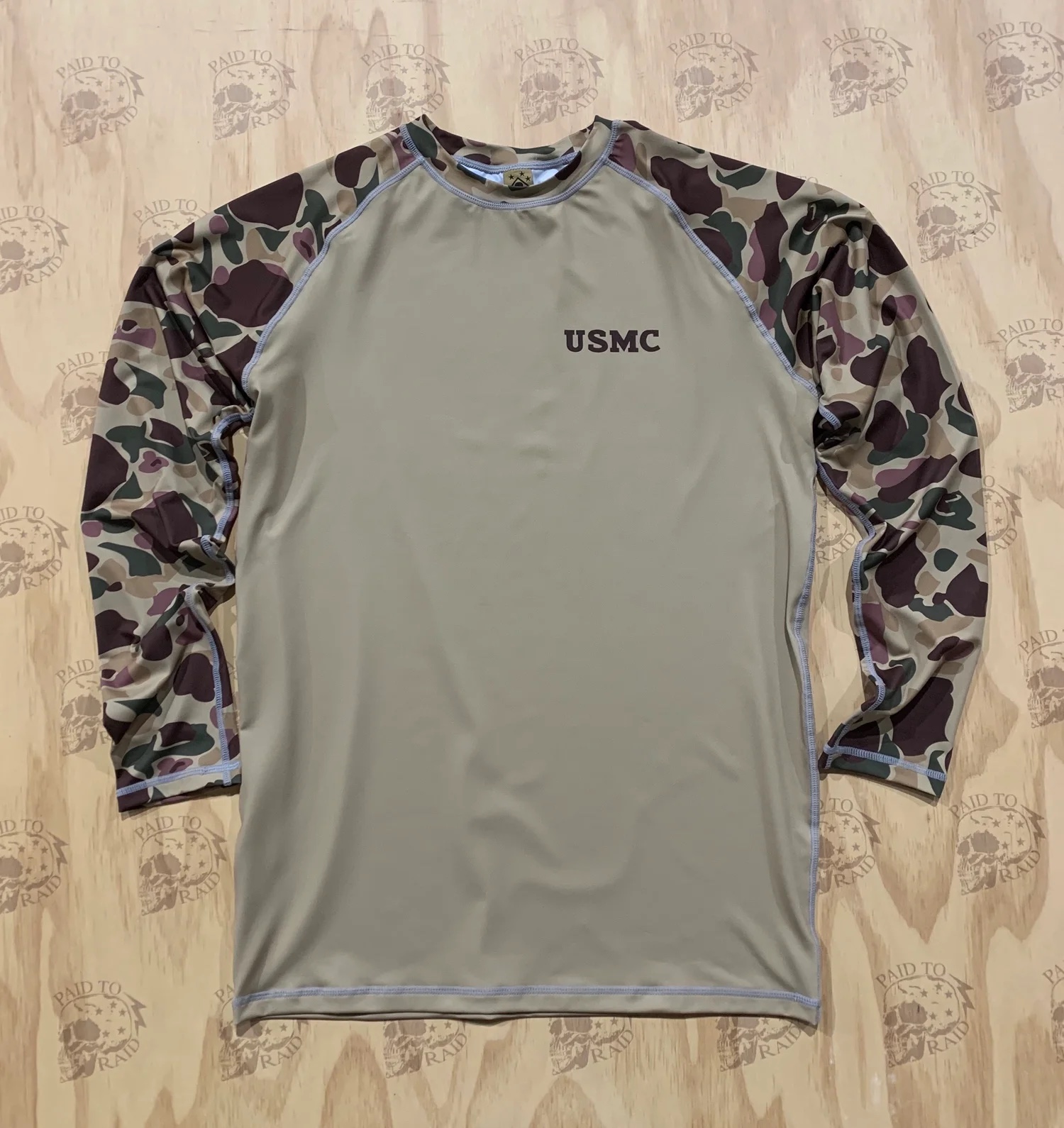
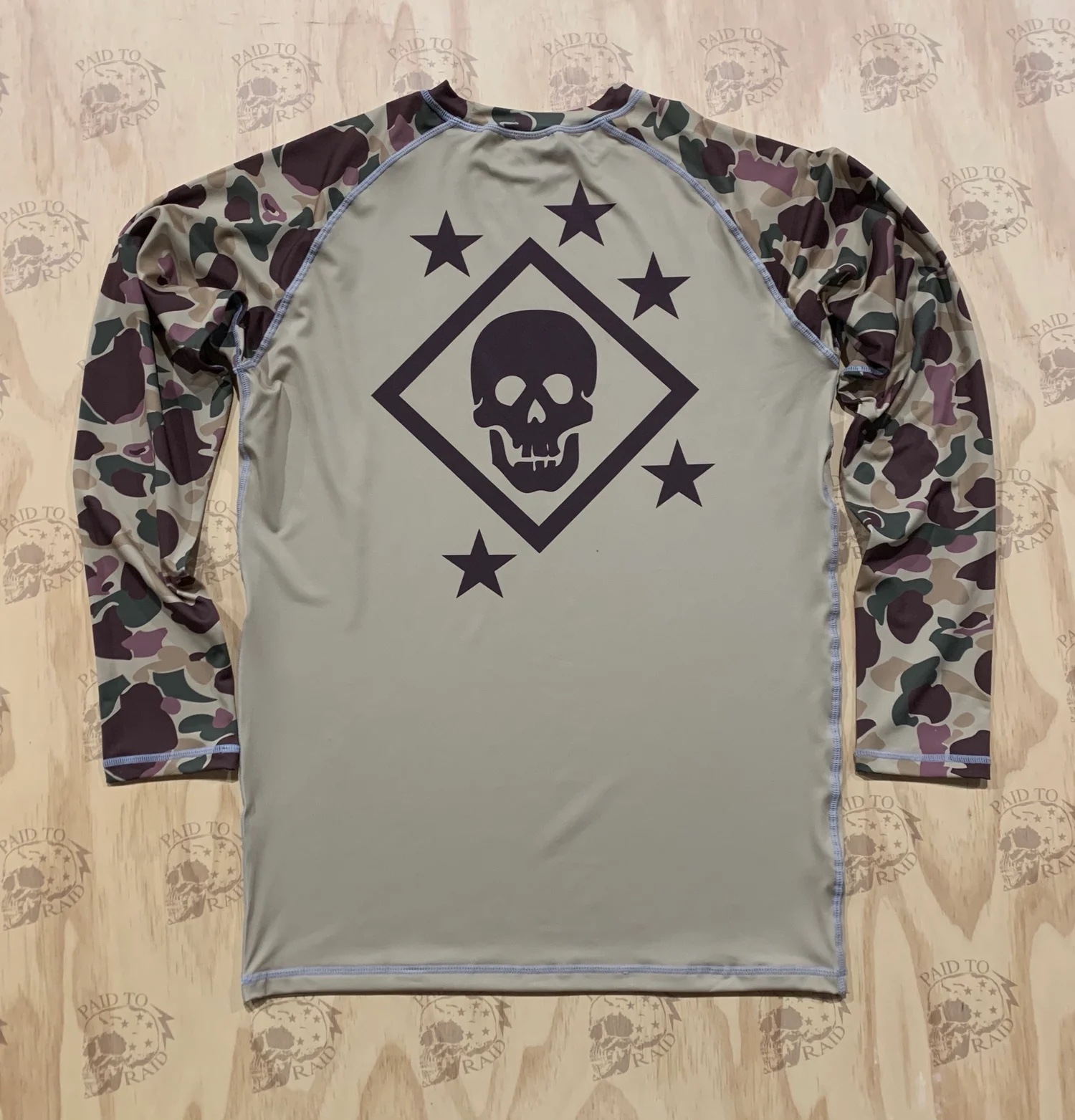
Rash guards were initially made to help prevent chafing on your skin against a surfboard, but it slowly made its way into almost every water sport. On land, rash guards can be used for everything from underbody armor (if worn under armor, make sure it is fire retardant none of SCUABRPOs rash guards meet the FR standards) mix martial arts to looking cool in the gym. (I can’t pull that last one-off, and to be honest, I would want to). Rash guards serve a couple of purposes in the water; they help make donning and doffing your wetsuit easier. They help protect you from the cold and sea life. Depending on the type/kind you use and how it’s made, it will help you keep warm, protect you from the sun, and, if made with some type of compression, it can help with craps and overall fatigue. DFND USA compression clothing provides medical-grade compress that adds in recovery and enables you to warm up faster. It is also great for long flights.

The SCUBAPRO UPF Collection Rash Guards are designed for diving but are suitable for other water sports. The long sleeve rash guards are made from high-quality polyester fabric, are form-fitting, comfortable, and dry quickly. They also provide UPF 50 UV protection, which puts them in the excellent UV protection category.  

The UPF 50 rating blocks 98% of UV radiation. Polyester is comfortable and abrasion-resistant, and it does an excellent job of retaining its shape after repeated use. A high neckline prevents uncomfortable chafing. The material dries quickly to enhance comfort between dives. If you want to add some thermal protection, not much can beat neoprene.

SCUBAPROs Everflex 1.5mm neoprene Rash Guards keep you warm while protecting you from scrapes and stings. The high-tech materials ideal for tropical diving, snorkeling, or pool training, these thermal tops are made with a special water-repellent, high-stretch Everflex neoprene on the outside and a combination of fleece and plush on the inside. They offer warmth, comfort, and lots of range of motion, plus they dry quickly and are great for layering. There are two styles of rash guards, tight and loose.

Neoprene is lightweight, durable, water-repellant, and a highly efficient insulator for heat retention. They are assembled using solvent-free glue, a 100% green process. High-tech plush and fleece lining reduces water flow and provides both comfort and extra warmth. Design helps block water intrusion to reduce convection. This design can also help keep you warm on the surface.  High-stretch neoprene is easy to don and doff and offers an excellent range of motion. They are designed to be worn by themselves, or you can use them as a base layer.

If your groups would like items like this without the reflective markings on them or you want special order items, please contact SCUBAPRO Customer service.

Four Additional Schiebel Camcopter

Friday, December 18th, 2020

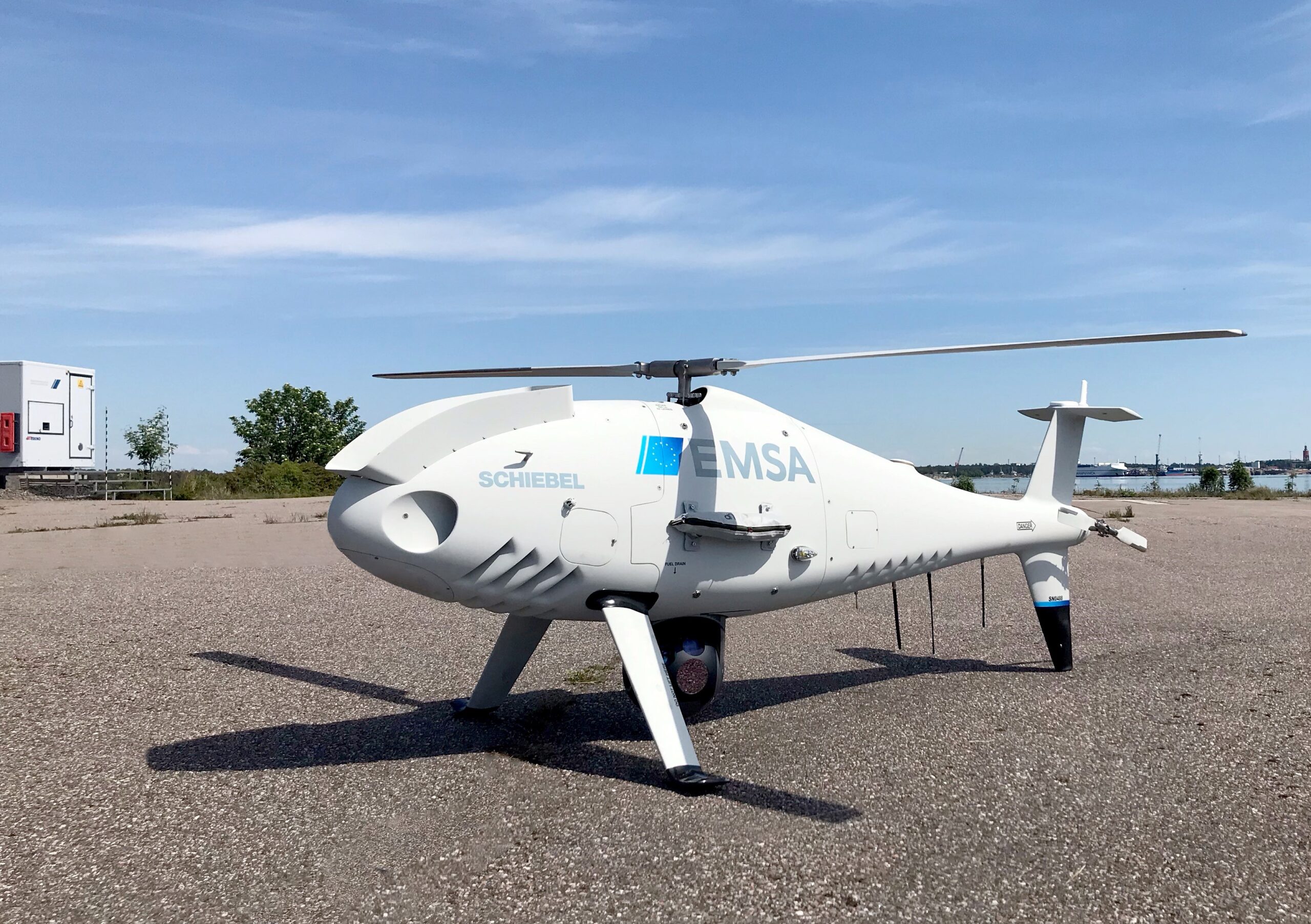
Vienna, 14 December 2020 – Naval Group, on behalf of the French Navy, has accepted for operational use two further CAMCOPTER® S-100 Unmanned Aerial Systems (UAS) with a total of four Unmanned Air Vehicles (UAVs). They will be deployed on the Mistral-class amphibious helicopter carriers (Porte- Hélicoptères Amphibie – PHA) Tonnerre and Mistral.

The acquisition comes after the successful integration of the CAMCOPTER® S-100 on the French Navy Mistral-class vessel Dixmude, which was finalised in 2019. This was the first time in Europe, that a rotary wing UAS had been connected to the combat system of an amphibious helicopter carrier.

The acceptance tests of the two systems took place in the last week of October with representatives of Naval Group and the French Navy in attendance.

Over the next few months the newly acquired CAMCOPTER® S-100 UAS will be integrated on the French Navy’s vessels Tonnerre and Mistral, significantly enhancing the helicopter carrier’s Intelligence, Surveillance and Reconnaissance (ISR) capabilities.

The CAMCOPTER® S-100 VTOL UAS operates day and night and can carry multiple payloads up to a combined weight of 50 kg. Due to its minimal footprint, reliability and airworthiness pedigree, it is ideally suited for maritime operations around the globe.

Hans Georg Schiebel, Chairman of the Schiebel Group, said: “After the successful integration on the Dixmude, we are very proud of the confidence the French Navy has in the proven and reliable CAMCOPTER® S-100 and we are looking forward to the integration on the Tonnerre and Mistral and their operational deployment.”

LCDR Serge D., UAS program officer, French Navy: “The S-100 on Mistral-class will be the first operational tactical UAS for the French Navy and this is a major step towards the Mercator plan.”

Porte Hélicoptère Amphibie Maintenance Architect at Naval Group, Philippe V., said: “We participated in the successful factory acceptance test, which was an important milestone for this acquisition, prior to the global integration onboard conducted by Naval Group.”

Royal Canadian Navy Awards Tulmar Safety Systems Contract to Support ‘Hammerhead’ Tactical Life Preserver Units

Wednesday, December 16th, 2020

Tulmar Safety Systems is pleased to announce the award of contract W8482-218402/A by the Canadian Department of National Defence to support the Tulmar ‘Hammerhead’ Tactical Life Preserver Units (TLPU) in-service with the Royal Canadian Navy (RCN).  Tulmar’s ‘Hammerhead’ TLPU is used by the RCN’s Naval Tactical Operations Group (NTOG) whose teams on Canadian warships provide boarding parties for maritime interdiction operations.  During these operations, NTOG team members are exposed to significant risk of falling overboard and are able to rely on the proven performance of the Hammerhead TLPU.  When failure is not an option, Tulmar answers the call:  Engineered for Protection.

www.tulmar.com

Marines Train with Dutch Counterparts during Exercise Coastal Caribbean Warrior

Monday, December 14th, 2020

SAVANETA, Aruba —

U.S. Marines with Charlie Company, 2nd Reconnaissance Battalion, 2nd Marine Division recently traveled nearly 1,600 miles to conduct open-water and dive training with Netherlands Marines from the 32nd Raiding Squadron in Savaneta, Aruba, on November 7.

The training increases interoperability between the Netherlands Marine Corps and the U.S. Marines as they work side-by-side as partner nations. 2nd Recon Battalion, stationed on Camp Lejeune, North Carolina, don’t often have the opportunity to work in tropical waters such as those of Aruba. To further develop the relationship between the two units, the Dutch Marines, will in turn, travel to Camp Lejeune in coming months to perfect their own tactics in a foreign climate and to perform myriad other types of training in the U.S.

“This is really a unique opportunity. The Dutch Marines’ subject-matter expertise in coastal tropics is invaluable to preparing us for combat situations in foreign regions.”

Capt. Joshua Foster, company commander of C Company, 2nd Recon Battalion

“The training circumstances here in Aruba are optimal,” said Netherlands Marine Corps Capt. Mark Brouwer, a Dutch exchange officer embedded with 2nd Recon Battalion. “We have everything in place here to train a lot better than we could’ve on Camp Lejeune. On top of that, the skills we teach to 2nd Recon, we do here on a daily basis.”

“This is really a unique opportunity,” said Capt. Joshua Foster, company commander of C Company, 2d Recon Battalion. “The Dutch Marines’ subject-matter expertise in coastal tropics is invaluable to preparing us for combat situations in foreign regions.”

The 32nd Raiding Squadron is regarded as an essential line of defense for the island of Aruba. Their effectiveness in conducting open water operations and their integration with their naval counterparts represent vital skills for 2nd Recon Battalion to hone. This bilateral training increases proficiency in a variety of skills necessary to complete their mission.

“There is nowhere else we could’ve trained with a full troop of Dutch Frogmen,” said Foster. “The environment here in Aruba is better suited to developing the skills that will help us in future operations, and it really helps us integrate with the Dutch who will be a really strong partner in the event we have to operate in Eastern Europe or the high North.”

2nd Recon Battalion completed a visit, board, search, and seizure training package as well as dive training, and a series of firing ranges. Being able to learn from the Netherlands Marines in their primary area of operations, helps 2nd Recon Battalion build a faster, more mobile, and more lethal force when operating in such diverse locations.

“The training is helping us build new unit operating procedures,” said Sgt. Zachary Palmgren, a team leader with 2nd Recon Battalion. “The water is clear so the dive teams can see what they’re doing and better build on the foundations they have. The VBSS training helps us integrate with the Dutch, and it shows us a more real-world application for the training we do at home.”

By working together, Marines from both nations developed a better understanding of how to implement new techniques. This type of bilateral training is critical, in particular when fighting in littoral and coastal regions. 2nd Recon Battalion’s mastery of these skills is paramount if they are to integrate effectively with their own naval counterparts.

By Lance Cpl Brian Bolin Jr., 2nd Marine Division