TYR Tactical

Archive for the ‘Maritime’ Category

USMC Amphibious Combat Vehicle Achieves Major Milestone

Thursday, December 10th, 2020

The US Department of Defense announced today:

BAE Systems Land and Armaments L.P., Sterling Heights, Michigan, is awarded an $184,444,865 fixed-price-incentive (firm target) modification to previously awarded contract M67854-16-0006 for amphibious combat vehicles (ACV).  This modification provides for the procurement of 36 full rate production ACVs and other associated production costs for the Marine Corps.  Work will be performed in York, Pennsylvania (60%); Aiken, South Carolina (15%); San Jose, California (15%); Sterling Heights, Michigan (5%); and Stafford, Virginia (5%).  Work is expected to be completed in November 2022.  Fiscal 2021 procurement (Marine Corps) funds in the amount of $184,444,865 are being obligated at the time of award, none of which will expire at the end of the current fiscal year.  The Marine Corps Systems Command, Quantico, Virginia, is the contracting activity (M67854-16-C-0006).

Marine Corps’ Program Executive Office Land Systems issues a story about the program:

Marine Corps will begin fielding Amphibious Combat Vehicle

Marine Corps Base Quantico, Va.— The Marine Corps’ new Amphibious Combat Vehicle has achieved two new major milestones.

On Nov. 13, the Marine Corps’ Capabilities Development Directorate approved the Initial Operational Capability of the ACV. Marines with 1st Marine Division aboard Marine Corps Base Camp Pendleton, California, were the first to receive the vehicle.

The Program Manager Advanced Amphibious Assault program office at Program Executive Officer Land Systems manages the system.

“We’re providing Marines with a modern, armored personnel carrier that offers tremendous capability with respect to survivability,” said Col. Kirk Mullins, program manager for Advanced Amphibious Assault at PEO Land Systems. “The ACV gives the Marine Corps a capable platform operational across the full-range of military operations.”

Then, on Dec. 8, Assistant Secretary of the Navy (Research, Development and Acquisition) James Geurts approved the vehicle for Full-Rate Production. This means the Marine Corps can build and field higher quantities of the ACV at a sustained rate over the next several years.

What is the ACV?

The ACV is a next-generation, eight-wheeled vehicle designed to move Marines from ship to shore. The vehicle will be the primary means of tactical mobility for the Marine infantry battalion at sea and ashore, replacing the Corps’ aging Assault Amphibious Vehicle.

The ACV provides organic, direct fire support to dismounted infantry. The vehicle’s ability to leverage waterways to carry Marines and equipment make it well-suited for various operating environments, including Expeditionary Advanced Base Operations.

It is net-ready, secure, interoperable, operationally effective and built for future growth. In the future, the Corps intends to develop, procure and field three additional variants that specialize in command and control, recovery operations and increased firepower.

“The fielding of the ACV is significant because we’re replacing the AAV, which has been effective for decades but was fielded in 1972,” said Mullins. “We’re providing Marines with a modern, more capable combat vehicle that is more adaptable to today’s battlefield.”

Col. David G. Bardorf, the director of Ground Combat Element Division at the Marine Corps’ Capabilities Development Directorate, said the ACV has progressed significantly since its initial requirements discussions in 2014. Combat Development and Integration was responsible for developing the requirements set that would be needed to replace the older platform.

“Reaching IOC is a testament to those involved in this program and the constant communication between the stakeholders: requirements, program managers, and [the vendor],” said Bardorf. “In the end, the Marine Corps is receiving an upgrade in capability ahead of schedule. We look forward to the program moving forward towards Full Operational Capability.”

Mullins said the vehicle is projected to reach FOC in fiscal year 2028.

Marines excited for new vehicle

In 2019, PEO Land Systems oversaw extensive testing involving the ACV that confirmed the vehicle’s ability to not only take on challenging surf, but also complete a long swim from ship to shore. The testing also indicated that the ACV has greater survivability and mobility than the AAV.

In 2020, Marine Corps Operational Test and Evaluation Activity performed independent operational testing involving the ACV’s achieved suitability, effectiveness and survivability. Results from the assessments, as well as feedback from Marines trained to employ the vehicle, came back positive.

Mullins believes the ACV achieving IOC and FRP is a significant achievement for the Marine Corps, as Marines will receive an innovative vehicle that further supports their missions in various combat environments for years to come.

“As program manager, I’ve spent a lot of time speaking with Marines who have trained with this vehicle in a variety of test environments,” said Mullins. “The feedback we’ve consistently received has been overwhelmingly positive. Marines seem to really love the vehicle.”

Story by Barb Hamby, PEO Land Systems

Photo by by Ashley Calingo

Combat Divers Submerge Inside Cheyenne Mountain

Thursday, December 10th, 2020

CHEYENNE MOUNTAIN AIR FORCE STATION, Colo. —

A Special Forces Operations Detachment – Alpha (SFOD-A) with 10th Special Forces Group (Airborne) put their combat dive skills to use November 5, 2020 where one would least expect: in the heart of the Cheyenne Mountain Complex. 

Inside the complex are three reservoirs that hold water for a variety of uses, including cooling the mountain’s generators and expelled exhaust. Because the mountain is designed to function independently, the water systems are vital to the success of the mountain’s operations. Assessing the Structural integrity of the reservoirs and ensuring the water is flowing freely through the cave systems that connect them keeps things running smoothly. 

“They originally contracted with a civilian company to get this done,” says the Officer in Charge of the Dive LIfe Support Maintenance Facility at 10th SFG (A). “My brother, an Air Force Logistical Officer tasked to the Space Force, recommended they get in contact with (us) to do it for free.”

The facility manager of the complex and the DLSMF and a chosen combat dive SFOD-A set out to accomplish the mission.

“Dive operations don’t happen very often in special forces,” says the OIC. “This was a good chance for us to go out and showcase our capabilities as a legitimate maritime force within (Special Operations Command) to actually do a real world mission. It’s not infiltrating into enemy country or territory, but it was a chance for us to show everyone that we do have this capability and it’s important to keep the capability within the Special Forces community.”

10th SFG (A) to establish and develop relationships outside of the Army and Special Operations Command. It started a relationship with the Cheyenne Mountain complex to provide future opportunities for real world missions, training and equipment testing. These relationships are essential to interoperability within different branches of the military enhancing our overall capabilities as one united force. 

By Sgt Angela Walter, 10th Special Forces Public Affairs

SCUBAPRO Sunday – How Elvis saved the U.S.S. Arizona

Sunday, December 6th, 2020

I ran this last year, but I wanted to do it again as I think it is great story.

The Japanese attacked on Pearl Harbor killed 2,403 military and civilians personal. A further 1,178 people were injured in the attack. 19 ships were sunk or damaged, and 188 aircraft destroyed. The efforts of the greatest generation raised all but three (The Arizona, The Utah, and The Oklahoma).

The wreck of the Arizona immediately became a memorial. Passing ships rendered honors to the Arizona and her crew throughout WW2 and still due to this day. Proposals for a permanent memorial started as early as 1943, but not until 1949 did an organized effort began to take shape with the creation of the Pacific War Memorial Commission (PWMC). As the PWMC considered ideas to formally recognize the role of Hawaii during the war, which would include a memorial to the Arizona, Admiral Arthur Radford had a flagstaff placed on the wreck in 1950. He ordered that the colors be raised at the site every day. This modest memorial was later expanded to include a wooden platform and a commemorative plaque.

In 1958, President Dwight Eisenhower signed Public Law 85-344 that allowed the PWMC to raise money on the Navy’s behalf for the construction of a memorial to the Arizona. A fundraising goal of $500,000 was set and the initial response from the public was promising. An episode of the popular T.V. series This is Your Life dedicated to Medal of Honor recipient Rear Admiral Samuel Fuqua. (Then Lieutenant Commander Fuqua serving as the U.S.S. Arizona ship’s Damage Control Officer and first lieutenant, and was on board her during Japan’s December 7, 1941, attack on Pearl Harbor. Though knocked unconscious by a bomb that hit the ship’s stern early in the attack, he subsequently directed firefighting and rescue efforts. After the ship’s forward magazines exploded, he was her senior surviving officer and was responsible for saving her remaining crewmen.)

That initial call for donations raised over $95,000. However, the project quickly stalled as donations dried up. By the start of 1960, only $155,000 had been raised.  

“Colonel” Tom Parker read about the struggling campaign in a newspaper and spotted an opportunity. As Elvis Presley’s manager, he was eager to get a bit of positive publicity for his client who had been out of circulation for a couple of years after being drafted into the U.S. Army. Parker surmised that a benefit concert for the U.S.S. Arizona Memorial would raise much-needed awareness of the fundraising campaign while also demonstrating that Elvis still had drawing power. Elvis was not only pleased to be able to perform for an audience. He was a patriot who genuinely believed in the cause and wanted to help.

The PWMC accepted Elvis’s generous offer and began making arrangements with the Navy to use the 4,000 seats Bloch Arena at Pearl Harbor as the venue for the concert. It was the same arena that had hosted the “Battle of Music” the evening before the attack in 1941. The “Battle of Music” was a spirited competition to determine the best ship band in the Pacific Fleet. Although they had been eliminated from contention, the band from Arizona was present and played dance music for the attendees. They would never perform again. The entire band was killed in the explosion on the ship the next morning.

With the venue secured and the show scheduled for March 25, 1961, Parker set ticket prices ranging from $3 to $100 and announced that everyone would have to buy a ticket to see the show. Rank usually has its privileges. Still, Parker seemed to take pleasure in rebuffing admirals and generals who approached him about complimentary tickets. When he said he everyone had pay, he meant everyone had to pay — even the performers. Elvis bought a $100 ticket for himself then bought dozens more to give to staff and patients at a military hospital.

After a brief introduction by Rear Admiral Robert Campbell of the 14th Naval District, Elvis took the stage as hundreds of teenagers screeched in excitement. The King looked resplendent in his signature gold lame jacket with silver sequin lapels. He let out a brief yell of his own in response to the ecstatic audience before launching into his hit “Heartbreak Hotel.” All accounts state that Elvis was in peak form, giving an enthusiastic and energetic performance that included favorites “All Shook Up,” “Don’t Be Cruel,” “Are You Lonesome Tonight,” and “It’s Now or Never.” He finished the show with a rollicking version of “Hound Dog,” during which he slid across the stage on his knees. The 15-song set, and 45 minutes of stage time were among the longest of his career. The concert would also be his last for 8 years.

The benefit was a resounding success. Ticket sales accounted for $47,000 with additional donations ($5,000 coming from Elvis), pushing the total take to over $60,000. Funding for the memorial was still well short of its target. Still, the electricity of Elvis had generated the jumpstart the campaign needed. In 1961, Hawaii Senator Daniel Inouye got legislation passed to secure another $150,000 in federal funds. Money began to flow from other sources. The combination of public funds and private donations (including $40,000 from Revelle raised through sale of model kits of the Arizona) reached the goal of $500,000 by September 1961 – just 5 months after the concert. The end of the year completed construction on the memorial.

The U.S.S. Arizona Memorial was officially dedicated on May 30, 1962. Elvis certainly took pride in his role in building a permanent memorial to the crew of the Arizona. He made several visits to the site on subsequent trips to Hawaii. The memorial has reached its own iconic status and welcomes 1.5 million visitors a year.

Elvis did not forget the Arizona, and the Navy did not forget Elvis. When Elvis passed away in 1977, the Navy showed its gratitude by placing a wreath for him at the U.S.S. Arizona Memorial.

Much of today’s upkeep comes from the fundraising of the American Veteran (AMVETS), a veteran’s service organization that helped to secure around $250,000 in total for the memorial during the 1950s. The organization is responsible for the upkeep of the white marble wall inscribed with the names of the men who perished aboard the U.S.S. Arizona. In 1983, and again in 2014, AMVETS raised funds needed to replace the deteriorating Wall of Remembrance.

SCUBAPRO Sunday – Wetsuit Care

Sunday, November 22nd, 2020

Your wetsuit is an essential part of your dive gear, as it protects your body from heat loss, abrasions, and wildlife injuries on a dive. Without proper care, neoprene can be damaged easily when you’re not even diving. Although they are designed to last a long time, certain elements will destroy it, if you don’t take care of it. Here are a few things that will damage neoprene. This stuff will also damage your H-gear/ Armor carrier and other nylon equipment.

Sunlight

Sunlight is the worst thing for any nylon product. You never want to leave your wetsuit hanging in direct sunlight to dry. Neoprene takes a beating from UV radiation, and it will begin to break it down quickly. Paired with heat, it can break a new wetsuit down in a matter of months.

Heat

Even in the absence of sunlight, heat is not good for neoprene. Under no circumstances should you ever put neoprene in the dryer. Even leaving it in a hot car can begin the process of deterioration. The best way to dry your wetsuit (after a fresh water rinse, of course!) is to hang it in the open air, in the shade. So, try not to store your wetsuit in a Conex box.

Salt and Minerals

If you’ve been diving in the ocean, you’ll need to rinse your wetsuit immediately with fresh water so that the salt, minerals, and bacteria accumulated during the dive will not remain to crystallize and produce odors. Soaking it in a tub is the best way to do this. Do more than just rinse it with a hose and hang it up to dry. Even if you haven’t exposed your wetsuit to any of the other damaging elements in this post, a stinky, bacteria-laden wetsuit is just as ruined if you never rinse it. Occasional soakings with a product like Sink the Stink are a great way to refresh your wetsuit every few weeks or months, depending on how often you dive. 

Improper Storage

As well as suffering heat damage, leaving your wetsuit wadded up in your gear bag, trunk, or garage will cause rapid deterioration, as it compromises the structure of neoprene. Hanging your wetsuit on a proper wetsuit hanger is the ideal storage, but if you’re limited on space, you can store it folded in half in a dry container once it is fully dry.

If you rinse your wetsuit with fresh water after every use, it should stay clean in most cases. However, you sometimes might find that your wetsuit gets a little funky. If you pee in it, it will get funky. Make sure that you always use a cleaner that is designed for wetsuits. The wrong type of cleaning product on your wetsuit can be one of the worst things that damage neoprene. Some people say you have to get a new wetsuit every 3 to 5 years. The truth is it depends on how much you use it and how deep you go. Every time you dive deep it will compress the wetsuit and push some of the bubbles that are in the neoprene out. So there is no real time line on how long a suit will last.

SCUBAPRO Sunday – Holes in Fins

Sunday, November 15th, 2020

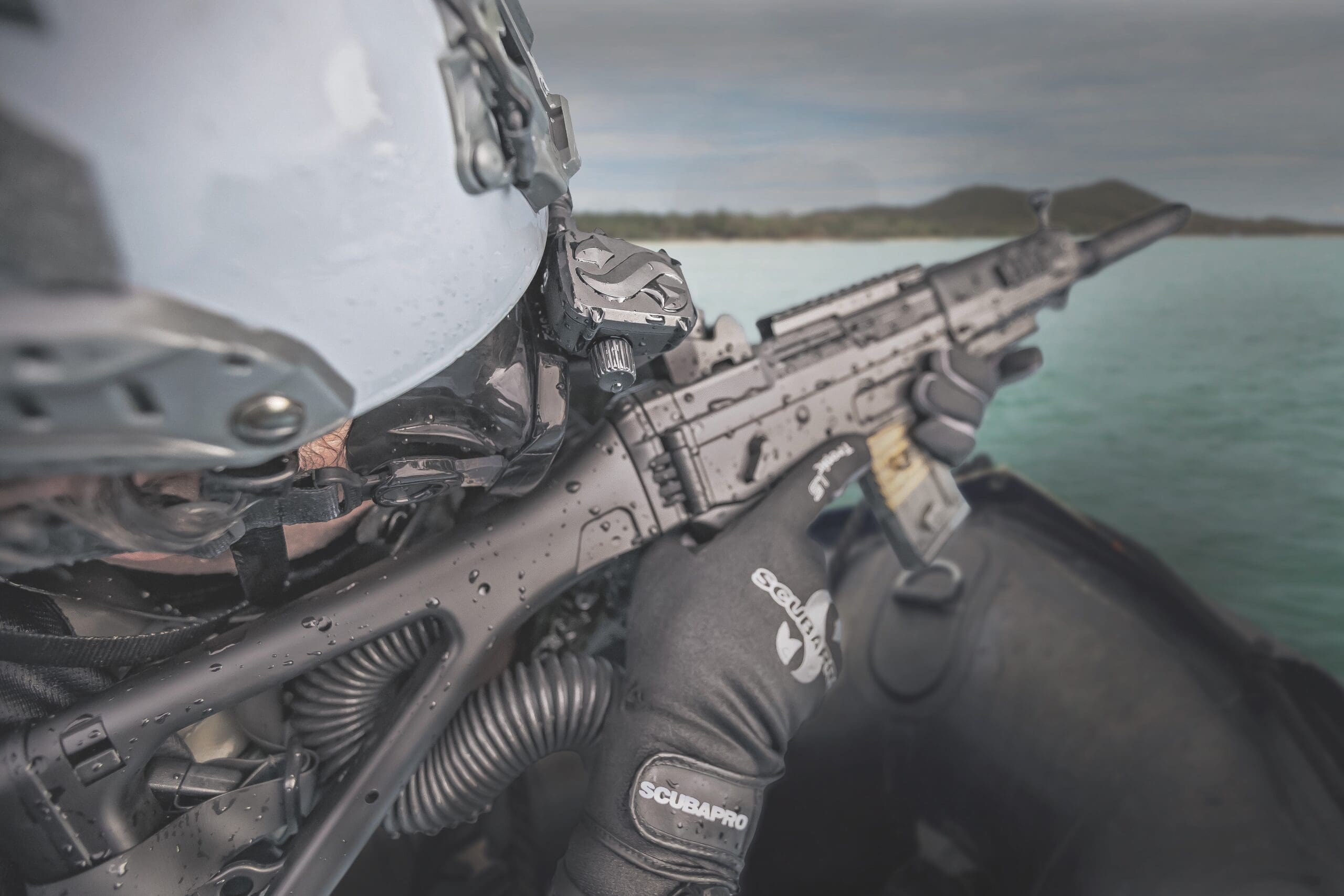
Why should you have or need holes in your fins? Some fins come with holes in some fins now, but only a few companies make them with holes to hang them on your gear. Most fins in the SCUBAPRO line that come with holes mainly have them so the rental company can hang them up to dry and store them together, minimizing the possibility of misplaced or mismatched fins. Holes on the blades of fins make coming out of the water onto the beach or climbing a ladder easier. It allows the water to drain out, so you don’t have to stop and dump it out. The holes can also be used to attach the fins to your wrists or back with the SCUBAPRO fin keepers, or you can use a carbineer and 550 cord.

The SCUBAPRO Jets fins are renowned for their power and durability. They can last a lifetime with proper care. They don’t really get sun damaged, salt eroded, chlorine discolored, travel battered, coral gouged, or split. They are one of the most vital pieces of equipment that you will ever own.

But they didn’t have holes on the blades so that you could hang them upside down. If you want holes in your fins, you would have to use a hole punch and then put a number 5 grommet in there to help keep the fin from ripping. You used a #5 because it was big enough to put a carbineer in the hole if needed, and the brass doesn’t stay shiny for long.

There are a few different ways to attach your fins to your gear. You can put a loop of 550 cord or ½ tape that you can put a carabineer thru and clip it into your H-gear. One of the best ways I have found is to put a male FasTec on one and Female Fastec on the other. This way, you can clip them into each other to hang on the bottom of a ladder. You can also do the same thing on the back of your H-gear so you can clip them on your back.  

You can also put a male on one wrist and a female on the other so you can clip them into your wrists to make coming out of the water easier; it also helps if you are doing a ladder climb and you want to keep your fins with you in case you fall off the ladder, and there is a strong current.

For groups that use the Twin Jets or twin jet type fins where there are twin blades, you can’t put holes in as the blade won’t support the fin’s weight. You can hang the fins by their straps or put something around the middle of the fins and hang them on your waist.

There is a lot that goes into the design of all of our products. Almost all things serve a purpose. We make products or update old ones. We have to take many user groups into account, so we ensure we are getting the best product out there for everyone.

120 Liter Waterproof Backpack from Watershed

Tuesday, November 10th, 2020

The 120 Liter Waterproof Backpack is a component of Watershed’s Maritime Backpack Suite.

It is attached to an Over The Beach Frame which is manufactured by Mystery Ranch is a hydrophobic, maritime version of their popular NICE Frame.

Like the NICE Frame, there is a LIFT Kit for the OTB version.

The pack is made from abrasion resistant polyurethane coated fabric in MultiCam pattern, with seams sealed via RF welding. It also features a YKK Aquaseal waterproof zipper, and oral inflate/deflate valve with cover.

It incorporates dual water bottle pockets, a rear stretch panel capable of holding a helmet or loose gear, and laser cut PALS panels at the upper side. Also features an interior MOLLE panel for mounting a radio pouch, oral inflate/deflate valve, and full compression/suspension straps. The top of the pack is designed to accept Mystery Ranch NICE Daypack Lid.

There’s a smaller 50 Liter version of the pack in the suite which can also be mounted to the OTB frame.

Lastly, there is a Mesh Bag which can be attached to the outside of either pack and carries equipment like fins, mask and snorkel once ashore.

These packs are Berry compliant and available for sale to government customers, regardless of stock notices on the website.

www.drybags.com/bags/military-waterproof-bag

PECI Flotation MOLLE Adapter by S&S Precision

Friday, November 6th, 2020

S&S Precision created a MOLLE adapter for the PECI TFFS (Tactical Flotation Support System) model 5326. The TFFS 5326 is usually attached to either side of a web belt at the wearers waist and provides 80 lbs of buoyancy.

This adapter will work with PALS platforms including the S&S Precision PlateFrame Modular cummerbund.

Watershed Waterproof Utility Pouches

Friday, November 6th, 2020

Watershed makes a wide variety of dry bags for recreational, industrial and military use. These are three of their utility pouches which are offered as part of their Maritime Backpack Suite. They include the Swimmer’s Utility Bag, Manpack Radio Bag, and Waterproof Individual Pouch.

The SUB is designed to carry the M53 protective mask or a similar sized item. The WIP accommodates a MK48 box mag, IFAK, or similar items. The Radio Bag will fit the AN/PRC-117G and accessories.

Regardless of size and intended use, they all have several design features in common. Watershed bags are made from abrasion resistant polyurethane coated fabric with seams sealed via RF welding. They also use a YKK Aquaseal waterproof zipper, and oral inflate/deflate valve with cover.

There is also a PALS compatible mounting system as well as both horizontal and vertical belt loops. Drainage points are also built-in at the ashes of the mounting system. There’s also a laser cut retainer for the T-shaped zipper pull so it doesn’t inadvertently open if caught on something.

These bags are all Berry compliant and available for sale to government customers, regardless of stock notices on the website.

www.drybags.com/bags/military-waterproof-bags