Techno Grab
National Molding Techno Grab
The Snap On Series
National Molding Snap on Series


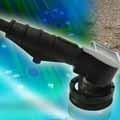 The Nemesis Series Space Saver connector from ITT was developed specifically for wearable military equipment. It is a lightweight, “no-profile” interconnect system that utilizes canted spring technology to provide blind mating and quick snap-on/rip-away coupling to prevent dangerous cable snags. Additionally, the connector features an antireflective ROHS-compliant salt-spray resistant plating, guaranteed for 500 hours and a max rating of 2 amp with a voltage rating of 50 Vdc. and a minimum insulation resistance of 5000MΩ.
The Nemesis Series Space Saver has superior EMI performance to ensure the integrity of high frequency signals, as well as pogo pin contact technology for enhanced contact durability. Its canted spring technology provides full 360-degree EMI protection.
This video gives you an inside look at the manufacture of SmartWool socks at their factory in the US. It’s a cool video that shows you the machinery at work and gives you a good idea of how the socks are made.
However, please remember, not all SmartWool products are manufactured here and although there are Merino sheep here in the US, Merino Wool is a product of New Zealand.
The new Marine Corps Family of Packs features a molded hip belt which incorporates hardwear from National Molding. The 2†Techno Grab Tensionlock is combined with the Lock Monster Single bar Male and Female to create a simple, adjust hip belt.
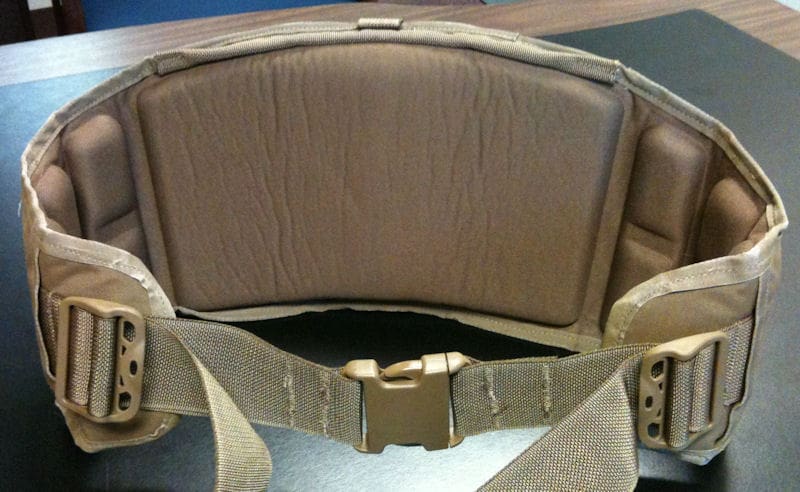
As you can see, the belt is adjusted by pulling forward on the straps. You grab a side in each hand and pull forward with equal pressure.
www.NationalMolding.com
20 Additional Fireloc products from American Cord & Webbing have earned ratings from Underwriter Laboratories.
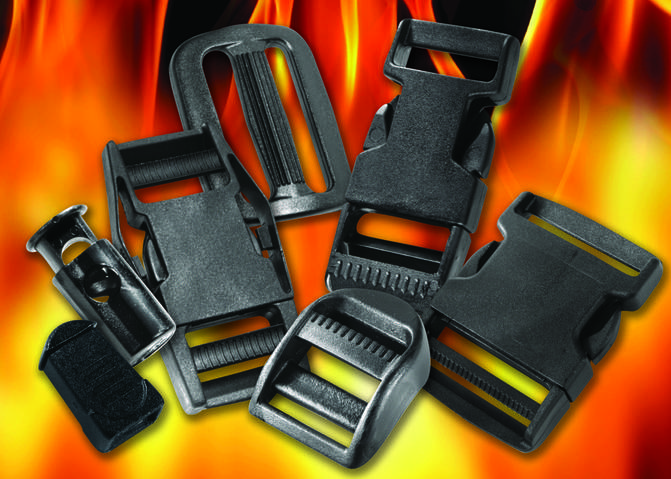
Primarily designed for high-heat applications, these Fireloc products have been tested and approved by Underwriters Laboratories (UL) for use in the United States and Canada. In addition to Fireloc, ACW also provides complimentary webbing manufactured from Kevlar, Nomex, and PBI.
In a press release, Mark Krauss, president of ACW stated, “We are very pleased to bring 20 more UL approved products to the marketplace. The expansion of the “Fireloc “ line of heat-resistant products is a direct result of how our highly skilled and knowledgeable staff along with the efficiency of our manufacturing facility allow us to meet the demands of our customers.â€
PrimaLoft® Insulation Technology™, announced that the United States Marine Corps (USMC) has purchased 8,750 additional sets of the USMC Extreme Cold Weather System, which consist of parkas, trousers and booties insulated with PrimaLoft®.
The USMC Extreme Cold Weather System (ECWS) is currently used by thousands of Marines stationed in the coldest areas of Afghanistan and across the globe. This new purchase brings the total number of ECWS currently fielded by the Marines to 58,750.
Developed to allow Marines to maintain the tactical edge during challenging high altitude, cold, and wet weather conditions, ECWS includes a parka, trouser and booties insulated with PrimaLoft®. As you know from previous coverage, PrimaLoft® is packable, lightweight, weather resistant, and very warm.
“PrimaLoft® takes great pride in our work to provide the best possible insulation technology to meet the U.S. Marine Corps mission readiness needs,†said PrimaLoft® Vice President and General Manager Joe Rumiesz in a press release. “We began working with the DoD 25 years ago, and we continue to advance our unique technology to address the specialized gear needs of our men and women in uniform.â€
PrimaLoft® was originally developed at the request of the US Army by Albany International Corp as a water resistant synthetic alternative to down. Now known as PrimaLoft® it is used by the United States Army, Marine Corps and Special Operations Forces.
WL Gore debuted their new GORE PYRAD FR fabric at AUSA. What’s unique about this technology is that Gore takes standard nylon-based fabrics and hardens them with the PYRAD technology. This allows them to exploit all of nylon’s strengths such as fast dry out time as well as enhanced camouflage through colorfastness and enhanced UV resistance. Additionally, this technology takes full advantage of the existing fabric supply change with the material being processed by Gore to create PYRAD.
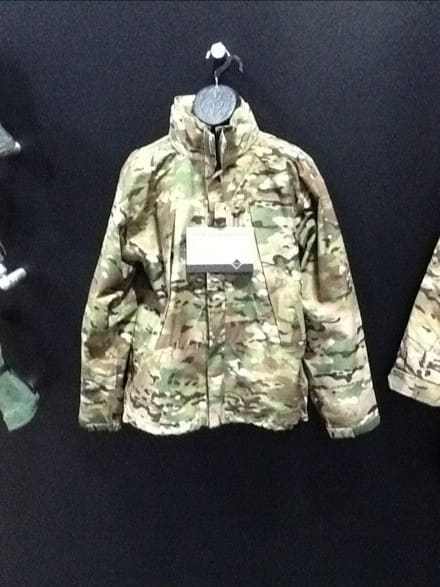
GORE PYRAD has successfully undergone Army testing. Additionally, the technology has already been commercialized with select US and Allied units having purchased garments integrating GORE PYRAD technology.
We first published this article last year, but winter’s coming and it might be time to pull your kit out and check it over before it’s needed.
It looks like it’s going to be a LONG winter. During a recent shooting class I attended it started raining day one and by the middle of the second day it looked like a blizzard. Most of my fellow shooters were wearing waterproof breathable outerwear and several began to feel clammy and then damp the longer each day progressed. A couple of guys were wearing issue Gen I ECWCS parkas. Probably not the best garment available as WL Gore long ago decided that the basic design could not meet their “Guaranteed to Keep You Dry” standards. Of course these jackets were old. More than anything, they needed some maintenance.
The key to any modern outerwear is its Durable Water Repellent (DWR) which serves as your clothing’s first line of defense against moisture. There are quite a few treatments available and different manufacturers have their favorites but they are usually are based on flouropolymers. These are PTFE molecules that are applied to the surface of the fabric and cured at high heat to make them adhere better and increase performance. These treatments have a fluorine atom at one end which is highly hydrophobic meaning it hates water. Heat causes the fibers to align themselves with their flourines exposed. Water tries to move away from the flourines resulting in beading. This allows the water to roll off without wetting the fabric. Interestingly, Quarpel (Quartermaster Repellent) was one of the first DWRs and used to treat field jackets and other military clothing items back in the 1960s.
Since most of us can’t run out and purchase a new jacket every time the DWR needs refreshing I thought it would be a good idea to share a few tips with you that will not only revitalize your garment’s DWR treatment but also extend the life of your clothing.
DWR treatments work best when they are clean. I realize this seems counter to what you think is right since a DWR generally lasts about 25 washings and tactical garments get quite a beating in the field, but you need to wash your clothing. The first thing is to avoid using liquid detergents as well as fabric softeners. Additionally, avoid optical brighteners as they are not good for DWR or IR treatments. There are wash in treatments you can purchase as well as spray on options to help renew your clothing’s DWR. However, wash in treatments may affect the breathability of your membrane. One of the best spray solutions available is Revivex from McNett and it is what I have used in the past. It also serves as a stain repellent. Revivex can also be applied to garments that never had DWR in the first place so if you have hunting or field clothing that you find yourself wearing in inclement weather regularly you may want to give it a once over. If you use a spray treatment be sure to evenly coat your garment while it is still damp after washing and to pay special attention to any seams.
There are two additional ways you can put some life back into your DWR without a full retreatment. One is to put the garment in a conventional dryer on warm and the other is to iron it on low heat. This helps realign the fibers. If water fails to bead up on the surface of your garment you will need to retreat.
No matter which method you choose, proper maintenance of your foul weather clothing’s DWR will help keep you warm and dry and extend the life of your equipment.