Atrius Development Group

Archive for the ‘Medical’ Category

Ricci Ankle Medical System

Monday, May 14th, 2012

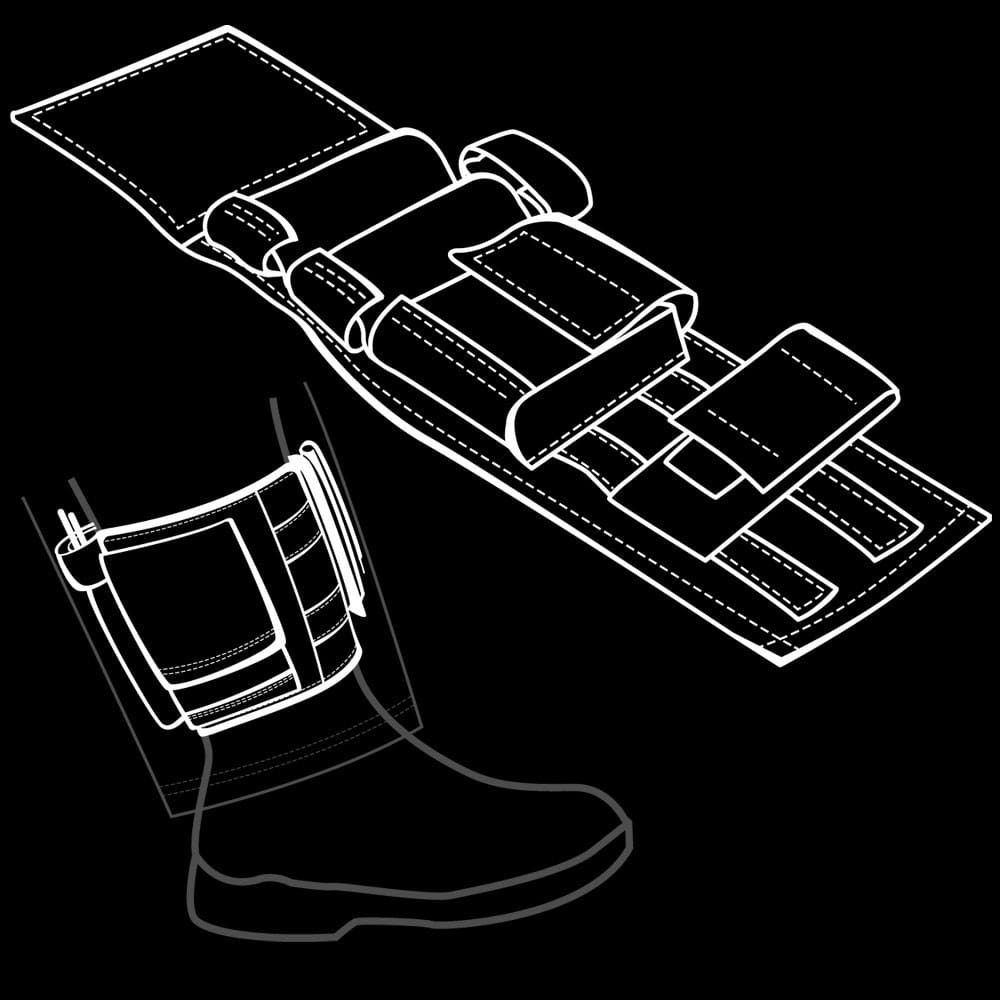
Strike Industries has introduced the Ricci Ankle Medical System. Designed by a SWAT officer, it is an ankle mounted medical pouch intended to ensure that every LE officer can have life saving medical gear on him at all times.

The pouch has three pockets, one of which is secured with a Velcro cover. The smaller pockets can carry the major tourniquets on the market with the main pocket able to carry hemostatic agents, gauze or chest seals.

strikeindustries.com

Warrior West – The Eliminator

Wednesday, May 2nd, 2012

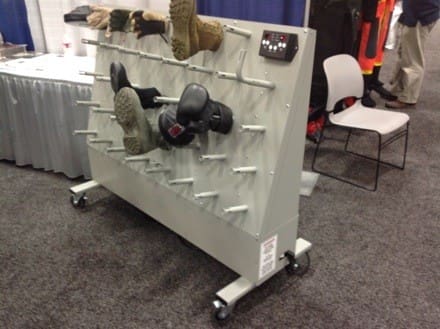
The makers of the popular Decon Zone ozone sanitation system have come up with an innovative new product released today at Warrior West. The Eliminator is designed specifically to dry as well as sanitize hand wear, footwear, and other similar PPE with a combination of warm air and ozone pumped through the 40 mounting tubes.

20120502-122411.jpg

There are also elbow adaptors to get into the toe box of footwear. Additionally, each row of tubes can be turned on or off. Finally, The Eliminator is portable but must be used out of doors due to the generation of bacteria killing ozone.

www.deconzone.com

Intelligent Clothing for Rapid Response to Aid Wounded Soldiers

Tuesday, May 1st, 2012

Under this year’s Small Business Innovative Research topics from the Defense Threat Reduction Agency, there’s a rather interesting topic. According to the call for ideas, the object of Topic DTRA122-010, Intelligent Clothing for Rapid Response to Aid Wounded Soldiers is to “Develop uniforms with integrated sensors built into the fabric allowing for measurement of overall health, detection of bullet location, detection of exposure to CBRNE (Chemical Biological Radiological Nuclear and Explosive) agents, and communication capabilities to provide location via GPS coordinates as well as critical health assessment information to medical personnel regarding the wounded soldier.”

The point of the SBIR is to get the Soldier’s clothing to constantly assess the health of the Soldier and alert him (and headquarters) of any maladies, including exposure to CBRNE threats.

“With Intelligent Clothing, the location of a bullet can be determined with appropriately-embedded sensors within the clothing’s fibers that can estimate the depth of penetration and the effected surrounding organs. Additionally, if the person was in an environment where a CBRNE weapon had been stored, manufactured, or used, the Intelligent Clothing could identify the agents via specific biomarkers detected within the blood, saliva, sweat, urine, or could distinguish damage at the cellular, tissue, and/or organ levels post exposure. For example, individuals exposed to a commonly used explosives compound, 2,4,6-Trinitrotoluene (TNT), have been shown to have hemoglobin adducts within their blood and form the urine metabolites of TNT, 4-amino-2,6-dinitrotoluene (4ADNT) and 2-amino-4,6-dinitrotoluene (2ADNT), all of which can be utilized as biomarkers for TNT. In addition, radiation biomarkers include alterations in serum enzyme levels post exposure to ionizing radiation, such as modifications in serum amylase and diamine oxidase concentration levels, which are presently being considered as potential biodosimeters within the medical community. These biomarkers could then be linked to the appropriate array of sensors within the Intelligent Clothing material to detect CBRNE targets, and this information could then be transmitted immediately to emergency responders via communications devices weaved directly into the fabric. This aids in triage and preparation of first responders to be able to handle emergency situations in a critically timely and efficient manner. The collected remotely data would provide commanders venue battlefield awareness as to type of weapons, numbers of casualties and location of engagements.

DTRA requires an assessment of the suitability of various biosensors, communications options and means of integrating these with the appropriate clothing materials and also considering relevant characteristics of the Intelligent Clothing (i.e. – size, thickness, weight, robustness, power requirements, lifetime, as well as sensor sensitivity and selectivity) and the added burdens for the individual troop to manage.”

The investigation will consist of three phases –
“PHASE I: Identify appropriate types of the fabrics, sensors, and related components that are currently available and may be useful for intelligent clothing systems. This phase would also include the selection of biomarkers specific to each agent along with corresponding sensor, and a proof of concept demonstrating operability of components within the military uniform.

PHASE II: Design of selected sensor interfaces and conduct a demonstration of a uniform containing a sensor and communications network.

PHASE III DUAL USE APPLICATIONS: Other applications currently being researched include heart/muscle monitoring for athletes, vitals measurements for babies, and blood sugar levels for Type I and Type II diabetics. Dual Use may be possible for occupations involving hazardous work conditions, mobile diagnostic of life style (as in mobile heart monitors). Furthermore, identification of potential commercial partners and/or commercialization markets in which Intelligent Clothing technology could be transitioned to as an end-user or for further optimization/development. ”

If you’ve been cooking up something that might meet DoD’s needs visit www.acq.osd.mil to get the lowdown on how to submit your white paper.

Tactical Operations ManikinADS Tactical

Sunday, April 29th, 2012

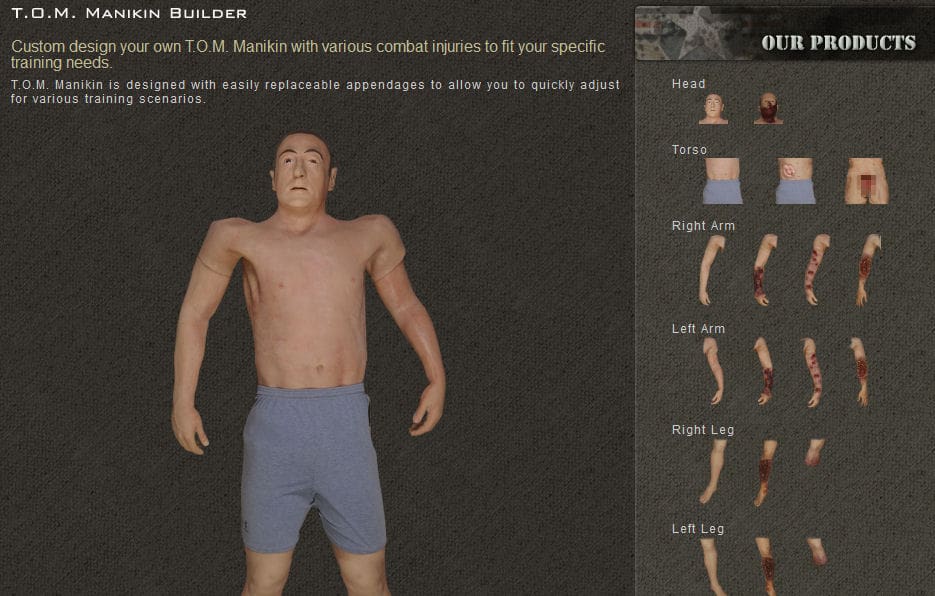
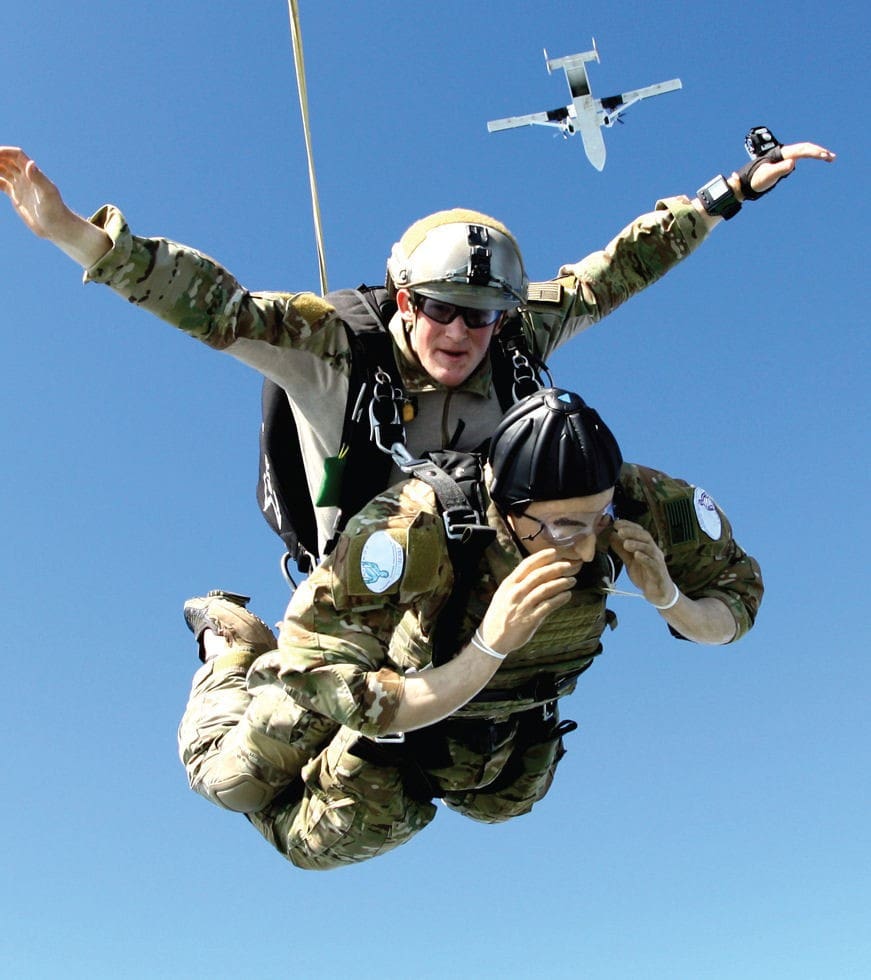
As of late, there as been a lot of push back on live tissue training. The Tactical Operations Manikin (T.O.M. Man) from Innovative Tactical Training Solutions may be just the solution.

T.O.M. Man is a rugged patient care simulator capable of repeatedly surviving tactical trauma training and is designed to move like a human and simulates massive bleeding in a combat environment. Features include remote control allowing the instructor to add surprise elements, talking, breathing, bleeding, breath sounds include sucking chest wounds, respiratory distress, massive bleeding, needle decompression, tourniquet, wound packing, surgical airway. Breathing is controlled by recovery position for Care Under Fire. Several areas of massive and minor bleeding throughout the main arteries and face are managed via a single controller that provides a number of features to support TAC Med and TCCC training with “live responses”.

ITTS is an innovative company run by a former USAF PJ. They teamed up with Techline to develop the T.O.M. Man and one of the best things about this product is that it can be customized for your particular needs. In fact, it weighs between 130-150 lbs which goes a long way to mimicking a human’s size and weight which means T.O.M. Man can support a wide variety of training.

ITTS products are available for unit and agency purchase through www.ADSinc.com.

Lightweight Integrated Field Transport (LIFT) System

Monday, April 16th, 2012

Necessity is the mother of invention. The owners of MATBOCK wanted a better combat litter and they went ahead and invented one.

Right from the get go, there is something different about the LIFT System in that it is dual purpose. Not only is it a litter but it is also a Sensitive Site Exploitation bag, or it could be used for other tasks such as collecting a casualty’s equipment. Weighing in at 1 lb the litter is made from parachute nylon with reinforcements across its width. Here you can see a loaded example along with its shoulder strap. It unzips and unfolds to form the litter. Once opened up it is 6-1/2 feet long.

It can be used alone as a poleless litter and features grab handles that also serve as slots for the Combat Carbon Poles.

The Combat Carbon Poles are collapsible with shock cord inserts so they are always connected even when broken down for portage. The CCP extends to 7 ft 6¼ and breaks down to five sections 1 ft 9¼ inches long. The individual poles weigh only 1.3 lbs each and together, with the LIFT will support 400 lbs. They also come with MOLLE mounting straps so they can be attached to a pack or armor vest.

Due to size, weight and cost of the CCP, it is envisioned that several members of an element will carry the LIFT but only one man will hump the CCP. This offers a team the option of collecting a lot of evidence during SSE and/or several soft litters. MATBOCK informed SSD that they are taking a look at developing attachments to make the CCP multipurpose products as well.

For more information on the Lightweight Integrated Field Transport System and Combat Carbon Poles check out their informational brochure.

To order, visit www.matbock.com/products/medical.

Abdominal Aortic Tourniquet

Monday, April 16th, 2012


We don’t have a lot of details yet but Speer Operational Technologies has introduced the Abdominal Aortic Tourniquet. It is designed to provide stable and complete occlusion of flow of blood to the lower extremities for uncompressible hemorrhage that is not treatable by a tourniquet in the leg, groin and inguinal region. It has 510(k) approval from the FDA for difficult to control inguinal hemorrhage. It is applied to the mid-abdomen, tightened and inflated and may remain on for up to an hour safely.

For more info visit www.speeroptech.com.

Forces Focus – Chris Coppola: A Pediatric Surgeon in Iraq

Saturday, April 7th, 2012

From the Conversations from Penn State series, this is an interview with former Air Force orthopedic surgeon Chris Coppola on his experience in Iraq.

War is a collection of very personal experiences. It’s interesting to hear from a different perspective than what we generally encounter.

CTOMs Is Giving Away Trauma Shears

Saturday, March 31st, 2012

According to Pvt. Bloggins, CTOMS is giving away a free pair of Trauma Shears with every $50 you spend through the month of April. If you spend $150, you get 3 pairs of Trauma Shears on the house. Now that’s a deal!


 Check it out.


-DR