The MOJO 440 Medical Kit incorporates two kits in one. The Immediate Action Kit can be separated from the main bag. It features total user configurability allowing the Medic to set his gear up how he will use it thanks to the full field of loop inside the pack. The main bag’s compartment allows the Medic to store items already prepped for use including three removable pouches with clear windows to quickly identify supplies. Additionally, there is a hydration sleeve in the main bag which can also be used for storage of such items as SAM Splints. Expandable side pockets accommodate extra equipment when needed.
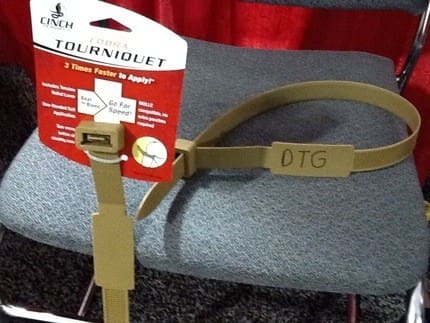
The new Cobra from Cinch Tourniquet is based on the same premise as flex cuffs regularly used by our troops. Just like flex cuffs it can be weaved into the PALS webbing found on armor carriers. Additionally, it has standardized space to write application data.
It is quickly applied with a single, steady pull once aligned into place. The locking mechanism is recessed and can be released with a flat object such as a screw driver head.
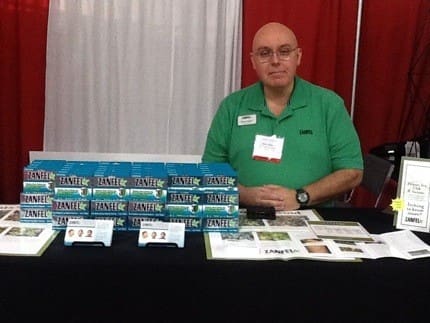
Zanfel Poison Ivy Wash from Zanfel Labs is designed to allow the affected person to literally wash away urushiol oil which is the toxin contained in plants that irritates 85% of the population. The wash can be used at anytime after contact and on any part of the body including the face and genitals.
Designed originally for over the counter, commercial use, Army personal began using the soap after finding that poison ivy related hospital stays were reduced from 3 days to as little as 2 hours meaning after a single use, a patient can be immediately returned to duty.
One important tip that Zanfel wanted us to pass along is that poison ivy oils can stay viable for up to 5 years and footwear and in particular laces retain these oils. According to them the best cure for this issue is to wash your shoes or boots with simple dishwashing liquid.
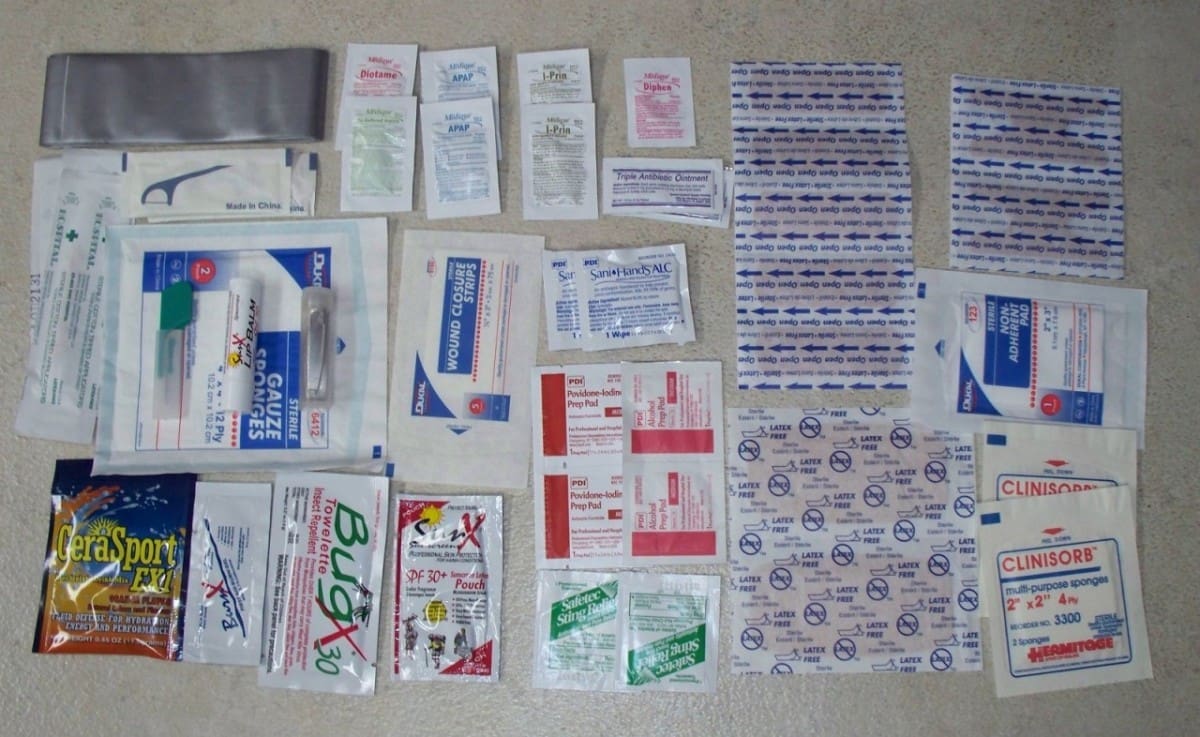
Designed to augment a larger kit, the DMR Boo-Boo Bag contains all of those consumable first-aid items that you actually use on a regular basis such as band-aids, meds, and insect repellant.
We recently found out that is a third variant of the popular 18XRAY automatic knife. The Combat/Rescue Knife was designed specifically for medics as well as first responders. Notice the 3-5/8†blade’s blunt tip combined with ultra-fine serrated teeth. The blade is manufactured from 154CM steel with DLC finish paired with T6-6061 aircraft grade aluminum handles that are Type 3 hard coat anodized in Red for high visibility. Once again, it features the limited forever warranty. Finally, like the entire line of 18XRAYs, the Combat/Rescue Knife features Darrel Ralph’s SAS (Slide Auto Safety) system.
We first posted this article about six months ago so many of you have already seen this. But since that time, we’ve added thousands of daily readers and there has been a change of authority downrange so there may be deployed personnel that haven’t seen Rip Shears.
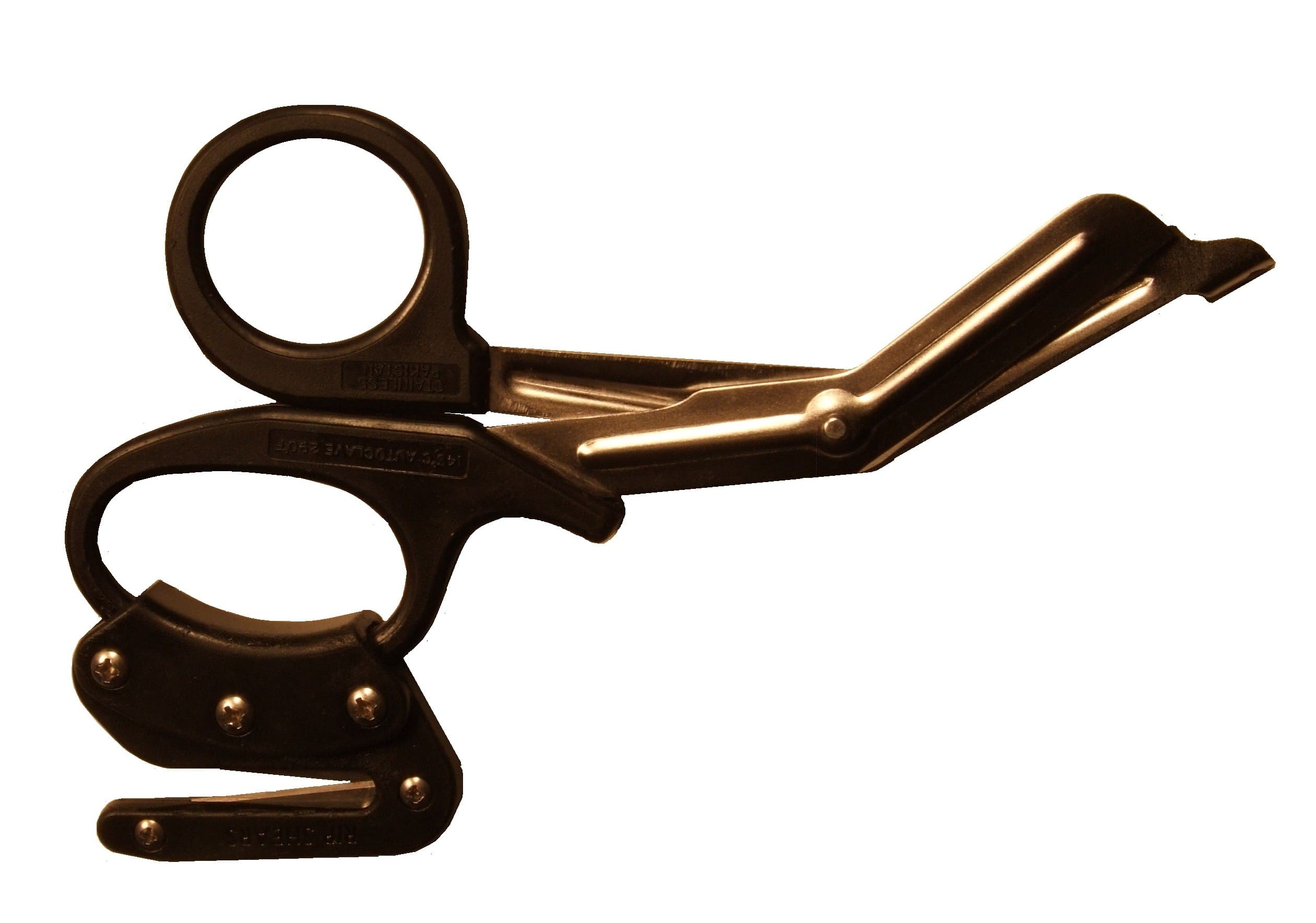
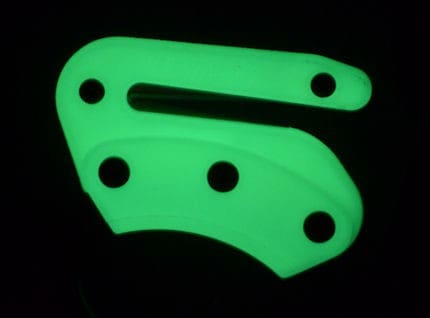
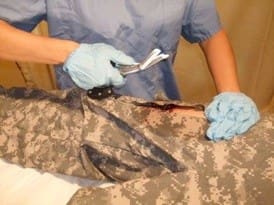
Rip Shears are a new attachment for standard EMT shears that transforms them into a tool that combines the shears with a safety knife and reflex hammer. Designed to attach directly to the handle of most 7-1/4″ shears, it provides a quick means of cutting through loose material and gear in order to access wounds.
Designed by Naval Special Warfare Corpsmen, Rip Shears are Made in the USA and crafted from fiberglass-reinforced nylon that can be autoclaved up to 270 deg F. Additionally, the blades are 440A stainless steel and are treated with a special DLC tungsten coating for increased lubricity. In fact, the coating will extend the life of the blades 4-5 times normal stainless steel. The design is simple and safe to clean with your fingers as well as replace blades. In fact, when you finally do need to change the blades, they are designed in such a manner that they are impossible to install incorrectly.
Rip Shears are offered in three models. The RS-1 is the Ripper unit by itself for installation on your current EMT shears. The RS-2 model combines the Ripper with EMT shears and the RS-3 or “Firefly” version is a Ripper featuring a glow in the dark material for civilian EMTs and flight medics.
A lot of folks are carrying hook knives to cut through webbing but they can be ineffective if the material is slack. With Rip Shears the cutting stroke is a pulling motion, offering a great deal of strength and control which can help to avoid further injuries. Rip Shears have been used on boots, leather jackets, and rigger belts. In fact, this video will give you a great idea of how well it works.
In fact, I had the chance to try them out myself and I am duly impressed. To get yours visit their distributor page www.ripshears.com and be sure to look around while you are there.
BAE Systems demonstrated GEN II Headborne Energy Analysis & Diagnostic System (HEADS) which has just passed First Article Testing (FAT) for the US Army with first deliveries to begin September 22, 2011.
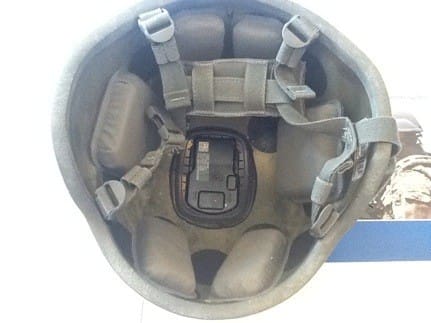
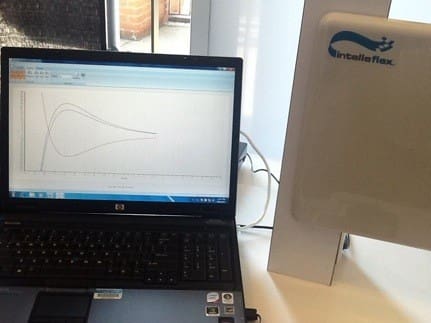
HEADS consists of the sensor which is mounted in the crown of the combat helmet, the software to perform computational analysis of traumatic events and an optional wireless antenna which can be used to interrogate the sensor for data when it is placed in close proximity. Alternatively, the HEADS sensor can be interrogated via a USB connection directly to a laptop.
As you can see from the photo, once data from the sensor has been uploaded to the software a date and time stamped visual display is created to assist medical personnel in correlating their medical diagnosis with actual events. The sensor will record all linear and angular acceleration and blast overpressure information, including multiple events.
It is important to note that the HEADS sensor can be covered with a crown pad within the helmet for enhanced comfort. Additionally, the sensor battery life is one year and can be recharged by tethering to a laptop via a USB cable or you can actually replace the battery with a fresh one.
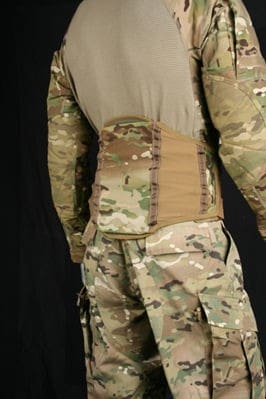
One of the coolest things that happened at Outdoor Retailer was an out of the blue meeting with Steve Jensen of Cropper Medical. They are the manufacturer of BioSkin Bracing and have come up with a lumbar support system called the BackJack Tactical that is designed specifically for military use.
Cropper Medical has been making human performance gear for nearly 20 years and they tout 37 professional sports teams wearing their supports including the last 5 Super Bowl winners. They took this know how and applied it to offload some of the weight of body armor from the discs of the spine.
BackJack is Cropper Medical’s first entrant into Tactical Military products and was developed in conjunction with a retired Special Forces 18D to help alleviate the epidemic back pain in the military. In 2009 Ft Polk’s JRTC, conducted testing on it and found that 89% of the Soldiers that wore the device said it relieved their pain and they would use it if it were issued. Next, a unit deployed to Iraq wore the kit and rated a 45% reduction in low back pain with the kit on. 100% of the Soldiers surveyed said they’d wear the kit if it were issued. Although exposure has been limited, Soldier acceptance has been high, to say the least.
The device works by pulling bilateral hand pieces engaging a cinching mechanism which pushes the lumbar panel into the area of pain, the low back. This direct pressure on the low back is what makes this kit so effective at not only relieving pain but preventing pain. Wear it under the Armor, Ruck, or just around the office to get some relief. I tried it and it is comfortable.