FirstSpear

Archive for the ‘Medical’ Category

Team Wendy Part of Groundbreaking Research Grant on Traumatic Brain Injury

Friday, July 28th, 2017

Under the direction of researchers at Brown University, others from Drexel University, Sandia National Laboratory and Team Wendy are working together to study how Traumatic Brain Injuries form and developing new helmet technologies to counter them.

PROVIDENCE, R.I. [Brown University] — With a new $4.75 million grant from the Office of Naval Research, a team of scientists aims to develop new insights into how traumatic injuries form in the brain and develop new helmet technologies to help prevent them.

"The helmets used today on the battlefield and on playing fields are tested against a standard developed in late seventies to prevent skull fractures," said Christian Franck, the grant's principal investigator and an associate professor in Brown's School of Engineering. "We want to update that standard to assess how well a helmet protects the soft tissue inside the skull–the brain–and ultimately develop a prototype helmet that meets our new standard."


Accomplishing that will require a comprehensive, multi-level understanding of how forces are transmitted from a helmet to the skull, from the skull through the brain and ultimately to the individual neural cells that are damaged during traumatic brain injury (TBI).

(A device developed by Brown University researchers can deliver compressive impacts to 3-D cultures of brain cells and monitor how the cells react to that trauma in real time. The device could help scientists better understand how traumatic brain injury occurs at the cellular level. photo by: Nick Dentamaro / Brown University)

Franck will work with Brown colleagues Diane Hoffman-Kim and Haneesh Kesari, as well as researchers from Drexel University, Sandia National Laboratory and Team Wendy, a manufacturer of helmets and helmet liners.

Franck's lab at Brown has developed a novel technique for measuring the effects of traumatic forces on individual neurons. Most previous research on TBI at the cellular level has been done on two-dimensional petri dishes, but Franck uses a custom-built device that can apply compressive forces to neurons inside three-dimensional cell cultures, while using a powerful microscope to continuously monitor changes in cell structure. Franck has already used the system to gain new insights into how cells respond to traumatic strain. With is new grant, he plans to establish precise force thresholds for the onset of cellular injury.

"We want to know how much force inside the brain is too much for cells," Franck said. "That gives us a baseline for understanding exactly what kinds of forces are involved in TBI at the cellular level."

The lab of Hoffman-Kim, an associate professor of medical science and of engineering at Brown, works with mini-brains, or neuron bundles that model basic properties of living brains. The mini-brains offer a more complex cell culture than those Franck has worked with previously, which enables the researchers to better recreate the actual brain environment in which neurons operate.

The information gleaned from the cellular level will be combined with results of studies designed to better understand the forces on a helmeted head generated by typical blunt impacts and blast waves. To do that, the research team will work with Team Wendy to develop a sensor system that can be fitted to existing helmets used in combat and athletics. In 2013, Franck and Team Wendy developed a simple but fully functional impact acceleration measuring combat helmet system, which served as a proof of principle for the current grant.

The team will build upon that initial sensor design, then they'll use facilities at Drexel and Team Wendy to test the response of helmets to a wide variety of forces, and how those forces are transmitted to the skull.

To complete the picture of how forces transmitted by a helmet are distributed through the brain to individual cells, Franck will work with researchers at Sandia National Laboratory. The Sandia team who has developed models of the head and neck based on thousands of CT scans. Those models are able to provide insights into how forces are transmitted through soft tissue.

"We want put all these pieces together from the macroscopic level of helmets to the microscopic level of cells to get a complete picture of how these injuries occur," Franck said. "Once we have that, we can start to think about new methods of diagnosis and prevention."

Based on the injury model developed during this project, the researchers aim to deploy a version of their sensor system in combat theaters and playing fields.

"The idea is that when someone experiences a blow to the head, the helmet transmits the force data to a computer," Franck said. "A first responder could then look at that data and determine if TBI is likely and how severe it might be."

Ultimately, the team hopes the data generated by the research can be used to devise a new testing standard for helmets and a new helmet prototype. In developing the prototype, Franck will work closely with Team Wendy and his colleague in the School of Engineering, Haseesh Kesari, who studies the mechanical properties of solid materials.

"What's exciting to me about this is that it spans the microscale to macroscale," Franck said. "We're not aware of any other project that has taken such a comprehensive and tightly integrated approach to understanding how to better prevent these kinds of injuries."

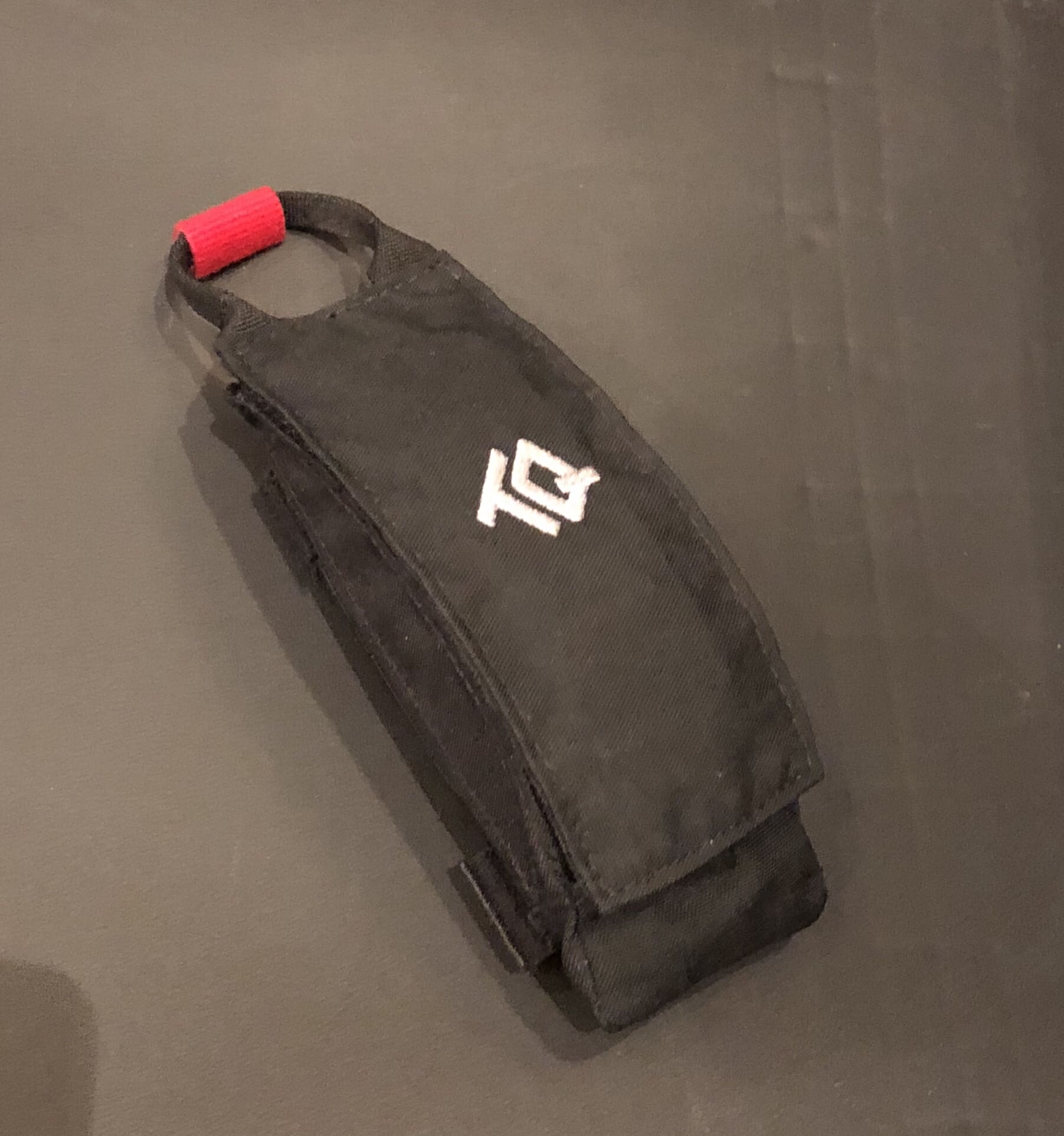
FirstSpear Friday Focus – Non-Stocking Non-Standard Medical Pocket

Friday, July 21st, 2017

Originally developed for a FS professional user the medical pocket is constructed from 500D – approximately 8.5” X 6.5” with a 2.5” loop square and old school MOLLE attachment backer. Elastic daisy chain interior to secure a variety of medical or similar sized items.

Available in Ranger Green and Multicam in the non-stocking non-standard section, while supplies last.

www.first-spear.com

Warrior Expo 2017 – MATBOCK OsteoFX

Friday, July 14th, 2017

MATBOCK is now offering the OsteoFX cast system. It’s FDA approved and reimbursibke through Medicare and Medicaid.

Application is simple, offering a 40% reduction in application time over traditional cast systems. Also, OsteoFX can be used most anywhere, including austere areas. You roll the inner material unto the affected limb, wet the outer material, roll it into place, and you have five minutes to make any adjustments before it begins to harden. The material cures as it air dries, fully cured in 15 min. Even better, you can get it wet, like showering or even swimming and the cast won’t compromise while allowing the skin underneath to dry and breathe.

www.matbock.com

Jumping In: The First Tactical Jump Bags

Thursday, June 15th, 2017

I saw these at SHOT Show and am very impressed. They worked with EMS professionals to introduce features not often found in soft bags.

First Tactical is excited to announce the launch of their new EMS Jump Bags.

The Large Jump Bag is 22” x 12” x 12” and is perfect for an ALS set up. The Medium Jump Bag is 22” x 10” x 10” and is an ideal BLS medical bag.

First Tactical’s design team worked hand-in-hand with end users to create a bag that would work in any situation.

A TPU molded bottom allows users to enter a situation and place their bag down without worry. The easy-clean bottom is light grey in color allowing users to take a decon wipe and quickly decontaminate their bag. The bottom is also waterproof and features oversized lugs providing flexibility based on situation: from being dragged across concrete to being set down on a wet carpet in a house with too many cats, this bag has you covered.

Traditional bags require operators “yard sale” their equipment when looking for what they need. The Jump Bags feature a “three-quarter zip” opening that minimizes the amount of the “lid” on the ground while allowing medics to open their bag and see everything they need quickly.

Boasting countless other features including a hook and loop interior, simple silhouette, and gurney hooks these bags will work as hard as you do. See all details here.

Both Jump Bags are available now and come in red and hi-vis yellow. The Large Jump Bag is priced at $199.99, the Medium Jump Bag is available for $179.99. First Tactical’s complete EMS Kit collection is also available.

ADS Federal Range Day – Blue Force Gear’s Micro TKN! Basic

Monday, June 12th, 2017

Blue Force Gear recently introduced a new Basic variant of their Micro Trauma Kit Now!

Available as a refill kit, the contents include:
1) Hemostatic dressing for wound packing/clotting (1 included)
2) 4″ Emergency Trauma Dressing (1 included)
3) 9″ Medical Grade Easy Tape (6 included)
4) Tourni-Kwik Compression Tourniquet (1 included)
5) Heavey Duty Medical Gloves (1 pair of large sized gloves)

Manufcatured from ULTRAcomp, the pouch is offered in belt or MOLLE style, in Black, Coyote, Wolf Grey, OD Green and MultiCam.

www.blueforcegear.com/micro-trauma-kit

Blue Force Gear Adds Trauma Kit Offerings With Basic Option For Every Day Carry

Friday, June 9th, 2017

See It Today at ADS Federal Range Day

POOLER, Ga., June 8, 2017 – Blue Force Gear®, the designer and manufacturer of the world’s finest weapon slings and tactical equipment, is continuing their mission to change the mindset of everyday carry (EDC) by adding a basic trauma supply option to their Micro Trauma Kit NOW! (MicroTKN!) product line.

With the overwhelming popularity and success of the MicroTKN!, which was first released at SHOT Show 2017, Blue Force Gear® saw a need for a kit which had critical lifesaving tools that was even more accessible in both cost and the level of recommended training.

“Our goal is to put the MicroTKN! on as many people as possible to create a more prepared population,” said Tom Kaleta, Director of Marketing of Blue Force Gear. “Each day seems to bring another example of why this mission is so important. This basic kit puts lifesaving equipment which can be utilized by practically anyone to save a life.”

The MicroTKN! Basic medical supply load-out specifically designed for small-form, low-bulk applications. It is also available in two, attach and wear methods, the belt pouch and MOLLE. The new basic medical supplies option contains:

• NuStat Tactical™ hemostatic dressing for wound packing/clotting (1 included)
• 4” Emergency Trauma Dressing (1 included)
• 9” Medical Grade Easy Tape (6 included)
• Tourni-Kwik Compression Tourniquet (1 included)
• Heavy Duty Medical Gloves (1 pair included)

The MicroTKN! is the smallest version of the Trauma Kit NOW! TM, designed to hold essential lifesaving medical supplies in a small easy-to-carry pack that takes up minimal space. The MicroTKN! is constructed with Blue Force Gear’s ULTRAcomp® and TenSpeed® elastic making it less bulky and stronger than a typical medical pouch. The inner carrier can be easily deployed with one finger or one hand from either the left or right side by pulling the BLIP™ (Ball Loaded Index Point) featured pull-tabs.

“It is simple: We made a more affordable kit that is easier to use. This furthers our vision of equipping millions of good people with the mindset, knowledge and equipment they need to help in life’s most challenging situations.” said Ashley Burnsed, CEO of Blue Force Gear.

The new MicroTKN! Basic content kit is available for $129. To learn more about the MicroTKN! or purchase the product, visit www.blueforcegear.com.

Special Operations Aid & Rescue, Ltd – The National Tactical Medicine Competition

Monday, June 5th, 2017

The 2017 National Tactical Medicine Competition was held at the Charlotte Fire Training Academy in Charlotte North Carolina on Sunday May 21st, hosted by Special Operations Aid & Rescue, Ltd (SOARescue). The event was held just prior to the Special Operations Medical Association Scientific Assembly Conference. In total, 12 two man teams competed for the title. This year’s competitors came from across the North America from California to New Hampshire and included one international team from Laval Quebec.

Each team was tasked with a grueling 4 stage course that was both mentally and physically challenging. The stages transitioned the competitors through each of the Tactical Emergency Casualty Care phases of care.

Stage 1 of this year’s competition begin with a story of the team providing a protective security detail for a local religious group traveling via in vehicles that was suddenly attacked by anti-government extremist group. Each team started the course rapidly assessing and treating several critically injured patients in the convoy of vehicles.
On Stage 2 of the course, competitors were faced with triaging an overwhelming number of patients with varying injuries following a secondary explosion at a local building. Teams sort through the chaos to treat the sickest patients first and work towards those who are least injured.

On Stage 3, teams were given critical patient’s requiring advanced level medical care including surgical airway management, life-saving medication administration, mechanical ventilation and introduced several concepts of prolonged field care.

Finally, on Stage 4 of this year’s competition, teams were tasked with rigging a high angle rope rescue system capable of raising and lowering a patient. The patient had to be moved to the hoisting location and secured in a SKED. The competitors then used the TRACE system from CTOMS, a sponsor from this year’s competition. Each team was given a set time frame to complete as much of the course as possible and a standardized grading rubric was used to score each team throughout their run.

This competition has been an incredible opportunity for civilian and tactical medical professionals to work together in friendly competition. The training competitors engaged in before the competition and hopefully will continue, has made each competitor a better medical provider. We hope to continue and grow this unique competition, to better prepare our responders, and to help the community better understand the services provided.

We asked some competitors what they thought, and this was one comment we received:

“Competing this year showed me strengths and deficiencies in my role as a tactical medical provider. I learned that providers need to be able to work off of their vest and belt as much as possible without digging into an aid bag. Providers also need to be well rounded in their skill set, able to function outside of the medical realm as needed, especially in gaining access to patients via breaching if needed. The competition was a huge opportunity to network and learn from the tactical medical professionals from around the world, which to me was the highlight of the entire event this year.”
-J.C. – Competitor NTMC 2017

The 2017 National Tactical Medicine Competition was an incredible success, thanks to all of our contributing sponsors, role players, patient actors, judging staff, and adjunct facilitators.

Our Sponsors Were:
-North American Rescue
-CTOMS
-Qore Performance
-Trauma FX/ KGS
-CRO Medical Gear
-TSSi Ops
-Tru-Spec
-Vighter
-Enola Gaye USA
-Carolina Fire Rescue and EMS Journal
-MOHOC
-Daniel Sroka PC
-Beeken Biomedical

www.SOARescue.com

SOTECH Debuts New SOF Medical Load Bearing System At SOMA

Monday, May 22nd, 2017

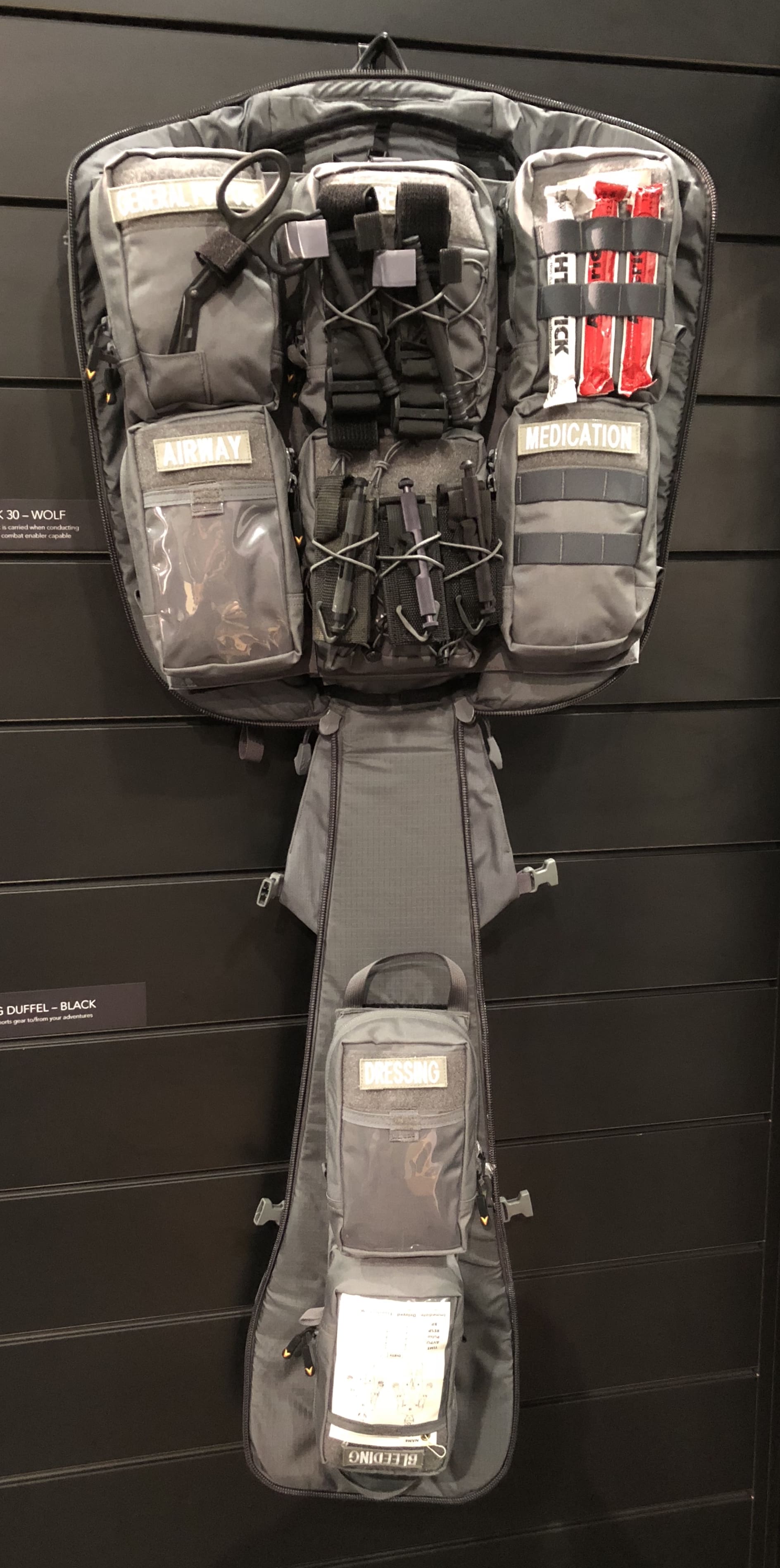
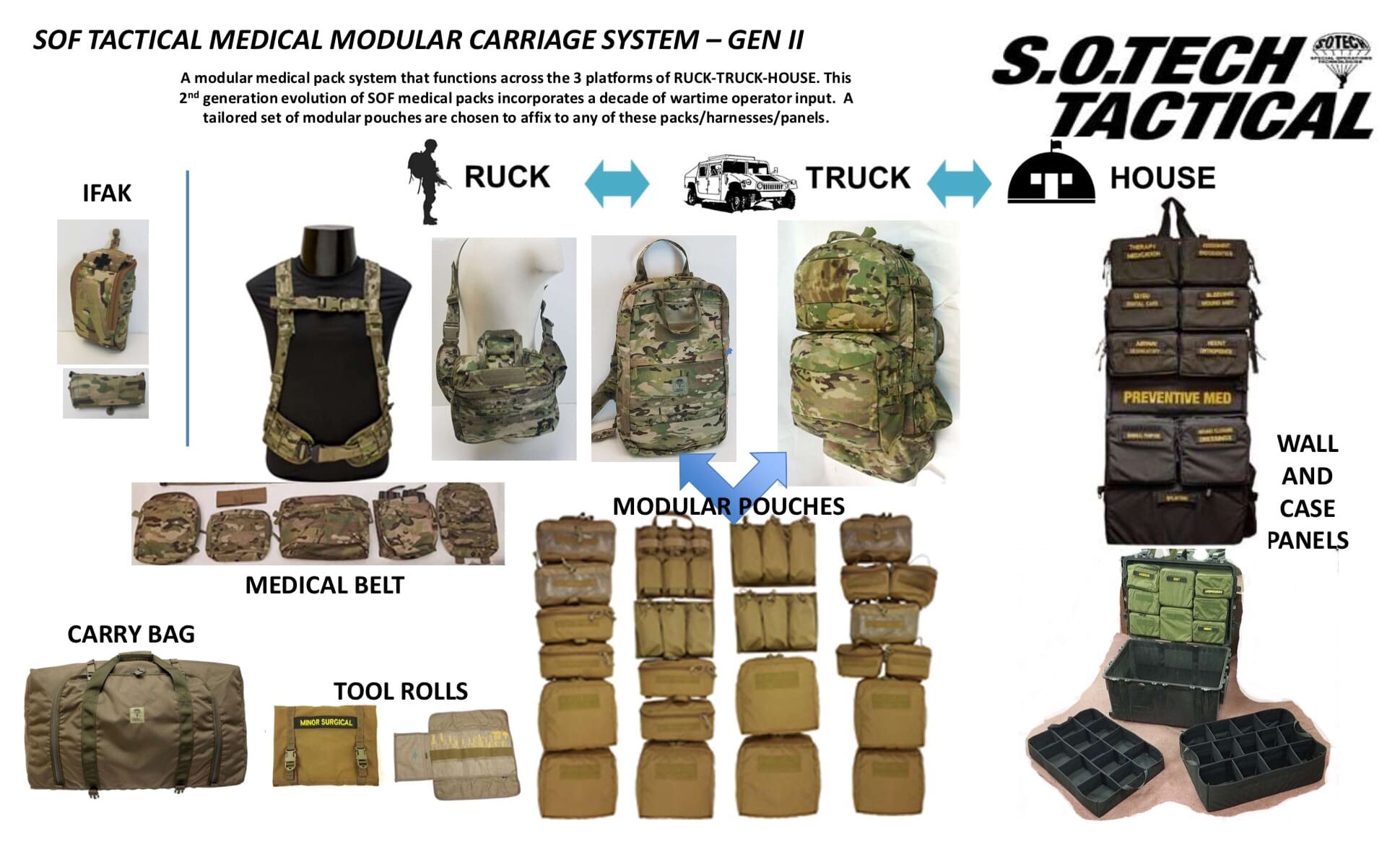
SOTECH is proud to announce its new SOF Medical Load Bearing System and will be displaying it at the SOMA Conference in Charlotte, NC this week. The kit contains a suite of packs, inserts, pouches, panels, tool rolls, IFAKS and med belts designed around the latest SOF methodology. Stay tuned for further detailed announcements!