GORE-TEX WINDSTOPPER

Archive for the ‘Mobility’ Category

Jankel Launches New Light Tactical Transport Vehicle (LTTV) at DSEi 2019

Friday, September 6th, 2019

Jankel, a world-leader in the design and manufacture of high-specification defence, security and NGO protection systems, will be launching their new Light Tactical Transport Vehicle (LTTV) at DSEi 2019, taking place at Excel London 10-13 September 2019.

The unveiling of the LTTV at DSEi follows on from the recent contract award for Belgium which will see Jankel deliver 199 of the Mercedes UNIMOG based vehicles to the Belgium Ministry of Defence (BeMOD). This contract follows the earlier production contract to supply the BeMOD with over 100 FOX Rapid Reaction Vehicles (RRV), based on a modified COTS Toyota chassis system.

Jankel’s LTTV is designed to provide a modular and configurable tactical support vehicle that benefits from unique, removable mission modules that enable the vehicle to be re-rolled rapidly for operational platform versatility.  With a payload of over 3 tonnes, dependant on the final vehicle specification, the LTTV has 3 core variants for Special Operations support, including an ambulance variant.  Alongside a user-configurable, fully integrated suite of military sub-systems that includes a removable ballistic protection kit, a Roll-Over-Protection-System (ROPS), weapon mounts and communications fit, the platform will provide full interoperability with the Fox fleet of tactical vehicles.

The LTTV’s versatility already promises to be a world-leader, literally able to plug and play between rear bed configurations. Combining the strengths of a trusted OEM platform with militarised and mission specific tactical enhancements, Jankel’s LTTV has already attracted the attention of several other countries and is of particular interest to those already operating with the Mercedes Benz UNIMOG platform.

Dan Crosby, Commercial Director at Jankel said: “Our team is very excited to be showcasing the LTTV at DSEi this year. Having achieved Mercedes Benz Direct Partnership certification, the LTTV is a great example of Jankel’s ability to offer armoured, tactical and utility vehicles based on modified Mercedes Benz chassis systems.” He added: “We believe that the exceptional modular functionality of the LTTV will allow us to build on the significant milestone successes that Jankel has achieved in recent years”.

At DSEi Jankel will be exhibiting at Stand N6-350.  As well as the LTTV, Jankel will have on display a Fox RRV and a wide range of BLASTech specialist seating solutions.

 www.jankel.com

Army Closer to Delivering New Infantry Squad Vehicle

Tuesday, September 3rd, 2019

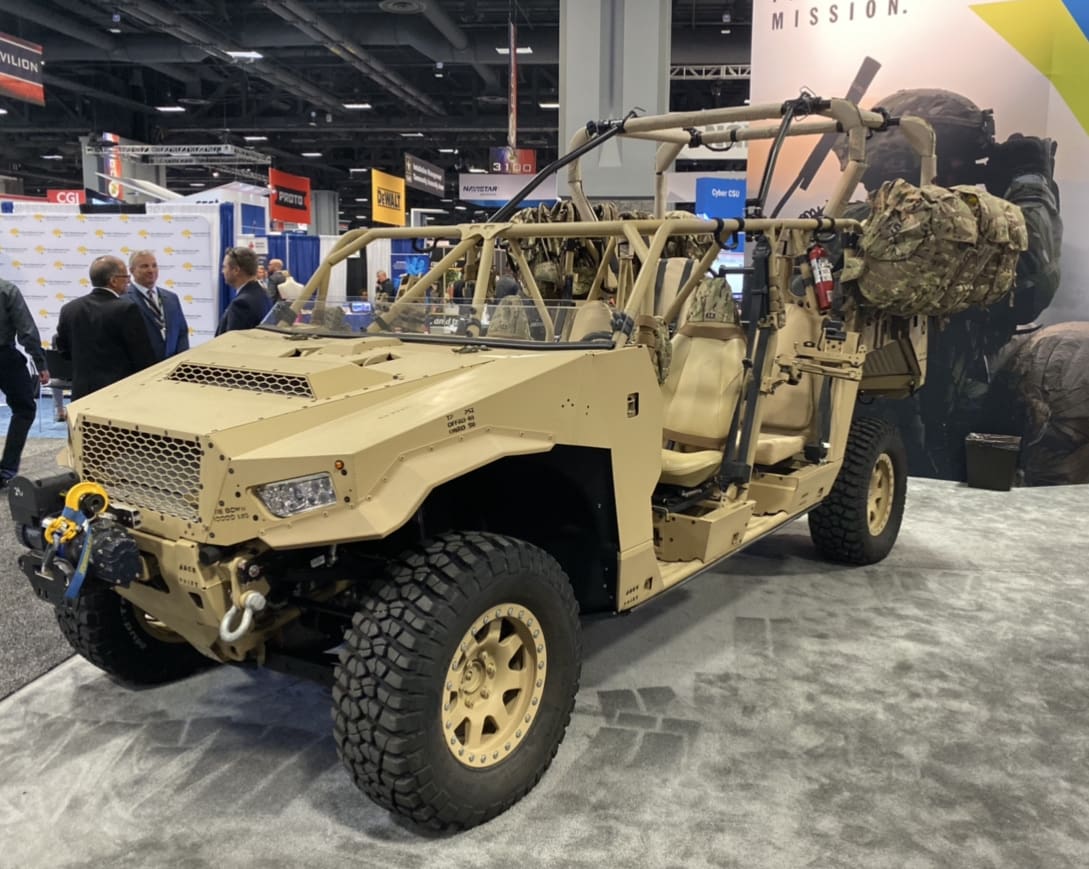
DETROIT — The Army is one step closer to fielding a new infantry squad vehicle after naming three industry leaders to develop prototypes, Aug. 23, 2019.

The $1 million mock-up contract makes strides toward the Army’s goal of producing new ISVs in 2020.

“The modernized vehicles will provide enhanced tactical mobility for an infantry brigade combat team to move quickly around the battlefield,” said Steven Herrick, Ground Mobility Vehicle product lead, U.S. Army Program Executive Office Combat Service & Combat Service Support, adding the vehicles will have ability for “repositioning operations to provide commanders greater freedom of movement and action.”

In February 2019, the Army approved a procurement objective and plans to purchase 649 ISVs.

A nine-Soldier infantry squad, along with associated equipment, will comfortably maneuver in the vehicles up to 5,000 pounds, Herrick added.

The scheduled delivery date for all three competing teams is Nov. 13, at Aberdeen Test Center in Maryland for initial assessment. The competing teams include Oshkosh Defense/Flyer, GM Defense, and SAIC/Polaris.

“Upon their arrival at the Maryland proving ground, all designs will compete in several performance, operational, and characteristics tests. Evaluations are scheduled to run through December,” Herrick said.

Following their early trials, the vehicles will be moved to Fort Bragg, North Carolina, to undergo their second round of testing. Once there, they will be subject to operationalized assessments through a series of tests on how effective the prototypes work for Soldiers.

“The Army plans to down select to one company for production in the second quarter of fiscal year 2020,” Herrick said. “This selection will be based largely on Soldier input and response to a formal request for proposal for production.”

The ISVs have been intended to provide ground mobility vehicle capabilities to the Army since the original model.

At first, the Army started looking toward industry to develop the new ISV in September 2018. Lightweight vehicles are essential to increase speed in combat and provide ability to be transported by helicopter into austere locations, Herrick said.

“Ground mobility vehicles provide flexibility for entry operations, permissive and non-permissive, to counter threat anti-access strategies through the use of multiple entry points — air-drop, air-land, and air-insertion,” he said.

By Thomas Brading, Army News Service

Mack Defense Partners with Truck-Lite on U.S. Army Heavy Dump Truck Contract

Saturday, August 31st, 2019

ALLENTOWN, PA (August 27, 2019) – Mack Defense is partnering with Truck-Lite Co., LLC to provide lighting systems for the M917A3 heavy dump truck (HDT). Truck-Lite is a worldwide leader in heavy-duty lighting, telematics, engine protection, safety and visibility systems.

“To meet the demanding specifications of the U.S. Army, Mack Defense assembled a world class team of suppliers to develop a best-in-class vehicle,” said Jack Terefinko, Mack Defense acquisition program manager. “That includes working with partners like Truck-Lite, which has years of experience in developing military-spec equipment.”

Since 1998, Truck-Lite has produced military-spec lighting that meets or exceeds the military’s strict lighting standards. Mack Defense partnered with Truck-Lite to bring that expertise to the M917A3 HDT program in the form of its blackout drive lights, front and rear composite lights and auxiliary lighting.

“Truck-Lite has supported the U.S. Army for more than 20 years through the development and release of forward and signal lighting that withstands the harsh environments of defense settings,” said Jacques Baudeloque, military sales director for Truck-Lite. “We’re proud to continue our relationships with both Mack Defense and the Army to provide the toughest and best lighting for the M917A3 HDT.”

The U.S. Army awarded Mack Defense a firm-fixed-price $296 million contract in May 2018 to produce up to 683 M917A3 HDTs. Based on the commercially-available Granite® dump truck, the Mack Defense M917A3 HDT has been optimized meet the demanding requirements of the U.S. Army with heavier-duty rear axles, all-wheel drive, increased suspension ride height and other rugged features.

Supacat Launches Latest HMT Extenda Variant at DSEi

Thursday, August 29th, 2019

29 August 2019, Supacat, the UK headquartered Special Forces vehicle developer, is showing the most advanced version of its world leading special forces vehicle, the HMT Extenda Mk2, for the first time at DSEi 2019.  This latest variant offers a step change in capability and payload capacity with an enhanced suspension system enabling gross vehicle weight to increase to 12,000kg from 10,500kg, and increase crew seating to six from four.  

The Extenda is a variant of Supacat’s successful HMT (High Mobility Transporter) platform, which is operated by Special Forces around the world.  The Norwegian Armed Forces are the first customer for the upgraded HMT Extenda Mk2.

Supacat has undertaken a rigorous and extensive programme of trials to Verify and Validate the performance of the system.  As well as reliability and durability trialling at the Supacat test facility, the vehicle has successfully completed a 12,500km tour of Australia in order to confirm reliability and performance over long distances.

“The innovations to the HMT platform on the latest Extenda deliver increased capability and superior payload and performance.  Our user feedback indicates that the vehicle has exceeded expectations, allowing them to do things they’d previously thought not possible”, said Phil Applegarth, Head of Supacat. 

The chassis is now STANAG compliant for recovery purposes and a 6.7 litre Cummins diesel engine comes as standard.   The blast and ballistic protection option can now be integrated at the factory build stage.

In line with Supacat’s modular design philosophy the latest Extenda provides for a range of configuration options from the factory in addition to the flexibility to re-role the base platform throughout the lifetime of the vehicle with a variety of mission modules and protection levels to meet changing demands.  HMT Extenda has the unique capability of being operated as a 4×4 or 6×6 wheel drive vehicle thanks to a removable 3rd axle.

Coming Soon From HPG Mobility

Monday, August 12th, 2019

55C0E420-E7CB-4EA9-A128-51AB150394A6

hillpeoplegear.com/mobility

The Corps’ JLTV Achieves Initial Operational Capability

Monday, August 12th, 2019

MARINE CORPS BASE QUANTICO, Va. —

The Marine Corps’ Joint Light Tactical Vehicle is officially ready to deploy and support missions of the naval expeditionary force-in-readiness worldwide.

Marine Corps Combat Development Command, Combat Development and Integration declared the JLTV program—part of the Light Tactical Vehicle portfolio at Program Executive Officer Land Systems—reached initial operational capability, or IOC, on Aug. 2, nearly a year ahead of schedule.

Photo by Cpl Juan Bustos

“Congratulations to the combined JLTV Team for acting with a sense of urgency and reaching IOC early,” said Assistant Secretary of the Navy for Research, Development and Acquisition James Geurts. “Changing the speed in which we deliver, combined with coming in under cost and meeting all performance requirements, is a fine example of increasing Marine Corps capabilities at the speed of relevance which enables our Marines to compete and win on the modern battlefield.”

The JLTV, a program led by the Army, will fully replace the Corps’ aging High Mobility Multipurpose Wheeled Vehicle fleet. The JLTV family of vehicles comes in different variants with multiple mission package configurations, all providing protected, sustained, networked mobility that balances payload, performance and protection across the full range of military operations.

Photo by Cpl Matthew Kirk

“The warfighting capabilities the JLTV provides our Marines far exceed the capabilities offered by its predecessor,” said PEO Land Systems John Garner. “I’m proud of what our team, in collaboration with the Army, has accomplished. Their commitment to supporting the warfighter delivered an exceptional vehicle, ahead of schedule, that Marines will use to dominate on the battlefield now and well into the future.”

Several elements need to be met before a program can declare IOC of a system, which encompasses more than delivery of the system itself. The program office also had to ensure all the operators were fully trained and maintenance tools and spare parts packages were ready.

“IOC is more than just saying that the schoolhouses and an infantry battalion all have their trucks,” said Eugene Morin, product manager for JLTV at PEO Land Systems. “All of the tools and parts required to support the system need to be in place, the units must have had received sufficient training and each unit commander needs to declare that he is combat-ready.”

For the JLTV, this means the program office had to fully field battle-ready vehicles to the Marine Corps schoolhouses—School of Infantry East at Camp Lejeune, North Carolina; School of Infantry West at Camp Pendleton, California; The Basic School at Quantico, Virginia; and the Motor Transport Maintenance Instruction Course at Camp Johnson, North Carolina—and to an infantry battalion at II Marine Expeditionary Force. The program office started delivering vehicles to the schoolhouses earlier this year and started delivering vehicles to the infantry battalion last month.

Photo by Sgt Timothy R. Smithers

On Aug. 2, Lt. Col. Neil Berry, the commanding officer for 3rd Battalion, 8th Marines, notified Morin and his team of the unit’s combat readiness with the JLTV. On Aug. 5, The Director, Ground Combat Element Division at CD&I notified PM LTV of its IOC achievement. The JLTV is scheduled to start fielding to I MEF and III MEF before the end of September.

According to LTV Program Manager Andrew Rodgers, during the post-acquisition Milestone C rebaseline of the JLTV schedule in January 2016, IOC was projected to occur by June 2020.  

Rodgers says that detailed program scheduling, planning and, most importantly, teamwork with stakeholders across the enterprise enabled the program office to deliver the vehicles and reach IOC ahead of schedule.

“It was definitely a team effort, and we built up a really great team,” said Rodgers. “In terms of leadership, our product managers’—both Gene Morin and his predecessor, Dave Bias—detailed focus and ability to track cost, schedule and performance was key. Neal Justis, our deputy program manager, has significant prior military experience working for the Assistant Secretary of the Army for Acquisition, Logistics and Technology, so having him on board knowing how to work the Pentagon network was a huge force multiplier.”

Rodgers is quick to note that, although the team has reached IOC, this is really only the beginning of the JLTV’s future legacy.

“We are really at the starting line right now. Our grandchildren and great-grandchildren will see JLTVs in the DOD,” said Rodgers. “We’ll easily still have these assets somewhere in the DOD in the year 2100. Welcome to the start of many generations of JLTVs.”

By Ashley Calingo, PEO Land Systems Public Affairs | Marine Corps Systems Command

SAIC and Polaris Team On Army Infantry Squad Vehicle

Friday, August 9th, 2019

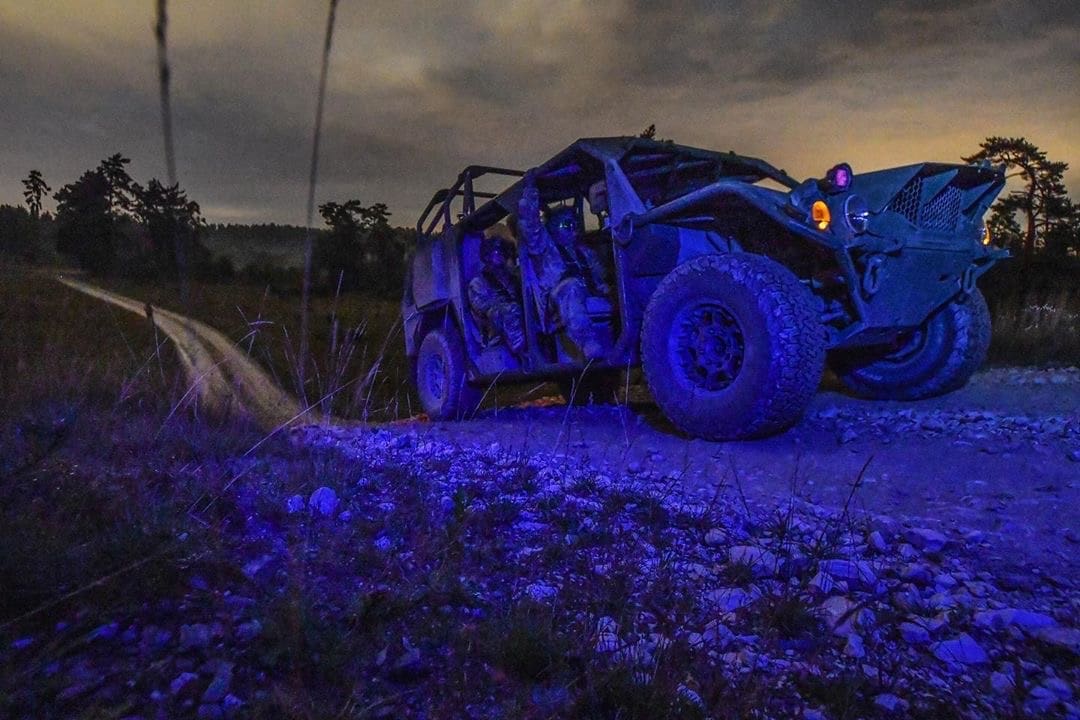
RESTON, Va., August 8, 2019 — Science Applications International Corp. (NYSE: SAIC) and Polaris Government and Defense, a division of Polaris Inc., (NYSE: PII) announced today they are teaming up for the U.S. Army’s Infantry Squad Vehicle (ISV) vehicle program. SAIC, a leading technology integrator, joined with Polaris, the industry leader in ultralight mobility platforms, to offer the proven DAGOR vehicle. DAGOR provides the warfighter superior operational capability, crew area, mobility and maneuverability in a tactical environment.

“SAIC has a long history of performing vehicle engineering and platform integration work, and the Army has a need for small-unit mobility and maneuverability that can be easily met with the proven DAGOR vehicle that has been deployed around the world,” said Jim Scanlon, executive vice president and general manager of SAIC’s Defense Systems Group. “Working with Polaris, SAIC will provide comprehensive systems engineering and integration using state-of-the-art tools and processes that leverage domain understanding gained through extensive field support and advanced experimentation in support of the Army to give the ISV a technological edge on the battlefields of tomorrow.”

“The DAGOR was designed to meet a squad’s payload and off-road mobility demands, while meeting weight and size restrictions that maximize air transportability,” said Jed Leonard, vice president, Polaris Government and Defense. “The lightweight and highly mobile platform supports the Army’s expeditionary missions providing a key capability needed on the ever-changing battlefield.”

The SAIC-Polaris team has delivered a baseline vehicle sample to soldiers in the 82nd Airborne Division for soldier assessment. The DAGOR vehicle can carry up to nine soldiers with their equipment and supplies. It provides the speed, mobility and communications support Army small units require to obtain and maintain situational awareness of the battlefield.

SAIC’s expertise in C4ISR integration onto ground vehicles could provide additional capabilities such as cybersecurity, enhanced surveillance, secure communications, and non-kinetic fires. The DAGOR ISV will leverage and further enhance the already proven, production-ready solution that has been tested, certified, and fielded to operational units in the U.S. Military and its Allies since 2015.

202 MPH $205,000 APR RS7 The World’s Fastest Armored Car?

Tuesday, July 30th, 2019

Pete Blaber led company uses advanced polycarbonate composites and ballistic glass and “world class” security features to creat a B-4 level safe room.

AddArmor, known as much for the pedigree of its leadership as for designing what they call sophisticated mobile safe rooms, recently announced its latest creation: the “world’s fastest armored car.” It’s an Audi RS7 built with a polycarbonate weave they say is 10x stronger than ballistic steel.

The new 202 mph APR-tuned RS7 was designed and built to showcase new developments in lightweight combat-proven polycarbonate armor paneling. Armored vehicles have long been associated with lumbering, heavy duty trucks. This was apparently the impetus that pushed AddArmor design. As they describe it, they decided to showcase a truly modernized armored car that could put lie to such impressions – and by doing so to highlight just how far modern armor technology has evolved. The result is a car they claim can perform at speeds of more than 200mph sporting an armor material weighing 60% less than ballistic steel.

AddArmor President Jeff Engen explains.

“With the new AddArmor APR RS7, we wanted to demonstrate how today’s armoring technology allows drivers to pick from a wide range of cars not normally associated with armored vehicles. The total armoring weight of the AddArmor APR RS7 is no more than 200 pounds. That small amount of weight allows for exotic sports cars and even electric vehicles to be nicely armored without compromising their performance or range. The key difference is AddArmor uses a polycarbonate composite instead of heavy steel plating. The weave offers a much stronger, lighter package that simultaneously allows the car to be much faster.”

Speed and maneuverability is frequently a critical element of safety, so AddArmor worked to ensure the vehicle’s “lightweight comprehensive 360-degree protection” would function without compromising acceleration or braking. They combined this ballistic protection with horsepower. As a result, the RS7’s 4.0L twin-turbo engine is complemented an APR Stage II system. AddArmor advises us this “special performance package” will produce 760 horsepower/800 lb-ft of torque with a manufacturer-clocked 0 – 60 mph time of 2.9 seconds.

AddArmor upfitted European B4-level armoring to the RS7; this package combines front-seat 360-degree polycarbonate body panels and ballistic glass to limit weight and protect the primary the occupants. Their ballistic glass is comprised of a multi-layer mixture of polycarbonate and ballistic glass, providing a transparent layer of armor that can withstand prolonged attacks from blunt objects like bricks and bats. Ballistically, the B4 armor can stop a .44 Magnum round, allowing drivers and passengers to evade attack – more important to EP/PSD work than overlanding, but nice to have nonetheless!

Vehicle armor is ballistically rated, much as individual body armor is categorized in II, III, and similar levels by the NIJ. The actual terminology used my vary, for instance from the US State Department Armored Vehicle Program to others from half a dozen or more different countries.

As described by the AddArmor release, the APR RS7 features “Delta Force-tested security throughout.”

The description continues:

Hidden security countermeasures include a sonic sound cannon with a PA system and siren capable of 120 dB. Other security items include electric-shock door handles equivalent to a high-powered taser gun and pepper spray dispensers. For ramming, AddArmor installed a front barrier bumper that protects the car’s radiator while also allowing the automobile to comfortably drive through most ambush situations. The AddArmor APR RS7 also includes a specially developed rear blinding light system that uses aircraft landing technology to temporarily blind assailants. The new vehicle also features a custom smokescreen system. For added security, the AddArmor APR RS7 includes biometric gun racks hidden in the trunk that can accommodate assault rifles and handguns.

Another unique security measure included on the AddArmor APR RS7 is a special Global 911 concierge service. This satellite-activated 24/7 system monitors the vehicle’s occupants via their cell phones and an array of beacons. Any sign of trouble automatically sets off a siren in a command center staffed by highly trained security staff with military and first-responder backgrounds. The Global 911 concierge service assesses all security situations as they arise and dispatches solutions in the case of any emergency. These systems allow AddArmor to protect their clients anywhere around the globe.




For added security, the new AddArmor APR RS7 includes a multitude of other on-board tactical electronics. An overseas-compliant drone-denial frequency-jamming satellite communications system has been installed alongside active mine/explosion detection, as well as a state-of-the-art 360-degree night-vision camera system. In the case of any airborne attacks, the AddArmor APR RS7 has an overpressure gas detection unit with onboard gas masks and air tanks to supply filtered fresh breathing air.

The RS7 runs on high-performance 275/30ZR21 Pirelli P Zero Run Flat tires capable of driving 30 miles after sustaining multiple high-powered rifle shots.

The AddArmor APR RS7 demonstrates how AddArmor provides custom protection packages to meet clients’ needs for either new or existing vehicles. Security packages for executive, work, personal, and family vehicles are available starting at $28,000. The new AddArmor APR RS7 is available for $205,000.

AddArmor (which offers training as well) can be found online at AddArmor.com.

DR can be contacted on IG via @reederwrites.