GORE-TEX WINDSTOPPER

Archive for the ‘Optics’ Category

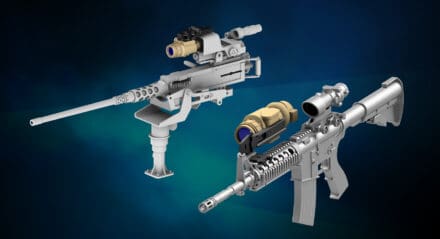
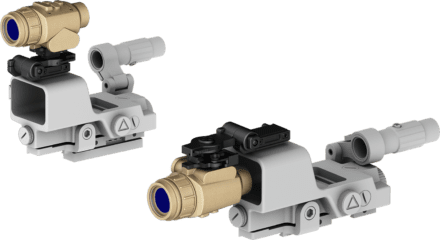
Sneak Peek – Safran DSI IronSnake Thermal Reflex Sight

Thursday, January 16th, 2025

During next week’s SHOT Show in Las Vegas Safran Defense & Space Inc is going to officially unveil their new thermal Fused red dot sight, dubbed IronSnake.

Designed for assault rifles and light ­machine guns, the IronSnake reflex sight offers a clear direct view channel ­ enhanced by high contrast thermal imagery and a configurable digital reticle.

Day or night, IronSnake can be used to identify and engage targets.

Developed in France in collaboration with BERTIN Technologies, IronSnake offers optimized ergonomics and compactness thanks to a combination of the latest technologies from France’s leading players in their field.

See IronSnake in the Safran booth #31108.

Holosun – AEMS PRO X2 & AEMS CORE X2

Monday, January 13th, 2025

Introducing the AEMS PRO X2 & AEMS CORE X2: The Next-Generation.

AEMS PRO X2 enhances the AEMS platform by improving accuracy through an advanced optical system that reduces parallax by 50%. AEMS PRO X2 also introduces a forward-facing light sensor creating a smarter AUTO Mode that drastically improves dot contrast in dynamic lighting conditions. AEMS PRO X2 also includes a new Anti-Reflective Device and an all-new four post, lower 1/3 co-witness mount. AEMS PRO X2 remains backwards compatible with original AEMS mounts.

AEMS CORE X2 enhances the AEMS platform by improving accuracy through an advanced optical system that reduces parallax by 50%. AEMS CORE X2 also features an all-new four post, lower 1/3 co-witness mount. AEMS CORE X2 remains backwards compatible with original AEMS mounts.

Both the AEMS PRO X2 and AEMS CORE X2 will be available in Red, Green, & Gold LED Reticles.

Specifications:

•Up to a 50,000 Hour Battery Life

• Shake Awake Technology™ with Last Setting Recall

• Solar FailSafe™ (AEMS Pro)

• Flip Down Protective Lens Covers (AEMS Pro)

• 2 MOA Dot Reticle Only (AEMS Core Only)

• Battery Type: CR2032

• Housing Material – AEMS: 7075 T6 Aluminum

• Housing Material – AEMS Core: Durable Aluminum

• Multi-Reticle System™ (MRS): 65 MOA Circle & 2 MOA Dot; 2 MOA Dot; 65 MOA Circle (AEMS Pro)

holosun.com

SHIELD Sights Announces Enclosed Emitter Advanced Mini Sight and AMSc Compact Red Dot Sights

Thursday, January 9th, 2025

For Immediate Release: Crewkerne England – Pioneer in red dot sight manufacturing and design, SHIELD Sights announces the Advanced Mini Sight (AMS) and AMSc as the latest advancement in mini sight technology. The AMS and AMSc are now available worldwide through SHIELD Sights and participating dealers.

The AMS and AMSc (compact) are fully enclosed pistol sights that share the standard SHIELD footprint and maintain a co-witness with standard height iron sights. The AMS Line series of sights combine the best features of the military-proven SIS enclosed carbine sight and RMSw pistol optic to create a compact yet fully sealed pistol sight. This combination integrates the patented no-click adjustment mechanism, 3 auto brightness settings, 12 manual brightness settings, and NGV compatibility.

The all-aluminium frame houses 23mm x 17mm (AMS) and 19mm x 16mm (AMSc) all-glass objective lens, features an integrated rear peep sight, and a mounting interface for fitting aftermarket accessories like a roll cage, lights, lasers, or protective lens covers. The housing is also nitrogen-purged and waterproof to depths of 30 feet for 30 minutes.

Weighing only 37g, 1.3 oz (battery included), the AMS and AMSc boast a calculated battery life of 20,000hr with CR2032 battery on manual level 7 setting. The side battery compartment is easily accessible and capable of using CR2025, CR2032, and CR2050 batteries.

Available models

AMS 4MOA
AMS 8MOA
AMS Multi Reticle ( 2MOA, 2MOA + 65MOA Ring, 8MOA, 8MOA + 65MOA Ring, 8MOA Horseshoe, and 8MOA Horseshoe + 65MOA Ring )

AMSc 4MOA
AMSc 8MOA

Features include AMS

–       Mounts to Standardized SHIELD footprint

–       Co-witness to standard iron sights

–       Large crystal clear 1x Glass lens

–       Weighing only 34g, 1.2 oz ( without battery ).

–       12 stage manual brightness adjustment, including 3 NVG settings.

–       3 stage auto brightness adjustments

–       20,000 hours battery life calculated using 2MOA LED on setting 7 using CR2032 Battery.

–       Uses CR2025, CR2032, or CR2050 batteries

–       Nitrogen purged Aerospace Grade Aluminium housing

–      Submersible to 30 feet for 30 minutes.

Features include AMSc

–       Mounts to Standardized SHIELD footprint

–       Co-witness to standard iron sights

–       Large crystal clear 1x Glass lens

–       Weighing only 21g, 0.75 oz ( without battery ).

–       20,000 hours battery life calculated using 4MOA LED using CR2032 Battery.

–       Uses CR2025, CR2032 or CR2050 batteries

–       Nitrogen purged Aerospace Grade Aluminium housing

–        Submersible to 30 feet for 30 minutes.

MSRP AMS: $599.99
MSRP AMSc: $569.99

www.shieldsights.com

Primary Arms Optics Reveals the NEW PLx HTX-1, an American-Made Enclosed Pistol Optic with a Modular Chassis System

Tuesday, January 7th, 2025

HOUSTON, TEXAS — As part of Discovery 2025, Primary Arms Optics unveiled the NEW PLx® HTX-1, the company’s first-ever Made-in-USA optic. This enclosed-emitter reflex sight combines advanced materials, innovative engineering, and modern manufacturing techniques to set a new standard for American pistol optics.

The HTX-1 is part of Primary Arms Optics’ flagship PLx® Tier, known for delivering the highest levels of precision and performance. As Primary Arms’ inaugural domestically produced optic, the HTX-1 represents a significant milestone in the company’s product capabilities, while reinforcing its commitment to quality and reliability.

Unique in its design, the PLx HTX-1 features a patent-pending modular chassis mounting system, which ensures compatibility with nearly all optics-ready handguns. Unlike traditional adapter plates, this integrated system creates a stronger connection and amuch lower optic centerline, enabling co-witness with standard-height iron sights. This design minimizes height-over-bore while improving holster compatibility.

Designed for the toughest conditions, the HTX-1 features a 7075 Aluminum housing with reinforced contours and a recessed lens pocket to guard against drops, impacts, and debris. Potted electronics and Grade 12.9 hardware ensure reliable performance under shock, vibration, and heavy recoil. The optic features narrow-band glass doublet lenses treated with wide-band anti-reflective coatings, which provides a clear, undistorted sight picture in any environment.

At release, the HTX-1 is available with two reticle options:ACSS® Vulcan® Dot with a toggleable outer ring for rapid target acquisition, or a 4 MOA dot reticle. The sight is powered by a side-loading CR2032 battery and features AutoLive® illumination technology, which conserves battery life when the optic is not in use.

The PLx HTX-1 is a significant milestone for Primary Arms Optics, reflecting years of research, development, and investment in American manufacturing. Its introduction also strengthens the company’s growing PLx® product line, which serves professional marksmen, law enforcement, and dedicated shooting enthusiasts with premium optics designed to excel in demanding environments.

“HTX-1 is the result of a three-year journey to expand optics manufacturing in the United States,” says Marshall Lerner, Founder and CEO of Primary Arms Optics. “This project exemplifies our commitment to innovation and craftsmanship, delivering a truly American-made optic designed and built in Houston, Texas.”

For full information about the HTX-1 and other Discovery 2025 optics, click here.

AIMPOINT Releases New Red Dot Optic in Collaboration with GLOCK

Tuesday, January 7th, 2025

Manassas, VA, January 7, 2025 – Aimpoint, the leading manufacturer and innovator of red dot sighting technology in partnership with GLOCK, a leading global manufacturer of pistols, announce an exclusive package that will be available January 20th in limited quantities. The GLOCK x Aimpoint COA™ combo will be available on select 9mm pistols with optic factory installed using the new Aimpoint A-CUT™ interface.

The new Aimpoint® COA™ red dot optic is optimized for concealed carry pistols. This revolutionary optic is designed for use on both slimline and standard size pistol frames. Developed and engineered with focus on the shooting experience, the COAcombines ease of use, reliability, performance, and innovation in an ultra-compact design.

The available pistols with the Aimpoint COA Optic and A-CUT interface include the G43X, G48, G19 Gen5, G45, and the G47 models. The Aimpoint COA optic is sold exclusively within this package and is not being sold separately at this time. This collaboration provides the user with superior “out-of-the-box”performance without sacrificing value.

“Our goal was to create the best shooting experience possible in a package delivering on our brand promises – Perfection and Performance from Trust. The result is a system you can trust when your life depends on it.” – Jonas Ardemalm, Director, OEM RDS Sales & Business Development – Aimpoint AB.

The Aimpoint A-CUT™ interface mounting system allows for the sight to be mounted deeper into the pistol slide for extreme stability and durability – ensuring long-lasting, rugged performance in any condition. Its innovative, low-profile design makes for easier unholstering, enhancing usability and concealment capabilities.

The GLOCK x Aimpoint package comes with high performance at a great value. The Aimpoint COA optic comes direct cut from the factory on GLOCK’s most popular 9mm pistol models. The wide window on the Aimpoint COA sight combined with the low mount allows the dot to co-witness with the factory iron sights. The combined features of the GLOCK pistol with Aimpoint COA optic make for a user-friendly, high performance pistol red dot combo suitable for competitive shooters, law enforcement, and firearms enthusiasts everywhere.

For product specs and to learn more about the collaboration, visit aimpoint.us/coa.

NoiseFighters – Quicksave

Sunday, January 5th, 2025

Quicksave is a QD lanyard for night vision binoculars & thermal monoculars.

Designed to accept dove-tail night vision and thermal optical devices when they aren’t mounted to the helmet, Quicksave is a great way to ensure those sensitive items remain at hand.

Made in the USA from a lightweight Arkema polymer body with 7075-T6 hardcoat anodized aluminum latch and Kevlar cord with grade 5 titanium rings.

noisefighters.com/products/quicksave-a-qd-lanyard-for-night-vision-binoculars-thermal-monoculars

German Parliament Approves the 3rd Option of the OCCAR Night Vision Contract Under which 25 000 Binoculars will be Provided Equipped with Photonis Image Intensifier Tubes

Thursday, December 19th, 2024

MÉRIGNAC, FRANCE – DECEMBER, 18th, 2024

– Germany confirms the exercise of the 3rd option of its OCCAR night vision contract with the Consortium Hensoldt Optronics / THEON providing enhanced night combat capability to the German Armed Forces

– In this framework, Exosens will provide the Consortium with Photonis 16mm image intensifier tubes, recognized as the European standard, widely used by European Armed Forces

– This contract, together with increased demand on its markets, strengthens Exosens’ visibility over the mid-term

– This OCCAR option 3 will be delivered mainly in 2025 and 2026. Therefore, Exosens will communicate early January its resulting 2025 guidance

The Defence Committee of the German parliament has approved a new addendum to the OCCAR contract today, exercising the 3rd consecutive option, ordering 25 000 binoculars equipped with Photonis image intensifier tubes, with an additional option of a similar size still available. The consortium of HENSOLDT Optronics GmBH and THEON SENSORS SA has been invited by OCCAR to sign the amendment on 20 December 2024 in Bonn, Germany.

The original contract for the production and in-service support of Binocular Night Vision Goggles (BNVG) with OCCAR was signed in July 2021. To date, 49 550 devices using Photonis 16 mm image intensifier tubes have already been contracted for supplying to the German and Belgian Armed Forces (note: 2 tubes per device). This additional addendum will include 25 000 binoculars to be delivered to Germany by 2026.

Photonis 4G and 4G+ image intensifiers have been selected by the armies of major European countries and NATO forces, who recognize the unique product performance of these products on the battlefield.

The Group will communicate early January 2025 its guidance for the 2025 fiscal year, which will incorporate the impact of this new contract.

The Group further confirms that it is fully on track to deliver its guidance for the 2024 fiscal year communicated as part of its IPO.

“We’re very proud to have earned the trust of the German government by once again receiving an order of a new batch of night vision goggles featuring Photonis image intensifier tubes. The performance and quality of our night vision products are key differentiators for our end users and allow us to be the undisputed world leader of image intensifier tubes. While we remain focused on meeting customer requirements by delivering volume on time with the right level of quality, we will continue to invest in capacity expansion and operational excellence required by a stronger market. This contract will also contribute to strengthen our mid-term perspectives.” commented Jérôme Cerisier, CEO of Exosens.

Climate, Weather, & Optics

Saturday, December 14th, 2024

In the field, your environment often dictates the performance of your gear, and this is especially true when it comes to gun optics. Many shooting enthusiasts have heard of ‘thermal shift’, which occurs when an optic’s zero changes due to rapid changes in exterior temperature. But this is just one of the many ways that an operating environment can affect your optic’s capabilities.

Whether you’re in dense jungles, scorching deserts, or alpine snowfields, understanding how to adapt and safeguard your optical systems in these varying climates can make the difference between success and failure. This article delves into the nuances of how different biomes impact the performance and selection of optics, and how you can optimize your equipment selection for that environment.

The Impact

Why does this matter?

For military and security professionals, the reliability of an optic is obviously crucial. It’s not just about having a clear sight picture or consistent zero; it’s about ensuring your equipment can withstand and function optimally in extended exposure. Even within a given category (such as red dots, rifle scopes, etc.), there are often significant variances in how two different optics will handle certain weather conditions, temperatures, and altitudes.

Part of this comes from the quality of the optic’s manufacturing, but there are certain design elements that simply favor certain biomes over others. As optics have become an essential component of a gunfighter’s kit, it makes sense that any professional team would want to choose the optics that best suit their area of operation.

Major Biomes

Each biome presents unique challenges to optics. We’ll coverlessons from five of the most common biomes here:

1. Woodland/Jungle

2. Desert/Arid

3. Snow/Mountain/Alpine

4. Coastal/Swamp

5. Urban

Woodland/Jungle

Woodlands and jungles are characterized by dense vegetation, variable lighting conditions, and high humidity. These environments present unique challenges for optical systems.

Glass Quality is Essential: The varied lighting conditions and hard shadows in woodland environments can cause significant visual irregularities and chromatic aberrations. High-quality glass helps minimize these distortions, ensuring clear and accurate target identification despite the complex interplay of light and shadow. For rifle scopes, optics with apochromatic HD or ELD glass are ideal.

Short Range, High Precision: Although engagement distances are typically shorter in forests, the abundant cover and concealment make target acquisition and precision shooting crucial. Optics must offer quick target acquisition in close-quarter engagements yet be capable of engaging small, minimally exposed targets in the brush.

Snag Hazards: The dense vegetation in forests creates numerous snagging hazards. Moving through brush, your gear will get caught and snag occasionally. As such, your opticsshould be compact and streamlined, minimizing protrusions that could catch on branches or underbrush. Accessories like flip-cap scope covers, 1.93” (or greater) optic mounts, and even offset reflex optics should be regarded with some scrutiny.

Hydrophobic Coatings: In high-humidity environments, optics are prone to fogging and water spots. Hydrophobic coatings on lenses help maintain clarity by repelling water and preventing moisture accumulation on the glass surfaces. This is generally not an issue on high-quality optics, but some affordable optics may suffer in long-term exposure.

Desert/Arid

Deserts and arid regions are characterized by extreme temperatures, bright sunlight, and pervasive dust and sand. Over the past two decades, much has been learned about selecting optics for desert environments.

Sunlight Management: Long-term exposure to intense sunlight and harsh lighting angles requires accessories like scope shades and anti-reflective devices (ARDs) to reduce glare and improve visibility.

Reticle Illumination: Reticles need to be highly illuminated to stand out against the bright desert backdrop. Alternatively, using a black reticle can provide contrast without relying on battery-powered illumination.

Increased Magnification: Engagement distances in deserts are generally longer, necessitating optics with higher magnification to accurately identify and engage targets at range.

Color Definition: The desert landscape often have a tight band of natural colors, making camouflage highly effective. Optics with excellent color definition are crucial for distinguishing targets from the background.

Wide Field of View: Given the expansive and open nature of desert terrain, a wide field of view allows for effective scanning of large areas, aiding in target detection and situational awareness.

Thermal Stability: The extreme temperature fluctuations in deserts can affect the internal components of optics. High-quality construction and materials that withstand thermal expansion and contraction are essential to prevent failures or loss of zero.

Scratch Resistance: Windborne sand and dust can scratch and damage lenses. Optics with scratch-resistant coatings can endure the abrasive environment, maintaining clear visibility.

Capped Turrets: Dust and sand can penetrate seals and O-rings, causing damage and affecting functionality. Capped turrets help protect these vulnerable areas, ensuring the longevity and reliability of the optics.

Snow/Mountain/Alpine

Mountainous and alpine environments present challenges such as cold temperatures, high altitudes, and rugged terrain.

Temperature Sensitivity: Cold temperatures can cause grease inside the optics to gum up, hindering their operation. Optics designed for cold environments use specialized lubricants that remain functional in extreme cold. Once again, these greases tend to only be found in high-quality optics from field-proven manufacturers.

Battery Performance: Batteries lose charge quickly in cold weather. Soldiers should carry spare batteries in interior pockets of their clothing to keep them warm and ensure their electronics remain operational. It is not enough to keep them in your backpack or armor carrier pockets, as they will freeze and drain before you can use them.

Ballistic Performance: High altitudes and cold, thin air can significantly affect ballistic performance. Optics need to be precisely zeroed for these conditions to maintain accuracy.Optics with BDC stadia will likely be at least slightly off at their indicated distances, so MIL subtensions are ideal.

Durability: The rugged terrain of alpine environments increases the risk of slips and drops. Optics must be robust and impact-resistant to withstand these harsh conditions. If it isn’t drop-proof, it isn’t worth bringing out into the cold.

Fogging and Condensation: Preventing ice formation and fogging is critical in cold environments. The condensation from your breath—or even your sweat—is usually enough to fog up an optic in extreme temperatures, and face-coverings like balaclavas tend to exacerbate it. Thus, high-quality hydrophobic coatings on lenses are very important to ensure that optics remain clear, even in freezing temperatures.

Coastal/Swamp

Coastal and swamp environments are characterized by high humidity, saltwater exposure, and reflective surfaces.

Water Resistance: While most high-quality optics are waterproof, continuous exposure to water and humidity can test their limits. Optics should have robust seals and be rated fortheir waterproof performance.

Enclosed Emitters Only: These environments often have high precipitation, so reflex sights should feature an enclosed design to prevent rain from reaching and blocking the emitter.

Reflection Management: Water surfaces create numerous reflections, complicating visibility for magnified optics. Once again, high-quality glass and ARDs help manage these reflections, maintaining clear sightlines.

Material Quality: Saltwater is highly corrosive, requiring optics made from materials resistant to rust and corrosion. Seals must be robust to prevent salt spray from penetrating the device.

Frequent Cleaning: Sand and grit can adhere to optics due to water and condensation. Regular cleaning with fresh water prevents salt deposits and maintains optical clarity.

Urban

Urban environments present a complex array of visual contrasts, varying distances, and numerous cover and concealment options. Generally, we’re talking about dense urban centers with tall buildings that can greatly affect the environment at street level.

Visual Contrast: They don’t call it an ‘urban jungle’ for nothing. Like forests, urban settings offer an extremely wide range of lighting conditions and colors with hard shadows and high reflections. High-quality optics with excellent contrast and clarity are essential for target identification, particularly in windows or at elevated positions.

Varied Engagement Distances: Urban operations involve extreme variations in engagement distances, from long sightlines to close-quarters combat. Optics need to be versatile, offering both magnification and rapid target acquisition capabilities.Magnified optics should be paired with a close-range backup. Likewise, reflex sights are often best paired with a flip-up magnifier.

Wind Patterns: Tall buildings create unpredictable wind patterns, including updrafts, downdrafts, and full-value directional winds. When relying on MIL or pre-calculated wind holds, be aware that your reads might be very far from reality.

Low-Light Performance: Urban areas have significant artificial lighting, creating glare and reflections. At night, the stark lighting differences necessitate optics that can handle bright lights and shadows.

Thermals and Night Vision: Bright sources of light and varied heat sources complicate the use of thermal imaging and night vision. Advanced optics that can filter and adjust to these conditions are crucial for maintaining operational effectiveness.Hybrid systems also help to counteract issues like targets behind glass panes.

Conclusion

These are just a few of the biggest considerations for common biomes here in the United States, but many of the learnings can be applied to global environments.

Ultimately, understanding the specific challenges posed by different biomes is essential for selecting and maintaining the right optics for any mission. By considering factors such as lighting conditions, temperature extremes, and environmental hazards, soldiers can ensure that their optical systems perform optimally in any setting.

This guest post was provided by Primary Arms.