XC3 Weaponlight

Archive for the ‘Optics’ Category

Wilcox – L4 Series Hybrid Shroud

Thursday, April 10th, 2014

DSC03747

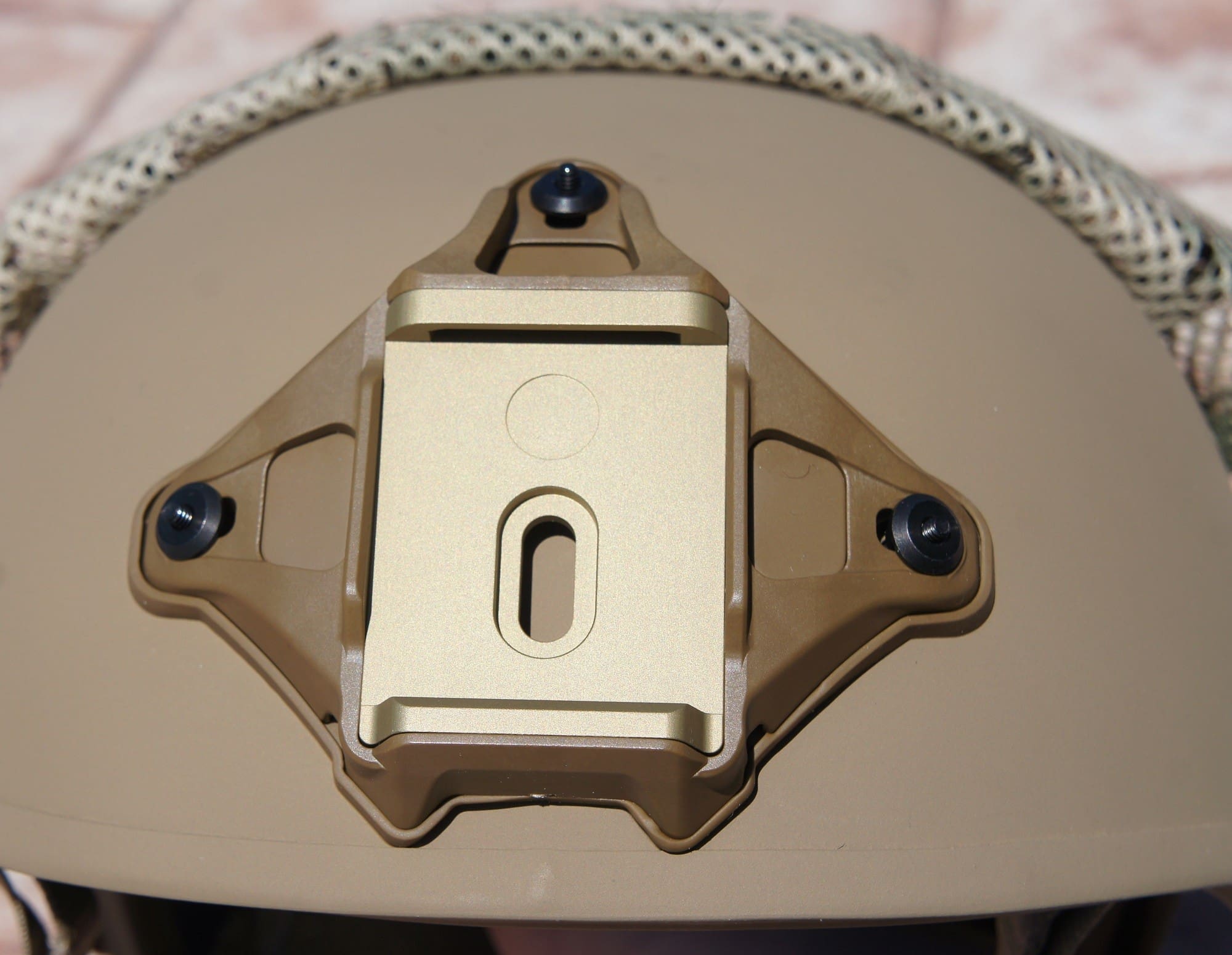
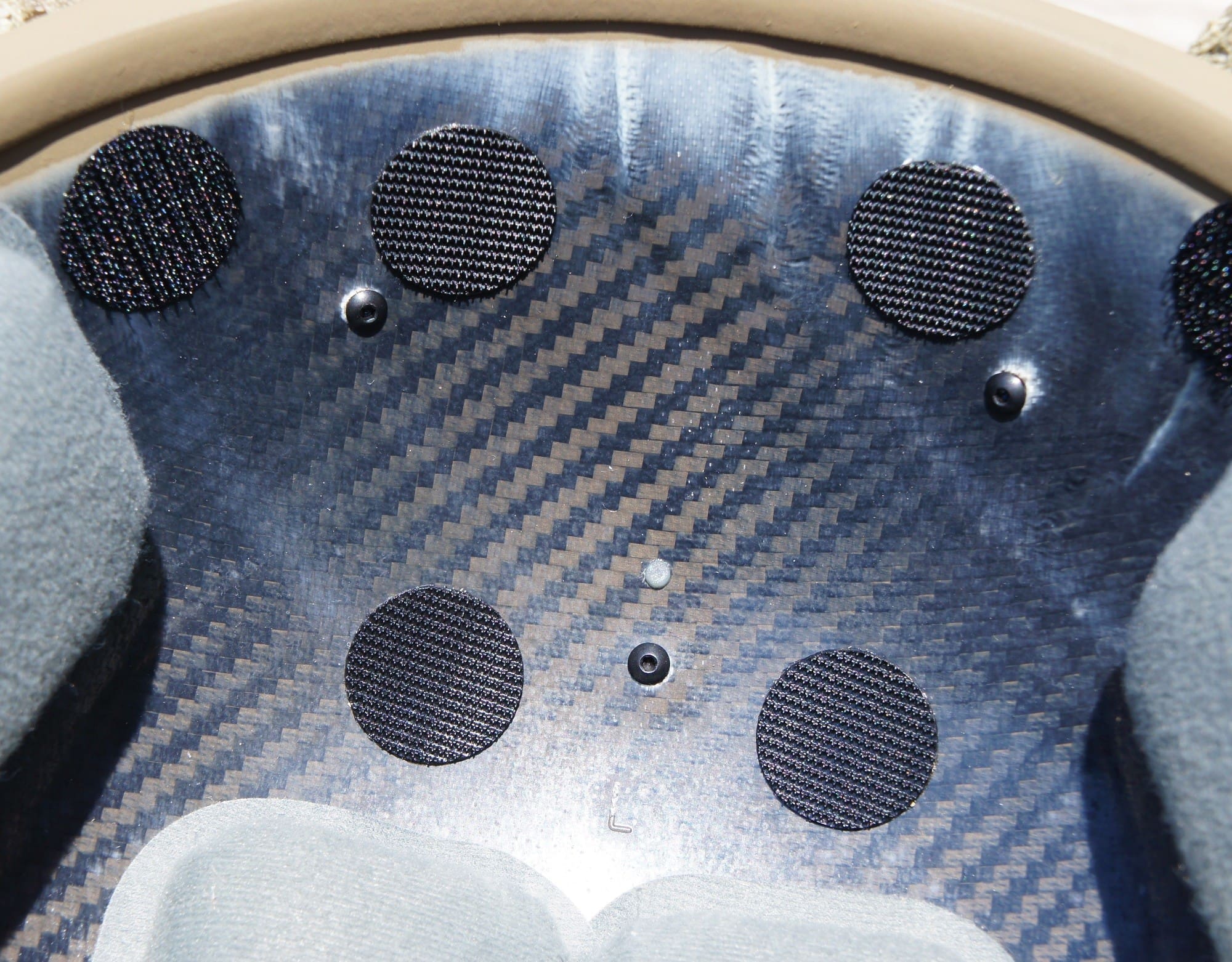
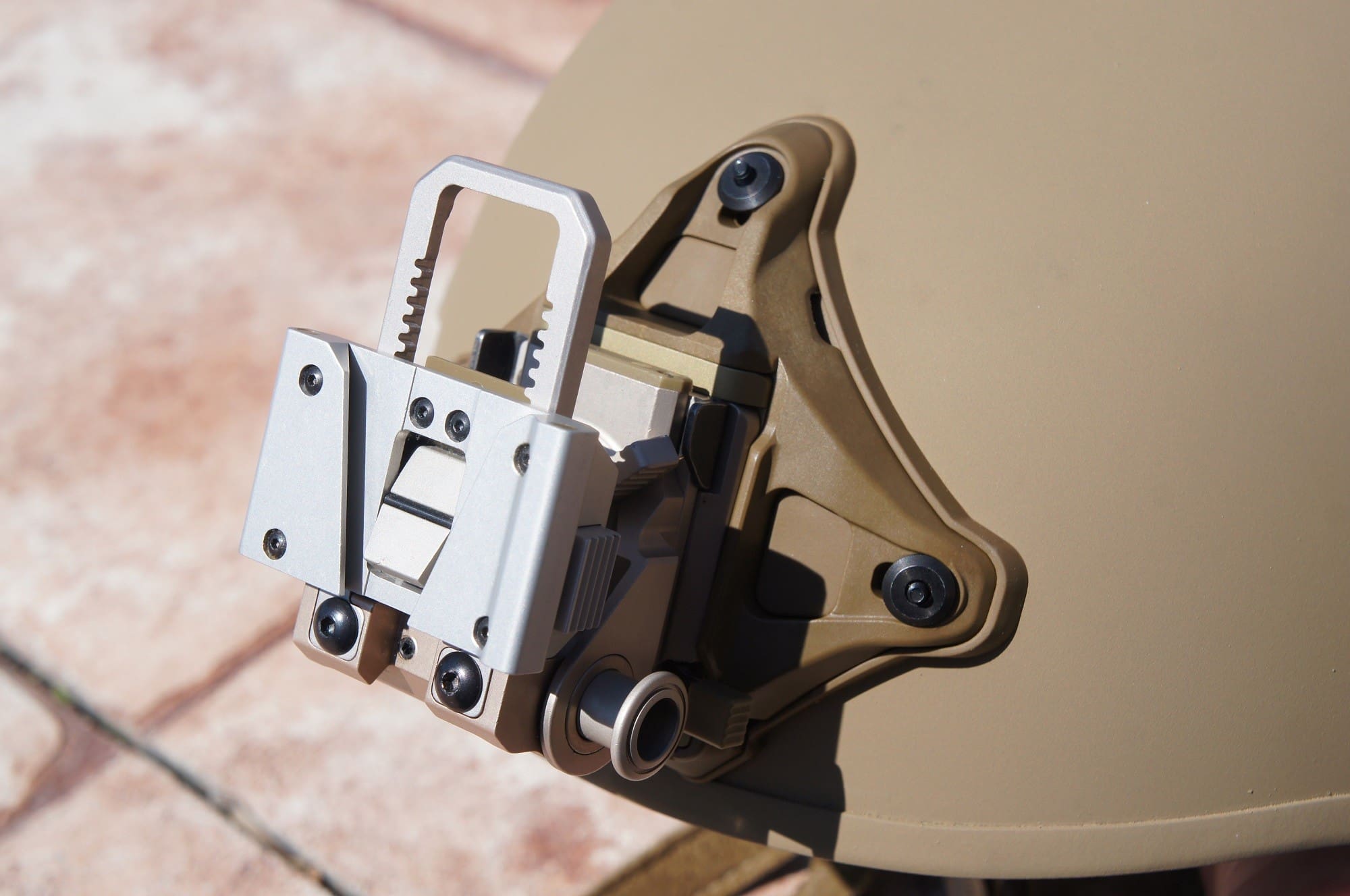
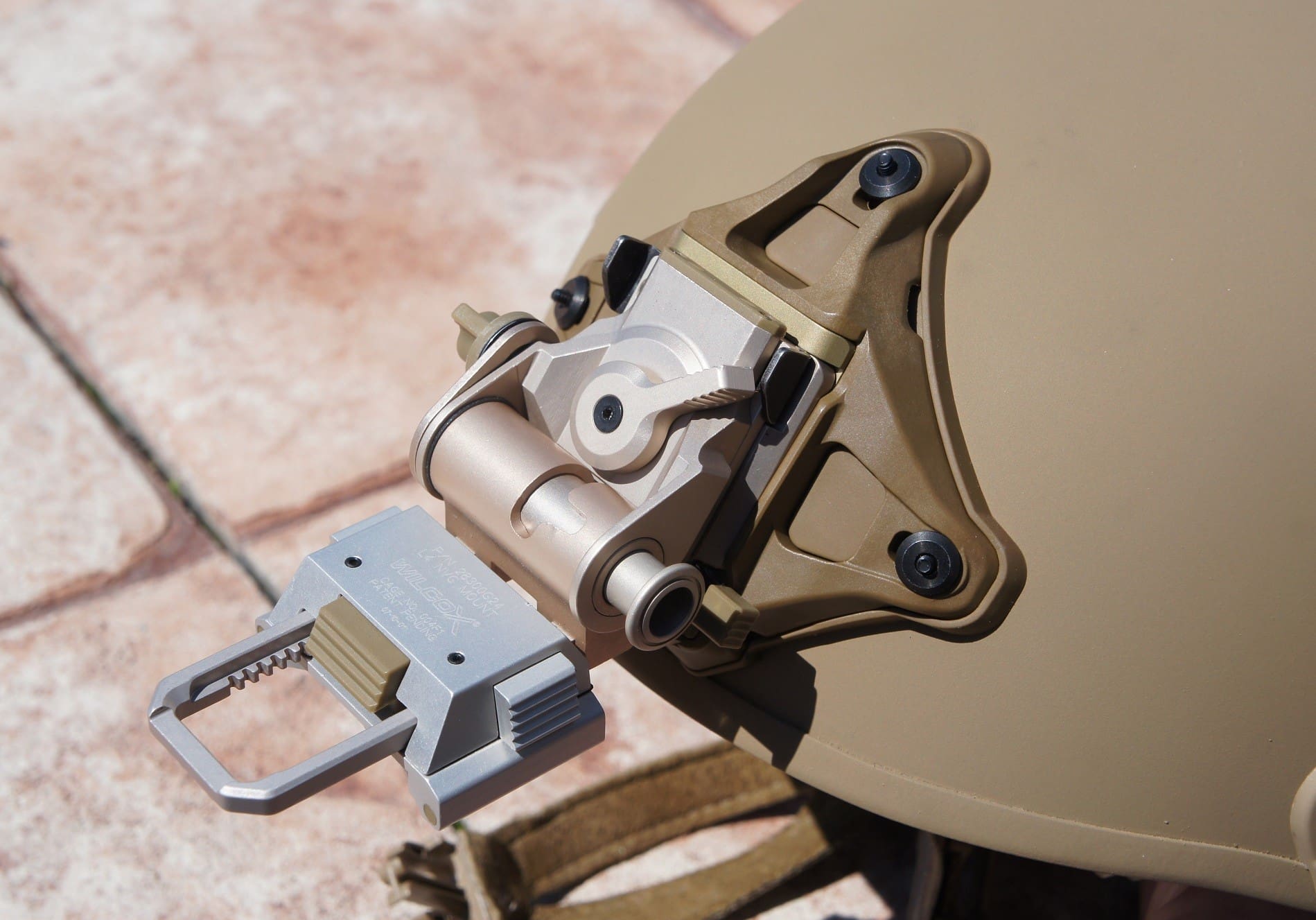
Wilcox’s L4 Series Hybrid Shroud was developed to allow the user to attach any of Wilcox’s L4 Series line of MVG mounts onto a helmet with either the One-Hole U.S. Army standard or Three-Hole MARSOC/WARCOM mount patterns. In the case of One-Hole helmets, the additional gaps in the housing can be filled with rubber plugs which keep the shroud from collecting dirt and debris. A rubber insert sandwiched between the helmet and shroud stabilizes the shroud body, particularly in cases when the One-Hole mount is utilized. Constructed of lightweight aerospace aluminum alloy and glass-reinforced polymer, the shroud is low profile and durable, yet weighs in at only 1.6 oz.

The Hybrid Shroud features four recesses molded into the sides of the polymer frame, hook points for bungees such as those found on the Ops Core FAST helmets and the Crye Precision AirFrame. The two lower recesses are molded to accept cable/cord pass through. The Hybrid Shroud also accommodates the optional retractable NVG lanyard system.

Available in Black and Tan.

www.wilcoxind.com/L4-Series-Hybrid-Shroud-P166

Tarsier Eclipse 9 Month Review

Wednesday, April 2nd, 2014

P1020183

In the last year there have been several night vision enhancement devices or focus enhancement devices which have come to market. Given the expensive price tag associated with Night Vision Devices, it is reasonable to only desire the best capability and durability available in an enhancement device.

Recently I had the opportunity to run Matbock’s flagship Tarsier Eclipse night vision focus enhancement device in southwest Texas during several evenings outdoors with various lighting sources from natural ambient light to artificial sources. This opportunity was extremely beneficial because the terrain was completely unknown to me and the necessity of simultaneous focus at varying distances was essential for both target recognition and safety while walking through fields and thick brush without the use of white light.

For my own edification, I also took advantage of this opportunity to use the Tarsier Eclipse on one tube while equipping the leading competitor’s enhancement device on the other tube. The Tarsier Eclipse proved far superior at varying distances without requiring readjustment or mechanical movement once focused initially.

After my trip, I made contact with the guys at Matbock in order to dial into some of the feedback from guys I knew were running them during pre-deployment work-ups over the course of the past 9 months. The latest version of the Tarsier Eclipse has been with various units, but a particular group of SOF operators has been providing feedback to Matbock along the way. This unit has been in a variety of environments including mountainous, arid climates with dust-like sand as well as roughly 30 hours of saltwater underwater diving operations.

To this point, the only negative feedback provided by the unit stemmed from the diving evolutions in which the unit reported an increasingly difficult action of the iris. A couple of drops of lubrication easily remedied this and quickly restored the action back to new conditions.

In the last few days Matbock reached back out to say the unit using them during pre-deployment work-ups provided the Tarsier Eclipse’s back to them and each was sent back to the iris manufacturer. After breakdown and examination of all the parts, the iris manufacturer reported the following:

– No dust / debris inside the housing
– No signs of rust or pitting
– Minor scuffs on the Corning glass sacrificial lens (nothing that would impede vision or clarity)

With a couple drops of lubrication, the units were put back together and “like new”.

-AV

www.matbock.com

MATBOCK products are also available through GSA Advantage

TNVC Re-Introduces The Famed PVS-4 NV Scope

Saturday, March 29th, 2014

This is an announcement from TNVC regarding the availability of their version of the PVS-4 Night Vision scope.

In our continuing effort to bring economical HIGH quality AND US built NV to the market…

The legendary PVS-4 Night Vision Weapon Sight is one of the most prolific night vision scopes ever made. Originally designed by Optic Electronic Corporation of Dallas in 1975, it was adopted by the U.S. Military in 1978 and served through 2008. That is an incredibly long time for a night vision device! The reason is that it is hard to beat, even by today’s standards. The PVS-4 utilizes a catadipotic lens system that gathers a tremendous amount of light. This provides incredibly clean and clear images, even in a Gen2 configuration.

The TNV/PVS-4 is our version of this classic weapon sight. We start off with a completely refurbished and refinished original PVS-4 housing/optical system. There are no more PVS-4?s being built, so anything available today is going to be “used.” However, these units are meticulously refurbished and upgraded. Parts are replaced and the entire system is just like new. The original systems were manufactured by Varo (Litton). We use new/unissued L3 MX-9644/UV Gen3 image intensifier tubes for the best possible resolution in their class. The reticle is fully adjustable for windage and elevation and features the standard M-16 pattern. This reticle features a range-estimator and a three-point cross hair that provides an aiming point for close range, 200m, and 400m.

The mounting interface on the TNV/PVS-4 has been upgraded from the original design. M1913 Picatinny Rail was not around in 1975, so the original PVS-4 was attached to weapons using proprietary brackets and mounts. Today’s modular weapon platforms feature much easier attachment methods. The TNV/PVS-4 has an excellent LaRue Tactical OEM LT100 quick detach mount. This incredibly solid mount allows users to add or remove the scope from standard M1913 rail without losing their zero.

Our TNV/PVS-4 also features an upgraded power supply. It runs off the ubiquitous CR123A 3-Volt Battery. This helps with commonality of batteries in the field since the majority of electronic devices use this power supply. It will also run off the old military button battery.

tnvc.com/shop/tnvpvs-4-gen2-weapon-sight

tnvc.com/shop/tnvpvs-4-gen3-weapon-sight

BAE Systems – Q-Warrior

Thursday, March 13th, 2014

Click to view .pdf
Q-Warrior

Q-Warrior is BAE Systems’ latest iteration of their helmet-mounted display technology, designed like a pilot’s HUD but modified for ground forces, including Friend-or-Foe identification and the capability to coordinate small unit actions.

Q-Warrior significantly increases situational awareness capabilities for the ‘dismounted soldier’ – personnel operating out of their vehicles. The Q-Warrior utilizes a high transmission and high luminance see-through display which incorporates a high-resolution color, collimated display that allows waypoints, points of interest, target symbols, and even video to be overlaid on the real view through the device. Q-Warrior also features a large eye-motion box to allow for the operator to make relatively large movements with their helmet while maintaining view of their display.

www.baesystems.com/article/BAES_165373/worlds-first-head-up-display-for-soldier-in-field-testing

TNVC – Universal Re-Focus Ring (RFR)

Sunday, March 9th, 2014

In this video, Eric talks about the STS Universal Re-Focus Ring, and demos its features.

tnvc.com/shop/universal-re-focus-ring

Norwich University Study On Trijicon RMR Vs Pistol Iron Sights

Friday, March 7th, 2014

Norwich University Pistol Study

Click to view .pdf
James E. Ryan and Robin Adler of the Department of Justice Studies and Sociology at Norwich University ran a comparative pistol project with the purpose of examining the effectiveness of traditional pistol iron sights versus Trijicon’s RMR red dot optic sight. The study, which consisted of 27 students split into two roughly equal groups, shows that the group who used pistols (Glock 19s for the purpose of the study) equipped with the RMR showed statistically superior “hits on paper” and accuracy when compared to the traditional iron sight group. The full study can be read in .pdf form by clicking the image above.

Warrior Expo – BE Meyers

Wednesday, March 5th, 2014

While it’s been around awhile, there continues to be a demand for the AN/PEQ-11A.

20140305-115301.jpg

Also referred to as a Dial 100G, it features a Green laser pointer as well as a dual collimated IR Pointer and illuminator. Designed for use with crew served weapons at NSW’s Special Boat Teams, the IR pointer stays in the center of the IR flood which offers 55 Deg coverage up to 5 km.

20140305-115921.jpg

The PEQ-11A is completely programmable via cable and is mountable via a Picatinny compatible mount.

www.bemeyers.com

Warrior Expo – Wilcox Industries

Wednesday, March 5th, 2014

20140305-113506.jpg

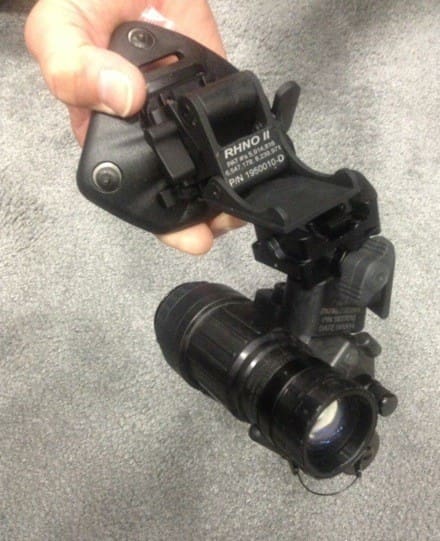
Dual Powered Aviation Mount or DPAM is the latest thing from Wilcox Ind. Designed as a replacement for the issue plastic ANVIS mount, it is manufactured from Aircraft grade aluminum and glass filled polymer. In addition to internal power it also offers a low power indicator option. Naturally, it can also connect to the issue rear mounted battery pack.



20140305-113738.jpg

It connects via an adapter to standard NVG shrouds. Additionally, they have introduced a shroud for the HGU-56/P helmet.

www.wilcoxind.com