Aquaterro

Archive for the ‘Optics’ Category

NEW Diamondback HD Spotting Scopes from Vortex Optics

Thursday, July 30th, 2020

THE ALL-NEW DIAMONDBACK® HD SPOTTING SCOPES. EVOLUTION NEVER LOOKED SO GOOD.

BARNEVELD, Wis. – The way you hunt demands more of an optic, whether you are picking a tine out of dense cover or seeing the telltale flick of an ear on the next ridge. In any scenario, the last thing you want is to doubt if your gear is up to the job.

The Diamondback® HD line of spotting scopes from Vortex® is taking the next step forward with two new configurations, the 16-48×65 and the 20-60×85, providing power and clarity in a redesigned package that’s high on performance and low on sticker shock.

The power behind the new Diamondback® HD spotters is an HD optical system that delivers crisp resolution, brighter images, and edge-to-edge sharpness, reducing eye strain during long glassing sessions. All air-to-glass surfaces are fully multi-coated for increased light transmission and powerful low-light performance, giving you an edge when you need it most.

In addition to rethinking the Diamondback® HD’s internal components, Vortex® took a fresh approach to the spotter’s exterior, introducing a streamlined, snag-free profile. The helical focus wheel provides fast, fine adjustments, and an Arca-Swiss compatible foot means the Diamondback® HD mounts quickly to compatible tripod heads without additional plates. Plus, a neoprene cover comes included, keeping your spotter protected in the field.

vortexoptics.com

US Army Prototypes Integrated Visual Augmentation System Network Capabilities for Tactical Vehicles

Tuesday, July 28th, 2020

ABERDEEN PROVING GROUND, Md. (July 23, 2020) — Army Futures Command (AFC) is using rapid prototyping to integrate tactical network systems, which will enhance functionality of the Soldier-worn Integrated Visual Augmentation System (IVAS), onto combat vehicles.

IVAS provides Soldiers with improved situational awareness capabilities as they fight, train and rehearse missions. IVAS capabilities include a digital display to access information without taking eyes off the battlefield, thermal and low-light sensors, rapid target acquisition, aided target identification and augmented reality.

The Command, Control, Communications, Computers, Cyber, Intelligence, Surveillance and Reconnaissance (C5ISR) Center — a component of AFC’s Combat Capabilities Development Command — is leading the prototyping efforts, in coordination with IVAS developers and network project management offices. The Center uses its in-house expertise to inform and refine the design, fit and function needed to house and integrate network components, including radios, servers and cables.

The C5ISR Center started design work this spring to integrate IVAS devices with Stryker armored vehicles, leading to Vehicle Excursion 2 (VE2) in January 2021 at Joint Base Lewis-McChord, Washington. The Soldier Lethality Cross-Functional Team (SL CFT) will host VE 2 with about a dozen participating organizations from Army research and development, acquisition and operational forces. It will be a static vehicle user study focused on assessing the utility and proof of concept of new capabilities on Strykers and Bradley Fighting Vehicles to gain early Soldier feedback.

To enhance IVAS network connectivity and capabilities, C5ISR Center engineers and network system developers engineered a network communications gateway and data management kit known as Project Bloodhound in 2019. The C5ISR Center delivered the integrated network kit mounted on an MRZR all-terrain vehicle, which allowed dismounted Soldiers using IVAS to connect into the broader Army tactical network to share and receive data.

This prototype and others will enhance modernization efforts led by the C5ISR Center, SL CFT, the Network CFT, Program Manager IVAS, and PM Tactical Radios.

Bloodhound allows greater connectivity throughout the company echelon, through a tactical radio integration kit that includes radio gateways that enable voice and data information to be pushed and pulled from multiple sources. This concept is being applied to the Stryker prototype effort.

“We designed Project Bloodhound as a modular vehicle-mounted system that can be integrated into any vehicle,” said C5ISR Center mechanical engineer Ryan Stuk. “Certain features could be employed in a command post or dismounted capacity. We’re now taking the knowledge and expertise gained from the MRZR integration and applying those to Strykers.”

The Stryker effort will provide additional capabilities for Soldiers, whether they are mounted, dismounted or in transition, Stuk said. The Army’s three objectives are to leverage the Strykers as an IVAS power source to maintain mission capability, integrate with existing and future vehicle-based onboard camera systems, and enhance Soldiers’ situational awareness while mounted or transitioning to dismounted.

The Center’s organic, internal prototype integration facility (PIF) has enabled the Army to meets its objectives for multiple design iterations, changing requirements and quick deadlines, said Tom Brutofsky, chief of the C5ISR PIF. A key aspect to Project Bloodhound has been additive manufacturing, commonly known as 3D printing.

“The C5ISR PIF has invested heavily in additive manufacturing to develop a rapid prototyping capability to deliver functional designs with significant cost and time savings,” Brutofsky said. “The PIF manufactured the MRZR Bloodhound prototype approximately 80 percent through additive processes and went from concept to functional prototype in less than three months.

“Additive manufacturing also enables easier modifications as engineers gather Soldier feedback during exercises and as the Army identifies additional vehicles for network kit integration.”

Soldier touch points like VE2 enable the Army to transition from R&D to prototypes and then mature capabilities for fielding.

“For the C5ISR Center, incorporating Soldier feedback is essential,” Brutofsky said. “Understanding the needs of Soldiers on the battlefield early on helps us make better use of time and resources.”

By Dan Lafontaine, CCDC C5ISR Center Public Affairs

Now Available: Vortex Optics AMG UH-1 Gen-II Holographic Sight

Friday, July 17th, 2020

When you rely on a tactical optic to keep you in the game, you’ve got to be ready to shine, day or night. The AMG UH-1 Gen II is the close-quarters solution you’ve been asking for, offering an incredibly fast holographic display to conquer every close-quarters situation, now with four night-vision compatible settings and a dedicated night-vision button. A large viewing window makes this door-kicker even faster, and a sleek, snag-free build looks and maneuvers great. The lightning-quick EBR-CQB reticle is designed to dominate in close, and our FHQ technology virtually eliminates stray light emissions for stealth shooting. Duty never sleeps, and the AMG UH-1 Gen II is ready to light your way.

• Mount Type Weaver/Picatinny
• Magnification 1x
• Dot Color Bright Red
• Dot Size 1 MOA
• Eye Relief Unlimited
• Adjustment Graduation 1/2 MOA
• Max Elevation Adjustment 100 MOA
• Max Windage Adjustment 100 MOA
• Parallax Setting Parallax Free
• Length 3.9 inches
• Weight 11.0 oz

OPTICAL FEATURES

Now Available: Vortex Optics AMG UH-1 Gen-II Holographic Sight

• Fully Multi-Coated Increase light transmission with multiple anti-reflective coatings on all air-to-glass surfaces.
• Brightness Settings 15 Levels
• Unlimited Eye Relief Non-critical eye relief for rapid target acquisition
• Parallax Free All red dot and holographic sights will exhibit some small amount of parallax. Matching current industry practice, this small amount would be considered “parallax free” and will make a negligible difference in performance.
• Night-Vision Compatibility Dedicated button with 4 night-vision

CONSTRUCTION FEATURES

• Shockproof Rugged construction withstands recoil and impact.
• Waterproof (IPX8) O-ring seals prevent moisture, dust and debris from penetrating the holographic sight for reliable performance in all environments.
• ArmorTek ® Ultra-hard, scratch-resistant coating protects exterior lenses from scratches, oil and dirt.
• Rear facing controls Easily power up and click through intensity levels.
• FHQ? Technology Virtually eliminates stray light emissions for stealth-shooter-signature in low light and prevents eyepiece glare common to other holographic sights.

• Integrated Mount Quickly attaches to any Weaver or Picatinny rail with the integrated mount.
• Matte Anodized Finish Corrosion and wear resistant anodization provides low-glare matte surface and helps camouflage the shooter’s position.

Product Manual Download (PDF)

MSRP: $799.00

vortexoptics.com/red-dots/vortex-amg-uh1-gen2/vortex-amg-uh1-gen2-holographic-sight

Quantico Tactical Announces STALKER from Safran Optics 1

Thursday, July 16th, 2020

Aberdeen, North Carolina – July 16, 2020 – Quantico Tactical®, the largest North Carolina based federal contractor, is proud to announce STALKER from Safran Optics 1.

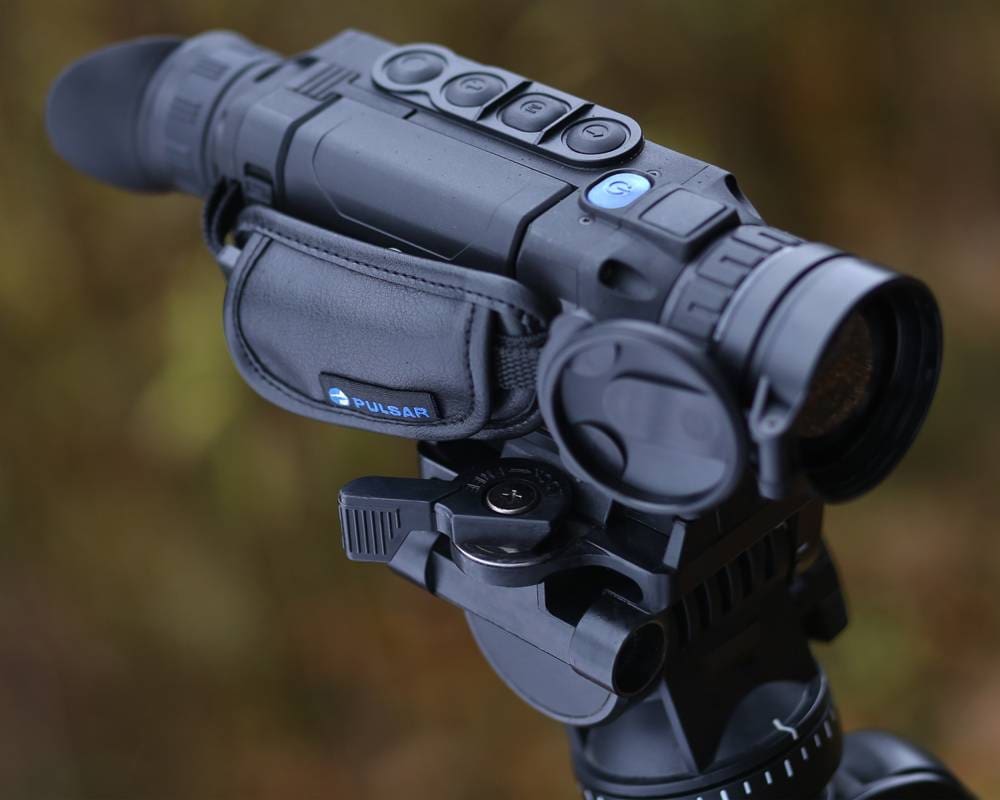
The STALKER from Optics 1 is a lightweight, handheld, day/night target acquisition, surveillance, and reconnaissance device capable of locating targets even in the most adverse conditions.  It uses a Class 1 eye-safe laser and can range over 5,000m in harsh conditions, with a maximum range of 10,000m in good conditions.  The system utilizes a low power consuming digital magnetic compass to determine azimuth and inclination. Customers may also be familiar with the Optics 1 MOSKITO TI, a similar device, only the STALKER has an integrated SAASM (Selective Availability Anti-Spoofing Module) GPS.

“The STALKER is a great tool for reconnaissance, surveillance, and targeting,” said Sam Lerman, Vice President of Sales & Marketing.  “This is a resource for dismounted soldiers to quickly and accurately locate and relay positions of interest to supporting forces.”

The Stalker has multiple interfaces, including RS-232 and USB for data exchange.  The system utilizes three observation modes: Direct View Day Optics, Low Light CMOS Optics, and LWIR Thermal Imager.

Quantico Tactical Showcases ATAK Enabled Gear from Safran Optics 1

Friday, July 10th, 2020

Aberdeen, North Carolina – July 9, 2020– Quantico Tactical®, the largest North Carolina based federal contractor, is proud to showcase ATAK enabled devices for the dismounted soldier.

Quantico Tactical® has been a longstanding partner with Safran Optics 1. Together these two companies are teaming to offer the latest in Android Tactical Assault Kit, ATAK, enabled devices. ATAK is an app-based technology that identifies and views teammates, targets, and route points. Operators can also see points of interest, such as terrain, topographical elements, and even weather.

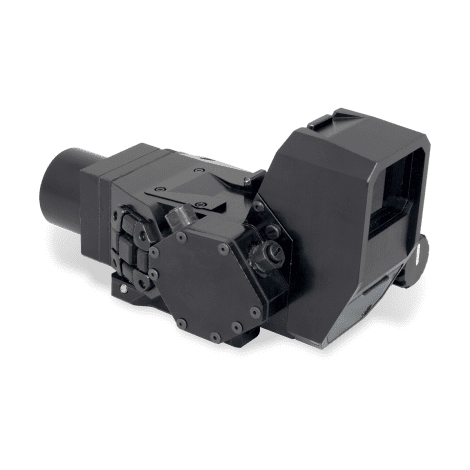
The Optics 1 Enhanced Clip-On Thermal Imager, ECOTI, provides unmatched detection capability and situational awareness by adding a long wave infrared thermal overlay on the user’s night vision device, NVD. The ECOTI is a low power consuming thermal sensor that mounts to existing NVD’s.  The ECOTI has a Heads Up Display, HUD, that provides real-time, geo-referenced navigation information.  When combined with an Android device, the NVD becomes a remote display for identifying teammates, targets, and route points.

The Optics 1 Enhanced Clip-On SWIR Imager, ECOSI, is bears the same physical design as the ECOTI, yet provides short-wave infrared, SWIR overlay on to the user’s NVD.  It helps see out-of-band short-wave infrared items like strobes, markers, beacons, and other devices. The ECOSI also integrates augmented reality through the use of ATAK.

“ATAK is a game-changer for properly relaying information,” said Rett Vandenberg, C4ISR Category Manager for Quantico Tactical. “Having the right devices that connect via ATAK can dramatically change the battlefield.”

The Pocket Laser Rangefinder, PLRF25C, is a reconnaissance, surveillance, and targeting device, also by Optics 1 that provides accurate distance and angle measurement. The PLRF25C is a small, lightweight, and ruggedized laser rangefinder that connects via Bluetooth® to wirelessly transmit distance, azimuth, inclination, horizontal distance and vertical distance to a target. The ATAK unit will automatically populate the target location information on the ATAK map.

Further Faster Designs – Rapid Access Panel Bino Case

Wednesday, July 8th, 2020

Manufactured from 500D Cordura, the RAP Bino Harness combines the ability to keep your binocular at the ready with discreet access to a pistol or other items. The panel is Velcro pile lined, and opens from either the top or side access points.

Additionally, the harness features 4-way stretch side pockets for quick access to wind meters, etc.

Available in Ranger Green, Ranger Green/Wolf, Ranger Green/Coyote and MultiCam from furtherfasterdesigns.com.

Meprolight Introduces its MEPRO FT Bullseye Illuminated Pistol Sight to the HLS and Law Enforcement Markets

Tuesday, July 7th, 2020

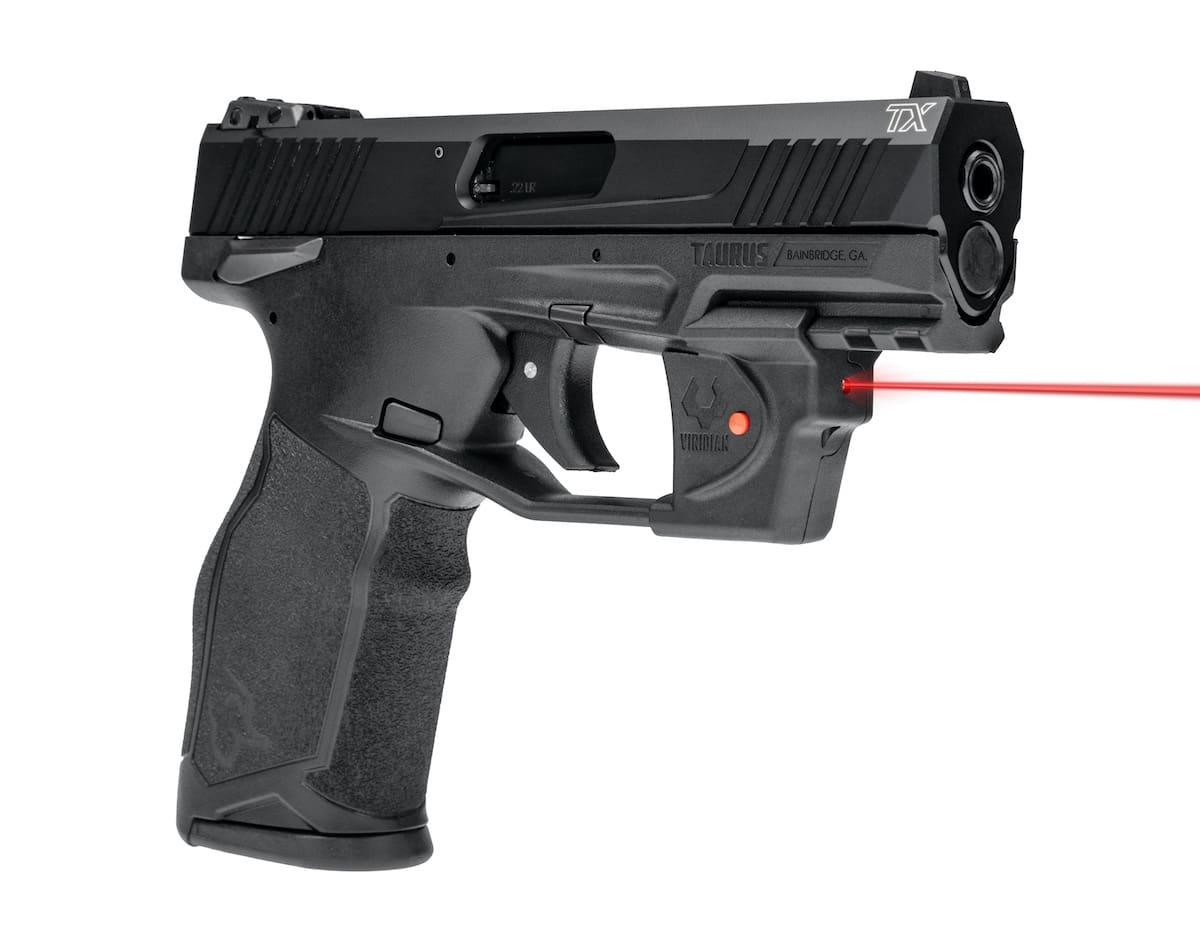
The compact Bullseye sight is the only optic sight for pistols, ensuring intuitive, accurate & fast target acquisition/shooting in day and night conditions, and is suitable for a wide range of/all pistols and holsters

Or-Akiva, Israel, July 6, 2020. Meprolight – a member of the SK Group and a leading manufacturer of electro-optical systems, thermal, night vision equipment, and self-illuminated sights for military, law enforcement and civilian applications – now introduces the Mepro FT Bullseye optical pistol sight to law-enforcement and HLS forces. FT Bullseye was originally developed for the civilian market. Its qualities, being the smallest optic sight and– fast target acquisition is unprecedented among other pistol-sights. That makes it particularly advantageous for law-enforcement professionals, for whom intuitive, accurate shooting in all/any lighting conditions is an operationally vital advantage. The sight’s compatibility to a variety of pistol models add versatility, simplicity and cost-effectiveness to the various forces with their existing arsenal.  

Based on a compact optical illumination patent, the sight’s fiber-optic tritium combination creates a low profile, single rear sight. That enables instant and accurate shooting in all lighting conditions with no batteries needed. It is easily installed on an existing pistol dovetail and is activated from the moment the sight is installed on the pistol.

According to Mr. Ilan Abramovich, V.P. Sales & Marketing – Defense, “The Mepro FT Bullseye sight is an innovative addition to our ever-growing aiming solutions for pistols. Meprolight offers over 180 types of aiming pistol sights for daytime and night-time operations based on various illumination sources – tritium, fiber and reliable LED illumination sources. The Bullseye’s enhanced capabilities meet law-enforcement forces’ needs”.

Corporate VP Marketing & Sales, SK Group Mr. Ronen Hamudot noted that “Our advanced technologies serve all markets – civil, law enforcement, HLS and defense. We are proud of our flexibility to apply solutions to developing needs and keep loyal to our vision – always staying ahead, providing customers with the perfect answer to their new challenges”.

www.meprolight.com

Soldiers Test New Night Vision Capabilities

Thursday, July 2nd, 2020

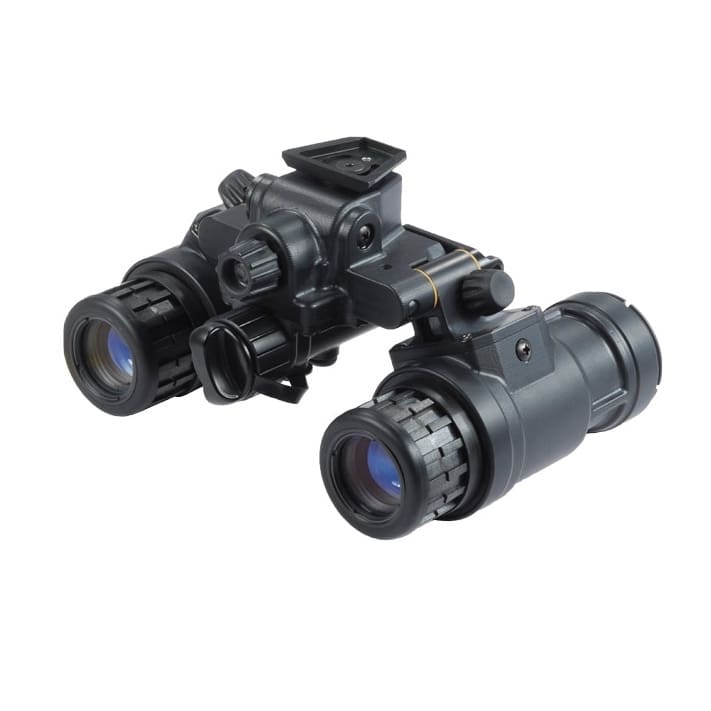
FORT BENNING, Ga. – “Really good” was never really going to be good enough for the Army team developing the Enhanced Night Vision Goggle – Binocular. Nine months after equipping the first unit with the ENVG-B, developers are testing the rigor of system enhancements at the Joint Readiness Training Center in Fort Polk, La., in order to assess new augmented reality technologies and the hardware that delivers them.

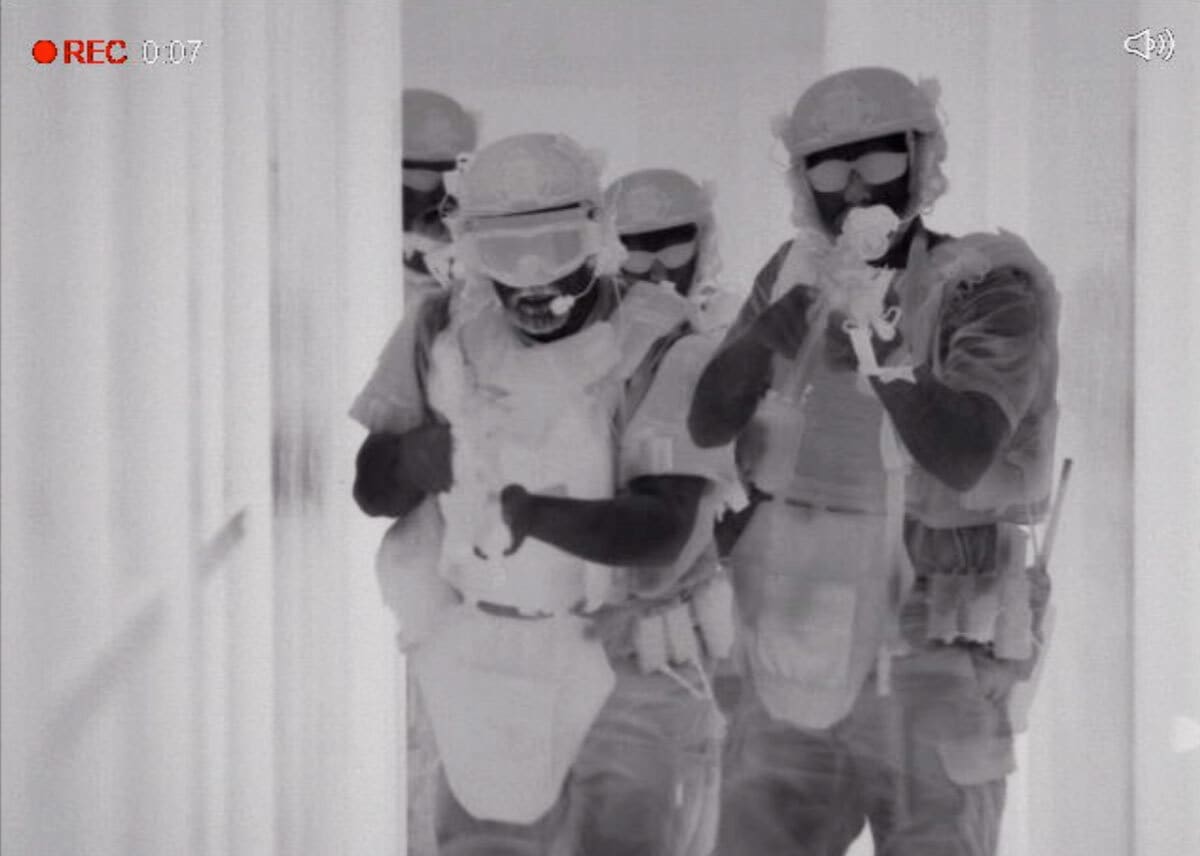
As a night vision device, the ENVG-B’s dual thermal and infrared sensing capabilities deliver unmatched clarity in situations where visibility is diminished, including the complete absence of light. It was fielded for the first time last fall as part of an initial Directed Requirement to get those next generation night vision capabilities in the hands of Soldiers at Fort Riley who have since deployed with them to Korea.

But that was just the beginning, said Maj. John Nikiforakis, the Assistant Product Manager for PEO Soldier. New applications are being tested and refined for delivery to the Close Combat Force.

“We put an incredible tool in the hands of Soldiers who need it now,” Nikiforakis said. “But the goal always is to treat the Soldier as a system, to equip Soldiers and squads holistically with weapons and system elements that work together to make them more lethal and more survivable. That’s what we’re doing here, testing the ENVG-B as a system.”

It’s a system that includes augmented reality capabilities and a heads-up display that integrates wirelessly with weapon optics. Those kind of capabilities make it possible for a Soldier to detect and even fire on a target around an obstacle with limited exposure to the enemy.

In what is called a reliability growth test (RGT), the first of three planned for the ENVG-B system, Soldiers from C Troop, 3rd Squadron, 89th Cavalry Regiment, 10th Mountain Division, put the system to the test during field training exercises throughout the month of June. After a week of classroom training with the systems, a week of marksmanship training on the range, and a week of nighttime situational training exercises, the event culminated in a 72-hour field training exercise with an opposing force. Thirty participants used the ENVG-Bs, and others used PVS-14 night vision devices in order for data collectors and observers to draw comparisons.

There was no comparison, said Capt. Will Hess, the C Troop commander.

“In terms of target detection and clarity, the difference between the (ENVG-B) and the PVS-14 is night and day,” Hess said. “The guys wearing the ENVG-Bs were taking targets out to 300 meters and even beyond, whereas our guys with 14s are having trouble seeing beyond 150. I can’t say enough about the ENVG-Bs. There’s really no comparison.”

Which doesn’t mean the tests all ran smoothly. By design, RGTs are iterative Soldier Touch Points that expose weaknesses in the software or hardware early and often throughout the development process in order to shape a final product that is beneficial to the Soldier and wholly accepted. That’s the Soldier Centered Design methodology employed by the Soldier Lethality Cross Functional Team that leads the ENVG-B program, one of Army Future Command’s signature modernization efforts. Soldiers are involved in design and development every step of the way.

“The focus for this is getting it the hands of the Soldiers and just figuring out early on what are some issues with the device and how do Soldiers actually use it,” Hess said. “They developed it and tested it in the lab based on how they think Soldiers are going to use it. Now, we give to Soldiers and run them through our training and see how they actually use it and to test its durability, to see how it stands up to the kind of rigorous use Soldiers put it through in a dense, rugged environment doing dismounted squad maneuvers.”

The rugged environment at Fort Polk includes swamps, and swamps present Soldiers with a different kind of challenge.

“Snakes. Two water moccasins, two feet away,” said 2nd Lt Phillip Davis, who spotted the threat using ENVG-Bs in thermal mode. “The guys using the 14s couldn’t see them at all. There’s no comparison between the two. Just the difference in depth perception and clarity is drastic. The ENVG-Bs are incredible for situational awareness alone. Having that augmented reality with Rapid Target Acquisition allows us to make decisions quicker, and that’s going to save a lot of lives.”

With all the additional “gee whiz features” on the ENVG-Bs, like see-through map overlays and a compass, Davis said he needs more time with the goggle to prevent cognitive overload.

“The potential is astonishing,” he said. “These are capabilities I never thought I’d see in the Army, but it’s a lot like learning to drive a stick shift; we just need practice. Our guys are picking up on it very quickly, so I can see it being a great benefit a few months from now.”

In the coming months, the ENVG-B team will continue to conduct Soldier Touch Points, including RGTs, to address any issues identified during the exercise at Fort Polk, Nikiforakis said. It’s an iterative “test-fix-test” cycle.

“We rely on Soldier feedback to ensure the equipment we field is exactly what they want and what they need to be more lethal and more survivable on the battlefield,” he said. “The need to restore overmatch is urgent. The key to staying on track is keeping Soldiers involved every step of the way and finding ways to work around the challenge of the (COVID-19) pandemic.”

When employees of the two vendors manufacturing the ENVG-B prototypes were diagnosed with the virus, Elbit and L3 found work-around solutions, including telework and alternate schedules, to mitigate risk without delaying production.

“Everything we do is a team effort,” Nikiforakis said. “But nothing speaks to the ingenuity and dedication of the team like what we’ve seen over the past few months, as everyone from every corner of the (Army Modernization) enterprise has persistently found ways to succeed at a time when it would’ve been easy to hit pause. We just keep our eyes on the finish line, because modernization can’t wait.”

For more information about the ENVG-B, email bridgett.d.siter.civ@mail.mil.

Army Futures Command and its subordinate cross functional teams partner with ASA(ALT) and its PEO subsidiaries, CCDC, and multiple branches of the Army Modernization Enterprise to deliver the next generation capabilities necessary to establish and sustain a clear and decisive overmatch for the Army of 2028 and beyond.