Here it is, in all its glory, the FY 2013 PEO SOldier portfolio. Think of it as a catalog of sorts, giving basic information for all of the commodities managed by PEO Soldier.


Here it is, in all its glory, the FY 2013 PEO SOldier portfolio. Think of it as a catalog of sorts, giving basic information for all of the commodities managed by PEO Soldier.
The US Army is looking for qualified vendors with improvements to the improved Combat Vehicle Crewman (iCVC) coverall that may be utilized to develop design and specification enhancements for the new enhanced Combat Vehicle Crewman (eCVC).
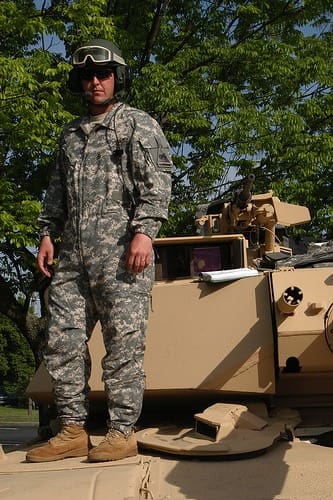
In this US Army photo you can see the current iCVC which saw evolutionary improvements over the previous legacy design which goes back to at least the 1970s. It is an FR one-piece garment that is also issued in OCP (MultiCam).
The Sources Sought Notice released yesterday by the Natick SSC Contracting Office on behalf of US Army Product Manager, Soldier Clothing and Individual Equipment (PM-SCIE) eCVC will consolidate the capability requirements of the one-piece improved Combat Vehicle Crewman (iCVC) Coverall into a single uniform and other enhancements over the current iCVC.
The eCVC shall be a two piece uniform ensemble which can be joined together creating a one piece coverall which does not compromise FR protection.
The eCVC two piece configurations shall allow the Mounted Soldier the ability to have more functional movement in a dismounted position with a full combat load and utilize the Army Combat Shirt (ACS) when in a dismounted operation, as well as reduce heat burden.
The big issue here is that they want to make the CVC a two-piece garment that can be converted into a one-piece. This is to enhance cooling and comfort. Additionally, we understand that there is interest in combining the Army Aircrew Combat Uniform (A2CU) with the CVC to reduce the burden on the supply chain.
Interested parties should respond by 1200 EST on 1 February 2013.

PFC Cheryl Rogers grins as 2LT Chelsea Adams helps her into the new Generation III Female Improved Outer Tactical Vest. The Soldiers, who are part of the 1st ABCT Female Engagement Team, Third Infantry Division, are preparing to deploy to Afghanistan and will be only the second group in the US Army to test this new body armor. Photo – US Army
The female fit variant of the US Army issue Gen III Improved Outer Tactical Best began in 2009 after the 101st identified fit issues with the Gen II IOTV for their female Soldiers.
“When I was with the 101st in Afghanistan, I raised the issue there that we had female Soldiers going outside the wire on a routine basis and their equipment was just too large for them to operate and correctly pocket their weapon in,” said MSG Jeff Fenlason. “Because the problems were directly affecting the ability of these women to operate efficiently in combat, the Army began looking for ways to improve the vests.”
During the initial push for a better vest, the U.S. Army Natick Soldier Research, Development and Engineering Center initiated multiple surveys and found that about 85 percent of women in the Army were wearing a vest one size too large and about 52 percent were wearing a vest about two sizes too large.
“Over the course of a couple years, NSRDEC worked through a couple design changes, and what we put the 1st ABCT FET team in is the result of all that work,” explained MSG Fenlason, who is now operating as a plans noncommissioned officer for 1st ABCT.
According to an Army press release, this version of the IOTV is designed to curve with the female anatomy, and the parts come in multiple sizes to custom fit to each woman, unlike the one-size-fits-all Gen II model.
The Army plans to field 3,000 of these models by the summer of 2013.
Back in July, the US Army released a Sources Sought Notice for a Compact Semi-Automatic Sniper System or CSASS. Now, Project Manager Soldier Weapons has consolidated the info received from industry in a Draft Request for Proposals for the new M110 carbine variant. The can be used by industry as a sort of warning order to prepare for an actual procurement by the Army.
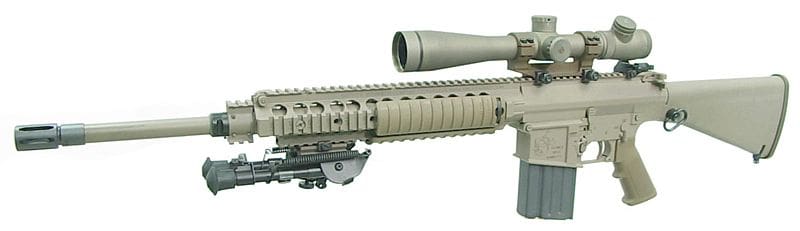
Manufactured by Knights Armament, the current M110 is a lightweight, direct gas operated, semi-automatic, box magazine fed, 7.62 x 51mm rifle intended to engage and defeat personnel targets out to 800 meters.
According to the FedBizOpps announcement, the Draft RFP seeks the best value to “manufacture a complete system or reconfigure some or all of the existing 7.62 x 51mm M110 Semi-Automatic Sniper System (SASS) currently available in Army inventory.”
The Army anticipates a full and open competition for a single award Indefinite-Delivery Indefinite Quantity (IDIQ) with two options:
Option one (1) will create five (5) one(1) year ordering periods with Firm Fixed Price (FFP) delivery orders. The minimum ordering quantity for this five (5) year option is 30 DT/OT units and a maximum ordering quantity of three thousand, six hundred forty three(3,643) CSASSs. The Government will have 24 months from contract award to exercise this option.
Option (II) is for the purchase of a technical data package. The government will have 36 months from date of contract award to exercise option II. Additional delivery orders cannot be placed until the successful completion of Milestone C/TC-STD.
It is anticipated that the winning manufacturer will initially provide “thirty (30) CSASS for Developmental Testing (DT)/Operational Testing (OT) which is expected to last 2 years, (2) An additional maximum quantity of three thousand, six hundred forty three (3,643) CSASSs…”
As with all Draft RFPs there’s no guarantee the Army will actually issue a final RFP and this Draft is valid until January 14 2013 just in time for SHOT Show so that Army Acquisition officials can speak openly with industry about this weapon.
Notice that they are still talking full and open competition for remanufacturing of M110s or a completely new weapon that meets their requirements.
More than 60 different diseases, some of which are fatal, are spread by ticks, chiggers, insects and other biting arthropods. These include malaria, Dengue (Broken Bone) Fever, West Nile Virus, Lyme Disease and others. The Army Combat Uniform with factory Permethrin treatment can, when worn with other measures, provide over 90 percent bite protection even after 50 washings. This will help protect Soldiers against these diseases. The ACU with Permethrin will be issued to Soldiers serving in the continental United States and elsewhere.
This is the second in a series of articles covering WL Gore’s various technologies and their military applications. While we are all familiar with the popular GORE-TEX brand, many do not know that WL Gore has worked extensively with the military since the mid-1980s to develop specific fabrics for various purposes. In this article we will cover the FR Fuel Handler Coverall.
 Military fuel handlers face a dirty, dangerous job. Petroleum, oils, and lubricants (POL) are both flammable and corrosive. In cold weather, fuel handlers face increased threat of cold weather injuries due to the lower freezing temperature of fuel. Diesel can remain in its liquid state down to 15 deg F. At these temperatures, spills can exacerbate the danger of cold injuries. That’s not to mention the flame threat associated with POL. To counter these environmental dangers, the Army and Marine Corps set about to develop a new garment for fuel handlers. The answer is the Fuel Handler Coverall which has been adopted by both the US Army and Marine Corps. It features GORE-TEX construction offering a wide variety of attributes. Not only does it integrate penetration-resistant against JP-8, DEET, and POL but it is also flame-resistant (thanks to Nomex technology), anti-microbial, durably waterproof, windproof and breathable and dissipates electrostatic charges. Additionally, it provides this protection for more than 25 wash/dry cycles. Finally, it is available in Coyote as well as UCP and includes n-IR signature reduction technology.
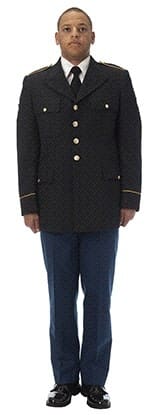 Training and Doctrine Command is looking for feedback on the Army Service Uniform. It’s for all Soldiers (Active Duty, Guard, and Reserve) and you must have AKO access to participate.
The survey site officially launches September 17, 2012 and will remain active until October 9, 2012, so make sure to take the time to offer your input and make your voice heard.
Links to the survey can be found at:
CAC Enforced: https://asusurvey.natick.army.mil
NON-CAC: https://surveys.natick.army.mil/Surveys/asu.nsf
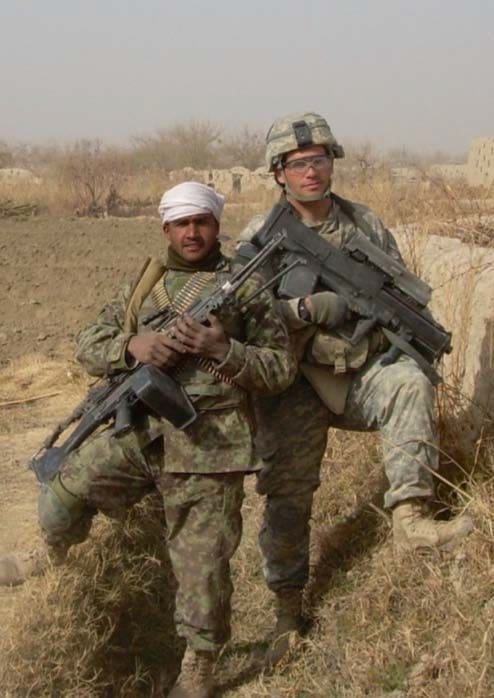
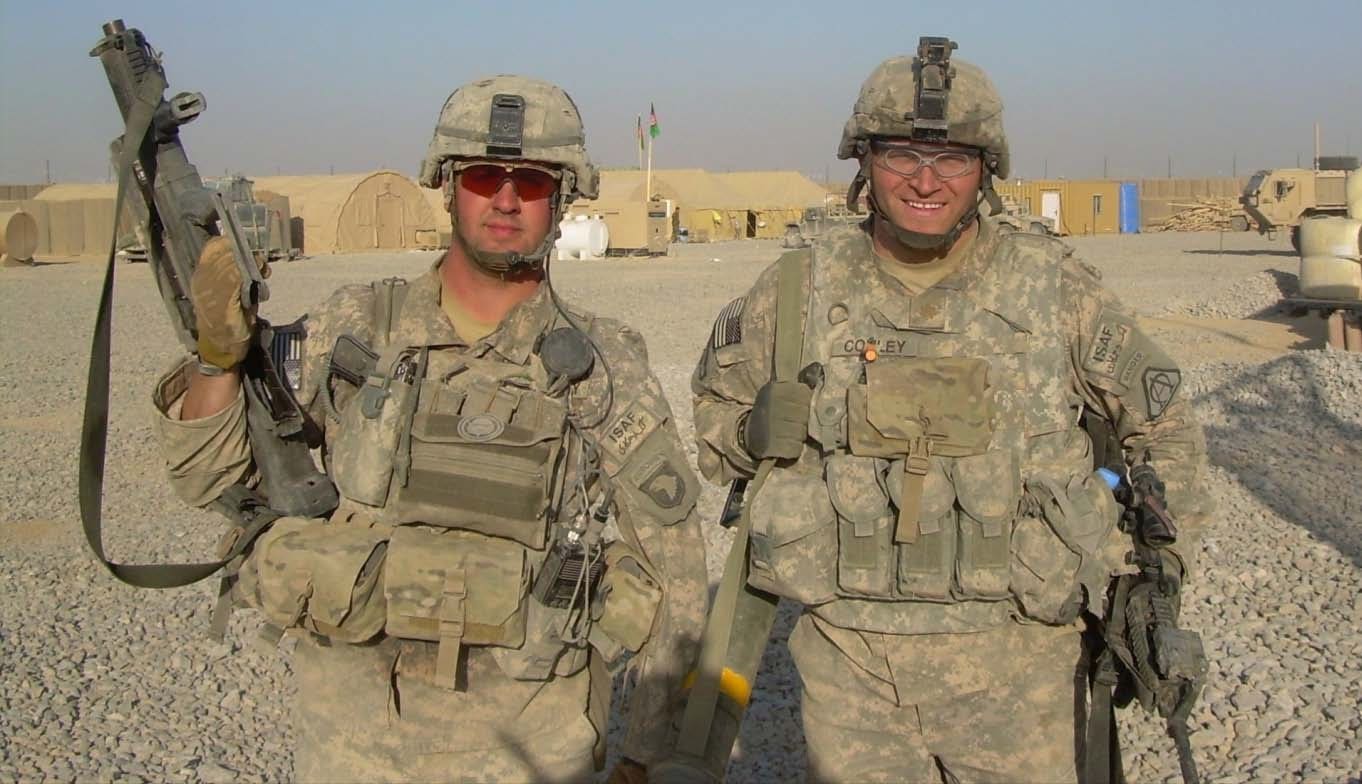
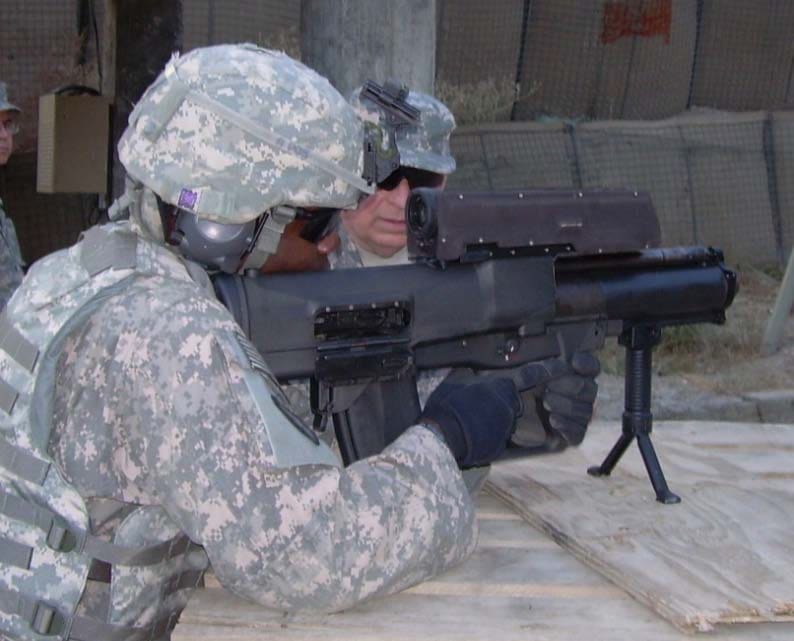
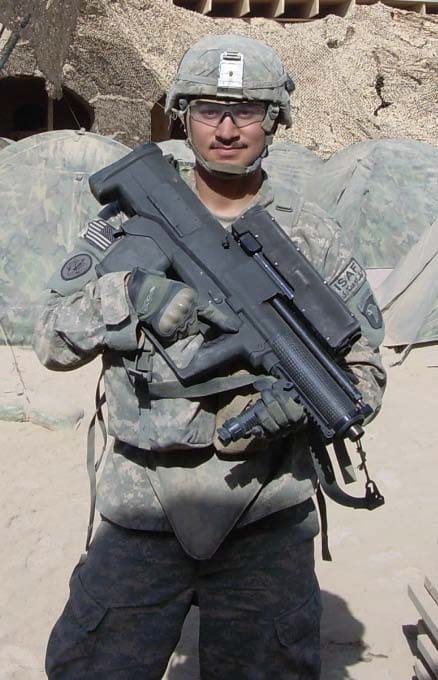
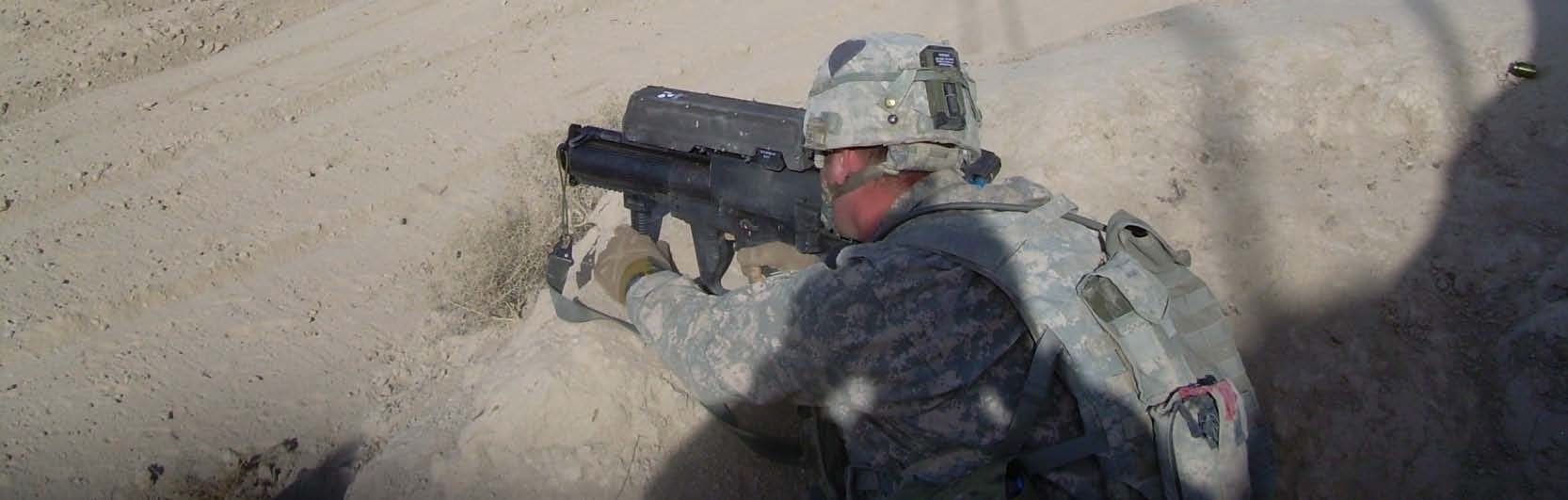
During 2010-2011 the Army fielded a limited number of XM25 Individual Semi-automatic Airburst Systems to troops in Afghanistan. PEO Soldier described the weapon as a game changer, and the troops gave it the monicker “Punisher.” Unfortunately, we didn’t get many glimpses of the weapon’s deployment. But here are a few to tide you over until we hear more about the XM25.