Phantom Lights

Archive for the ‘PEO-Soldier’ Category

Squad Immersive Virtual Trainer

Saturday, April 29th, 2023

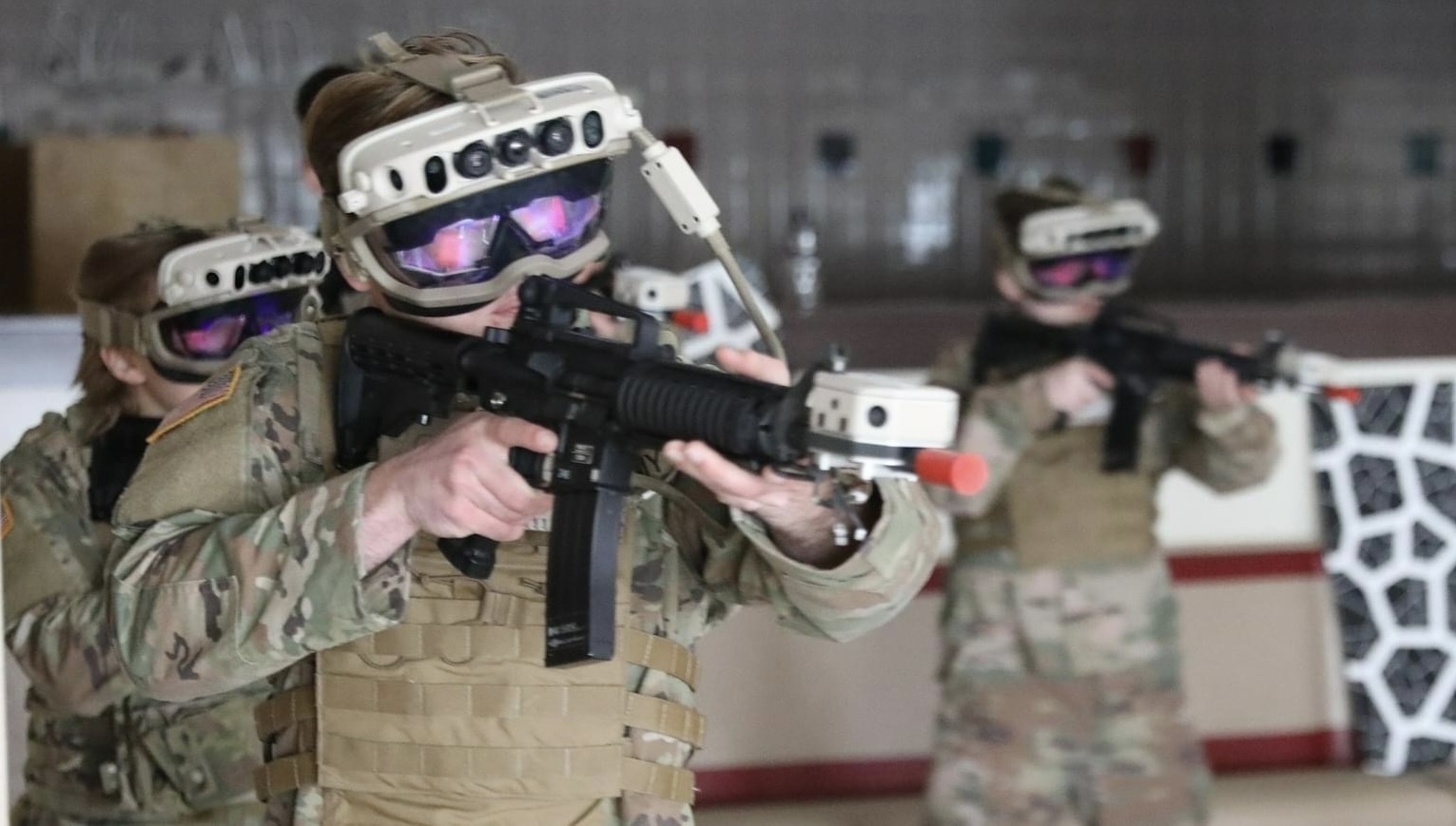
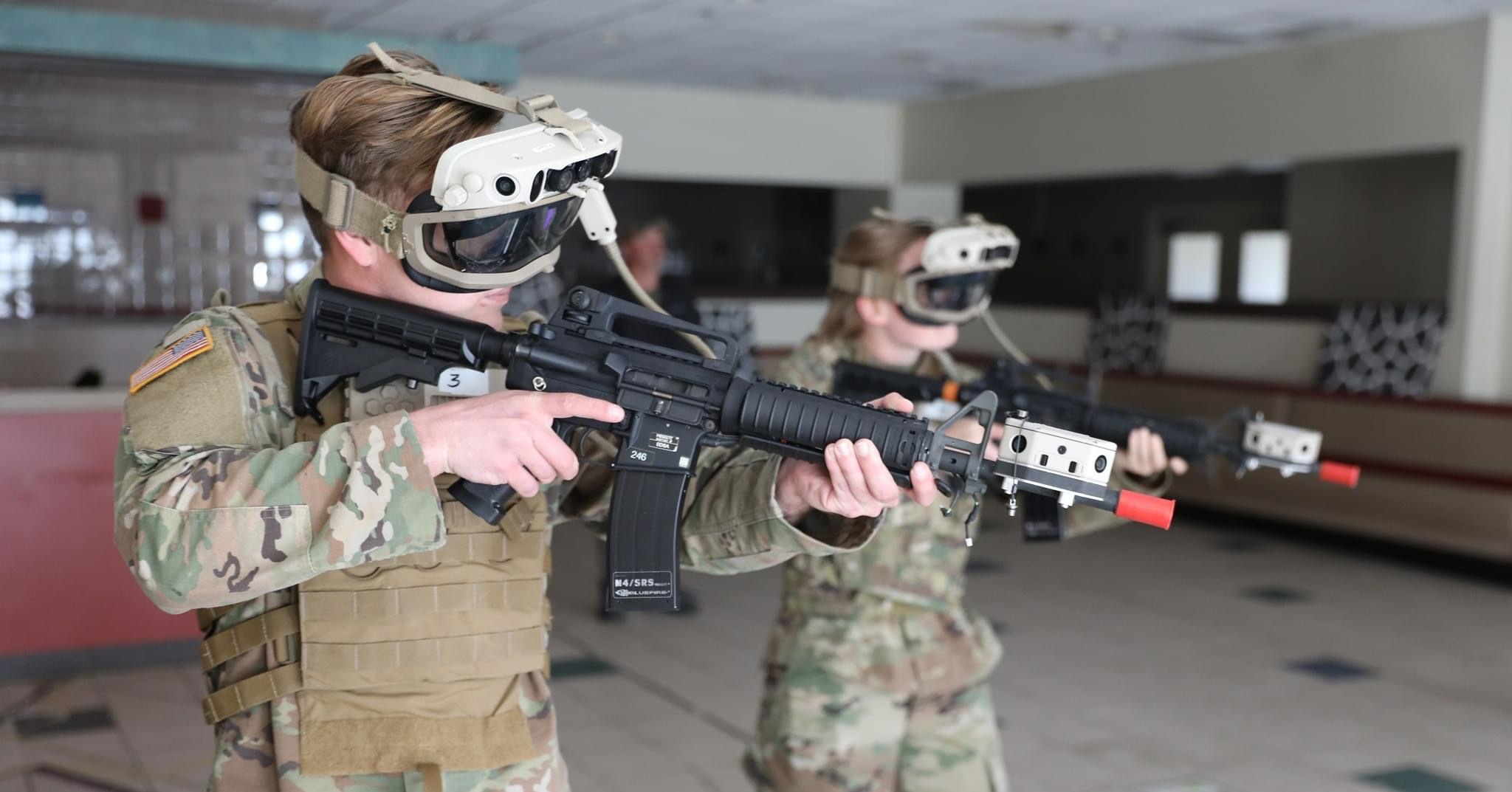
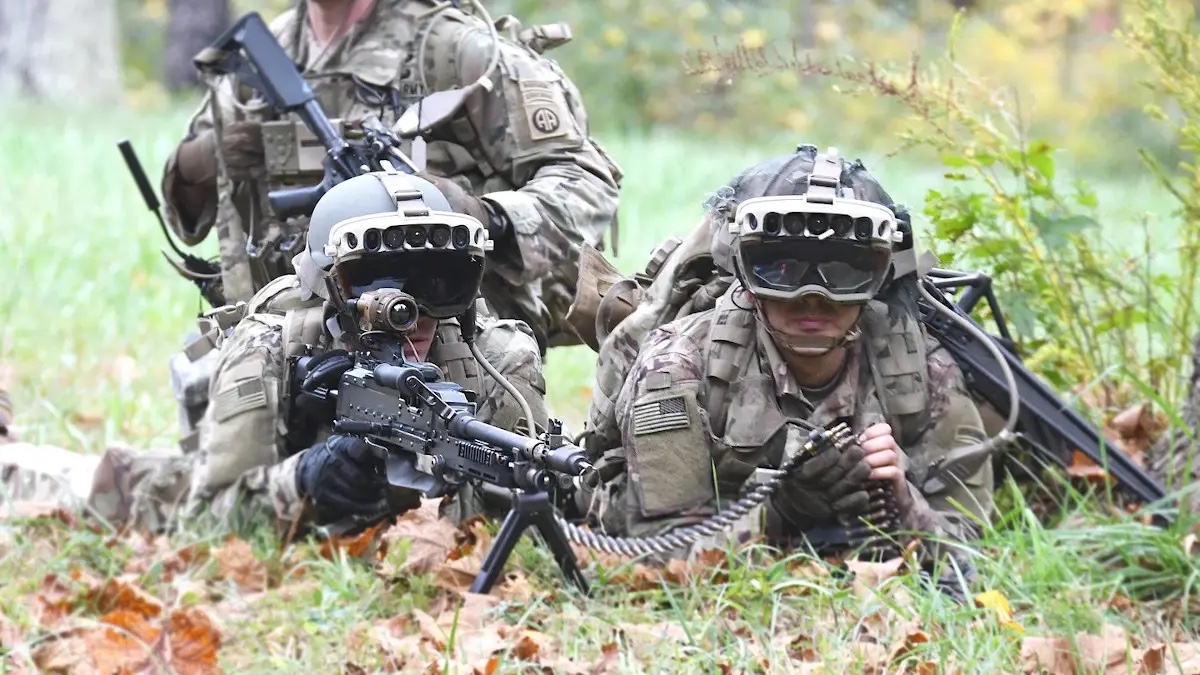
One feature of the US Army’s Integrated Visual Augmentation System (IVAS) is the Squad Immersive Virtual Trainer (SiVT) which facilitates squad-level training in a mixed reality-based synthetic environment. It can be used to train almost anywhere at any time; bringing training to Soldiers instead of bringing Soldiers to training.

Taking full advantage of Microsoft’s HoloLens technology which IVAS is based in, Soldiers are immersed in a synthetic, virtual reality environment and can interact, including movement and engagement, with various scenarios, even those created by small unit leaders.

PM SWAR Vision of the Army Soldier 2030 & Beyond Industry Day

Wednesday, April 5th, 2023

Program Executive Office Soldier, Project Manager Soldier Warrior (PM SWAR) is hosting a two-day industry event on 17-18 May 2023 at the Embassy Suites Hotel, 8100 Loisdale Rd., Springfield, VA 22150, to inform DoD Contractors of the PM SWAR vision of the Army Soldier 2030 and beyond.

PM SWAR is interested in DiD contractors with experience in Heads Up Display (HUD) Hardware and Software, Sensor and Laser Technologies, Army Platform Integration, and Wearable Battery Technologies.

DoD participants for this event are:

Program Executive Office Soldier, Project Manager Soldier Warrior

Product Manager (PdM) Integrated Visual Augmentation System (IVAS)

Product Manager Soldier Maneuver Sensors (SMS)

Product Manager Soldier Precision Target Devices (SPTD)

Program Executive Office Simulation, Training and Instrumentation, Project Manager Synthetic Environment

Product Manager One World Terrain (OWT)

Program Executive Office Command Control Communications-Tactical (C3T), Project Manager Tactical Radios

Product Manager Handheld, Manpack and Small Form Fit (HMS)

Visit sam.gov to learn more.

IVAS 1.2

Monday, April 3rd, 2023

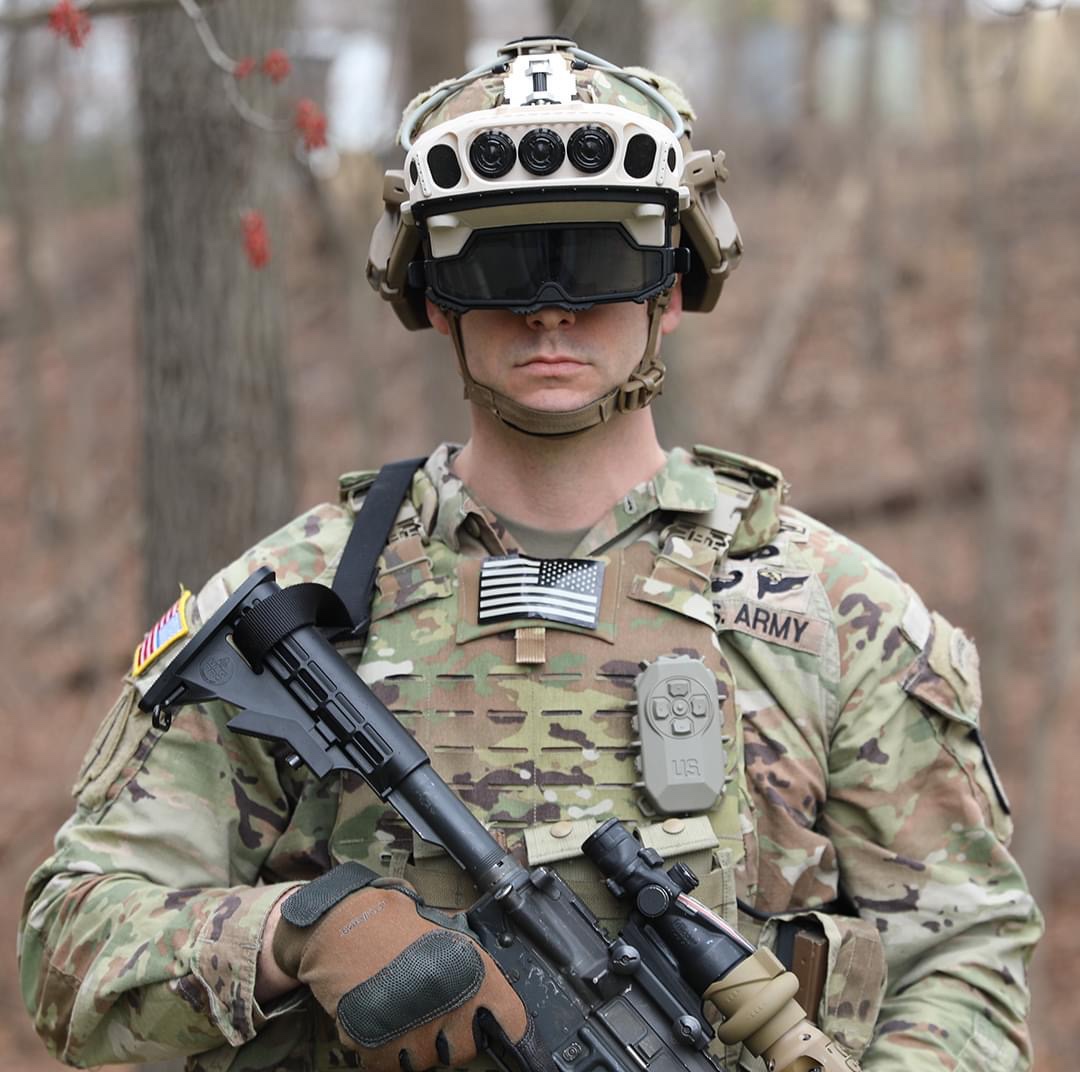
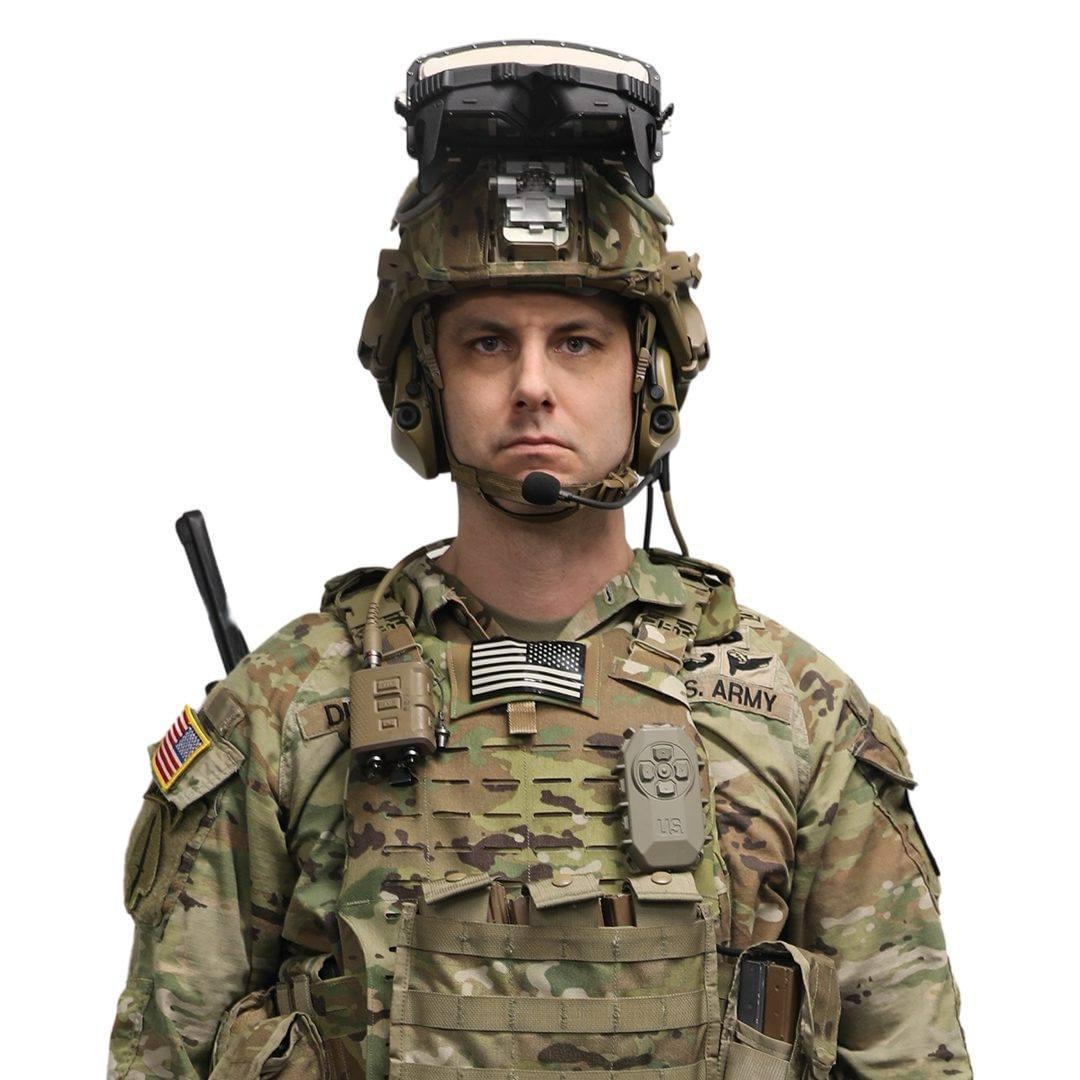
IVAS 1.2 features an improved form factor and a lower profile heads-up display with distributed counterweight for improved user interface and comfort.

IVAS’ Production and Fielding Remain on Track

Tuesday, March 14th, 2023

Over the past year, the Army tested, evaluated and refined the Integrated Visual Augmentation System’s (IVAS) capabilities in a manner that will result in improved systems being incrementally fielded to Soldiers over the next several years – IVAS 1.0, IVAS 1.1 and IVAS 1.2 variants.        

Last June, IVAS completed its Operational Test, during which Soldiers trained on IVAS 1.0 systems in company-level missions and live-fire exercises. The Army determined that IVAS demonstrated several transformational capabilities, but three areas prevented the systems from achieving Soldier acceptance:  reliability, low-light sensor performance and form factor.  

The Army and its industry partner, Microsoft, used the lessons learned from testing to address concerns and adjust its fielding plan.  To specifically address reliability, in November 2022 Microsoft and the Army incorporated a new software release into IVAS 1.0 resulting in a more stable and reliable user experience.  Software improvement is a continuous effort that will transcend all current and future versions of IVAS.

IVAS 1.0 systems will be fielded to training and doctrine units next year to support the Army’s Campaign of Learning, an ongoing process that gathers and incorporates user feedback from user studies, user assessments, Soldier Touch Points and operational demonstrations to improve IVAS’ performance.

IVAS 1.1 upgrades reliability and features an improved low-light sensor that performs comparable to the PVS-14 night vision goggles. These systems will be delivered and fielded in Fiscal Year (FY) 2024.  

The Army awarded an IVAS 1.2 technology insertion effort to Microsoft in December 2022, with the anticipation of moving to production in late FY2024 and fielding to operational units beginning as early as 4Q FY2025. The majority of the close combat force will receive IVAS 1.2; this version features an improved form factor in addition to reliability and low-light sensor upgrades, as well as a lower profile heads-up display (HUD) with distributed counterweight for improved user interface and comfort.  

In recent exercises the Army has shown a number of different ways IVAS can be used on the battlefield, ranging from ingesting video and data from small Unmanned Aerial Systems to integrating with ground and air platform sensors to provide Soldiers the ability to see what the platform drivers, commanders and pilots see before dismounting into a hazardous situation.

The Army remains fully committed to IVAS.  Despite some revisions to the fielding timeline, the developmental process for IVAS will result in fielding several years ahead of standard acquisition programs.  

By PEO Soldier PAO

PEO Soldier Works with Industry To Rapidly Field New Cold Weather Clothing to 11th Abn Div

Monday, March 6th, 2023

Last month, the US Army began fielding an interim version of the Cold Temperature and Arctic Protection System or CTAPS to the Alaska-based 11th Airborne Division following a Directed Requirement from the Chief of Staff of the Army, General James C. McConville.

Soldier Systems Daily had the opportunity to sit down with the Program Executive Office – Soldier team behind this project to discuss how it happened. The Product Manager Soldier Clothing and Individual Equipment is LTC Naim Lee. He was joined by Assistant Product Manager for Extreme Weather Clothing and Equipment, MAJ Ryan Ogden and a Textile Technologist on his team, Mr. James Murdock who is an Engineer assigned to the Combat Capabilities Development Command Soldier Center in Natick, MA.
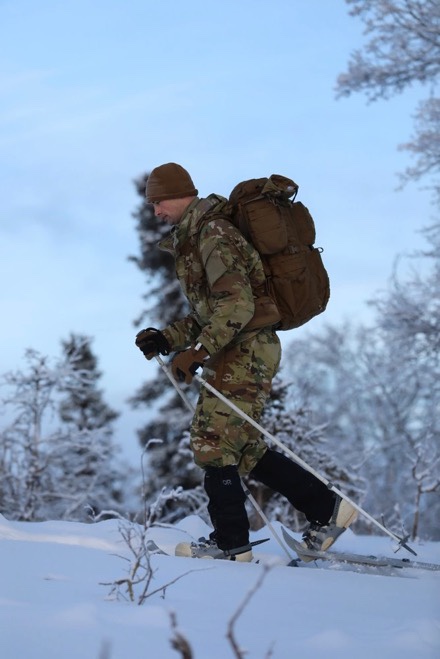
The CSA issued the Directed Requirement to provide the 11th Abn Div with an improved interim cold weather clothing capability in June 2022 and by January 2023, the team was already conducting human factors testing at the Cold Regions Test Center at Fort Greely, AK with 18 Soldiers from the 70th Brigade Engineer Battalion. The PEO Soldier team quickly transitioned from testing to fielding beginning in mid-February.
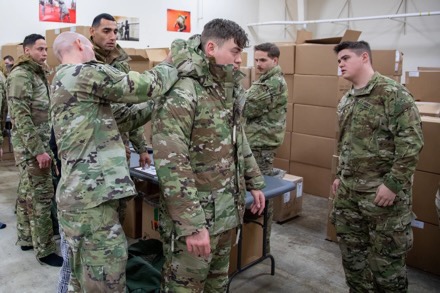
As fielded, CTAPS consists of five layers vice the seven layers of ECWCS. MAJ Ogden explained that Army hasn’t decided how they will characterize layers in the future but in the meantime will continue to use the layer designations of the Extreme Cold Weather Clothing System Generation III. However, like with ECWCS (and the similar Protective Combat Uniform worn by SOF personnel), although they are referred to as layers, the Soldier may combine different layers to gain the desired protection from the elements.
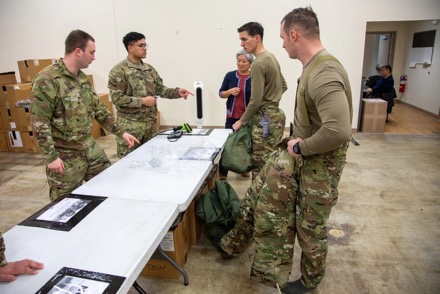
Featuring the Operational Camouflage Pattern, CTAPS is offered in 15 different sizes, ranging from extra small and short to extra-extra-large and extra-long.
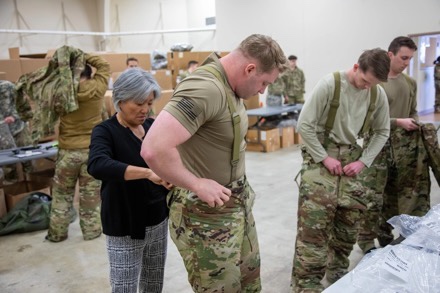
While CTAPS features government designs, two of the layers, layers one and six were fulfilled by Commercial Off The Shelf (COTS) items due to the short notice nature of the requirement.

CTAPS includes:

Layer 1 – Base layer
Layer 3 – Lightweight Insulated Liner
Layer 5 – Softshell Uniform
Layer 6 – Cold/Wet Weather Uniform
Layer 7 – Extreme Cold Weather Parka/Trousers

One of the ways that the Army is able to reduce the number of layers is by creating adaptable garments which combine capabilities. For example, the CTAPS L5 Softshell Uniform is intended to function as both Softshell and Wind Shirt found in ECWCS.
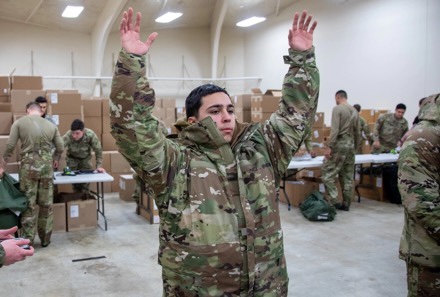
Additionally, Murdock said, “there is functionality in the designs. There is a reason every pocket and zipper is located where it is, so that the entire ensemble not only works as a system but that it also interfaces with other OCIE like body armor, gloves, boots, and head protection.”

Based on the recent Arctic strategy document, “Regaining Arctic Dominance” the Army must be capable of surviving temperatures as low as -65 deg F. This is slightly colder than the -60 deg F capability provided by ECWCS going back to its first iteration in the late 1980s. Murdock explained that although the system has been tested to -65, everyone reacts a bit differently to extreme temperatures and while one Soldier may find the ensemble just fine, another may feel cold or another warm.
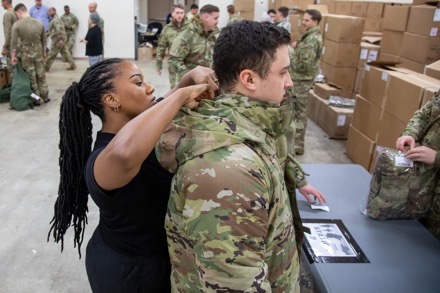
Murdock explained that the search for materials to handle such extreme temperatures began in 2016 with the Regionally Aligned Combat Ensemble – Arctic program. The Combat Capabilities Development Command Soldier Center evaluated numerous different fabrics for their individual attributes as well as how they could be combined for use in a clothing system for extreme cold weather.

They also worked with Subject Matter Experts from the Army as well as the civilian winter sports community to inform form and function. These concepts were bounced off of 11Bs in the Infantry as well as Soldiers from other branches to determine their applicability to the mission. For example, the L7 parka is now designed to be worn with armor and the trouser features an expandable waist to make it more adaptable to layering.

MAJ Ryan Ogden pointed out the short period of time it took to fulfill this requirement stating, “One of the big takeaways is the rapid flash-to-bang from requirement to fielding. We worked closely with industry to make this happen. It’s a testament to how quickly we can get a capability out to the force.” Murdock added, “We had companies working very closely with one another that might normally be seen as competitors. Everyone came together to make this happen.” This was a major event within the US textile industry. Not only did fabrics have to be milled, treated and printed, but the companies actually assembling the garments had to manage supply chains that include such disparate items as snaps, zippers, and nylon tape, with everything coming from a different supplier. Industry is currently producing up to 400 sets of CTAPS per day and as many, if not more, Soldiers are being issued their systems every day.

The units receiving the new clothing are the 1st Infantry Brigade Combat Team at Ft Wainwright and the 2nd IBCT (Airborne) at Joint Base Elmendorf-Richardson. MAJ Ogden conveyed that a small quantity of additional systems was also delivered to cover sizing tariffs and spares of two such large organizations.
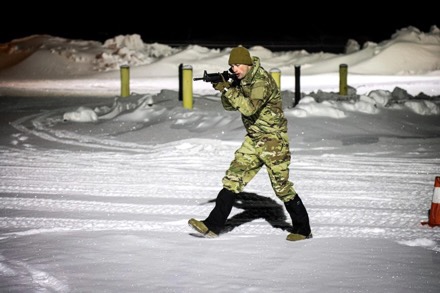
Next month, the units will participate in a force-on-force Field Training Exercise which will also serve as a testbed for the clothing systems.

LTC Lee wanted to point out that what you see here isn’t the final configuration. PEO Soldier will use information gleaned from the fielding of this directed requirement to inform a future iteration of specialized clothing to replace the current ECWCS Gen III.

Additionally, LTC Lee mentioned that accessory items like hand and footwear as well as head protection for extreme cold are separate from this project and covered under other programs of record.

The big takeaway here are that the Army can work with industry to rapidly field unique requirements at scale and that PEO Soldier continues to improve clothing and individual equipment for the Soldier.

MAJ Ogden summed it up well, “CTAPS leverages novel materials and offers increased comfort and durability, reduced bulk, enhanced integration with OCIE, and improved moisture management.”


PEO Soldier Delivers CTAPS to Two Brigade Combat Teams in the Arctic

Tuesday, February 28th, 2023

Project Manager Soldier Survivability (PM-SSV) began the issuing of the Cold Temperature and Artic Protection Systems (CTAPS) system to two Brigade Combat Teams (BCT) of the 11th Airborne Division at Ft. Wainwright and Anchorage, AK on February 13, 2023. Soldier feedback on CTAPS will inform the Army’s next generation Cold Weather Clothing System requirement for protection in extreme cold weather operating environments, with a more modular, adaptable, and packable system.  

PM-SSV in conjunction with the DEVCOM Natick Soldier Center worked tirelessly to fulfill the June 2022 Army directed requirement to outfit soldiers in Alaska in support of winter field training exercises, inform the Army long-term requirement for Arctic Clothing and provide the 11th Airborne Division with this improved interim capability.

CTAPS allows soldiers to effectively operate and sustain combat operations in extreme conditions increasing their ability to fight is temperatures as low as -65 degrees Fahrenheit.

The team transitioned the CTAPS from Science & Technology to production and began delivering CTAPS to the 11th Airborne Division within six months of receiving the Directed Requirement.  This included transitioning three novel materials to production that had never been produced in large quantities by the industrial base, establishing production contracts with multiple vendors, and ramping up the entire supply chain to support this effort.  Currently vendors are producing between 250-400 sets of CTAPS per day and 300-500 soldiers are being issued CTAPS every day.

11th Abn Div Testing Cold Temperature and Arctic Protection System in Alaska

Thursday, January 26th, 2023

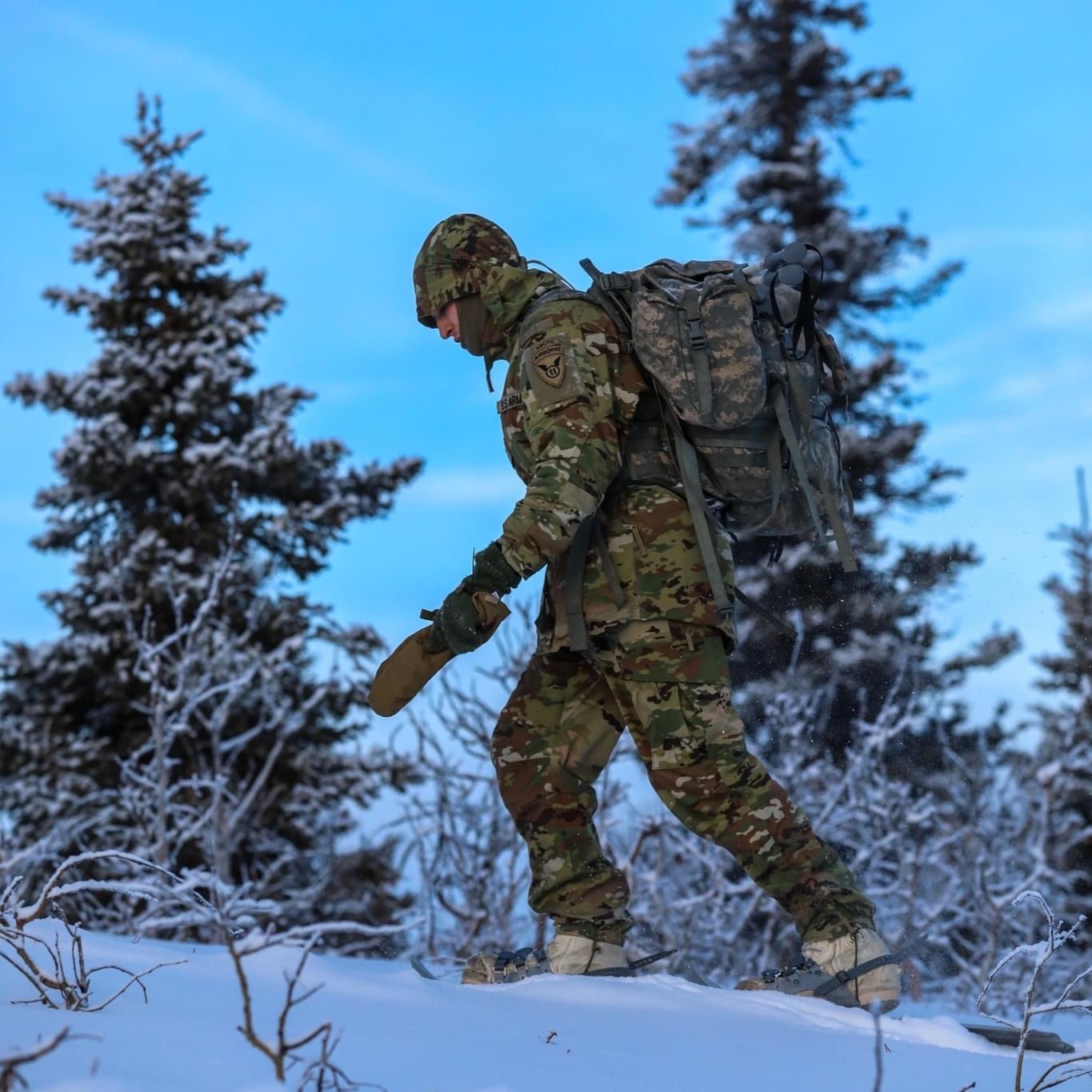
Soldiers of D Company, 70th Brigade Engineering Battalion, supporting the 11th Airborne Division, test out the new Cold Temperature and Arctic Protection System, or CTAPS, at the Cold Regions Test Center, Fort Greely, AK.

CTAPS is an innovative multi-layer system that aims to keep Soldiers warmer in cold weather environments, spanning from 45 degrees Fahrenheit to -65 degrees Fahrenheit.

Photo from PEO Soldier

Integrated Visual Augmentation System 1.2 Development Task Order Awarded

Monday, January 9th, 2023

Washington – On Dec. 20, 2022, the U.S. Army awarded a task order to Microsoft Corporation to develop the 1.2 variant of the Integrated Visual Augmentation System.

This task order is the latest step in the process that began in March 2021, when the Army awarded Microsoft a firm-fixed-price Other Transaction Authority production agreement to manufacture IVAS. Under that agreement, the Army envisioned improving the system through an iterative process, and this task order will provide improvements based on completed test events.

The IVAS will provide Soldiers with a single device to fight, rehearse and train by integrating next-generation situational awareness tools. To date, the Army has conducted over 30 Soldier test events and more than 100 technical sub-tests, with more than 1,000 Soldiers contributing nearly 100,000 hours of IVAS user feedback. These tests validated the system’s continued progress while identifying areas for focused improvements.

IVAS will begin incremental fielding in September 2023. IVAS 1.0 provides baseline warfighter capability, and the IVAS 1.1 features an improved low-light sensor to aid maneuver and positive target identification. In addition to the IVAS 1.1 improvements, IVAS 1.2 will include a new form factor to address Human Systems Integration, including physiological impacts identified during testing, and a lower profile heads-up display with distributed counterweight for improved user interface and comfort. IVAS 1.2 will also include software improvements for increased reliability and reduced power demand.

Delivery orders for IVAS 1.2 production systems will be placed after qualification and operational testing.

The Army will continue to work with its IVAS industry partner, Microsoft, to execute the IVAS program in a rapid and innovative manner. The iterative and Soldier feedback oriented developmental process for IVAS will result in fielding substantial capability several years ahead of traditional acquisition program timelines. The Army is fully committed to IVAS and the leap-ahead capability it will provide for Soldiers to prevail on the battlefield.

By U.S. Army Public Affairs