Phantom Lights

Archive for the ‘Power’ Category

ProTecBird Enables Successful Protection of the Red Kite Around Wind Turbines

Thursday, August 22nd, 2024

Rheinmetall supplies expertise in the field of air defence for the detection of protected bird species
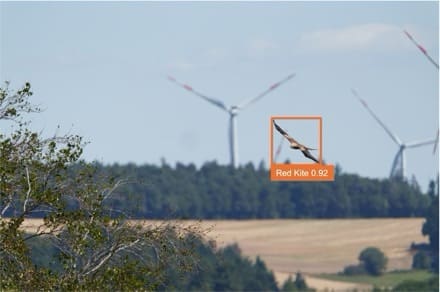
With AI and sensor technology from ProTecBird and software from the military sector, Rheinmetall and ProTecBird want to ensure the protection of red kites around wind turbines and at the same time contribute to the energy transition. Both companies have now announced the successful demonstration of the effectiveness of the AVES Wind anti-collision system for the protection of red kites around wind turbines, which was developed by ProTecBird by integrating Rheinmetall technology. With this milestone, the young technology start-up from Husum, which is specialised in the development and manufacturing of economical and species-specific anti-collision systems, has now overcome a significant hurdle for the energy revolution in Germany in partnership with Rheinmetall.

The development of effective anti-collision systems (ACS) has been one of the biggest challenges in the operation of wind farms in areas with wind-sensitive bird species. The balance between technical feasibility and reliable species protection is of central importance for the planning processes in the construction of wind farms. With its AI-based AVES Wind anti-collision system, ProTecBird has succeeded in solving this problem by defining and demonstrating the requirements for an anti-collision system in terms of nature conservation, economics and technology for the first time. By doing so, the system offers an alternative to generalised shutdown regulations by providing a customised solution for wind farm-operators through species- and situation-dependent short shutdowns.

As one of the federal states with the most wind power, Schleswig-Holstein is a pioneer in the establishment of forward-looking standards for anti-collision systems and their integration into approval procedures. On behalf of the Ministry of Energy Transition, Climate Protection, Environment and Nature of the Federal State of Schleswig-Holstein (MEKUN, Ger. for Ministerium für Energiewende, Klimaschutz, Umwelt und Natur), a committee was convened in September 2022 to develop a testing framework under the direction of the State Office for the Environment SH (LfU, Ger. for Landesamtes für Umwelt). This committee, consisting of a team of consultants (TÜV NORD, the Office for Biostatistics), ACS and wind energy manufacturers as well as stakeholders from nature conservation organisations and wind energy associations, developed a comprehensive testing framework for the validation of ACS by the end of 2023. On 8 August 2024, Tobias Goldschmidt, Minister of Energy Transition, Climate Protection, Environment and Nature of the Federal State of Schleswig-Holstein, announced the first nationwide testing framework for anti-collision systems. The testing framework is currently being evaluated by other Federal States in Germany in order to incorporate it into their own area of responsibility.

The AVES Wind system from ProTecBird was tested at an existing wind farm between July and September 2023 in accordance with the requirements of the technical convention proposal “Test framework for anti-collision systems” (MEKUN 2024). A total of 237 red kite flight sequences were analysed at various sites on a total of 25 recording days: AVES Wind detects, recognises and protects the red kite in accordance with the specifications of the technical convention proposal (MEKUN 2024), meaning that the species protection requirements and the protective effect for the red kite are fully met by the ProTecBird anti-collision system.

“We are delighted to have our AVES Wind anti-collision system recognised, and are proud to be making a contribution to the energy revolution,” comments Thorsten Heinzen, CEO of ProTecBird. “The cooperation with the relevant players in Schleswig-Holstein was crucial for this breakthrough. The fact that ProTecBird was the first company to undergo and pass the officially defined testing framework highlights the company’s innovative strength and commitment. With its AVES Wind anti-collision system, ProTecBird has achieved a technological breakthrough that can be seen as disruptive for the wind energy industry,” continues Thorsten Heinzen. “We have created a clever networked system that utilises the existing wind farm infrastructure and further improves the effectiveness and sustainability of the generated wind energy”.

The solution of the AI-based AVES Wind anti-collision system is based on software developed by Rheinmetall Electronics GmbH, which was originally programmed for air defence in the military sector and is in use worldwide.

Rheinmetall uses an established software (Multi Mode Tracker) that can recognise and assign missiles via pixel changes on the horizon. Thanks to the further development of the software by ProTecBird and the use of the newly developed AI, different bird species, such as the protected red kite, can now be reliably recognised and tracked by the systems’ sensors. As a result, automated shutdown commands are sent to wind turbines, effectively preventing collisions between the animals and the rotor blades from a predefined distance between the bird and the wind turbine.

“The possible applications go far beyond the original military field,” explains Uwe Lindenau, Sales Manager Mission Systems at Rheinmetall Electronics GmbH.

“The cooperation between Rheinmetall and ProTecBird is unique worldwide. With our software and the technical expertise of ProTecBird, not only can unique protected birds such as the red kite or the white-tailed sea eagle be protected. Concerning the aviation sector, it also offers great benefits for flight safety regarding bird strikes on aircraft engines and the airframe,” Lindenau continues.

For Rheinmetall, demonstrating the effectiveness of the system in wind turbines is a successful example of the Group’s involvement in environmental protection.

As a technology start-up, ProTecBird is determined to push ahead with its research and development. The company is currently working on expanding its technology to other animal species, such as real-time detection of bats, to ensure more comprehensive protection of wildlife.

In addition, ProTecBird aims to expand its partnerships to promote the use of renewable energy not only in Germany but also worldwide.

Electric Micromobility Operations Vehicle from Bunker Supply

Wednesday, August 21st, 2024

Bunker Supply has been awarded a SBIR Phase II for the continued development of the Electric Micromobility Operations Vehicle (E-MOV).

E-MOV is a versatile, decentralized electric micromobility vehicle to optimize base operations and support distributed operating bases by aiding distributed operations at dispersed locations, a key component of the Agile Combat Employment (ACE) concept.

Galvion Recharges USMC with the Receipt of Multiple Power and Data Product Orders

Wednesday, August 7th, 2024

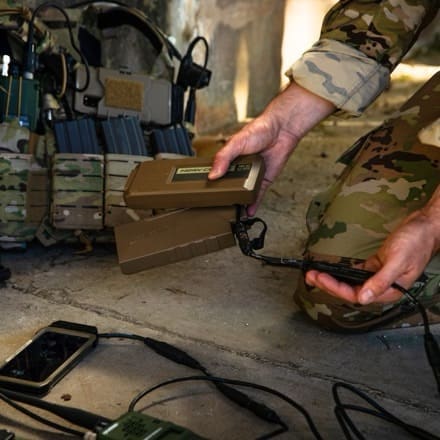
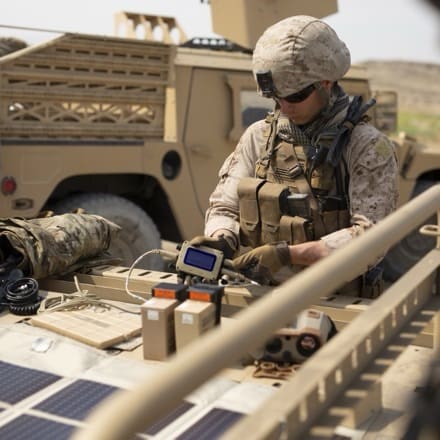
Galvion, a world leader in the design and manufacture of integrated power and data management solutions and innovative head protection systems, has received a number of orders from the United States Marine Corps (USMC) for its Nerv Centr® power and data products. Galvion has recently received an order for 5000 SoloPack™ II lithium-ion rechargeable batteries and a USD $1.5M order for additional ancillary cables to further support the USMC’s in-service Portable Power Scavenger Systems (P2S2).

The SoloPack™ II batteries ordered will support the USMC’s Fire support and coordination systems using portable, handheld devices to employ supporting arms in consonance with maneuver elements used by Marines. Galvion’s original 98Wh SoloPack™ batteries were included in kits when fielded in 2018. This new order for 5000 SoloPack™ II will provide more power to better sustain these critical systems. Small, lightweight and energy-dense, the SoloPack II offers 140Wh of energy (40% more power storage capacity than the original SoloPack), while maintaining the familiar, compact form factor users expect from the Nerv Centr® suite of products. SoloPack II fits into a magazine pouch for ease of storage and weighs only 1.65lbs (750 grams).

In December 2022, Galvion announced an order valued at USD $11 million to supply a customized Squad Power Manager™ (SPM) kit to each Marine Expeditionary Force (MEF) within the Marine Corps, including Reserve Forces. The USMC’s Portable Power Scavenger System (P2S2) kits include Galvion’s SPM and a selection of cables, connectors and accessories that provide the ability to scavenge, distribute, and manage power from multiple power sources including solar, Alternating Current (AC), Direct Current (DC), military batteries, North Atlantic Treaty Organization (NATO) plugs, and vehicle cigarette lighter/alternator attachments. The SPM kit can scavenge power from partially discharged batteries, vehicles, and standard electrical outlets and convert that power into a usable format for powering devices and recharging batteries. The recent order received for additional ancillary cables will extend and further enhance the functionality of the USMC’s in-service P2S2 kits.

Todd Stirtzinger, CEO at Galvion said: “The United States Marines are some of the world’s toughest warfighters, and we’re incredibly proud to supply them with equipment that supports their missions.

The power supply and management solutions that we provide contribute to a reduction in physical and logistical burden by sustaining power for longer with less weight.” He continued: “The fact that these orders extend and enhance capabilities that Galvion has already supplied to Marines is an example of our commitment to responding to the ever-changing needs of our customers. We’re seeing a number of repeat orders from partners across the globe, which means we’re doing something right; this latest round of orders from the USMC is a proud moment for our whole team.”

Black Hills Designs – Battery Mag

Friday, August 2nd, 2024

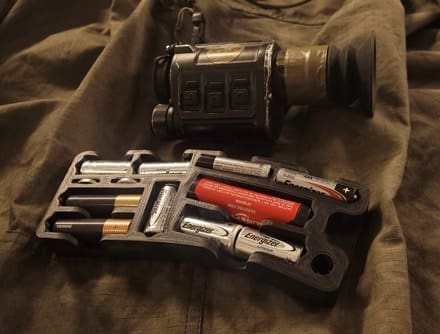
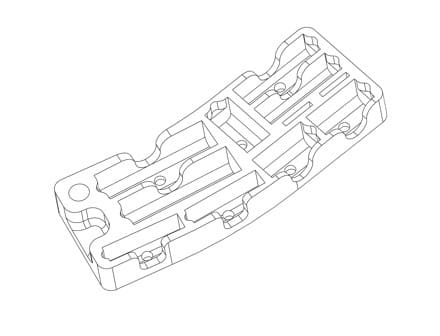
Black Hills Designs has come up with another handy solution for load carriage. This time it’s a battery caddy that is shaped like a 30 round M4 magazine to help standardize your pouches.


I know what you’re thinking already. No, it won’t fit in a magwell, it’s a bit oversized. Plus, it features a unique texture so it will feel different in your hand as well as having all of those cutouts for batteries. But just to be sure, don’t store it in your kit along with your actual magazines.

CAPACITY

2xAA
2×2032
4xAAA
3xCR123
2x 18650/16650 OR an additional 4xCR123

Currently offered in Black with more colors to come.

Get yours at www.blackhillsdesigns.net/product/battery-mag.

All-Electric Fixed-Wing Aircraft Offloads Cargo at JB McGuire-Dix-Lakehurst

Wednesday, July 17th, 2024

JOINT BASE MCGUIRE-DIX-LAKEHURST, N.J. (AFNS) —

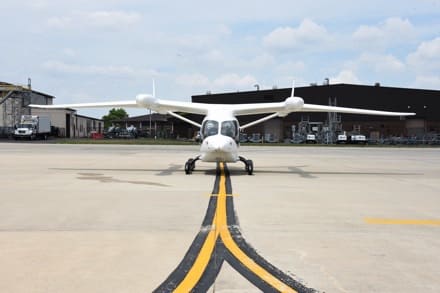
Joint Base McGuire-Dix-Lakehurst played a vital role in a historic first cargo flight as part of a demonstration of the ALIA CTOL, a battery-powered fixed-wing aircraft, July 9. The National Aerospace Research and Technology Park (NARTP) in Atlantic City tested the aircraft’s cargo usage by flying a lap pattern from Atlantic City, Dover Air Force Base and JB MDL.

The U.S. Air Force, in a partnership with BETA Technologies, has been instrumental in the development of ALIA. This groundbreaking aircraft, with a range of 250 nautical miles and the capacity to seat up to five passengers, is a testament to the Air Force’s adaptability to new technologies. The Air Force’s interest in the ALIA’s flexible applications further reinforces its commitment to staying at the forefront of technological advancements.

Moving cargo between Dover AFB and JB MDL with the ALIA is advantageous because it saves time and many other valuable resources.

“We can be ready to take off in a matter of minutes, and the battery has a low center of gravity, which is not affected by the way you load the cargo,” said Ross Elkort, BETA Technologies flight test engineer.”

The 305th Maintenance Squadron’s Precision Measurement Equipment Laboratory team unloaded 319 pounds of cargo from Dover AFB and loaded 222 pounds to send on a return trip.

Having last-mile cargo delivery handled by a battery-powered fixed-wing is an opportunity to make air mobility safer, cleaner and more cost-effective.

“It brings key innovation to the mission. It’s going to make things faster and simpler,” said Alyxandra Scalone, 305th Maintenance Squadron production controller. “Dover (AFB) is about two and a half hours away from us. Today’s flight only took 45 minutes.”

“An all-electric aircraft like the ALIA is the next evolution of rapid global mobility,” said Zachary White, BETA Technologies team member. “We started working with the AFWERX Agility Prime Program in 2019. We are super excited to be here and supporting Air Mobility Command. Doing different types of missions and flying cargo between bases, it was great to see the flexibility of this aircraft.”

By MSgt Joseph Vigil, Joint Base McGuire-Dix-Lakehurst Public Affairs

Smart Magnetics Innovation by Exxelia: Enhancing Next-Generation Resonant and Bidirectional Power Converters

Monday, July 8th, 2024

Exxelia, global manufacturer of complex passive components and subsystems introduces groundbreaking innovations in smart magnetics technology, specifically tailored for resonant bidirectional power converters. These advancements are set to redefine efficiency and performance standards across a spectrum of applications.

The advent of electrification, especially in electric or hybrid mobility including EVTOLs, buses, heavy vehicles, military/defense applications, off-road vehicles, and space thrusters, as well as electric energy storage systems & Smart Grid networks, implies the management and storage of large quantities of electrical energy. This necessitates the use of specific architectures such as DAB, LLC, and interleaved converters. These structures enable very high efficiencies.

EXXELIA SMART MAGNETICS INTEGRATED TECHNOLOGY

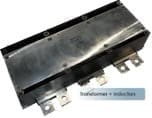
Combines an inductor and a transformer into a single ultra-compact/miniaturized, lightweight component, regardless of the inductance value, for a seamless integration.

• High Power Applications (up to 300kW)

• High Frequency (10-500kHz): fits next-generation semiconductors (SiC, GaN) : Enables compact, lightweight designs.

• High Efficiency: minimizing losses, achieving efficiencies above 99% even at high frequencies.

• Lower Total cost of ownership: Ensuring straightforward integration and optimized system costs.

• EMI Reduction: Enhances electromagnetic compatibility for reliable operation.

TECHNICAL CHARACTERISTICS

3 Phase 24 kVA Integrated Component (Transformer + Inductors) 360/27 V @ 100kHz

– Incorporates Series Inductors (18?H)

– Withstands Net Bias Current 10% of Load Current

– Size 1085cc, Mass 3.86kg

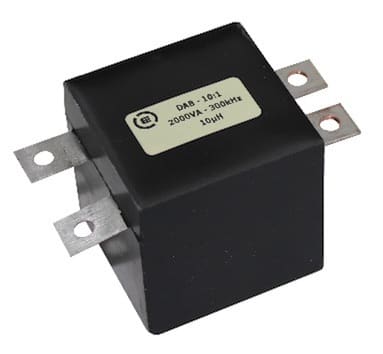
Dual Active Bridge Transformer 2kW / 10:1 / 300 kHz and Chokes 10?H

– Incorporates Series Inductors 10?H ? Size 40x40x40 mm, Mass 250g

Meet the Challenges in Converter Development:

• Miniaturization: Designing smaller systems without compromising performance.

• Thermal Management: Efficiently managing heat to enhance durability and efficiency.

• Cost-Effectiveness: Balancing efficiency enhancements with cost-effective solutions.

Exxelia’s commitment to the development of these new technologies shows its willingness to anticipate the needs of advances power electronics.

For more information on Exxelia’s smart magnetics innovations, visit Exxelia’s website.

This project was financed by the government as part of the Recovery plan.

GM Defense Provides Battery Electric Technology for Future Military Platforms

Wednesday, June 26th, 2024

WASHINGTON, D.C. — GM Defense, a subsidiary of General Motors, is providing commercial battery electric technology in support of the University of Texas at Arlington (UTA) Pulsed Power and Energy Laboratory (PPEL) and Naval Surface Warfare Center Philadelphia Division (NSWCPD). The project, Evaluation of Electric Vehicle Batteries to Enable Directed Energy (EEVBEDE), is funded by the Operational Energy Innovation office of the U.S. Department of Defense (DoD), through its Operational Energy Capability Improvement Fund (OECIF). UTA PPEL will evaluate the technology to understand current capabilities of commercial automotive batteries under dynamic discharge and charge scenarios. The team’s evaluation of the technology will help provide pathways and options for domestically supplied energy storage for future use in military platforms.

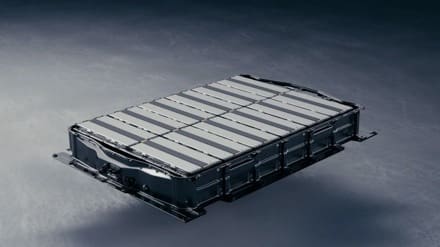
GM Defense is leveraging GM’s Ultium Platform propulsion architecture, for evaluation and testing. The Ultium Platform can deliver power, range and scale beyond any previous GM hybrid or extended range EV technology. Modular and scalable, the Ultium Platform can use different chemistries and cell form factors, making it adaptable to changing needs and new technology insertions as they become available. Utilizing the battery technologies of its parent company, GM Defense can help solve the DoD’s energy and energy storage challenges. The work performed in this new effort will provide insights into the performance and design considerations when batteries are used in more dynamic, high-power operations than would be faced by more typical applications. OECIF support plays a key role in the development of new power and energy technologies, which provide the DoD with advanced capabilities and help prevent power and energy from being a limiting factor.

“The Department of Defense can benefit from billions of dollars in GM investments to develop and manufacture transformative battery technologies,” says Steve duMont, president of GM Defense. “These technologies offer significant potential to enhance operational capability, whether at the tactical edge or on installations throughout the world. GM Defense welcomes the opportunity to support this important project and to help transition our global defense and government customers.”

“We are excited to work with GM Defense to test the Ultium Platform to determine its potential for use in future warfighting applications. PPEL has a long relationship with the DoD and the Office of Naval Research for testing the limits of batteries used in high power applications, and we are in a unique position to evaluate this technology and make recommendations for future use cases,” said David Wetz, a professor of electrical engineering at UTA and director of the PPEL.

“As a Carnegie R-1 university, UTA is committed to working with industry to better develop and understand the potential of new technology. This collaboration between PPEL, GM Defense and the DoD will not only improve our nation’s military capabilities, but also adds to our workforce development efforts producing next generation engineers who will solve our nation’s complex problems,” said Peter Crouch, dean of UTA’s College of Engineering.

GM Defense previously announced its participation in the Defense Innovation Unit’s Jumpstart for Advanced Battery Standardization (JABS) project. Similar to EEVBEDE, JABS is designed to evaluate and test high voltage battery systems to optimize commercial technologies. GM Defense provided a prototype of a battery system based on GM’s Ultium Platform for the project. Under the same contract, GM Defense demonstrated mission power capabilities by integrating a high-voltage battery pack into a light tactical utility vehicle. Key learnings from JABS will help inform the integration requirements of future battery electric defense solutions. To learn more about GM Defense projects, visit www.gmdefensellc.com or follow us on LinkedIn.

Eurosatory 2024: Caracal Airborne Platform Demonstrates High Mobility with Synthetic Fuel

Wednesday, June 19th, 2024

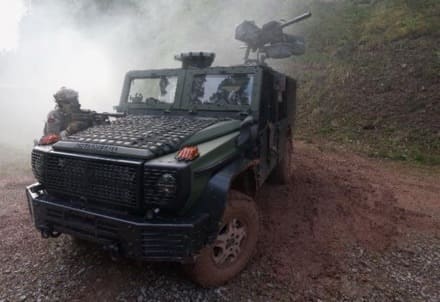
The Caracal platform, a pathbreaking outcome of cooperation between Rheinmetall, Mercedes Benz AG and ACS – Armoured Car Systems, has proven to be a pioneering answer to the demands of modern military mobility. From 17 June 2024, the Caracal will be demonstrating its high agility twice a day in the Demonstration Area at Eurosatory 2024, even in difficult terrain. It will be using a new synthetic fuel generated from hydrogen, CO2 and electricity for military use.

Rheinmetall is cooperating with its technology partner INERATEC on this Giga-PtX project vision for a war-ready energy supply with synthetic fuels. Trade journalists will be able to view this demonstration in the Demonstration Area on 16 June 2024. Furthermore, at Rheinmetall’s Eurosatory 2024 stand a Caracal variant fitted with a launcher for Hero-120 loitering ammunition is on show.

The Caracal is also proving successful on the market. After winning a joint order from Germany and the Netherlands for up to 3,058 vehicles, another important contract came as part of Germany’s efforts to aid Ukraine. A total of 20 units of the Caracal, based on stocks of the G-model 461 series, have been delivered as an immediate requirement for the special forces since spring 2024 after just a few months of production. This has sparked interest not only at home but also internationally.

A showpiece of military innovation, the Caracal draws not only on tried-and-tested technologies, but also embodies advanced elements regarding tactics, safety and performance. While for Germany and the Netherlands joint interoperability and the Caracal’s airtransportability in the STH CH-47 Chinook helicopter were decisive design features, the Ukrainian Caracal will deliver maximum land mobility, giving Ukrainian special forces units a critical tactical edge. Incoming orders from Germany, the Netherlands and now Ukraine highlight the global relevance of this binational partnership and its contribution to international security.

Close cooperation between Rheinmetall, Mercedes Benz AG and ACS has resulted not only in a cutting-edge military vehicle, but also in a strategic alliance that bundles the individual strengths of the partners: the Caracal combines a high-performance, large-production run platform – the Mercedes military G class 464 series – with a modular, industrial scalable build-on from ACS. Rheinmetall is in charge of final assembly of the role-specific military mission kits, drawing on its ability to produce customized products on a large scale in relevant customer countries, as well as providing long-term logistical support throughout the entire product lifecycle.

The Caracal platform not only assures maximum mobility on the ground and in the air. It also enables integration of ballistic protection, various weapon systems and technologies, as well as state-of-the-art reconnaissance and communication equipment – critical elements in the modern battlespace.

In addition to technical superiority and benefitting from assured long-term global logistic support, the Caracal is a very reasonably priced vehicle platform which can be flexibly adapted to meet the ever-changing requirements of current and future combat.

The orders from Germany, the Netherlands and Ukraine, coupled with enquiries from numerous other nations make clear the platform’s international market potential.

The partnership between Rheinmetall, Mercedes Benz AG and ACS shows that the future of military mobility lies in intercompany cooperation. Here, the Caracal platform points the way forward, setting the standard and serving as a model for binational partnerships in the defence industry, in which companies take on challenges together, pushing ahead on the path to sustained innovation, and bringing new products to the global marketplace.