Aquaterro

Archive for the ‘UAS’ Category

Schübeler Technologies Supports Visionary Project of ETH Zurich

Friday, November 26th, 2021

Students realize bionic inspired morphing concept for the aircraft of tomorrow.
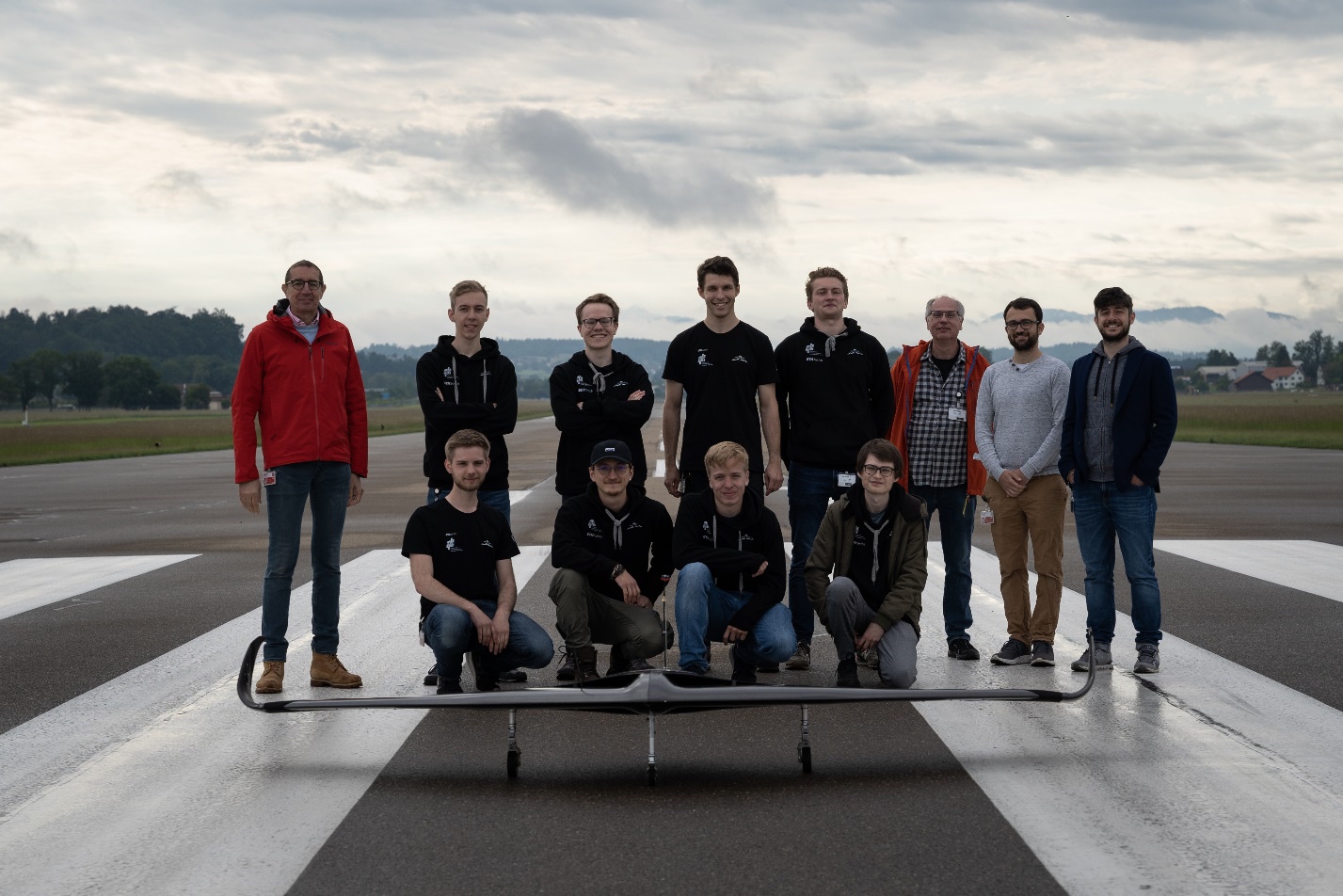
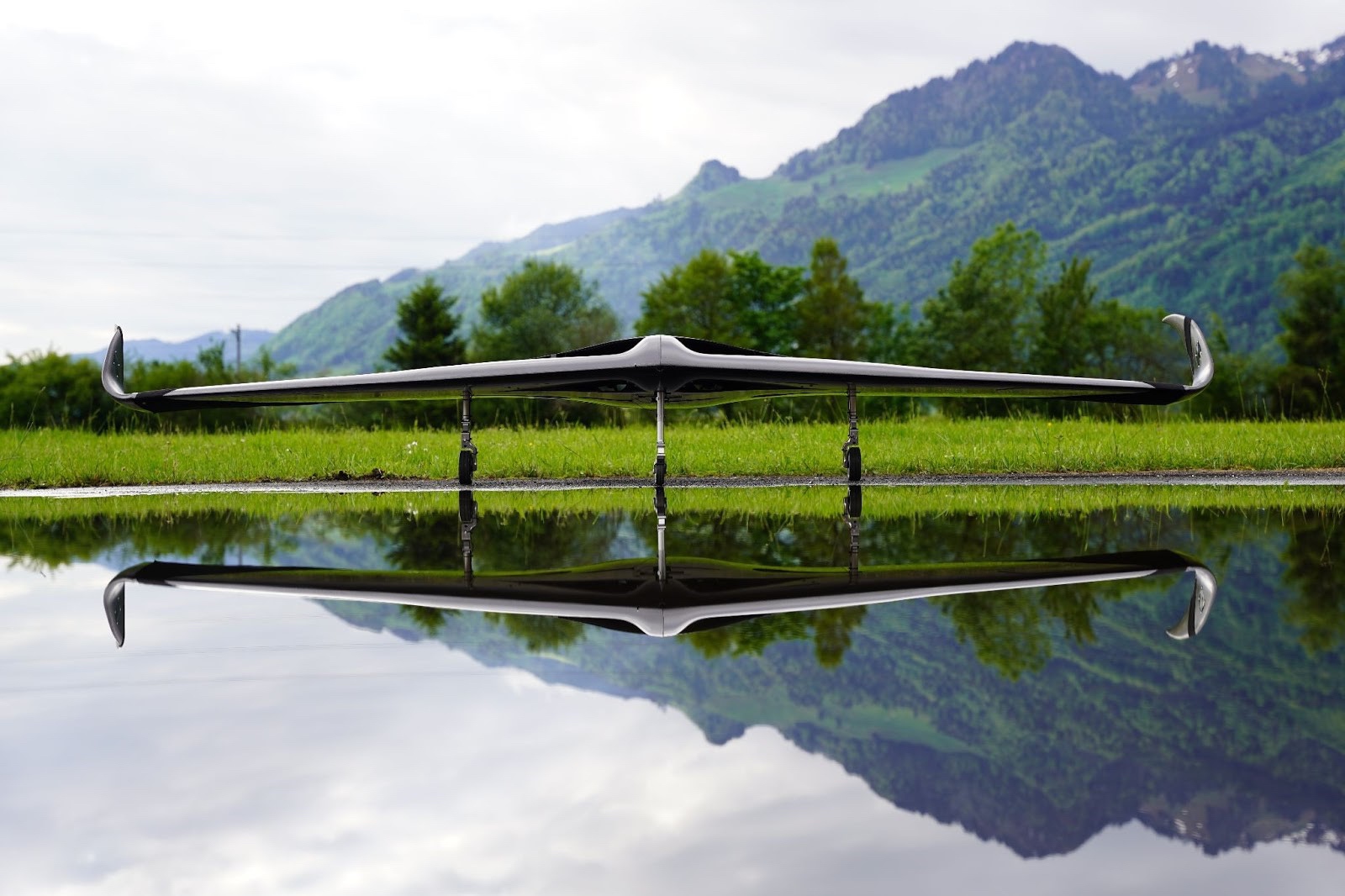
Rome, NY- A control concept inspired by nature and combined with morphing technology has now been realized by engineering students of ETH Zurich together with aviation experts. The eight-member student team is testing novel control concepts and construction methods in aviation. The aim is to reduce energy consumption and noise generation through reduced drag and to improve the maneuverability of the aircraft.

Schübeler Technologies actively supported this innovative project and provided both engines and technical expertise in an advisory capacity. “By participating in this project, we would like to contribute to the further development of aviation,” explains Daniel Schübeler, Managing Director of Schübeler Technologies. “The visionary approach of Bionic Flying Wing as well as the enthusiasm and creativity of the team excited us.”

The project aims to prove the feasibility of bionic inspired morphing concepts in the air. To this end, a deformable morphing wing structure with a three-meter wingspan was developed to be used in place of discrete flaps. A top speed of up to 100 km/h can be achieved with it. The wing structures are specifically deformed to replace conventional control surfaces. In this way, new design potential for the aircraft of tomorrow is opened up The main challenge of this approach is that the wing must be stiff – i.e., it must not flap – but still be able to be deflected. To achieve both, a healthy compromise had to be found. Because of its high strength and low weight, the team therefore opted for CFRP (carbon-fiber-reinforced polymer) as the construction material.


The requirements for the drive system used were also high. In the search for an efficient impeller that delivers the greatest possible thrust in combination with low power consumption, the team quickly came across EDF market leader Schübeler. On Schübeler’s recommendation, the team decided on the DS-51-AXI HDS model with an 1125kv motor and 12 lipo cells. This drive offers a thrust of 5.5 kg (about 55N) with a current consumption of 85 amps, which was perfectly suited for an aircraft of this speed, size and weight. Two fans are used and provide a total thrust of approximately 11kg (110N)

The HDS fan is a quality product designed for durability. The lightweight and highly shortened rotor assembly provides efficient operation through high smoothness. The blades are made of high-temperature, fiber-reinforced polymer, operate highly efficiently, broadband, and quietly. Strength is provided by the carbon shroud.

In a successful first test flight in June of this year, the team proved that bionic inspired morphing concepts can be used to safely control a flying wing aircraft. This was the product of countless hours of engineering and manufacturing, paired with the support of strong sponsors such as Schübeler Technologies.

To learn more about Schübeler Technologies, visit www.schuebeler-technologies.de.

AeroVironment’s New Mantis i45 N Multi-Sensor Imaging Payload Delivers Advanced ISR for Nighttime Operations

Wednesday, November 17th, 2021

• Mantis i45 N provides maximum visibility during low-light or nighttime intelligence, surveillance, and reconnaissance (ISR) operations

• All-environment rated payload maintains similar footprint to battle proven Mantis i45, for fast in-field change-out of payloads between day and night operations

• No software updates required to Puma UAS avionics or ground control stations for legacy system compatibility


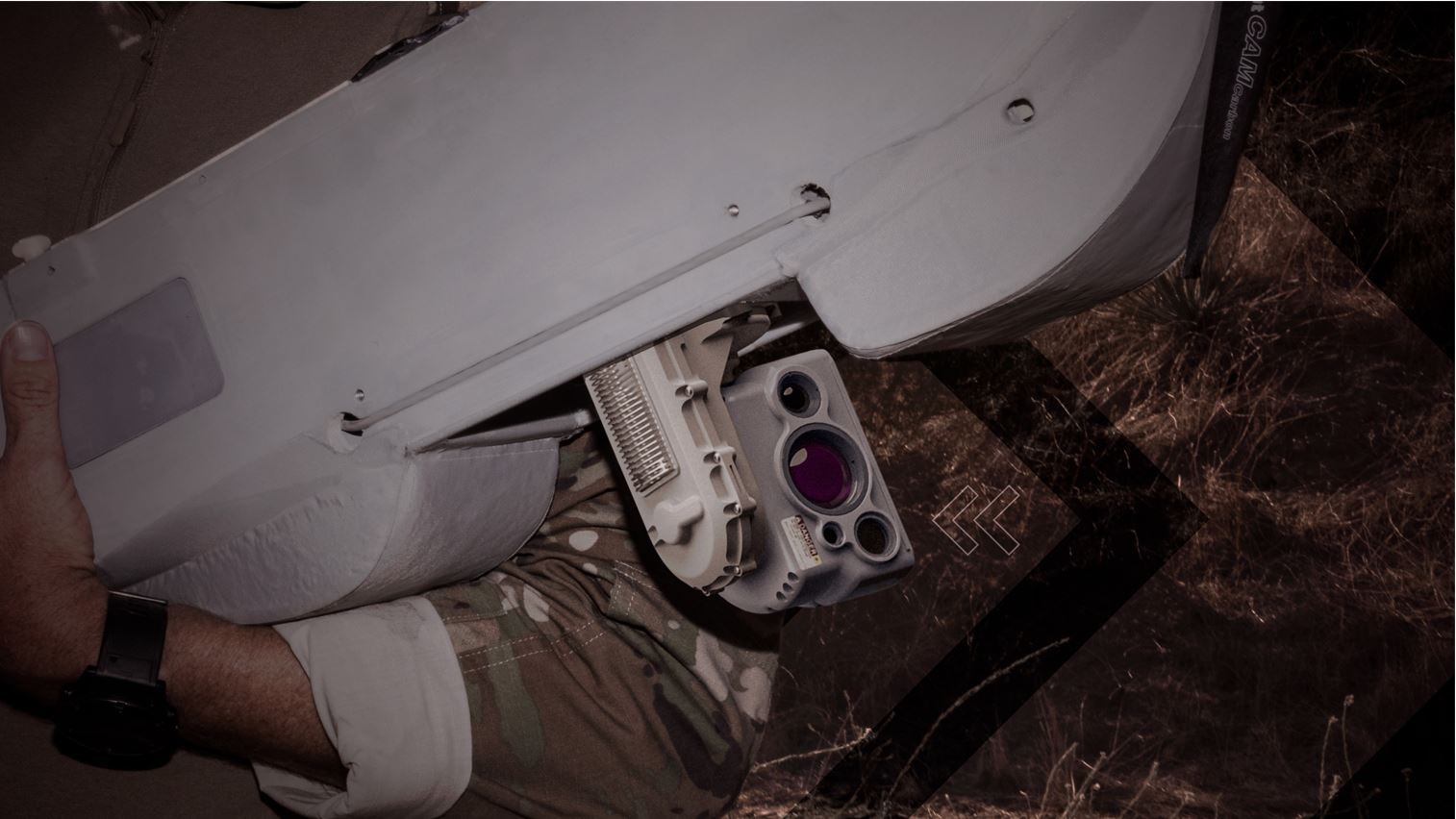
AeroVironment’s Mantis i45 N provides maximum visibility during low-light or nighttime intelligence, surveillance and reconnaissance (ISR) operations. (Image: AeroVironment, Inc.)

ARLINGTON, Va., Nov. 16, 2021 –AeroVironment, Inc. (NASDAQ: AVAV), a global leader in intelligent, multi-domain robotic systems, today introduced the Mantis™ i45 N, a multi-sensor nighttime imaging payload compatible with Puma™ 2 AE, Puma™ 3 AE and Puma™ LE small unmanned aircraft systems (UAS). Lightweight (905 g) and compact, the new Mantis i45 N joins AeroVironment’s expansive Mantis product line of micro-gimbals delivering high-quality video and imagery downlink to UAS operators.

Mantis i45 N is a dual-axis, gyro-stabilized, multi-sensor nighttime imaging payload designed for maximum visibility during low-light or nighttime intelligence, surveillance and reconnaissance (ISR) operations. The next-generation imaging system features improved long-wave IR (LWIR) thermal cameras with narrow-angle 32 mm and wide-angle 9.2 mm IR with 7.6x electronic zoom, allowing operators to capture high-resolution video at extended range. Designed for both superior night and low-light performance, the new imaging system also includes an upgraded 5-megapixel monochrome low-light camera sensor and high-powered 860 nm laser illuminator. Through its advanced suite of sensors, the Mantis i45 N payload allows Puma UAS operators to extend aircraft standoff distance for covert operations.

“Today’s battlefield is dynamic and UAS operators increasingly rely on multiple payloads to successfully complete their missions,” said Charles Dean, AeroVironment vice president for global business development and sales of UAS. “The new Mantis i45 N is a game changer during low-light or nighttime ISR operations, delivering increased situational awareness and advanced threat detection in any environment.”

Built on the trusted and battlefield proven Mantis i45, the enhanced night variant Mantis i45 N maintains the same housing form-factor, allowing for a quick and simple change-out of payloads between day and night operations. Plug and play operational, no software updates are required for Puma UAS avionics or ground control stations for legacy system compatibility. Mantis i45 N is also natively compatible with AeroVironment’s Crysalis™ next generation ground control solution. To learn more, visit: www.avinc.com/uas/payloads

DARPA’s Gremlins Program Demonstrates Airborne Recovery

Friday, November 12th, 2021

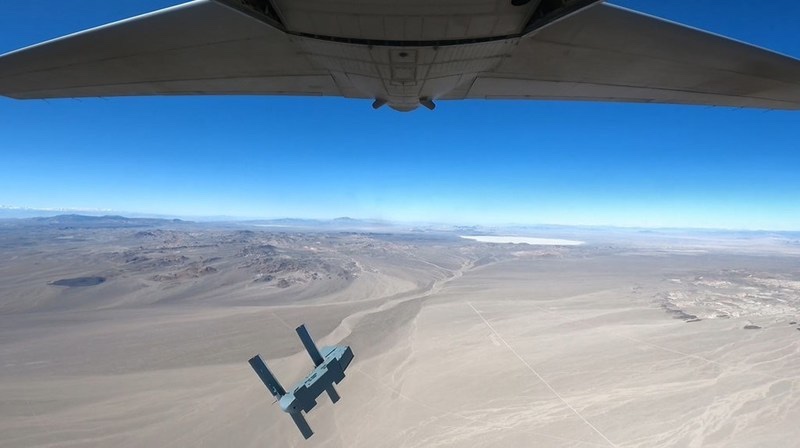
Successful Fourth Deployment Results in Airborne Recovery of Gremlins Air Vehicle to C-130

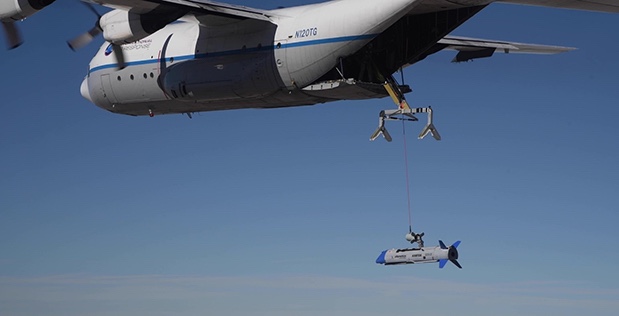
An unmanned air vehicle demonstrated successful airborne recovery during the DARPA Gremlins program’s latest flight test deployment last month. During the deployment, two X-61 Gremlin Air Vehicles (GAV) successfully validated all autonomous formation flying positions and safety features before one GAV ultimately demonstrated airborne recovery to a C-130.

“This recovery was the culmination of years of hard work and demonstrates the feasibility of safe, reliable airborne recovery,” said Lt. Col. Paul Calhoun, program manager for Gremlins in DARPA’s Tactical Technology Office. “Such a capability will likely prove to be critical for future distributed air operations.”

During the final experiment, the team refurbished an X-61 vehicle and conducted a second flight within 24 working-hours. In addition, many hours of data were collected over four flights including air vehicle performance, aerodynamic interactions between the recovery bullet and GAV, and contact dynamics for airborne retrieval. Unfortunately, one GAV was destroyed during the flight tests.

“Airborne recovery is complex,” said Calhoun. “We will take some time to enjoy the success of this deployment, then get back to work further analyzing the data and determining next steps for the Gremlins technology.”

Safe, effective, and reliable air recoveries promise to dramatically expand the range and potential uses of unmanned air vehicles in conflict situations. The GAVs can be equipped with a variety of sensors and other mission-specific payloads. They can also be launched from various types of military aircraft, keeping manned platforms safely beyond the range of adversary defenses. After air retrieval, the GAVs can be refurbished by ground crews to prepare them for another mission within 24 hours.

Dynetics, a wholly owned subsidiary of Leidos, is developing the Gremlin vehicles.

– DARPA

DroneShield Releases the 6th Edition of its C-UAS Factbook

Friday, November 5th, 2021

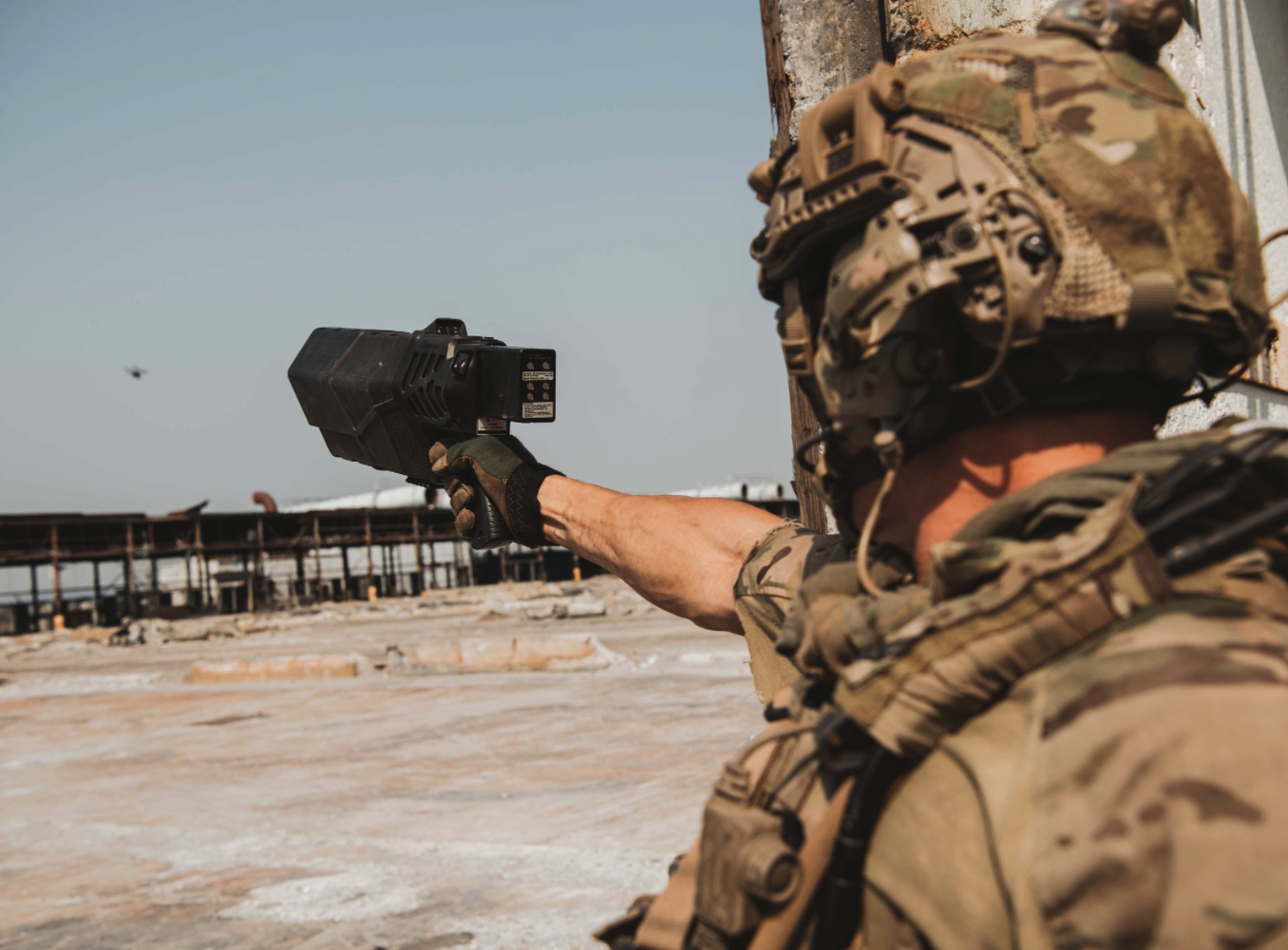
DroneShield Ltd (ASX:DRO), the pioneer and global leader in C-UAS/counterdrone sector, is pleased to share the 6th edition of its C-UAS Factbook.

Covered topics include various types of UAS threats, C-UAS technologies, and other key considerations.

The Factbook can be viewed here.

AeroVironment Awarded $20.3 Million Switchblade 600 Tactical Missile Systems Hardware Contract by US Special Operations Command

Friday, November 5th, 2021

• Switchblade 600 tactical missile system features high-precision optics, more than 40 minutes of loitering endurance and an anti-armor warhead for engaging and prosecuting hardened static and moving light armored vehicles

• Lightweight, self-contained Switchblade 600 launch tube system allows for deployment flexibility from fixed and mobile platforms on land, in air or at sea


Switchblade 600 is an all-in-one, man-portable loitering missile that delivers unprecedented tactical reconnaissance, surveillance and target acquisition. (Photo: AeroVironment, Inc.)

ARLINGTON, Va., Nov. 4, 2021 – AeroVironment, Inc. (NASDAQ: AVAV), a global leader in intelligent, multi-domain robotic systems, today announced it was awarded a firm-fixed-price contract on Sept. 28, 2021 by the United States Special Operations Command (USSOCOM) for $20,321,973 for the procurement of Switchblade® 600 tactical missile systems (TMS). Delivery is scheduled to be completed by January 2023.

“Switchblade 600 is an all-in-one, man-portable tactical missile that provides warfighters with the capability to fly, track and engage non-line-of-sight targets and light-armored vehicles with precision lethal effects,” said Brett Hush, vice president and product line general manager for TMS. “The tube-launched, Switchblade 600 can be easily transported for deployment from fixed and mobile platforms in any environment, providing operators with superior force overmatch and minimizing exposure to direct and indirect enemy fires.”

AeroVironment’s Switchblade 600 is an all-in-one, man portable solution equipped with a high-performance EO/IR gimbaled sensor suite, precision flight control and more than 40 minutes of flight time to deliver unprecedented tactical reconnaissance, surveillance and target acquisition (RSTA). Its anti-armor warhead enables engagement and prosecution of hardened static and moving light armored vehicles from multiple angles without external ISR or fires assets. Switchblade 600’s patented wave-off and recommit capability allows operators to abort the mission at any time and then re-engage either the same or other targets multiple times based on operator command, resulting in minimal to no collateral damage.

AeroVironment Demonstrates First-Ever Switchblade Loitering Missile Integration for Air Launched Effects from JUMP 20 Medium Unmanned Aircraft System

Friday, November 5th, 2021

• Initial proof-of-concept demonstration conducted in August 2021

• Leverages an AeroVironment end-to-end solution with combat-proven systems for increased mission autonomy and efficacy

ARLINGTON, Va., Nov. 3, 2021 – AeroVironment, Inc. (NASDAQ: AVAV), a global leader in intelligent, multi-domain robotic systems, today announced the successful demonstration of integrating Switchblade® 300 loitering missiles and JUMP® 20 medium unmanned aircraft systems (UAS) for increased mission autonomy and efficacy. This Air Launched Effects (ALE) proof-of-concept demonstration took place in August 2021 with the goal of launching an inert Switchblade 300 from the JUMP 20 and successfully recovering both air vehicles.

The systems were integrated by fixing the inert Switchblade 300 tube-launch system to the existing JUMP 20 platform’s vertical lift boom with a custom-made bolt-on mount and firing solution. Switchblade 300 was remotely fired using the JUMP 20 ground control solution with in-flight control taken by a separate Switchblade ground element. Both vehicles were successfully recovered, proving the demonstration event to be the first-ever Switchblade 300 integration and air launch from a JUMP 20 Group 3 vertical takeoff and landing (VTOL) platform.

“This end-to-end integrated solution enables customers with greater time on station than if they were to deploy a Switchblade on its own, resulting in the ability to conduct persistent real-time surveillance to increase the chance of identifying the correct target and minimizing collateral damage,” said Brett Hush, AeroVironment vice president and product line general manager of tactical missile systems. “It combines the combat-proven Switchblade loitering missile’s lethality, reach and precision strike capabilities with low collateral effects and the VTOL, fixed-wing JUMP 20’s advanced multi-sensor ISR services and 14-hour endurance.”

Utilizing Semi-Autonomous Resupply to Mitigate Risks to Soldiers on the Battlefield

Wednesday, November 3rd, 2021

YUMA PROVING GROUND, Ariz. — Situated in a broad swath of Arizona desert, Yuma Proving Ground offers the U.S. Army a prime location for testing — or “proving” — new capabilities.

It is a fitting home base for Project Convergence 2021, a modernization experiment organized by Army Futures Command’s Joint Modernization Command.

The event brings together members of the Joint Force to test and retest novel equipment and systems.

“It’s the initial steps of working out how our joint forces will need to operate in the future,” said Joseph Cruse, data collection and analysis execution lead for Project Convergence 2021.

Dotted throughout the dusty landscape at Yuma Proving Ground are high-tech, multi-phase exercises designed to validate the utility of first-of-their-kind tactical and operational scenarios, many of which are enabled by artificial intelligence.

One such scenario explores the Army’s ability to use joint sustainment semi-autonomous resupply mechanisms to improve logistical dexterity while mitigating additional exposure and risk to Soldiers.

“The goal is to ensure that we’re able to extend our reach, especially during MDO, which is multi-domain operations,” said Maj. Christopher Jones, the lead for semi-autonomous resupply testing at Project Convergence 2021.

“We can do that by applying semi-autonomous vehicles into our formations, to provide rest for Soldiers, to take the Soldiers off the ground and expedite those pushes that we need to get out to our Soldiers,” Jones said.

The semi-autonomous resupply process, as envisioned and executed, starts with a need on the battlefield — for food, supplies, ammunition or even replacement parts for heavy machinery.

The exercise at Yuma Proving Ground specified a need for a replacement part required by a tank operator in the field, setting into motion a number of steps to deliver the essential item.

Communicating with a base of operations, the tank operator described his location and the part needed, and personnel set to work quickly to obtain the part. Those responsible for doing so assumed a spare parts-limited environment, so a replacement was fabricated using a field-ready 3D printer capable of producing both plastic and metal objects.

The Army then dispatched a small convoy of leader-follower tactical wheeled vehicles, which can be driven independently, remotely or be made to follow a vehicle, to deliver the part to an Expeditionary Modular Autonomous Vehicle (EMAV), a U.S. Marine Corps robotic vehicle, waiting at the (simulated) fighting edge.

Once the part was secured to the platform of the EMAV, Soldiers sent remote communications from a distance, signaling to the vehicle exactly where it should deliver the item. When it received the message, the previously still machine revved into gear, kicking tan dust onto its black tracks and road wheels as it accelerated up a hill and turned toward its destination.

According to Dr. David Stone, a senior robotic engineer with the Marine Corps Warfighting Lab, the EMAV is operational in all terrains, possessing the ability to not only travel through muddy fields but also to pull other vehicles out of the mud. Despite its relatively smaller size, “the thing’s basically a truck,” Stone said.

Stone elaborated that the EMAV, which is a diesel-electric hybrid, is “very robust. Its versatility and the modular aspect — being able to do different warfighting functions — is the real value of it.”

Originally designed to accompany dismounted Marines, the durable autonomous vehicle can also serve the needs of Joint Force missions, as evidenced by the exercise.

“Between the Army and Marine Corps, we are going after the same thing,” Stone said. “Anything we can do to leverage on another’s work helps us do more with the money we have.”

While an EMAV was used for the training exercise, the Army also intends to use its Robotic Combat Vehicle-Light to serve a similar purpose in future semi-autonomous resupply missions.

Following the arrival to its destination approximately two miles away, and the human-assisted replacement of the tank part in the exercise, the EMAV returned to its starting point, powering easily through gravel and dirt as it traveled among a group of heavy military trucks.

The scenario demonstrated how the U.S. military can integrate new field-deployable technologies with existing ones, offering additional options to commanders while decreasing the human footprint necessary to carry out logistical resupply missions.

“People who are supplying us with ammo, water, food, etcetera — anything that puts Soldiers at risk, the EMAV takes them out, and it saves lives,” said Pfc. Daniel Candales of 1-508 Parachute Infantry Regiment, 3rd Brigade, 82nd Airborne Division, who was trained on the various functions of the vehicle.

The Army is additionally working to develop complementary capabilities that would allow for autonomous loading of supplies and digital tracking of items and vehicles and testing prototypes for these systems at Project Convergence 2021.

Reducing the need for hands-on support will also enable Soldiers who would otherwise be assisting with resupply chains to tackle other priority tasks. In addition, augmenting methods for delivering necessary equipment and supplies over treacherous ground will bolster the Army’s ability to function effectively across multiple domains.

“Logistics is something we always have to improve upon,” said Command Sgt. Maj. Robin M. Bolmer of the Army’s Futures and Concepts Center, who observed the exercise. He explained that new technologies open up numerous possibilities for growth, but that “the need to sustain what we have is always going to be there.”

The Futures and Concepts Center developed the initial concepts for many of the technologies and systems being tested during Project Convergence 2021, and will assume responsibility for organizing Project Convergence 2022, which is slated to include the participation of U.K. and Australian forces.

Bolmer shared that he was observing this year’s activities with an eye toward continual modernization progress, keeping the question of “how do we build upon all the great work being done here?” always at the forefront of his mind.

By Maureena Thompson, Army Futures Command

SOFWERX – USSOCOM Autonomous Interoperability Standards Development Event

Saturday, October 23rd, 2021

SOFWERX, in collaboration with USSOCOM’s Directorate of Science and Technology (S&T) and Naval Special Warfare (NSW), will host the Autonomous Interoperability Standards Development Event, 07-09 December, 2021. In the Human Machine Teaming Aspects of Mission command, the objective is to bring together Special Operations Forces (SOF) representatives and Subject Matter Experts (SMEs) to assist USSOCOM in discerning the future of Autonomous Interoperability for Unmanned Air, Ground, Surface, and Underwater Systems (UxS). Focus areas will include but are not limited to sensors, communications, and platforms.

NSW has developed a vision for the future whose key elements include next generation UxS and autonomy solutions, and interoperable maritime and air assets. To do this effectively, NSW needs interoperability standards for the heterogeneous UxS platforms that they will use now and in the future. USSOCOM thus needs to develop and implement a set of interoperability standards that are not cumbersome, that are flexible, and that will support new technologies. They will also need to provide enough freedom for companies to use their creative approaches but with well-defined interfaces, messaging, communications, navigation, and control systems. Further, the backing of NSW and USSOCOM should provide an incentive for commercial players to rally around the new standards. This effort will support agility, wider government and commercial participation and ensure cost-effective development.

This event is restricted to U.S Citizens Only.

Submit NLT 29 October 11:59 PM ET, details at events.sofwerx.org/interoperability.