BOSS-Xe from Wilcox Industries

Archive for the ‘UAS’ Category

Drone Tech: Elistair Unveils the SAFE-T 2, The New Standard for Tethered Drone Stations

Wednesday, June 24th, 2020

Elistair Unveils the Safe-T 2, The New Standard for Tethered Drone Stations
 

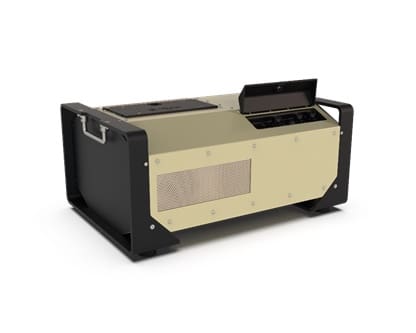
Elistair has announced the release of the Safe-T 2, their most advanced and powerful tethering system for use with commercially available drones. Key Features include, IP54 rating, up to 125m / 400 feet of micro-tether, 2 200 watts max continuous power, a fiber optics option, and industry leading weight/power ratio from its patented Dynamic Voltage Optimization (DVO). The Safe-T 2 provides users with unmatched power efficiency and enables safe and persistent flight time for UAVs.

Since the launch of its first tethering station in 2015, Elistair has quickly become the industry leader in tethered drone systems, with over 600 tethered stations deployed so far to help security forces monitor events, secure sites and protect assets. The Safe-T 2 has been built on the success of the flagship Safe-T product line which has been deployed in over 60 countries by governmental organisations, industrial groups, and security forces. The Safe-T 2 will take tethering operations to a new level.

“To design the Safe-T 2, we worked in close collaboration with our users who challenged us with their critical feedback.  We rethought the entire solution in order to build the perfect tethering system for critical security operations.” Said Timothée PENET, Co-founder and Chief Technical Officer at Elistair. “With up to 2,2 kW max continuous power and 2,8 kW peak power, the Safe-T 2 allows for higher flights with heavier payloads, thus enabling security forces to cover larger areas with a single system.”

Smart and Secured

The secure Dual-Comms option (Fiber optic and BPL), offers a redundant tethered data link, or the possibility to select which technology is best suited for the aircraft and/or payload. A patented Brake system also allows the user to adapt the maximal tether length, depending on the safety zone needed around the aircraft, for instance in urban or crowded environments. Like its predecessor, the Safe-T 2 integrates Elistair’s live flight management system with T-monitor mobile app offering optimal flight control for safer operations.

Ready for integration

Engineered to meet the most demanding missions with its rugged weather-resistant design, and compact modular metallic structure, the Safe-T 2 offers mounting plates and optional software development kit (SDK) for seamless integration into vehicles and fixed structures whilst also being agile enough for a single operator to deploy. Its interchangeable micro-tethers and smart adaptive winch control laws, allow the operator to reconfigure the station and use the best tether weight/power range for each drone.

For more information: www.elistair.com

DroneShield Drone Detection Update 2Q2020

Monday, June 22nd, 2020

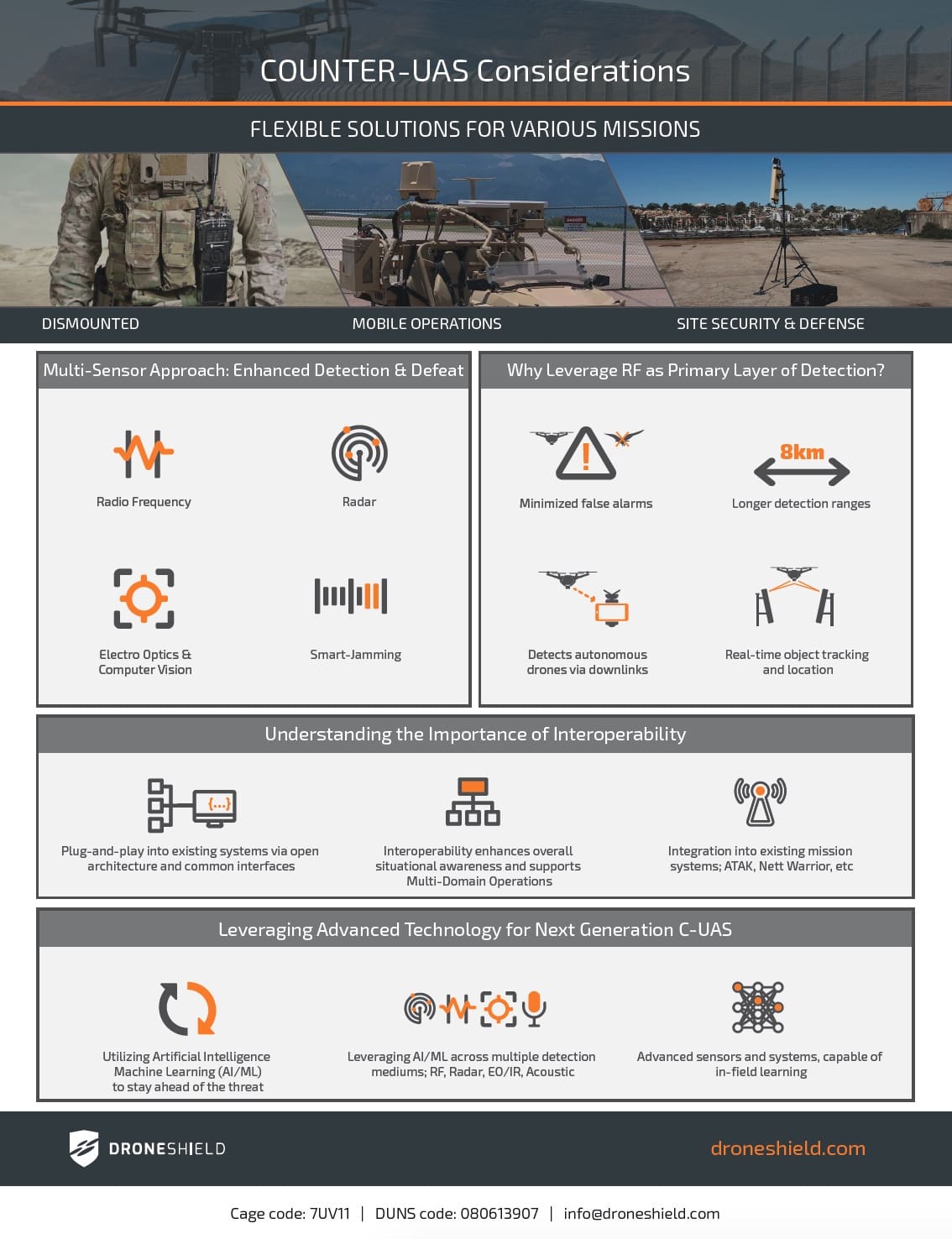
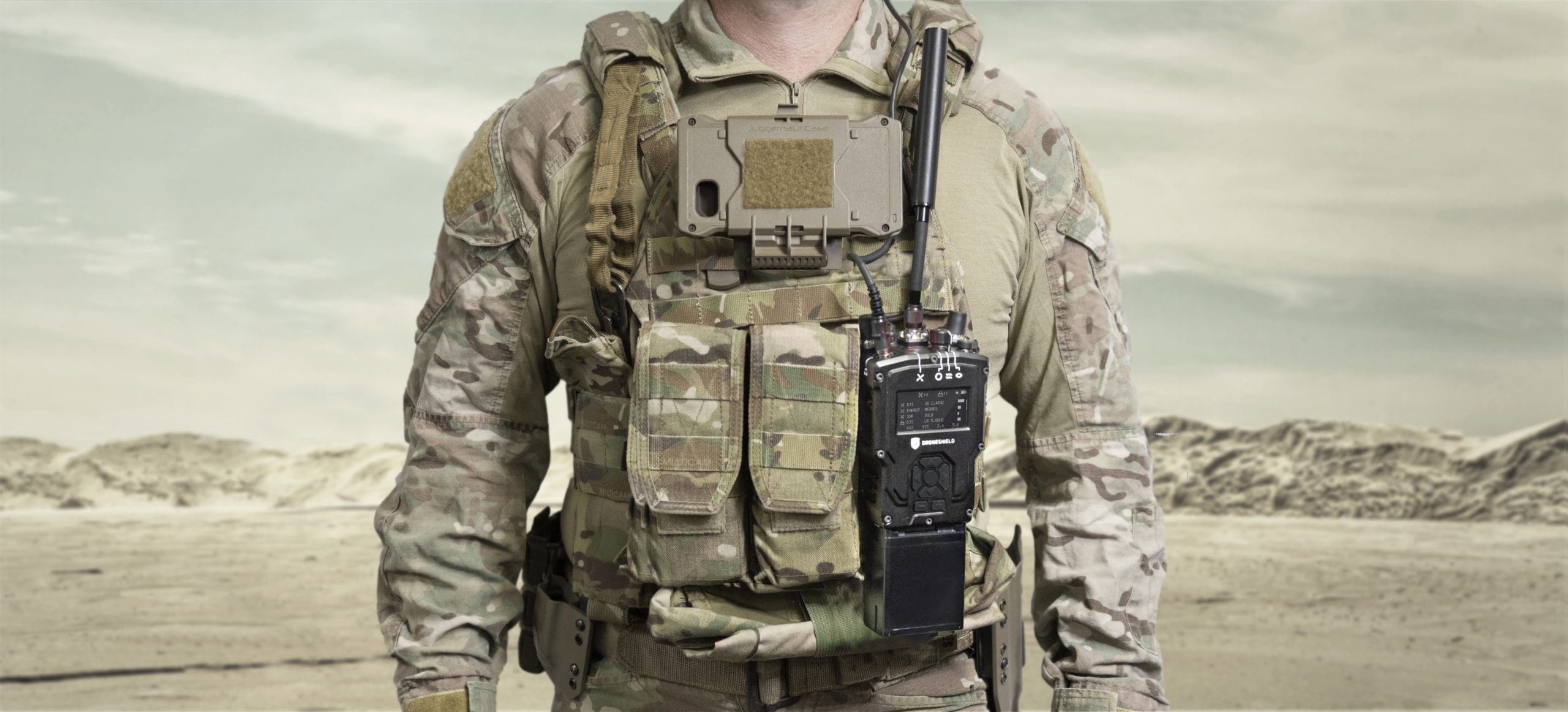
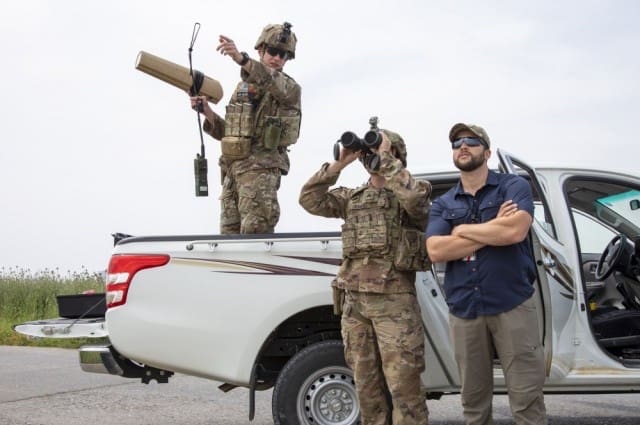
DroneShield Ltd (ASX:DRO) (“DroneShield” or the “Company”) is pleased to announce the upcoming 2Q2020 software release of its RF-based threat detector for its various counterdrone products, including body-worn RfPatrol MKIITM platform. The software upgrade will be available for all customers and fielded devices starting 1 July 2020.

RfPatrol MKIITM is a body-worn passive (non-emitting) drone detection device. As the drone threat rapidly evolves, DroneShield provides quarterly updates to ensure its customers receive continuous counterdrone protection.

2Q2020 quarter update includes a number of new drone models from multiple manufacturers, as well as performance enhancements and general firmware updates. In addition, this update includes detection and identification of signatures commonly associated with First Person View (FPV), hobbyist and homemade drones.

Oleg Vornik, DroneShield’s CEO, commented, “DroneShield is committed to keeping users of our products ahead of the quickly evolving drone threat. Rapidly adapting software is a key feature of our solutions.”


RfPatrol MKII body-worn drone detection device

For enquiries, please contact info@droneshield.com.

New Research Leads to Army Drones Changing Shape Mid-Flight

Monday, June 22nd, 2020

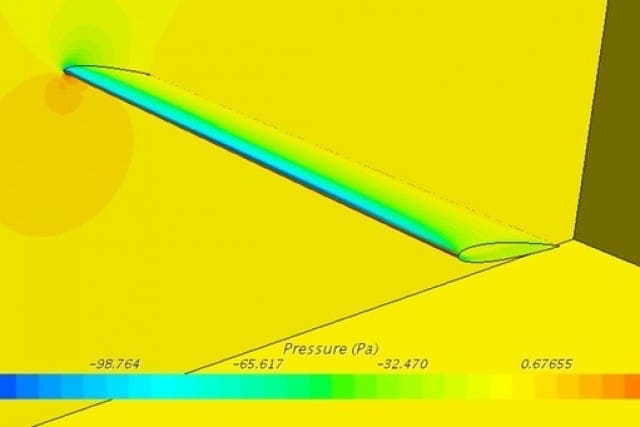
ABERDEEN PROVING GROUND, Md. — Soon, the U.S. Army will be able to deploy autonomous air vehicles that can change shape during flight, according to new research presented at the AIAA Aviation Forum and Exposition’s virtual event June 16.

Researchers with the U.S. Army’s Combat Capabilities Development Command’s Army Research Laboratory and Texas A&M University published findings of a two-year study in fluid-structure interaction. Their research led to a tool, which will be able to rapidly optimize the structural configuration for Future Vertical Lift vehicles while properly accounting for the interaction between air and the structure.

Within the next year, this tool will be used to develop and rapidly optimize Future Vertical Lift vehicles capable of changing shape during flight, thereby optimizing performance of the vehicle through different phases of flight.

“Consider an [Intelligence, Surveillance and Reconnaissance] mission where the vehicle needs to get quickly to station, or dash, and then attempt to stay on station for as long as possible, or loiter,” said Dr. Francis Phillips, an aerospace engineer at the laboratory. “During dash segments, short wings are desirable in order to go fast and be more maneuverable, but for loiter segments, long wings are desirable in order to enable low power, high endurance flight.”

This tool will enable the structural optimization of a vehicle capable of such morphing while accounting for the deformation of the wings due to the fluid-structure interaction, he said.

One concern with morphing vehicles is striking a balance between sufficient bending stiffness and softness to enable to morphing,” Phillips said. “If the wing bends too much, then the theoretical benefits of the morphing could be negated and also could lead to control issues and instabilities.”

Fluid-structure interaction analyses typically require coupling between a fluid and a structural solver.

This, in turn, means that the computational cost for these analyses can be very high – in the range of about 10,000s core hours – for a single fluid and structural configuration.

To overcome these challenges, researchers developed a process that decouples the fluid and structural solvers, which can reduce the computational cost for a single run by as much as 80 percent, Phillips said.

The analysis of additional structural configurations can also be performed without re-analyzing the fluid due to this decoupled approach, which in turn generates additional computational cost savings, leading to multiple orders of magnitude reductions in computational cost when considering this method within an optimization framework.

Ultimately, this means the Army could design multi-functional Future Vertical Lift vehicles much more quickly than through the use of current techniques, he said.

For the past 20 years, there have been advances in research in morphing aerial vehicles but what makes the Army’s studies different is its look at the fluid-structure interaction during vehicle design and structural optimization instead of designing a vehicle first and then seeing what the fluid-structure interaction behavior will be.

“This research will have a direct impact on the ability to generate vehicles for the future warfighter,” Phillips said. “By reducing the computational cost for fluid-structure interaction analysis, structural optimization of future vertical lift vehicles can be accomplished in a much shorter time-frame.”

According to Phillips, when implemented within an optimization framework and coupled with additive manufacturing, the future warfighter will be able to use this tool to manufacture optimized custom air vehicles for mission specific uses.

Phillips presented this work in a paper, Uncoupled Method for Massively Parallelizable 3-D Fluid-Structure Interaction Analysis and Design, co-authored by the laboratory’s Drs. Todd Henry and John Hrynuk, as well as Texas A&M University’s Trent White, William Scholten and Dr. Darren Hartl.

By U.S. Army CCDC Research Laboratory Public Affairs

NürnbergMesse Plans Closer Links Between “Unmanned Technologies” Segment and Other Trade Fairs Beginning in 2021

Thursday, June 11th, 2020

Closer links between trade fairs in the security segment in future

NürnbergMesse plans to establish closer links between its “unmanned technologies” segment and other trade fairs as of 2021. Instead of being exclusive to Enforce Tac, as it has been until now, U.T.SEC will in future also be able to present itself as a corresponding platform at other relevant events. This will give the highly topical drone technology segment a greater reach.

Since 2018, U.T.SEC has been taking place concurrently with Enforce Tac. Increasingly, its focus has been on the use and neutralisation of drones by official security agencies and organisations.

Drone technology becoming a megatrend

In recent years, drone technology has become an important cutting-edge issue not just for users in the sensitive security segment but also for other target groups. This is why the event is evolving, as it moves away from its origins as a summit to become an integral part of Enforce Tac. In future, it will also showcase the diverse applications for drone technology to a greater extent at other NürnbergMesse Group events, for example at Perimeter Protection, the trade fair for the monitoring and protection of industrial and commercial outdoor sites and facilities, critical infrastructure and major events.

This will allow manufacturers to reach a larger and more diverse range of target groups and offer them more opportunities to present their technologies. In the process we will also be offering potential users more targeted insights into the uses of unmanned technologies.

www.nuernbergmesse.de/security

AeroVironment Receives $9.8 Million Raven and Puma 3 AE Awards from NATO Support and Procurement Agency under Multi-Year Contract with $80 million Potential Value

Wednesday, June 10th, 2020

• Three-year base contract includes option for an additional two years of logistical support, spares and repair services for existing fleet of Raven, Wasp and Puma tactical unmanned aircraft systems

• AeroVironment’s family of tactical UAS allows customers to use the same ground control station and software for multiple UAS for added simplicity and efficiency

• AeroVironment UAS enabling interoperability across several NATO forces

SIMI VALLEY, Calif., June 10, 2020 – AeroVironment, Inc. (NASDAQ: AVAV), a global leader in unmanned aircraft systems (UAS), today announced its receipt of two firm-fixed-price orders totaling $9,804,448 from the NATO Support and Procurement Agency (NSPA). The orders, received on March 5, 2020 and April 16, 2020, encompass the procurement of Raven® and Puma™3 AE tactical UAS and spares. Delivery for the first order is anticipated by August 2020 and the second order by October 2020.

The orders are part of a three-year base contract received from NSPA in January 2020.  The contract includes an option for two additional years of logistics support for Raven, Wasp® and Puma tactical UAS. The total potential value of the multi-year contract is $80 million, encompassing the procurement and sustainment of AeroVironment tactical unmanned aircraft systems employed by the defense forces of several NATO countries.

“AeroVironment’s tactical unmanned aircraft systems, such as Raven and Puma, have helped transform the way U.S. and allied forces plan, train, equip and operate,” said Rick Pedigo, vice president of sales and business development at AeroVironment. “Both systems benefit from continuous technology improvements and pack significant capabilities into portable, man-packable platforms that provide operators with rapid and effective force protection.”


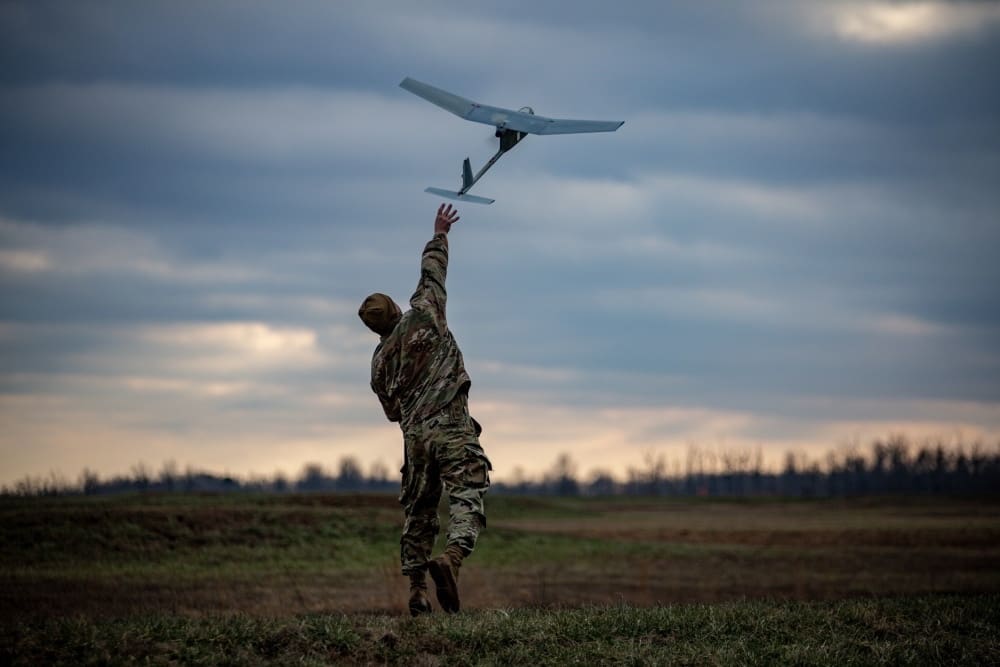
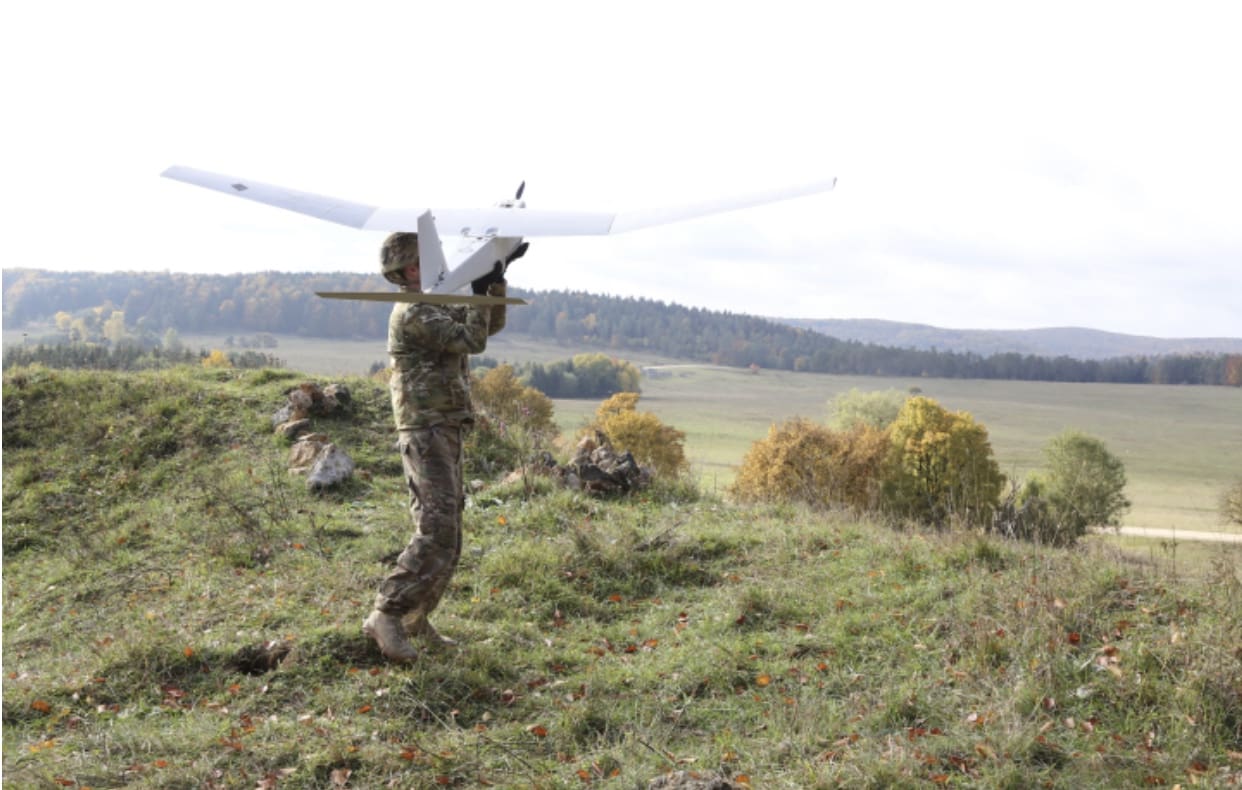
AeroVironment’s Raven system is designed for rapid deployment and high mobility for operations requiring low-altitude intelligence, surveillance and reconnaissance. With a wingspan of 4.5 feet (1.4 meters) and weighing just 4.2 pounds (1.9 kilograms), the hand-launched Raven provides situational awareness, day or night, with an operational range of 6.2 miles (10 kilometers). The Raven’s Mantis i23 EO/IR gimbaled payload delivers real-time video or infrared imagery to ground control and remote viewing stations.

The AeroVironment Puma 3 AE is a fully man-portable unmanned aircraft system designed for land and maritime operations. The hand-launched Puma 3 AE has a wingspan of 9.2 feet (2.8 meters), weighs 15 pounds (6.8 kilograms) and can operate for up to 2.5 hours at a range of up to 12.4 miles (20 kilometers) with a standard antenna, and up to 37.2 miles (60 kilometers) with AeroVironment’s Long-Range Tracking Antenna (LRTA). Capable of landing in water or on land, the all-environment Puma, with its Mantis i45 EO/IR sensor suite, empowers the operator with extended flight time and a level of imaging capability never before available in the tactical UAS class.

AeroVironment’s family of tactical UAS use a common ground control station and software, allowing for improved interoperability and decreased training and logistics costs for NATO forces. To learn more, visit www.avinc.com.

DroneOptID Launch

Thursday, May 28th, 2020

DroneShield Ltd (ASX:DRO) (“DroneShield” or the “Company”) is pleased to announce the release of its camera based software for drone detection, identification and tracking, DroneOptIDTM.

DroneOptIDTM has an Artificial Intelligence/Machine Learning (“AI/ML”) engine at the core of its software, offering the latest in computer vision technology to detect, verify and track drones in real time. The AI/ML model has been developed specifically for drone detection and works seamlessly with DroneShield’s range of best in class drone detection and countermeasure devices.

The software is camera-agnostic and can work with a wide range of cameras. The initial integration includes Bosch MIC 7000 and 9000 cameras, with all current customers of those cameras globally now able to utilise this software.

In addition to compatibility with DroneShield’s DroneShieldCompleteTM native GUI, DroneOptIDTM can be used in third party Command and Control (C2) systems.

DroneOptID Software running through DroneShieldCompleteTM GUI

The product summary is available here.

DroneOptID is available for purchase now to qualified customers.

DroneShield’s CEO Oleg Vornik commented, “Multi-layered systems are at the core of DroneShield’s approach to effective detection and mitigation of drones. DroneOptIDTM enables the next step in this equation, with a sophisticated way to obtain visual data on the drone that can be used for a range of purposes, from court evidence to directing a kinetic weapon at the drone, and enables additional information to the system user, such as reviewing payload of the drone, which isn’t available through other sensors”.

DroneShield Chosen by the European Union Police

Friday, May 22nd, 2020

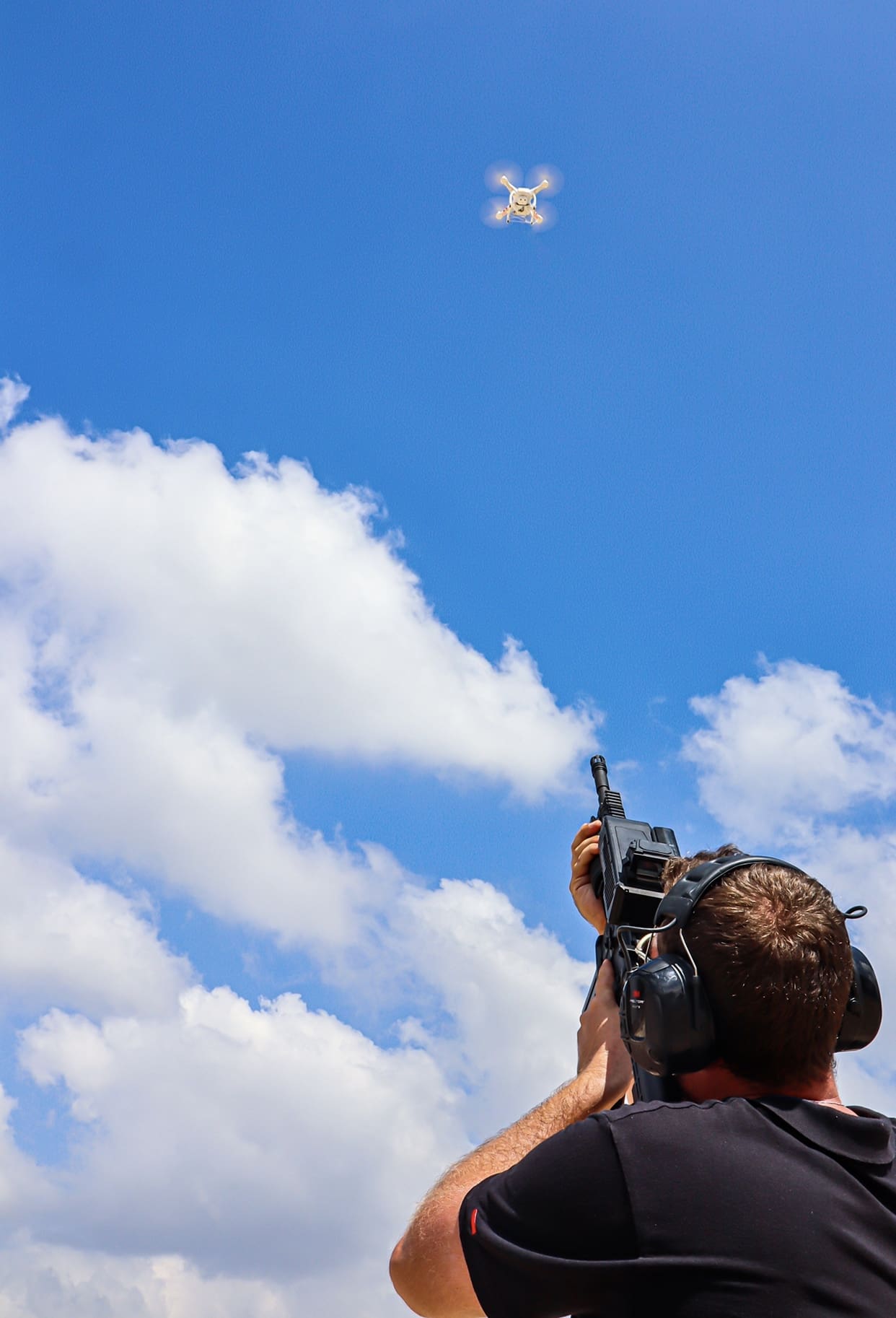
DroneShield Ltd (ASX:DRO or DRO.AU) (“DroneShield” or the “Company”) is pleased to advise that, following a competitive tender, its DroneGun TacticalTM product was selected as the preferred solution by the European Union police forces. The process was run by Belgium Police, with an EU-wide framework. Sales, training and local support will be managed by DroneShield’s Benelux region partner ForcePro BV.


DroneShield’s DroneGun Tactical deployed by the French Army

Under the framework agreement, DroneGun TacticalTM is expected to be rolled out across a range of police units across European Union. While the agreement does not specify minimum purchase quantities, DroneShield expects this agreement to produce material periodic sales over an extended period of time, with orders commencing this quarter. Further, the Company expects this framework to be a platform for sales of its other products, such as RfPatrolTM and its vehicle and fixed site products, to EU police departments.

Oleg Vornik, DroneShield’s CEO, commented, “This is an exciting win in a number of ways. This is the first framework rollout of counterdrone equipment by any Government customer, anywhere in the world. In addition to the substantial nature of this contract, we expect for this to set a standard for DroneGun TacticalTM procurement by other Government customers in the EU and globally, helping fasttrack additional acquisitions. This selection by a highly demanding customer, following on the UK Government CPNI certification last year, reinforces the world leading position of our products in the industry. Importantly, this win of the competitive tender by DroneShield illustrates that security is at the forefront of governments globally as well as the fact that, after a brief interruption caused by the COVID crisis, global procurement processes have resumed.”

AeroVironment Unveils Quantix Recon, Fully-Automated Hybrid Vertical Takeoff and Landing Unmanned Aircraft System for Defense Applications

Friday, May 22nd, 2020

• Quantix Recon delivers on-demand, georeferenced aerial imagery, providing quick visibility for on-site mission planning and verification

• Fully-Automated, hybrid vertical take-off and landing (VTOL) design and radio frequency silent mode enable aircraft to conduct missions undetected

• Powerful onboard processing delivers high-resolution imagery immediately on the included operating tablet upon landing – no other devices, internet or software required

AeroVironment’s new Quantix™ Recon, a fully-automated reconnaissance unmanned aircraft system.

SIMI VALLEY, Calif., April 23, 2020 – AeroVironment, Inc. (NASDAQ: AVAV), a global leader in unmanned aircraft systems (UAS), today announced the availability of Quantix™ Recon, a lightweight, rapidly deployable, fully-automated reconnaissance solution that delivers high resolution, georeferenced terrain, vegetation and infrastructure imagery, providing ground forces with on-demand actionable intelligence.

With its unique hybrid VTOL design, Quantix Recon combines the vertical takeoff and landing advantages of a multirotor drone with the range, speed and efficiency of a fixed-wing unmanned aircraft. Featuring fully-automated flight operation, Quantix Recon surveys up to 1.6 square kilometers (0.6 square miles), or 20 linear kilometers (12.4 miles) per 45-minute single battery flight. Multiple automated reconnaissance mode options allow users to choose between line (route), area and waypoint targeted data capture. Collected aerial imagery data is compatible with a wide range of available geographic information system (GIS) analytical tools to facilitate further analysis.

“AeroVironment’s Quantix Recon is a low-cost reconnaissance solution that can be in the air within minutes, capturing high-resolution georeferenced imagery of hard to access areas or dynamically changing environments.” said Rick Pedigo, vice president of sales and business development for AeroVironment. “Because it does not rely on radio signals during flight, Quantix Recon offers greater stealth for concealed operations and is unaffected by radio frequency jammers, providing greater protection for frontline troops while reducing cognitive load.”

Powerfully simple to use, Quantix Recon is fully-automated and hands-free with five optional flight altitudes, ranging from 150 feet to 800 feet.  Simple, automated operation makes Quantix Recon easy for users to vary the coverage area and image resolution to suit their aerial reconnaissance needs.

Quantix Recon is equipped with dual 18-megapixel cameras that can capture both high resolution true color and multispectral georeferenced imagery. Powerful, on-board processing allows users to immediately view the high-resolution geospatial imagery on the included operating tablet as soon as the aircraft lands, requiring no other devices, internet or software. And, through the operating tablet’s Quick-Lookä HD app feature, users can pinch and zoom navigation down to centimeter-level ground sampling distance, enabling them to pinpoint and react to critical issues with precision and speed.

To learn more, visit www.avinc.com/Quantix-Recon, or view the recorded Quantix Recon Press Briefing at event.webcasts.com, using the password “QuantixRecon.”