XC3 Weaponlight

Archive for the ‘UAS’ Category

Proliferation of Drones Posing Risk for US Military, Army Expert Says

Tuesday, August 28th, 2018

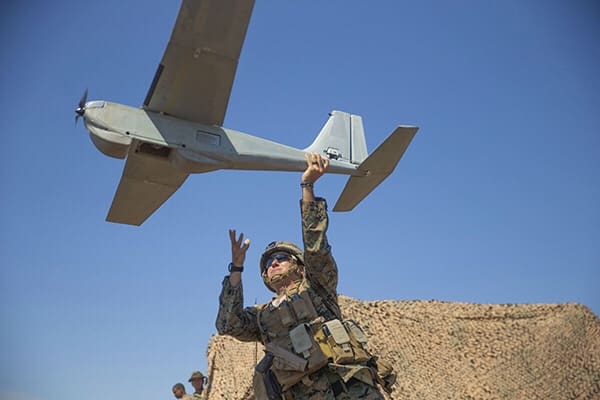
WASHINGTON — As of January 2018, over 1 million micro drones were registered with the Federal Aviation Administration, with about 878,000 of those registered to hobbyists, said Dr. Juanita Christensen.

These micro drones are proliferating in other nations as well, including areas in every combatant command where U.S. forces are stationed or operating, she added.

Christensen, executive director of the Aviation and Missile, Army Research, Development and Engineering Command, spoke at the Institute for Defense & Government Advancement-sponsored Counter-UAS Summit here, Aug. 23.

The growth of drone ownership poses challenges, she said, such as identifying the unmanned aerial system, determining whether or not the unmanned aerial system is friend or foe, and, if foe, employing the right countermeasures.

32B0FABF-845E-4E7A-BE39-42FDD18C7EB4
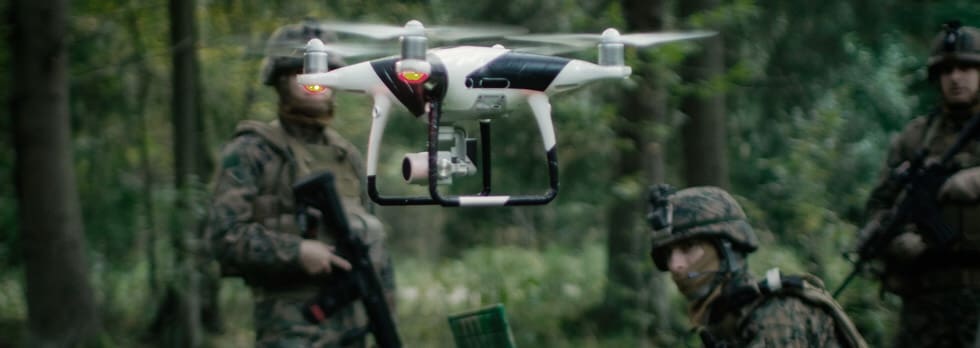
The U.S. Army is at the forefront of identifying and mitigating threats from unmanned aerial systems, including identifying the UAS, determining whether or not the unmanned aerial system is friend or foe, and, if foe, employing the right countermeasures. (Photo Credit: U.S. Army photo David Vergun)

UAS IDENTIFICATION CHALLENGE

It’s not just the sheer number of drones that is an issue, but also the the hundreds of UAS variants being produced worldwide, Christensen said.

Each of these variants comes in different weights, shapes, and sizes. Additionally, each has different operating characteristics such as speed, flight duration, maneuverability and payload capacity. These variations make tracking them difficult because it’s hard for radars and other surveillance systems to identify exactly what’s out there, she said.

Another reason why it’s hard to identify UASs, she said, is that many are very small and therefore have a minuscule radar signature. Additionally, some of these UAS fly very low to the ground, away from a radar’s line of sight. They also move relatively slowly, similar to the flight of a bird, and they produce very little acoustic, infrared, radio frequency, or electromagnetic signatures.

Current military radars and surveillance sensors may categorize class 1 and 2 UASs as “clutter,” and not identify them as UAS, she said, explaining that class 1 and 2 consist of micro and mini UAS, respectively. These are the UAS systems commercially available to anyone.

The second challenge is determining whether or not the UAS is being flown by a hobbyist or commercial entity for benign reasons, or by someone bent on causing harm, she said.

Any number of payloads can be placed on a UAS and they can also be used for surveillance, Christensen added, declining to get more specific for security reasons.

This identification problem is especially acute because operators often have to determine friend from foe and what action to take in just a matter of seconds.

UAS COUNTERMEASURES CHALLENGE

RDECOM has recognized the importance of countering UAS for some time now, Christensen said.

In January 2014, RDECOM stood up the Counter-UAS Community of Practice. That community coordinates counter-UAS research with all of the labs across the Army and the other services and looks for solutions from industry and academia, she said.

For example, the Army Research Laboratory, which falls under RDECOM, is working with the community to study how to defeat swarms of enemy UASs, she said. And, the Communications-Electronics Research, Development and Engineering Center, also in RDECOM, is testing electronic countermeasures.

The community also is working with industry and academia to open new lines of effort, such as applying machine learning and artificial intelligence that will enable faster processing of data so that countermeasures can be taken much more quickly and with greater accuracy, she said.

The community is focused on class 1, 2 and 3 UAS threats, she said, explaining that class 3 consists of low-end tactical UAS. The other classes, 4 and 5, are high-end tactical and strategic UASs, respectively, that fly high and for long durations and are in the Air Force’s area of responsibility.

There are many promising lines of effort to deter a threatening UAS, she said, such as kinetic; passive, such as shooting a missile at the UAS that contains a net that deploys to take it down intact; sensitive sensors that can detect the UAS’s signatures emitted; and various types of jamming devices.

Besides going after the UAS itself, there are other efforts underway to defeat the “kill chain aspect,” she said, meaning eliminating the enemy UAS operator and the network behind it.

By David Vergun, Army News Service

PITBULL, A Wearable UAS Jammer From MyDefense

Monday, August 27th, 2018

Designed to be used in conjunction with the MyDefense WINGMAN series of drone detectors, the PITBULL jammer works against commercially available Unmanned Aerial Systems which have been adopted by threat forces due to their widespread availability. These UAS are used for reconnaissance, and with simple modifications, can be turned into smart weapons, utilizing terminal guidance or preplanned flight routes.

It will function either autonomously (when drones are detected by the WINGMAN) or manually (constant jamming), and the internal directional antennas cover the 2.4GHz, 5.8GHz and GNSS frequency bands. With its directional antennas, the PITBULL is capable of jamming a malicious drone at the distance of 1000 meters. An external active antenna will be made available to cover additional frequency bands.

Additionally, it can be mounted to PALS platforms.

Technical Specs:
Weight: 775 grams
Dimensions (D x W x H): 60x90x165mm (2.36 x 3.54 x 6.50 inch)
Battery (standby): >20 hours
Battery (continuous jamming): 2 hours
External battery: AN/PRC-148 and AN/PRC-152
Operating modes: Automated and Manual
Transmit power: 2W
Frequency bands: 2.4 & 5.8GHz
Internal antenna: 6 dBi antenna gain, EIRP of 8W (39dBm), Circular polarized, Half power beamwidth 60° hor. & ver.
Jamming range: 1,000 meters
Color: Black/Desert/Custom

mydefence.dk/military-customers/pitbull-counter-uas-jammer

DroneShield’s Product Suite Accepted to the GSA Schedule

Tuesday, August 21st, 2018

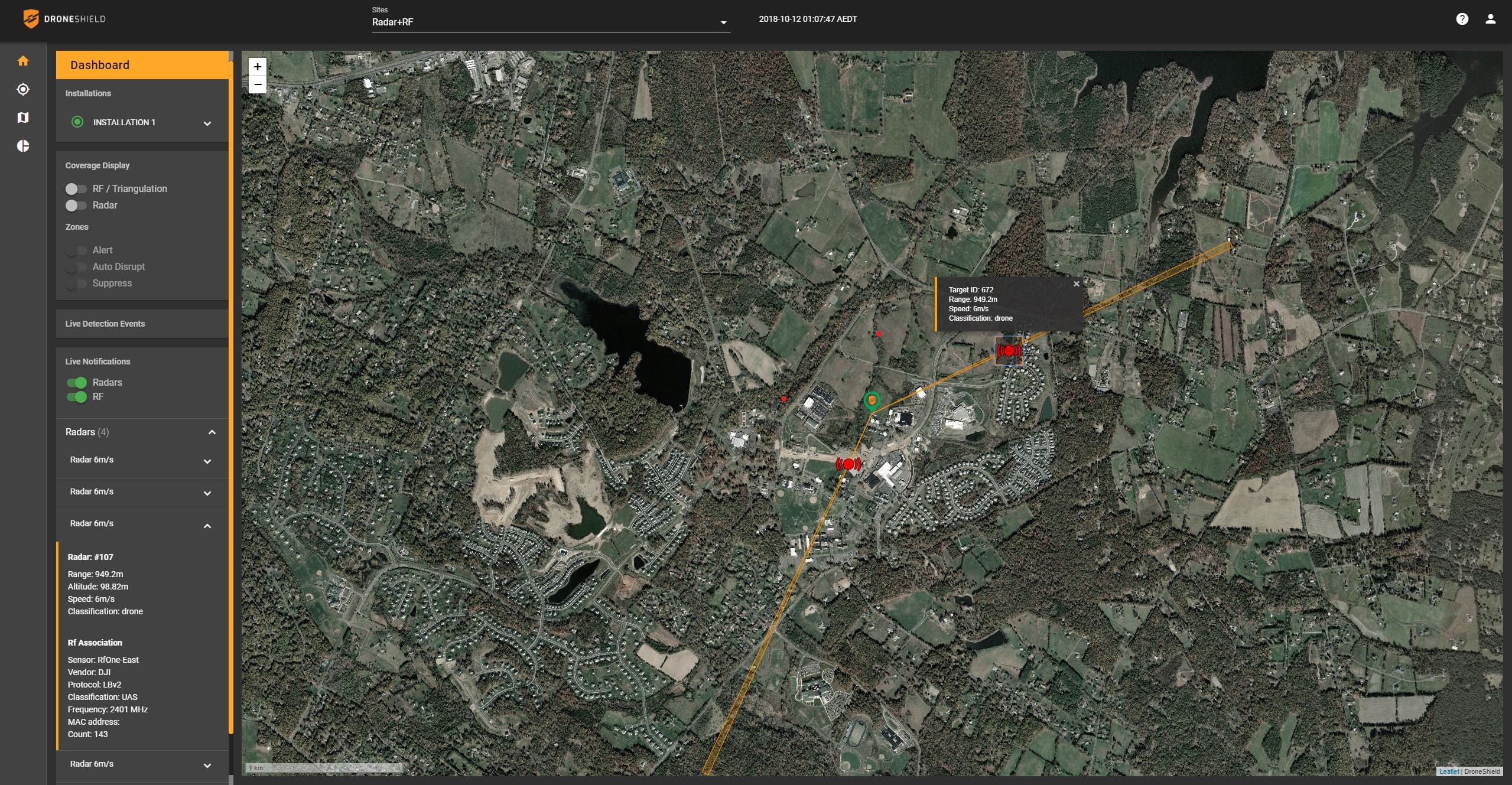
DroneShield Ltd (ASX:DRO) (“DroneShield” or the “Company”) is pleased to advise that its full product suite has been approved for placement on, and placed on, the GSA Schedule.

The GSA (General Services Administration) is an agency of the United States government that supplies products for U.S. government offices and operates the Federal Acquisition Service (the FAS). As part of this effort, it maintains the GSA Schedule, which other U.S. government agencies can use to buy goods and services. Procurement managers from various U.S. government agencies can seamlessly make purchases of the products that are on the GSA Schedule, knowing that the terms of such purchases have been preset between the vendor and the GSA. The process is further streamlined through GSA Advantage, an online government purchasing service run by the GSA in order to provide a streamlined and efficient purchasing portal for U.S. governmental agency procurement. The official description of GSA Advantage refers to it as “the Federal Government’s premier online shopping superstore.”

As part of the placement on the GSA Schedule and GSA Advantage for federal procurement, DroneShield’s products have also been approved as qualifying for purchase through GSA Advantage by state and local governments.

This is an important step for the Company as it allows any U.S. federal agency and U.S. state and local government agencies, to buy DroneShield’s product seamlessly, from a pre-qualified catalogue of products, without going through a competitive and bespoke process.

DroneShield CEO Oleg Vornik commented “United States federal, state and local governmental agencies are responding to the ever-increasing drone threats by taking proactive measures. The placement of DroneShield’s product suite, including its drone detection and drone mitigation products, on the GSA Schedule and in the GSA Advantage catalogue now allows for instant and pre-approved procurement of the Company’s products by governmental employees with appropriate authority, at a click of a button.”

The Sky Guys Granted SFOC for Flight Testing of New DX-3 Vanguard

Thursday, August 9th, 2018

TORONTO, August 8, 2018 (Newswire.com) – The Sky Guys, Canada’s top drone operator, announced this week they have been granted a Special Flight Operations Certificate (SFOC), a permit for commercial Unmanned Aircraft System (UAS) flights, for its landmark development project, the DX-3 “Vanguard”. The permit allows The Sky Guys to perform testing that will put the DX-3 through critical elements of integrated flight testing, including performance benchmarking and evaluating Vertical Takeoff and Landing (VTOL), transition, forward-flight, endurance, systems safety, and various aspects of human factors.

“This SFOC is a testament to the industry-leading engineering design and flight operations expertise at The Sky Guys,” noted Jeremy Wang, CTO of The Sky Guys, “Besides its outstanding performance specs, the DX-3 Vanguard comes with safety features normally found in military and commercial aviation. The system is also proudly designed and assembled in Canada, so we have tight control over the IP and production methods that make it unique around the world.”

The SFOC approval comes after months of testing and evaluation in a controlled laboratory environment. The flight testing will be conducted at Toronto Markham Airport CNU8, consisting of Line of Sight (LOS) and simulated Beyond Visual Line of Sight (BVLOS) only.

“The revolutionary DX-3 ‘Vanguard’ is a giant leap forward in the capabilities of today’s commercially available UAS platforms,” stated Adam Sax, President and CEO of The Sky Guys. “Capable of flying for over 24hrs and 1500km in range, the DX-3 utilizes military-grade technology and sensors to carry out missions in heavy industry and military environments. Its ability to take off and land vertically eliminates the need for runways or launch rails typically required with similar UAS platforms only available to the defense sector.”

“We’ve been working closely with partners in industry, law enforcement, and defense to define test protocols that will establish the DX-3 as the forerunner in NATO Class 1 / DoD Group 2 class UAVs,” concluded Sax.

For more information, visit www.theskyguys.ca

DroneGun Tactical Certified for Human Exposure

Thursday, July 26th, 2018

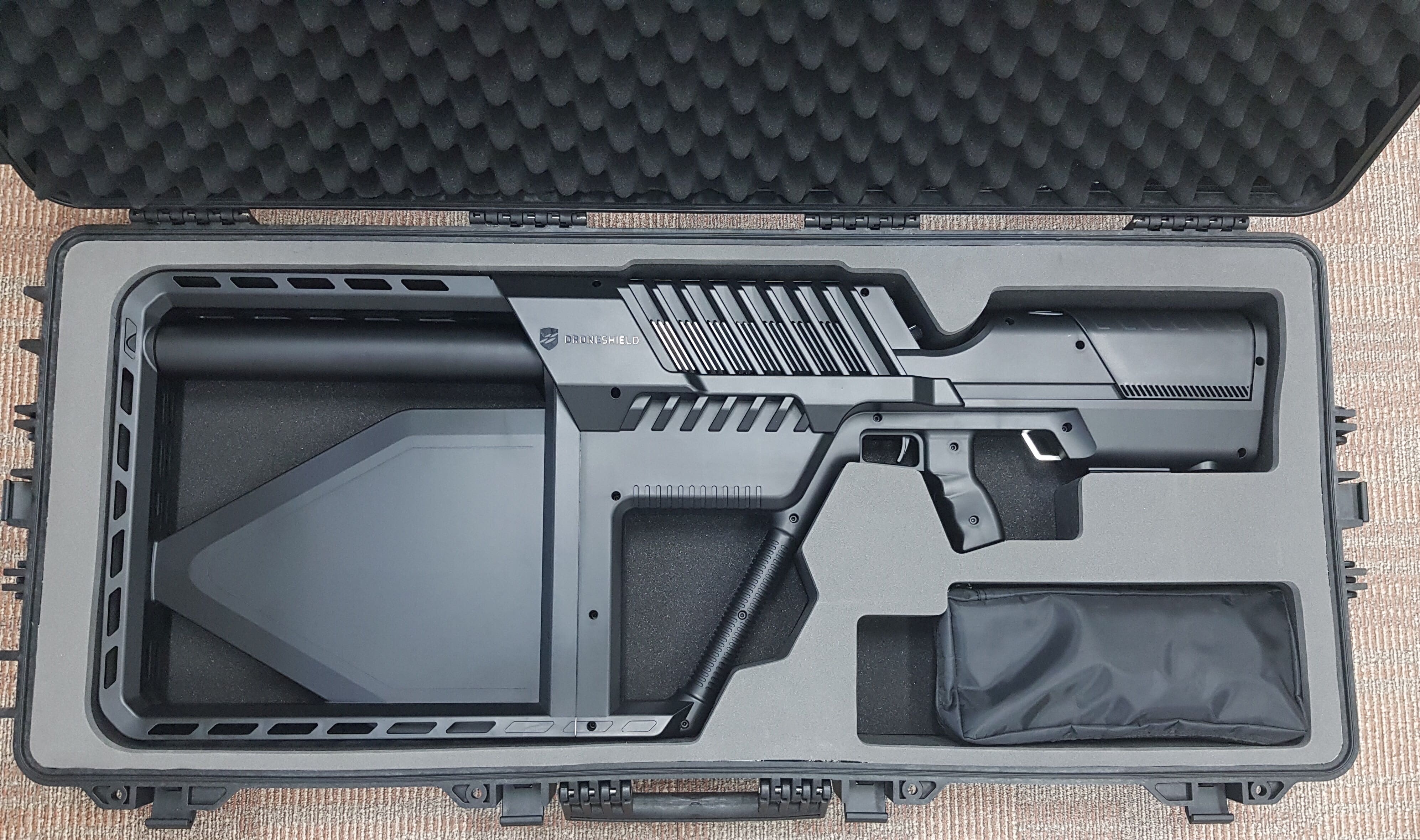
DroneShield Ltd (ASX:DRO) (“DroneShield” or the “Company”) is pleased to announce that its DroneGun TacticalTM product has been certified as compliant for human exposure, in connection with requests by potential governmental end-users, in relation to their procurement processes.

OneTech, a specialist SAR (Specific Absorption Rate) laboratory for global certifications, has certified DroneShield’s DroneGun TacticalTM as compliant with the ARPANSA EN 50566 and EN 50663 (Australian and New Zealand Communications and Media Authority requirements for human exposure to radio frequencies) within the specific frequency bands of operation which cross references to the international ICNIRP standard.

The certification was obtained in response to the DroneGun TacticalTM product advancing through procurement processes with a number of major defence and other government agencies internationally, for which this was a requirement requested by several agencies.

The certification follows DroneGun MKIITM safety for human exposure certification in December 2017, and DroneSentry airport compliance certification in May 2018.

Images: DroneGun Tactical at recent evaluations by the South Korean military.

RADA’s MHR Part of the X-MADIS Solution Wins Prize at SOFWERX ThunderDrone RPE III Event

Tuesday, July 24th, 2018

RADA & Partners’ Mobile Drone Defeat System demonstrated at Counter UAS Exercise

July 16, 2018 Netanya, Israel, – RADA Electronic Industries Ltd. A leader in the development , production and sale of tactical land radar for force and border protection – announced that RADA together with its partners, Ascent Vision and Sierra Nevada Corporation, won a $200,000 prize at the SOFWERX ThunderDrone Rapid Prototyping Event (RPE) III demonstration, with its X-MADIS mobile drone defeat system.
RADA’s Multi-Mission Hemispheric Radar (MHR) is the primary detection and tracking sensor of X-MADIS (the eXpeditionary Mobile Aerial Defense Integrated System), tailored for Counter-unmanned aerial system (C-UAS) missions. Combined with other state of the art systems (Electro-Optical/Infrared and electronic warfare equipment), the system is integrated into a commercial off-road vehicle. It can detect, locate, identify, track, exploit and defeat an enemy UAS on the move or while in a stationary position, protecting airports, no-fly zones and other high-value infrastructure.

X-MADIS excelled at every stage in the exercise, proving it could provide solutions for a broad range of threats. The award was presented late last month at Nellis Air Force Base in Nevada.

Dov Sella, RADA’s CEO, commented, “We are very proud to be part of the industry team achieving this success for X-MADIS. The system is a derivate of a system deployed successfully with a Department of Defense customer. Therefore, it demonstrates that our technology is highly scalable, flexible and truly adaptable for multi-mission environments.”

The SOFWERX RPE demonstration events, also called Game of Drones, began in June 2017. More than 450 technological capabilities aimed to tackle sea, land, and air-based UAS, tactical swarms, payloads (kinetic/non-kinetic/sensors), and their associated data science applications. ThunderDrone RPE III was the culmination of the events, and provided a venue for systems of various technologies to be tested in a true field environment.

The exercise was formally evaluated by a government assessment team. SOFWERX is a Partnership Intermediary Agreement between Doolittle Institute and the United States Special Operations Command (USSOCOM), created to investigate new technology in an effort to put the most advanced capabilities into our warfighters’ hands. 

For more information, see the SOFWERX website.

AeroVironment Collaborating with NASA’s Jet Propulsion Laboratory to Build First Drone – the Mars Helicopter – to Fly on Mars

Wednesday, July 4th, 2018

• New space endeavor draws on company’s unique and diverse history of innovation and high-altitude drone flight experience

• Drone prototypes have passed rigorous tests in simulated Mars atmosphere

• Final Mars-bound helicopter now in production at JPL

MONROVIA, Calif., July 3, 2018 – What does a company do when its trailblazing and diverse innovations for nearly half a century have redefined how the world drives and flies?  When its many technological “firsts” include the first practical electric car, flying the Nano Hummingbird drone, record-setting, solar-powered aircraft flights in near space, and reshaping the battlefield with portable, hand-held, tactical drones and loitering munitions?

It takes on another world.

At a briefing held Wednesday at New York City’s NASDAQ Marketsite, AeroVironment, Inc. (NASDAQ: AVAV) revealed its critical role in collaborating with NASA’s Jet Propulsion Laboratory (NASA/JPL) in Pasadena, Calif. to build the drone helicopter recently selected by NASA/JPL’s Mars Exploration Program, and displayed a model of the Mars Helicopter, which is planned to fly on Mars in less than three years.

“AeroVironment’s deep, rich and diverse history of innovation combined with our experience with near-space aircraft like Pathfinder and Helios make us uniquely suited to collaborate with NASA and JPL on this historic, interplanetary venture,” said AeroVironment President and Chief Executive Officer Wahid Nawabi.

Flying at nearly 100,000 feet on Earth is much like flying on the surface of Mars – same air density – so AeroVironment used airfoil design principles and simulation tools the technology company learned from record high-altitude flights and incorporated them into the Mars helicopter design.

“The Mars Helicopter effort also benefits from the ultra-lightweight and ultra-high-precision methods integral to our nano projects that have been developed in our MacCready Works laboratory, where we’ve assembled a dedicated team of the industry’s brightest and most experienced thinkers to solve some of today’s greatest technological challenges,” Nawabi said.

AeroVironment first developed subscale Mars helicopter prototypes to test and demonstrate the feasibility of lift in the thin Martian atmosphere.  Then in May 2016, AeroVironment delivered to NASA/JPL a Mars Helicopter rotor and landing gear prototype that was integrated with a JPL-developed controller and demonstrated free flight in a simulated Mars atmosphere, proving that it is possible to fly on the Red Planet.  Next, AeroVironment delivered major helicopter subsystems in the fall of 2017 for integration into Mars-representative engineering development models.  JPL built two Engineering Development Model Mars Helicopters, integrating the AeroVironment rotor, landing gear, fuselage shell and solar panel substrate together with JPL-developed fuselage composed of flight avionics, onboard power, telecom, flight control and sensors into two models.

One of the development models was used for flight demonstration in JPL’s large 25-foot space simulator, and the other for environmental testing, including thermal tests to ensure the vehicle can endure the frigid Mars nights, and vibration tests to make sure it is rugged enough to survive launch.  Both vehicles passed the rigorous tests, paving the way for the development and fabrication of the final, Mars-bound version.

AeroVironment is currently building the flight versions of their subsystems which will be integrated with other subsystems into the vehicle that JPL is building. The plan is for JPL to then install the finished Mars Helicopter into the Mars 2020 rover for its ride to a Martian landing site, still to be determined.

The Mars Helicopter project is led by NASA JPL with team members across JPL, AeroVironment, NASA Ames and NASA Langley. The AeroVironment team has worked closely with NASA rotorcraft experts at the NASA Ames and Langley research centers and with JPL electrical, mechanical, materials, vehicle flight controls, and systems engineers. AeroVironment’s contributions to the first Mars drone include design and development of the helicopter’s airframe and major subsystems, including its rotor, rotor blades, hub and control mechanism hardware. The company also developed and built high-efficiency, lightweight propulsion motors, power electronics, landing gear, load-bearing structures, and the thermal enclosure for NASA/JPL’s avionics, sensors, and software systems.

The press briefing featured high-impact visuals and models of many of AeroVironment’s innovations, including the Snipe™ nano drone – the latest tactical UAS innovation from AeroVironment that provides today’s defenders with critical information whenever and wherever it is needed – and the Switchblade® Lethal Miniature Aerial Missile System (LMAMS).  AeroVironment recently received Switchblade orders from the U.S. Army and U.S. Marines Corps through Urgent Needs Statements.

SNC and Partners Invited to SOFWERX ‘Game of Drones’ Demo

Thursday, May 24th, 2018

X-MADIS Mobile Drone Defeat System Advances in Counter UAS Exercise
SPARKS, Nev. (May 22, 2018) – Sierra Nevada Corporation (SNC) and its partners, Ascent Vision and RADA Technologies, will participate in the SOFWERX ThunderDrone Rapid Prototyping Event (RPE) III demonstration at Nellis Air Force Base next month. SOFWERX is a Partnership Intermediary Agreement between Doolittle Institute and the United States Special Operations Command (USSOCOM), created to investigate new technology in an effort to put the most advanced capabilities into our warfighters’ hands.

SNC and its partners will participate in the demo, also being called “Game of Drones,” using X-MADIS (eXpeditionary Mobile Aerial Defense Integrated System), which is a self-contained, fully mobile and integrated counter-unmanned aerial systems (C-UAS) capability. The C-UAS, radar and Electro-Optical/Infrared (EO/IR) equipment is integrated into a commercial off-road vehicle that can detect, locate, identify, track, exploit and defeat an enemy UAS (also known as drone) to protect airports, no-fly zones and other high-value infrastructure.

The SOFWERX RPE demonstration events began in June 2017 and have evaluated more than 450 technological capabilities aimed at bringing sea-, land-, and air-based UAS, tactical swarms, payloads (kinetic/non-kinetic/sensors), and their associated data science applications to the Special Operations Community. ThunderDrone RPE III is the culmination of the events, and X-MADIS is one of just 30 remaining entrants. Only warfighters, interagency partners, and select contributors from industry and academia may participate in RPEs, which are formally evaluated by a government assessment team.

X-MADIS performed flawlessly in the previous RPE II held at Ft. Bragg North Carolina. This event evaluated operational setup time and the system’s capability to detect, locate, identify, track, exploit, defeat, and assess effects on threat representative small unmanned aerial vehicles. The top three participants for the upcoming exercise, called “Game of Drones,” will be awarded prize money based on system performance.

For more information, see the SOFWERX website. X-MADIS will be on display at the Special Operations Forces Industry Conference (SOFIC) in Tampa, Fla., May 22-24, booth #1624.