Celebrate 20 years of the TLR-1

Archive for the ‘weapons’ Category

Revolutionizing Operational Testing: The Next Generation Squad Weapon (NGSW) Expeditionary Operational Assessment at Fort Johnson

Friday, June 13th, 2025

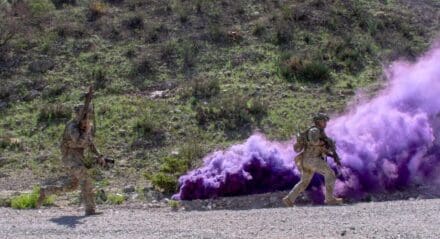
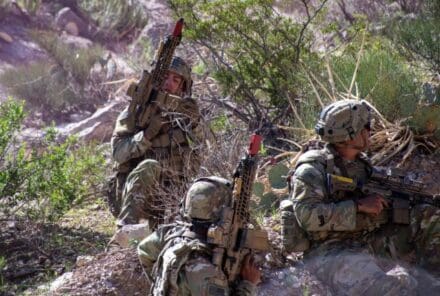
FORT JOHNSON, La. — Amidst the evolving landscape of military acquisitions and the Army’s renewed commitment to agile, rapid capability development, the Next Generation Squad Weapon (NSGW) has undergone a pivotal Expeditionary Operational Assessment (EOA) in collaboration with elements of 1st Brigade, 101st Airborne Division (Air Assault), at the Joint Readiness Training Center (Rotation 25-07).

This assessment marks a significant step forward in the Army’s implementation of the continuous transformation framework, specifically within the Transformation in Contact (TiC) phase.

The 101st Airborne Division, identified by the Army as one of its TiC units, plays a critical role in rapidly integrating and evaluating emerging capabilities that directly address urgent operational requirements.

Operational Testing in TiC: A New Paradigm

The NGSW assessment at Fort Johnson is in direct response to Army Chief of Staff Gen. Randy George’s call to action for the Army to swiftly adapt its acquisition processes. Through the continuous transformation framework, TiC-designated units receive and rapidly implement new capabilities at a relevant speed. This has necessitated a shift in thinking from traditional test and evaluation (T&E) approaches, in trade for more agile, iterative processes. These highlight the integration of rigorous data-driven analysis and direct soldier feedback.

“Our commitment to providing world-class, objective test data to Army senior leaders remains unchanged. But the rapidly changing battlefield requires that we rethink historical methods and processes of operational testing. TiC especially highlights that we cannot remain in the status quo,” said Col. Mike Trotter, Director of the Maneuver Test Directorate (MTD), U.S. Army Operational Test Command (USAOTC). “We are embracing agility and broadening our testing horizons, while ensuring we retain world-class standards.”

Small Team, Big Impact

Whereas operational testing has traditionally been a large-scale effort — requiring extensive planning, coordination, and strict control of test variables — T&E within TiC has sparked more agile practices. EOAs are one such evolution.

This EOA event, which expands upon previous assessments conducted at Fort Campbell, Kentucky, is led by a specialized, nimble test team uniquely equipped for agile testing. The team is drawn from USAOTC’s MTD, Dismounted Test Division — Mr. Troy Willey, a retired Command Sergeant Major with extensive armored command experience; Mr. Bill Rabena, a mathematician, operations research systems analyst and former brigade commander with deep expertise in operational analytics; and Maj. Thomas Lorenson, the senior test officer. They are joined by Maj. Matt Brooks, a military evaluator from the U.S. Army Evaluation Center.

“The expertise of Mr. Willey and Mr. Rabena, as well as Maj. Brook’s operational experience, [are] invaluable,” emphasized Lorenson. “Their operational and analytical insights significantly enhance our ability to construe soldier feedback comprehensively and accurately. I’m fortunate to work alongside such a proficient and dedicated team of experts.”

Expanding the Testing Frontier

The broader shift toward EOAs was successfully applied in previous programs, such as the Infantry Squad Vehicle and Next Generation Tactical Vehicle. EOAs prioritize flexibility, mobility, and timely data collection within operationally realistic training and combat scenarios.


This EOA also reflects growing engagements between operational testers and the Combat Training Centers (CTCs). CTCs are uniquely poised to enable testers minimal, invasive access to TiC units in their training cycles. CTC conditions, in many cases, qualify as the operational realism required of traditional operational tests.

Col. Ricky Taylor, Commander of Operations Group at Joint Readiness Training Center, underscored this critical initiative. “We need to continue adapting to changes on the battlefield and replicate large-scale ground combat operations,” he said. “These assessments directly support the chief’s and the Army’s initiatives. It’s imperative we embrace them and fully integrate these assessors with our task force to achieve the most valuable operational data.”

Another key evolution was the integration with the Centers of Excellence (COE), as a source of evaluation criteria. This nascent approach seeks to align EOA data requirements with the learning demands of the COEs and, in some cases, the operational units. This marks a shift from traditional dependence on formal requirements documents, like the Capability Development Document, which may be outdated or absent in today’s rapidly evolving environment.

“The Army’s expectations are clear: operational testing must deliver timely, relevant insights without compromising rigorous evaluation,” explained Willey. “Our approach ensures rapid adaptation to soldier and unit needs, directly informing future capability development.”

Qualitative Insights, Quantitative Precision

During the assessment, the team conducts comprehensive qualitative and quantitative surveys with Soldiers, which captures broad perspectives on the NGSW’s 6.8mm ammunition, Fire Control System, and overall weapon implementation. Hundreds of Soldiers provide immediate, unfiltered insights highlighting both strengths and areas requiring improvement.

“The weapon is great. I can fire effectively from all positions, and it gives me a lot of confidence,” said Spc. Shaquille Pusey of Alpha Co., 1-506th Battalion. “My only issues are the bipod, which can be hard to manage, and the ammo pouch release button. It often comes undone when I move, spilling the link.”

“With this weapon, I’m simply more lethal,” said Sgt. Christopher Caldwell from 3rd Platoon, Alpha Co., 1-506th Battalion. “Engaging targets at long distances feels effortless. It’s like having a cheat code. The precision and controllability give us a clear edge.”

While qualitative soldier feedback provides firsthand experience, Rabena’s system-oriented approach ensures the rigorous analytical depth required in operational testing.

“Unique to this EOA is its targeted data collection approach, which focuses on specific areas needing improvement that were identified in a previous operational test’s database,” Rabena said. “This EOA serves as a litmus test for program manager (PM) progress and unit sentiment toward the new system. It essentially asks, what still needs to be fixed, and have any new issues emerged?” This structured data collection will yield precise, actionable feedback for evaluators like Brooks, who ensure system updates, while contributing to the iterative process.

“The Next Generation Squad Weapon program thrives on rapid prototyping and embedded evaluation,” said Brooks. “Soldier feedback drives iterative improvements at the speed of relevance, ensuring design adjustments meet real-world needs. The U.S. Army Evaluation Center accelerates the process by delivering results briefs to senior leaders within seven days of test completion.”

Unbiased Testing, Unchanged Integrity

While TiC assessments accelerate fielding timelines and challenge traditional test methodologies, USAOTC’s fundamental commitment to providing unbiased data for decision makers remains unchanged. Modernizing T&E capabilities and data collection methods, as well as fostering closer integration with new stakeholders across the acquisition and operational communities, enables the generation of critical insights under realistic operational conditions, free from personal bias.

“Our role as an impartial stakeholder is absolutely critical,” Lorenson noted. “We objectively report the data, bridging soldier experiences with the needs of program managers and the larger enterprise, ensuring rapid delivery of reliable and effective equipment.”

A Call to Action, A Call to Transform

The assessment at Fort Johnson directly aligns with the recent emphasis of Maj. Gen. John Klein, Special Assistant to the Commanding General, U.S. Army Training and Doctrine Command on incorporating lessons learned from global conflicts that highlight urgent operational realities. The continuous transformation framework, as demonstrated through TiC, ensures that soldier input, rigorous operational testing, and adaptive acquisition practices remain at the forefront of Army capability development.

“The Chief of Staff and Klein’s message to the force reemphasized the need to evolve iteratively and continuously,” said Rabena. “This assessment isn’t just about one weapon system. It represents the future of how we rapidly develop and field critical capabilities to Soldiers on the ground.”

Forward Momentum: Lessons and Insights

As the assessment concludes, USAOTC will produce a memorandum of observation highlighting critical improvements, agile spin-off opportunities, and valuable insights to guide ongoing and future acquisition efforts. By providing data-backed, field-tested insights, iterative feedback empowers both the developers and decision makers to innovate and deliver with the urgency of today’s battlefields demand.

“Our ultimate aim is timely feedback that enables PMs, Soldiers, and the broader acquisition community to swiftly and effectively deliver superior capabilities. The NGSW Expeditionary Operational Assessment at Fort Johnson exemplifies our commitment to transforming operational testing to meet the urgent demands of the modern battlefield,” concluded Lorenson.

“We are zealously looking at how we can assist meeting the demands of operational realities, continuous transformation, and the forthcoming sweeping changes across the Army Acquisition enterprise,” Trotter said. “What we do for our Army aids in providing the best equipment on the planet to our Soldiers so that they can fight, dominate, win, and survive on the battlefields in which they WILL find themselves. The NGSW EOA is a significant step forward in revolutionizing operational test and evaluation.”

By CPT Simeon Blakely, MAJ Thomas Lorenson, and Mr. Thomas Mort, Maneuver Test Directorate, U.S. Army Operational Test Command

L3Harris Providing Additional Vampire Counter-UAS Systems to Department of Defense

Wednesday, June 11th, 2025

MELBOURNE, Fla., June 9, 2025 — L3Harris Technologies (NYSE: LHX) has received a new contract through the U.S. Department of Defense for additional VAMPIRE systems, which neutralize unmanned aerial threats. The new order builds on the first delivery and installation of the VAMPIRE systems in 2023 in support of European operations.

VAMPIRE, or Vehicle Agnostic Modular Palletized ISR Rocket Equipment, delivers advanced reconnaissance and precision strike capabilities against drones and remotely piloted aircraft, enabling European ground forces to protect allied infrastructures from enemy attacks.

“L3Harris’ VAMPIRE has proven to be a reliable and cost-effective response to the growing counter-UAS threat on the global battlefield,” said Tom Kirkland, Vice President and General Manager, Targeting and Sensor Systems, L3Harris. “We will continue to work closely with the Department of Defense and our allied partners to provide formidable counter-UAS technology domestically and abroad.”

VAMPIRE integrates L3Harris’ rugged WESCAM MX™-10D RSTA targeting and sensor system with its weapons station to allow operators to identify and engage targets quickly. The system also combines the Advanced Precision Kill Weapons System rocket with the L3Harris proximity fuze and Widow® mission management software for increased system lethality for engaging ground and aerial targets.

VAMPIRE has shown potential for multi-domain applications with capabilities that can extend to the sea, offering a solution for maritime operations against UAS, fast inshore attack crafts and low-slow flyers.

NSNs Assigned to FN’s Lightweight Intermediate Caliber Cartridge Carbine and Suppressor

Wednesday, June 11th, 2025

Over the weekend, Japanese X account @teppoblog surprised us with a post listing National Stock Numbers associated with the Lightweight Intermediate Caliber Cartridge (LICC) Individual Weapon System (IWS), a novel weapon and ammunition manufactured by FN America. We reached out to several sources to validate the NSNs and they came back as real. We must point out that Teppoblog has a history of sharing correct info.

The LICC IWS project originated in 2019 from requirements provided to the Irregular Warfare Technology Support Directorate (IWTSD), a government office, which is responsible for conducting research and development in support of U.S. and allied organizations involved in Irregular Warfare. In fact, one of those sponsors of this system, Canada Special Operations Forces Command just nominated the program’s caliber, 6.5 x 43mm (.264) for NATO Standardization. FN America was awarded a development contract and we’ve kept up on the program with a couple of updates. Last November, FN delivered carbines, machines guns, suppressors, and ammunition to several SOF organizations.

The LICC IWS has four purpose-built components:

• Lightweight ammunition family
• Improved Performance Carbine
• 25-round purpose-built, polymer magazine
• Signature Suppressor

These new NSNs pertain to the three variants of the Improved Performance Carbine (11.5” Close Quarters Battle (CQB), 14.5” Carbine, and 18.5” Recce (Designated Marksmanship Rifle)) as well as two suppressors associated with the system.

The NSNs are:

NSN 1005-01-729-0039, FN IMPROVED PERFORMANCE CARBINE 12.5 IN CQB WITH BII*

NSN 1005-01-729-0052, FN IMPROVED PERFORMANCE CARBINE 14.5 IN CQB WITH BII

NSN 1005-01-729-0046, FN IMPROVED PERFORMANCE CARBINE 18.12 IN REECE (sic) WITH BII

NSN 1005-01-728-9868, SUPPRESSOR, FLOW 264 FOR IMPROVED PERFORMANCE CARBINE

NSN 1005-01-728-9874, SUPPRESSOR, FLOW 7.62 FOR IMPROVED PERFORMANCE CARBINE

*Basic Issue Items

The suppressors are manufactured by HUXWRX.

The NSNs are managed by the Special Operations Forces Support Activity at Lexington Bluegrass Army Depot and are available for requisition by Army, Navy, Marine, Air Force and SOCOM elements and activities.

Coincidentally, they’ve added a belt-fed machine gun to the capability in the form of the FN Evolys, but we still haven’t seen an NSN. Logic goes, that if the carbines have them, it should as well.

FN has also demonstrated versions of Evolys in 7.62 NATO and 6.5 CM in addition to the .264 model developed for this program. In fact, the first version of Evolys seen in the US was as the 6.8mm candidate for Next Generation Squad Automatic Rifle which rolled into NGSW. While it proved a desirable candidate for NGSW, it was too heavy for the specs spelled out in the requirement.

Due to the multiple caliber options, a forward leaning organization could buy the LICC machine gun and then arrange for the conversion kit from FN America for the desired caliber.

Likewise, we have not yet seen any Department of Defense Identification Codes (DODIC) for the ammunition. Not saying they don’t exist, but a reliable source of .264 ammunition is critical for adoption.

At any rate, these NSNs offer an opportunity for select DoD organizations (or perhaps Federal LE) to take advantage of the production contract associated with this program.

Rampart Range Day 25 – Glock 43X

Tuesday, June 10th, 2025

Rampart showcased the Glock 43X both on and off the range during their recent event at the Stittsville Range near Ottawa, Canada.

This 9mm pistol combines a compact Slimline frame with a 10-round capacity making a great choice for concealed carry.

The frame incorporates elements of the Gen5 and Slimline series such as the short trigger distance, a frame with a built-in beavertail, a reversible magazine catch and the incredibly accurate, match-grade GLOCK Marksman Barrel (GMB) and precision-milled front serrations.

Departments, agencies, and military organizations in Canada can purchase Glock firearms via Rampart.

Barrett and MARS Inc Team Win U.S. Army xTech Soldier Lethality Competition with Revolutionary 30mm Precision Grenadier System

Monday, June 9th, 2025

MURFREESBORO, TN – The U.S. Army has announced that the MARS Inc, Barrett team has been selected as the winner of the xTech Soldier Lethality competition.  In six months, this team of agile businesses were able to design, build, test, and demonstrate the effectiveness of a new 30mm grenade rifle system in support of the Army’s Precision Grenadier System (PGS) requirement.  PGS is a soldier portable, shoulder fired, semi-automatic, magazine fed, integrated armament system (weapon, ammunition, fire control) that enables rapid, precision engagements to destroy personnel targets in defilade and Unmanned Aerial Systems (UAS) targets at close range.  Both companies are proud to have the opportunity to provide this unique capability to the U.S. and allied war fighters.


MARS Inc. and Barrett’s PGS submission for U.S. Army’s xTech.

“For decades, Barrett has changed the battlefield with revolutionary systems like the shoulder fired semi-automatic .50 caliber Model 82 and its modern variants, as well as the MRAD MK 22 — the world’s most accurate multi-caliber sniper rifle,” said Bryan James, Barrett CEO. “These weapon systems are now supporting the U.S. and more than 80 allied nations around the world. With our focus now on the U.S. Army’s PGS initiative, we are committed to delivering another game changing advantage: a system with Programmable Air Bursting counter defilade and Counter-UAS capabilities designed to keep our troops safe and ensure mission success.”

The xTech program was an incredible demonstration of the strength and capabilities of the Barrett team to collaborate with like minded companies to achieve what many thought unachievable in the given time frame. As part of that journey, Barrett worked closely with small business innovator MARS Inc to bring their technology to life, AMTEC Corp to develop an entirely new family of 30mm shoulder fired munitions, and Precision Targeting to provide a fire control system customized for the AMTEC ammunition. This new ammunition family will have the full spectrum of capabilities required to achieve the US Army’s mission to provide over match on the modern battlefield. This includes, Programmable Air Bursting High Explosive (HE), Proximity Fuzed and Point Detonating HE, as well as a Close Quarter Battle Round.

“This award highlights not only our technical capabilities, but the power of partnership, agility, and a shared mission,” said Ryan Krantz, Barrett Vice President of Business Development & Sales. “We’re proud to stand shoulder-to-shoulder with the U.S. Army to deliver the next leap forward in soldier lethality.”


Barrett and MARS Inc. put their xTech Precision Grenadier System prototype to the test in a live fire event.

Plumb Precision Products Reveals the P3 M110 and M110A1 C-UAS Weapon System

Thursday, June 5th, 2025

Issaquah, Washington, June 4th 2025

Plumb Precision Products is excited to reveal the P3 M110A1 C-UAS weapon system technology demonstrator. This is a light weight anti-drone platform focused on type 2 and 3 UAS. The weapon system is intended as an Engineering Change Proposal (ECP) to the M110 and M110A1 series of rifles. For the M110A1 It utilizes the P3 HK 417 magazine adaptor in order to utilize the Genesis Arms 12-gauge magazines. The use of 12-gauge ammunition provides the end user unprecedented flexibly for non-lethal, lethal, and counter UAS options.

This and other P3 C-UAS 12-gauge based concepts feature the expertise of Genesis Arms. Genesis Arms and Plumb Precision have had working relationship for over 5 years. This is reflected in the P3 M110A1 H&K and the M110 Knights Armament pattern 12-gauge upper receiver C-UAS concepts.

This particular variant uses a HUXWRX 12-gauge Ventumsuppressor. This compact and lightweight suppressor prioritizes maneuverability without sacrificing functionality and is full auto-rated.

It also features a Heckler and Koch M320 40mm grenade launcher. This enables the system to utilize low pressure 40mm counter UAS ammunition under development and legacy 40mm ammunition. The P3 M110A1 C-UAS uses precision 40mm ammunition such as the Raytheon Pike and its C-UAS variant. This extends the maximum effect range to almost 2000 meters.

Not shown is the patent pending P3 C-UAS detection system. Recently submitted to SF Command’s X-tech program, itutilizes acoustic detection, laser tracking, and AI enabled targeting to engage UAS. The P3 M110A1 and M110 C-UAS systems were specifically created for submission into AEWE and C-UAS programs.

Plumb Precision Products expects to conduct basic conversions to the existing M110/M110A1 for as little as $2500 per unit. This would allow the Department of Defense to convert and field preexisting systems immediately, for less money than any other option.

Look for more information from www.plumbprecision.com  

USMC Affirms Confidence in Modular Handgun System

Monday, June 2nd, 2025

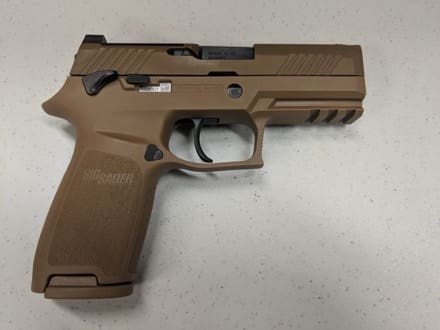
Back in April a reader posted a link to this 2023 USMC incident report regarding a negligent discharge of an M18 Modular Handgun System pistol by a foreign national gate guard on Okinawa, to the comments section of SSD. I read it and wondered why I hadn’t heard about it. Current hysteria over the P320 aside, Modular Handgun System pistols are equipped with a manual safety. If one did indeed discharge all by itself while “safe and secure in the holster”, as alleged in this indecent report, there are significant concerns over the safety of our service members regarding the over 400,000 pistols in service.

You can download the report here.

As you can imagine, the report began to circulate as confirmation bias that the M18 pistol which is based on SIG SAUER’s popular P320, is doing this or that. Unfortunately, getting to the bottom of the issue takes awhile, particularly with a vigorous travel schedule and when going back and forth with the government. Despite this, I dug in.

Considering the pistol has a manual safety and was in a holster and claims that nothing impacting the trigger, something seemed off. I asked around about the report and heard that there was more to the story and it would be best if I made a formal inquiry. Consequently, I approached the DoD Program office for MHS, Product Manager Soldier Weapons (PdM SW), which is subordinate to Project Manager Soldier Lethality at Picatinny Arsenal. They stepped right up and looked into the issue as they weren’t familiar with the mishap despite the conclusion of the incident report which was to “recommend that an engineering review of the M18 be conducted.”

I asked for a statement from PdM SW but they informed me that, as the incident had occurred in the Marine Corps, I should pursue further inquiries with Marine Corps Installation Command Pacific. I sent them an email inquiry and finally heard back after this story was published. They offered a simple statement, standing by the report.

Next, I went to Marine Corps Systems Command. Their PAO interfaced with the command and offered this statement based on my initial inquiry regarding the incident report.

The incident was appropriately reported to the Naval Safety Command, which is where the provided pdf of the incident report was sourced from in response to a FOIA request. All factual information was released in accordance with FOIA. Deliberative portions of the safety investigations are subject to executive privilege, and they will not be released to any person or entity, except within the Department of Defense, for mishap and loss prevention purposes.

I had obviously asked the wrong command, the wrong question. They didn’t investigate it. Since my main concern was whether the weapon was safe for use, that’s what I ended up asking.

Late last week, the Marine Corps Systems Command Public Affairs Office provided this statement on behalf of the command:

The M18 was rigorously tested to DoD standards before being selected for use by our Marines, and we have not seen any evidence that indicates design or manufacturing issues are present. In addition to the initial testing, each lot of weapons produced for the U.S. Government is subject to extensive lot acceptance testing with oversight by the Defense Contract Management Agency and the Service from which the order was placed (Army/Marine Corps).

The Marine Corps has full confidence in the quality, performance, and safety of the M18 handgun. The MHS is designed, built, and tested to military standards to ensure safe and effective employment during training and combat.

At least one other website reported this incident and only used the incident report as the basis of their post. They never bothered to contact the military. While we may never know what actually happened in this instance, the reality is that the Marine Corps (and Army) stand behind the safety of the MHS program. Here we are, over two years later and the pistols remain in service.

That is the ultimate concern, that service members can maintain faith and confidence in their equipment, particularly those items that they must depend their lives on, such as PPE and weapons. It was my goal to determine whether or not this was the case and the Army and Marine Corps have asserted their position that MHS is safe.

By Eric Graves

Rampart Range Day 25 – Colt Canada

Wednesday, May 28th, 2025

Due to Canadian content laws, Colt Canada provides small arms to the Department of National Defence.

The Canadian military is currently working on an upgrade to their C8 carbines. Colt Canada showed off the latest version of their line of rifles, the C8 Modular Rail Ambidextrous Rifle in 5.56 NATO (Colt Canada also makes the MRR in 300 BLK).

It features a fully ambidextrous lower receiver with ambi bolt catch and release and well as fire selector switch.

This version with the 14.5” barrel is considered the general service variant and is intended for Combat Support and Combat Service Support personnel while close combatants will wield a carbine with an 11.6” barrel. As you can see, it is fitted with the Millbrook Strategic Sciences Multi Function Muzzle Device. The MFMD is timed and permanently affixed to the barrel and is currently already adopted by CANSOFCOM.

I had an opportunity to fire the 11.6 barrel version as well as a C20 sniper rifle in 7.62 NATO. Both were fitted with the MFMD. Although the MFMD is technically a two component system with a clip-on module which offers an additional 3db of attenuation, most don’t bother with the added weight. I was concerned that the carbine would feel unbalanced toward the muzzle but I didn’t notice it at all during firing. This is because most of the MFMD is mounted over the barrel and behind the muzzle. Additionally, although the device looks like a large block, most of it is hollow, filled with chases for the gas to run and escape.

This is a conceptual prototype of what a C8A4 might well look like. However, don’t surprised if the enabled change. For instance, DND still hasn’t decided on which suppressor and variable power optic they are going to field.

Departments, agencies, and military organizations in Canada can access Colt Canada and CZ Group products via Rampart.