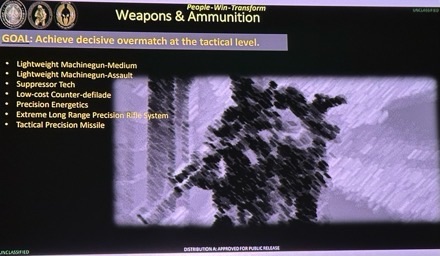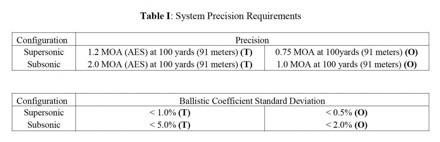
Robotics and in particular developing weapons for unmanned systems has become a focus of DoD. This poster was presented during NDIA’s recent Future Forces Capabilities Conference in Huntsville.

Contact info is on the poster for those interested.
Robotics and in particular developing weapons for unmanned systems has become a focus of DoD. This poster was presented during NDIA’s recent Future Forces Capabilities Conference in Huntsville.

Contact info is on the poster for those interested.

TAPA, Estonia — A U.S. Army-led High Mobility Artillery Rocket System, or HIMARS, live-fire exercise demonstrated the weapons system’s capabilities and enhanced allied interoperability with NATO allies in Estonia, Sept. 27, 2023.
U.S. Army Soldiers with Task Force Voit, assigned to 3rd Battalion, 27th Field Artillery Regiment, 18th Field Artillery Brigade, 82nd Airborne Division, supporting the 3rd Infantry Division, demonstrated M142 HIMARS operations to multinational troops comprising NATO’s enhanced Forward Presence Battle Group Estonia during the exercise at the Estonian Defense Force’s Central Training Area .
The Task Force Voit Soldiers demonstrated the capabilities of the HIMARS to NATO allies while conducting gunnery qualification on the system.

The live-fire demonstration followed months of multinational training, with Estonian troops training on the platform side-by-side with U.S. Soldiers in recent months at Camp Tapa. The training also coincided with Estonian Defense Forces purchasing HIMARS from the U.S. late last year to enhance its military’s operational capabilities.

Maj. Jeremy Rathbun, the executive officer for 3-27th Field Artillery Regiment, said his unit has been cross-training with NATO allies since they arrived in Estonia in June. Some of this training took place in the week prior to the exercise, with U.S. and Estonian troops participating in a simulated contested environment HIMARS training scenario, according to Rathbun.
Rathbun said the live-fire exercise set a foundation for the 3-27th Field Artillery Regiment’s real-world HIMARS capabilities and its readiness for future missions, operations, and exercises with NATO partners.
Staff Sgt. Austin Quiñones, a HIMARS crew section chief with 3-27th Field Artillery Regiment, said the HIMARS training with Estonians and the live-fire exercise increased his Soldiers’ readiness.

“The training value for my crews participating in this exercise, like with my crew specifically, they’ve never been overseas before; this is their first time,” Quiñones said. “They get to see not only what it’s like to be overseas, but helping the allies as well, and seeing what they’re really doing this stuff for. [It’s] not just checking a box that we’re certified — this is real world stuff that we’re doing.”
Quiñones added that the HIMARS training also enhanced interoperability with U.S. allies.
“It’s important to train with our allies, especially when we’re in their country,” Quiñones said. “If something were to happen, we need to be able to work together and efficiently. Even if something doesn’t happen, we’re building these bonds with them. They can see that it’s not just our countries that are allies, we’re allies too, on a personal level.”

Rathbun said the culminating live-fire demonstration shows the U.S. Army’s unwavering commitment to its allies.

“For them to come out here and witness the live-fire and the capabilities of the HIMARS platform is just a demonstration of our commitment to the mission here in Estonia,” Rathbun said.
Task Force Voit Soldiers, who continue to train with NATO allies in the Baltic, support the 3rd Infantry Division-led Task Force Marne. The 3rd Infantry Division’s mission in Europe is to engage in multinational training and exercises across the continent, working alongside NATO allies and regional security partners to provide combat-credible forces to V Corps, America’s forward deployed corps in Europe.
By SGT Cesar Salazar Jr.

FORT CAMPBELL, Ky. — Fort Campbell is testing some of the Army’s newest weapons that has the potential to redefine the capabilities of U.S. infantry forces. Last month Soldiers began field testing the Sig Sauer XM7 Rifle and XM250 Automatic Rifle before the they respectively replace the M4/M4A1 carbine rifle and M249 Squad Automatic Weapon.
The contract, awarded by the U.S. Army, represents a significant investment in enhancing the Soldiers’ effectiveness on the battlefield.
“The XM7 has no fixed front sight post, allowing for full length rail systems and eliminating a heat source that interferes with thermal weapon sights,” said Communications Director Bridgett Siter, Soldier Lethality Cross-Functional Team at Fort Moore. “Both [Next Generation Squad Weapons] were purpose built and integrated to fire with visual and acoustic suppressors to improve survivability and command and control, and they have ambidextrous controls and improved operating systems. The XM250 incorporates a select fire system that allows automatic riflemen to maintain volume of fire in the team while improving their ability to do other tasks in semi-automatic mode.”

The transition isn’t just about the introduction of new firearms; it also signifies a shift in ammunition caliber from the 5.56mm to the more potent 6.8mm. This decision was fueled by the need for ammunition with improved armor-penetrating capabilities, and it is expected to bring about a substantial boost in lethality.
“The move to 6.8mm improves the probability of hitting a target, increases resistance to wind drift and enhances performance against personnel and battlefield barriers,” Siter said. “The NGSW weapons make the [close combat force] Soldier more lethal and survivable.”
These new weapons are not only armed with the common 6.8mm ammunition, which includes government-supplied projectiles and specially designed cartridges, but they also come equipped with the cutting-edge XM157 Fire Control optic. Crafted by Vortex Optics, the optic is equipped with a laser range finder, ballistic calculator, visible and infrared lasers, and even a compass, providing Soldiers with unmatched precision and tactical advantages.
This pivotal shift to an “intermediate caliber” round marks a departure from the Army’s reliance, for more than half a century, on the 5.56mm ammunition. The decision emerged from a comprehensive series of studies conducted, highlighting the limitations in range and energy delivery exhibited by the existing small-caliber squad-level weapons.
These groundbreaking weapons are designated for close combat forces, including infantry, combat engineers, and select enablers like scouts and special operations units. The integration of the 1-8x magnified XM157 fire control, with its advanced computer-assisted rifle optic, extends the weapons’ range, bolsters accuracy, and delivers more formidable hits.

“The Army adjusts tactics, techniques and procedures frequently based on many variables. As the Army transforms the [close combat force] into the future, the concepts of NGSW and other efforts will be integrated to attain and maintain overmatch,” said Siter.
“These efforts combined will give the [close combat force] better ability to detect and engage targets; improved performance of ammunition against personnel and battlefield barriers; better [commad and control] and nighttime fighting capabilities; greater effects against targets in defilade; and more. As we experiment, test, and field systems — through Soldier touchpoints, formal test events, and tactical training — leaders at all levels will develop and adapt [tactics, techniques and procedures] to capitalize on these synergistic gains.”
Fort Campbell Garrison Commander Col. Chris Midberry and Command Sgt. Maj. Chad Stackpolehad experienced the new weapon system firsthand.
“It is an incredible piece of equipment, incredible lethality,” he remarked. Looking ahead to the future, Midberry expressed anticipation about the widespread deployment of this advanced weaponry to units stationed at Fort Campbell. “I’m looking forward to getting it fielded to our units here on Fort Campbell.”
By Kayla Cosby
This seventh poster was presented during last week’s NDIA Future Forces Conference.

Contact info is at the bottom of the poster for thise interested in more info on this capability.
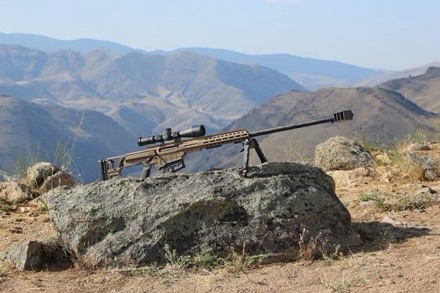
This week, USSOCOM finally issued a contract for the Mid Range Gas Gun – Sniper or MRGG-S (pronounced Margie-Ess at SOCOM), a 6.5 Creedmoor gas gun. However, the barrel is user swappable to 7.62mm as per the requirement.

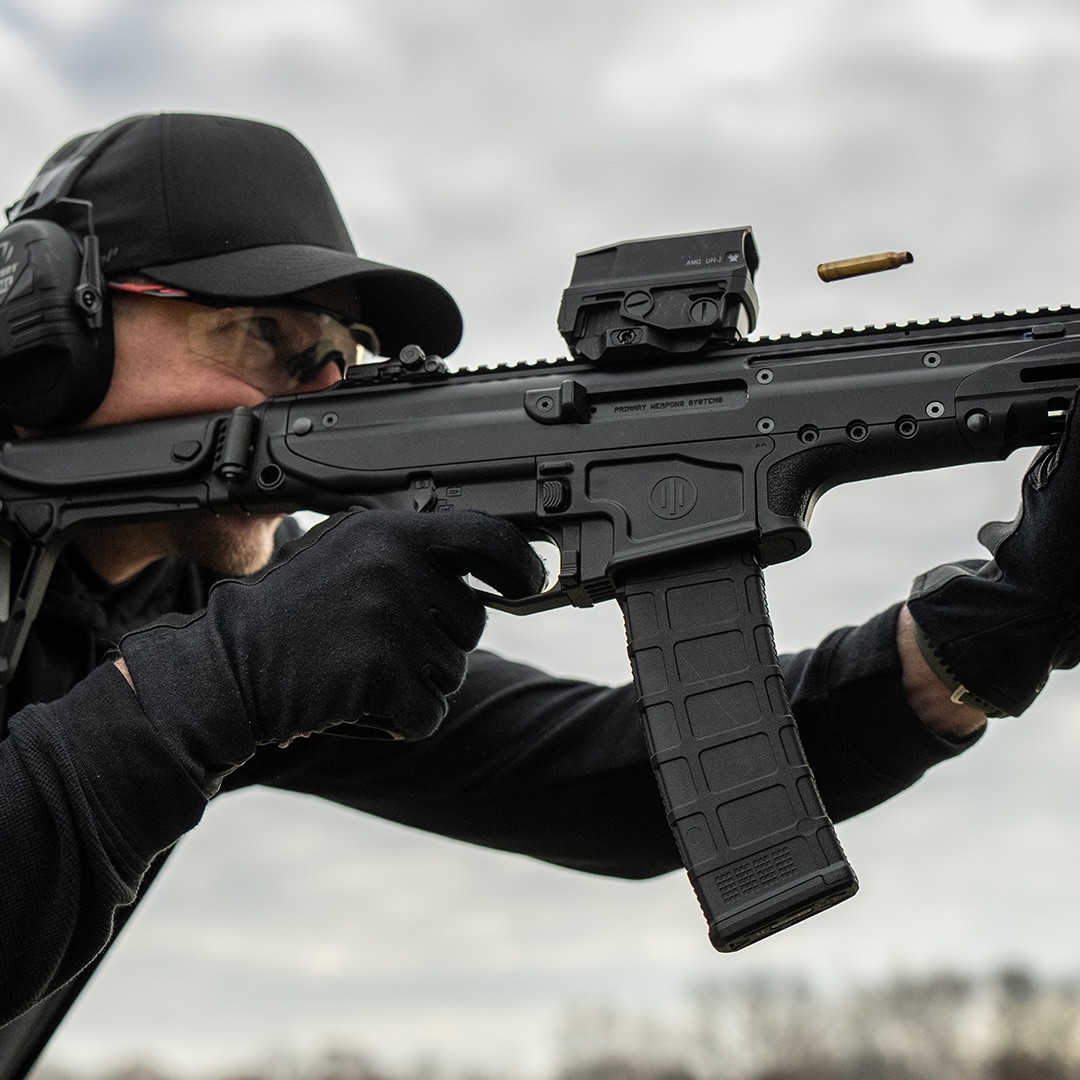
This photo was taken during SOF Week. The program of record rifle features everything you see here except the optic as SOCOM has several optics initiatives under way.
Below is the DoD contract announcement:
Geissele Automatics, North Wales, Pennsylvania, has been awarded an indefinite-delivery/indefinite-quantity contract (H92403-23-D-0003) with a 10-year ordering period and a maximum ceiling of $29,263,029 to procure a new sniper support weapon, designated marksman, rifle taking advantage of advances in ammunition and weapons technology to improve the intermediate range sniper rifle lethality, reliability and performance when suppressed during 50-1,500 meter engagements. This effort will also provide for complete sustainment over the life cycle of the weapon system, including associated spare parts and vendor support, new equipment training, engineering, and travel. Fiscal 2023 procurement funds in the amount of $4,240,133 are being obligated at time of award on the first delivery order. This contract is a follow-on production contract stemming from a competitive prototype agreement and is being awarded in accordance with 10 U.S. Code 4022(f). U.S. Special Operations Command, MacDill Air Force Base, Florida, is the contracting activity.
Although listed on Geissele’s website, the gun is not in stock.

The commercial variant features a 20″ cold hammer forged from CRMOV steel and chrome lined barrel. The barrel is interchangeable between 6.5 Creedmoor and 7.62×51 mm NATO at the user level. The full features are available at the Geissele site.
There is still a program afoot to adopt an Assaulter version of MRGG. It features a shorter barrel and different stock as well as full-auto fire.
SOFWERX, in collaboration with USSOCOM Program Executive Office – Fixed Wing (PEO-FW), Stand-Off Precision Guided Munitions (SOPGM) Program, will host a Collaboration Event (CE) on 2 November 2023 to demonstrate and integrate Air-launched Loiter Munition (ALM) capabilities.
The SOPGM Program Office currently supports Special Operations Forces (SOF) aircrews with short range munitions that are employed directly to known targets, visually identified by the shooter aircraft before launch, and utilize Global Positioning System (GPS) or Semi-Active Laser (SAL) for terminal guidance. The dependencies for this employment method will place SOF Operators at an unacceptable risk during engagements in highly contested areas. New solutions are required to provide identification, tracking, and engagement of moving or mobile targets in a time compressed environment. SOF aircraft must be prepared to efficiently engage moving targets on the time scale it would face during any potential conflict with a well-resourced peer or near-peer adversary attempting an act of aggression. Traditional airborne moving target intelligence, surveillance, and reconnaissance (ISR) sensors currently employed by SOF will be inadequate for such a scenario due to deficiencies in survivability, speed, range, or sensor performance. Considering these capability gaps, USSOCOM is looking for ALMs to decrease the engagement time from minutes to seconds, improve targeting solutions, and increase the survivability of SOF.
Event Objectives
1) Explore potential ALM solutions with Industry, Academia, and Labs based upon an understanding of current SOCOM use cases and operational landscapes for future conflicts. Recent conflicts in Ukraine and elsewhere have demonstrated mature ground-launched loiter munition capabilities. This, combined with the emergence of Air Launched Effects (ALE), should provide a shorter path to viable and mature ALMs.
2) Investigate the trade-space, to include:
a) Endurance, Range, Cruise and Max Airspeeds
b) Payload Capacity
c) Sensors/Seekers, Semi-Active Laser (SAL), Electro-Optical/Infrared (EO/IR), Radio Frequency (RF), Automatic Target Recognition (ATR), Automatic Target Detection (ATD)
d) Command and Control (C2) Data-Link, Telemetry, Transponder, Flight Termination System
e) Counter Detection
f) Warhead and Fusing
g) Employment from various SOCOM aircraft (ex: AC-130J, MQ-9, MQ-1, MH-60, and others)
h) Aircraft Integration standards such as MIL-STD-1760/1553, Universal Armament Interface (UAI), Battle Management System (BMS), Common Launch Tube (CLT), and 14-inch lug racks.
3) Future proof the system for technology upgrades, with considerations for Model Based Systems Engineering (MBSE), Modular Open Systems Approach (MOSA), Weapons Open Systems Architecture (WOSA), and Weapons Government Reference Architecture (GRA), as well as producibility concerns.
4) Identify Risks, Issues, and Opportunities.
Request to Attend NLT 12 October 2023 11:59 PM ET.

FORT SILL, Okla. — The U.S. Army Rapid Capabilities and Critical Technologies Office, known as RCCTO, announced the successful delivery of four cutting-edge Directed Energy Maneuver-Short Range Air Defense, or DE M-SHORAD, prototype systems to the 4th Battalion, 60th Air Defense Artillery Regiment at Fort Sill. Delivering the platoon of prototypes marks a pivotal milestone for RCCTO’s DE M-SHORAD Project Management Office, led by Col. Steven D. Gutierrez, and represents a major landmark accomplishment for the entire team involved.
This momentous delivery coincides with the historic reactivation of the 4-60th ADAR in March of 2022 and the subsequent reactivation of its Delta Battery in June of this year. It signifies the continued smooth transition of the 4-60th ADAR from the 32nd Army Air and Missile Defense Command to the 1st Armored Division, which took place in November 2022.
To prepare for the integration of these groundbreaking laser weapon systems, 4-60th ADAR commenced training in fall 2022. Drivers underwent rigorous training utilizing a surrogate M-SHORAD vehicle specially constructed to replicate the DE M-SHORAD prototype’s size, weight, and power. Additionally, the crews skillfully simulated the execution of the structure of an attack or “kill chain” on the Virtual Crew Trainer Operating Systems provided by the RCCTO.
In March 2023 at Yuma Proving Ground in Arizona, crews from 4-60th ADAR and the DE M-SHORAD prototype team came together to conduct a highly successful capability demonstration during a Live Fire Exercise. The event showcased the remarkable potential of these prototypes and left a lasting impression on participants and viewers.
“The delivery of DE M-SHORAD prototypes to the 4-60th ADAR represents a transformational milestone in the Army’s modernization campaign. It is an achievement that adds what was often thought of as a next generation capability, now,” stated Col. Gutierrez. “These high energy laser systems will be a game-changer on the contemporary battlefield, a critical component of an integrated, layered, and in-depth air missile defense for division and brigade maneuver formations.”
Col. Gutierrez continued, “I couldn’t be prouder of our team. The Directed Energy Project Office took nascent technologies and accelerated their maturation and development to put hardware in the hands of Soldiers in record time. This will prove to be a deterrent as well as an effective weapon system against relevant threat sets that requires minimal logistical support versus traditional and legacy systems.”
Receiving these groundbreaking systems enables the 4-60th ADAR Delta Battery to embark on collective training with kinetic variants of the DE M-SHORAD, as they were concurrently received in June 2023. This opportunity allows for enhanced evaluation of the integration and employment of these systems within the Army’s integrated and layered air missile defense architecture, as well as their structural alignment within division formations.
Lt. Col. Alex Corby, former 4-60th ADAR battalion commander, notes, “The delivery of the DE M-SHORAD prototypes marks an extraordinary advancement in our military capabilities. Today, Delta Battery etches its name in the annals of military history as the Army’s first-ever tactical Directed Energy capable unit. With cutting-edge technology at their disposal, they are pioneers, forging a path towards a more formidable and agile future for our forces.”
Looking ahead, in partnership with the Army Test and Evaluation Command, the Army plans to employ these prototypes in a Soldier Touchpoint in FY24. This assessment will provide invaluable insights into the capabilities and limitations of these cutting-edge systems, aiding the Army in its ongoing quest for innovation and progress.
The RCCTO, alongside its dedicated partners and 4-60th ADAR, remains steadfast in its commitment to innovation and excellence. Together, they forge a path towards a future where cutting-edge technologies like the DE M-SHORAD prototype system pave the way for an enhanced and robust national defense.
By Venetia Gonzales
The Close Combat Lethality Task Force released this photo of Soldiers from the 101st AASLT DIV’s 2nd Battalion, 502nd IBCT, as they received their new XM7s and XM250s last week at Fort Campbell.

The unit will conduct extensive training and testing over the next few weeks. See our update for details.