FirstSpear

Army’s First Female Deep-Sea Diver Reflects on Career

February 5th, 2023

FORT LEE, Va. — Andrea Motley Crabtree’s career can be lauded as a ground-breaking triumph.

Or, it could be noted as a tragic tale of lingering misery, a grim reminder such achievements often come with human tolls.

Crabtree is the Army’s first female deep-sea diver and the first African American female deep-sea diver in any branch of service.

The retired Army master sergeant was the guest speaker at the Martin Luther King Jr. observance Jan. 19 at the Lee Theater. She spoke in front of a few hundred people, including CASCOM and Fort Lee commanding general Maj. Gen. Mark T. Simerly, whom she has known 30 years.

During the speech, the 64-year-old laid bare her fight to pursue what she loved, the forces that undermined her ambitions and the deep, invisible wounds she suffered as a result.

Crabtree said she knew the journey to earning the Army Diver Badge would be fraught with difficulty — a classmate said she “belonged in the kitchen barefoot and pregnant” — but even she could not anticipate the malevolence exhibited by some classmates because she was black and female.

“I expected to go through a lot of hazing when I went through dive school and I did,” she recalled, “and I actually agree with the process. Once that diver badge is pinned on, any diver that sees that pin knows exactly what I went through and what I’m capable of, and I knew the same of them … If they were wearing that pin, I knew they knew what they were doing. That should have been enough. That should tell it all. For me, it never stopped. I had to prove myself over and over and over again every day.”

The Westchester, N.Y., native was the only Black person and the only woman among eight Soldiers and more than 20 others on day one of her 1982 class at the U.S. Navy Deep Sea Diving and Salvage School at Panama Beach, Florida. The three-month program of instruction awarded the Corps of Engineers’ military occupational specialty 00B to Soldiers, who go on to use their training to support underwater maintenance and construction projects amongst other missions.

To graduate, students were required to pass a health and fitness assessment that disqualified many. Other course challenges included requirements to rise from a seated position wearing the 198-pound Mark V deep sea dive suit, walking to a ladder, descending into the water and climbing back up. In the end, Crabtree was one of only two Soldiers and nine Sailors to earn the coveted diver badge.

Although Crabtree had accomplished what no female Soldier had in the predominately white, male career field, there would be no confetti drop. It became clear from her first assignment at Fort Belvoir.

“There were only about 39 divers total in the Unites States Army diving field at that time — all male — and the majority of them were not thrilled to have me,” she said.

Soldiers’ expressions of disapproval included pranks such as turning Crabtree’s air off underwater; placing a dead snake in the freezer; walking around naked following physical training; and “assigning me with what they thought were impossible tasks to complete,” she said.

Nevertheless, Crabtree dove head-first into her duties because the rewards were much greater than the efforts to stop her.
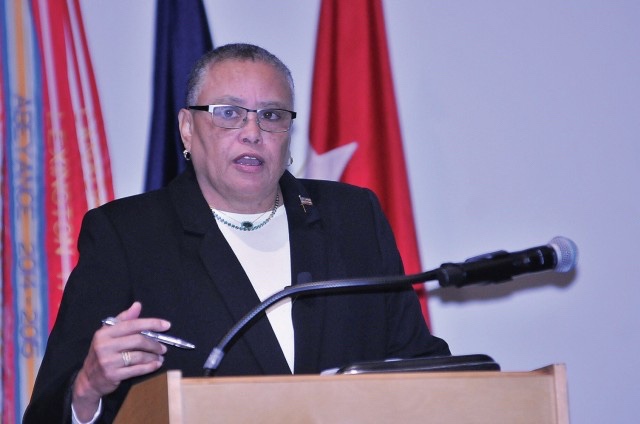
“For the most part, I could put up with it because I was a diver, I was diving, I was doing what I loved and I was learning,” said the Soldier of 21 years and mother of three adult sons. “I was learning to become a better diver. I loved what I was doing.”

Seeing she might rankle the dive community’s elitist culture, Crabtree said she was shipped off to South Korea after about eight months at Fort Belvoir. There loomed one Sgt. 1st Class James P. “Frenchy” Leveille, a renowned master diver who had enough juice to squeeze Crabtree out of the career field. He introduced himself to her via a boisterous, blustering tirade on who was in charge and how things would be run.

“He told me I was no different than any other diver, and if I couldn’t pull my weight, he’d be getting rid of me,” Crabtree recalled. “He went on and on and on and on.”

Leveille defied what many thought was his role in pushing Crabtree out of the career field, she said. Instead, he turned out to be no more or less than a hard-but-fair Soldier who took care of his troops no matter what and who was ready to challenge anyone questioning his leadership.

“He told all the divers that he would decide who dove, when they dove and who they would dive with, and anybody who wouldn’t dive with me wouldn’t dive at all and would be taken off of dive duty,” she added.

Leveille, now 75, said he staked his career on fairness and was not ignorant to Crabtree’s circumstance.

“As far as I was concerned, she was going to get the same treatment and same opportunity as everybody else,” said retired the sergeant major, “and she did very well for herself. She was a good diver, and she was a good Soldier. That’s the way I rated her.”

Leveille’s directive to his troops was clear — he called the shots and nothing was going to happen to Crabtree or anyone else unless he approved. He stood firm on what was right in the face of tense dissent, and the troops eventually fell in line, said Crabtree.

“It was only due to the respect they had for him, that they did as they were told,” she said. “Command climate is everything. It trickles down. No one was going to go against Frenchy.”

Crabtree, who remains friends with Leveille, said she grew under his leadership, learning more about diving than in dive school. Her proficiency eventually became a threat to earning diving’s most coveted honor. In the eyes of diving’s leadership at the time, it was one thing to be a female diver, but it was downright blasphemous for one to sport the Master Diver Badge, said Crabtree.

“I’m not trying to be conceited,” she said, “but I was a good diver. And the senior leadership knew it. They knew if I was allowed to continue, I would’ve made master diver. And they would be damned if that was going to happen on their watch.”

Crabtree at some point concluded leaders bet against her becoming a diver in the first place. When she questioned why she was accommodated prior to training and not so much during the course and afterward, one officer concluded, “We didn’t think you’d make it.”

Crabtree withstood powerful gales of hostility in doing so, but destructive storms were brewing on the horizon. Her orders for advanced schooling in California following the Korea assignment were cancelled; her 300-point Army Physical Fitness Tests were rescored as a male’s; and she later received notice her MOS would be closed to women due to changes in policy.

Deciding some of the actions directed against her were discriminatory, Crabtree filed complaints with her chain of command, the post inspector general, the specialized training branch sergeant major and the Department of the Army inspector general.

“They all wouldn’t help me,” she recalled. “They all said there was nothing they could do. I told my command they had won and requested to be relieved from dive duty. I’ve been angry every day since then.”

That was 1985. Crabtree finished out her career as a signal Soldier. Over the course of leaving dive duty, her indignation has grown into debilitating discontent, consuming every corner of her consciousness.

“That anger has taken its toll on every aspect of my life — on my marriage, my children. It’s affected my finances and, most of all, it’s affected my mental health,” she said.

Crabtree, who was accompanied by her service dog Buddy during the speech, said she could accept people resisting her for breaking new ground but has had difficulty reconciling why she was ill-treated.

“It didn’t bother me when I was the only woman; it didn’t bother me when I was the only Black,” she said. “What bothered me was the way they treated me because I am a Black woman.

“I know what it feels like to be hated because I’m a woman,” continued Crabtree, “and I know what it feels like to be hated because of my race. Yes, I’m sure a lot has changed for the good in the last 25 years, but many of the same issues are still hanging around as well as plenty of new issues that are not being addressed properly …”

Crabtree said a strong, values-driven command climate is a potent antidote for building foundations that are supportive of Soldiers.

“Soldiers will follow without question the leaders who take care of them,” she said to the audience. “Be a good leader. Take care of your Soldiers, and they will take care of you.”

Now living in the Augusta, Georgia area, Crabtree said she has spent considerable time trying to heal as a result of what she experienced in the Army. Engagements such as the Fort Lee MLK event at which she spoke have helped.

After the speech, Crabtree spoke with Soldiers and many were thankful she shared her story. One interaction with an officer was notable and even haunting because it proved to be powerfully restorative, if only in a small way.

“I get a little choked up when I think about it,” said Crabtree later of her exchange with a senior Soldier who had no hand in her ordeal. “He handed me a coin, took off his Sapper Badge (Tab) and apologized for the engineers. He’s an engineer officer. It’s the first apology I received from anybody associated with the Engineer Corps or the military. It’s really had an effect on me.”

The effect of offering glimmers of hope in an otherwise tragic tale of lingering misery.

By Terrance Bell

Army Editor’s note: In the U.S. Army today, males and females can sign up for the dive MOS — re-designated 12B — as well as many others that were only open to males when Crabtree enlisted. They include those in infantry, armor, field artillery and special forces. The U.S. Army also has initiated numerous efforts to ensure all Soldiers are treated with dignity and respect.

HunterSeven Foundation – Heavy Metal Toxicity

February 4th, 2023

HunterSeven Foundation shared this information on Heavy Metal Toxicity.

Heavy metal toxicity isn’t restricted to just Lead. Other metals like Cadmium, Mercury, Chromium, Aluminum, and Uranium are considered toxic at increased doses/exposures as well.

While short term exposures (<24hr.) may cause acute symptoms, such as headaches, nausea, dry throat, cough, and a slight fever, a majority (~75%) of these metals will be excreted. The other 25% circulate in the blood for a month or so before entering soft tissues and in the bone.

Once the heavy metals enter the soft tissue and bones, the ‘acute’ symptoms lessen, as the metals are not ‘active’ in circulation.

On the other hand, those repeat exposures continue the process stated above. Multiple exposures have the same ending.

Heavy metals, like Lead, remain in soft tissue for a few months, whereas it remains in bones for upwards of 25 to 30 years. Cadmium is approximately 38 years.

As those exposures continue, the deposits in the bone continue as well. Slowly increasing more chronic, systemic symptoms, including the ones mentioned on the graphic.

So the question is how can we prevent these chronic issues from occurring?

1. The obvious, do your best to prevent these exposures, meaning using special cleaning wipes, protecting your oral and nasal cavity, shooting outdoors when possible, changing your clothes, not eating / drinking on ranges, etc.

2. If you’ve been exposed for a LONG time, and you are symptomatic, there are specialized providers who can test, assess, and treat chronic heavy metals exposures through ‘chelation’ therapy.

Chelation is tough on the kidneys, so it is ordered and monitored closely by medical staff.

Otherwise, certain foods have been promoted as detoxifying agents, which may be helpful in that acute period (time of exposure -to- 2 months).

Serve and Succeed: The Story of Black Quartermasters in WWII

February 4th, 2023

By Joe Reagan, Director of Military and Veterans Outreach at Wreaths Across America

At the entrance to the U.S. Army Infantry Museum, located in Ft. Moore, GA, (formerly Ft. Benning), visitors begin their journey by walking up a 100-yard ramp that shows the history of the U.S. Army Infantry. It is a symbolic representation of what is ingrained in every infantry soldier – you can have all the tanks, artillery, planes, trucks, and anything else in the world, but in battle the last 100 yards requires a soldier with a gun – the last 100 yards will always belong to the Infantry.


This mindset inspires great pride in Infantry Soldiers, and inspires the admiration of historians, filmmakers, and civilians alike – often lost is the story of those troops who comprise supply lines that often begin in the U.S. and extend thousands of miles to ensure that the infantry has everything it needs to fight their way across that last 100 yards. By some estimates standing behind each infantry soldier are six support soldiers – they are the lifeline and unsung heroes whose efforts are often overlooked. This was especially true in World War II.

World War II saw an increased level of mechanization – no longer did an army run solely on its stomach, fuel and spare parts were needed to keep the machines of war moving and that meant a supply chain extending back to industrial hubs in the United States. When comparing the success of campaigns like D-Day to failures like the German invasion of Russian in 1941 – it was logistics that determined success or failure – even the most tactically proficient army can’t win if it doesn’t have supplies. This required support soldiers to be better trained, and the U.S. Army needed more of them.

Nearly one million black men served in WWII, over 80 percent of them were assigned to logistics and service units, in fact by 1944 almost all black soldiers were assigned to these units. They were responsible for building bridges, roads, and runways, they moved beans, bullets, fuel, and the fallen – their efforts were critical to the allied success and were the embodiment of the modern military saying, “armatures study tactics, professionals study logistics.” To be historically accurate, all black units such as the 92nd and 93rd infantry divisions, the 861 Tank Battalion, and the Tuskegee Airman have impressive and well documented success in combat – the story of black quartermasters is important because it not only embodies the courage and valor of these Americans but demonstrates their ingenuity and how their service led to success on the battlefield and when they came home.

In Europe, allied preparations for the D-Day invasion required a massive movement of supplies, ships would have to be quickly unloaded to make room for the next load – this job fell to the quartermaster corps whose dockhands were primarily black GI’s. In prior conflicts much of this unloading would have been done by hand – a menial task – given the size of the loads, often exceeding 30 tons, it required skilled crane operators who worked non-stop during the 18-month build up to D-Day. In the final hours before the invasion these skilled operators would transfer loads directly from the supply ships to the invasion crafts.

Once the foothold was established in Normandy, the quartermasters were in a race to ensure the front-line troops they needed to continue to push the Nazi’s back. By July of 1944, allied troops were moving east at a rate of nearly 80 miles a week. With sea and rail infrastructure badly damaged – Normandy remained the sole point of entry for supplies entering the European theatre. Allied commanders were determined to prevent a lack of supplies from stopping the advances on the front lines, so they devised an ambitious plan that became known as the Red Ball Express. Nearly 75 percent of the drivers who made up this critical and constantly expanding supply line were black and not all of them were trained to drive trucks, never mind drive trucks filled with ammunition, at night, without headlights working in teams of two to complete the 54-hour round-trip journey. They succeeded in delivering roughly 12,000 tons of supplies per day – for 82 consecutive days.

The quartermasters played a huge role in the Pacific as well. While we typically think about the island-hopping campaign in the Pacific, crucial to the success of these missions was the work of our Chinese allies under Chiang Kai-shek. The Ledo Road, like the Red Ball Express, was a critical supply route connecting U.S. bases in India with allied forces in China – without these supplies Chinese forces likely would have been defeated allowing Japan to focus all its efforts on the Pacific. The building and maintenance of the Ledo Road was overseen primarily by these units. The roughly 1,000-mile road cut through many obstacles including Japanese snipers, dense jungles and of course the southern Himalayan Mountains. Running the route was treacherous, challenging even experienced drivers. Keeping the road open was an equally daunting task that fell on engineering units who would operate bulldozers and other specialized equipment in torrential rain to clear blocked portions of the road or reconstruct parts that washed out.

The legacy of black quartermasters in World War II is one of Service and Success. GI’s who quickly learned how to become skilled crane operators working non-stop to ensure the D-Day invasion had all the supplies needed to succeed. They became expert truck drivers and tirelessly kept the flow of supplies moving to the front during the Red Ball Express. They were engineers and drivers who crossed the Himalayan Mountains to ensure allied forces could keep pressure on the Japanese to allow U.S. forces to succeed in the Pacific. These quartermasters answered the call to serve, while in uniform they succeeded in quickly learning new skills, adapting to challenges, and committing themselves to mission success. After the war their service left an enduring legacy on our military. An after-action review of the war found that the contributions of black soldiers was instrumental to the success of the war effort. The report went on to recommend creating a desegregated force that was fully reflective of American society.

After the war these quartermasters continued to serve and succeed. Men like Medgar Evers, who was a driver on the Red Ball Express, saw what could happen when Americans worked together during the war. He returned home and became a highly influential part of the Civil Rights movement. Others like Harry Bellefonte who dropped out of high school to enlist in the Navy, while not part of the quartermaster corps he served as a crane operator loading and unloading ships. After the war Bellefonte used his GI bill to pay for acting classes in New York. He would find tremendous success on stage. Charity Adams, one of the first black female officers in the military who served in the Quartermaster Corps, continued to serve using her GI bill to earn a degree in psychology and then working at the Veterans Administration. This year the home of the Quartermaster Corps in southern Virginia will be renamed Ft. Gregg-Adams a fitting tribute to the legacy of service and success of the black soldiers who served in World War II.

“What we can learn About World War II From Black Quartermasters?”; Douglas Bristol, Jr.; Aug. 27, 2021; World War 2 Museum.

“Army veteran Medgar Wiley Evers a Foot Soldier in Struggle for Justice”; T. Anthony Bell; Feb. 25, 2020.

“King of Calypso, Harry Belafonte Was WWII Sailor”; David Vergun, DOD News; Feb. 2, 2022.

To Learn more goto www.wreathsacrossamerica.org

Joseph Reagan is the Director of Military and Veterans Outreach for Wreaths Across America. He has almost 20 years’ experience working with leaders within Government, non-profit, and Fortune 500 companies to develop sustainable strategies supporting National Security, and Veterans Health. He served 8 years on active duty as an infantry officer in the U.S. Army including two tours to Afghanistan with the 10th Mountain Division. He is the recipient of multiple awards and decorations including the Bronze Star, Purple Heart, Combat Infantryman’s Badge, and the Ranger Tab. He is a graduate of Norwich University, the oldest private military college in the country.

US Army Air Defenders Complete Sling Load Operations in Romania

February 4th, 2023

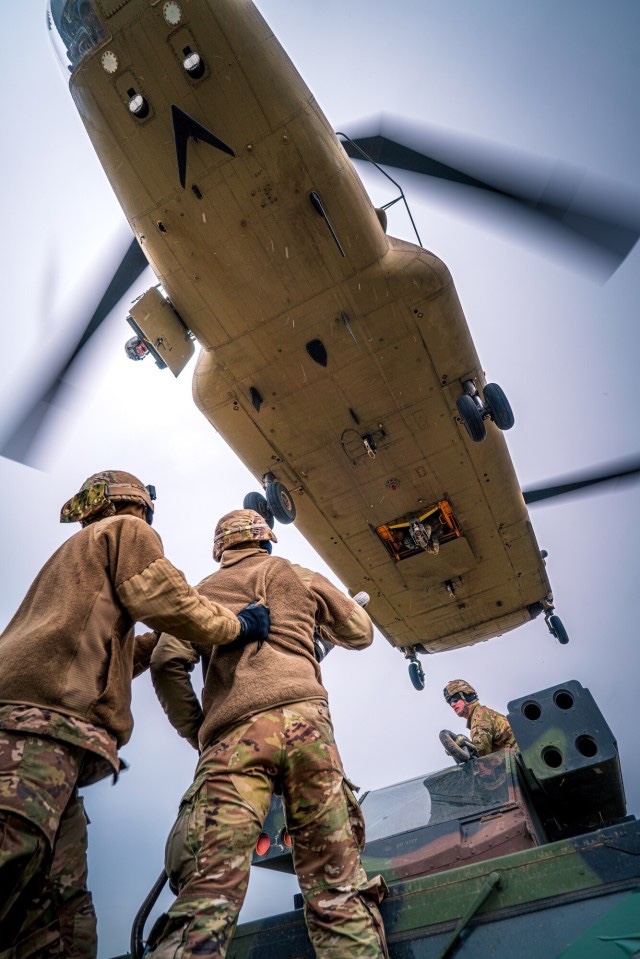
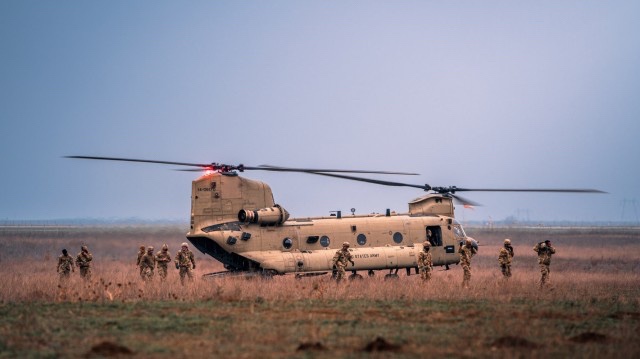
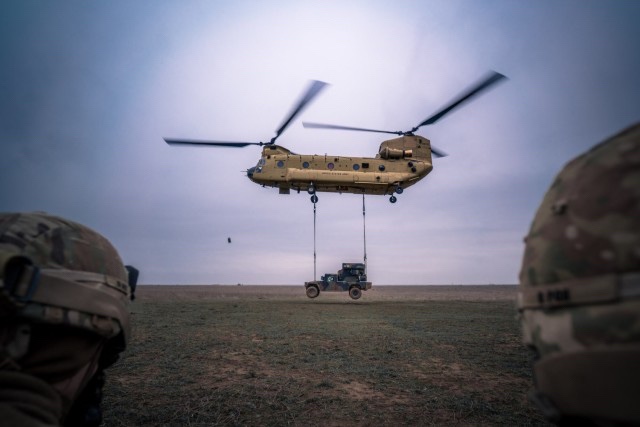
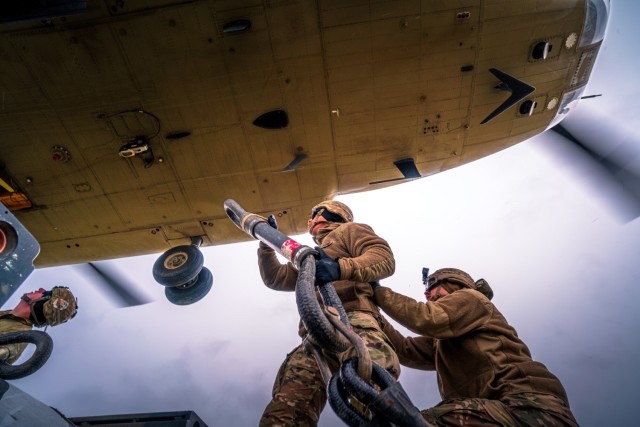
ROMANIA — U.S. Army air defenders from Charlie Battery, 5th Battalion, 4th Air Defense Artillery Regiment completed sling load training at their forward-deployed site near the Black Sea on Jan. 25, 2023. They are deployed in support of NATO’s enhanced Forward Presence Battle Group in Romania.

“Having our Soldiers train on sling load operations not only provides the commander some flexible employment options, but tactically it allows us to conduct some deep maneuver and air assault operations with the units that we are supporting,” said Capt. Nathan Jackson, the commander of Charlie Battery, 5th Battalion, 4th Air Defense Artillery Regiment.

The unit practiced sling loading both the Avenger and the Sentinel A3 radar variant, which is one of the first times this has been done with the Sentinel in theater.

The Avenger weapon system is an all-terrain, all-weather air and missile defense system that is capable against rotary-wing, fixed-wing, unmanned aircraft and cruise missiles while the Sentinel A3 provides early warning detection and identification of aerial threats.

Just days after the Russian invasion of Ukraine began, Avenger short-range air defense Soldiers and equipment from 5th Battalion, 4th Air Defense Artillery Regiment deployed to Romania to help assure our NATO allies that we are committed to our obligations under Article 5, and to deter any potential acts of aggression against NATO by providing short-range air defense of allied forces. Elements of 5th Battalion, 4th Air Defense Artillery Regiment have maintained deployments in Romania, Slovakia and Poland since early 2022.

“I think it’s a great opportunity for air defense Soldiers to see this side of air assault operations, to be able to build and expand their toolkits with these capabilities. I received a lot of positive feedback from the Soldiers as this is something they don’t get to do every day, to help build these capabilities for our future operations,” said Jackson.

Charlie Battery was supported by a Chinook helicopter crew from Bravo Company, 2-501, Combat Aviation Brigade, 1st Armored Division, who are also deployed to Romania as part of Operation Atlantic Resolve.

U.S. Army Europe and Africa has led the Department of Defense’s Atlantic Resolve land efforts by rotating units from CONUS to Europe since April 2014. There are four types of U.S. Army Atlantic Resolve rotations — armored, aviation, sustainment task force, and division headquarters. Rotational units conduct bilateral, joint and multinational training events across more than a dozen countries. Atlantic Resolve is funded by the European Deterrence Initiative, which enables the U.S. to enhance deterrence, increase readiness and support NATO.

By MAJ Robert Fellingham

Fresh Sales Successes for Rheinmetall in Artillery Ammunition: Total Order Value in the Double-Digit Million-Euro Range

February 3rd, 2023

Rheinmetall has just won two new contracts in the indirect fire ammunition domain. An international customer has ordered propellant charges worth around €40 million from Rheinmetall Denel Munition, the Group’s South African subsidiary. Another customer, a NATO state, has placed an order with Rheinmetall Denel Munition for its tried-and-tested Assegai 155mm ammunition. This order is worth around €17 million. The Assegai family of artillery ammunition can be fired from any NATO STANAG-compatible artillery system, including the PzH 2000 self-propelled howitzer.

“We’re very pleased that two customers – including a NATO member state and a non-NATO country – have again placed their trust in our globally proven Assegai indirect fire technology”, says Jan-Patrick Helmsen, managing director of Rheinmetall Denel Munition. “As a systems maker, we work constantly to improve our cutting-edge technologies so that we can provide our customers’ soldiers with the very best, most reliable solutions possible.”

Back in 2019, Rheinmetall succeeded in setting a new maximum range record in South Africa with the Assegai family and other Group products like the new Extended Range Charge from Rheinmetall’s subsidiary Nitrochemie AG. Thanks to the Assegai system approach – from fuse to projectile to propelling charges – long ranges were attained with various artillery systems. A non-NATO 155mm artillery gun with 52 calibre lengths and a 25-litre propelling charge chamber achieved a record range of 76 kilometres.

Rheinmetall Denel Munition is already working on other future artillery technologies. For example, the rocket motor in conventional 155mm Assegai projectiles is being improved. In addition to this, a new development is on the way that will boost the maximum range to over 155 kilometres.

Bridgford to Exhibit at CSAAA

February 3rd, 2023

St-Laurent, QC (Canada) (Feb 2023) – Bridgford Foods Corporation, a ready to eat pocket sandwich line of products distributed exclusively for the Canadian first responders’ market by Hudson Supplies Inc, will be at CSAAA this February 12 & 13 at Calgary Telus Centre in Calgary AB Canada with choice of tasting:

Pepperoni Pizza

French Toast

Apple Turnover

Mexican wBeef Wrap

BBQ Beef

About Bridgford

Bridgford Foods Corporation is a family-controlled business, which is currently traded on the NASDAQ and traces its roots back more than 90 years to 1932 in San Diego, CA.  Uniqueness, high quality, and consistency of products have been the main objectives of Bridgford Foods Corporation.  

The principal product lines include frozen bread doughs; frozen fully baked breads, rolls and buttermilk biscuits; frozen micro-ready sandwiches and meal kits; sliced lunch meats, beef jerky and meat snacks as well as shelf-stable dry and semi-dry sausage products.  Bridgford Foods Corporation is headquartered in Dallas, TX and has a plant in Chicago, IL, one plant in Anaheim, CA, Statesville, NC and has two additional facilities in Dallas, TX.  Bridgford presently employees over 500 people and their products are sold in all fifty states, Canada, and several overseas locations.

The Shelf-Stable Ready to Eat Pocket Sandwich line was originally developed for the United States Military as combat feeding rations for the “Troops On-The-Go”. The Military required a product which had a three-year shelf-life and tasted great on day one or day 1,095. The product was originally tested with the United States Marines during an operation in Fallujah. The product scored exceptionally well and received one of the highest acceptance scores of any new product introduction. The product is currently being incorporated into the “First Strike Ration”, which is being provided to our Military’s Special Operations Forces when they carry out missions in a “Hot Zone”. The entire product line of sandwiches, pizza, and wraps are proudly produced at the Bridgford Statesville, NC production facility. Our ingredients are all sourced from the USA.

The Shelf-Stable Ready to Eat Pocket Sandwiches is produced under a grant of inspection with the USDA/FSIS. The facility is SQF certified and is inspected by the USDA/AMS, FDA, NCDA, VETCOM and a handful of other agencies. All of the meat and poultry is purchased from USDA facilities within the USA and are BSE tested.

The Bridgford Ready to Eat Items weigh 4.4-oz or 3.1-oz, depending upon the variety.  No refrigeration is required, and the product has a three-year shelf-life from date of manufacturing if maintained at 80 degrees of less.  The Sandwiches can be stored consistently at 100 degrees for six months. The product’s shelf-life is attained by a combination of packaging and formulation. The Ready to Eat Sandwiches are a great food solution for the outdoor enthusiast, whether you are camping, hiking, boating, fishing, etc. 

It is also a great solution for household emergency kits as well as for disaster preparedness or disaster relief efforts.

Bridgford currently offers several varieties of sandwiches like BBQ Beef, BBQ Chicken, Sweet & Spicy Chicken, Italian Style, Filled French Toast, Cinnamon Bun, Blueberry, Cherry, and Apple Turnover. Three varieties of plain sliced bread, White, Whole Wheat and Multigrain. Pepperoni and plain Cheese Pizza Slices. BBQ Pork and Mexican style beef and cheese wraps. On average, the sandwiches provide 300 calories per serving and provide 10 to 12 grams of protein.

The Bridgford Ready to Eat Sandwiches was designed to be eaten straight from the pouch; simply tear the pouch open at the tear notches, remove the sandwich, and eat.  The sandwiches may also be heated using an MRE/Flameless Heater; immersing the unopened pouch in boiling water for approximately six minutes or if you have access to electricity, removing the sandwich from its pouch and microwaving on high for 20 to 30 seconds or heating in a toaster oven at 350 degrees for 8 to 10 minutes.

SK Guns Names Peter Grillone Chief Creative Officer

February 3rd, 2023

HAYMARKET, Va. – February 1, 2023 – SK Guns®, the Nation’s only limited-edition, series-driven production manufacturer of collectible firearms, has officially named Peter Grillone as Chief Creative Officer. Grillone will be responsible for leading a team of designers, historians and copywriters on the rapid growth of the SK brand.

“We’re thrilled to announce Peter as our new chief creative officer,” said Simon Khiabani, owner and founder of SK Guns and SK Customs. “Peter brings a wealth of talent as one of the most published media creators in the firearms industry. With his unique style and extensive experience in photography and creative services, I have no doubt he will contribute greatly to the growth of SK Guns and SK Customs.”

Prior to joining SK Guns®, he served as the commercial photographer for a variety of brands in the firearm industry such as Wilson Combat and Nighthawk Custom. With experience in providing creative direction for these brands, Grillone has established himself as one of the top firearm photographers. He is now able to use his past experiences and talented creative eye to manage the creative team at SK Guns.

“I’m extremely honored to serve as CCO of SK Guns,” said Grillone. “These limited-edition, custom firearms continue to create a huge impact on the industry as they illustrate the rich history of historical events, influential leaders, rituals, places and more. I’m excited to use my experience to tell each gun’s unique story and help our creative team continue to grow.”

To learn more about SK Guns®, and SK Customs®, visit skguns.com.    


Mesa Precision Arms Rebrands to Pure Precision

February 3rd, 2023

For Immediate Release – Grand Junction CO – Manufacturer of fine firearms and accessories, Mesa Precision Arms, announces it will rebrand as Pure Precision effective February 1st, 2023.  Rebrand will coincide with an expansion of the manufacturing capabilities and a new line of actions, stocks, and metallic components.

Operating as Mesa Precision Arms since 2017, the name change is necessary to better differentiate company branding within the industry and to create a better foundation of growth. The timing of this name change strategically supports the company’s rapidly expanding footprint and vertical integration of manufacturing capabilities. It is important for Mesa Precision Arms customers to realize that Pure Precision comprises the same people who will continue to manufacture the same (or better) quality products for many years to come.

“As we started expanding our footprint into other aspects of manufacturing and services provided, it became clear that a name to better represent our trajectory was essential. We will always hold Mesa Precision and the Mesa mountains from which it was born close, but Pure Precision is the culmination of who we are. The new brand will represent us well going forward”, said John Hakes, CEO of Mesa Precision Arms.

Companies under the Pure Precison brand:

Pure Precision Rifles
Pure Precision Composites
Pure Precision Finishes

The Pure Precision launch will be kicked off with a precision rifle bundle giveaway which will include a complete light weight Carbon Ascent rifle chambered in 6.5 PRC with Proof carbon fiber barrel, Pure Precision Altitude stock, Trigger Tech Special trigger, and Nightforce NX8 2.5-20x50mm scope provided by The Battalion. To enter the sweepstakes click the link below:

6.5 PRC Ascent Rifle Giveaway

New website is: www.PurePrecision.com