XC3 Weaponlight

Kinect M-Lok QD System of Mounts Adds the Surefire Pro Series Mount

August 23rd, 2021

KDG is proud to introduce a new addition to their patented Kinect M-Lok QD system of mounts, the Surefire Pro Series Mount. This mount works directly with the new Surefire Pro Scout weapons lights. The QD mount allows end users to utilize the swivel design of the Pro Scout lights, and the QD capability of the Kinect M-Lok mounting system. To learn more about this mount or the Kinect M-Lok QD system, visit kineticdg.com.


The mount is available through the KDG website, and authorized distributors and dealers. For more information, visit kineticdg.com or email  info@kineticdg.com.

Instagram: @kineticdevelopmentgroup

Facebook: www.facebook.com/kineticdevgru

Civil Air Patrol Continues Auxiliary Efforts for the Total Force

August 23rd, 2021

In 2015, the Air Force Doctrine Volume 2 “Leadership” was updated to include the Civil Air Patrol as an official Air Force auxiliary, and part of the Total Force.

“All Airmen, including the members of the Civil Air Patrol, are directly responsible for acquiring, delivering, supporting, launching and driving Airpower,” said Air Force Chief of Staff Gen. CQ Brown, Jr. “The Civil Air Patrol has a critical role in attracting and developing innovative individuals who have an interest in science, technology, engineering and mathematics who can help reshape the design of the Air Force in line with the ‘Accelerate Change or Lose’ Action Orders.”

The doctrine lists the active duty Air Force, Air National Guard, Air Force Reserve, retirees, contractors and other groups supporting the Air Force mission as other parts of the Total Force. When acting on behalf of the Air Force, the Civil Air Patrol is aligned under First Air Force.

Since 2020, the auxiliary has logged more than 365 days of continuous support during the COVID-19 pandemic. This included flying test kits, vaccines and critical protective equipment to hospitals, which was the largest coordinated effort since World War II.

The inclusion of the Civil Air Patrol allows for approximately 59,000 volunteers to support non-combat related Air Force missions within the United States. They also act as ambassadors to the Air Force to communities that may not have consistent military exposure. 

“CAP is in over 1,400 communities across the United States and its territories,” said John Russo, the assistant deputy for the Air Force Auxiliary. “In many cases, CAP may be the closest Air Force-associated unit a person interested in aviation and the military comes in contact with.”

The auxiliary members conduct 90% of the inland search and rescue missions in the U.S. tasked by the Air Force Rescue Coordination Center and other agencies, and has nearly 7,000 aircrew members and 33,00 responders trained to the Federal Emergency Management Agency’s standards.

“The Civil Air Patrol bolsters many of the Air Force homeland operations,” Russo said. “The auxiliary flies Air Force-assigned missions at about 1/40th the cost of an active unit. For example, during every hurricane response, the program saves the Air Force $8 million. They are also recognized by the Air Rescue Coordination Center with about 100 lives saved each year.”

The Civil Air Patrol provides intercept training, light cargo transport and aerial imagery for disaster damage assessments to support local, state and national agencies, along with disaster relief.

Another example of how the Air Force Auxiliary provides support to the United States is its ability to be an avenue for a diversity of cadets and students interested in pursuing aviation and STEM-education and careers.

“Civil Air Patrol has cadets as young as 12 years old, and gives youth the chance to learn more about the military and service to their community,” Russo explained. “The Civil Air Patrol has squadrons located in underserved areas, exposing more diverse youth to the opportunities the Total Force offers.”

The Civil Air Patrol provides an Air Force-style organization with values, structure, and focus on aerospace. For young Americans seeking to learn about service, to give back to their community, and explore more about aviation or the military, the Civil Air Patrol is a great opportunity to prepare them for service in the Air Force, Russo said.

Springfield Armory Waterproof Rifle Case

August 22nd, 2021

Measuring 54″X10″ the Springfield Armory Waterproof Rifle Case is made from 500D PVC material paired with weathertight water resistant zippers.

Springfield states the Exterior Shell has a Waterproof Rating of IP 67 (immersion up to 1m). They also claim it will float and since it’s lined with removable foam padding, I don’t doubt it. Just to be safe, I’d just count on this rifle bag being weatherproof rather than waterproof, based on the terminology Springfield uses.

SCUBAPRO Sunday – Self Adjusting Fin Straps

August 22nd, 2021

Self-adjusting fin straps are one of the best ways to don and doff your fins. It also makes it easier to use different size booties. Steel spring straps are a relatively new product for fins. It was invented by cave divers that didn’t want their rubber straps breaking on them in the middle of a cave. So, they took screen door springs and made fin straps out of them. Typical rubber straps also have a chance of breaking at some point. If you are lucky, it will happen when you are putting them on before a dive, not in the middle of one. I had a strap break on me in the middle of a dive. Lucky the suction between the fin and my booties kept the fin on.

I noticed that the fin was slightly lost, but we only had about 30 minutes left in the dive, so I just went with it. I was also lucky that I wanted to drive and hang out and make sure we didn’t run into anything. I did have a very small bungee that I used to hold the fin on. It wasn’t great, and I should have tried it in the pool before I was out doing a combat swimmer dive. It would help if you always carried a spare strap on you. Replacing a strap can be a pain in the middle of a dive. So, as I said before, and I have said this a lot in the articles I post, always practice things before you are in the field.

The self-adjusting strap helps avoid most of these problems. You can find them for almost every type of open-heel fins. The spring straps typically attach using rust-resistant metal hardware. SCUBAPRO Steel Spring Straps are available for SCUBAPRO Jet fins, Twin Jet Max, Veloce fins, and the Seawing Nova fins. They are made from High-grade marine steel. These straps can replace the traditional fin strap with the added benefits of being easier to don and doff, and they will compensate at depth for the pressure underwater. The flexible nature of the spring strap tightens as you descend to compensate for the crush on your boots, meaning your fins stay on at the exact tension you set them to at the surface. They are also a lot less likely to break when entering the water from a helicopter. The Steel Spring strap for the SCUBAPRO Jet fin has also been added to the 2020 Naval Aircrew Systems State of the Art Catalog. This allows SAR swimmers the ability to start using the Spring heels on their fins.

Spring straps are strong springs with a rubber or nylon heel cover for comfort. Instead of adjusting the tension every time you put them on like with traditional straps, you simply stretch the spring over your heel. This decreases your time and energy spent putting on and taking off your fins before and after a dive. Several fins models now come with pre-installed spring straps, but they can also be added to many other fin models.

The other type of self-adjusting straps is made from quality marine-grade bungee designed for years of reliable use. Marine-grade bungee is design and construction, making it ideal for prolonged exposure to saltwater, sunlight/UV radiation, and the general wear and tear that fin regularly go through. A denier Dacron polyester cover is thick and long-lasting, repelling water and resisting abrasion better than nylon.

This bungee is made from a top-quality first extruded latex rubber with a consistent 100% stretch and high modulus that won’t lose its elasticity as many others do. Like the steel spring, the bungee is self-adjusting at depth. Upon ascent, they decompress, keeping fin straps comfortable throughout the dive. Straps have a large rubber finger loop to aid in donning and doffing. Marine bungee is highly reliable and has a very low percentage of breaking. All this being said, I know you can break it if you “test it” to try and prove me wrong. They come standard on the SCUBAPRO Go (Barefoot fin) and GO Sport fins (Boot fin).

They are made from 100% Monprene construction avoids de-lamination problems, broken blades, and torn foot pockets that tend to plague average thermoplastic fins. This enables the Go Sport to stand up to long-term, heavy-duty use.

The Go fin excels in strength, comfort, and convenience, but where it shines is in kicking performance. The Go is built with a 25° pre-angled blade with a central power panel that provides longitudinal rigidity and channeling effect. Power bars on the underside of the rails prevent over-flex; this helps maintain the optimum angle of attack under high load conditions. The result: you get a lightweight fin that delivers speed, power, stability, and maneuverability with a minimum of effort.

The Go Sport fin is genuinely one of the best fins I have ever used. I have giving them away to a lot of people. This is because when I let someone uses them, they usually won’t give them back. I have used them diving in a strong current, swimming over the beach, pushing a ruck, and for surface swims. I have never had a cramp while using them. They are light and do not take up too much room, making them the ideal river and stream crossing fins. I am 6’2″ 225, and they push my big butt around.

In Memoriam – Joe Galloway

August 22nd, 2021

Vietnam War Journalist extraordinaire Joseph Galloway, 79, passed away last week due to complications from a heart attack.

He was a giant among men, unafraid of heading into the fray with the forces he meant to cover. In fact, during the battle of Ia Drang Galloway saved a Soldier’s life and was eventually recognized decades later by the Army with a Bronze Star Medal for his heroism under fire. A witness to the action, it was so intense, he armed himself. During his ceremony, MG Joe Kellogg said of Galloway, ““He was a soldier in spirit, he was a soldier in actions and he was a soldier in deeds.”

He wrote a book about that battle, along with retired LTG Hal Moore entitled, “We Were Soldiers Once … and Young” which was later made into a movie.

He remained a journalist his entire career, covering everything from the local seen to international politics.

May He Rest In Peace.

CSASS Goes To War

August 22nd, 2021

Paratroopers of the 82nd Airborne Division’s Immediate Response Force prepare personnel and equipment for a deployment to the U. S. Central Command Area of Operations. The Immediate Response Force is charged with remaining ready to answer the Nation’s call to deploy to anywhere in the world at a moments notice.

10th SFG(A) Group Foundations Course

August 21st, 2021

The Group Foundations Course is a two-week course designed for Green Berets new to 10th SFG(A). During this two-week process, the new Special Forces Operators learn about the history of the group and cover the fundamentals of being an Original – which includes combatives, pistol and rifle marksmanship, physical fitness and in-depth military vehicle familiarization.

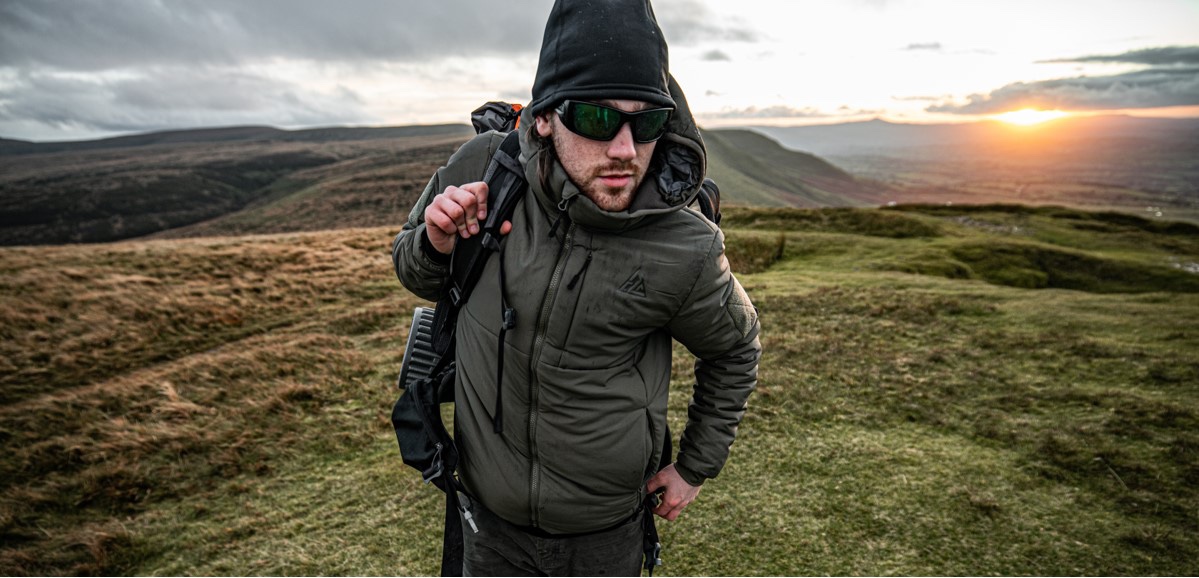
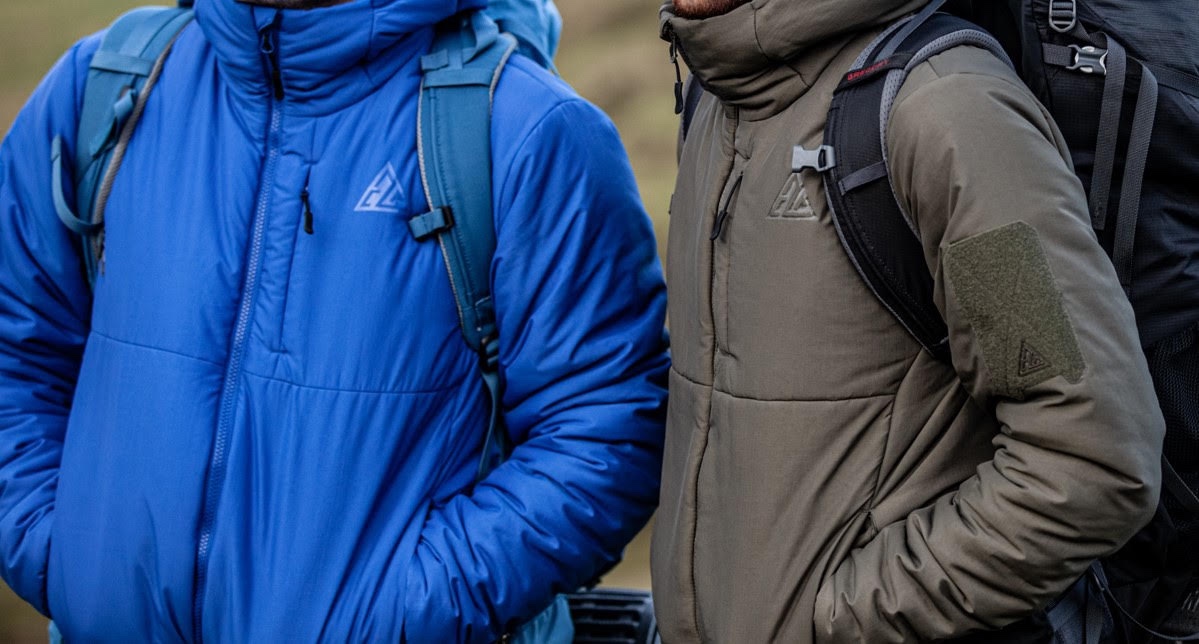
Arctic Environment : Why the Insulation in Your Clothing System is Critical to Mission Success

August 21st, 2021

Cold and Wet

It’s early March 1988 400 miles north of the Arctic Circle, a small team of special operations guys are loading into the torpedo tubes of a diesel submarine to lock out and conduct a mission sinking a small craft. Climbing into the tube taking care not to hit our dive rigs and gear on the lip or rails, we work our way deep into the dark tunnel. Situated in the tube, cold steel closing in all around us the loading door is sealed shut just before the tube fills with arctic water. Pitch black, water fills the tube and pressure equalizes with the outside depth. The exit door opens, and we escape to the open water. The water is cold like an ice cream headache, we can feel it thru our dry suits but there is something else… wetness slowly expanding around my right knee. As the dive continues, I get wetter and wetter…. soon my whole clothing system is soaked with seawater.

This may not be your normal occurrence for the hiker or climber but getting wet and needing to maintain body heat is. This is where a little discussed thermal value comes to play called “Wet CLO”. Let’s segment that a little, starting with CLO. The CLO Value is a measurement of warmth and can be used to characterize apparel items including garments, gloves, headwear and footwear.  1 CLO is the amount of insulation that allows a person at rest to maintain thermal equilibrium in an environment at 21 degrees Celsius or 70 degrees Fahrenheit.  This is said to be equivalent wearing a three-piece business suit with undergarments at that temperature.   When we discuss Wet CLO, we talk about the insulation value degrading because of the water content. That water can come from sweat, rain, condensation, etc.

Let’s look at the insulation spectrum starting with Down which can have a super high Dry CLO value of 1.68, but a super low Wet CLO value, near zero! Please note, that the Dry CLO value is dependent on garment design, and grade and thickness of the Down.  The high differential in thermal capability is problematic to the novice adventurer and most military folks, as they do not get to pick a blue bird day to execute a mission.

Air is one of the best insulators for apparel systems. Most insulated apparel systems work by trapping air next to the wearers’ body. When an insulation becomes wet, the trapped air within the insulation is replaced by liquid water. This can lead to huge decreases in in warmth or CLO value, as air is 24x more insulative than water.  As you can see from the graph below, even a little bit of water pick-up can lead to a huge decrease in CLO value.

If the water in the insulation later freezes, the impact is even worse, as air is 90x more insulative than ice.   On top of decreasing the CLO value of the insulation, water inside insulation can evaporate, causing cooling. This is similar to how our bodies cool ourselves by sweating on a hot day. But in a cold environment, this can be dangerous. In some wet situations, having wet insulation can be worse than having no insulation at all!

Wool has been a baseline measure for years; we have all heard the ‘warm when wet’ moniker. Today’s insulation world has been inundated with synthetics from Primaloft to Thinsulate, Climashield to Gore Thermium. These insulations have been developed to deliver the highest CLO value per gram, be hydrophobic and feel comfortable inside the garment.  Ultimately, the easiest way to reduce the impact of water on the CLO value is to minimize the amount of water that the insulation can pick up in the first place!  This can either be done by changing the properties of the insulation itself (ex., making it hydrophobic), or by protecting the insulation from water exposure (ex. by utilizing a GORE-TEX barrier to prevent rain ingress).  Some insulations, like Gore Thermium, do not pick up any moisture, therefore the CLO value does not change when exposed to water. Thus, minimizing the water content within the insulation is key to effectively closing the gap between wet CLO and dry CLO.

Today, there is no standardized test method for measuring Wet CLO across the outdoor industry, but engineers and scientists are working to characterize this phenomenon as it an important issue in protective apparel. Primaloft has worked on this issue since the early days of PCU and developed Primaloft Gold, their best performing insulation is 97-98% clo value when wet.

Our goal in the military and those that ‘GO’ when duty calls is to build clothing and sleep systems with the narrowest CLO differential dry or wet possible. With a narrow CLO differential, the user can select an insulation for the appropriate temperature range and the moisture content of the clothing system has little to no effect on warmth. USSOCOM made a deliberate decision to build their clothing and sleep systems to complement each other, remain unaffected by moisture and be ‘continuously drying’.

Back to my story, upon exiting the water in soaking wet clothing we had to make every attempt to walk for the next twelve hours to dry the clothing system out as it had little insulation value wet, was hard to dry and made for a challenging night above the Arctic Circle.  No teammates were injured during this event.

How do you know you’re getting wet after 2-3 days in the field? Your sleeping bag just doesn’t fit the same as when you left the house, your jacket is a little heavier, all signs that moisture is in the system, you just don’t feel it next to skin. That moisture degrades your comfort and warmth. So the next time you’re out for a trip weigh your kit before and as soon as you return… check your water weight!

Scott Williams, NSW (ret), Former OIC Naval Special Warfare Center, Det Kodiak, USSOCOM Cold Weather Equipment Project Director. Currently at the Wing Group leading Defense efforts.