FirstSpear TV

TacJobs – CEMA With The 75th Ranger Regiment

May 30th, 2020

The 75th Ranger Regiment has a dedicated Military Intelligence Battalion and recruits MOS 17C, 35N, and 35P to conduct Cyber and ElectroMagnetic Activities in support of the Regiment and other SOF elements.

MOS 17C: Cyber Operations Specialist integrates full spectrum Cyber capabilities to the 75th Ranger Regiment and the special operations community. Cyber Operators specialize in computer network operations, cyber mission management, technology integration, and offensive cyberspace operations.?

MOSs 35N/35P: Signal Intelligence Analyst and Cryptologic Linguist, serve on an Operational Signals Intelligence Teams (OST) specializing in tactical ground SIGINT analysis. OST provides full spectrum signal intelligence to the 75th Ranger Regiment.

In the Army, send your SRB from a .mil account to 75recruit@socom.mil for your application packet.

In AIT, talk to your instructor and get with a Ranger recruiter to sign a volunteer statement to come to Ranger Assessment and Selection Program 1.

Not in the Army, get with your local Army recruiter and ask about an Option 40 contract.

New 5G Switch Provides 50 Times More Energy Efficiency Than Currently Exists

May 30th, 2020

RESEARCH TRIANGLE PARK, N.C. — As 5G hits the market, new U.S. Army-funded research has developed a radio-frequency switch that is more than 50 times more energy efficient than what is used today.

With funding from the Army Research Office, an element of the U.S. Army Combat Capabilities Development Command’s Army Research Laboratory, researchers at The University of Texas at Austin and the University of Lille in France, have built a new component that will more efficiently allow access to the highest 5G frequencies, in a way that increases devices’ battery life and speeds up how quickly users can do things like stream HD media.

Smartphones are loaded with switches that perform a number of duties. One major task is jumping back and forth between different networks and spectrum frequencies: 4G, WiFi, LTE, Bluetooth, etc. The current radio-frequency switches that perform this task are always running, consuming precious processing power and battery life.

“Radio-frequency switches are pervasive in military communication, connectivity and radar systems,” said Dr. Pani Varanasi, division chief, materials science program at ARO. “These new switches could provide large performance advantage compared to existing components and can enable longer battery life for mobile communication, and advanced reconfigurable systems.”

The journal Nature Electronics published the research team’s findings.

“It has become clear that the existing switches consume significant amounts of power, and that power consumed is useless power,” said Dr. Deji Akinwande, a professor in the Cockrell School of Engineering’s Department of Electrical and Computer Engineering who led the research. “The switch we have developed can transmit an HDTV stream at a 100GHz frequency, and that is an achievement in broadband switch technology.”

The new switches stay off, saving battery life for other processes, unless they are actively helping a device jump between networks. They have also shown the ability to transmit data well above the baseline for 5G-level speeds.

Prior researchers have found success on the low end of the 5G spectrum – where speeds are slower but data can travel longer distances. This is the first switch that can function across the spectrum from the low-end gigahertz frequencies to high-end terahertz frequencies that could someday be key to the development of 6G.

The team’s switches use the nanomaterial hexagonal boron nitride, a rapidly emerging nanomaterial from the same family as graphene. The structure of the switch involves a single layer of boron and nitrogen atoms in a honeycomb pattern sandwiched between a pair of gold electrodes. Hexagonal boron nitride is the thinnest known insulator with a thickness of 0.33 nanometers.

The impact of these switches extends beyond smartphones. Satellite systems, smart radios, reconfigurable communications, and Internet of Things, are all examples of potential uses for the switches. In addition, these switches can be realized on flexible substrates making them suitable for Soldier wearable radios and communication systems that can benefit from the improved energy efficiency for longer battery life with faster data speeds as well as other defense technologies.

“This will be very useful for radio and radar technology,” Akinwande said.

This research spun out of a previous project that created the thinnest memory device, also using hBN. Akinwande said sponsors encouraged the researchers to find other uses for the material, and that led them to pivot to RF switches.

In addition to the U.S. Army, support through a Presidential Early Career Award for Scientists and Engineers, the U.S. Office of Naval Research and The National Science Foundation’s Engineering Research Center funded the research. The Texas Nanofabrication Facility partly fabricated the switch and Grolltex, Inc., provided hBN samples.

By U.S. Army CCDC Army Research Laboratory Public Affairs

Kopfjäger Releases the Small Diameter Rifle Adapter for the Reaper Grip

May 30th, 2020

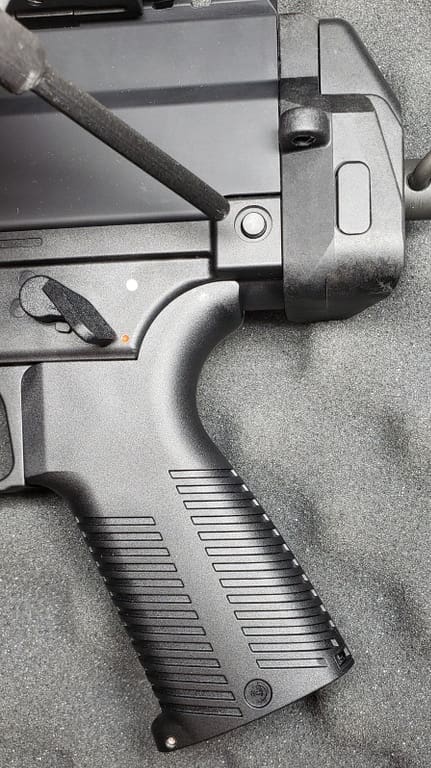
(MANSFIELD, TEXAS) – The creators at Kopfjäger are excited to announce the release of the SDR (small diameter rifle) grip! This durable silicone grip can be attached to Kopfjäger’s classic Reaper Grip to accommodate smaller-sized rifles such as youth rifles, air rifles and pellet guns. When the SDR grip is doubled, it can fit stocks down to .25 inches! Now, youth and other small-rifle shooters can enjoy the confidence and stability of a classic Reaper Grip from Kopfjäger.

Features:
Ø  Fits stocks down to 0.85 inches
Ø  When doubled, fits stocks down to 0.25 inches
Ø  Hardy Silicone Construction
Ø  Weighs 4.3 ounces

Visit www.kopfjagerindustries.com


Gray Bearded Green Beret – E&E Kit

May 29th, 2020

Contents:

-6 piece Titanium Lock Pick Set
-6?, 200lb. break strength kevlar escape cordage
-Covert handcuff key made of plastic
-Micro-clip handcuff key, plastic
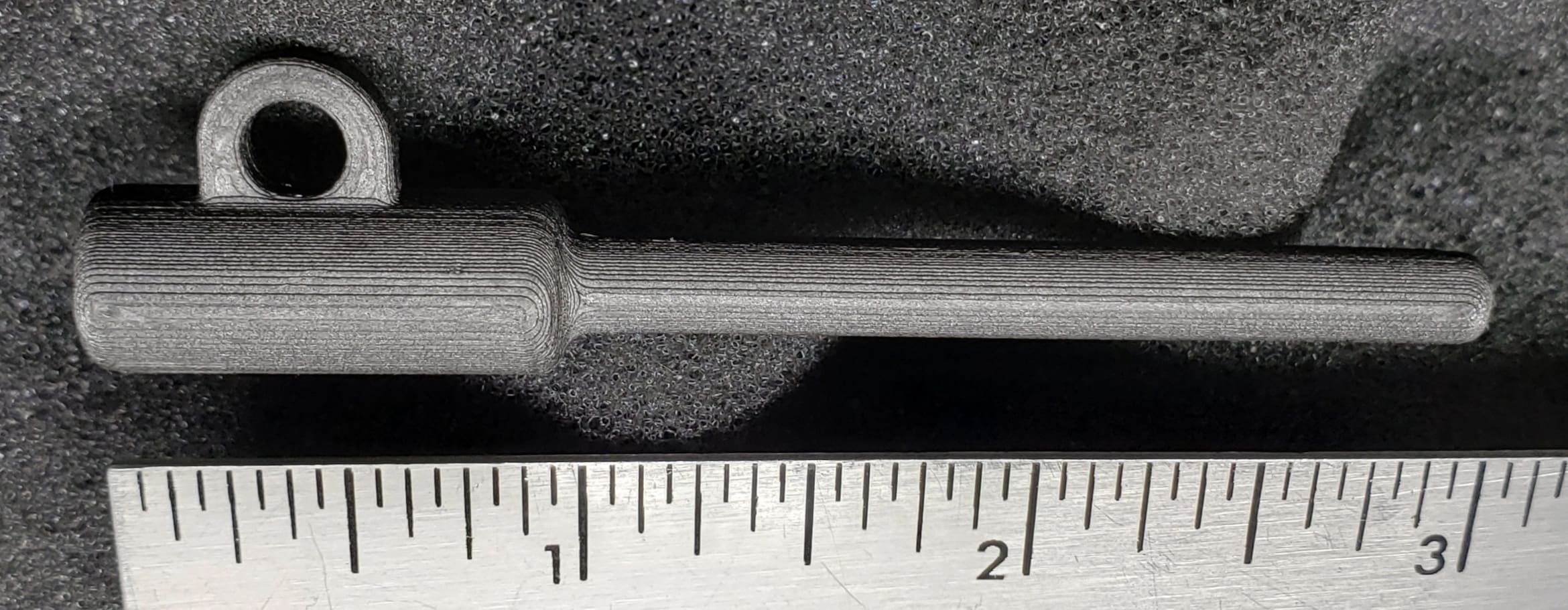
-Escape Capsule – Size: 0.76” length x 0.26“ diameter. Weight: 0.01 oz.
-Bypass Knife Tool – Works on most file cabinet locks, many basic padlocks, and even Darby style handcuffs
-Mini Shim Decoder – Works on some padlocks, handcuffs and zip-ties
-Handcuff Shim

graybeardedgreenberet.com/product/escape-and-evasion-kit

The Volume Soft Lock from MC Kydex

May 29th, 2020

The Volume Soft Lock was developed to work with one handed operation and have less wear and tear on your volume dial from it being torqued up and at an angle. This lock simply slides in either direction unlock or lock your volume adjustment. The lock will also work with their Messenger Radio Carrier and the R.A.C.C. (coming soon).

Order at www.mckydex.com.

Air Force Delays Mandatory Wear-Date for OCP items, 2PFDU

May 29th, 2020

JOINT BASE SAN ANTONIO-RANDOLPH, Texas (AFNS) —

In an effort to reduce unnecessary stress on Airmen and Space professionals during COVID-19 restrictions, several uniform changes scheduled to become mandatory for the Operational Camouflage Pattern and Two-Piece Flight Duty Uniform (2PFDU) on June 1, have been delayed to Sept. 1.

The changes for each uniform are detailed in Air Force Instruction 36-2903, “Dress and Appearance of Air Force Personnel.” Mandatory wear of the Operational Camouflage Pattern Uniform remains April 2021.

The changes that become mandatory on Sept. 1 for the OCP include:

– Officer rank insignia will be spice brown (exception: first lieutenant and lieutenant colonel rank insignia will be black).

– The U.S. flag patch will be mandatory and the only authorized color is spice brown (cloth). Airmen will wear the flag while in garrison and deployed. Infrared U.S. flags are not authorized.

– The authorized T-shirt color will be coyote brown (listed as Tan 499 per AAFES nomenclature) only. If purchasing coyote brown shirts from outside retailers, uniformed members should ensure the color matches the authorized coyote brown color (Tan 499).

– The authorized socks will be DLA-issued green socks or coyote brown only.

– The authorized boot color will be coyote brown only. The two exceptions are for Airmen with a medical condition as determined by medical authorities at a civilian or military treatment facility and approved by the commander, and those who must wear black combat boots in industrial areas.

The changes that become mandatory on Sept. 1 for the 2PFDU include:

– All mandatory wear badges must be in place.

– The cloth U.S. flag will be the spice brown color only.

– The authorized socks will be DLA-issued green socks or coyote brown only.

– The authorized boot color will be coyote brown only.

– The only authorized color for thermal undergarments will be coyote brown.

For more information, please review Air Force Instruction 36-2903, “Dress and Appearance of Air Force Personnel,” or visit www.afpc.af.mil/Career-Management/Dress-and-Appearance.

By SSgt Sahara L. Fales, Air Force Personnel Center Public Affairs

USAF Holds Basic Military Training at Second Location, Keesler AFB

May 29th, 2020

The US Air Force has extended Basic Military Training at a secondary location until the end of COVID-19 surge operations after a successful proof-of-concept trial run at Keesler Air Force Base, Mississippi, which began April 7.

Beginning June 2, the next Keesler BMT class will be held there under Detachment 5 of the 37th Training Wing at Joint Base San Antonio-Lackland, Texas.

USAF BMT also supports the US Space Force with basic training for its new enlisted recruits in addition to those from the active USAF, Air Force Reserve and Air National Guard.

Until the end of the surge, 60 new recruits from across the total force will undertake six weeks of BMT. The shortened requirement, down from 8 1/2 weeks, is due to the physical layout of the BMT area, the small number of recruits and a surge schedule, which trains Airmen 10 hours per day, six days a week, versus the notmal eight hours per day.



“This capability was a deliberately-developed option to disperse the delivery of BMT during contingencies to provide surge capacity and introduce agility in the training pipeline construct,” said Maj Gen Andrea Tullos, 2nd Air Force commander. “This move also helps ensure the health and safety of our trainees and instructors by allowing proper safety controls, like physical distancing and deep cleaning.”

The location was chosen because Keesler AFB is home to the 81st Training Wing where so many technical training schools exist. Newly accessed AF trainees won’t be exposed to potential infection during travel from BMT to tech school. Consequently, most of those attending BMT at Keesler will be those who will remain at the base for further training.

Although Keesler AFB BMT is a contingency option and is not designed to be implemented longer than 180 days, it may be kept in place for longer periods, if required.

PEO Soldier’s Product Manager Soldier Protective Equipment Executes Change of Charter

May 29th, 2020

FORT BELVOIR, Va. – Product Manager Soldier Protective Equipment (PdM SPE) held a change of charter to welcome Lt. Col. Stephen Miller as the new leader of the organization and recognize Lt. Col. Ginger Whitehead for her leadership, at Fort Belvoir, on May 27th.

A product team of Program Executive Office (PEO) Soldier’s Soldier Survivability (SSV) program office, SPE is charged with improving the lethality and mobility of the force by optimizing Soldier protection and effectively serving as the Lifecycle Manager for all personal protective equipment (PPE).

“I truly look forward to leading and working with the SPE team as we continue to improve Soldier lethality and survivability, by focusing on the key priorities that Ginger set out,” said Miller. “I intend to continue providing the right capabilities to the right Soldiers at the right time.”

Miller arrives at PEO Soldier after serving as an Army Acquisition Fellow, assigned last year to Microsoft as part of the Training With Industry Program. His other recent assignments include positions in the offices of the Assistant Secretary of the Army for Acquisition, Logistics, and Technology (ALT) and the Deputy Assistant Secretary of the Army for Plans, Programs, and Resources. Miller has been a member of the Army Acquisition Corps since 2009 and served as the Chief of Soldier Systems at the Maneuver Center of Excellence (MCoE) at Fort Benning, Ga. Many of the capability requirements for which he was responsible for at MCoE are for the programs being developed and procured now at PdM SPE. During his career, Miller deployed twice to Afghanistan and once to Iraq.

Miller said that SPE will “continue to pursue innovative solutions as routine practice.”

Miller’s portfolio now includes the Soldier Protection System (SPS), which includes the Next Generation Integrated Head Protection System (NG IHPS), Vital Torso Protection (VTP Shooter’s Cut), and the Torso and Extremity Protection (TEP). He is also responsible for the team that provides quality and testing support of all legacy Personal Protective Equipment (PPE) items as well as the Next Generation Advanced Bomb Suit (NGABS).

Col. Stephen Thomas, Project Manager Soldier Survivability (PM SSV) hosted the change of Charter. He highlighted Whitehead’s achievements during her tenure and presented her with the Meritorious Service Medal before the official change of charter.

“When I think of Ginger, I think of the word ‘trailblazer,’ just because of the numerous things she’s accomplished during her time as product manager,” said Thomas.

Whitehead’s tenure featured progress on the production of the NG IHPS, which provides greater levels of protection and interoperability with a range of night-vision devices for the wearer. The office further developed components of the SPS, the Army’s next generation and first ever-complete capability set of body armor, which includes a Blast Pelvic Protector (BPP), gender-specific Ballistic Combat Shirts (BCS), and a Modular Scalable Vest (MSV) that is lighter in weight than any of its predecessors and provides superior scalable protection and flexibility. The BPP, BCS and MSV are all subsystems of the of the SPS TEP.

“What we have today is lighter, better, more capable body armor that is light years ahead of anything we had in the last 10 to 15 years,” said Whitehead.

Recapping her time as product manager, Whitehead said one her proudest moments was participating in a PPE return ceremony. Last year, SPE presented Staff Sgt. Bryan McQueen the Enhanced Combat Helmet that stopped a 7.62x54mm round from fully penetrating the helmet’s shell, saving the Soldier’s life. She described it as “a powerful moment that underscores the importance of what we do on a daily basis.”

“We recognize that success is never owned, it is merely leased, and the rent is due daily,” said Whitehead.

Whitehead also thanked the Soldiers and civilians of SPE and said they will drive on with the mission in the years ahead.

“You are assuming responsibility of a phenomenal team that will stop at nothing to support the warfighter,” she told Miller.

Whitehead will next serve as Senior Acquisition Officer and Acquisition Branch Chief with the Army Futures Command at Fort Leonard Wood, Mo.

“I am sure [she will] take the same level of tenacity and ‘get the job done’ as she has here as the product manager,” said Thomas.

Story by Fred Shear
Photo by Courtney Bacon