SIG SAUER - Never Settle

Has The Army Already Made Their Next Generation Weapons Decision? Winchester Selected To Operate Lake City Army Ammunition Plant

September 28th, 2019

Yesterday, the Department made this announcement:

Olin Winchester LLC, East Alton, Illinois, was awarded a $28,313,481 fixed-price with economic-price-adjustment contract for production of small caliber ammunition and the operation, maintenance, and modernization of the Lake City Army Ammunition Plant. Bids were solicited via the internet with three received. Work will be performed in Lake City Army Ammunition Plant in Independence, Missouri, with an estimated completion date of Sept. 27, 2029. U.S. Army Contracting Command, Rock Island Arsenal, Illinois is the contracting activity (W52P1J-19-F-0742).

Although it’s a very significant win for Olin Winchester, it has even larger implications for the Army’s future.

Lake City Army Ammunition Plant is a government owned, contractor operated facility. Most of the US military’s small arms ammo comes from that plant. It is currently run by Northrop Grumman, but that is all about to change.

Interestingly, Winchester is also teamed with AAI Textron on the US Army Next Generation Squad Weapons Program. For NGSW the Army seeks new ammunition, carbine, and automatic rifle to replace the current 5.56mm NATO M4A1 and M249 Squad Automatic Weapon. Although, at its very heart, NGSW is an ammunition development program. The ammunition will deliver the effects the Army is seeking as it retools to fight a near-peer competitor.


While one would argue that the government should have selected a cartridge and then challenged industry to build the best weapons to fire it, that’s not what they did. In NGSW, they gave industry a performance envelope and specified a caliber, offering 6.8mm projectiles to industry. Seeking performance similar to a .270 Win Short Mag, and instructing then to shed 20% weight over existing ammunition, they left the cartridge design to industry.

As the Army enters phase two of NGSW, they have down selected to three competing systems: AAI Corporation Textron Systems teamed with Olin Winchester for ammunition, General Dynamics OTS teamed with True Velocity for ammunition and SIG SAUER with their own ammunition solution. Of these, both Textron and GD’s solutions rely on polymer cases. Only SIG uses a metal case and it is a three-piece design combining steel and brass.

Here are the three competing ammunition offerings:

AAI Textron/Olin Winchester

General Dynamics OTS/True Velocity

SIG SAUER

Due to the costs associated with a wholesale change in both weapons and ammunition, the Army is understandably concerned with controlling costs by owning Intellectual Property associated with these designs. They are going to want as much of the data rights as possible transferred to them. Imagine the huge advantage Team AAI Textron will now have during final negotiations because their ammunition producer is running the factory it will be produced in.

One might argue that this contract award was made in a vacuum. After all, Program Executive Office Soldier owns the NGSW program and Joint Program Executive Office Armaments and Ammunition owns Lake City. But thanks to the Army’s recent Futures Command reorganization, both PEOs have representatives on the Lethality Cross Functional Team and are fully aware of one another’s activities, combining efforts of many programs, with special emphasis on NGSW. Remember, it’s really an ammunition program.



What’s more, LCAAP is old. It requires constant upkeep and the transition to a new ammunition for NGSW will require an entire new wing of the plant to be manufactured. Estimates are rumored to be around three-quarters of a billion Dollars to accomplish these capital improvements. If you look at the award, Winchester will hold the contract for the next decade. The Army plans to start rolling out NGSW in 2022.

The implications are of the value of producing the ammunition are even larger, as both Air Force and Marine Corps have signed on to NGSW. Naturally, United States Special Operations Command is also monitoring the program. One would expect close allies to join the US, once systems are fielded and show promise. All told, they are going to purchase a lot of ammo over the life of this program.

To be sure, Winchester is a capable company, currently selected to produce the new 9mm ammunition for Modular Handgun System. their ability to produce quality, safe and accurate small arms ammunition is without doubt. What’s interesting is their teaming with AAI Textron on the Case, Telescoped round which is unlike any currently fielded small arms ammunition. Not only is the design significantly different, resembling a shotgun round loaded with a sabot, but it requires an entirely new weapon operating system, with a rotating breech and the ammunition, both projectile and cartridge moving forward through the works, akin to an assembly line. Once again, they will have a serious leg up, knowing how to produce this unique cartridge and running the plant it will be built in, if CT ammunition is selected, of course.

After all, munitions are the gift that keeps on giving. An army will only buy so many weapons, but the munitions it fires are expendable. They’ve got to constantly be purchased. So is this contract award an indication of the shape of things to come, in the form of Case, Telescoped? Or, is it a guarantee that Winchester comes home a winner on NGSW, no matter which ammunition type is selected by the Army?

NGSW is an ammunition program, with weapons thrown in because something has to shoot it. The Army has already decided who will make that ammo. Now, they’ve got to decide what it will look like.

Army Project Brings Quantum Internet Closer To Reality

September 28th, 2019

RESEARCH TRIANGLE PARK, N.C. — A U.S. Army research result brings the quantum internet a step closer. Such an internet could offer the military security, sensing and timekeeping capabilities not possible with traditional networking approaches.

The U.S. Army’s Combat Capability Development’s Army Research Laboratory’s Center for Distributed Quantum Information, funded and managed by the lab’s Army Research Office, saw researchers at the University of Innsbruck achieve a record for the transfer of quantum entanglement between matter and light — a distance of 50 kilometers using fiber optic cables.

Entanglement is a correlation that can be created between quantum entities such as qubits. When two qubits are entangled and a measurement is made on one, it will affect the outcome of a measurement made on the other, even if that second qubit is physically far away.

“This [50 kilometers] is two orders of magnitude further than was previously possible and is a practical distance to start building inter-city quantum networks,” said Dr. Ben Lanyon, experimental physicist at University of Innsbruck and the principal investigator for the project, whose findings are published in the Nature journal Quantum Information.

Intercity quantum networks would be composed of distant network nodes of physical qubits, which are, despite the large physical separation, nevertheless entangled. This distribution of entanglement is essential for establishing a quantum internet, researchers said.

“The demonstration is a major step forward for achieving large scale distributed entanglement,” said Dr. Sara Gamble, co-manager of the Army program supporting the research. “The quality of the entanglement after traveling through fiber is also high enough at the other end to meet some of the requirements for some of the most difficult quantum networking applications.”

The research team started the experiment with a calcium atom trapped in an ion trap. Using laser beams, the researchers wrote a quantum state onto the ion and simultaneously excited it to emit a photon in which quantum information is stored. As a result, the quantum states of the atom and the light particle were entangled.

The challenge is to transmit the photon over fiber optic cables.

“The photon emitted by the calcium ion has a wavelength of 854 nanometers and is quickly absorbed by the optical fiber,” Lanyon said.

His team therefore initially sent the light particle through a nonlinear crystal illuminated by a strong laser. The photon wavelength was converted to the optimal value for long-distance travel — the current telecommunications standard wavelength of 1,550 nanometers.

The researchers then sent this photon through the 50-kilometer-long optical fiber line. Their measurements show that atom and light particles were still entangled even after the wavelength conversion and the distance traveled.

“The choice to use calcium means these results also provide a direct path to realizing an entangled network of atomic clocks over a large physical distance, since calcium can be co-trapped with a high quality “clock” qubit. Large scale entangled clock networks are of great interest to the Army for precision position, navigation, and timing applications,” said Dr. Fredrik Fatemi, an Army researcher who also co-manages the program.

Story by U.S. Army CCDC Army Research Laboratory Public Affairs

Photo courtesy IQOQI InnsbruckHarald Ritsch

You Never Know Where They’ll Show Up

September 28th, 2019

These were taken at CFB Borden in Ontario during an RCMP Carbine Instructor Course.

Kit Badger – Squad Goals

September 27th, 2019

Varusteleka – Särmä TST M19 Combat Boots, Manufactured by Lowa

September 27th, 2019

Varusteleka just launched the new Särmä TST M19 Combat boots. These boots are a joint development between Varusteleka and Lowa. The aim was to create a robust combat boot, which works well in various Nordic climate conditions, maintains a grip on snow and works well in woodland type of terrain.

Features:

• Gore-Tex membrane
• Thick nubuck leather and Cordura
• Injection molded EVA multicomponent sole
• Speed lacing
• Weight approx 1430 grams (3.15 lbs) for pair
• Manufactured in the EU from EU materials

www.varusteleka.com/en/product/lowa-z-8n-gtx-sarma-tst-m19-combat-boots

UPC4 Plate Carrier Adapter System Available Now

September 27th, 2019

Modular, Adaptive, Quick Release Pack to PC Attachment

EEB960AE-2C77-4D60-A2EA-D19507C7AD79

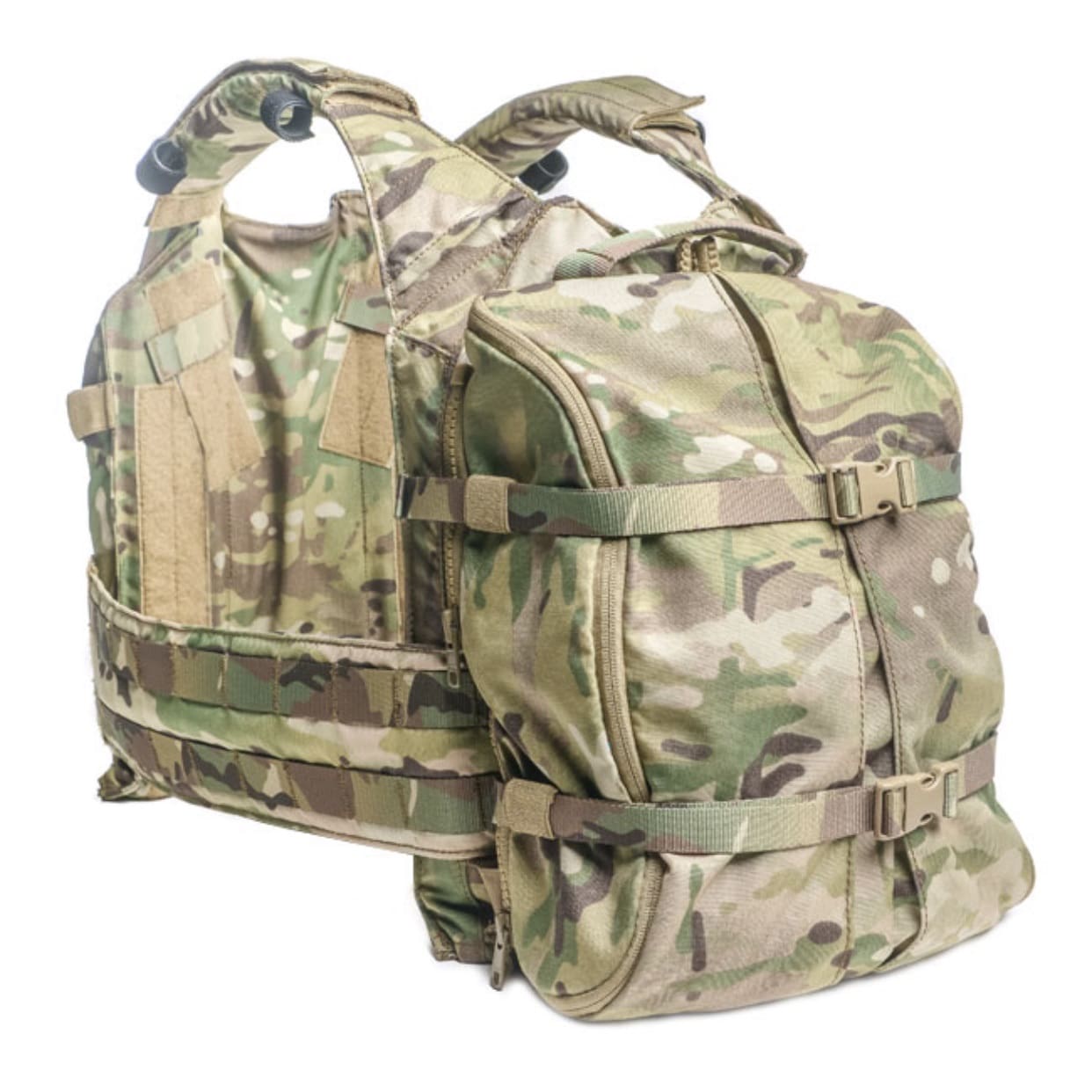
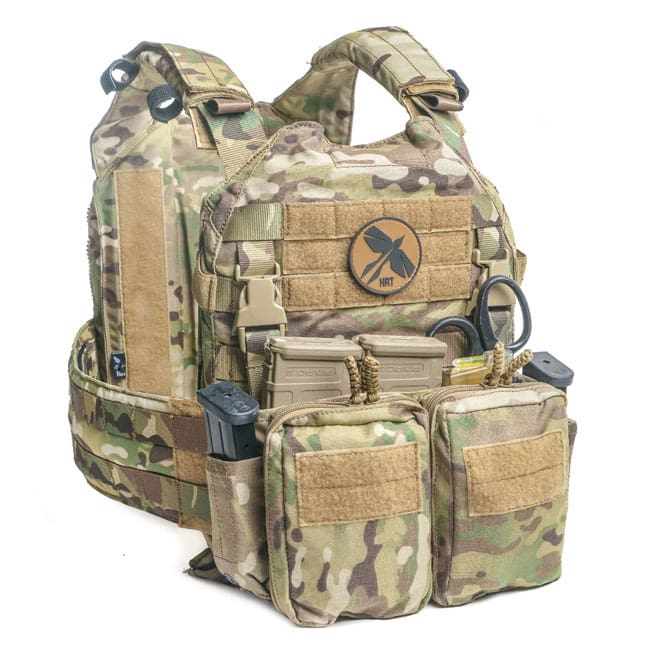
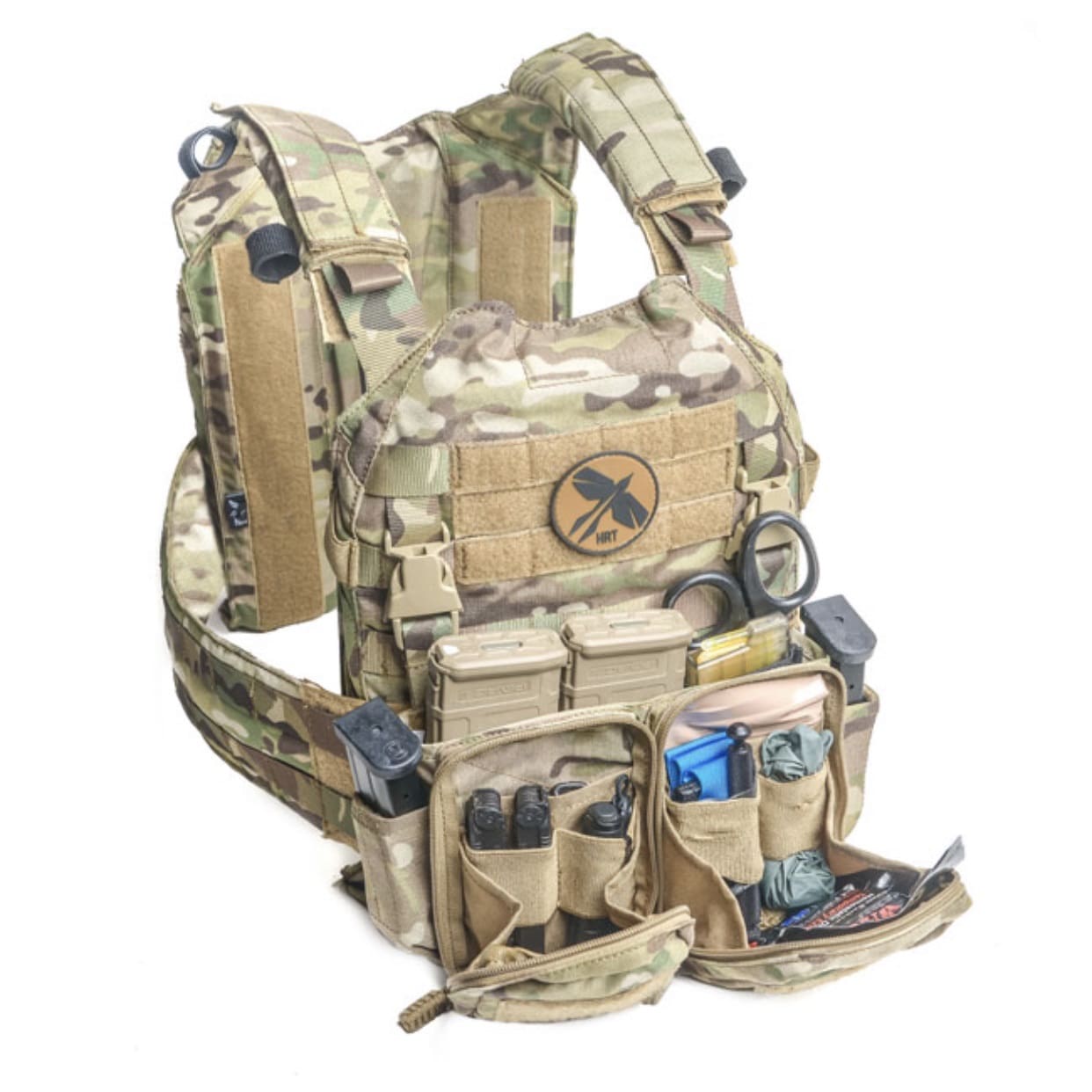
Due to user requests for a universal, quick detach/reattach pack to plate carrier solution, the UPC4 Plate Carrier Adapter System is available for any PALS equipped pack or PC.

September 24, 2019 (Birmingham, AL) — Emergent Rescue Systems, LLC today announced the release of its newest innovation, the UPC4 Plate Carrier Adapter System. The UPC4 was developed initially for HRE Pack attachment to the most common industry PCs.

The end result, however, is a modular system which adapts to any PALS/MOLLE equipped surface. Additionally, its adjustable quick release points allow fast detachment and simple reattachment.

The UPC4 is a full solution system with modular components.

Shoulder Quick Release Straps

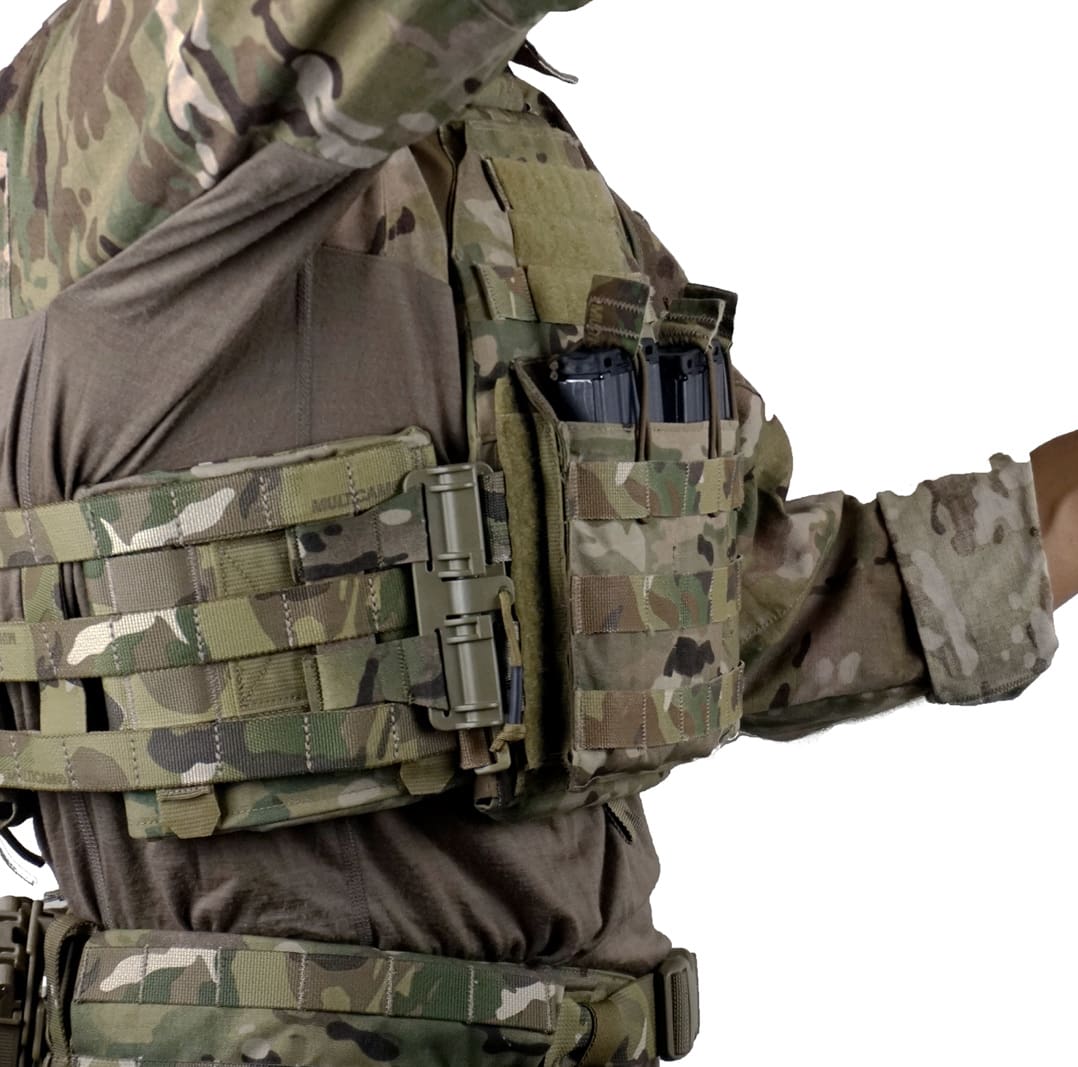
Shoulder Quick Release Straps provide multiple quick release points across the shoulder and plate carrier front.

Its shoulder QR points can adjust to any position along the PC shoulder straps.

Shoulder Quick Release Covers

Shoulder Quick Release Covers provide a simple protective solution to securing cross-shoulder items. With a trifold design and QR pull tabs, removal and reattachment is simple.

Side Quick Release Strap

Side Quick Release Straps provide QR attachment points along the cummerbund that include strap tension adjustment at the ITW QASM buckles. For rear pack attachment, G-Hooks provide a low profile connection that is secure enough for harsh environments, yet detachable without a tool.

Vertical Adapter Locks

Vertical Adapter Locks convert horizontal to vertical PALS rows with a dual row adapter lock that remains in place under heavy load tension. VALs are designed as an adapter and stabilizer, eliminating QASM adapter twisting from single PALS row attachment.

Made in the USA. Berry Amendment compliant. Exclusive production by Zulu Nylon Gear.

Visit UPC4 Plate Carrier Attachment System for more info.

ROGAN Introduces Pocket Tools

September 27th, 2019

Check out the all new ROGAN Pocket Tools! These pocket prybars are designed to be used for everything you don’t want to risk breaking your pocket knife for! Save your knife for making fine cuts and these tools will handle all the gouging, prying, scraping, etc. All ROGAN Tools are 100% made in the USA and the bevels are ground by hand. We also offer a full line of accessories that include pouches, carabiners, patches and lanyards.

Check us out at www.roganusa.com

PHLster – ARC Enhanced WML Switch

September 27th, 2019

For years, serious shooters have been executing DIY modifications to their WML switches. Using JB Weld, putty, or epoxy, shooters have been improving their speed and consistency of WML activation by building up the small switch nubs on their lights. Drawing on those years of end- user experience, PHLster is excited to follow up their Surefire X300 Switch Enhancements with a set of switches for the Streamlight TLR-1s and TLR-2s.

Shipping as a set of two replacement switch paddles, the ARC allows users to decrease the distance between activation fingers and switches, optimize their light for right or left handed use, improve speed and consistency of activation based on their preferred method, and reliably engage the WML switches with gloved or wet hands.

Each kit includes two switches, both longer than stock. One switch is symmetrical and the other is asymmetrical. Users can choose between having equally long switches on both sides or having one side longer than the other, depending on their preference.

Switch installation is easy and requires no permanent modification. The stock switch paddles are removed and installed with a single screw, using the included hex key. And, the ARC switch enhancements fit pretty much every decent WML holster on the market, including Safariland and many, many others.

At launch, the TLR ARC is available at PHLsterHolsters.com and BigTexOutdoors.com for $24.99.