Register Now for SOF Week

Landmark Upgrade to Copehill Down Village Underway

September 9th, 2025

London, 9th September, 2025 – Defence technology specialists, 4GD, have begun work on a significant upgrade to the military training environment at Copehill Down Village on Salisbury Plain. Copehill Down, a purpose-built “village”, is used to train for urban operations in built-up areas. The Urban Training facilities are being fitted with an Audio and Visual Closed Circuit Television capability and incorporated After Action Review (AAR) system.

Once complete, the modernised facility will support urban training serials. 4GD is delivering these improvements on behalf of the Defence Infrastructure Organisation (DIO), together with Landmarc Support Services (Landmarc) and the Land Warfare Centre.

The village upgrades will provide a much more realistic, high-fidelity training environment which will enhance the war fighting ability of military personnel and help prepare troops for future potential operational deployments. . The utilisation of 4GD’s flagship products will elevate the quality of urban training on the site. Included in this upgrade is 4GD’s 4GAV After Action Review (AAR) system, which provides unrivalled visibility of all training exercises. These works will also deliver special effects to simulate both battlefield effects as well as pattern of life.

The expansion of 4GD products across the UK’s military training estate continues at pace. The news of the Copehill Down delivery adds further credibility to the quality of 4GD’s technology, which is now in use at Merville Barracks in Colchester, Catterick Training Area in North Yorkshire and Rollestone Camp on Salisbury Training Area. This represents a geographic reach covering the South West, East and North of England. The expansion presents an opportunity for an increasing number of soldiers across the country to be booked into 4GD facilities, to hone their urban fighting skills, close to their garrison base.

At over 94,000 acres, Salisbury Plain Training Area (SPTA) is the UK’s largest training area. It offers live firing and other facilities for armoured vehicles, artillery, engineers, infantry and aircraft. The regular Army, Army reserves and cadets use the training area, as do NATO allies.

Rob Taylor, 4GD Founder and Director, said:

“4GD is at the forefront of delivering technology updates to the military training estate. Starting this work to Copehill Down Village is another major contract for the business and proves the suitability of 4GD’s products for modern defence training. This all serves to enhance training for the warfighter and help prepare the British Army for urban combat.”

DIO’s Colonel Richard Gibb, Deputy Head UK Defence Training Estate, said:

“We are delighted to see this project taking shape.

“DIO supports our Armed Forces by providing what they need to live, work and train. Current operational requirements identified that there was a need for further investment and development in the urban training infrastructure.

“This upgrade in technological systems is a significant milestone in evolving the British Army’s urban warfare capability. It offers a highly realistic space and the ability for immediate after-action reviews which will better prepare military personnel for operations around the world.”

Elbit Systems Launches Frontier: Next-Generation AI-Based System to Tackle Evolving Border Defense Challenges

September 9th, 2025

Elevating Persistent Surveillance with Real-Time AI-Driven Threat Detection and Decision-Making Support, Frontier reduces the workload on operating teams, reduces operational costs, and enhances mission success rates.

London, UK, September 9, 2025 – Elbit Systems Ltd. introduces Frontier, its cutting-edge wide-area persistent surveillance system, designed to address the increasing complexity and intensity of border defense challenges. Presented for the first time at the DSEI 2025 exhibition, Frontier is built to autonomously detect, classify, and assess threats in real-time. Frontier leverages advanced artificial intelligence (AI) to optimize intelligence gathering and decision-making in land, air, and maritime domains.

As global threats continue to evolve, intelligence teams are burdened with monitoring and managing thousands of alerts and massive amounts of data in real time. This challenge places significant demands on operational teams, often requiring substantial resources and risking potential errors. To address these needs, Elbit Systems developed Frontier, a smart, AI-based edge system designed to enhance surveillance operations.

Key features of Frontier include:

  • AI Based Adaptive Routine Learning: using cutting edge computing capabilities the system continuously learns and adapts to routine operations by analyzing vast amounts of data to detect anomalies and deviations.
  • Autonomous Threat Classification: Leveraging AI, the system autonomously identifies and classifies threats in real-time, enabing fast and accurate responses.
  • Smart Decision-Making Support: Frontier prioritizes and assesses the risk of potential threats, providing operators with clear, actionable insights.
  • Sensor Integration: Maximizes the capabilities of multiple sensors, turning data overflow into a coherent understanding of the peremiter.
  • Operational Efficiency: Reduces the workload on operating teams, and lowers operational costs, while improving mission success rates.

Frontier autonomously operates various types of sensors to visually confirm and classify threats, transmitting only the most relevant and analyzed information to the appropriate forces.

CTOMS Launches The FieldMate V1, V2, and EvacMate Syringe Organizers

September 9th, 2025

CTOMS™ is proud to introduce three exclusive syringe organizers—the FieldMate™ (V1 and V2) and EvacMate™—developed in partnership with The Flat Line Company and based on the proven MedicMate platform. Designed by first responders, for first responders, these organizers streamline medication access and delivery in tactical environments. With secure retention for multiple syringe sizes, they keep your injectable medications organized and ready when seconds matter.

FieldMate™ V1 (2×3cc + 3×10cc) & FieldMate™ V2(1×5cc + 3×10cc + 1×20cc)

Rapid-access layout with 5 syringe slots with optional color-coded ID tabs.

One-handed needle cap clamp, tip holders, and utility slot for IDs, swabs, or tools to expedite prep.

Flexible mounting options: MOLLE clip, bungee loops, IV drip clips, and optional multi-clip.

Built tough for frontline medics demanding maximum reliability.

EvacMate™ (2×20cc + 3×10cc + 1×5cc)

Optimized for casualty evacuation and high-volume medication scenarios.

Securely organizes and retains larger syringes while maintaining a quick-access design.

Shares the robust construction and modular attachment options of the FieldMate™ series.

Together, the FieldMate™ and EvacMate™exemplify the CTOMS™ commitment to developing high-functionality medical gear shaped by frontline experience and tailored for tactical performance. Engineered for speed, durability, and adaptability, these organizers raise the standard of field medicine preparedness.

The FieldMate™ V1 and V2 are available now in Black, FDE, and Ranger Green. The EvacMate™ is currently available in FDE. Exclusively at CTOMS™. For more details visit www.ctomsinc.com

Milrem Robotics, Overwatch Aerospace, MSI-Defence Systems, and Pearson Engineering Join Forces to Deliver UK-Specific THeMIS Combat UGV

September 9th, 2025

Milrem Robotics, the world’s leading developer of robotic and autonomous systems, along with Overwatch Aerospace Ltd, MSI-Defence Systems Limited (MSI-DS), and Pearson Engineering Limited, has announced the launch of a UK-specific version of the THeMIS Combat Unmanned Ground Vehicle (UGV) at DSEI 2025. This strategic relationship will see the four companies develop, test, demonstrate, and produce the combat-proven THeMIS platform in the United Kingdom, specifically designed to meet the needs of UK customers.

The UK version of the THeMIS Combat UGV will combine Milrem Robotics’ battlefield-proven THeMIS UGV platform with MSI-Defence Systems’ advanced TERRAHAWK Remote Weapon Station (RWS) and Overwatch Aerospace’s innovative APEX Unmanned Aerial System (UAS). Pearson Engineering will contribute its proven expertise in integrating mission-critical capabilities into armoured platforms, ensuring the vehicle is optimised for survivability, mobility, and adaptability to UK operational requirements.
Kuldar Väärsi, CEO of Milrem Robotics, said: “The THeMIS has proven its value in multiple theatres worldwide, and this UK-specific variant will take its capabilities even further. By working with trusted British partners, we deliver an advanced and mission-ready combat system and ensure that development, testing, and production happen here in the UK, creating local value and strengthening domestic defence capabilities.”

Drew Michael, CEO of Overwatch Aerospace Ltd, said: “Integrating our APEX UAS into the THeMIS Combat UGV introduces a completely new dimension to battlefield awareness and adaptability. By merging unmanned ground and aerial capabilities into a unified system, we enable forces to operate more effectively, with improved situational awareness and lower risk to personnel. This collaboration ensures our innovation directly aligns with UK defence priorities.”

Brigadier (ret) Haydn White, Senior Military Adviser at MSI-Defence Systems, stated: “The MSI-DS TERRAHAWK RWS is our fully stabilised remote weapon station, which offers exceptionally precise firepower and situational awareness in a package designed for rapid integration with a wide range of payloads and sensors. Collaborating with Milrem Robotics on this UK-focused UGV demonstrates how the best of British engineering, combined with proven international platforms, can deliver world-class capability to the British Army.”

Ian Bell, CEO of Pearson Engineering Limited, added: “Pearson Engineering will ensure that the THeMIS Combat UGV is adapted perfectly for UK operational environments and that it delivers reliable performance in the most challenging conditions. This partnership highlights our shared commitment to lead the industry into a new era of innovation and safety.”

The program will now move into a comprehensive development and trial phase, with the goal of delivering a deployable, scalable, and enduring robotic combat solution for the British Army.

Anduril Awarded Contract to Redefine the Future of Mixed Reality

September 9th, 2025

“Military operations are inherently human endeavors, characterized by violence and continuous adaptation by all participants. Successful execution requires Army forces to make and implement effective decisions faster than enemy forces.”

-Army Doctrinal Publication 6-0, Mission Command

Anduril Industries announced today that it has been awarded a $159 million contract by the U.S. Army for an initial prototyping period to develop a night vision and mixed reality system as part of the Soldier Borne Mission Command (formerly IVAS Next) program. This award represents the largest effort of its kind to equip every soldier with superhuman perception and decision-making capabilities—fusing the best of night vision, augmented reality, and AI into a single system.

Today’s warfighters benefit from decades of steady improvements in night vision technology, but even the best NVGs remain fundamentally limited: they provide sight, not perception. They don’t fuse multiple spectral bands, integrate battlefield data, or enable soldiers to command robotic teammates directly from their display. At the same time, command systems remain largely designed for static command posts, not for soldiers in contested, communication-degraded environments.

In a forward-deployed environment, a squad leader must stitch together maps, radios, and ad hoc apps just to know where their team is, what the threat looks like, and how higher headquarters wants them to move. Intelligence gets trapped in silos, updates arrive too late, and every new piece of gear adds complexity instead of clarity. The result: warfighters lose precious seconds just trying to get a common picture of the fight. In a world where success depends on making and implementing decisions faster than the enemy, that’s an unacceptable disadvantage.

The Solution

Anduril’s solution reimagines the battlefield interface giving soldiers superhero-like abilities. In collaboration with leading technology partners—including Meta; OSI; Qualcomm Technologies, Inc.; and Gentex Corporation—Anduril is developing a helmet-mounted mixed reality system that unites advanced night vision with augmented reality overlays. This creates a single perceptual layer that fuses day, night, and thermal imagery with real-time battlefield intelligence. Soldiers will see farther, across more spectral bands, through an intuitive, real-time display. Instead of toggling between devices, warfighters will perceive a unified picture of their environment—accelerating understanding and enabling faster, better decisions.

The competitively awarded SBMC contract provides Anduril with the opportunity to deliver a generational leap in both capability and hardware ergonomics. Anduril and its partners are developing a modular component framework, enabling soldiers to select the most effective loadout for their specific mission needs.

Soldier Borne Mission Command Architecture

Originally launched as the Integrated Visual Augmentation System (IVAS), Soldier Borne Mission Command-Architecture (SBMC-A) is the software backbone for the Army’s new mission systems. While the broader SBMC program delivers new helmet-mounted displays and edge compute hardware, SBMC-A provides the open software platform that integrates them into a fielded, soldier-ready capability, continuously iterated with Army combat units. Built on Anduril’s Lattice platform, SBMC-A is led by Anduril in partnership with Palantir Technologies, L3Harris Technologies; Persistent Systems, LLC; Sierra Nevada Company; DTC; Maxar Intelligence; Kägwerks; and others, all working together to advance integrated capabilities across the Soldier Borne Mission Command ecosystem.

Working with its partners and leveraging over 260,000 hours of soldier input from the IVAS program, Anduril has integrated IVAS 1.2 headsets as surrogates with Lattice, completing multiple field tests with the Army to advance SBMC-A as the foundation for future helmet-mounted mixed reality systems. SBMC-A has undergone four soldier exercises and been tested in combat training scenarios using a mesh of heads-up displays, and body- and vehicle-borne edge compute devices. Through Anduril’s SBMC-A, drones were directly tasked from over three kilometers away via a line-of-sight radio connection to a Lattice-integrated IVAS 1.2 headset, allowing individual soldiers to command and control drones from their HUD without a dedicated drone pilot.

Fourteen industry partners are actively engaged in the SBMC-A program, with third-party developers already onboarded to the Lattice Partner Ecosystem via the Lattice Software Development Kit (SDK) to expand capabilities inside the Lattice Mesh. Most notably, Anduril has reduced over-the-air software update timelines by 99 percent—cutting the process from two days to just 15 minutes—enabled by Lattice’s optimized test and fleet management tools. With daily updates pushing to the field, Anduril is accelerating delivery timelines, reducing costs, and continuously improving SBMC-A through real-world soldier feedback and operational testing.

Together, SBMC and SMBC-A are about human perceptual augmentation: giving soldiers the ability to see beyond the limits of human senses and act with speed and clarity across every domain of the fight. SBMC will allow every soldier to see farther, know more, and act faster than ever before, redefining what it means to fight and win in the 21st century.

Avon Protection introduces MITR-PG1 Powered Goggle at DSEI 2025

September 9th, 2025

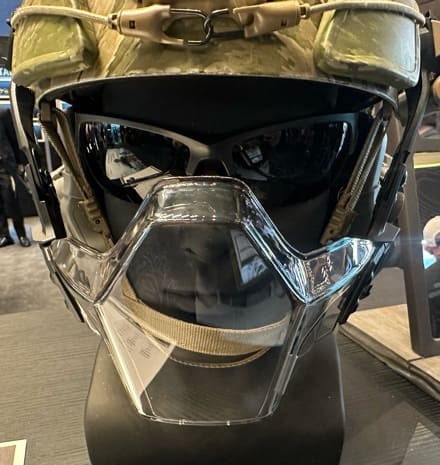
The MITR-PG1 Powered Goggle is one of a number of new CBRN protective wear innovations on display on the Avon Protection stand N3-310 

9th September 2025, Melksham, UK: Avon Protection introduces the MITR-PG1 Powered Goggle at DSEI 2025, designed to provide ocular protection against particulate hazards in military, special forces and law enforcement operations. The new product has been developed to be worn with the MITR-M1 Half Mask, providing users with scalable, flexible full-face protection for tactical low- to mid-level threat environments.   

The MITR-PG1 Powered Goggle integrates seamlessly with the MITR-M1 Half Mask and head protection systems.

The low-profile, low-burden MITR-PG1 filters CS/CN/OC threats with an integrated filter and blower system which constantly purges the air within the goggle. This ensures that the wearer’s eyes remain constantly protected against particulate hazards, and the visor remains clear from fogging even in extreme temperatures. 

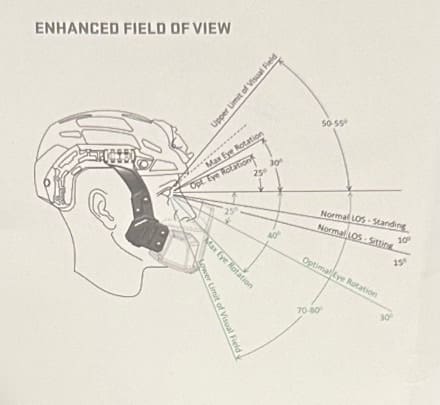
MITR-PG1 integrates seamlessly with ballistic and bump helmets via a strap system without interfering with other head-mounted systems such as night vision goggles. It is powered by a single 18650 protected cell battery that offers >8 hour operation from a single charge, with LED and vibrate status indicator that can be turned to stealth mode when required.

MITR-PG1 is designed to meet the requirements of ANSI Z87+ and ISO 16321-1, and can be used in an operational temperature range of -10 to 50?C.

“With the MITR-PG1 Powered Goggle joining the MITR-M1 Half Mask, we can now offer full face protection to tactical users who want a flexible, low-burden alternative to full face rigid respirators for fast evolving low-mid threat environments,” Steve Elwell, President, Avon Protection, said. “We have leveraged our 140-year history of design excellence to produce a goggle that is light and comfortable enough to be worn for more than eight hours at a time, and that integrates seamlessly with the Half Mask and commonly used helmets.”

At DSEI Avon Protection is also showcasing the MITR-M1 Communications Unit concept; a compact, high-performance system module built to integrate optimally with the MITR-M1 Half Mask, delivering clear and reliable voice transmissions for users in demanding operational environments. A new helmet mounting kit accessory, the MITR-M1 Helmet Mount, further improves the MITR-M1 don/doff process by enabling users to mount the Half Mask directly to a wide range of helmets without the need to remove the helmet.

Also newly launched is the MITR-RF Riot Agent Filter, a low-profile combination filter containing a pleated high-efficiency filter element for removal of aerosols, particulate matter, smoke, fumes; and a carbon layer for the removal of vapours that may be released from trapped particles. The filter is specifically designed for removal of riot control agents and tear gases including CS, CN and OC pepper spray.

‘A Major Win for UK industry’: Defence Industry Representatives Hail New MOD Scheme to Create Defence Inward Investment

September 9th, 2025

Industry representatives have lauded the announcement by the Government’s new Defence Industrial Strategy to create a new scheme to drive UK economic growth through a defence inward investment scheme when buying defence equipment from overseas.

The Defence Industrial Strategy, published today (8 September 2025) said that the MOD will launch a new defence inward investment scheme known as ‘offset’ next year – arguing that the policy “can be an effective way to create opportunities for firms to enter global supply chains, boosting the domestic industrial base, creating jobs and supporting economic growth”.

Director General of Make UK Defence Andrew Kinniburgh has described the announcement as a “major win for UK industry”.

The trade body, which represents over 700 SMEs in the defence industry, has been campaigning for the UK Government should draw inspiration from 53 other developed nations with similar policies such as Norway, Poland and South Korea and adopt a defence inward investment plan, or offset regime, as a central pillar to the UK’s growth mission and to strengthen our industrial capacity.

Earlier this year, Make UK Defence argued that such a scheme could allow up to 90% of the economic value of defence contracts going overseas to go back into the UK economy over a ten-year period, unless it was deemed necessary for national security reasons. Companies could achieve this in multiple ways such as creating new UK jobs, utilising UK supply chains with both large and small businesses, creating novel technologies and investing in skills training and apprenticeships.

Make UK Defence point to the successes other countries with similar policies such as Poland, which secured $6bn (£4.4bn) in inward investment following their F-16 acquisition in 2003. In 2023, the country also secured £200 million inward investment from the WILSA anti-aircraft and anti-missile programme. 

The trade body now want to ensure the MOD utilises the new defence inward investment scheme to incentivise the utilisation of SMEs in the defence industry and to support industries supplying critical raw materials the Defence Industrial Strategy identified as critical to UK Defence, such as steel and semiconductors.

Make UK Defence Director-General Andrew Kinniburgh said:

 “The MOD’s commitment to design a new defence inward investment plan – something Make UK Defence has spent months campaigning for – is a major win for UK industry.

“By adopting this plan, the Government will deliver more work for UK based companies, including primes, mid-tiers and SMEs, and help to fulfil the defence dividend – unlocking private investment in UK jobs, skills, and supply chains across the nations and regions.

“We look forward to continuing to work closely with the MOD to ensure the new defence inward investment plan delivers for all of industry, including SMEs, and boosts economic growth across the UK.”

BLADE Cuts Down Drones at Project Flytrap 4.0

September 9th, 2025

BEMOWO PISKIE TRAINING AREA, Poland — Soldiers from the Army’s 2nd Cavalry Regiment detected, tracked, engaged and defeated multiple drones at ranges between 500 and 800 meters using the Ballistic Low Altitude Drone Engagement, or BLADE, system from a Stryker vehicle at the Bemowo Piskie Training Area in northeast Poland during a live fire event for Project Flytrap 4.0 on Aug. 1.

“Some of those (drone) threats were being flown simultaneously, so the system defeated one target then quickly targeted and defeated a second target in a matter of seconds,” said David Goldstein, counter-unmanned aerial systems (C-UAS) lead for the Combat Capabilities Development Command Armaments Center.

The Armaments Center ran the BLADE science and technology project from 2016-2019 to develop a capability to counter drone threats. BLADE leverages — and enhances — a system operated throughout existing Army formations, the Common Remotely Operated Weapons Station, or CROWS.

As a remote system mounted on different types of Army vehicles, CROWS allows an operator to fire a weapon while remaining protected inside. Using an array of optics, a viewing screen and motorized gimbals and controls, the operator can effectively select and engage targets.

With BLADE, a precision radar and C-UAS fire control software is integrated with CROWS hardware and software to assist operators in identifying, tracking and pointing the weapon to a continually calculated intercept point to enable the difficult challenge of destroying enemy drones.

Capable of functioning with numerous weapons, the BLADE/CROWS combination at Project Flytrap included an M2 .50 Caliber machine gun firing multi-round bursts.

BLADE also participated in several Project Flytrap non-firing training scenarios using the radar for detection, tracking and other simulated defensive actions, according to Goldstein.

Starting in late July, Project Flytrap 4.0 was the final iteration of the C-UAS training events where Soldiers from the 2nd Cavalry Regiment and 1st Royal Yorkshire Regiment, United Kingdom, tested new C-UAS capabilities in combined exercises meant to develop and inform the future of anti-drone tactics and technologies.

“Project Flytrap is part of a series of training events designed to test and refine new counter-unmanned aerial systems technologies and tactics to respond to the evolving threat of drone warfare,” said Col. Matt Davis, transformation chief and exercise director of V Corps, Project Flytrap, during a press engagement.

Previous Flytrap events were focused on command-and-control systems and countering small UAS sensors, said Goldstein. “We were invited to come out to the latest Flytrap with our BLADE and CNALT systems because they wanted to see more kinetic capabilities,” said Goldstein.

The CNALT software plug-in, also being developed by the Armaments Center, is an application that provides tactical fire control and visualization tools to reduce time in the kill chain — the cycle of finding and identifying targets, prioritizing and coordinating attacks. Time is critical in military operations with targets in constant motion and considering that potential targets threaten harm to friendly forces.

Soldiers took 15 minutes on new equipment training for CNALT operations, said Marc Sanzari, chief of the Armaments Center Networked Lethality & Collaborative Autonomy Branch. During various training scenarios, CNALT successfully ingested real-time sensor data from the BLADE Precision Fires Radar, classified UAV tracks, and generated actionable engagement recommendations for BLADE and the Stryker commander.

For BLADE, getting the components to Project Flytrap 4.0 and operational, tested the abilities of engineers and technicians to meet the Army and DoD challenge to get new drone capabilities into the hands of Soldiers quickly and with the fewest constraints.

“Within two weeks of request, the system was installed and operational and ready for Soldier touch point training,” said Jonathan Gann, an Armaments Center mechanical engineering technician specializing in autonomous weapons.

Gann was part of an Armaments Center team who shipped the BLADE components from Picatinny Arsenal, New Jersey to Poland and conducted a field expedient installation of an existing CROWS on a Stryker vehicle to make it operational as a BLADE system.

After the installation, Gann met with Soldiers to discuss the tactics, techniques and procedures for BLADE operations within unit formation while stationary and on the move. He noted that Soldier feedback from the live-fire event provided insights on future improvements for BLADE, but also, “it highlighted the possibilities of UAS engagement in a dynamic environment,” said Gann.

“I was able to understand the fundamental workflow for the system and gunner actions within one hour of seeing the BLADE for the first time,” said Maj. Jared Whitaker, deputy chief G-31 from V Corps, who as a leader observed the entirety of the drone engagements in a seat between the gunner and radar operator.

Whitaker, who is proficient in operating CROWS, said that compared to ground engagements there were added steps in counter-drone operations. Schooling on the radar was necessary, as was additional training to become fluid during rapid reactions while performing counter drone scenarios.

“I found that the ability to engage UAS using a CROWS has gone from impossible to possible with the addition of BLADE,” said Whitaker.

After achieving Technology Readiness Level Six in 2019, BLADE has participated in various C-UAS exercise and engagements, such as Project Convergence, the Maneuver Fires Integrated Exercise and Red Sands – Operation Hard Kill.

Operation Flytrap has become the latest BLADE knowledge builder.

“The Armaments Center continues gathering insights from participating in C-UAS events and is transitioning the technology to current programs of record for near-term fielding opportunities, said Goldstein.”

By Timothy Rider