The New iTWB

Army Develops Ultra-Light Vehicle for Changing Battlefields

August 23rd, 2026

Getting troops and equipment across the battlefield is a vital part of every theater operation — Soldiers and their kits, as well as spare ammunition and other supplies, all need to arrive quickly, with nothing left behind — or risk jeopardizing the mission.

The Joint Light Tactical Vehicle and Humvee have done a great job at performing those tasks so far, but the battlefield is always changing. In some cases, those vehicles are too heavy and impractical for the task at hand. So, the Army chose to develop a new, ultra-light troop transport vehicle.

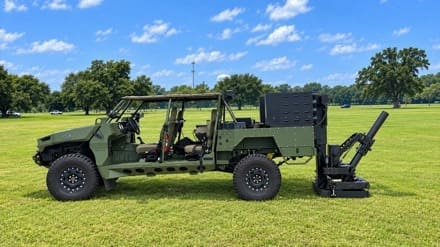
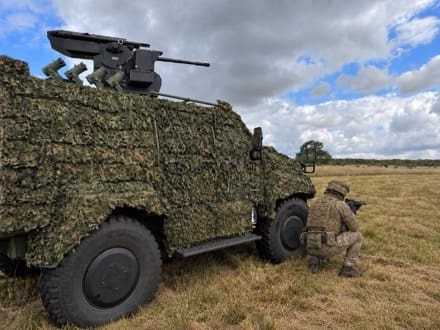
The Infantry Squad Vehicle is an ultra-light tactical vehicle that carries nine passengers and their equipment. Its evolution was informed by Soldier touchpoint events.

“We are extremely proud of this program and what we’ve been able to achieve in a short period of time,” said Susan Fung, Portfolio Acquisition Executive Maneuver Ground’s mobile brigade combat team deputy project manager. “In this high-stakes environment of modern warfare, playing it completely safe is often the most dangerous thing a leader can do for decades.”

Fung explained that the team is intentionally trading the illusion of a risk-free acquisition process for the ability to use commercial products and iterating with continuous Soldier feedback through the Army’s Transformation in Contact program.

“Traditional defense acquisition has prioritized its bureaucratic processes and zero-defect mentality over speed, and while well-intentioned, that approach often meant our Soldiers had to wait quite a bit for critical capabilities to reach the field,” she said.

Exponential Growth

The Infantry Squad Vehicle program began in 2019, with a procurement objective of 649 vehicles. However, based on Soldier feedback and TIC experimentation, Fung said Soldiers told them what they truly needed.

“This led to an explosive growth driven entirely by operational demand,” she added.

The number of vehicles required increased to 900 in February 2021. It increased two more times and was set at 2,593. In April 2025, the service approved the ISV utility variant and increased the Army procurement objective, bringing the total to 5,733 vehicles across both variants, Fung explained.

“In February of 2026, the Army established the current position objective and procurement objective at 11,582 vehicles,” she said. “That shows you the increased objective based on Soldier demand, and that’s really equivalent to about an 18-fold increase from the original requirement. Not because of requirements creep, but really because Soldiers validated the capability in the combat training environments and demanded more.”

John Hufstedler, the product director for ground mobility vehicles at PAE Maneuver Ground, said that connecting with the system’s mission was critical during the development of the vehicle.

“Early on, the ISV succeeded by staying locked-in. A few key requirements were transportability, [but] mobility and payload and resisting requirements creep,” he said, adding Army senior leaders kept the vehicle’s mission in focus.

“Anytime somebody wanted to add a radio with encrypted keys or hang another piece of encrypted equipment off the platform, leadership just didn’t buy into it. And that allowed the vehicle to stay focused and true to its mission, so we didn’t have to leave a Soldier back with the vehicle. All nine could go execute the mission and objective,” Hufstedler said.

The traditional acquisition approach allows custom military specifications, extensive government testing and sequential milestone gates. Hufstedler explained that this process can take four to 10 years, often resulting in cost overruns and technological obsolescence.

Instead, he explained that the ISV took the rapid acquisition approach, using commercial off-the-shelf solutions and minimal military modifications. That approach resulted in the first unit being equipped within 24 months.

Transparency Aids Progress

Taking a more risk-positive approach to developing the ISV required somewhat of a culture change within PAE Maneuver Ground. Specifically, it required more direct, transparent communication.

Hufstedler believes that leading by example, empathy, listening, incorporating team feedback into decisions and a willingness to stand by those decisions as leaders were key. He added that providing team autonomy, while clearly defining boundaries and success criteria and transparency at all levels of communication, also contributed to their success.

Next-generation Variants

“With the ISV program, we prove[d] that calculated risk works,” Hufstedler said. “We keep going back to commerciality — I think that has helped us a lot — trusting our Soldiers’ judgment and moving at the speed of relevance; I think we’ve delivered that capability.”

The Army’s willingness to accept commercial standards as a starting point and make the Soldiers the primary evaluators of the equipment will be critical to the success of developing ISV variants, he noted.

Fung said the team is currently developing the ISV heavy variant. It will include enhanced onboard power generation and storage capability to support next-generation command and control equipment.

“Overall, the ISV program is a great example of our acquisition reform, which allows getting capabilities to the field faster, leveraging commercial technologies while staying agile and giving Soldiers what they really want,” she said.

For more information, visit the CPE Ground website.

JACQUELINE M. HAMES is an editor with Behind the Frontlines. She has 15 years of writing, editing and reporting experience with the federal government, and has a B.A. in creative writing from Christopher Newport University.

US Marine Corps Awards Accrete Sole-Source Contract for Argus for Cognitive Advantage

August 22nd, 2026

NEW YORK, Aug. 21, 2026 — Accrete, the cognitive infrastructure company building Knowledge Engines for autonomous work, today announced that it has been awarded a sole-source contract by the U.S. Marine Corps to deliver Argus for Cognitive Advantage.

The award was made on a sole-source basis. Under the award, Accrete will license its Expert AI Agents to the U.S. Marine Corps to help achieve cognitive advantage, enabling more informed, confident decisions.

Adversaries increasingly compete below the threshold of armed conflict, using coordinated narratives, synthetic media, and inauthentic amplification to shape perceptions faster than human analysts can track. Rather than treating open-source data as a search problem, Argus for Cognitive Advantage tracks, analyzes, and visualizes narrative development across the complete information environment — OSINT, open web, social media, broadcast media, messaging platforms, and foreign-language outlets. Accrete’s Knowledge Engine platform, which powers the Expert AI Agent Argus for Cognitive Advantage, converts the institutional knowledge of experienced practitioners into expert AI agents that surface the most relevant, use-case-specific signals across every accessible network. This significantly reduces analytic time and produces the detailed reporting required for timely decision-making.

In a world driven by visual media, rapid analysis is paramount — and this is where Argus for Cognitive Advantage’s video vision stands out. It reduces hours of video content to analysis in minutes, transcribing and translating speech, detecting objects and scene content, and inferring location cues — turning clips that once had to be watched end to end into searchable, attributable evidence, including video posted in languages the analyst does not read.

Additional product capabilities include:

Narrative intelligence. Narrative engines, stance detection, and predictive simulation track how conversations evolve and resonate.

Audience simulation. The Audience Simulation Agent segments an audience and simulates how each segment will react to a message before it is released, compressing a weeks-long analytic task into a single workflow.

Measures of effectiveness. Automated assessments quantify mission outcomes.

Global reach. Real-time translation and transcription across 243 languages, spanning sources including Facebook, Instagram, TikTok, X, YouTube, Reddit, Telegram, Weibo, and VKontakte.

Argus Chat. Analysts query the data in plain language.

Trusted AI by design. Every inference is traceable to its source, within auditable, accreditation-ready boundaries.

“Cognitive advantage is a warfighting requirement, not a support function, and this award reflects the Marine Corps’ clear recognition of that,” said Bill Wall, CEO of Accrete AI Government. “Furthermore, this sole-source award demonstrates the trust Accrete has built across the Department of War services. Accrete is proud to expand its reach within the Department of War by supporting the U.S. Marine Corps.”

Accrete first deployed Argus with the Department of War in 2022, followed by a multi-million dollar U.S. Army contract in 2024 to advance the capability for Army information operations. Argus for Cognitive Advantage was selected for a 2025 AFWERX STRATFI award to transition its technology from prototype to operational use.

“Knowledge Engines are dynamic context recorders, and the advantage begins the moment an organization presses record. The most valuable context in any institution is the know-how trapped in the heads of its best people. Organizations that never capture it are ceding compounding advantage to adversaries and competitors that do. Argus for Cognitive Advantage is one of the most sophisticated applications of the Knowledge Engine platform, and Accrete is proud to extend it to the Marine Corps as it counters adversaries operating against the United States every day through digital channels,” said Prashant Bhuyan, Founder, CEO, and Chairman of Accrete, Inc.

NEXTORCH Edge Guard Cut-Resistant Tactical Gloves

August 22nd, 2026

360-Degree Cut and Abrasion Protection

Seattle, WA – (August 18th, 2026) – NEXTORCH North America, the primary U.S. distributor of global manufacturer NEXTORCH Industries, is proud to announce NEXTORCH Edge Guard Cut-Resistant Tactical Gloves. They’re designed and engineered to protect against blade slashes, glass, and metal shards, while maintaining dexterity and touchscreen capability. 

Edge Guard tactical gloves are built to deliver continuous protection with enhanced dexterity and all-day comfort. They feature an integrated 13-gauge HPPE (High-Performance Polyethylene) continuous A7 cut-resistant liner that wraps your entire hand. It creates a powerful “blade-sliding effect” to neutralize active knife slashes and jagged metal hazards. The extended protective cuff boosts wrist slash-resistance and integrates a dual-locking elastic band with an oversized rubberized pull tab for split-second deployment.

The Edge Guard gloves are infused with ultra-conductive fibers across all ten fingers and the full palm for flawless operation of rangefinders, smartphones, MDTs, and tactical tablets (including complex swiping, pinching, and zooming) all while keeping your hands fully protected. They feature premium cowhide and Cordura materials for flexibility and a non-slip grip,even in wet/oily conditions. They offer high mobility, avoiding the clunky feel of traditional, thick protection gloves. Available sizes include: S, M, L, XL and 2XL.

Key Features:

• A7 Cut-Resistant Liner

• Extended Wrist Protection

• Ergonomic Cut Design – improved fit and comfort

• Seamless Fingertip Design – sensitive and precise control

• Articulated Finger Structure – smooth natural movement

• Full-Palm Touchscreen Capability – fast and accurate control

• CORDURA® Reinforced Zones – high-wear durability reinforcement

• ?Quick Pull Tab – quick entry and removal

MSRP: $47.99

Available for Evaluation

Law enforcement, military, and security agencies in the U.S. are invited to participate in the NEXTORCH 30-Day-Free Test & Evaluation Program. To learn more about the T&E program “click here”.

The US Army Marksmanship Unit’s Instructor Training Group: Strengthening Lethality Through Expert Instruction

August 22nd, 2026

The Instructor Training Group (ITG) of the U.S. Army Marksmanship Unit (USAMU) is one of the Army’s most influential training assets. Based at Fort Benning, Georgia, the ITG delivers expert small-arms instruction to servicemembers across the force, ensuring marksmanship fundamentals, coaching skills and weapons proficiency remain at the highest possible standard.

Mission and Core Purpose The ITG’s mission is to increase small-arms lethality across the force by training servicemembers and developing instructors who can return to their units and elevate marksmanship programs. As part of USAMU’s broader training mission, the ITG provides:

• Mobile training teams that travel worldwide.

• Instructor development courses that teach Soldiers how to coach, evaluate and build sustainable marksmanship programs.

• Weapons-specific training aligned with Army doctrine and modernization efforts.

This dual focus—training shooters and training instructors—makes the ITG a force multiplier across the Army.

Training Methods and Curriculum ITG instruction blends data-driven training, doctrinal consistency and adaptable teaching methods. Training packages typically include:

• Baseline marksmanship assessments.

• Classroom instruction on preliminary marksmanship, ballistics, weapons familiarization, optics familiarization, shot analysis and coaching techniques.

• Hands-on weapons training with systems such as the M4, M17/M18 and emerging platforms like the M7/M8 rifle.

• Instructor development modules.

• Final evaluations measuring improvements in hit probability, consistency and proficiency.

The curriculum reinforces proven fundamentals while integrating modern optics, fire-control systems and Army lethality initiatives.

Verified Impact on Army Readiness Across its annual training cycle, the U.S. Army Marksmanship Unit consistently delivers measurable improvements in small-arms proficiency—an impact strongly driven by the Instructor Training Group. On average, USAMU conducts about 80 training missions each year, providing advanced marksmanship instruction to more than 4,000 Soldiers.

One of the ITG’s greatest advantages—and a major selling point for commanders—is its ability to tailor every training mission to the unit’s specific needs. Commanders dictate the training intent, and ITG cadre build a customized program of instruction that focuses on the formation’s mission requirements, weapons systems and operational environment. Rather than selecting a preset course, units receive training built specifically around their mission parameters, ensuring relevance, efficiency and maximum lethality gains.

These tailored efforts produce significant, documented improvements in battlefield effectiveness. Servicemembers routinely achieve substantial increases in lethal-hit averages and overall marksmanship proficiency after completing an ITG training package, demonstrating the value of customized instruction delivered by expert cadre.

Together, these results highlight the ITG’s role as a critical contributor to Army readiness and small-arms modernization.

Reach Across the Army The ITG supports a wide range of Army organizations, including:

• Basic Combat Training and One Station Unit Training.

• ROTC Cadet Summer Training.

• Infantry and Armor Basic Officer Leader Courses.

• Maneuver Captain’s Career Course.

• National Guard and Reserve units.

• Partner-nation forces during joint training events.

• U.S. Army Forces Command (FORSCOM).

• U.S. Army Special Operations Command (USASOC).

ITG mobile training teams frequently travel to remote or resource-limited ranges, ensuring units across the Army receive expert instruction regardless of location.

Strategic Importance The Instructor Training Group is central to the Army’s long-term lethality strategy. By focusing on instructor development, the ITG ensures:

• Units maintain higher lethality long after training ends.

• Marksmanship doctrine remains standardized across the Army.

• New weapons and optics—such as the M7/M8 rifle and Next Generation Squad Weapon systems—are integrated effectively.

• Leaders at every level understand how to coach, evaluate and sustain marksmanship programs.

As small-arms proficiency becomes increasingly decisive in close combat, the ITG’s role is more vital than ever.

Contact The U.S. Army Marksmanship Unit’s Instructor Training Group can be reached at AMU-ITG@army.mil.

Story by LTC Michelle Lunato 

U.S. Army Marksmanship Unit

German Precision Optics Announces GPO Setback Cantilever Mount

August 21st, 2026

Designed for Compact Tactical Riflescopes

Richmond, VA. (August 14th, 2026) – German Precision Optics(GPO USA) proudly announces the GPO SetbackÔ Cantilever 3” extension mount designed for compact tactical 30mm riflescopes. This design allows compact riflescopes to be mounted up to either 3” forward or rearward, depending on what the optical system requires for optimal eye relief.

“This new mount is a must for compact riflescope users,” said Mike Jensen, Owner and CEO of GPO, USA. “Most riflescope mounts push optics forward. Compact tactical scopes often require the opposite. The GPO SetBack™ allows you to bring the optic rearward, allowing shooters to achieve proper eye relief, faster target acquisition, and a more natural head position behind the rifle. The result is improved comfort, a full sight picture, and maximum performance from today’s compact precision optics.”

The GPO SetBack™ 3” cantilever was designed and engineered specifically for today’s ultra-compact tactical optics. While compact scopes offer significant advantages in weight, balance, and handling, their shorter main tube length often limits mounting flexibility and can place the optic too far forward for proper eye relief. The SetBack solves this problem by moving the scope mounting position up to 3 inches rearward, allowing shooters to achieve a full field of view and a comfortable shooting position without compromising rail engagement or mounting security. The GPO SetBack™ ensures your optic sits exactly where it should, closer or further to your eye and ready for maximum performance.

This ingenious extension mount is precision machined from a single billet of aircraft-grade aluminum. The unique one-piece mount delivers exceptional rigidity, precise ring alignment, and dependable return-to-zero performance under heavy recoil and demanding in-the-field conditions. Although 1-piece, it has extremely narrow ring gap, less than 2.5”, made specifically for scopes with extremely limited mounting surface (ie the GPO CENTURI Super-Compact series).  Designed for riflescopes with a 30mm main tube, the SetBack features four hardened steel Allen-head cross-bolts that provide a secure, repeatable attachment to any Mil-Std 1913 Picatinny rail.

Premium features include:

• Positions the scope up to 3” rearward or forward for optimal eye relief

• Designed for 30mm main tube riflescopes

• One-piece precision-machined aircraft-grade aluminum construction

• Four hardened steel Allen-head cross-bolts for maximum mounting security

• Mil-Std 1913 Picatinny rail compatible

• Optimized for compact tactical optics

• Improves eye relief and shooting comfort

• Hard-anodized matte black finish

• Maintains strength, alignment, and zero retention under recoil

The GPO SetBackÔ retails for $89.99 and will be available through authorized GPO dealers nationwide and online at www.gpo-usa.com.

Tiberius Aerospace Announces Invictus Has Moved into Formal Engineering Testing and Evaluation, Bringing Scalable Long-Range Precision Strike Across Multiple Domains

August 21st, 2026

Tiberius Aerospace, the modern defense technology company building next-generation weapon systems and AI-powered defense solutions for the United States, United Kingdom and allied nations, today announced that Invictus is moving from early laboratory investigation to prove the concept into formal engineering Test & Evaluation (T&E) development, marking a major step towards fielding its next-generation long-range precision strike system.

Invictus is a tube-launched, multi-mission system designed for integration across multiple platforms and domains. Its architecture is intended to support launch from vertical launch systems and autonomous vehicles operating across land and sea, giving warfighters greater flexibility in how long-range precision effects are delivered.

Tiberius Aerospace launched its first ramjet munition, Sceptre, in May 2025 and recently announced successful ramjet ignition during live firing in the US. This rapid development and learning has facilitated the accelerated transition of the Invictus programme from exploratory laboratory development into a proven engineering program focused on validating propulsion, flight performance, guidance, platform integration and manufacturability through formal testing. Direct- connect testing of the Invictus ramjet engine is already underway at Purdue’s Zucrow Laboratories, where the engine has demonstrated excellent operability using Jet-A across all conditions tested to date.

The program is advancing against an increasingly urgent strategic challenge: the need for the United States and its allies to rebuild long-range precision strike capacity faster than traditional defense production can replenish it. The U.S. Army used virtually all of its stockpile of ATACMS and Precision Strike Missiles during the five-month conflict with Iran, intensifying concerns about readiness for future contingencies. Across Europe, Western missile inventories have also come under growing pressure, driving NATO governments and manufacturers to accelerate production and rebuild stockpiles.

Invictus is being designed to address both capability and capacity, combining long-range precision with an architecture built for adaptability and scale. The Invictus-200 will pair a ramjet with an integral booster to deliver speeds up to Mach 3 and precision strike at ranges of up to 200 kilometres, with targeting precision of 5.5-meter CEP depending on guidance configuration. Its 10– 15 kilogram payload capacity and modular, open architecture will allow the system to be configured for different missions and evolve as operational requirements change.


“The move into formal engineering, testing and evaluation is a major step toward turning Invictus from a promising technology into a deployable capability,” said Chad Steelberg, Founder and CEO of Tiberius Aerospace. “Invictus and Sceptre have been designed from first principles to deliver cost-effective lethality from the outset, using our AI powered platform GRAIL to maximize the combat effect delivered for every dollar spent by simplifying the weapon, engineering it for high-volume production and building in an open architecture that can evolve without replacing the entire system. We have used GRAIL to enable a Silicon Valley approach to product development, connecting program requirements with domestic and allied suppliers capable of producing components and systems and therefore supporting a broader and more resilient industrial base. Invictus will bring together long-range precision, multi-domain flexibility, cost-effective lethality and scalable production in a weapon designed not only for today’s operational requirements, but for continuous adaptation throughout its service life.”

SOFWERX – UxSAI Mission Autonomy Systems Assessment Event

August 21st, 2026

SOFWERX, in collaboration with USSOCOM Program Executive Office SOF Digital Applications (PEO-SDA), will host a series of events to identify and evaluate decentralized and collaborative mission autonomy solutions for heterogeneous, multi-platform, multi-domain unmanned systems in support of the Unmanned Systems Autonomy and Interoperability (UxSAI) program. 

Fielding and sustaining autonomy on unmanned systems requires mission autonomy software capable of executing diverse missions within complex, rapidly changing environments and traditional vertical-stack autonomy is constrained by proprietary, vendor-locked software architectures and is highly vulnerable to communications denial in contested electromagnetic environments. Decentralized mission autonomy addresses this gap by enabling peer-to-peer coordination, dynamic re-tasking, and localized planning without real-world communications or centralized command constraints. The UxSAI Program is seeking a mission autonomy software solution that can seamlessly integrate into the government-owned Collaborative Heterogeneous Autonomy Operations Software (CHAOS) baseline, allowing program personnel to rapidly field new capabilities independently.

The goal is to identify mission autonomy software providers capable of delivering decentralized and collaborative autonomy solutions that integrate with the CHAOS baseline for multi-platform, multi-domain unmanned systems. The selected provider should deliver an open, modular capability that UxSAI personnel can configure and sustain organically, without ongoing vendor dependency for software development, and the UxSAI program intends to complete test and evaluation (T&E) on vendor deliverables as a part of this event. 

Submit NLT 07 September 2026 11:59 PM ET

Learn more at events.sofwerx.org/uxsaimissionautonomy.

US Military Affirms SIG SAUER M17 and M18 as “Safe and Reliable”

August 21st, 2026

Results of unprecedented analysis, including inspection of nearly 114,000 pistols, “reinforce confidence and assurance” in the SIG SAUER firearm

NEWINGTON, N.H., (August 20, 2026) – Following an extensive inspection and analysis of the SIG SAUER M17 and M18, both the Department of War (DoW) and Department of the Air Force (DAF) confirmed the firearms are “safe and reliable.”

On August 7, 2026, DoW confirmed the SIG SAUER Modular Handgun System pistols, including the SIG SAUER M17 and M18, are safe and reliable, saying it underwent extensive testing where more than 1.5 million rounds were fired and “all investigated incidents of alleged ‘uncommanded discharges’ have been traced back to the trigger being pulled, and not due to an issue with the firearm.” The full DoW statement is available on the U.S. Army’s Capability Program Executive website.

Following the inspection of 113,479 M18 firearms, DAF said the results “reinforce confidence and assurance that the M18 remains safe and reliable for DAF missions.” DAF’s inspection found “100% of the inspected weapons exhibited no signs of any condition that could have allowed the weapons to experience an ‘uncommanded discharge.’” The full DAF letter dated January 23, 2026, is available at Soldier Systems.

“The U.S. military analysis further validates the technology, engineering, and performance behind the P320,” said Phil Strader, VP of Consumer Affairs, SIG SAUER. “This was an unprecedented level of inspection, extensive for both the volume of firearms analyzed and for the level of evaluation on each product. Nearly 114,000 firearms were disassembled to methodically examine individual components and reassembled for final functional testing, and the product stood up to the test.”

Following an incident in July 2025, the Air Force Global Strike Command ordered an evaluation of the M18, which is a carry version of the P320 pistol, while the M17 is a full size. The initial evaluation showed that no weapon discharges were attributable to a malfunction. Global Strike Command reinstated the M18 in August 2025, while DAF completed its inspection, which is summarized in its January 2026 letter.


For more information, visit www.P320Truth.com, a website dedicated to accurate information on the P320.