XC3 Weaponlight

820th BDG Tactical Leader, Battle Staff Courses Shape Future Leaders

December 28th, 2023

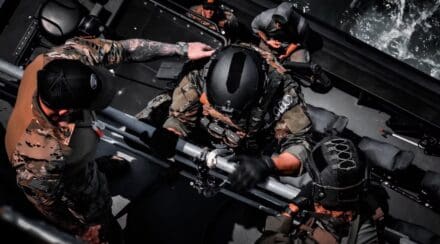
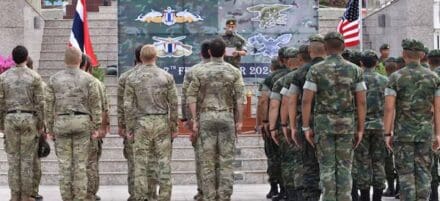
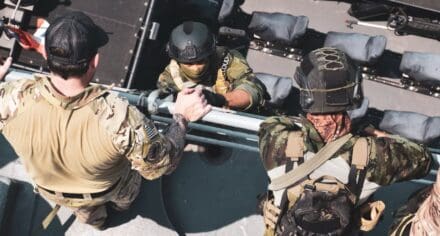
MOODY AIR FORCE BASE, Ga. – The 820th Base Defense Group plays a pivotal role in ensuring safe operations by securing air base infrastructure, safeguarding personnel and providing a strong defense posture to enable Air Force, Joint and Coalition missions.

In a joint environment with unpredictable challenges, dispersed execution and mission command becomes imperative for operational success and maintaining a lethal edge.

To create a more cohesive unit, the 820th BDG created a two-week Battle Staff Course for its unit leadership and merged its execution with the Group’s existing Tactical Leader course for squad leaders. The first iteration of this combined training occurred Dec. 1-18, 2023, at Moody Air Force Base, Georgia.

A Battle Staff consists of officers and non-commissioned officers working together to support command decision-making processes, manage resources, plan and direct subordinate missions, analyze intelligence, and oversee communications and logistics during military operations. Tactical leaders are senior airmen and NCOs appointed as leaders within their unit entrusted to make decisions at the ground level.

The Battle Staff course teaches Air Base Defense Doctrine and how to implement it into mission planning for tactical leaders to employ. The tactical leader course empowers Airmen to interpret, execute and conduct lower-level planning to support the commander’s intent in the Battle Staff’s operational orders.

“By immersing students in this intensive training regimen, the (Tactical Leader) course empowers Airmen with ample leadership opportunities, allowing them to make critical decisions throughout the entirety of the program,” said Senior Airman Garrett Montilla, 820th Combat Operations Squadron training instructor.

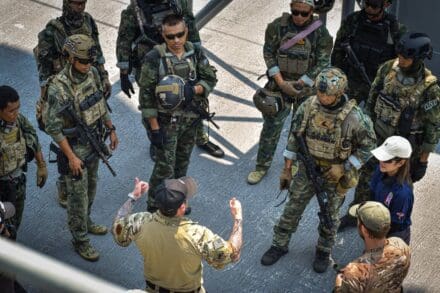
These courses culminated with a five-day field training exercise immersing tactical leaders and battle staff in real-world scenarios where they had the freedom to experiment, make mistakes, and most importantly, learn from them.

“They’re working through very realistic problems in an environment where failure is totally fine because everything is executed in a controlled environment,” said Lt. Col. Justin Bateman, 822d Base Defense Squadron commander and course creator. “We have a chance to play it back and show them the decisions they made and let them reflect on it and figure out how to learn from it during the debriefing process.”

During the training exercise, students in the Battle Staff course produced an operational order for their squadron driving a series of tasks for tactical leaders in the field to execute.

“These orders guide the squads during missions, conducting area reconnaissance and gathering crucial intel from ground forces,” Montilla said. “They ultimately inform strategic decisions by shaping future operations and their dynamic scenarios.”

To initiate the exercise, the squad leader faced the challenge of maneuvering a squad through an enemy-contested area. Upon reaching the designated operating location with low visibility, they efficiently established a base in four hours which included digging 4-foot trenches for defensive positions and setting up communications with the Battle Staff.

Operating on minimal sleep, tactical leader students underwent frequent rotations as squad leaders and team leaders. Instructors evaluated them from the moment they received patrol orders to the end of each mission. These operations focused on denying adversarial access to key terrain and enemy movement as well as eliminating adversaries in proximity to bases, decreasing enemies’ capability and willingness to fight.

“I hope that they take away a better understanding of their role and what is required of them in an airbase defense environment,” Bateman said. “I also hope that they take away the realization that we all have a lot to learn and must stay growth-minded no matter our rank. Regardless, the students are growing and you can see that in their execution.”

Story by Senior Airman Deanna Muir, 93rd Air Ground Operations Wing

Rest In Peace – Gaston Glock

December 27th, 2023

Blast from the Past – The Digital Message Device Group

December 27th, 2023

Not long after “ET” used a modified Speak & Spell to phone home*, select units within the US Army were using the OA-8990/P Digital Message Device Group (aka KY-879/P) to communicate.

I used the DMDG from the late 80s up until the mid-90s while assigned to both 3rd ID LRS and in 3rd SFG(A) on a SOT-A.

Manufactured by Racal Communications, it was a burst transmission device. Messages were formatted and encrypted via one-time pad and then entered into the device via the keyboard. The dot matrix screen could be backlit but was used only with caution so as not to give away the user’s location at night. Although, the nylon cover could be configured to partially conceal the screen from three sides, the glow reflecting off of the user’s face was noticeable, especially if he was wearing glasses.

The DMDG sent a digital burst signal when used primarily in conjunction with HF radios. Initially these were the AN-PRC-74 and 70, but I only ever used the device with the AN/PRC-104A and AN/PRC-132 SOHFRAD (Special Ops High Frequency Radio). It could also used with SATCOM systems such as the AN/PSC-3, AN/LST-5 and AN/MST-20.

In the photo at the top, you can see the cables used to connect the DMDG to the radio as well as an external battery such as the Magnesium BA-4386 (also used in the AN/PRC-77) which only provided about four hours of power.

The combination of burst transmission and HF comms was intended to thwart threat radio direction finding efforts but the baud rate was so slow (266.6 baud), messages took a really long time to transmit. At that speed, you could only transmit 27 characters a second on HF. For SATCOM shots, you could speed it up to 1200 baud but satellite time wasn’t as prevalent during the 80s and 90s.

During an International (NATO) LRRP exercise in the late 80s, I learned that the Dutch 104th Reconnaissance Co used the MA-4450 Message Entry and Read-Out Device. The MEROD looked like the DMDG, but offered onboard encryption.

By the mid-90s we began to transition to the AN/PRC-137 Special Mission Radio System which was much smaller and lighter than earlier radios and used a palmtop Data Messaging Device to transmit messages via a radio which could be queried by a base station for message traffic. When used for Special Reconnaissance missions this allowed to communicator to leave the radio a safe distance from the element. This combined with much faster data transfer rates greatly lowered the risk of threat direction finding.

The DMDG is now a relic of the Cold War. Today, handheld cellular devices provide more capability than we could carry just two decades ago. Communicators use a variety of multi-band devices which offer onboard encryption as well as data transfer rates high enough to provide live video feeds using waveforms which boast low probability of detection and intercept.

* “E.T. the Extra-Terrestrial” was a 1982 movie by Steven Spielberg. A famous line is “E.T. phone home.”

Sneak Peek – Raptor Tactical Suppressor Covers

December 27th, 2023

Raptor Tactical is working on suppressor covers.

Light Fighter Course, 3-5 May 2024, Alabama

December 27th, 2023

From crew who brought you Light Fighter Manifesto. Based on the pilot course conducted earlier in this year in Switzerland, CR2 is holding their inaugural US Light Fighter Course, 3-5 May 2024, at Steel City Precision in Alabama.

The 3-day Light Fighter Course offers training in skills for target interdiction and reconnaissance and surveillance (R&S) operations including precision shooting techniques, radio communications encompassing both voice and data, utilization of Software Defined Radios (SDRs) for spectrum analysis, monitoring, and directional finding.

Additionally, the course includes extensive training in comprehensive drone planning, flight operations, and culminates in a mission planning exercise integrating all learned skills.

www.cr2supplycage.com/products/Light-Fighter-Course-3-5-May-2024-Alabama

Brouwer’s “The Thing”

December 27th, 2023

Is a simple, and robust solution to a long-faced problem; how do you combine the ergonomic benefits of multi-angle pistol magazine pouches, with the versatility of the soft forging duty pouch such as the “TACO”?

Traditionally, the multi-angle pouches are manufactured using Kydex, or injection molding, which serve their purpose well, however, they only support one or two types of magazines. This solution is great, in environments where only one gun or one magazine type is used.

But for the working professional or the firearms connoisseur, you just flat out need more flexibility… literally. And for this need, the HSGI TACO is excellent. Stuff whatever you want in it and it will serve you well. However, it can only be installed 90 degrees to whatever MOLLE belt solution you select.

We are proud to announce a solution for the best of both worlds. the “The Thing” is a robust T7075 aircraft-grade aluminum mount ready for any scenario in shooting. Our proprietary design allows quick and easy mounting with any MOLLE pouch on the market. Adjustable in 10-degree increments, for a full 360 degrees of rotation.

Additionally, the center of rotation is offset from the centerline, so that “The Thing” can be installed with the magazines in a high or low offset, depending on your setup and needs!

Includes 2 spacers for your belt of choice from 1.5″ – 2″ we got you covered. 

We didn’t know what the hell to call it, so it’s just, … “The Thing”

www.brouwersolutions.com/shop/the-thing

How Army Tailors Brought Back The “Ike” Jacket

December 27th, 2023

Stitching with distinction: the Army’s talented tailors

FORT MEYER, Va. — From a basic trouser hem to re-designing a famous jacket fit for a President, the tailoring team at the Logistics Readiness Center, Joint Base Myer-Henderson Hall in Fort Meyer, Virginia keeps the fabric of the Army strong, accurate and reliable for its customers.

LRC JBM-HH is one of 78 LRCs that report to the U.S. Army Sustainment Command. LRCs are essential in providing support services across the entire U.S. Army. While these support services vary in type – everything from ammunition management to food service – the tailoring team is one of the unique teams that supports our Army. LRCs have a daily, visible impact on every Soldier at their duty station and provide essential services that many take for granted. For example, many don’t likely think twice about a ceremonial uniform for a Soldier, but if they looked or fit less than perfect, it would attract attention.

The LRC JBM-HH team provides tailoring services for members of the 3rd U.S. Infantry Regiment (The Old Guard), 289th Military Police Company, Joint Task Force-National Capital Region/USA Military District of Washington staff members, and a few other senior leaders and organizations. These organizations are authorized to wear the ceremonial blue uniform and include people with titles such as Commanding General, Chief of Staff White House social aides and the Army Aide to the President and Vice President. They’ve also worked on garments for presidents and other key U.S. dignitaries. With a tailoring team of only five personnel, this wide and diverse mission keeps them consistently occupied.

Comprised of three seamstresses, a tailor, a joint lead tailor and shoe cobbler, they adeptly tailor 80-100 items weekly. Common tasks take between 30 minutes to three hours to complete, while custom pieces can take much longer.

Thanks to the proficient tailoring team, the process seamlessly unfolds for those utilizing their services. As an invaluable part of ASC, they provide a unique way for leadership to look sharp and ready for a variety of occasions.

The team manages individual orders for ceremonial uniform fittings, but they also handle other aspects of daily wear, such as shirts, trousers, overcoats, raincoats, and more.

“A saber must be measured based on the height of the individual,” explains James Risek, LRC JBM-HH director. “This ensures that we are meeting the standards of the U.S. Army and the Old Guard.”

If standards are not met and maintained, there can be inconsistencies among uniforms, taking away from the polished look that the Army is known for. There may also be differences in the uniforms based on exposure to the elements, such as excessive time in the sun.

Ceremonial uniforms for the Old Guard, for example, are composed of a heavier set of cloth material that will hold up over a longer period of time. This is particularly important for the guards of the Tomb of the Unknown Soldier, Honor Guards, and funerals.

“The precision and dedication of our talented tailors to serving the Old Guard at the Tomb of the Unknown Soldier indeed symbolize their profound commitment to honor and professionalism,” says Col. Larry Dean, commander of the 406th Army Field Support Brigade.

“The heavier uniforms maintain their appearance longer, and it reduces the dry cleaning and pressing requirements,” Risek explains. “The Old Guard Soldiers have internal press machines in each of the barracks for in between funerals or other missions. This provides them the ability to press their individual uniforms as needed.”

He adds that for any alterations, they must measure, fit and size before making any necessary follow-up adjustments and transferring to the workroom. The final product is then ready for pickup and wear.

Through thousands of stitches, some noteworthy items have been worked on over the last few years.

Alex Nguyen, lead tailor at JBM-HH, was invited to then chairman of the Joint Chiefs of Staff Gen. Mark Milley’s retirement ceremony this fall. Nguyen provided specialized tailoring for Milley for eight years and was specifically requested by Milley to re-outfit him as the chairman of the Joint Chiefs of Staff.

The team tailored a jacket for President Donald Trump and other key senior military leaders in 2017 for use while addressing troops overseas.

They supported the Cadet Uniform Factory at LRC West Point during a backlog, adding a new facet of uniform preparation to their repertoire.

Risek says that while most tailors and seamstresses focus on alterations, his team is different.

“The tailor shop is trained to understand the unique needs of every customer and weigh it against tailoring, embellishments and any other unique military requirements.”

The team showcased their skills and knowledge with the “Ike jacket,” designed on commission from Milley. It was the prototype of a replica of the famous jacket worn by President Dwight D. Eisenhower while in the field. This process involved using an archived jacket, relying on historical data, and applying modern standards, reviewed and approved by Milley. It was executed by the team with Milley’s input. Milley, the first fitting model for the project, made it available for Army service members to purchase and wear.

While not all items are as intricate as this project, it underscores the team’s wide range of skills and talents benefiting the Army. Whether jackets, pants, overcoats, raincoats or special commissions, most projects require at least a hem, embellishments, or final touches throughout their life cycle.

Tailors are an invaluable asset to both ASC and the Army, ensuring that military members are properly outfitted with uniforms that fit correctly and meet the standards set by the Army. While having the correct uniform is essential for a Soldier’s comfort, safety, and morale, it can also help create a sense of unity within the Army team.

By Kelly Haertjens, ASC Public Affairs

DroneShield Releases DroneSentry-C2 Tactical

December 26th, 2023

• DroneShield releases DroneSentry-C2 Tactical (DroneSentry-C2T) – an intuitive, tablet-based, command-and-control version of its DroneSentry-C2

• DroneSentry-C2T allows central command-and-control level capabilities for field-based operators to maintain awareness of multiple portable, on-the-move and fixed site systems in their area of interest

• DroneShield (“DroneShield” or “the Company”) is pleased to release DroneSentry-C2 Tactical (DroneSentry-C2T), in response to significant end user demand.

DroneSentry-C2T is a ruggedised, on-the-edge version of DroneShield’s main Command-and-Control solution DroneSentry-C2. The system provides operators with real-time C-UAS situational awareness from a single device or network of DroneShield and third-party devices, such as the RfPatrol body worn drone detector and the DroneSentry-X on-the-move and expeditionary fixed site drone detection and defeat system.


DroneSentry-C2T provides an intuitive satellite map-based display, with 2-way communication between the user and the distributed network of counter-drone devices, demonstrating drone detections from a network of sensors back to a central point anywhere to a rugged user tablet, as well as ability (where lawful) to activate drone defeat systems.


Image: DroneSentry-C2 Tactical deployment solution

The launch of the DroneSentry-C2 Tactical enables existing DroneShield end users to enhance their solutions as an ‘add-on’ capability. Additionally, the DroneSentry-C2 Tactical offers a new entry level C2 solution to customers who do not require the full DroneSentry solution.

Angus Bean, DroneShield’s CTO, commented “The release of the DroneSentry-C2 Tactical solution is in line with modern defence technology trends, pushing enhanced situational awareness and decision-making tools to the operator at ‘the edge’. It allows personnel on the ground to take a more strategic view of the area of operation.”

“DroneShield is both a sensor maker and a developer of C2/sensor integration systems, which enables us to provide an optimised experience for the end user. The release of the DroneSentry-C2T enables us to utilise our position as the global leader in the C-UAS handheld systems, and introduce world’s first command-and-control system for a hand-held C-UAS environment.”

“As we are seeing in Ukraine and other places around the world, handheld C-UAS devices enable cost-effective, mass-scale drone detection and defeat capability. DroneSentry-C2T enables to network these groups of devices together, without a limitation on size of the amount of devices, to provide central point of awareness and response, either in hands on a single master user, or distributing information amongst multiple users in the field.”

The product has recently completed successful trials with the US Department of Defense and is available for sale immediately.