XC3 Weaponlight

Next Generation Squad Weapon Tested at Army’s Cold Regions Test Center

March 29th, 2024

FORT GREELY, Alaska — It is vital that military equipment work wherever in the world American Soldiers need it, and extreme cold is a weather condition troops have had to contend with frequently in American history.

From Korea to Afghanistan, the lives of American Soldiers have frequently depended on properly functioning equipment in inhospitably frigid environments.

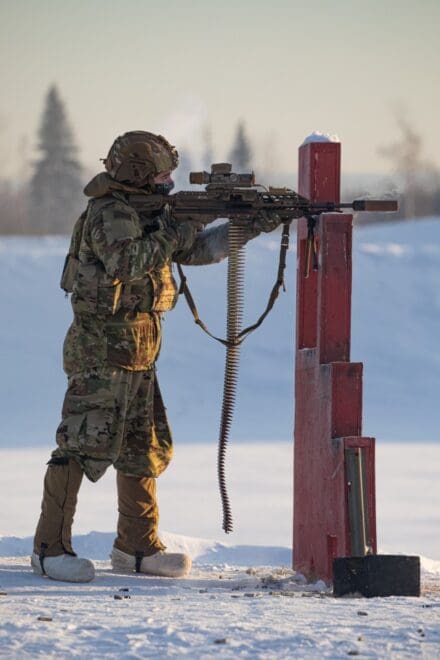
This fact led to a multiweek test of the Army’s Next Generation Squad Weapon at the U.S. Army Cold Regions Test Center at Fort Greely, Alaska early this year.

The XM7 and XM250 are successors to the M4 rifle and M249 light machine gun that American forces have used for decades. The new weapons boast improved accuracy and range, weigh less and fire with less recoil even though their 6.8-millimeter round is larger than the two legacy weapons’ 5.56 mm cartridge.

“The big idea behind this weapon is for close-combat forces,” said Steven Prewitt, test officer. “It’s a capability gap-filler for infantry and special forces, not necessarily an M4 replacement. It gives them a different tool.”

Even when outfitted with a flash suppressor, the XM7 weighs less than 10 pounds. The new weapon has a standard rifle scope with an etched reticle, but also much more.

“It has adjustable modes of operation where it can act like a red dot or close combat optic,” said Prewitt. “It also has a corrected aimpoint: it has a ballistic calculator and range finder built in, so if you range a target it takes into consideration your environmental conditions, the distance to target, and the attitude of the weapon to ensure first shot accuracy.”

Soldiers from the Army’s 11th Airborne stationed at Alaska’s Joint Base Elmendorf-Richardson supported the testing.

“We had an organic troop, which was nice,” said Isaac Howell, senior test officer. “We had the entire leadership from the company commander on down.”

The Soldiers and testers utilized the weapons in rigorous scenarios, from static and kinetic ranges at Fort Greely and Fort Wainwright to maneuver live fires and ultimately a 72-hour simulated mission across CRTC’s vast ranges. All the while, a team of 16 data collectors recorded information in the weapons’ battery life, hit-miss data on targets the Soldiers engaged, and a variety of human factors data involving utilizing the weapons in extreme cold.

“We knew it was going to be extremely fast-paced and that usually means there will be changes,” said Monica Gaschler, senior data collector. “We settled on 16 data collectors, which meant one data collector per three Soldiers. 14 went out in the field, and two stayed in house to do quality assurance on the data and write test incident reports.”

Extreme cold was a coveted commodity for this test, and the weather forecast delivered beyond the highest hopes of the testers.

“We were fortunate to have some pretty substantial cold weather for the duration of the test,” said Prewitt. “The last urban rifle marksmanship course we did was -54 degrees Fahrenheit when we started, so it was incredibly cold.”

“The Soldiers really got to experience what a long, cold day was,” added Howell. “Every day they went out one week it didn’t get above minus 20. The next week it was hovering in the minus 30 to minus 40 range all day, every day.”

The majority of data collectors who supported the test traveled from Yuma Test Center in Arizona, which like CRTC is under the command of U.S. Army Yuma Proving Ground.

“It was an endurance challenge for data collectors from the desert,” said Gaschler. “It’s rare for data collectors to be out in the field in temperatures below minus 50 degrees, but they did it without complaints. They got every bit of data, and I am so proud of every one of them.”

“We’ve got a lot of data that is informing decisions,” added Howell. “It’s very fortunate that we had a good block of cold to test this equipment, especially something as prominent as the NGSW is going to be. It has definitely been a successful test.”

By Mark Schauer

G3 Systems Wins Overseas Construction Works Contract for Refurbishment of the British Deputy High Commission Office in Lagos, Nigeria

March 28th, 2024

G3 Systems Limited, the British company with over 20 years of operationally proven expertise in designing and producing deployable containerised solutions and providing infrastructure support to military and government organisations in remote locations across the globe, has just been awarded a multi-million-pound contract by the Foreign and Commonwealth Development Office (FCDO) for the remodelling and refurbishment of the British Deputy High Commission (BDHC) in Lagos, Nigeria.

The contract, awarded following a competitive tendering exercise, is a mix of demolition, refurbishment, new build and landscaping works estimated to take 18-24 months. The objectives of the FCDO project are to enhance the working environment for deployed staff, ensure compliance with modern building standards, maximise space utilisation and minimise ongoing maintenance and running costs.

The project will also seize the opportunity to enhance compound security and improve the compounds overall environmental performance, in line with government net carbon zero goals.

Throughout the works, the BDHC will remain occupied and fully operational. Therefore, an essential component of the project is to provide close liaison with staff to ensure the project works are synchronised with their operational needs.

Nick Rose, Managing Director G3 Systems said, “This is excellent news for G3 Systems and a very exciting extension of our existing construction capability. We have a strong pedigree of providing deployable containerised embassy solutions for the government in the past and delivering projects in remote locations for the military, but this is a first to manage a complex construction project in a remote location for the FCDO, which is a fantastic addition to our current portfolio.

Army Delivers Next Generation Squad Weapon to First Unit

March 28th, 2024

FORT CAMPBELL, Ky. – A brigade from the 101st Airborne Division at Fort Campbell was the first unit equipped with the Army’s new Next Generation Squad Weapon (NGSW) system today.

Soldiers from the 1st Battalion, 506th Infantry Regiment, accepted Next Generation Rifles and Automatic Rifles in preparation for New Equipment Training (NET) in April. NET is an in-depth, train-the-trainer course that prepares designated non-commissioned officers to facilitate follow-on training across the company.

“The process of developing and fielding new equipment is never without challenges and setbacks and speed bumps, so we’re celebrating the fact that we’re delivering on schedule, as promised,” said Lt. Col. Mark Vidotto, the NGSW lead for the Soldier Lethality Cross-Functional Team (SL CFT) at Fort Moore, Georgia. “It was a team effort from start to finish.”

The “start” was 2018, and the “team” included the SL CFT and their Program Executive Office Soldier partners, Joint Program Executive Office Armaments and Ammunition, Sig Sauer, Vortex and a number of other stakeholders who teamed to hasten development and production of the new system after the requirement was identified in a 2017 study that recognized the need for weapons that will perform better at range.

More than 25,000 hours have been invested by Soldiers during the development and testing of the NGSW system, which includes the XM7 Rifle, the XM250 Automatic Rifle, the XM157 Fire Control and the 6.8 mm family of ammunitions.


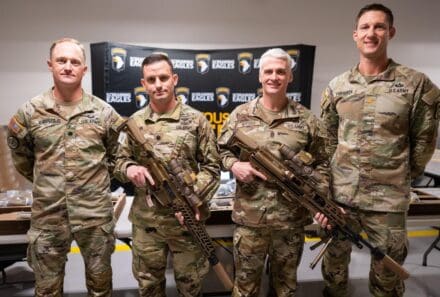
LTC Mark Vidotto, Next Generation Squad Weapons (NGSW) requirements manager for Army Futures Command, LTC Eric Evans, Battalion Commander, 1st Battalion, 506th Infantry Regiment, CSM Ryan Jeffers, senior enlisted leader of the 1st Battalion, 506th Infantry Regiment, and MAJ Eric Forsgren, assistant product manager for the NGSW for PEO Soldier, pose for a group photo at an NGSW first unit equipped and unboxing event at Fort Campbell, Ky., March 28.

“The NGSW fielding is a culmination of a comprehensive and rigorous process of design, testing and feedback, all of which were led by Soldiers,” said Col. Jason Bohannon, project manager, Soldier Lethality, PEO Soldier. “As a result, the Army is delivering on its promise to deliver to Soldiers the highest quality, most capable small-caliber weapons and ammunition.” 

Based on modernization schedules, the Army will field NGSW systems to a National Guard armored brigade in May.

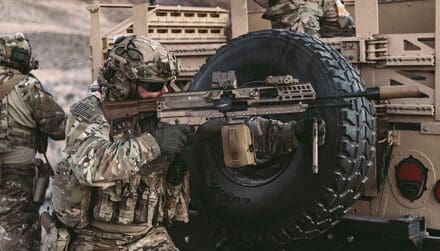
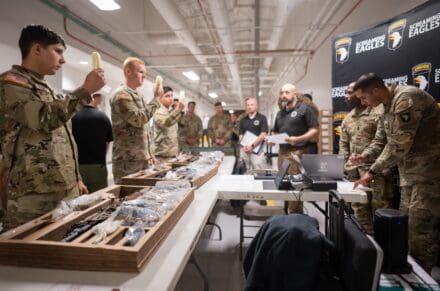
Note from SSD: This came from Army Futures Command. It did not include a photo but few people read articles without photos. I included the image at the top from PEO Soldier’s PM Soldier Lethality. It was not taken during this First Unit Equipped event and only illustrates the XM250 Automatic Rifle. The optic shown is not currently part of the program of record. The previous test event with the 101st was considered first unit issued. Later in the day, PEO Soldier released the two additional images.

KC Eusebio Wins Speed Shooting Title with Bushnell RXM-300 Reflex Sight

March 28th, 2024

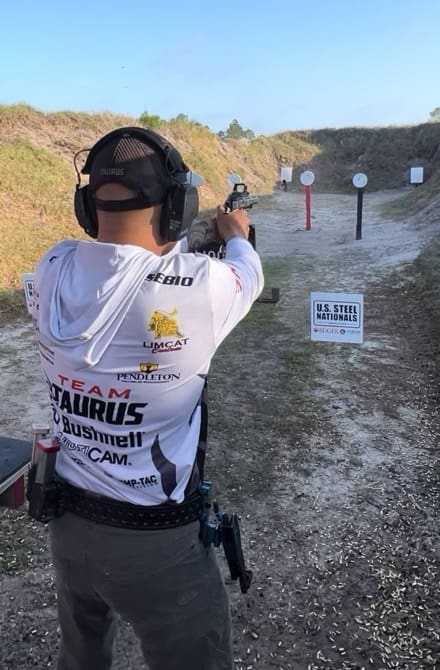
OVERLAND PARK, Kan. – March 25, 2024 – Bushnell®, an industry leader in performance optics, is proud to announce sponsored shooter KC Eusebio won the Speed Shooting title at the US Steel Nationals at the Volusia County Gun Club near New Smyrna Beach, Florida, March 15 -17.

Eusebio successfully defended his title from 2023 and opted to use the same Bushnell reflex sight – the RXM-300 Reflex Sight – to claim his 2024 national title.

“This was a tough one with minimal training and jet lag,” said Eusebio. “But once we got rolling, Jessie Harrison and Max Michel pushed me to focus up and give it my all.”

A USPSA Grandmaster since age 12, Eusebio is one of the most accomplished competitive pistol shooters in the world. Over the last six years, Eusebio has relied on Bushnell products to keep him at the top of his game. Prior to competing at the US Steel National, Eusebio used the Bushnell RXM-300 to win first place overall at the Boland Handgun Championship in Cape Town, South Africa

“There are so many great things that I can say about the Bushnell RXM-300,” said Eusebio. “It is by far the best red dot that I have used throughout the 28 years of my shooting career. A big thank you to Bushnell and my other sponsors for allowing me to live the dream and pursue my marksmanship endeavors.”

The Bushnell RXM-300 is a versatile, large lens, 4 MOA red dot with 12 brightness settings plus an optimized hood geometry for faster target acquisition and shot follow-up without sacrificing durability. That not only makes it the perfect competition sight for pro shooters like Eusebio, but also makes it a great option for carry, home defense and hunting on long-guns and handguns alike. Other premium features of the RXM-300 are user selectable auto-ambient intensity, shake-awake with selectable defeat, and button lockout.

To learn more about Eusebio, other Bushnell ambassadors and pro shooters and the gear they rely on, visit the Bushnell Ambassador’s page.

TacJobs – US Army 17A Cyber Warfare Officer

March 28th, 2024

US Army Cyber Warfare Officers are responsible for carrying out cyber security operations in conjunction with an organized plan by targeting adversary activities and capabilities.

Specialized Skills Learned:

-Cyber Operations

-Intelligence & Surveillance

-Systems & Networks

Earn up to 46 Nationally Recognized Certifications

Requirements:

-U.S. Citizen or Permanent Resident

-18 to 34 Years Old

-Accepted to College, In College, or Graduate of a Four-Year Degree Program

-Basic Officer Leadership Course (or Additional Special Courses/Qualifications)

-Eligible for a Secret Security Clearance

-Medically and Physically Fit

-In Good Moral Standing

For more information on how YOU can become a 17A, head to www.goarmy.com/careers-and-jobs/career-match/signal-intelligence/locations-stats-frequencies/17a-cyber-warfare-officer

Safariland Unveils New Solis Fits for GLOCK 17 and 19

March 28th, 2024

JACKSONVILLE, Fla. – Safariland®, a brand of The Safariland Group®, a leading global provider of safety products designed for the public safety, military, professional and outdoor markets and one of Cadre Holdings, Inc.’s (NYSE: CDRE) (“Cadre”) key brands, has announced new GLOCK fits for the Solis OWB holster.

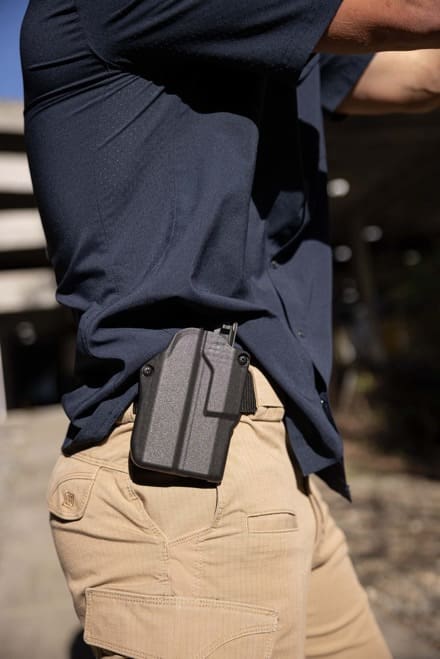
In 2023, Safariland introduced the Solis holster to accommodate subcompact duty pistols with lights and optics. Now available for GLOCK 17 and 19 models, Solis offers law enforcement officials and civilians a new OWB carry option from the originators of holster retention.

“We continue to collaborate with firearm manufacturers to ensure a diverse range of OWB holster fits for the most effective tools for everyday carry,” said Eric Gasvoda, GM of Duty Gear for Safariland. “Solis is an ideal addition to our outside-the-waistband holster family, and we’re proud to provide new GLOCK options for the firearm and law enforcement community.”

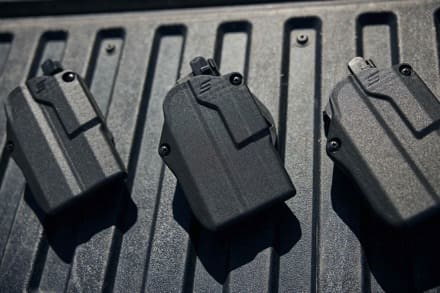
Crafted from a durable and weather-resistant SafariSeven™ nylon blend, the Solis OWB holster offers rugged durability to protect firearms. Its open muzzle end design facilitates easy debris removal and accommodates threaded barrels, ensuring optimal functionality in various environments.

Key features include:    

• ALS® secures firearm once holstered: simple straight-up draw once the release is deactivated

• Compatible with most Red Dot Sights

• Compact Light Compatible

• Two-piece reinforced holster body for increased strength

• MSRP: $82.50 – $87.50

With the introduction of the Solis OWB holster for GLOCK 17 and 19 models, Safariland continues to deliver innovative solutions that meet the evolving needs of law enforcement professionals and firearm enthusiasts.

To learn more about the Solis holster, visit Safariland.com.

Arisaka Defense – MCX Spear 308 Zero Retention Clamp

March 28th, 2024

Arisaka Defense showed me their new MCX Spear 308 Zero Retention Clamp during the vendor day at last week’s USASOC Sniper Competition.

It’s the big brother to their popular MCX Virtus/Spear LT Zero Retention Clamp which is designed to prevent handguard flax and thereby reduce zero shift for lasers and iron sights that are mounted on the handguard of the MCX Spear.

The Arisaka ZRC consists of two sets of 7075 clamps that mount in the vent slots on either side of the handguard. The inner half of each clamp engages the extended upper receiver.

This new version is designed for the MCX Spear chambered in 277 Fury and .308 while the LT model is for .223, 300 BLK, and 7.62 x 39. You can tell the difference between the two clamps by the number of external lugs: three for the heavy and one for the light.

Transforming DOD: PC-C4 Prepares for the Future Battlefield

March 28th, 2024

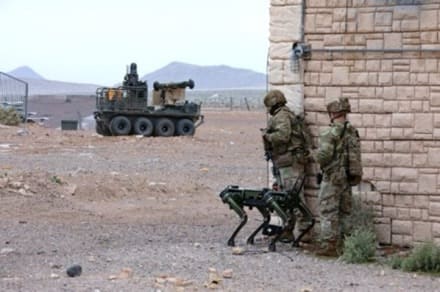
FORT IRWIN, Calif. — On the beaches, oceans, air and deserts of the U.S. West Coast, more than 4,000 members of the joint force, civilians, contractors, and militaries from the United Kingdom, Australia, Canada, New Zealand, France and Japan experimented with more than 200 technologies in the Army’s largest experiment in the dirt, Project Convergence Capstone 4.

Two phases, primarily conducted in California at Camp Pendleton and the National Training Center, allowed experimenters to work in arduous conditions and experiment with cutting-edge technology in as close to a real-world environment as possible. Distant locations also supported the experiment up and down the West Coast and the Pacific region to experiment through time, distance and complexity.

Technology getting to PC-C4 itself takes time and goes through a review process designed to save PC-C4 time and money by ensuring only the most promising technologies make their way to the capstone experiment. All technology at PC-C4 could fill a potential gap or provide a capability designated as necessary by senior leaders. Nascent technologies go through the Science Technology and Review Board before spending time at a myriad of other experiments and lab-based risk reduction activities, all before they ever make their way to NTC or Camp Pendleton.

“There are plenty of technologies we find out aren’t mature enough or don’t fill a gap or capability the way we thought, so they get withdrawn way before Capstone 4 takes place,” said Mindy Gabbert, experiment division chief at the U.S. Army Combat Capabilities Development Command.

Not only does this scrutiny save money and time once the experiment begins at PC-C4, but it also ensures that all players involved in putting on PC-C4 already have working relationships.

“It’s not just a yes or no process. It’s going through those prior risk reduction activities that allows the broader community to see those technologies and just to be familiar with them before they get here so that they can properly fit them into the exercise, so that they can make sure that we are aligning them with the right use cases and the other right opportunities out here,” Gabbert said. “So, in addition to the technical aspects of those technologies, it’s just building that knowledge base within the community of what’s out there and bridges that community by building the whole body of knowledge we’re all working on.”

Since 2020, Project Convergence (PC) has grown exponentially in scale and scope. PC-C4 was the largest PC experiment yet, with participation from the United States Army, Navy, Marine Corps, Air Force and multinational partners.

“The first PC was conducted in 2020. It was Army only and focused on a specific time between the identification of a target and an effector shooting on that target,” said Lt. Gen. Ross Coffman, United States Army Futures Command deputy commanding general. “And from there, we decided the Army will never fight alone, so let’s get the entire joint force focused on this problem set.”

“This year, we have increased the threat envelope to 10 times what we did last year. With the entire joint force and our U.K. and Australian teammates and allies, we were able to effectively move data for the first time in an Indo-Pacific scenario at a magnitude we’ve never seen before,” Coffman said.

PC-C4 informed combined, joint all-domain situational awareness, command and control, integrated offensive and defensive fires, defeat large target array, human machine integration and how to sustain the force over large-scale combat operations, dubbed contested logistics.

One of the significant successes of PC-C4 was the integration of sensors and fires to ensure that the force is best able to stop incoming missiles without depleting munitions unnecessarily. Coffman explained that they used offensive and defensive fires to tackle the problem and ensure that sensors have interoperability between the branches to ensure the right sensors pick up the threat and the right shooter takes it out, so the military does not waste munitions.

“It’s not our job to go fill up the magazines to the level we’d like them to be, but it is our job to ensure that we can connect my sensors to his fires and his sensors to my fires because I might have the most available weapon where he’s got the most survivable sensor and vice versa,” said Vice Adm. Michael Boyle, Third Fleet commander. “And that’s really what this is about; it’s enabling us to pick from whatever magazine we need.”

Another major win for PC-C4 was the increased ability to push data through a fully networked command, control and communications system. This allowed for more significant amounts of data to be pushed to the Joint and Allied forces.

“When you put stress on untested equipment, you’re going to learn things,” Coffman said. “One of the interesting things is that as we increase the pipe on this cross, it worked magnificently. It could pass a large amount of data that we had not seen before we tested it last year, and we could see it was nascent. We were able to pass data successfully.”

Great strides in contested logistics experiments also took place across both phases. Experiments involving beach landings, drones and printing technology were showcased, and for the first time, a repair part for an Army system was printed out at sea on a Navy vessel.

“Envision the printer was on the vessel,” said Col. Shane Upton, director of the Contested Logistics Cross-Functional Team. “They printed the part, we put it on an unmarried unmanned aerial system, a drone, and flew it onto the beach to the point of need. In a contested environment where you don’t have a permissive flow of sustainment, you’ve got to use some of these exquisite technologies. That’s why we’re experimenting with them.”

Now that PC-C4 has wrapped up after several weeks of experimentation, the data collected will be analyzed to inform future acquisition and force structure decisions and aggressively advance and integrate Army contributions to the Joint and Combined fight.

“It’s worth every penny,” Coffman said of the experiment. “The readiness of the joint force and the partnership with our allies is invaluable. When called upon, the women and men of this nation and the women and men of other nations will fight side by side to preserve liberty, and that cost is worth every penny.”

By Matthew Murch, Futures and Concepts Center