TYR Tactical

MATBOCK Monday – ARES Drone Pack Series

June 15th, 2026

MATBOCK has been watching how operators actually use their gear, and what they saw was a lot of Graverobber™ bags showing up in drone operations. Rather than let users continue to adapt a medical pack to a mission set it wasn’t designed for, MATBOCK did what MATBOCK does, they went back to the drawing board and built something purpose-built. The result is the new ARES Drone Series, two packs built from the ground up to support drone assault operations, carrying the DNA of the Graverobber™ line but optimized specifically for drone operations.
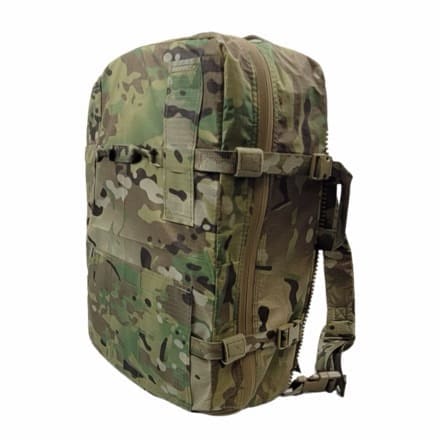
ARES Drone Assault Pack

The smaller of the two, the ARES Drone Assault Pack mirrors the form factor of the Graverobber™ Assault Medic (GRAM) bag but is purpose-configured for drone ops. Each kit ships with the pack, an insert panel with shoulder straps, two ARES Drone Assault Panels with bungee cords and cordlocks, and three Graverobber™ Assault Pouches. It can also be mounted directly to the larger ARES Drone Sustainment Pack for expanded capacity when the mission calls for it. You can also mount the ARES Drone Assault Pack directly onto a rigid frame or using the shoulder straps. A lot of options to carry the pack.
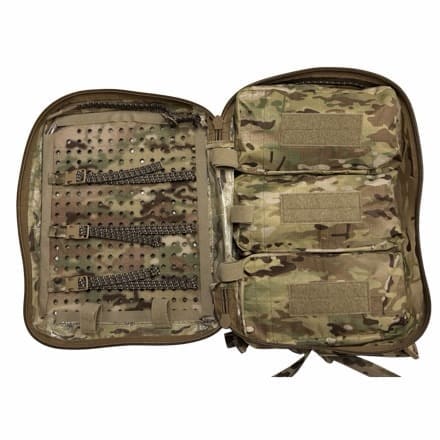
Specs of the ARES Drone Assault Pack:

Material: Ghost & Ghost Light Weight: 3.4 lbs (1.52 kg) Dimensions: 15″ L x 12″ W x 6″ H Max Volume: 1,507 cubic inches (24.7 liters) Available in Black, Coyote and Multicam®

ARES Drone Sustainment Pack

Built off the Graverobber™ Sustainment platform, the ARES Drone Sustainment Pack runs as a standalone or can be combined with the Assault Pack to significantly extend operational capacity. 
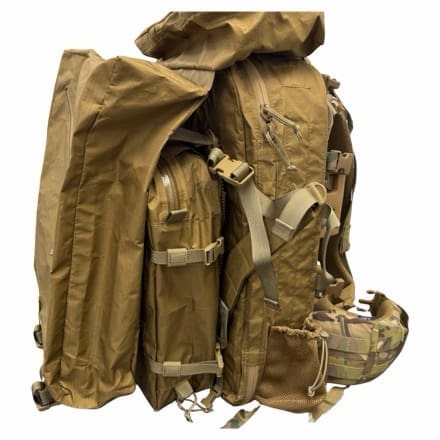
Each comes with the main pack, two ARES Drone Sustainment Panels with bungee cords and cordlocks, three Graverobber™ Sustainment Pouches, and an ARES Sustainment head pouch with extension pouch. It’s designed to fit on military-style rigid frames, and an optional Mystery Ranch NICE Frame can be purchased through MATBOCK.
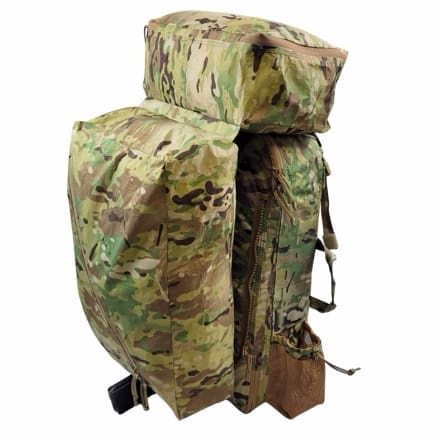
Specs of the ARES Drone Sustainment Pack:

Material: Ghost & Ghost Light Weight: 4.2 lbs (1.94 kg) Dimensions: 27″ L x 14″ W x 11″ H Max Volume: 3,377 cubic inches (55.3 liters) Available in Black, Coyote and Multicam®
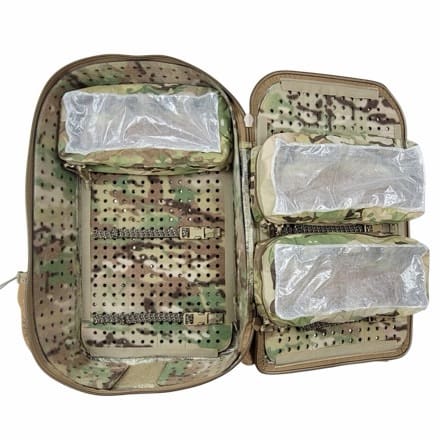
Both packs are built with MATBOCK’s Ghost materials and carry the same modular, operator-driven philosophy that’s made the Graverobber™ series so successful on the battlefield. MATBOCK has entered the chat.

Check out the full ARES Drone Series at www.matbock.com/collections/packs/Drone and reach out to sales@matbock.com to get a unit quote started today.
BFG Monday: Load Carriage Has to Change Without Breaking What Already Works

June 15th, 2026

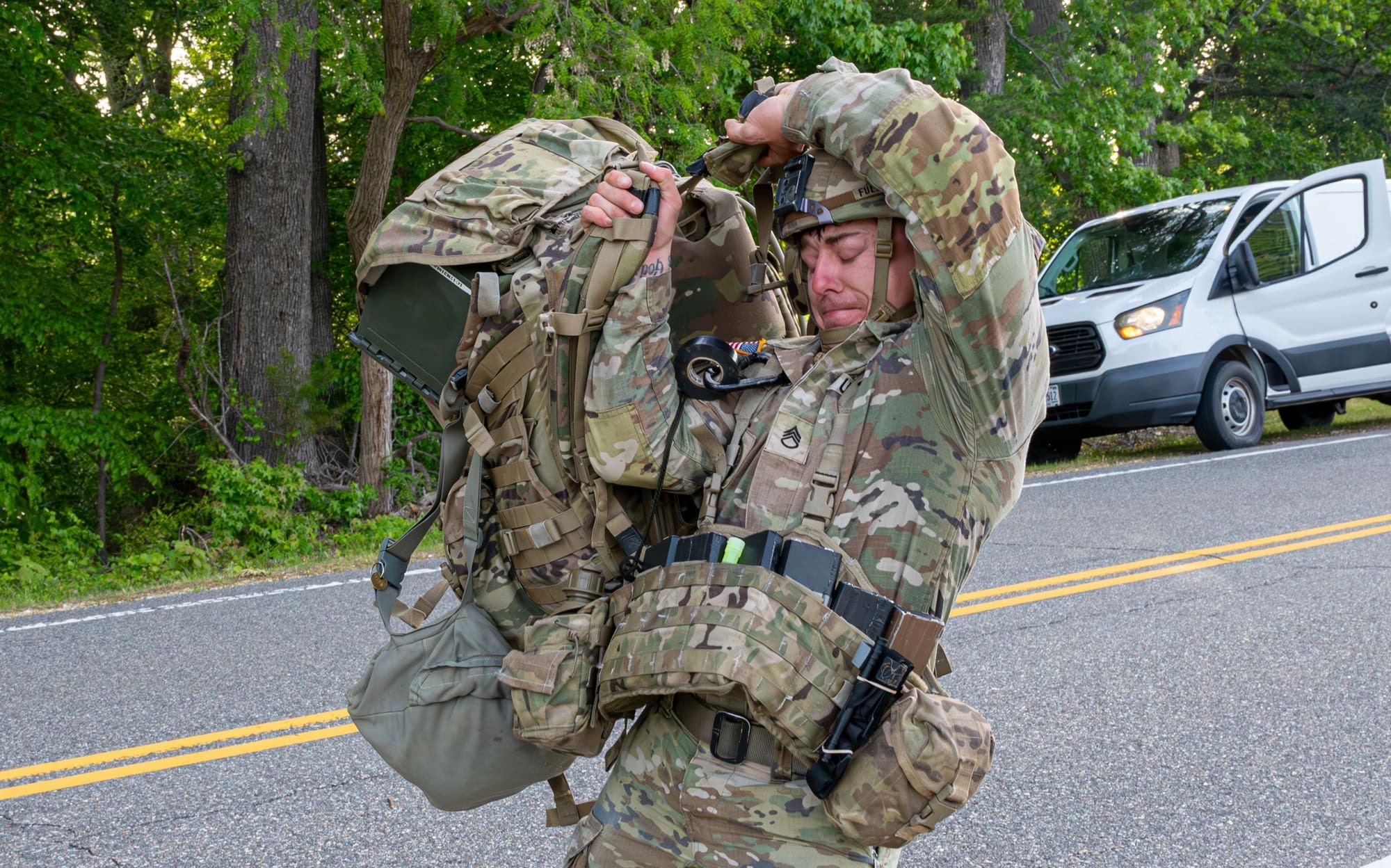
Load carriages are too heavy, but starting over completely is not realistic for Big Army.

That is the hard part of modernization. The Army does not just need lighter gear. It needs lighter gear that works inside the system already fielded.

Plate carriers, pouches, belts, rucks, vehicles, sustainment plans, training requirements, and unit SOPs are all connected. Change one piece too aggressively, and you can create new problems faster than you solve old ones.

Military leaders understand that reducing Soldier load is critical to improving mobility, increasing endurance, maintaining survivability, and preserving combat effectiveness. The Army has spent decades studying the impact of Soldier load and pursuing modernization efforts designed to improve human performance without reducing combat capability.

The problem is that weight reduction is rarely as simple as replacing equipment.

Every piece of gear lives inside a larger system. A pouch is not just a pouch. It connects to an attachment method, which connects to a carrier, belt, chest rig, or ruck. That equipment connects to how a unit trains, packs, moves, sustains itself, and fights. When a new solution forces units to replace too much at once, it can create cost, logistics, training, and fielding friction that slows adoption.

That is why compatibility matters.

In load carriage, compatibility is not just a convenience feature. It is part of the performance requirements. A solution that reduces weight but requires wholesale replacement may look good on paper, but it can create a new burden for the units expected to field it. A solution that reduces weight while working with existing MOLLE and PALS infrastructure can move faster because it respects how units operate.

That is the balance modernization has to strike.

Photo courtesy of U.S. Air Force photo by Senior Airman Olivia Bithell

Soldiers need less weight. Units need less disruption. Leaders need solutions that improve performance without creating another layer of complexity across the formation.

For years, new requirements often meant adding more material, more components, and more bulk. Individually, those decisions made sense. Collectively, they added pounds to the Soldier’s load. More pouches. More webbing. More hardware. More attachment points. More things to manage, inspect, maintain, and carry.

The opportunity now is to reverse that trend.

Not by reducing capability, but by removing unnecessary weight from the systems Soldiers already depend on.

That is where Blue Force Gear has focused from the beginning. The goal was never to create change for the sake of change. The goal was to reduce burden while preserving the platforms, habits, and interoperability units already trusted.

Helium Whisper was built around that exact problem. Traditional MOLLE pouch back panels relied on numerous individual pieces, layers, snaps, stiffeners, and sewn components. Blue Force Gear reduced that complexity by creating a lighter, simpler, laser-cut attachment system built from advanced ULTRACOMP material. The result is a pouch attachment system that reduces weight by up to 50% while remaining fully compatible with existing MOLLE and PALS platforms.

That distinction matters.

Helium Whisper does not require units to abandon their current armor carriers, belts, chest rigs, rucks, or issued platforms. It does not ask them to rebuild their load carriage system from the ground up. It gives them a way to remove weight from the equipment they already carry.

That is how meaningful modernization becomes realistic.

A lighter pouch matters. A lighter pouch that fits the equipment already fielded matters more. A lighter pouch that reduces weight, eliminates unnecessary components, sheds water, maintains strength, and works within the existing MOLLE ecosystem gives units a practical path forward.

The future of load carriage should not create another transition burden.

It should make the current system better.

This is where the conversation has to move. The question is not whether load carriage should evolve. It should. The question is how to evolve it in a way that improves Soldier performance without sacrificing the training, equipment, and interoperability already in place.

The answer is not to replace everything.

It is to improve what Soldiers already carry.

One ounce at a time.

Explore lightweight load carriage solutions from Blue Force Gear.

For units seeking to increase survivability and operational performance through reduced load carriage by upgrading to Helium Whisper, contact the Blue Force Gear Military Department or visit BlueForceGear.com.

11th Airborne Division Launches First-Ever “Angel Ascent” to Accelerate Soldier-Driven Innovation and Arctic Readiness

June 15th, 2026

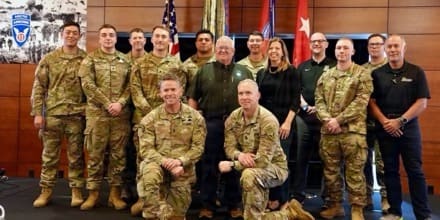
The 11th Airborne Division hosted its inaugural “Angel Ascent” innovation event at Joint Base Elmendorf-Richardson this week, marking a major milestone in the division’s commitment to warfighting transformation and Soldier-driven solutions for the Arctic’s unique operational challenges.

The event, modeled as a “Shark Tank-style” pitch competition, brought together Soldiers from across the division to present their innovative solutions to a panel of senior leaders and subject matter experts from various industries and organizations, including the University of Alaska Fairbanks, the 673rd Air Base Wing, DEVCOM, and the U.S. Army Arctic Regions Test Center (ARTC). Angel Ascent will become a bi-annual fixture, alternating between JBER and Fort Wainwright, and is designed to harness the ingenuity of Soldiers at every rank, empowering them to drive continuous transformation in support of the Army’s warfighting mission and the profession of arms.

Maj. Gen. John P. Cogbill, commanding general of the 11th Airborne Division, emphasized the impact of Soldier-driven innovation on the division’s transformation. “The hardest part of today was picking a winner, because every Soldier who stepped into the arena to pitch their idea is a winner,” Cogbill said. “Each of these innovative solutions will be prioritized in our division’s innovation plan. My promise is that every one of these ideas will continue to move forward because we want to see them scale and make a difference on the ground.”

Over the course of the day, junior enlisted Soldiers, warrant officers, and officers presented a range of technology concepts and process improvements aimed at enhancing Arctic mobility, survivability, and mission effectiveness. Among the technologies and concepts pitched were cold-weather power solutions, advanced load carriage systems, and new approaches to Arctic sustainment.

The top award went to “Wardrive,” a passive reconnaissance small unmanned aerial system (sUAS) payload that detects adversary wireless emissions and automatically uploads and reports location data back to the operator. Wardrive was developed and pitched by WO1 Brian Raab of the 2/11 Multi-Functional Reconnaissance Company.

“We may not be a Transformation in Contact division, but you wouldn’t know it if you talked to our Soldiers or saw what’s happening here,” Cogbill said. “Our division is transforming because we have innovators at every level, figuring out how to fight, adapt, and win in the Arctic.”

Cogbill also highlighted the importance of partnerships and the division’s unique expertise. “Alaska presents challenges you won’t find anywhere else, and our Soldiers are the subject matter experts in solving them. We’re working with universities and industry partners to turn these ideas into real-world solutions that will save lives and make our Army more lethal and resilient.”

The event underscores the Army’s commitment to continuous transformation, strengthening the Army profession, and leveraging the full potential of its people. Angel Ascent aligns with the Army People Strategy and the Department of Defense’s focus on accelerating warfighting advantage through innovation.

“We’re going to keep pushing, keep growing, and keep learning from each other,” Cogbill said. “This is just the start of a culture of innovation that will define the 11th Airborne Division and set the standard for the Army.”

By MAJ Ian Roth

Scouting America Launches Military Family Fee Waiver to Support Service Members and Their Families

June 14th, 2026

IRVING, TX (June 8, 2026) – Scouting America announced its Military Family Fee Waiver, a new initiative designed to reduce financial barriers and expand access to Scouting programs for all new and renewing youth members whose parents or guardians are currently serving as active-duty military (Army, Navy, Air Force, Marines, Space Force and Coast Guard), Reserves and National Guard. The program underscores Scouting America’s longstanding commitment to supporting military families and ensuring youth have access to character-building, leadership development, and outdoor experiences.

Through the Military Family Fee Waiver, eligible families may receive a waiver of national registration fees, helping make participation in Cub Scouting, Scouts BSA, Venturing, and Sea Scouting more accessible during times of service-related transition. Frequent relocations, deployments, and changes in family circumstances can present unique challenges for military families, and this initiative helps ensure continuity in youth development opportunities.

“Military families make tremendous sacrifices in service to our country,” said Roger Krone, president and CEO of Scouting America. “The Military Family Fee Waiver is one way we can give back by making it easier for young people in these families to build confidence, develop leadership skills, and experience the adventure and camaraderie that Scouting offers.”

Scouting America has a long history of serving military-connected youth, including units based on military installations around the world. The new fee waiver strengthens that connection by removing a common barrier to participation and inviting more families to take advantage of Scouting’s programs.

Scouting provides youth with opportunities to learn practical skills, serve their communities, and develop resilience, benefits that can be especially meaningful for those navigating the unique demands of military life. Programs emphasize teamwork, responsibility, and personal growth, equipping young people with tools that last a lifetime.

Eligible families are encouraged to contact their local Scouting America council for details about the Military Family Fee Waiver and application process.

For more information about Scouting America and its programs, visit www.scouting.org.

Savage Arms Helps Raise $1 Million for Youth Shooting Sports Through Support of MidwayUSA Foundation

June 14th, 2026

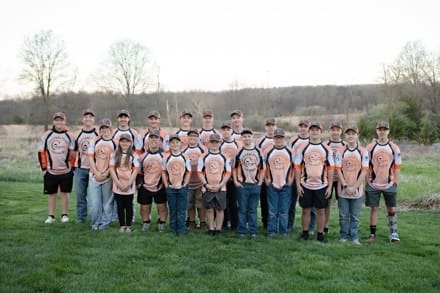
WESTFIELD, Massachusetts – June 10, 2026 – Savage Arms, an iconic firearm manufacturer, has reached a significant milestone in its continued commitment to youth shooting sports, helping raise more than $1 million for youth shooting teams and organizations through its support of MidwayUSA Foundation.

Since partnering with MidwayUSA Foundation in 2020, Savage Arms has played an important role in sustaining and growing youth shooting sports programs across the country. Funds raised through this partnership provide long-term financial support to youth shooting teams, ensuring future generations have access to safe, competitive and educational shooting sports opportunities.

“True to their vision, they build quality firearms for shooting sports enthusiasts of all ages.  Through this partnership with us, their products allow youth shooting teams in our program to conduct community fundraisers.  The fundraising product grant model gives donors the chance to win a high-value item, and in return, the team earns contributions to their endowment that will fund their team forever.  Savage Arms is leaving a legacy by supporting MidwayUSA Foundation’s mission,” said John Linquist, MidwayUSA Foundation’s Relationship Manager. The majority of Savage Arms’ products are used in MidwayUSA Foundation’s fundraising product grant programs.  Funds raised and donated to a team endowment are matched by MidwayUSA Foundation’s matching program, enabling rapid endowment growth through sponsor-provided products.  

This $1 million milestone reflects Savage Arms’ ongoing dedication to conservation, outdoor traditions and the development of young athletes through participation in shooting sports. By supporting the MidwayUSA Foundation, Savage Arms is helping youth programs nationwide build stronger teams, expand opportunities and provide valuable experiences that teach leadership, responsibility, confidence and discipline.

250 Years of America, 251 Years of Readiness

June 14th, 2026

Porsha Auzenne of the Fort Polk Public Affairs Office created this graphic which commemorates not only the US Army’s 251st birthday but also our nation’s founding 250 years ago.

Happy birthday to the institution that’s been fighting for our freedom longer than we’ve been a nation!

Happy birthday US Army!

Army Commissions Second Cohort of Tech Executives into Executive Innovation Corps

June 14th, 2026

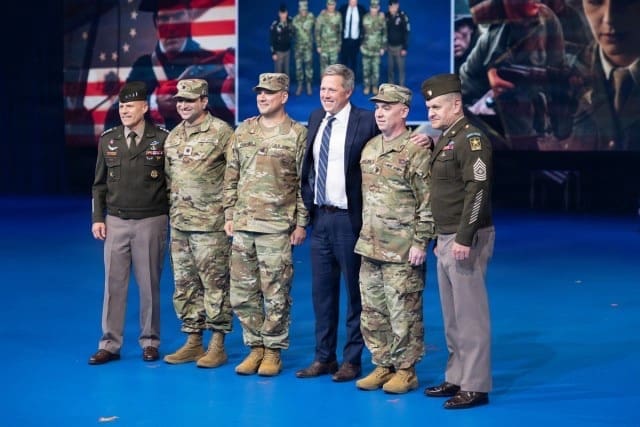
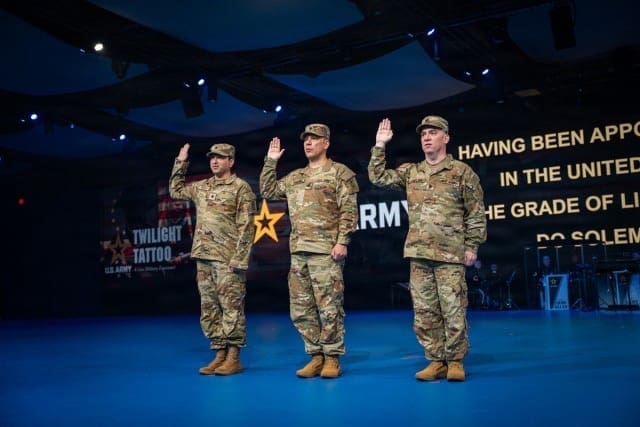
JOINT BASE MYER-HENDERSON HALL, Va. — The U.S. Army commissioned its second cohort of senior technology leaders into the Executive Innovation Corps, known as Detachment 201, during a ceremony June 10 at Joint Base Myer-Henderson Hall.

Detachment 201 is a specialized Army Reserve unit designed to bridge the gap between private-sector innovation and military modernization. It reflects the War Department’s broader push to leverage private-sector technical capabilities to address complex national security and defense challenges.

The program selects applicants who are highly skilled civilian technology professionals at the executive or C-suite level to serve as part-time strategic advisers. These officers use their advanced expertise in commercial tech and private industry to offer a different perspective and advise senior Army leaders on solving military problems.

The three newly commissioned officers of Cohort 2 are Dane Knecht, chief technology officer of Cloudflare; Sam Pallura, managing director and chief technology officer of Sutter Hill Ventures; and Serkan Piantino, co-founder of Facebook AI Research and former vice president of products at Reddit.

The officers shared their perspectives on joining the unit:

“I was drawn to Detachment 201 because it’s a unique opportunity to apply private-sector technical expertise to national defense challenges,” Knecht said. “I’m excited to contribute to helping the Army innovate and maintain a strategic advantage.”

Pallura, whose father served in the US military, pointed to his desire to help solve some of the Army’s most critical problems. “The Army’s most pressing technology challenges in AI, cyber defense, and large-scale distributed systems require leaders who can evaluate a technical architecture in the morning and advise a general in the afternoon,” he said.

Piantino noted the shifting nature of global conflict. “As the character of warfare evolves, the armed forces must rapidly adapt to new domains and prepare for continued technological change,” he said. “Those who have the experience to contribute to that mission have a duty to offer their service.”

The program’s inaugural cohort, launched last year, commissioned four other leading innovators from the tech sector, including Shyam Sankar, chief technology officer at Palantir; Andrew “Boz” Bosworth, chief technology officer at Meta; Bob McGrew, former research lead at OpenAI and current advisor at Thinking Machines Lab; and Kevin Weil, former chief product officer at OpenAI.

Over the past year, the pilot cohort of Detachment 201 has provided strategic counsel on the Army’s critical challenges. Their work has influenced key initiatives, including munitions supply chain data analysis, Organic Industrial Base investments, and foundational strategies for autonomous systems and counter-drone technologies.

The Army’s acquisition pipeline for highly skilled talent is managed through the modernized Direct Commissioning Program, which has been overhauled to compete more effectively with the private sector for technical talent. By streamlining the centralized application process, the military has reduced the onboarding timeline from more than 18 months to approximately six months. This pathway allows senior corporate leaders to serve in uniform part-time without abandoning their civilian careers.

For more information on the Direct Commissioning Program, visit www.army.mil/dcp.

By U.S. Army Public Affairs

Allen-Vanguard Secures Over $3 Million Worth of New Contracts in Africa

June 13th, 2026

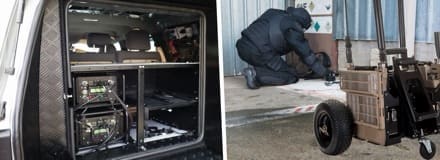
Allen-Vanguard, a global leader in Cyber Electromagnetic Activities (CEMA), has secured over $3 million worth of new contracts for its vehicle-based Electronic Countermeasure (ECM) system (3XXX) and highly adaptable man-portable ECM system (SCORPION 2) to enhance the force protection and C-IED capability of two African nations. Allen-Vanguard will be at Eurosatory, Hall 5a – DE345 to discuss all their integrated RF protection products and capabilities to defeat modern threats.

Allen-Vanguard are experts in delivering integrated, platform-agnostic RF electronic warfare, counter-RCIED and counter-UAS solutions. It has over 25 years of operational experience in the design, development and deployment of integrated, platform-agnostic systems tailored to counter evolving threats in high-risk environments. Its capabilities enable the detection, disruption and protection of personnel across complex battlespaces, supporting defence, security and public safety organisations worldwide. Allen-Vanguard combines proven technology with comprehensive training, threat-informed updates and through-life support to ensure sustained effectiveness and mission readiness in high-risk operational scenarios.

Due to the sensitivity and security risks associated with the customer’s theatre of operations, it is not possible to disclose the purchasing nations or specify the deployment plans for this new capability. However, these initial orders are a major force protection capability uplift for the end user. It will deliver enhanced individual, vehicle and vulnerable point protection to security forces operating in high-risk Radio Controlled Improvised Explosive Device (RC-IED) environments and, in addition, help mitigate the increasing threat posed by the use of Uncrewed Air Systems (UAS), such as drones, to conduct aggressive ISTAR activity or deliver lethal effects.

The contracts come with a full support package, including training for users, technicians and mission-fill development. This support includes the deployment of Field Service Representatives to ensure the development of indigenous ECM capability and reach back to the Threat Management Team.

This team of RF experts optimise algorithms specific to the end user’s needs to combat evolving threats specific to their region of operations. This comprehensive wrap-around support maximises the protection offered by the ECM systems, both from a physical capability perspective but also from the essential changes to tactics, techniques and procedures necessary to keep operators safe.

Stuart Wilson, Director Business Development & Marketing at Allen-Vanguard, said: “We have a long history of providing force protection capability to African nations and associated peace-keeping forces, and we are extremely pleased to secure these new contracts to maintain and enhance this important relationship with the region. Unfortunately, the significant threat to security forces in Africa from UXOs, IEDs, RC-IEDs and other RF hazards remains high, and has only been exacerbated by the growing threat from UAS. Our systems are not only market leading in relation to their technology and capability, but our support packages also ensure purchasing nations improve their wider ECM capability and remain updated with the latest algorithms and software to maintain their protection. For this reason, we are trusted and operationally proven with NATO countries and peace-keeping forces globally.”