SIG SAUER - Never Settle

LiteFighter Concealment Covers

August 13th, 2025

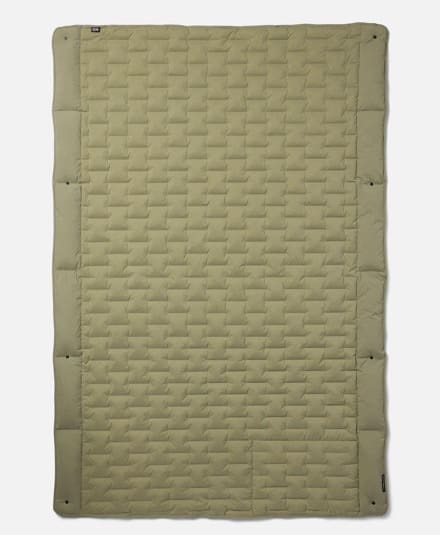
After showing them at trade shows for the past few years, LiteFighter Tactical has finally released their Stealth Concealment Covers.

Engineered with patented signature management materials, these covers reduce IR visibility and help safeguard troops and equipment from detection.

Connect & Scale: Their universal linking system lets you connect multiple covers to customize coverage for any operational need.

Mission-Ready Design: Compact, lightweight, and modular for rapid transport, setup, and adaptability in the field.

Built for Any Terrain: Reversible camouflage for use across multiple AORs, with additional patterns available to match mission demands.

Offered in multiple sizes and pattern combinations. Visit litefighter-tactical.com/product/concealment-covers.

LionHeart Alliance Awarded Spot on FBI’s STEAL Contract for Tactical Equipment and Procurement Support

August 13th, 2025

LionHeart Alliance FBI Patches from Combat Swag

Virginia Beach, VA – 12 August 2025 – LionHeart Alliance, a Virginia Beach-based tactical gear supplier, has been selected as a contract awardee on the Federal Bureau of Investigation’s Strategic Tactical Equipment Acquisition and Logistics (STEAL) IDIQ. With a total ceiling of $57.5 million, the award allows LionHeart to support FBI missions with essential tactical equipment—delivered fast and procured without friction.

The STEAL contract is built to simplify the acquisition of mission-critical gear—everything from survival kits and ballistic protection to comms systems, diving equipment, and HAZMAT solutions. It spans a one-year base period with four optional renewals, supporting both urgent needs and long-term programs.

Where LionHeart breaks from the pack is with its customer service, and how it supports the full range of procurement methods embedded in the contract.

“This isn’t just about what we sell—it’s about how agencies can buy it,” said Cody Schneider, FBI Sales Manager of LionHeart Alliance. “Whether it’s a GPC swipe or a contract call order —we make it easy. No red tape. No delays. Just the right gear, ready when it’s needed.”

About LionHeart Alliance

LionHeart Alliance is an operational equipment supplier built for the next generation of government procurement. Based in Virginia Beach, we serve federal agencies, state and local law enforcement departments, and defense professionals across the country—delivering the gear they trust through the channels they actually use.

We don’t build products – we build relationships to solve your equipment problems. Whether you’re buying on GSA, placing a PO, or standing up a multi-year contract, our team knows how to get it done fast, clean, and without excuses. Backed by real-world experience, a curated catalog of high-performance brands, and a no-nonsense approach to service, LionHeart makes procurement frictionless.

With a deep catalog covering:

… and access to thousands of trusted brands, LionHeart is built to deliver—fast, flexible, and fully aligned with the operational tempo of modern mission sets.

Learn more at www.LHAGear.com or contact Sales@LHAGear.com

Army UAS and Launched Effects Summit Begins at Fort Rucker

August 13th, 2025

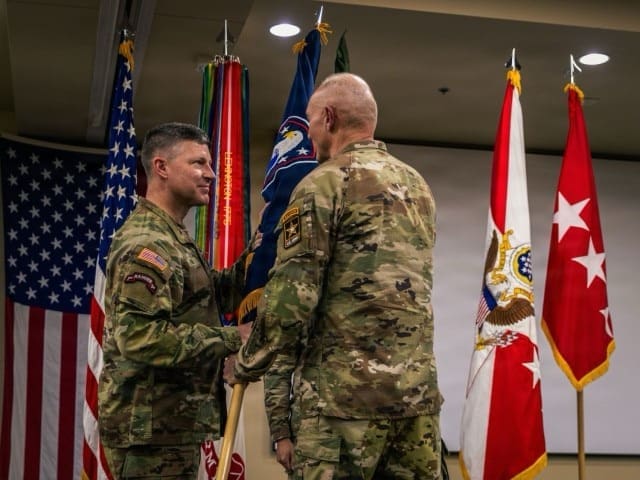
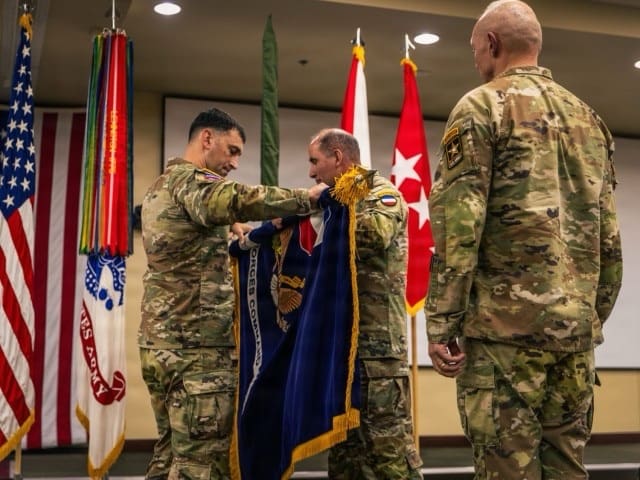
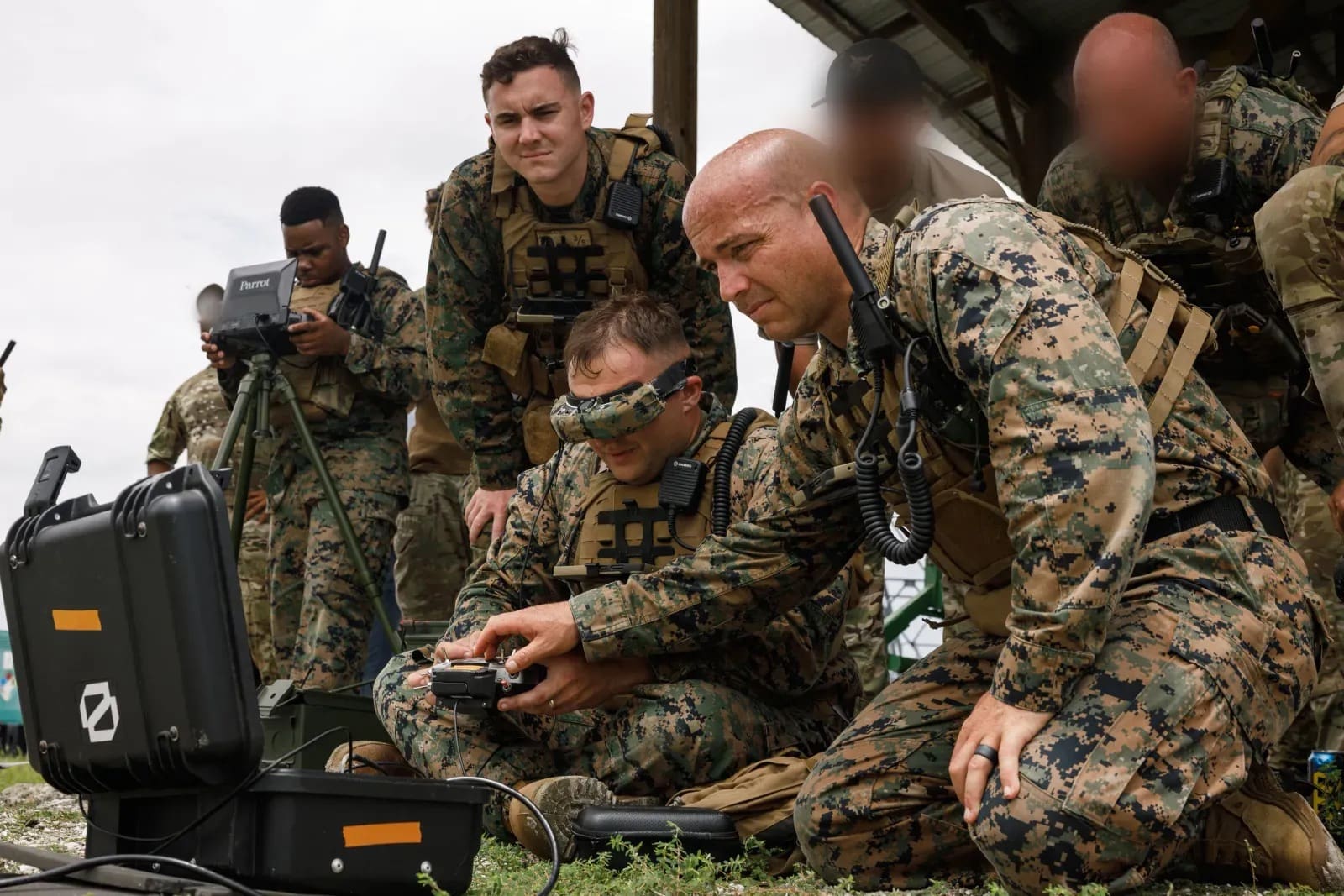
FORT RUCKER, Ala. — The Army’s Unmanned Aircraft Systems and Launched Effects Summit opened Aug. 11, setting the tone of week-long events focused on the rapid increase in unmanned systems in the US Army.

Maj. Gen. Clair Gill, commanding general of the Army Aviation Center of Excellence and Fort Rucker, gave the opening remarks to summit attendees, stressing that UAS need to be seen not solely as a tool for the aviation branch but a capability to support the Army as a whole.

“The battlefield is going to be busy, so we need to be thinking about what the enemy is doing, as well as ourselves,” Gill said in his opening remarks. “We need to do this quickly because the future is now.”

Gill pointed to recent global events and the Department of Defense’s decision to lift restrictions on UAS acquisition and fielding, a move he said will drive increased deployment of smaller systems at lower levels within the Army. He emphasized the importance of integrating those systems with manned aircraft, noting that the mission of Army Aviation is evolving alongside the technology.

Gill also spoke to the Army’s plan to merge the currently separate UAS operator and maintainer career fields into a single UAS specialty. The beginning steps of this merger are already in place as the Army is currently training the first wave of Soldiers that will operate and maintain the small UAS systems the Army is expected to adopt going forward.

“We just stood up a course in Hawaii where we are going to start training what will be the new (UAS military occupational specialty), the 15X,” Gill said.

Gill explained that the Army is adopting a “train the trainers” plan to help increase the number of UAS qualified Soldiers, with the Soldiers currently in training expected to go on to help further develop UAS training throughout the Army.

The adoption of small UAS is a big shift in how the Army fights, as the systems are expected to be in use at much lower levels than previously operated. However, Gill also sees a future where new technology and networked solutions will allow the proliferation of UAS to still provide the larger unit and commanders with vital information.

“We want to embed and launch effects at every level. You might have something down at that platoon that can support the company or battalion… Imagine if you put a sensor on a UAS that could find things you weren’t even looking for. Imagine if it could pass that information to a network and feed that to only the people that need to see it,” Gill said.

Gill went on to talk about how he sees a future where UAS are not only platforms for sensors, but will carry systems for use in electronic warfare, psychological and deception effects, weapons systems for direct attack, and repeaters and relays to extend not only communications, but also extend the control range of other UASs.

“It’s pretty exciting when you see where this is all going,” Gill said.

The increase in the type and number of UASs in use by the Army, as well as the rest for the DoD is expected to have a direct impact on airspace management and battlefield coordination.

“Low altitude is that space only aviators and artillerymen used to worry about. We like to fly low, that’s part of our security, that’s how we protect ourselves. Now there’s all kinds of things up there with us,” he said.

On the lighter side, Gill also spoke about the establishment of the Army drone team and their recent success at a racing competition. While the team will take part in certain competitive events like racing, the team will also be competing in events with a more tactical bent, using their competitive drive to help develop new methods and uses for UAS that can help shape how the average Soldier will be able to use the aircraft.

Following Gill, Col. Joshua Ruisanchez, director of the Army Aviation Capabilities and Integration Directorate went into more detail of the kinds of things the Army UAS operator, officer, and Soldier can expect to see in the future.

According to Ruisanchez thanks to the changes at the DoD level, the number of civilian manufactured drones for use by the Army has expanded, adding 11 new aircraft to the list bringing the number to 30. Soldiers can also expect to see funds made available to acquire UAS, as well as an expansion of options like 3D printing and additive manufacturing systems that can allow units at division level and below to design and produce their own components.

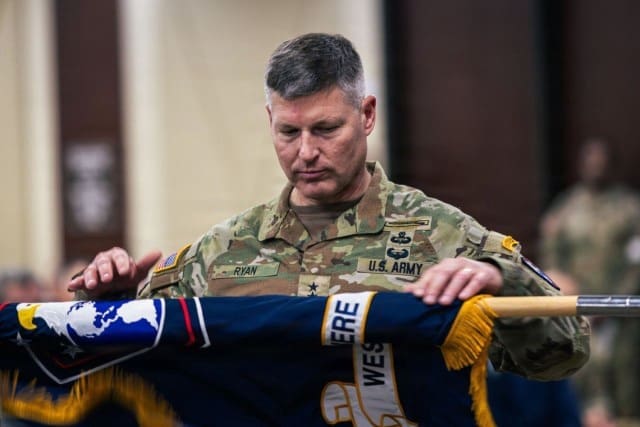
Adding to this, Col. Nicholas Ryan, director for the Army Capabilities Manager – UAS discussed how the changes will enable the unit and Soldier to make use of these new options. One example he gave was the plan to establish an online marketplace where officers at the brigade and regimental level can authorize units to purchase approved systems.

“Now that (Colonel) can go out there and get a drone,” Ryan said.

Ryan also spoke to the need to change the perspective on what a UAS even is. Traditionally the Army considered most UAS to be durable items that needed to be carefully accounted for, with the loss or destruction of a UAS requiring a lot of paperwork and an investigation, possibly even a fine. Going forward Ryan said some UAS, especially smaller, cheaper ones, need to be normalized and considered expendable items, with reasonable losses in combat and training to be expected.

“We need to start treating drones like any other piece of a Soldier’s kit. Just like your radio, or night vision devices, you need to get used to having a drone,” Ryan said.

The UAS and Launched Effects Summit will continue through the week, featuring presentations, panel discussions, and demonstrations of UAS, including some equipped with live weapons.

By John Hamilton

GeoCue Expands in Poland: Geotronics Dystrybucja Joins European Distribution Network

August 12th, 2025

Trusted Trimble Partner Adds TrueView LiDAR and LP360 Software to Product Portfolio

FOR IMMEDIATE RELEASE: August 11, 2025

Huntsville, AL: GeoCue is proud to announce a new partnership with Geotronics Dystrybucja, one of Poland’s most experienced providers of geospatial solutions. Based in Kraków, Geotronics Dystrybucja officially joins the growing European distribution network for GeoCue, bringing TrueView 3D Imaging Sensorsand LP360 software to professionals across Poland.

Now available through Geotronics, customers throughout Poland can access the full lineup of TrueView LiDAR solutions, including the all-new TrueView GO handheld mapping scanner. From drone LiDAR to mobile and SLAM-based handheld sensors, GeoCue’s products offer cutting-edge tools for collecting and processing accurate, colorized point clouds and geospatial deliverables.

Geotronics is also authorized to distribute LP360, GeoCue’sflagship LiDAR and photogrammetry software. LP360 enables users to extract information, run QA/QC workflows, and create high-quality mapping deliverables with ease in a familiar GIS interface.

With a legacy of over 30 years in the Polish geospatial market, Geotronics Dystrybucja has built its reputation on delivering high-quality surveying and positioning equipment, top-tier support, and trusted service as an authorized Trimble distributor. Their experienced team provides expert advice, warranty and post-warranty service, repairs, equipment rentals, and comprehensive geospatial training.

“We are excited to represent GeoCue in Poland and provide our customers with access to some of the best LiDAR technology available, including the TrueView GO handheld scanner where we already see unique interest,” said Tomasz Zieli?ski, Commercial Director at Geotronics Dystrybucja. “GeoCue’sLiDAR surveying and mapping solutions fit perfectly within our portfolio and will help us continue delivering excellent service and superior products for our customers.”


Geotronics Dystrybucja now offers the TrueView GO handheld LiDAR scanner

As GeoCue continues to expand its reach across Europe, the company is pleased to welcome Geotronics Dystrybucja.

Samuel Flick, European Sales Manager for GeoCue, added, “We’re very grateful to connect with the team at Geotronics and continue growing our presence in Europe. This is a trusted and experienced distributor that shares our commitment to service and innovation. They can expect unparalleled support from everyone at GeoCue to help make this partnership a success.”

With this collaboration, customers in Poland can now explore a more complete set of geospatial tools, from high-performance LiDAR sensors to powerful processing software, backed by the combined support of two experienced teams in GeoCue and Geotronics Dystrybucja.

Pacific Defense Launches SABER, a Multi-Function Electronic Warfare Product Family for Multi-Domain Missions

August 12th, 2025

SABER’s tactical edge-based AI/ML capabilities enhance system performance, reduce operator burden, and counter emerging threats—all built on a MOSA framework

EL SEGUNDO, Calif.– Pacific Defense, the leader in C5ISR Modular Open Suite of Standards (CMOSS) products and integrated mission systems, announces the launch of its SABER Multi-Function (MF) Electronic Warfare and Signals Intelligence (EW/SIGINT) product family. The first offering in the line is the EWS1090VP — a 9-slot 3U OpenVPX™ system that seamlessly integrates counter-UAS, counter-communications, counter-IED, and counter-radar electronic support capabilities.

Designed for rapid capability insertion and adaptation, SABER addresses the complexity of today’s electronic battlefield, where adversaries continuously adapt, and traditional countermeasures struggle to keep pace. With its wideband processing capabilities, SABER empowers operators to conduct comprehensive, full-spectrum surveys of the electromagnetic environment. Warfighters can pinpoint signals of interest in real-time, while advanced direction-finding and geolocation maintain persistent tracking of threat emitters. SABER also delivers electronic countermeasures through multiple low-latency active and reactive electronic attack (EA) modes, effectively neutralizing threats while enhancing situational awareness and force protection.

MOSA Standards Revolutionize Life-Cycle Management

Aligned with CMOSS and The Open Group’s Sensor Open Systems Architecture™, SOSA™, technical standards, SABER is a Modular Open Systems Approach (MOSA) solution that leverages Commercial Off-the-Shelf (COTS) components—such as antennas and amplifiers—to reduce delivery timelines, lower costs, and enable rapid integration of multi-vendor technologies.

By adhering to SOSA and the CMOSS Modular Open Radio Frequency Architecture (MORA), SABER provides open interfaces for radio frequency (RF) systems. This ensures the platform remains adaptable and capable of addressing frequency-agile threats in congested electromagnetic environments. SABER can be quickly upgraded with any MORA-compliant third-party software application or software-defined radio (SDR), allowing operators to stay ahead of emerging threats. These accelerated upgrade cycles and cost efficiencies ensure warfighters are equipped with the most advanced RF systems available—from trusted, government-approved partners.

SABER Enhances Operator Effectiveness

SABER’s software enables versatile orchestration, from interactive control to fully automated, remote managed operations. Through a unified user-friendly interface, warfighters can seamlessly monitor system hardware, operate battle management tools, integrate third-party applications, and deliver decisive effects across the electromagnetic spectrum.

Integrated advanced artificial intelligence and machine learning (AI/ML) algorithms enhance SABER’s ability to detect RF patterns of life and identify anomalous behaviors. This maximizes accuracy while reducing operator workload and increasing overall mission efficiency.

“SABER’s tactical edge-based AI/ML capabilities enhance system performance, reduce operator burden, and counter emerging threats—all built on a MOSA framework,” said Frank Pietryka, VP of EW, SIGINT, and Autonomy at Pacific Defense. “Warfighters gain theater-level EMS superiority today, with the flexibility to upgrade emergent capabilities tomorrow. The modular design behind SABER’s multifunctionality allows us to continuously innovate and stay ahead of rapidly evolving EW threats.”

For more information, please visit: SABER.

Mission First Tactical 7.62×51/.308 10 rd Translucent EXD Magazines

August 12th, 2025

Horsham, PA – (August 4th, 2025) – Mission First Tactical (MFT), proudly introduces the new MFT 7.62×51/.308 10 rd. Translucent EXD Magazines. These new magazines are the toughest, most reliable translucent magazines available on the market today. Designed to perform in the harshest conditions, these magazines meet the highest demands and are currently deployed with Federal Law Enforcement Agencies.

Crafted from a military-grade proprietary copolymer, these are not your traditional Poly Carb Mags. They are designed for the AR10A/SR25/M110 pattern rifles and optimized for use with SAAMI-spec 7.62×51/.308 Winchester ammunition. The MFT Translucent EXD Magazines are made to resistant to heat, cold, UV, harsh chemicals, and drop impact, even in extreme temperatures. The magazines will not crack, become brittle or discolor over time. No lip reinforcement is required. The translucent body, offered in Clear and Smoke colors, allows for quick visual confirmation of ammo count and type, and has a textured finish to reduce shine. Compatible with a wide range of AR15/M4 and non-AR15/M4 platforms in 7.62×51/.308 caliber.

Features include:

  • Next generation long glass fiber polymer 
  • Enhanced strength & durability 
  • Ribbed front and rear gripping surface 
  • Tool-less disassembly with double floor plate safety release tabs
  • Long-life stainless-steel spring with four-way anti-tilt self-lubricating follower
  • Flared floor plate
  • Oversized bolt catch
  • Paint pen dot matrix

MSRP: $22.99

To learn more about the MFT 7.62×51/.308 Translucent 10 rd. EXD Magazines, and the complete product lineup from Mission First Tactical, please visit www.missionfirsttactical.com. Stay connected with the latest updates by following MFT on Facebook and Instagram.

Galvion Wins US Marine Corps Integrated Helmet System contract

August 12th, 2025

Galvion, a world leader in the design and manufacture of innovative head systems, power and data management solutions, and integrated soldier systems, has been awarded the United States Marine Corps (USMC) Integrated Helmet System (IHS) contract. The five-year indefinite-delivery/indefinite-quantity (IDIQ) contract from the Marine Corps Systems Command (MCSC) has a maximum value of $131,396,296. Galvion’s customized Integrated Helmet System was developed over multiple years under the scope of an Other Transaction Agreement (OTA) with Marine Corps Systems Command (MCSC) to meet the unique operational requirements of the U.S. Marine Corps.

The Galvion IHS Solution is a functionally robust, USMC-mission-focused system that is optimized to meet all USMC technical requirements. The no-through hole, hi-cut helmet is a proprietary geometry (introduced commercially as the Hellbender™ platform earlier this year) that combines an ECH front shape for ease-of-integration with existing accessories and a ridged-back design that provides structural stability. It features the latest version of Galvion’s best-in-class Apex™ lining system, which includes improvements incorporated as a direct result of Marine feedback, resulting in a better-fitting, balanced and more stable helmet platform for SBNVG and ECOTI mounting.

Galvion’s E.D.G™ power management system integrates easily, offering scalable operational capability for Marines. The helmet was designed to support single-size components (NVG shroud, rails, harness, accessory straps) for ease of maintenance and supply logistics, with a clear upgrade and support path through its service life.

Galvion designed, built and tested prototypes demonstrating technical capabilities and integration with current USMC equipment including communication devices and visual augmentation systems, and delivered over 1000 systems across two configurations to meet the Marine Corps trial and evaluation requirements:

  • ‘Block 0’ Baseline System: helmet featuring NVD shroud with stabilization bumpers, IHS rails with NVG clips and O2 attachments, NVG bungees, External Loop Pattern, Battery Retention Straps, the latest APEX™ liner system, and a customized helmet cover with cable management.
  • ‘Block 1’ Integrated System: built off Block 0, with the addition of the E.D.G scalable power pack, single and dual cables to power SBNVG & SBNVG with ECOTI, Integrated Strobe, Task Light and optional HED.

Todd Stirtzinger, CEO at Galvion said: “This is an incredibly proud moment for the entire Galvion team. This program has been a uniting force across our organization and has driven us to innovate, integrate and collaborate faster and better as a team. From the research and development done in our Warfighter Lab to design a more stable system, to the helmets produced in our Vermont facility, to the E.D.G power and data component coming out of our New Hampshire headquarters – this has been a true team effort.” He added: “The United States Marine Corps are some of the world’s most demanding users, and our solution offers them a fully integrated helmet system that has been designed specifically to evolve with technology to support the Marines advanced mission needs. The development process for this system highlights the Marine Corps Systems Command’s commitment to working with industry to find the absolute best solution for Marines. We had such a high level of engagement with users throughout this process – through the multiple Limited User Evaluations and Ballistic Testing events organized by the MCSC and the dozen additional Galvion internal sessions that they supported. We incorporated feedback after every evaluation stage to ultimately deliver a system that has been designed by Marines, for Marines. We look forward to continuing this collaborative process as we outfit Marines with our helmets and support their evolving needs for years to come.”

US Army to Hold Industry Day for UAS Marketplace

August 12th, 2025

Imagine being at a unit and having the ability to purchase a multitude of vetted Uncrewed Aircraft Systems on a marketplace similar to Amazon. That’s just what the Army aims to do in order to get small drones into the hands of every squad by 2026 as well as manage the voracious appetite DoD will have for this game changing technology.

The U.S. Army’s Program Executive Office for Aviation (PEO Aviation), in collaboration with the Project Management Office for Uncrewed Aircraft Systems (PM UAS) and Army Contracting Command Redstone (ACC-RSA), has announced an Uncrewed Aircraft Systems (UAS) Industry Day, scheduled for 16 through 18 September 2025 in Huntsville, AL.

This event aims to foster collaboration between the Army and industry stakeholders to advance the development, integration, and sustainment of UAS capabilities.

In an effort to accelerate its modernization and transform how it acquire UAS, the Army is introducing the UAS marketplace concept which aims to create an environment of continuous competition across multiple domains, increasing opportunities for a wide range of companies and organizations with the end goal of accelerating capability to Soldiers.

Unlike traditional, long-term contracts with limited vendors and costly upgrades, the UAS Marketplace fosters open innovation and innovative business approaches by allowing any qualified industry partner to contribute.

Areas of Interest

Air Vehicles

  • Design and development of fixed-wing, rotary-wing, and hybrid UAS platforms.
  • Autonomy levels, endurance, payload capacity, and launch/recovery methods.

Payloads

  • Intelligence, Surveillance, and Reconnaissance (ISR): EO/IR sensors, synthetic aperture radar, signals intelligence.
  • Lethal and Non-Lethal Effects: Munitions, electronic warfare payloads, decoys.
  • Other Subcomponents (may be grouped or separate): Batteries, motors, landing gear, and other integral components.

Software

  • Mission planning and control software compatible with the Army’s Uncrewed Vehicle Control (UVC) system and Software Product Development Services (SPDS) initiatives.
  • Autonomy algorithms, data processing, and user interface design.

Integration

  • Methods and standards for integrating payloads into air vehicles.
  • Modular Open Systems Approach (MOSA) compliance and interoperability considerations.

Manufacturing

  • 3D Printing: Additive manufacturing techniques for UAS components.
  • Large-Scale Manufacturing: Capability to produce UAS platforms given a Technical Data Package (TDP).

Architecture

  • System architecture supports scalability, redundancy, and resilience.
  • Network integration and communication protocols.

Repairs and Sustainment

  • Maintenance strategies, supply chain management, and lifecycle support.
  • Field repair capabilities and turnaround times.

Technical Data

  • Level of technical data available for government use, including Software Specially Negotiated License Rights – (SNLR).
  • Willingness to provide detailed technical documentation beyond generic statements.
  • Right to repair.
  • Production Facility Information
  • ISO certifications, current production throughput, lead times.
  • Capacity to scale production in response to increased demand.

Design and Manufacturing Roles

  • Indicate whether your company is interested in:
  • Design only
  • Manufacturing only
  • Both design and manufacturing

Additional Services

  • Any other services or capabilities relevant to UAS development and deployment.
  • Participation in UVC Software Factory/SPDS
  • Interest and capability to participate in the Army’s UVC Software Factory and SPDS initiatives.

The hosts invite industry to participate in this groundbreaking concept by registering for the event.

Full details are available at sam.gov.

Photo by SPC Breanna Bradford