GORE-TEX Professional - AWICS

3rd Marine Aircraft Wing Activates New Air Defense Unit


December 5th, 2022

CAMP PENDLETON, Calif. —

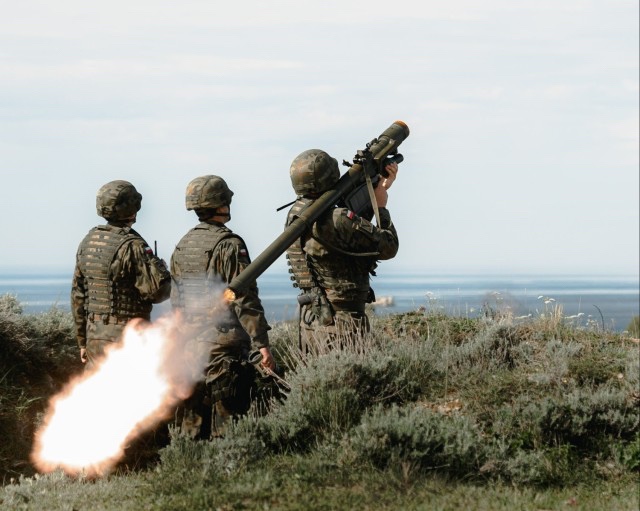
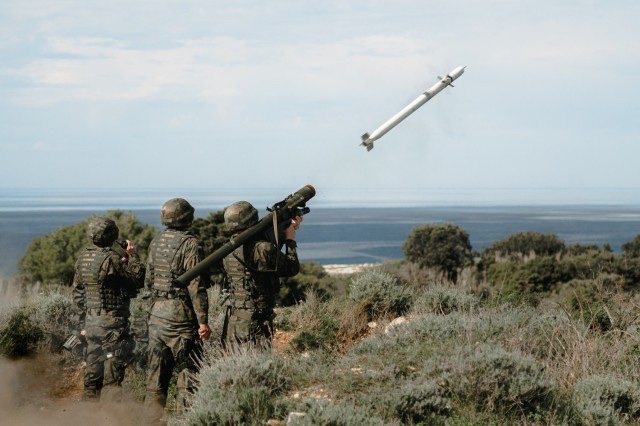
The 3rd Marine Aircraft Wing activated a new air defense battery on November 18, 2022, as part of its ongoing efforts to modernize its existing ground-based air defense capabilities to continue responsibly modernizing the force.

Charlie Battery, which belongs to 3rd Low Altitude Air Defense Battalion, Marine Air Control Group 38, increases 3rd MAW’s ground-based air defense weapon systems and capabilities. The activation demonstrates the Marine Corps’ investment in growing the ground-based air defense community.

“The Charlie Battery activation is another piece to the pie of modernizing the force to meet future threats.”

-Maj. Crispus M. Kimani, operations officer for 3rd LAAD Battalion

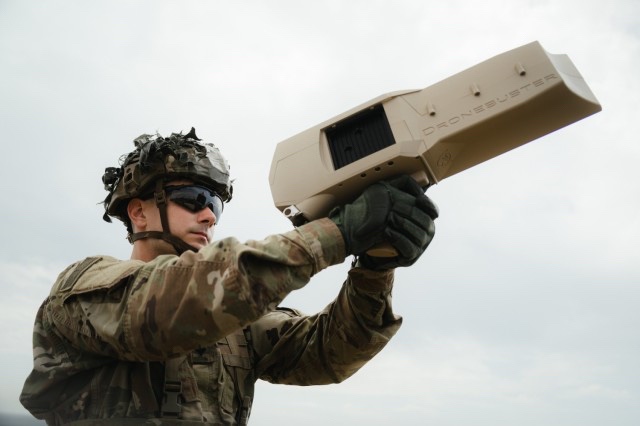
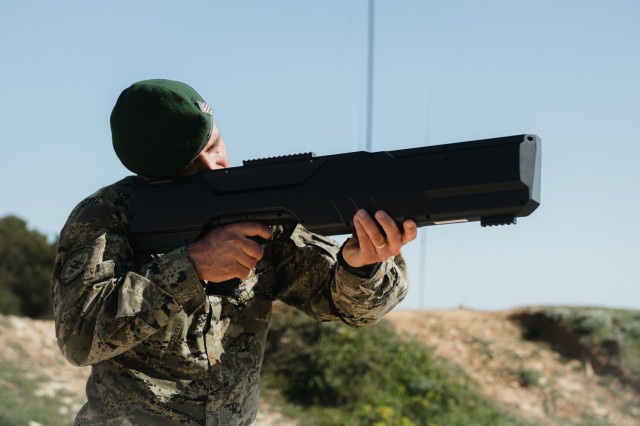
The unit’s activation sets the foundation for the arrival of Marine Air Defense Integrated System Increment 1 to the battalion. This system modernizes the existing ground-based air defense capabilities by mounting a mix of legacy and emerging technologies and capabilities onto the Joint Light Tactical Vehicle. The new capabilities will help the unit mitigate the threat from unmanned aerial systems, fixed, and rotary-wing aircraft.

Once fully equipped, the new unit will have the MADIS, FIM-92 Stinger missiles, and a kinetic remote weapon system designed to counter adversary unmanned aerial systems. The remote weapon system, an organic RPS-62 RADAR, provides additional capabilities, including multi-function electronic warfare and significant command and control improvements.

“The Charlie Battery activation is another piece to the pie of modernizing the force to meet future threats,” said U.S. Marine Corps Maj. Crispus M. Kimani, operations officer for 3rd LAAD Battalion. “It increases air defense capacity within the Marine Expeditionary Force.”

Activating Charlie Battery and integrating new technologies, including the MADIS, enables 3rd LAAD to detect, track, identify, and defeat aerial threats. Additionally, the new capabilities will enable expeditionary counter-unmanned aerial systems operations in austere and isolated environments.

Story by 2nd Lt Andrew Baez, 3rd Marine Aircraft Wing

Photo by Cpl Sean Potter

Sneak Peek – Tigerstripe Becker Patrol Pack from Bongo Gear

December 4th, 2022

Bongo Gear has license to produce Becker Patrol Packs and they’ve been hard at work creating variants of this classic.

This week they plan to release a run of the BPP Mk II in Tigerstripe camouflage. They are offering two variants of the new attend which they refer to as regular and olive. The only difference between these two patterns is in the green – one has the regular green and the other has an olive green. The olive green version is a bit more versatile because blends into a wider variety of environments. The production models will feature green binding tape.

To learn about what they’ve done to improve the original pack to create the Mk II, visit bongogear.com.

SCUBAPRO Sunday – Operation Flipper

December 4th, 2022

Operation Flipper was a raid by the Combined Operations to kill Field Marshall Erwin Rommel at his headquarters in Sidi Rafa, Libya, that would take place between 10-19 November 1941. The attack would use man from Combined Operations, Special Boat Services (SBS), No. 11 Commando, Long Range Desert Group (LRDG), and also the man from the Special Operations Executive (SOE) G(R). This raid was to be a smaller part of a more significant campaign to relieve Tobruk and push the Axis from North Africa.

The operation had four main objectives, first and foremost was to kill Rommel at his headquarters, destroy the nearby Italian headquarters and its communications network, sabotage the Italian Intelligence Office in Appolonia and its communications network between Faidia and Lamdula, and lastly, conduct general sabotage actions elsewhere in the Axis forces rear area.

Leading the mission was Colonel Robert Laycock. His second in command was Lieutenant Colonel Geoffrey Keyes. On November 10, 1941, Laycock’s six officers and 53 men boarded the submarines Torbay and Talisman and left Alexandria harbor for Beda Littoria, Cyrenaica. Waiting for them on the beach was Captain Jock Haselden and an Arab soldier from the SOE’s G(R). They would guide the folbots (early versions of Klepper type canoes) to the beach and help them ashore. Once ashore, they would meet up with the rest of Haselden man, including two more Brits, a free Belgian, and another Arab soldier who stayed further inland; all had been dropped off by the LRDG earlier that day. Haselden’s team had local knowledge of the area; one of the Arabs would lead the assault team to the target while the rest of Haselden’s team would sabotaging the communications. Keyes got himself and all his men ashore. But as Layton and his men prepared to disembark, a storm struck. Heavy seas drove Talisman aground, and only Layton and seven men reached the beach.

With his force cut in half, Keyes modified the plan. It would be a two-part assault; Keyes would attack Rommel’s HQ, and Lt. Roy Cooke would lead the Italian headquarters’ attack. Layton and a small force would defend the force’s escape route. On the evening of November 15, Keyes, Cooke, and their men headed inland. Despite the weather, the groups managed to reach their respective launch positions on the evening of November 17. At midnight, they attacked. Keyes, leading a three-person assault team, burst into the villa identified as Rommel’s headquarters. They surprised a German officer who was killed as he struggled with Keyes. The attackers then rushed down the hall, and Keyes opened a room where ten Germans were arming themselves. One of the Germans shot Keyes, killing him. What the team didn’t know was that Rommel had left the compound a week earlier for Rome. After Keyes’s death, things started to get worse.

Campbell was shot in the leg by one of his men. He passed command to Sergeant Jack Terry and remained behind. Terry gathered the raiding team and retreated with 17 men to rejoin Laycock at the beach. Cooke’s men encountered a platoon or so of Italian police paratroopers. The Italians had been searching for the British raiders close to the village Mansura north of Cyrene. With the Italian and Germans looking for the raiding party, Laycock knew it would be impossible to re-embark on the submarines as they waited for the weather to improve. They were discovered and exchanged fire with local Italian and German troops. Low on ammo and aware that they could not stand off a larger force, Laycock ordered the men to scatter. Laycock and Terry made it to safety after 37 days in the desert. Bombardier John Brittlebank, one of the SBS teams who had guided the commandos in the folbots, escaped and survived alone in the desert for forty days until Allied troops picked him up. The rest of the raiding force was captured, some of them were wounded.  

The raid was considered a failure by the British high command, but to the Germans, especially to Rommel, it showed what the Combined Operations could do. It would also help Winston Churchill decide to put the Commando’s and other groups under the SOE after the British military decide they didn’t need them anymore. Rommel was quoted as saying, “It was a brilliant operation and with great audacity.” Rommel ordered that Keyes and all the rest of the Commandos be buried with full military honors, sending his personal chaplain, priest Rudolf Dalmrath, to officiate. He had cypress crosses and wreaths made for the British and German dead. Rommel also instructed that photographs be taken of the ceremony and Keyes’ grave and sent them to his parents, a chivalrous act that increased British respect for him. British Special Operations would continue to wreak havoc thru out the Africa Theater of Operation, significantly contributing to the Allies victory.

Outdoor Research – Men’s Tundra Slip-on Aerogel Booties

December 4th, 2022

Featuring a sole insulated with PrimaLoft Aerogel Insulation to act as a cold barrier, the uppers are insukated with VerticalX ECO which works wven when wet. The heel can be worn up or down.

Available in Loden Camo (shown), Saddle and Black sizes XS – XL.

www.outdoorresearch.com/us/mens-tundra-slip-on-aerogel-booties

Team Federal’s Alysia Burrows Shines at the 2022 PCSL 2-Gun Championship

December 4th, 2022

ANOKA, Minnesota – November 29, 2022 – Federal Ammunition congratulates Team Federal sponsored shooter and brand ambassador Alysia Burrows, who recently too took home 1st Lady Practical Division at the 2022 PCSL 2-Gun Championship.

“This was Alysia’s first major match returning to the action shooting sports after a 6-month break taken to recover from rotator cuff surgery immediately after winning 1st Lady in 2-Gun Division at the Superstition Mountain Mystery match this past March,” said Federal’s Marketing Director Brian Anderson. “It doesn’t appear as if she has missed a beat, getting back on the clock and ready to tackle anything the stage throws at her. With this win, she secured the top Lady position in Practical Division for her second year in a row. We congratulate her and everyone on Team Federal for their excellent performances this fall.”

Burrows relies on Federal Syntech Action Pistol 150-grain 9mm in her handgun; American Eagle 55-grain .223 Rem and Federal Premium Gold Medal 69-grain Sierra MatchKing .223 Rem in her rifles.

“I was excited to get back and shoot at this event. This match is known for attracting some of the best around, and it’s always a privilege to shoot alongside them,” said Burrows. “What really gave me my edge at this match was Syntech. This handgun load has low recoil, but also has strong power to knock down all the large heavy steel. And in a match like this, the long range can make or break your game, the 69-grain .223 Rem. Gold Medal rounds worked fantastically well. It’s nice to have ammo that you can depend on to get the job done.”

Federal ammunition can be found at dealers nationwide or purchased online direct from Federal. For more information on all products from Federal or to shop online, visit www.federalpremium.com.

You Never Know Where They’ll Show Up

December 4th, 2022

Greetings from the Moltke-Room in the German Ministry of Defence residence Bonn-Hardtberg (the famous „Hardthöhe“)

“Apollo’s Warriors”

December 3rd, 2022

“Apollo’s Warriors: United States Air Force Special Operations during the Cold War” was written by Col Michael E Haas, (USAF, Ret), and tells the story of the rise of Air Force Special Operations post World War Two and up until the late 70s. There are some fascinatikng periods in the command’s history like the creation of the Air Resupply and Communications Service.

It’s available as a free download and definitely worth a read.

MIT Develops Self-Replicating Hierarchical Modular Robotic Swarms

December 3rd, 2022

According to an article in Nature, Massachusetts Institute of Technology’s Center for Bits and Atoms (CBA) has developed self-replicating hierarchical modular robotic swarms. That sounds kind of ominous as so many of us are concerned with the use of robotic swarms to overwhelm defenses.

But there’s a word you need to add to your vocabulary and that’s “Voxel”. Some are familiar with the mathematical definition:

Voxel is an image of a three-dimensional space region limited by given sizes, which has its own nodal point coordinates in an accepted coordinate system, its own form, its own state parameter that indicates its belonging to some modeled object, and has properties of modeled region.

There’s another use of the term and that’s in regard to robotics. Voxels are also small robots, generally uniform in size and structure which can be used as components to build a larger robot: kind of like Lego or other construction sets you used as a kid. However, these voxels do so much more. They not only offer mechanical function but can now transit power and data to one another.

You can easily see how these robots can be used for assembly and that these structures will make us question what a robot is as its functionality becomes inherent in many new things which go beyond what we currently consider a robot.

The robots themselves consist of a string of several voxels joined end-to-end. These can grab another voxel using attachment points on one end, then move inchworm-like to the desired position, where the voxel can be attached to the growing structure and released there.

Assembler robots building bigger versions of themselves are just the beginning. Eventually, we will see systems which can reconfigure themselves, shapeshifters if you will, as their purpose changes.

What’s more, they could be capable of repairing themselves by replacing voxels as they are worn out or damaged. Let that sink in. The implications are enormous and may quite possibly change the order of things.