Kids Dino Pants: In stock and shipping now.

They’ll outgrow them but they won’t forget them.
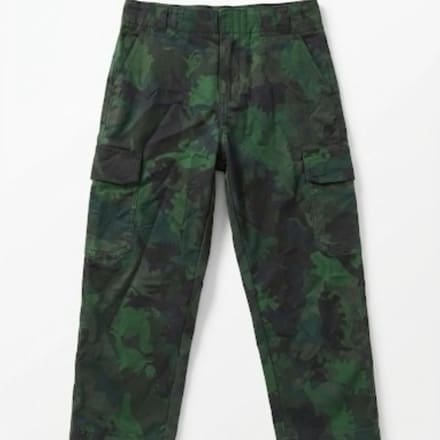
Order by tomorrow for Christmas delivery.


Kids Dino Pants: In stock and shipping now.
They’ll outgrow them but they won’t forget them.
Order by tomorrow for Christmas delivery.
18 DEC 25 – For Immediate Release – Breach-Bang-Clear and Soldier Systems Daily are excited to announce the impending availability of Clobberflage pattern for use on assorted stuff and things – just in time for the 60th birthday of the man who inspired it: GW Ayers.

GW Ayers is a foundational icon of the American tactical industry and a longtime friend of both SSD and B-B-C. A retired US Army Cavalry SNCO and combat veteran, GW is not just an institution in our battlespace; he’s one of the finest humans on the planet.
And today is his 60th birthday!

Why clobberflage, you ask? Glad you asked. The answer is twofold: first, to get your attention, and, second, because Benjamin Grimm, aka The Thing, is (fittingly) GW’s favorite superhero. And if you know anything about the cigar-chomping, ever-lovin’, blue-eyed Thing, then you’re familiar with the phrase, “It’s clobberin’ time!”

Ayers hails originally from Virginia. Since then, he has lived in Texas, California, Washington, Kansas, Georgia, Germany, and Iraq, but his heart has always been on Yancy Street. He served for 22 years in the U.S. Army, from the Cold War through the GWOT (e.g., Bradleys through Strykers). He held every leadership role that an enlisted leader can have in his field, including a long stretch as the Senior Enlisted Leader for the 500 indigenous soldiers of an Iraqi Light Infantry Battalion.
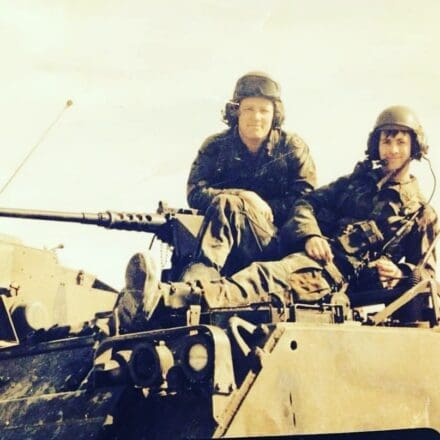
Ayers graduated at the top of his class at every leadership school he attended, was awarded the Soldiers’ Medal for actions for the rescue of downed aviators, is the recipient of a Bronze Star, and is a member of the Sergeant Audie Murphy Club (SAMC), which encompasses only the top 3% of the Army’s Non-Commissioned Officers.

Since his retirement, GW has successfully helped launch two new companies, achieving immediate 7-figure results. He has held the positions of COO, CSO, VP of Sales and Marketing, and more, across businesses operating in the manufacturing and global distribution industries. He is also the Chief Executive Officer of the Resilient Warrior 501 (c) (3) charity, which houses homeless veterans and helps them transition back into society.
We are very happy to wish him a HAPPY BIRTHDAY!

Now, a note on the Clobberflage pattern: it isn’t actually a Thing yet (see what we did there?). That said, if there is actual interest in it, it could be. And if it did happen, it would be found on the Bad Moon Armory website, and all profits would go to support Resilient Warrior.

Please join us in congratulating this outstanding individual for successfully completing his 60th decade on the planet. We’re looking forward to working with him for several more. You can connect with GW on Instagram, @gwayers3.
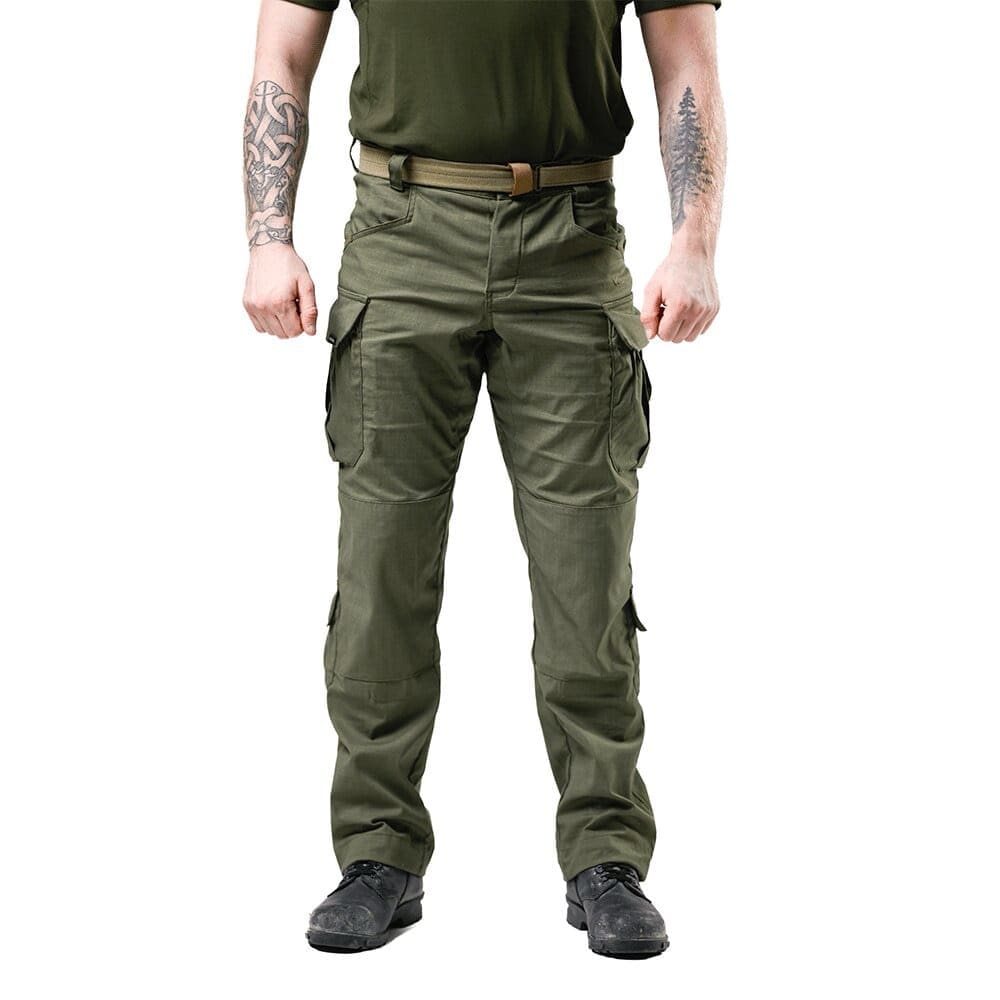
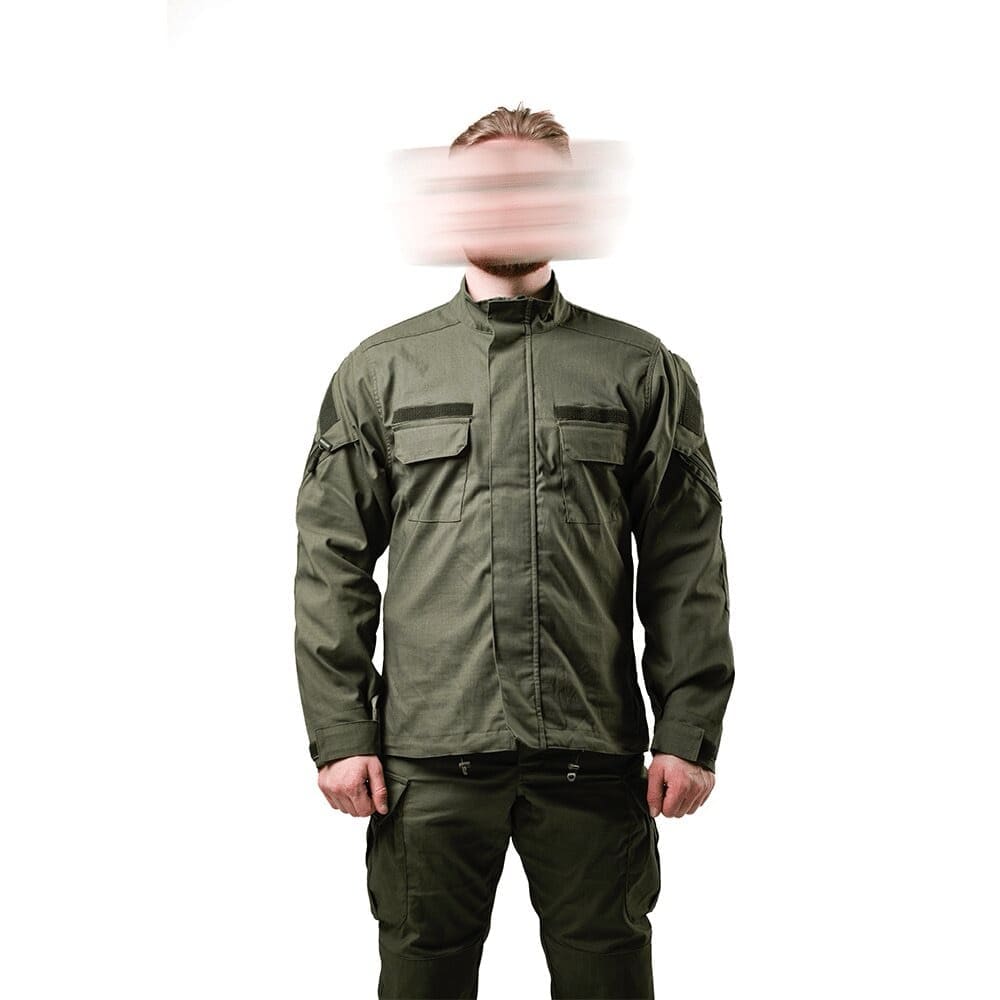
Meet the Fallujah Field Uniform, our next generation combat clothing. Made in NYCO Stretch, a state of the art Rip-Stop fabric that is ultra-light, breathable, but still highly durable. The Fallujah offers both unparalleled comfort and mission-ready performance with its minimalistic design and high quality materials from brands such as CORDURA® Advanced Fabrics, VELCRO®, YKK™ and D3O® Protection.
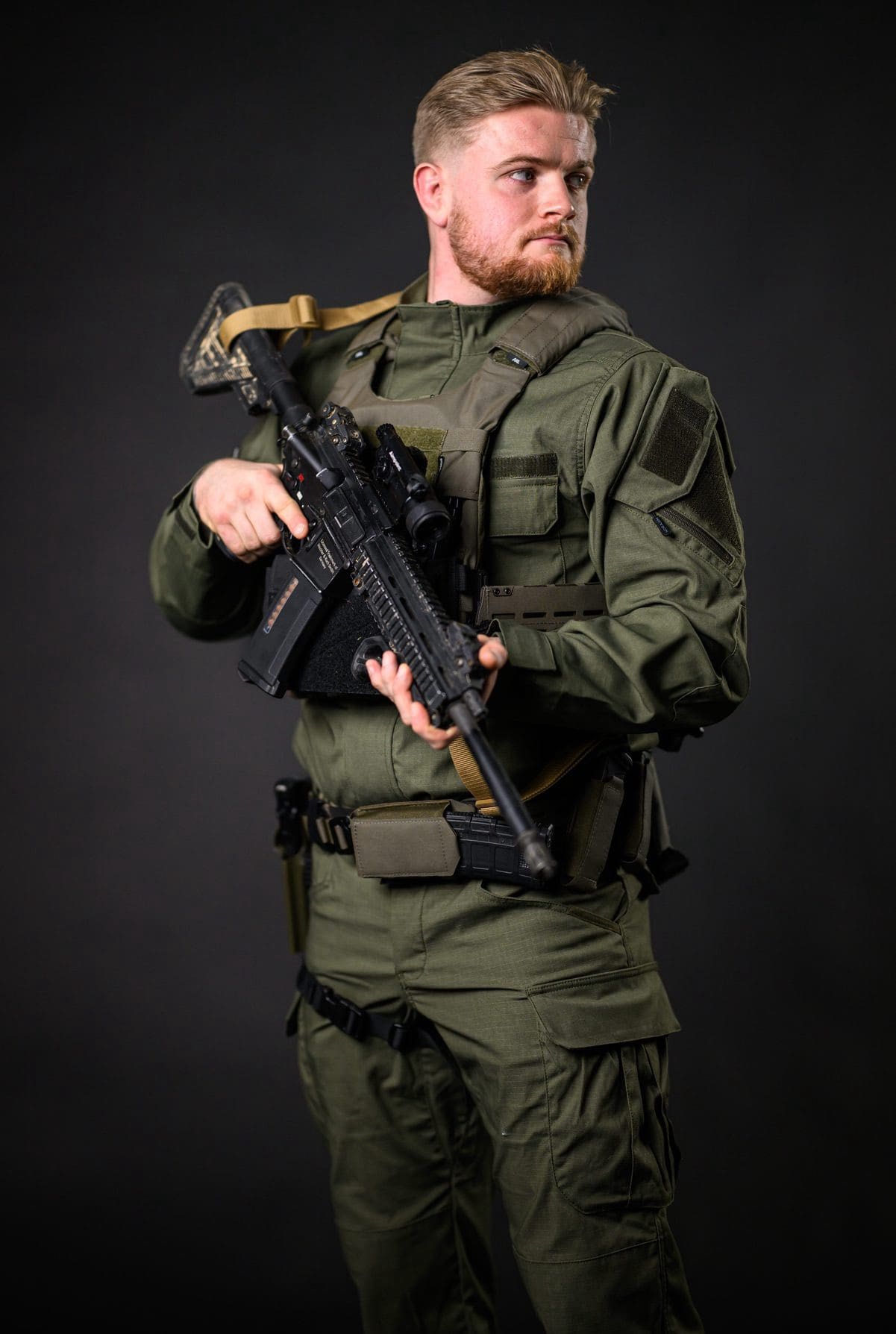
Perfect for warmer climates or activities that will make you sweat, due to its breathable fabric, but also suitable for colder climates by layering it with a wool baselayer, like our Finnmark Baselayer, or our Finnmark Half Zip Sweater.

The Fallujah Field Pants are compatible with the D3O P12 Knee Pad and have a knee height adjustment system located in the front pockets.
The Fallujah Field Jacket has few bulk pockets for better mobility under gear and can be comfortably worn with plate carriers and chest rigs.
LANGLEY AIR FORCE BASE, Va. (AFNS) —
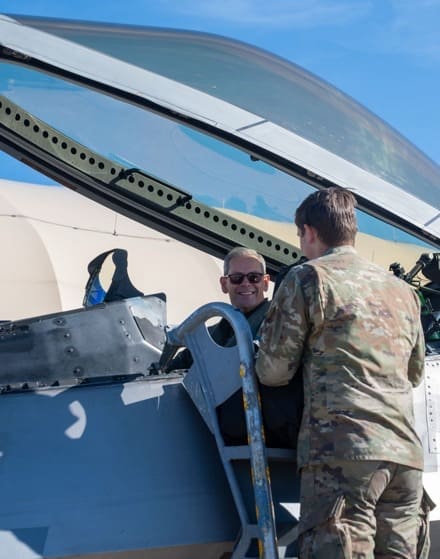
On June 17th, Gen. Ken Wilsbach thought he had successfully flown his last sortie in the F-22 Raptor, but on Nov. 24th, he returned to the cockpit in America’s premier air supremacy platform.
“Every opportunity to step to the jet is a great privilege,” Wilsbach said. “For leaders of flying units, being current and qualified builds credibility and demonstrates leading from the front.”
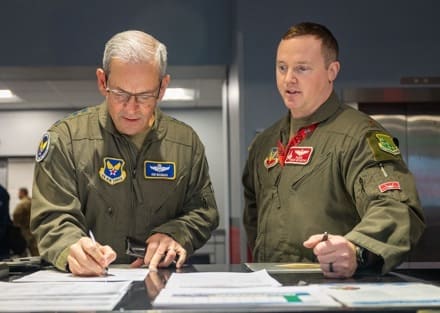
Hours after Wilsbach assumed the duties of Chief of Staff of the Air Force, he encouraged commanders and leaders of all flying units to maintain or regain active flying status in their primary mission design series—the aircraft to which they are primarily assigned.
“Air superiority is not a given, it must be earned every day,” Wilsbach urged. “To maintain our edge as the world’s greatest and most powerful Air Force, our warfighting abilities must be constantly honed.”
As Americans heard the story of their Air Force flawlessly executing the bombing run on Iranian nuclear facilities this summer, the skill of the entire Air Force enterprise was on clear display.
Alongside the bombers of Air Force Global Strike, which dropped bombs during Operation Midnight Hammer, Air Combat Command is the primary force provider of combat airpower and vital to America’s defense strategy.
“Flightline operations is both the hardest and most important thing we do,” said ACC Commander Gen. Adrian Spain. “You can’t truly understand the ecosystem of the flightline unless you’re out there on it … seeing how support, operations, and maintenance come together in real time. As a senior leader, I need that firsthand awareness to recognize where the balance is fragile and where roadblocks exist, so that I can help clear them. Flying and experiencing that flightline convergence also enables a visceral sense of our battlefield standards that keep our Air Force ready to fight and win.”
In a contest with a peer adversary, flying acumen and experience across the Total Force will be indispensable.
Mobility aircrews enable the joint force to overcome the tyranny of distance when operating under mission type orders in anti-access, area denial scenarios while facing increased operational risk.
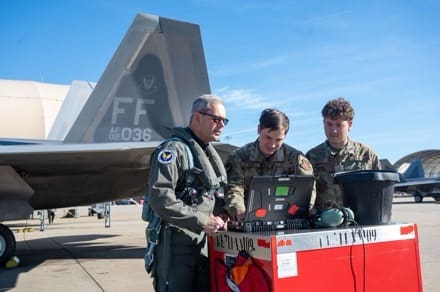
“The touchpoints with Airmen when stepping to the aircraft, running your checklists, and executing the mission deliver insights not found in a slide deck or a headquarters building,” said Commander of Air Mobility Command Gen. Johnny Lamontagne. “Remaining current isn’t just about flying an aircraft, it’s about experiencing the latest tactics, techniques and procedures, and the challenges our Airmen must overcome as we face an evolving, contested strategic environment.”
Special operations aircrews must be prepared to conduct battlefield air operations, agile combat support; information operations, precision strike, specialized air mobility, intelligence, surveillance and reconnaissance missions, and more.
On preparing for these mission sets, Air Force Special Operations Command Commander Lt. Gen. Michael Conley said, “Flying keeps me connected to the mission, and more importantly, our Air Commandos. Training alongside them reinforces my trust in the aircraft, our crews, our maintainers, and everyone who plays a role in ensuring we’re ready to fight. As the commander, it also provides me firsthand perspectives of the challenges and opportunities we face in delivering specialized airpower where the nation needs it.”
Readiness in every MDS [Mission Design Series] for every mission begins with realistic, world-class training. From the first time on the stick to track selection, from undergraduate pilot and navigator to loadmaster, boom operator and aerial gunner training, and from weapons school to test pilot school, Air Education and Training Command facilitates it all.
“Our Airmen expect leaders that are grounded in the realities of the daily mission,” said AETC Commander Lt. Gen. Clark Quinn. “While flying is just one part of our mission, it provides an invaluable opportunity to connect with the Total Force team that fly, fix and support our operations. Briefing, flying and debriefing with our teams ensures I see firsthand the challenges our instructors and students face every day and the effort our maintenance teams put in to keep our aircraft mission ready.”
Secretary of the Air Force Public Affairs
16 December 2025 – DroneShield is pleased to announce it has received a contract for $49.6 million from an in-region European reseller that is contractually required to distribute the products to a European military end-customer. The contract is for handheld counter-drone systems, associated accessories, and software updates. DroneShield has a large portion of this stock on-the-shelf and expects to complete all deliveries in Q1 2026. Cash payments are also expected to be fully received in Q1 2026. No additional material conditions need to be satisfied.
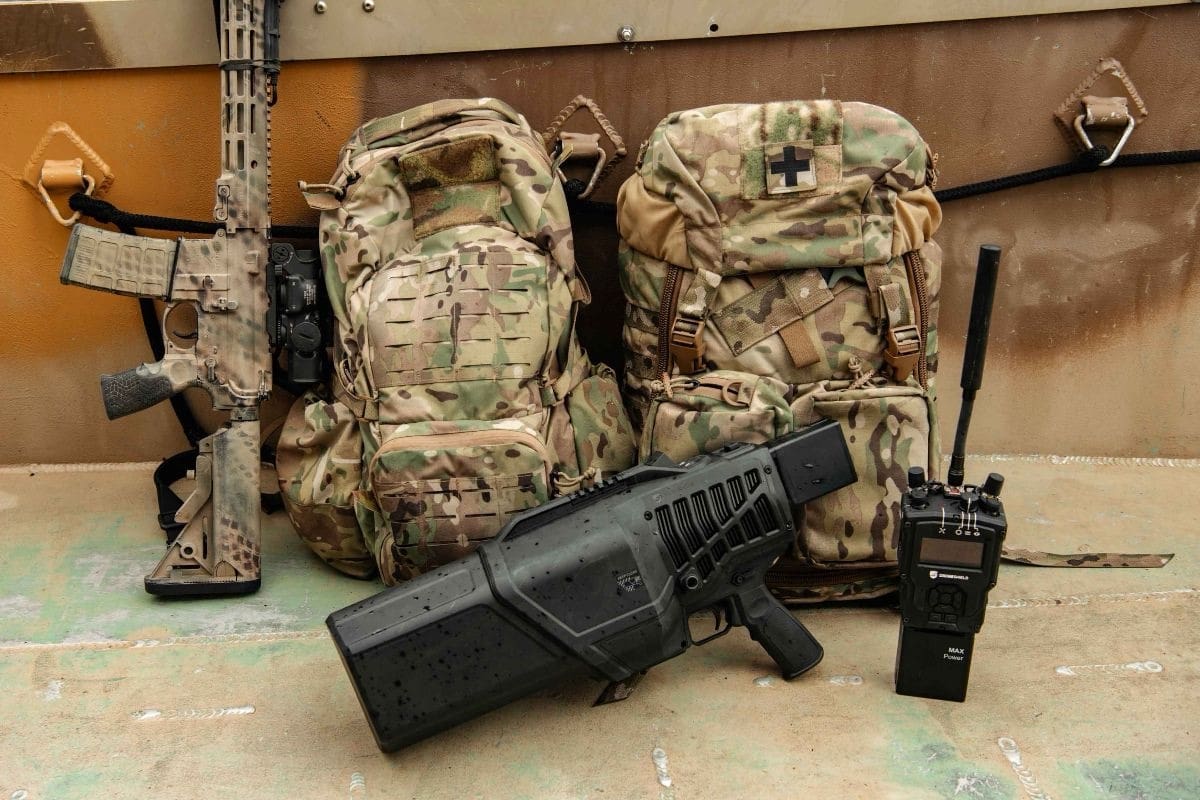
Image: DroneShield DroneGun Mk4 and RfPatrol Mk2
Learn more at droneshield.com.
Addition to the marketplace satisfies competition requirements and enables rapid acquisition of CHAOS systems across U.S. and NATO commands

LOS ANGELES — CHAOS Industries, the defense technology company building Coherent Distributed Networks (CDN™) systems that give warfighters time to act against border and autonomous threats, today announced its addition to the U.S. Army’s Global Tactical Edge Acquisition Directorate (G-TEAD) Marketplace following its participation in Project Flytrap 4.5 in Putlos, Germany. The G-TEAD Marketplace enables any Army Service Component Command and NATO partners to rapidly acquire emerging technologies and capabilities.
Project Flytrap 4.5 brought together U.S. soldiers and NATO partners in Germany to test a range of low-cost, portable sensors and shooters designed to counter unmanned aerial systems and strengthen NATO’s Eastern Flank Deterrence Line posture. The systems showcased during the event were evaluated and tested through a competitive evaluation process focused on quickly identifying solutions that can be deployed at the tactical edge.
“We applaud the Army in creating a marketplace to allow ASCCs to quickly acquire emerging technology,” said John Tenet, co-founder and CEO of CHAOS Industries. “The addition to the G-TEAD Marketplace represents a significant step forward in making our Coherent Distributed Networks capabilities available to commanders across the theater who need them, and we look forward to working with the Army and our NATO partners throughout 2026 and beyond.”
CHAOS’s addition to the G?TEAD Marketplace reflects the Army’s assessment of the company’s expeditionary sensing architecture and stay-behind capabilities, including its VANQUISH™ distributed early warning radar. VANQUISH™ provides low-SWaP, short- to mid-range detection and tracking of unmanned aerial systems, missiles, and aircraft. This Coherent Distributed Networks (CDN™)-enabled system gives air defenders more options to detect, track, and respond to unmanned aerial systems while complementing existing command and control and effector architectures.
CHAOS will support continued Army experimentation with a VANQUISH™ system in 2026, providing on-site training, integration support, and rapid iteration in response to operator feedback. This forward presence is intended to tighten the feedback loop from field use to product updates, ensuring the technology evolves in lockstep with soldier needs and emerging threats.
About CHAOS Industries
CHAOS Industries creates time. The company is redefining modern defense with omniscient systems that give the ultimate advantage—domain dominance. CHAOS Industries’ products are powered by Coherent Distributed Networks (CDN™), empowering warfighters, commercial air operators, and border protection teams to act faster, adapt rapidly, and stay ahead of evolving threats.
CHAOS Industries was founded in 2022 and has raised a total of $1 billion in funding from leading investors, including 8VC, Accel, and Valor Equity Partners. The company is headquartered in Los Angeles, with offices in Washington, D.C., San Francisco, Seattle, and London. For more information, please visit www.chaosinc.com.
RESTON, Va., Dec. 16, 2025 — SpiderOak, a leader in zero-trust cybersecurity solutions for space, aerospace, and defense, announced today that Red Cat Holdings (NASDAQ: RCAT), a recognized industry leader in advanced all-domain drone and robotic solutions for defense and national security, has selected SpiderOak to perform a comprehensive Blue UAS cybersecurity assessment of its Black Widow™ Short-Range Reconnaissance (SRR) platform.

As part of the Defense Innovation Unit’s (DIU) Blue UAS framework, SpiderOak—an official Recognized Assessor—will conduct vulnerability analysis, penetration testing, and Foreign Ownership, Control, or Influence (FOCI) evaluations to support Red Cat’s inclusion of the Black Widow™ on the Blue UAS Cleared List.
Strengthening Cyber Resilience Through Blue UAS Assessments
As a Defense Innovation Unit (DIU) Recognized Assessor, SpiderOak delivers a suite of independent cybersecurity evaluation services under the Blue UAS framework—designed to verify and enhance the cyber resilience of unmanned systems before they enter the Department of War supply chain.
For Red Cat’s Black Widow™ platform, SpiderOak’s team will perform a comprehensive Blue UAS assessment, including vulnerability analysis, penetration testing, and Foreign Ownership, Control, or Influence (FOCI) evaluations. These services provide critical validation that the platform meets stringent U.S. Government cybersecurity, supply chain, and compliance standards.
SpiderOak’s methodology integrates advanced threat modeling, secure-by-design analysis, and supply chain forensics to help partners like Red Cat meet or exceed requirements under NIST 800-171, NIST 800-53, and Executive Order 14028. Through its role as a Recognized Assessor, SpiderOak supports the rapid fielding of trusted, mission-ready systems that advance U.S. defense and intelligence operations across all domains.
Support for Secure All-Domain Operations
“Red Cat is an industry leader pushing the boundaries of all-domain defense operations, and the Black Widow™ platform plays a critical role in ensuring our warfighters maintain situational advantage,” said Michael Carlson, Senior Director of Business Development for SpiderOak. “Our Blue UAS assessment services are designed to deliver outcomes quickly for the warfighter—helping trusted partners like Red Cat validate cyber readiness, achieve certification, and get critical capabilities into the field sooner. By bringing zero-trust principles and a rigorous, data-driven assessment methodology to the forefront, we’re enabling faster, more secure deployment of mission-critical UAS across the Department of War.”
“Cybersecurity is foundational to trust and mission assurance,” said Jason Gunter, VP of Tech and Innovation at Red Cat Holdings. “Working with SpiderOak ensures that Black Widow™ not only meets Blue UAS standards but sets a new benchmark for how defense-grade UAS platforms should approach cyber protection and supply chain integrity.”
Enabling Secure UAS Integration into the DoD Supply Chain
This engagement reinforces the continued importance of the DIU Blue UAS program in accelerating access to secure and compliant unmanned systems across the Department of War. Through its role as a Recognized Assessor, SpiderOak supports industry partners in meeting stringent cybersecurity and compliance requirements while enhancing the resilience of command, control, and telemetry links across contested environments.
Using a Foreign Military Sales contract announced earlier this week, the Israeli Defense Force has ordered M4A1 carbines from Colt Industries.
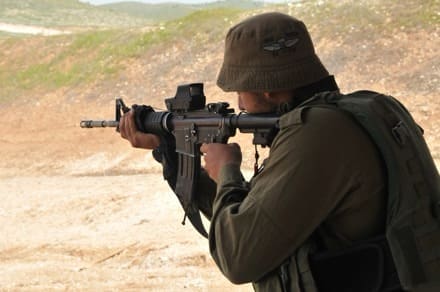
The contract awarded by Army Contracting Command is valued at $12.9 million and includes carbines and suppressors. It is to be fulfilled by the end of June of 2026.