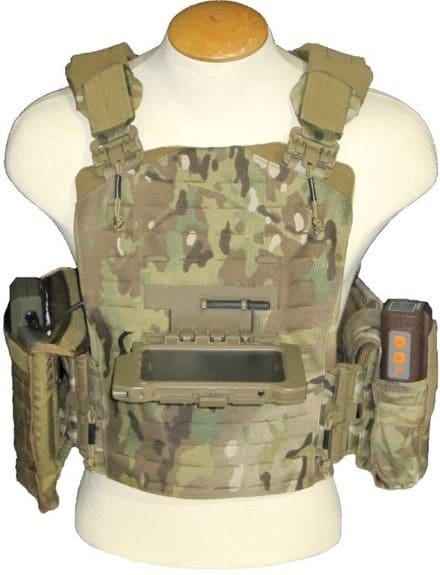
G24 Mount from Wilcox Ind

Archive for 2013

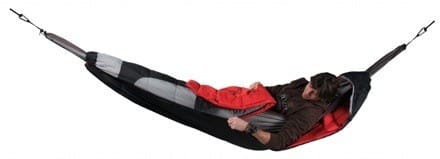
Grand Trunk’s Hammock Compatible Sleeping Bag

Thursday, September 19th, 2013

20130919-160008.jpg

The Hammock Compatible Sleeping Bag from Grand Trunk was developed based on a concept by Herrick Kroeger, an employee of Georgia’s Blue Sky Outfitters. The Thinsulate filled sleeping bag design cocoons the hammock (and you) and incorporates channels at either end for the suspension lines. Grand Trunk claims it fits most hammocks and looking at the design I’d say that it will work with most commonly available models.

store.grandtrunkgoods.com/sleeping-bag

Bates Supports Wounded Artists

Thursday, September 19th, 2013

20130919-110606.jpg

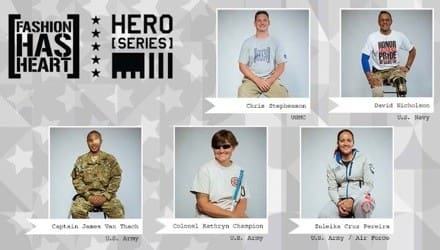
This story from Bates Footwear is pretty cool. They’ve given five wounded warriors the opportunity to partner with an artist through Fashion Has Heart to creat their ArtPrize entries. The HERO[series], pairs a Hero with an Artist to collaborate in order to share that hero’s story through the medium of art and design. Each veteran was paired with artists and designers to create two pairs of Bates boots – one for themselves and another to be included in ArtPrize® in September 2013. The veterans returned to Grand Rapids unveiled their ArtPrize® entry, “HERO[series],” on Wednesday, Sept. 11. The entry can be found at the Fashion Has Heart venue, 144 E. Fulton St, Grand Rapids, MI. Voting begins September 18, 2013.

20130919-111839.jpg

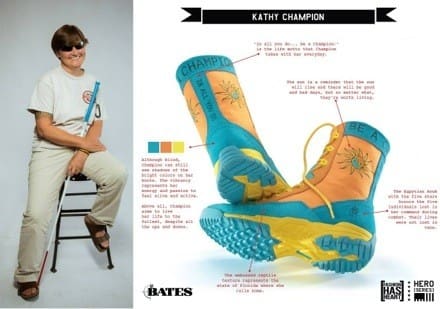
Above, you can see COL Kathryn Champion’s entry. To see all five entries as well as learn about the participants, visit www.batesfootwear.com.

PenCott PolyCotton Fabric Sale

Thursday, September 19th, 2013

20130919-101438.jpg

Contact sales@hydedefinition.com

PEO Soldier Returns ESAPI Plate That Saved His Life To Paratrooper

Thursday, September 19th, 2013

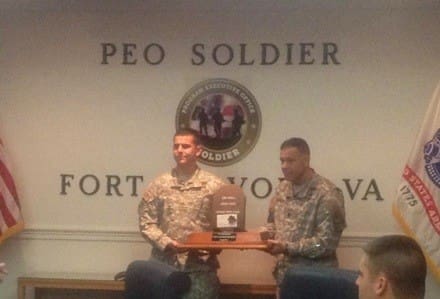
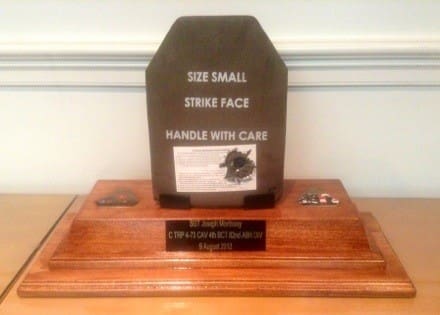
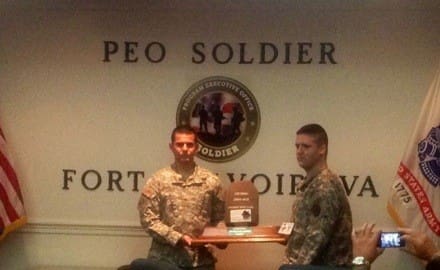
At 0912 hours on 12 August, 2012 while conducting a route clearance patrol near SP Panza, Afghanistan, SGT Joseph Morrissey of C Troop 4-73 Cavalry, 82nd Abn Div was shot in the chest by a 7.62 round from a distance of 30m. It hit right in his ESAPI plate which absorbed the blow and saved his life. Yesterday, that plate was returned by Program Executive Office Soldier’s SEA, CSM Maunakea.
20130919-073650.jpg

Surprisingly, right after the incident, his unit initially thought they might have to MEDEVAC him due to the shot, but once they sat him down and conducted an assessment they realized that the projectile had not penetrated through his vest and all he needed to do was replace his front ESAPI plate. They did that and he was returned right back to his patrol.
20130919-073602.jpg

The plate was returned to SGT Morrissey courtesy of the Joint Trauma Analysis and Prevention of Injury in Combat Program at Ft Detrick which funds collection and analysis of PPE. Although it’s a joint program, the actual analysis is conducted by personnel from Program Executive Office Soldier to determine how well it performs against real threats and to use the information to make better armor systems in the future.

According to COL Marilyn Brew (USA) a PM at JTAPICP, the program has been around since 2006. She related that in addition to Armor Plates, they also analyze soft armor, helmets and other armor items, regardless of the service of origin. Amanda Perry of the Technical management directorate explained that they have over 70,000 data points in their database.

This was a great opportunity for SGT Morrissey to meet the men and women behind the equipment that saved his life. Conversely, the team at PEO Soldier had a chance to put a face on the work that they do.

SGT Morrissey took the opportunity to thank everyone at PEO Soldier. He explained that prior to the visit, he had no idea that a place like PEO Soldier even existed but said that he would spread the gospel once he returned to his unit at Ft Bragg.

When I asked him about his PPE his answer was simple, “It Works.” He went on to tell me that prior to this incident he was no fan of body armor, but now? “If it wasn’t for this equipment, I’d be dead.” And that pretty much sums it up, doesn’t it?
20130919-073733.jpg

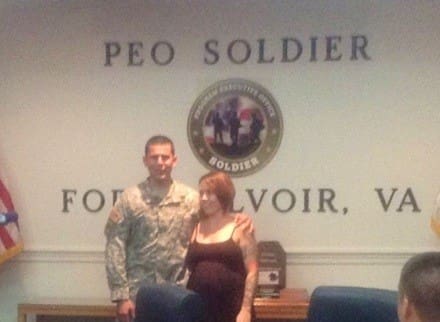
SGT Morrissey was accompanied to the ceremony by wife Nikki and battle buddy SPC Samuel Walley.
20130919-073834.jpg

SSD wishes SGT Morrissey and his lovely wife well as they will soon become parents. We’d also like to thanks PEO Soldier for the opportunity to visit their facility and cover this story.


Visit Panacis at Modern Day Marine

Thursday, September 19th, 2013

20130917-165920.jpg

Canadian power company Panacis will be exhibiting at the Modern Day Marine Expo, Sept. 24-26 MCB Quantico, VA, in booth #1134. Anyone interested in reducing Soldier/Marine combat weight, battery resupply requirements, while increasing C4ISR device run time are welcome to stop by for a briefing and demo of the system.

It’s Talk Like A Pirate Day

Thursday, September 19th, 2013

20130919-072020.jpg

It’s Talk Like A Pirate Day. Just for fun, answer the phone in your best accent. This link should help; talklikeapirate.com/translator.


Juggernaut Case For iPhone 5 – Soon To Go Up On Kickstarter

Thursday, September 19th, 2013

img_9645

Starting September 30th, Juggernaut Defense is launching a Kickstarter to fund an iPhone 5 variant for their Juggernaut Case. We’ll be sure to keep you updated when the project goes up for funding.

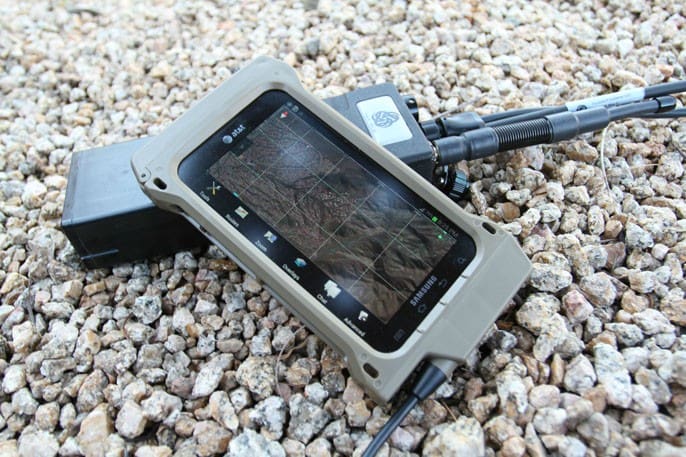
Juggernaut Cases enable units to employ the ‘smartphone on the battlefield’ by ruggedizing the device within a shockproof/dustproof, IP-6X Case that contains an EMI-shielded USB connection to tactical radios through a sealed Glenair 80-series connector. By implementing features like the hands-free/flip-down armor mount and anti-glare etched chem-strengthened glass screen protector, users will be able to employ this ‘smartdevice technology’ running Android apps on the battlefield. The cases and mounts are manufactured in Arizona and are Berry-Compliant.

www.juggernautcase.com/index.html

Army Developing Tool To Reduce Altitude Sickness In Deployed Soldiers

Thursday, September 19th, 2013

size0

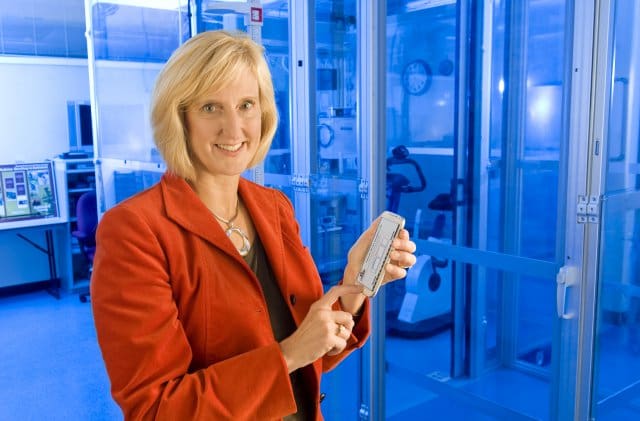
“Rapid ascents without sufficient time to adapt to altitude can lead to acute mountain sickness, or AMS,” said Dr. Stephen Muza, acting division chief for the Thermal and Mountain Medicine Division, or TMMD, which is part of the U.S. Army Research Institute of Environmental Medicine, or USARIEM. “This condition, marked by nausea, fatigue, headache and gastrointestinal distress, can really throw a wedge into a mission when not planned for.”

To combat the negative effects of AMS on the modern soldier, the Thermal and Mountain Medicine Division (TMMD) of the U.S. Army Research Institute of Environmental Medicine (USARIEM) has been developing a system called Altitude Readiness Management System or ARMS. ARMS combines population-based data with an individual’s altitude exposure, which provides information for sustaining health and improving performance. It predicts the prevalence and severity of altitude stress by incorporating altitude acclimatization, acute mountain sickness and physical work performance decrements. ARMS acts as a prediction for the level of AMS a person is likely to experience during a mission as well as offer ways to reduce and potentially avoid the affects of AMS completely.

“This model allows commanders to mitigate the impact of altitude exposure,” Beidleman said. “It not only predicts whether a Soldier would get ill at certain altitudes, it gives a prescription for exposure. This tool can prescribe, for example, that if (Soldiers spend) two days at 8,000 feet before they go to their final altitude of 14,000 feet, the likelihood and severity of AMS would be drastically reduced.”

The ultimate project goal is to produce a stand-alone software product coupled with the capability to produce a mobile version that could be integrated into a wristwatch, GPS, or smartphone. TMMD is currently collaborating with Massachusetts Institute of Technology’s Lincoln Laboratory to create a smartphone-based app using the ARMS system.

“If a commander has a small unit of 12 Soldiers with specialized skills, and potentially two can get sick, that really impacts their mission,” Beidleman said. “With this tool, he or she can think ahead to bring an extra person or allow for more time for Soldiers to acclimatize to the altitude. Essentially, it tells them the risk and also provides them with ways to mitigate that risk.”

www.army.mil/article/111471/Army_developing_tool_to_reduce_altitude_sickness_in_deployed_Soldiers/