XC3 Weaponlight

Archive for April, 2014

Beyond Clothing – “Stitched In The States” Part 1

Tuesday, April 8th, 2014

In this video, Beyond Clothing demonstrates what “Made in America” means in regards to their outdoor products, which are all designed and manufactured in the USA. Their process allows for more prototypes, quicker turnaround, and allows Beyond to drive customer feedback into the production line to ultimately create better outerwear.

www.beyondclothing.com

Warrior Protection and Readiness Coalition Holds 5th Annual Day on the Hill

Tuesday, April 8th, 2014

I’d say that it’s more important now than ever to work together as an industry. America currently enjoys an industrial base, unprecedented in history, that exists specifically to support the Warfighter. For that industry, this isn’t the time to take a back seat and hope for the best, but rather, to take steps to ensure an enduring role in supporting our nation’s most formidable weapon, it’s Warfighters. Many companies have already joined the Warrior Protection and Readiness Coalition or are involved in other, similar lobbying efforts. It’s imperative to organize in order to better raise awareness on Capital Hill of what strides have been made and what we can lose if the relationship between industry and Government is not properly fostered. The industry is feeling the effects of a changing demand for its products. For many years, the military has purchased equipment in a “feast” mode. All along, the industrial base has worked to develop better ways to protect our troops. Now that it would seem a “famine” has begun, we must not lose the momentum it has taken so long to build. Measures can be out into place to help soften the blows of Sequestration and to generate the next generation of protective equipment technology. One way is through the budgeting process and to do that requires Congressional support.

Now in its 5th year, the WPRC Day on the Hill brings together industry partners and key Congressional Leaders to share ideas and concerns regarding equipping our troops, now and in the future. We don’t want the protection of our troops to become an afterthought. The best way to ensure a viable industrial base is to proactively engage decision makers. Right now, the WPRC is the best, unified voice, our industry has.



Member companies of the WPRC will meet with Congress April 8th and 9th to recommend reform of procurement practices to improve U.S. manufacturers’ ability to develop and produce individual military equipment and clothing critical for mission readiness.

WASHINGTON, D.C. April 8th, 2014 – For the fifth consecutive year, member company representatives of the WPRC will travel to Washington to build awareness for the essential part of the U.S. industrial base that manufactures the personal equipment for the Armed Services, such as operational clothing, body armor, knives, boots, and optics, and advocate for the improvements needed to streamline government procurement practices and ensure the United States maintains a robust industrial base with key technical capabilities.

Acquisition reforms being recommended by the WPRC include:

  • Adhere to “Best Value” performance-based contracts for critical warfighter equipment and restrict the use of “lowest price technically acceptable” contracts.
  • Increase the visibility of warfighter equipment and clothing funding in Department of Defense budgets to sustain industry’s innovation investments.
  • Extend the Berry Amendment to the Coast Guard and TSA components of the Department of Homeland Security.
  • “The Warrior Protection and Readiness Coalition serves an essential role of advocacy and education on behalf of the innovative companies who manufacture equipment and clothing for our Armed Services,” said David Costello, Executive Director of the WPRC. “Our Coalition is comprised of the leaders in advanced US manufacturing, with capabilities that range from creating ballistic ceramic plates for body armor to the next generation of camouflage. Our work to maintain and build upon the capabilities provided to the warfighter and peacekeeper by our industry has never been more important. As a Coalition we remain committed to lending our voice to supporting the needs of those who serve our country.”

    For a list of WPRC members, visit warriorprotection.net/members

    American Silencer Association – Iowa Suppressor Legalization Needs Immediate Support

    Tuesday, April 8th, 2014

    ATLANTA, GA — Iowa House File 2381, a bill which sought to legalize the possession and ownership of firearm suppressors in Iowa, was denied a hearing in a Senate Judiciary Subcommittee chaired by Senator Thomas Courtney (D-44), and is no longer active. HF 2381, formerly known as HF 384, passed the Iowa State House by an 83-16 margin.

    The opposition for the legalization of suppressors stems from the vehemently anti-gun Chairman of the Senate Judiciary Committee, Senator Robb Hogg (D- 33). Despite overwhelming bipartisan support in both the House and the Senate, Sen. Hogg continues to oppose the measure in a blanket attempt to block any and all legislation that advances the Second Amendment.

    What Sen. Hogg does not understand is that the legalization of suppressors is about more than the Second Amendment. It is about jobs. It is about economic development. It is about hearing protection.

    The primary role of a suppressor is to reduce the overall sound signature of the host firearm to hearing safe levels. Despite their name, suppressors do not silence anything. Instead, they simply trap the expanding gasses at the muzzle and allow them to slowly cool, in a similar fashion to car mufflers. Their muffling capabilities intrinsically make them a hearing protection device for both the shooter and those around them.

    Even the most effective suppressors on the market on the smallest and quietest calibers reduce the peak sound level of the gunshot to that of a chainsaw or a hammer drill (110-115 dB). According to the National Institute for Occupational Safety and Health (NIOSH), “without proper hearing protection, running a chain saw for only 2 minutes can become dangerous to the human ear.” For centerfire rifle and pistol calibers, suppressors can only reduce the peak sound level to that of a snare drum at a rock concert, or a jet engine at takeoff (130-140 dB).

    According to NIOSH, individuals should not be exposed to sound levels over 85 dB for more than eight hours (Occupational Noise Exposure, Revised Criteria 1998). For every three dB increase, exposure time is cut in half. At levels between 130-140 dB, the sound level of most suppressed firearms, noise levels are loud enough that only a few rounds can be safely fired without earplugs or earmuffs. Any exposure to sounds in excess of 140 dB will cause instantaneous and irreversible hearing damage. However, when suppressors are used in conjunction with traditional hearing protection devices, shooters can safely expose themselves to hours of additional shooting without risking permanent damage to their hearing.

    Iowans have made it clear that they want to become the 40th state to allow their citizens to protect their hearing by possessing and using suppressors. In order for it to become a reality this year, the Senate and House leadership will need to agree to include language from HF 2381 in their end of session leadership bill. They will only do so if you keep the pressure on them.

    Please contact members of the Senate and House Leadership IMMEDIATELY and urge them to support the legalization of suppressor ownership in Iowa. Urge your friends and family to do the same. Without everyone’s support, your rights will not be granted.

    Contact information can be found here:

    Senate:

    Senate President Jochum: Pam.Jochum@legis.iowa.gov (563) 556-6530
    Senate Majority Leader Gronstal: Mike.Fronstal@legis.iowa.gov (712) 328-2808
    Senate President Pro Tempore Sodders: Steve.Sodders@legis.iowa.gov (641) 751-4140
    Senate Majority Whip: Joe.Bolkcom@legis.iowa.gov (319) 337-6280

    House of Representatives:

    Speaker Paulsen: Kraig.Paulsen@legis.iowa.gov (515) 281-3521
    Speaker Pro Tempore Olson: Steven.Olson@legis.iowa.gov (515) 281-3221
    House Majority Leader Upmeyer: Linda.Upmeyer@legis.iowa.gov (641) 357-8807
    House Majority Whip Hagenow: Chris.Hagenow@legis.iowa.gov (515) 281-3221

    americansilencerassociation.com

    Rifle Dynamics Launches YouTube Channel

    Monday, April 7th, 2014

    I had an opportunity to visit Rifle Dynamics just last Friday and Jim Fuller mentioned that they were launching a YouTube channel. He wasn’t kidding.

    Looking forward to seeing more!

    rifledynamics.com

    ADS Inc Wins USAF Non-FR Combat Shirt Contract

    Monday, April 7th, 2014

    Last week, the Department of the Air Force awarded ADS Inc a contract for $1,908,872.41 to deliver non-FR Combat Shirts under the Defensor Fortis-Load Carrying System 2 program. Intended for use by AF Security Forces, these Combat Shirts differ from the Airman Battle Shirt by being manufactured from lightweight, non-FR materials yet like the ABS, incorporate a mock turtleneck and also sport the Digital Tigerstripe Pattern worn by all stateside Airmen. These are going to be worn by SF on gate duty when they wear body armor such as IBA or equivalent to increase comfort and are not intended to be worn in a deployed environment.

    Here is a full description:

    All fabric shall be lightweight, breathable, moisture wicking and odor resistant; long sleeve “over the head” style with a semi-tight fit that eliminates bunching or riding up under armor; right & left sleeves shall contain: Air Force Digital Tiger Stripe Camouflage Print, hook and loop cuff closures, anti-abrasion padded elbow patches, two-channel flapped pen pocket on both forearms secured by hook & loop fastener tape, zippered shoulder pockets with 6-1/4 inch opening for all sizes (opening toward front of arm); right shoulder pocket must accommodate hook & loop name tape and rank insignia; fastener tape dimensions: loop fastener for name tape shall be 1 inch wide x 5-1/2 inches long, loop fastener for the rank patch shall be 2 inches wide x 2 inches long; torso & mock turtle neck shall be AF Sage Green 1641 (match color in Tiger Stripe Green) or Army Foliage Green 504; modesty panel covering chest area. These will be available in X-Small through XXX-Large.

    There is still no award on the load carriage portion of the solicitation.

    Exoskel

    Monday, April 7th, 2014

    SS Photo with Guards

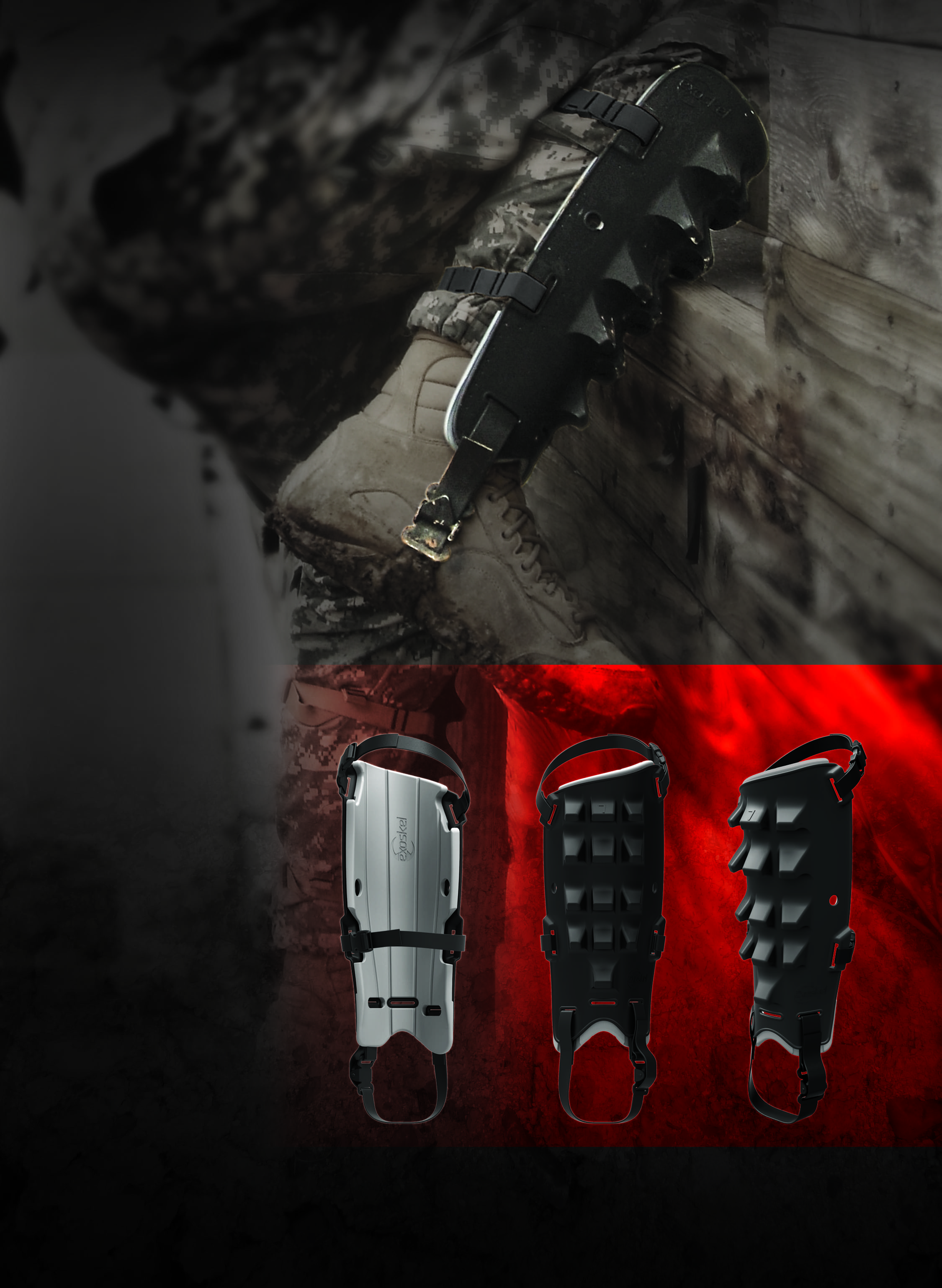
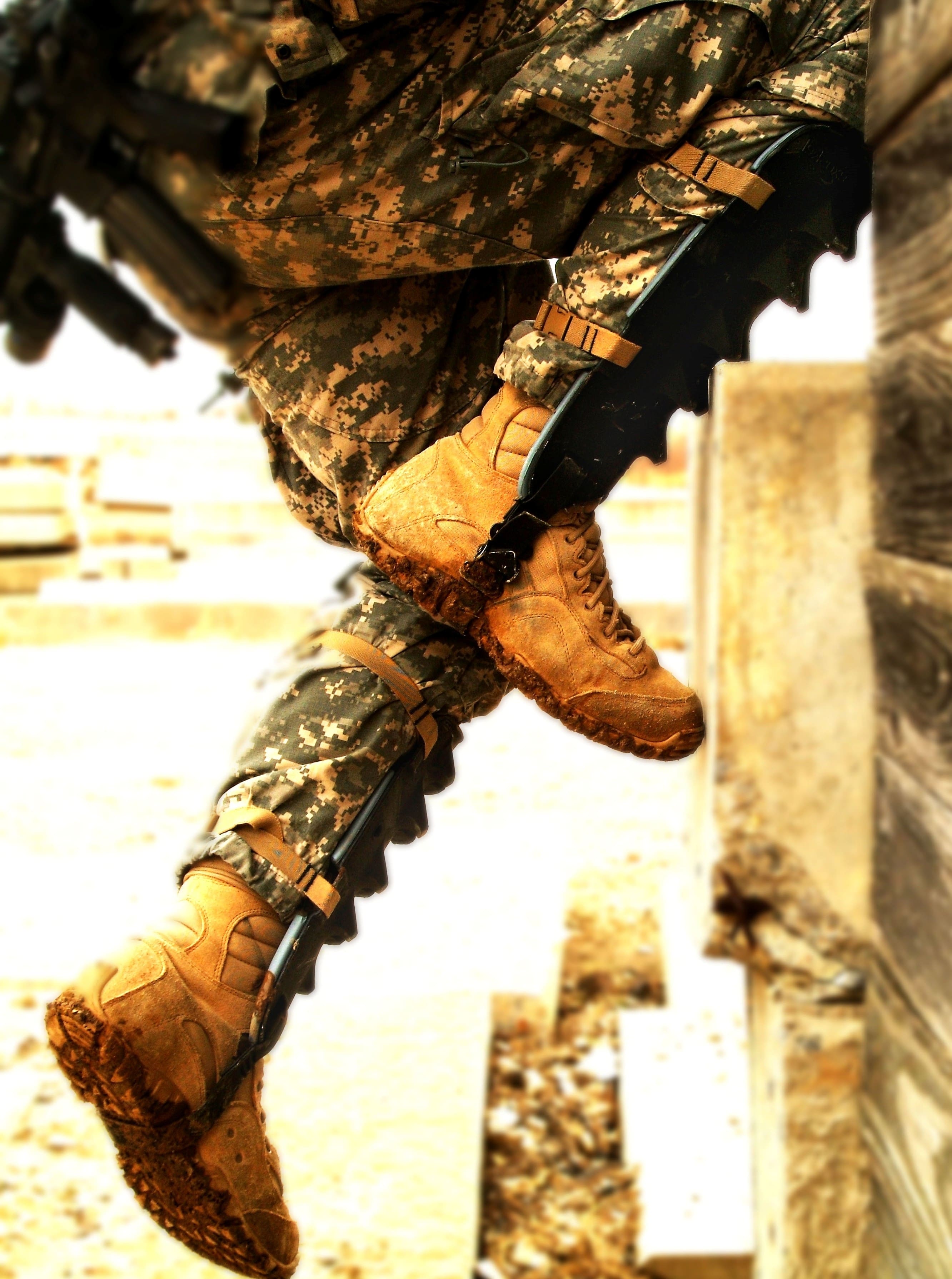
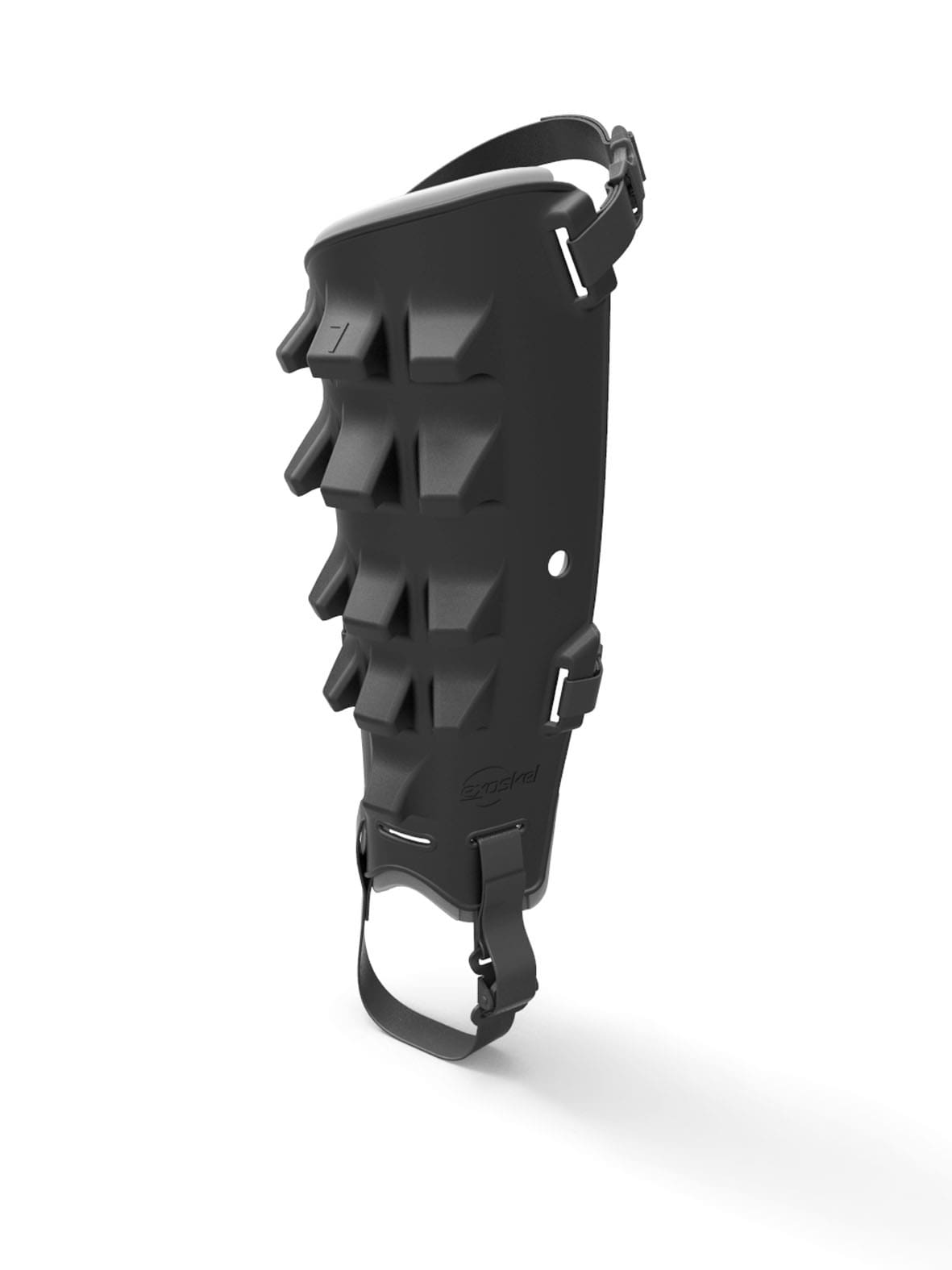
    Exoskel was developed for when proper climbing technique is superseded by the need for fast and low profile scrambling. Exoskel assists the user to rapidly ascend and negotiate obstacles, whilst offering enhanced stabilization and lower limb protection. The Exoskel features rows of teeth which lock on to terrain and lift the user via a stirrup system up and over obstacles.

    Exoskel SS Pri 1

    The Exoskel system can also assist the operator by:

    – Stabilizing the firing or anchor position on irregular terrain
    – Acting as a shin protector – injury prevention
    – Perpetrator restraint
    – Functioning as a Close Quarter Battle tool

    Exoskel SS Pri 2

    Exoskel guards hold in excess of 1000 lbs, yet weigh only 1.1 lbs each. They are Berry Compliant, and are made from high specification specialty engineering grade Polyamide which is high impact, puncture, UV, hydrolysis, and flame resistant – UL94 VO rated.

    www.exoskel-group.com

    2014 Sniper Adventure Challenge News

    Monday, April 7th, 2014

    Magpul Dynamics’ Director of Operations Cody Carroll will assist Competition Dynamics this year with the course design and layout for the 2014 Sniper Adventure Challenge. Competition Dynamics, a company based in Fort Collins, Colorado, promotes extreme world-class long-range and practical shooting competitions and adventure races in the Western United States.

    The Sniper Adventure Challenge is a 24-40 hour adventure race in which teams to two solve land navigation problems without the aid of GPS to over a route of 25-50 miles, in addition to completing mental, physical, and marksmanship challenges throughout the event. The first Sniper Adventure Challenge took place in 2012.

    In addition to assisting with the course design, Magpul Dynamics will also be running two seasoned teams through the course in its entirety, one week prior to the official event to allow for minor changes. Participants can also expect to see plenty of Magpul loot on the table if they manage to complete the challenge.

    www.magpul.com

    competition-dynamics.com

    Ask SSD – What’s the Story on These $10 Billion Special Operations Equipment Contracts?

    Monday, April 7th, 2014

    Recently, we’ve shared several contract award announcements for Special Operational Equipment Tailored Logistics Support issued by Defense Logistics Agency. There has been some consternation amongst our readers regarding these awards and what they mean.

    First off, the award announcements are for the 6 winners of the Special Operational Equipment Tailored Logistics Support program run by Defense Logistics Agency. Some of you guys may remember the old Prime Vendor program and this is just the latest version.

    Last go around, 4 companies held the contract; ADS Inc, Darley Defense, Source One, and TSSi. This time, they’ve been joined by Quantico Tactical and Federal Resources Supply for a total of 6.

    Different Prime Vendor programs exist for a variety of commodity areas including the TLS program we are most familiar with so it isn’t just for buying eye pro and sleeping bags. For example, similar arrangements exist for Class I (rations) and Class VIII (medical). They were created in order to streamline the delivery of goods by moving the onus of kitting, packaging and warehousing unto the vendor and off of the Government.

    In the case of Special Operational Equipment, it was initially let many years ago to support the dive community so that it could introduce a wider variety of low demand items and keep up to date with new technology rather than having DLA stock a smaller range of dive gear that can become quickly outdated. Some of the units that used dive equipment such as Naval Special Warfare asked if the contract vehicle could be used to purchase other gear they used such as packs and boots and the program adapted itself to support the procurement of a wide range of gear.

    Originally, Prime Vendor had 4 vendors and worked much differently than it does now. At the time, you contacted the vendor with a list of exactly what you wanted, even by brand name. They gave a quote and once you approved it, you transferred the funds and they bought what you wanted, shipped it to you, and you used it.

    Now, one aspect of the program is still the same. Now in its fourth generation, the customer can still order specific brand name products to meet their mission requirements within the scope of the TLS contract. But how it’s done has changed. Each of those 6 companies was awarded a seat at the table. That seat is an opportunity to provide the equipment a DoD customer needs. Customers don’t go directly to the vendor anymore. Instead, they now go to DLA Troop Support and DLA uses the same procedures that are used with many service oriented IDIQs. DLA issues a task order with the list of equipment the customer wishes to purchase. Each of the 6 vendors has a short period of time to offer a bid and the Government selects the best value and awards that task order to the winning bidder. Best value is pretty important here. Oftentimes, that means best price but in the case where a customer isn’t beholden to a particular brand of product. For example, they want a day pack but are more interested in the capability than a brand. They can ask for “or equivalent” substitutions that allow the vendors to offer options. DLA will work with the customer to determine the best value based on requirements and award based on that. That’s why best value may not necessarily be best price. An item may cost more but more, yet turn out to be a better solution than other offerings.

    Additionally, DLA monitors the program. DLA Troop Support audits the vendors on a regular basis competitive pricing, overall customer satisfaction and promptness of delivery. TLS, as a component of DLA, also allows customers to use Military Standard Requisitioning & Issue Procedures (MILSTRIP) requisitions, government credit cards and Military Interdepartmental Purchase Requests (MIPR).

    We’ve been posting the TLS award announcements and it’s confused some folks, including vendors. The program still works the same, but now you’ll have a few more companies in the mix. These contracts are for a total of 5 years with a base period of 2 years with 3 options through March 6, 2019. This Indefinite Delivery, Indefinite Quantity contract holds a maximum total award amount of $10 billion.

    To wrap this up, let’s cover the term Indefinite Delivery, Indefinite Quantity and this relatively high contract ceiling. Sure, $10 Billion sounds like a lot of money and it is, and all 6 of the awardees are telling everyone that they got a contract worth $10 Billion. Once again, what they got was a chance to earn up to that much money. Generally with IDIQs, the Government puts a fairly high ceiling on the contract so that they have plenty of room in case something comes up. It’s good business, but it doesn’t mean they will spend every Dollar of it. Usually, they don’t. In fact, the draft solicitation for TLS states that the contract will probably be worth about $4 Billion over 5 years.

    I’ll follow this up with a note. If your supply section is asking for an NSN for a widget you need, they are living in the Cold War. That costly national stock system that issued NSNs to every imaginable item under the sun is a product of that bygone era. TLS is meant to lower costs and increase options. Consider using TLS to purchase low demand items. The program is managed by DLA and purchasing through TLS allows customers to use Military Standard Requisitioning & Issue Procedures (MILSTRIP) requisitions, government credit cards and Military Interdepartmental Purchase Requests (MIPR). It’s perfectly legal and encouraged. Just remember, you can’t purchase everything with TLS. The are limits, such as restrictions on non-Berry compliant gear. Be sure to make sure you are using the right procurement option for the requirement.

    I hope this clears up some of the confusion and gives you a better idea of what IDIQ, contract ceilings and TLS are all about.